Contents:
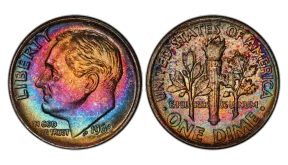
At first, the items may be considered regular coins, though this is not particularly true. Beneath their modest exterior, there can be found hidden historical significance, precious metal content, and aesthetics, frequently apparent to collectors only. The price reaches $588 in MS-67+ condition.
What Is a 1962 Dime Worth Today?
A common Roosevelt item is worth $2.25 to $2.50
Standard collector grades usually sell for $5 to $15
Proof versions from San Francisco trade for $7 to $25
The Full Bands or perfect PR-70 grades can command massive bonuses, with top auction records reaching between $500 and $2,800.
The Item History
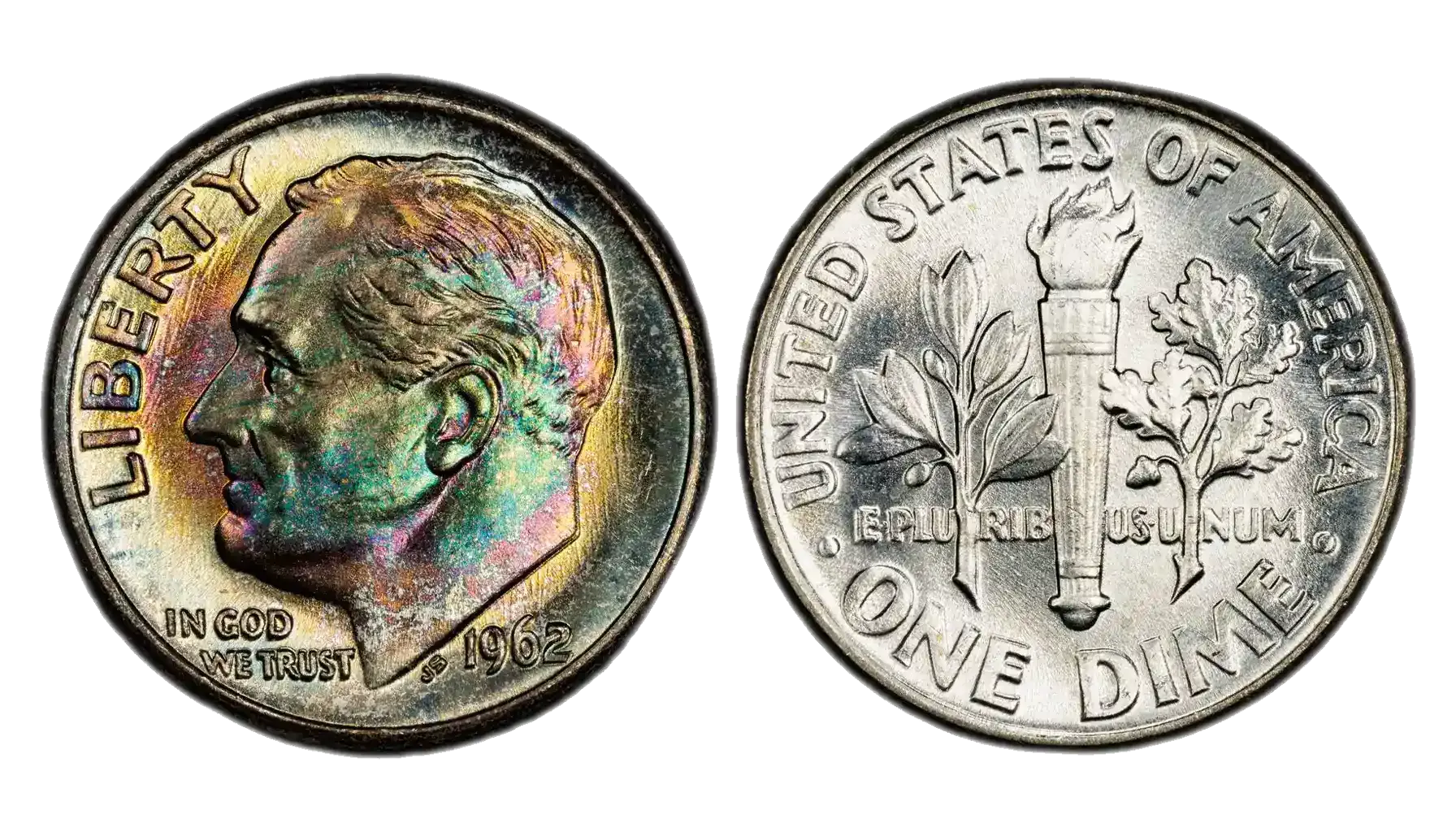
The stories of the issues are intriguing, for their legacy is rooted in the contributions of the great leaders and events that nations made it possible to overcome. The US Mint decided to replace the Mercury item with a new design commemorating the late President Franklin D. Roosevelt.
Since then, it has become obvious that the monetary sector in the US discovered a new perspective when it could integrate modern, simple, in a good sense, designs that can highlight national ideals more appropriately. The Roosevelt item, which was 90% silver until 1964, swiftly became a symbol of the American coinage and remains an iconic piece up until now.
Although it was widely used because of its convenience and durability, the addition of silver gave it an inherent value that went beyond its 10-cent face. Indeed, the majority of the series' instances are common, yet certain issues, e.g., the item, have made it a favorite among numismatists anyway. But why?
Compare the item with the 1980 dime value guide.
Is a 1962 Dime Silver?
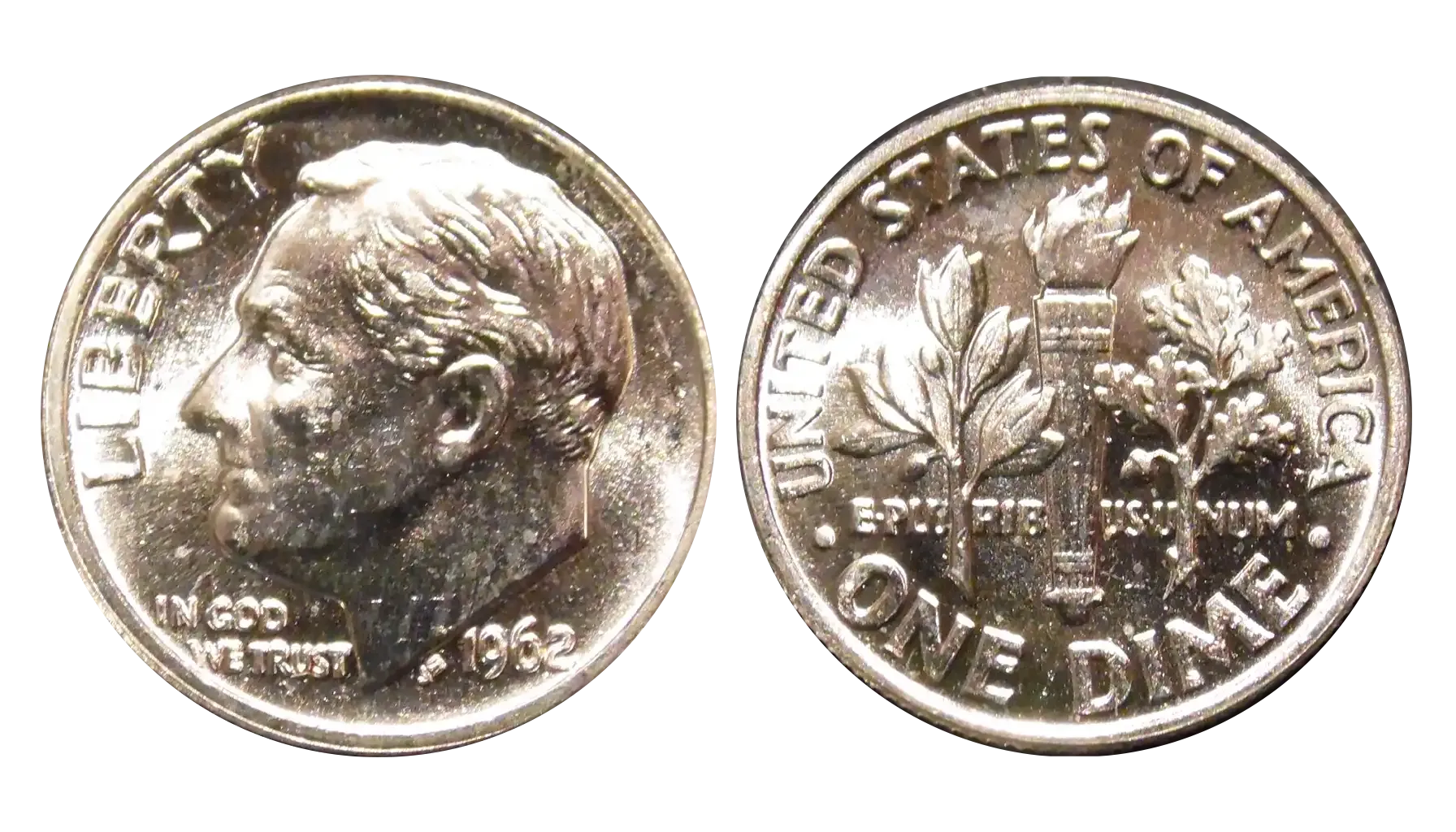
Every issue produced for circulation by the United States Mint in 1962 was struck in a 90 % silver and 10 % copper. This continued until 1965, when the U.S. changed to the copper-nickel clad composition.
Composition – 90 % Silver, 10 % Copper
Edge Check – if you look at the edge of the coin, it will be a solid silver color. Modern items (1965–present) show a distinct copper-colored stripe along the rim.
Melt Value – because of its silver content, an issue is always worth significantly more than its $0.10 face value, between $1.80 and $2.50 on the current market price of silver.
The item was part of the final period of junk silver coinage. The Coinage Act of 1965 officially removed silver from items and quarters because of the rising silver prices and coin shortages. Because 1964 was the absolute last year for silver items in circulation, your item is a genuine piece of silver bullion.
1962 Roosevelt Dime Overview
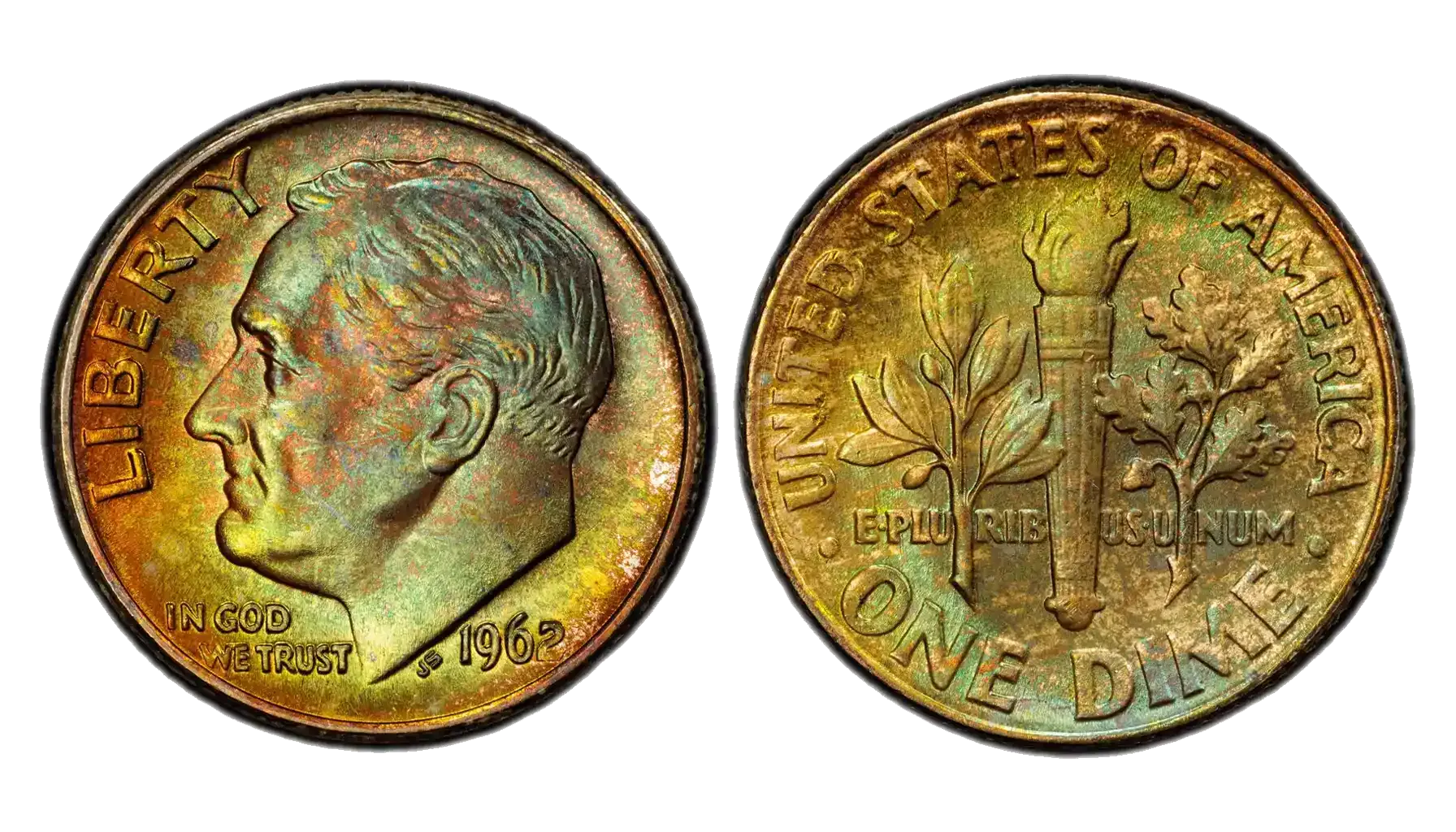
The Roosevelt issue is a little but important coin that is prized for both its inherent silver content and its design. In fact, these are the first points that can be noted about any unit of currency, so let us turn to its appearance first.
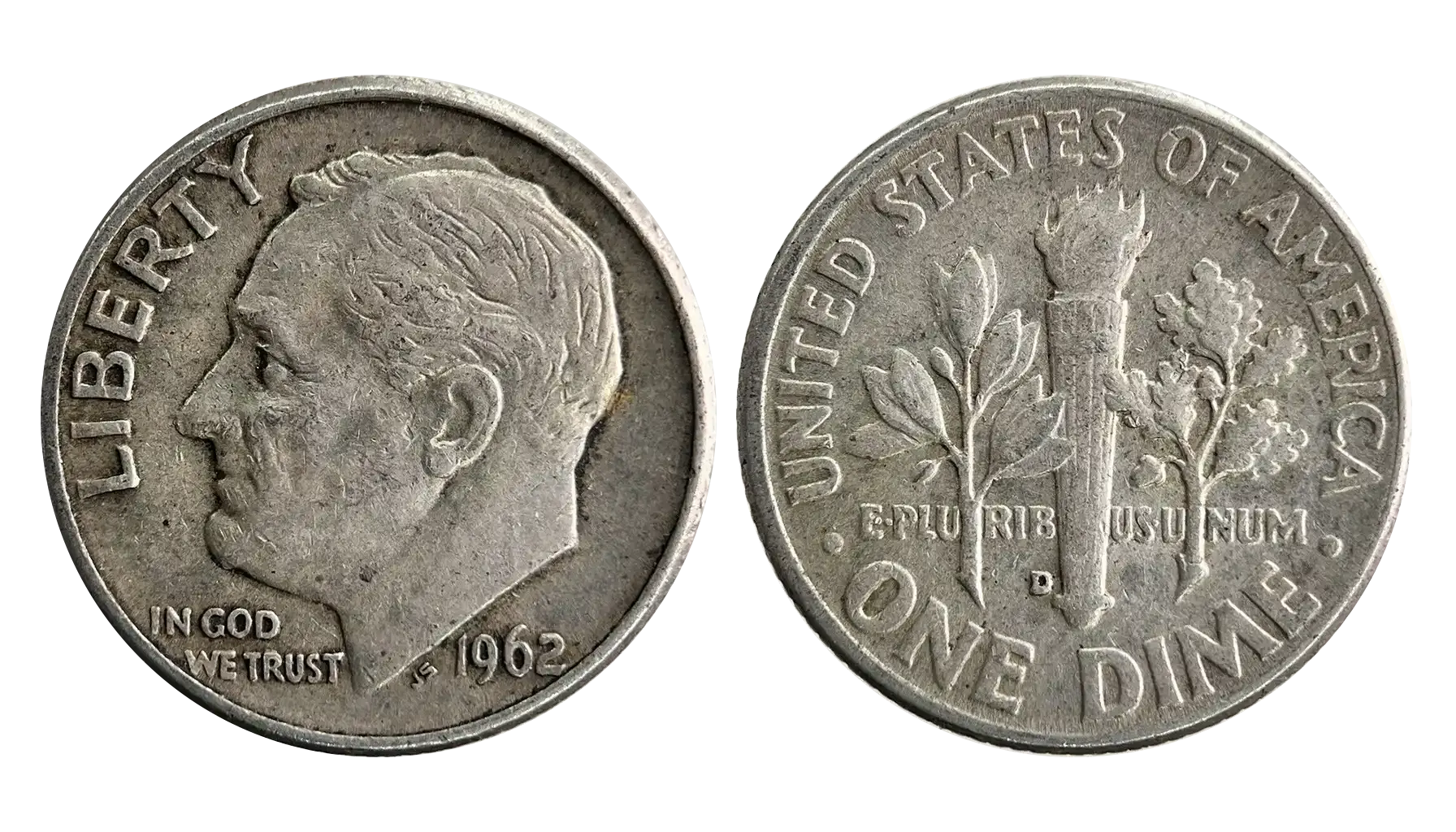
Obverse Design | A portrait of Franklin D. Roosevelt by John R. Sinnock |
Reverse Design | A torch and other symbols |
Composition | 90 % silver |
Weight | 2.5 grams |
Diameter | 17.91 mm |
Edge | Reeded |
Mint Locations and Mint Marks
In the case of items, only two major facilities were responsible for the production of these coins, namely the Philadelphia Mint and the Denver Mint. Each played a significant role in producing millions of items that year, but some of the instances are a bit more valuable because of their origin and unique characteristics, too.
As was typical for coins produced at this site at the time, Philadelphia-minted items lack the mint mark at all. These units of currency, which had a mintage of 72,450,000 regular pieces and 3,218,019 proof coins, are somewhat widespread and could be easily found in circulation.
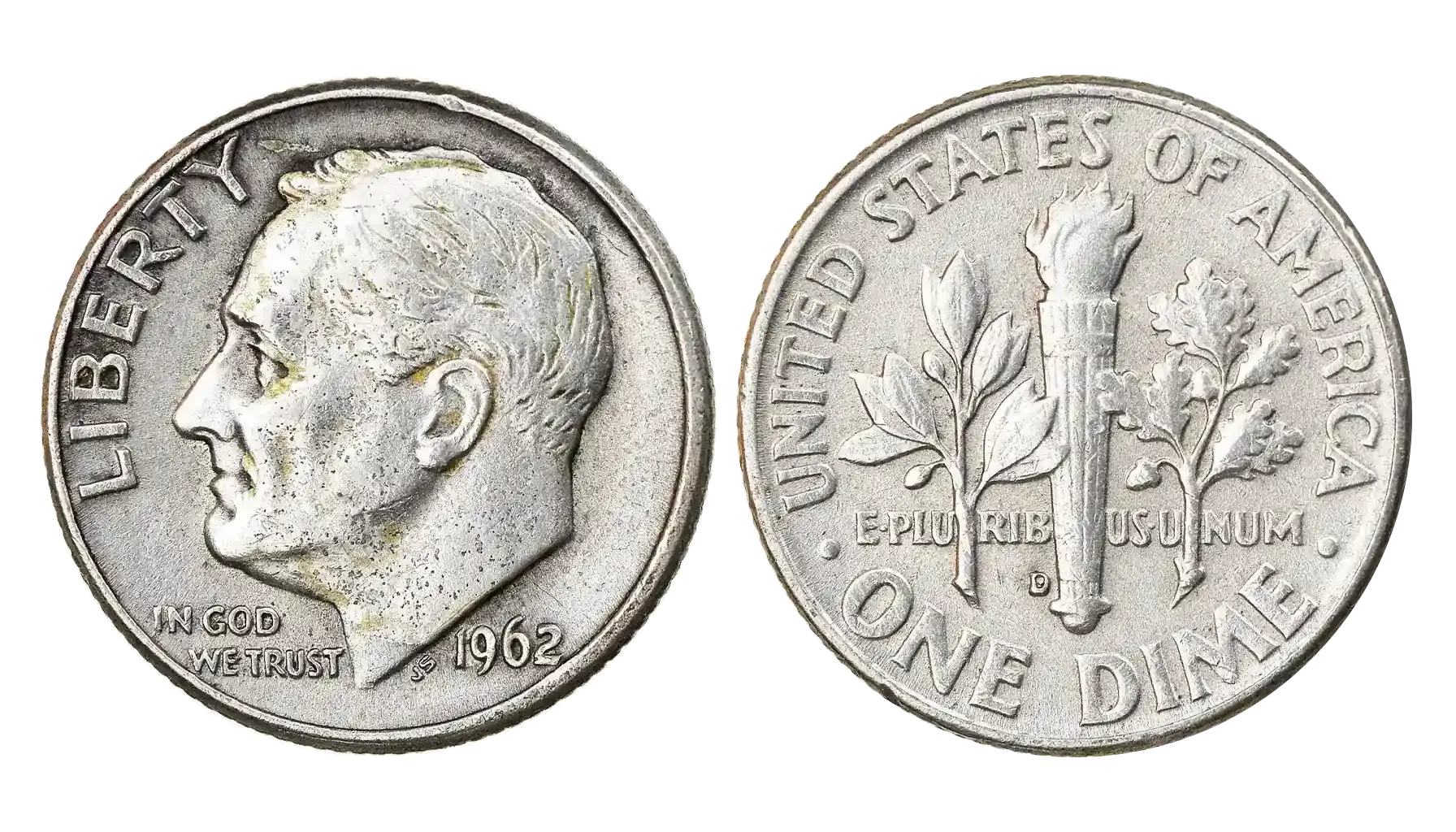
In contrast, the Denver Mint was the main source of the Roosevelt issue supply in 1962, having manufactured over 334,948,380 pieces. These can be identified by a little "D" mint mark on the reverse side, located above the torch, to the left of the inscription "ONE".
1962 Dime Value Chart
When the condition, mint marks, and unique characteristics are taken into consideration, one may see the true 1962 Roosevelt dime value, which can vary significantly. Mint State or peculiar Proof grades can sometimes fetch higher prices, and this makes these coins much more desirable.
Type | Auction Record | Grade |
10C 1962 P Dime Value | $588 | MS-67+ |
10C, FB | $2,233 | MS-67+ FB |
10C 1962 D Dime Value | $489 | MS-67 |
D 10C, FB | $2,880 | MS-68 FB |
10C Proof | $358 | PR-70 |
10C, CAM | $180 | PR-69 CAM |
10C, DCAM | $546 | PR-69 DCAM |
Anyway, prices are usually subject to fluctuations. Keep up with the market trends so as not to miss updates regarding the value of 1962 dime.
1962 Proof Dime Value
The Proof issue is highly liquid and frequently traded. In the modern market, the baseline 1962 dime value today is tied to silver content, but collector bonuses for high-grade slabbed coins have increased.
Silver Melt Value $5.79
Raw / Ungraded Proof $6.50 – $9.50
PCGS/NGC PR-66 $12.00–$19.50
PCGS/NGC PR-68 $29.00–$45.00
Cameo (PR-67 CAM) $55.00–$85.00
In the 1960s, proof dies were not as consistently frosted as they are today. A "Cameo" or "Deep Cameo" (DCAM) issue, where the portrait looks stark white against a black mirror background, commands a 500 % to 1,000 % bonus over a standard brilliant proof.
"For the 1962 Denver issue, specialists focus heavily on the Repunched Mint Mark (RPM) varieties. Because the dies were being pushed to their limits to meet demand, these mechanical errors offer the most significant upside for a collector beyond just the silver melt value."
– Jeff Garrett, expert
The Red Book
How Much Silver Is in a 1962 Dime?
Historically, the United States maintained a very consistent coin silver standard for over 125 years.
1796–1837 (89,24 % silver)
1837–1964 (90 % silver)
1965–present (0 % silver)
2010–present (99.9 % silver)
From 1873 to 1964, the U.S. Mint did not change the silver content of the item at all. This means your 1962 item has the exact same melt value as a 1916 Mercury dime or a 1892 Barber series.
In the precious metals market, your coin is part of the 90 % Junk Silver category. Because it is so common, it is valued strictly by its silver weight rather than rarity, unless it is in a Proof or High-Grade condition.
What about efficiency? It takes roughly 14 silver items to equal one full troy ounce of pure silver.
While most items dropped all silver in 1965, the Half Dollar was the only circulating coin that kept a reduced silver content (40 %) until 1970. The piece was one of the last pure silver daily issues of the American economy.
Rare 1962 Dime Error List
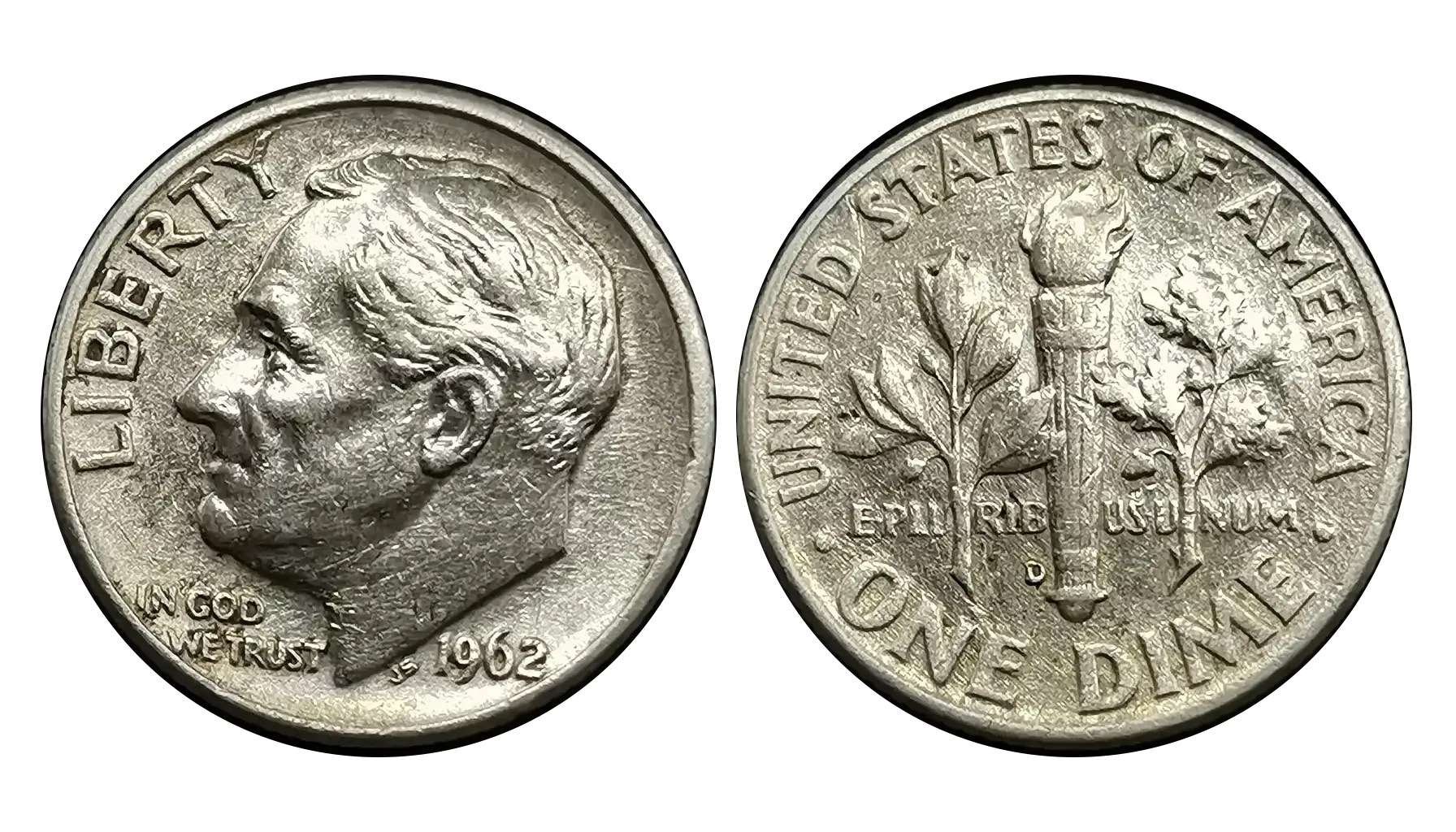
Finding rare Roosevelt item errors requires a keen eye for mechanical inconsistencies that occurred at the Philadelphia and Denver mints. Today, the primary value of a standard item is its 90 % silver content, but a verified 1962 D dime error list can push that price into the hundreds of dollars.
D/D Repunched Mint Mark (RPM)
Specific to the Denver Mint, this error occurred when the mint mark was punched into the die more than once. In high-grade uncirculated condition, a clear 1962-D/D can command a high premium. Look for a secondary "D" slightly offset to the north or south of the primary letter.
Value $45–$200
DDO / DDR
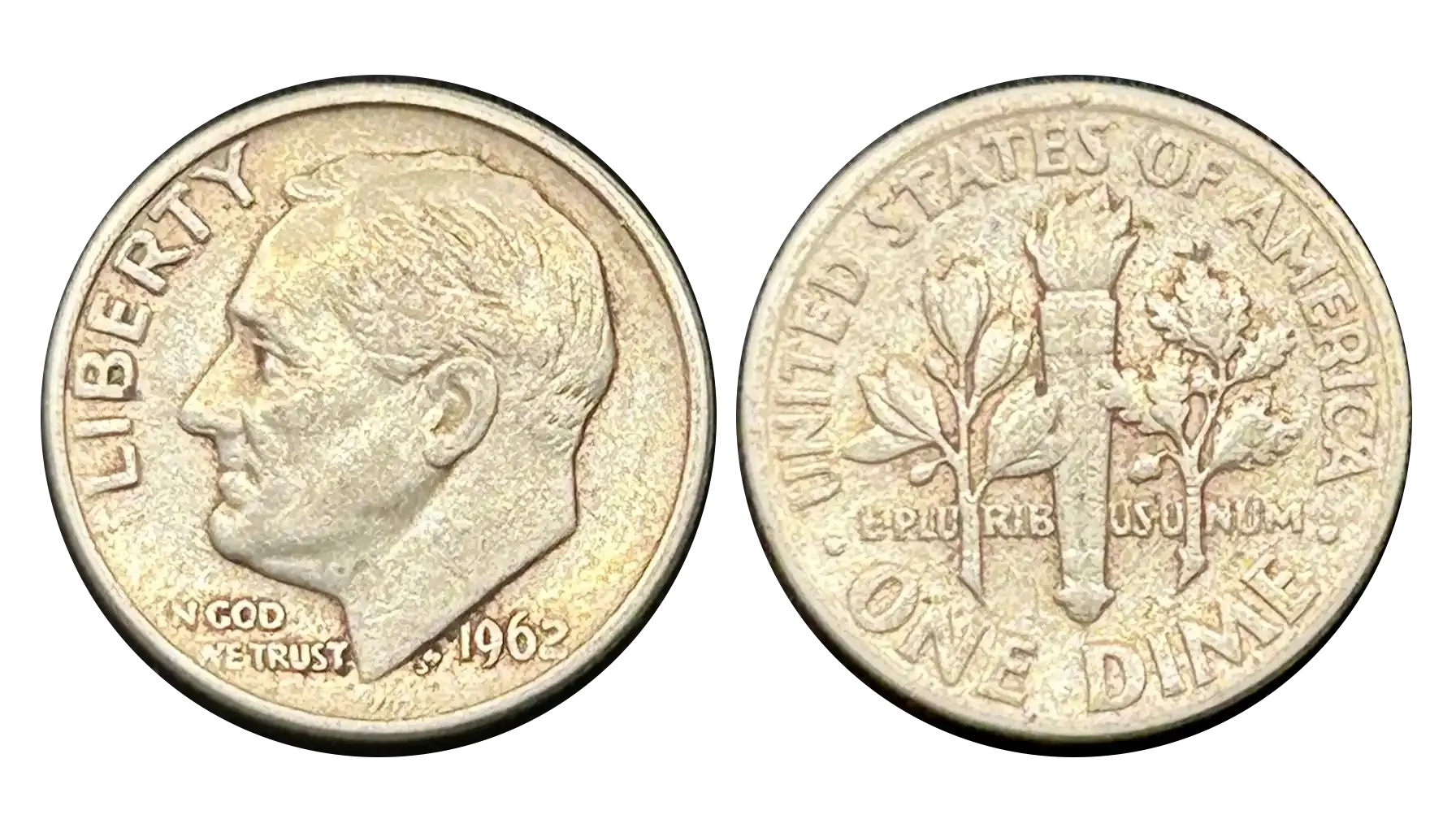
While the proof item is more famous for its doubling, the 1962 also features several documented varieties. Thickening or splitting of the serifs on the letters in "IN GOD WE TRUST" or the digits in the date. 1962 dime silver value factor is a Gem Proof with a non-cataloged Doubled Die that can sell for over $150 at specialized auctions like GreatCollections.
Value $15–$350+
Off-Center Strikes
If the silver planchet was not perfectly centered when the dies came down, the design would be cut off. The error is most valuable if the date (1962) is still fully visible on the coin. A 50 % off-center item is a major rarity and a unique find for silver stackers.
Defect Value $50–$300+
What Makes a 1962 Dime Valuable?
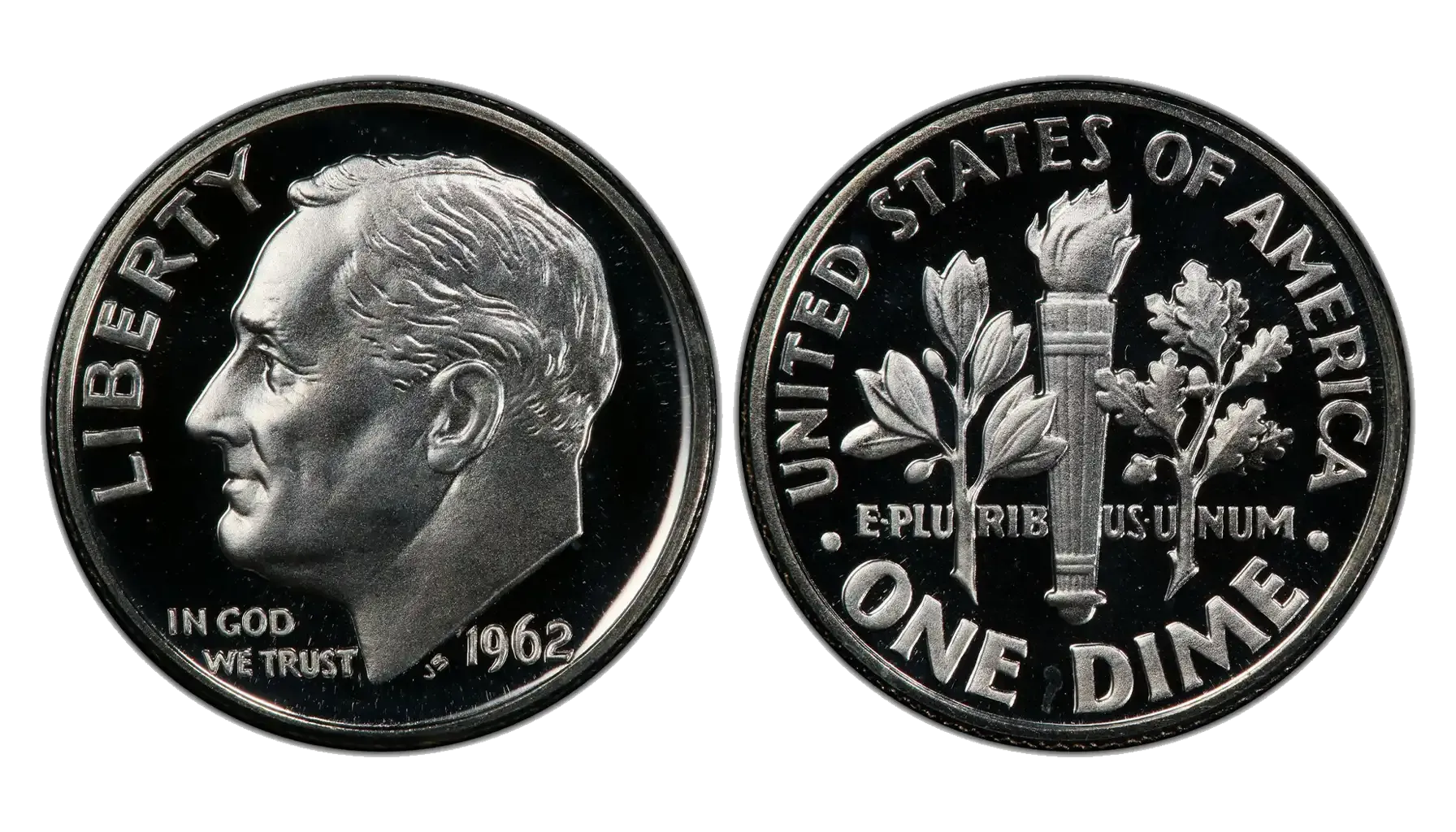
Another important feature of these coins is the designations that denote excellent quality or distinctive features. These labels, like "Full Band", "Cameo", or "Deep Cameo", can affect the 1962 silver dime value even more.
Full Band (FB) – Roosevelt items with clearly struck reverse details, particularly the horizontal bands on the torch, are designated as Full Band. A coin must bear completely separated bands with unbroken, distinct lines in order to be considered a Full Band.
Proof (PR) – especially for collectors, proof coins were released. Proof coins, which are made with the use of polished dies and planchets, can be easily distinguished by their frosted patterns and mirrored fields.
Cameo – proof coins that have a striking contrast between the mirrored background and the frosted design features are referred to as cameos.
Deep Cameo (DCAM) – Deep Cameo instances have deeply frosted features that are put in contrast to highly reflecting fields (the highest level of proof grades).
Check the valuable markers on the 1964 quarter.
How to Tell If Your 1962 Dime Is Rare
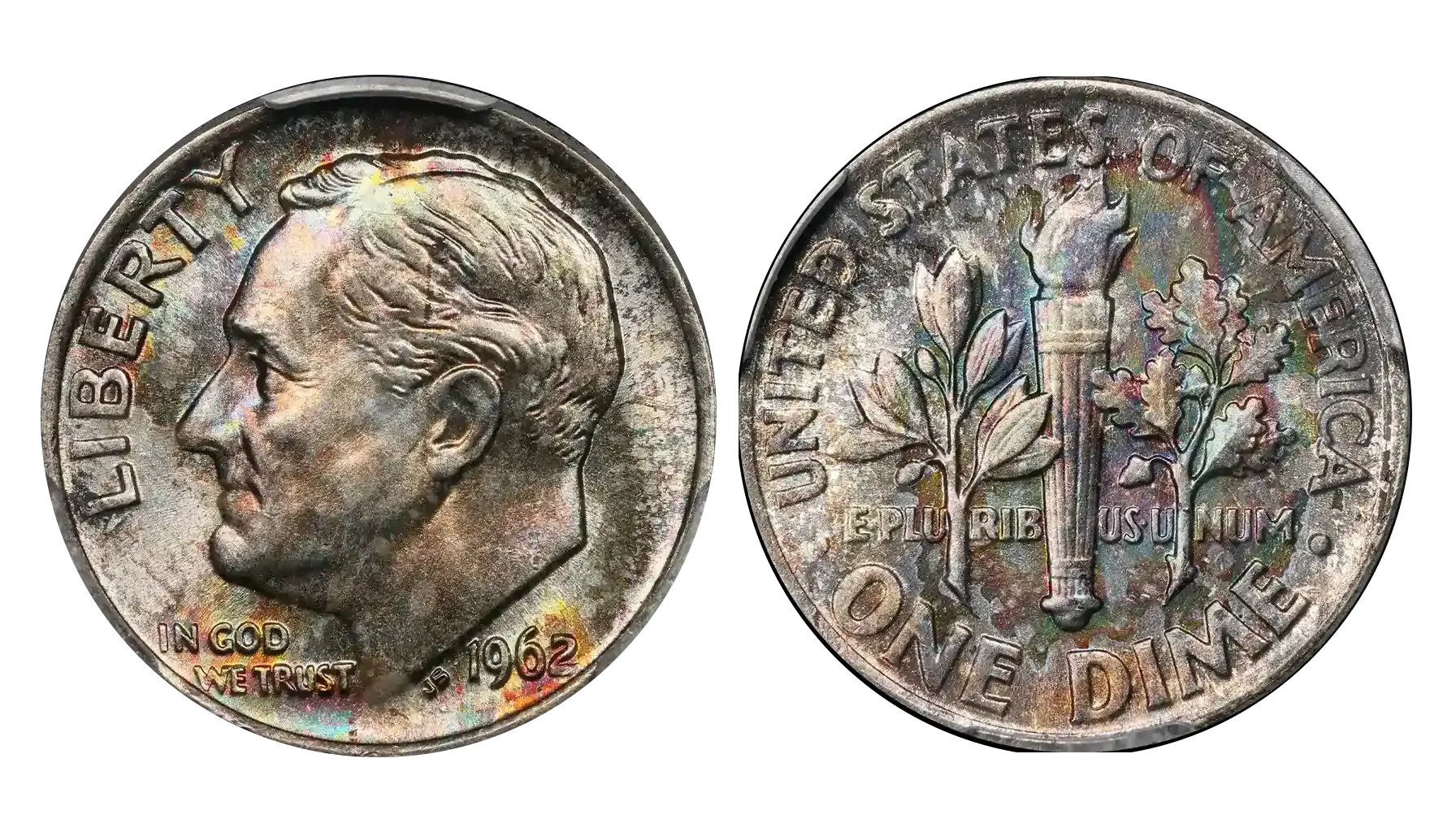
Follow these steps to determine if your coin is a common silver piece or something more.
Step 1 – Check the Item Characteristics
A genuine issue must be silver. Look at the rim. If you see a copper stripe, it is a modern 1965+ item (check the date again). Use a digital scale for the weight test.
Step 2: Locate the Mint Mark
Look at the reverse (back) of the coin, specifically to the left of the base of the torch. A 1962 dime no mint mark is a symbol that the item is from Philadelphia. These are very common, but can be rare if in a perfect Proof condition. D Mint Mark from Denver.
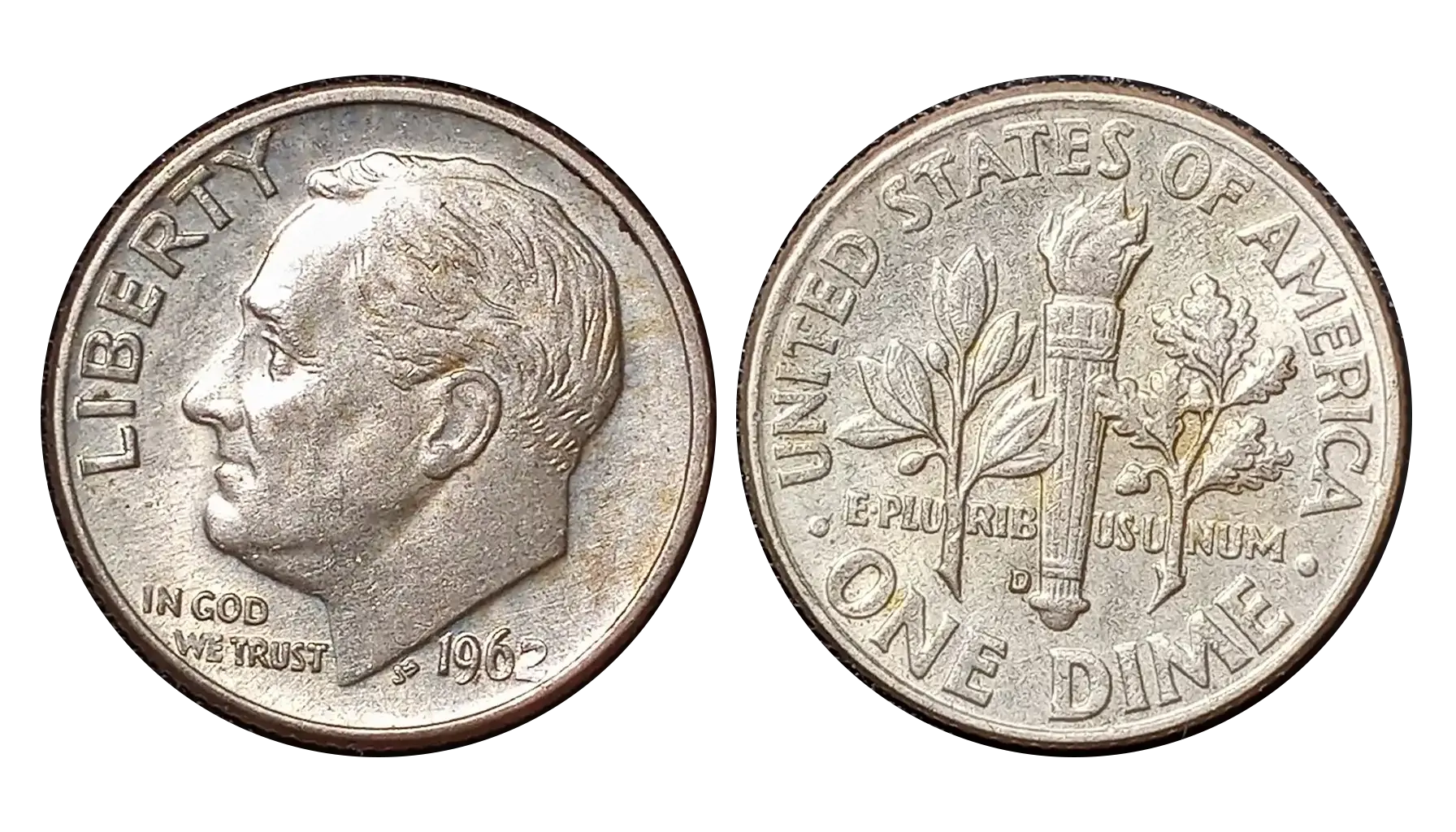
Step 3: Inspect the defects, such as D / D or RPM
Grab a magnifying loupe and focus on the D mint mark. Look for a secondary D shadow or a distinct second loop of the letter tucked behind or slightly offset from the main D.
Step 4: Evaluate Full Bands
For regular business strikes in Philadelphia or Denver, rarity is defined by the quality of the strike. Look at the two horizontal bands at the top and bottom of the torch on the reverse – Full Bands (FB) or Full Torch (FT).
FAQ
Are dimes from 1962 worth anything?
The price for an ordinary item is between $2.25 to $2.50, but issue with defects reaches $500.
Is a 1962 dime made out of silver?
The item has only 10 %, not 1962 dime silver content – copper.
Where is the mint mark on a 1962 Roosevelt dime?
Look on the reverse side and on the left side, near the torch, you will see the mint mark letter.
What is the melt value of a 1962 dime?
The melt value is a fluctuating number, but usually it is between $1.80 and $2.50.
How many 1962 dimes were made?
The total mintage is over 3.2 million proof items.
How much is a 1962 dime worth?
The item price in PR-68 is $29.00–$45.00.
Is there any silver in a 1962 dime?
The item contains pure silver metal content.
What is the composition of a 1962 dime?
The item composition is 10 % copper and 90 % silver.

 Facebook
  X (Twitter)
  Pinterest
  LinkedIn