Contents:
— “I almost spent it.”
— “What stopped you?”
— “The urge to identify my coin first.”
This coin appears ordinary, and it is, but for some, it may become special. The 1989 nickel is an example of tradition and coin art. But how much is a 1989 nickel worth? And is it a good idea to add it to your collection?
1989 Jefferson Nickel Overview
The 1989 Jefferson Nickel belongs to a mature phase of the series, when production was optimized for speed and consistency rather than detail. The design had already been in use for over 50 years, and the U.S. Mint focused on supplying large volumes for circulation. As a result, 1989 5-cent coins are plentiful today. Their appeal to collectors is tied to preservation and strike sharpness, not to the date itself.
Identifying the 1989 Jefferson Nickel
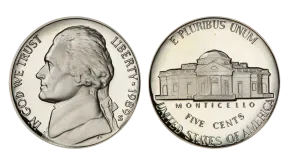
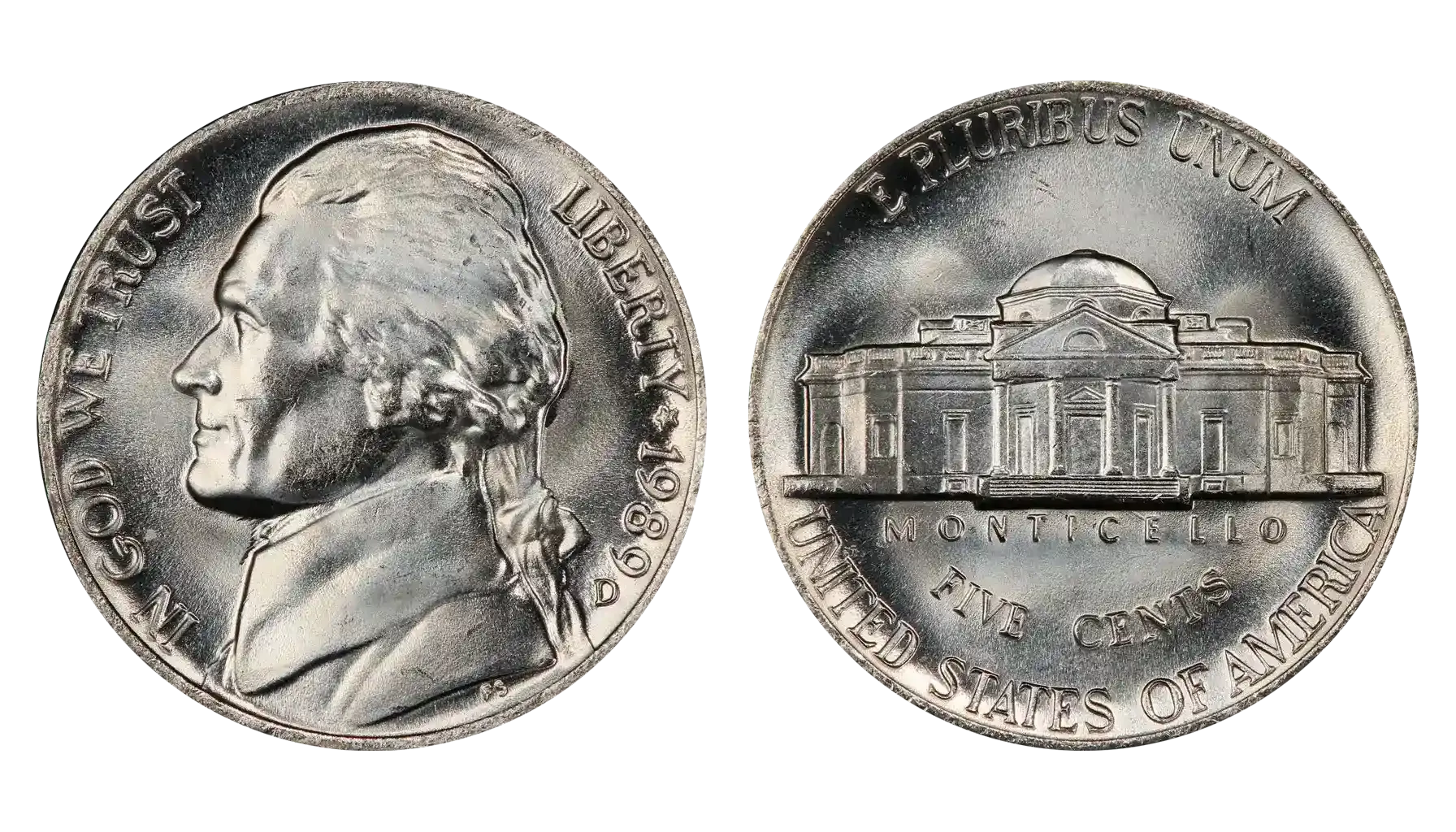
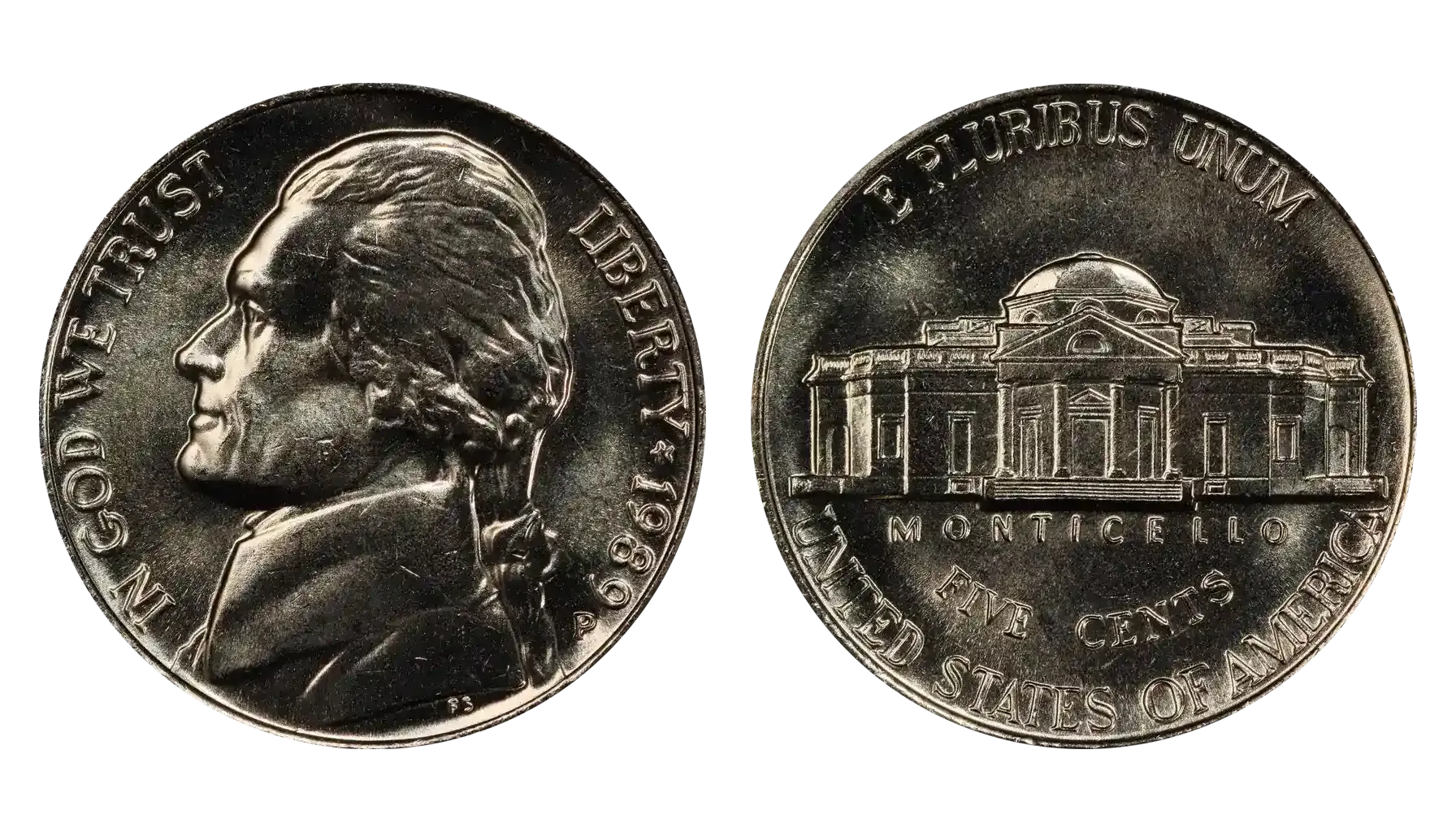
On the obverse, Thomas Jefferson is shown facing left. The inscriptions LIBERTY and 1989 appear to the right, while the mint mark sits just behind the ponytail. The reverse shows Monticello centered within the design, with the denomination and country name placed around it.
Physical characteristics follow the standard modern format: plain edge, approximately 21.21 mm in diameter, and a nominal weight of 5 grams. Many examples show weak detail on Monticello, even when unworn.
Before examining strike quality closely, a quick image check with Coin ID Scanner can help identify the coin and bring you standard specs.
Mint Marks and Varieties: P and D
1989 Nickel P (Philadelphia)
Philadelphia struck a very high volume of coins in 1989. Many pieces suffer from flat or indistinct reverse detail, particularly in the steps. Well-defined examples exist, as well as the 1989-P nickel error list, but they are not typical.
1989 Nickel D (Denver)
Denver coins from this year generally show stronger definition and cleaner lines on Monticello. Because of this, collectors often give preference to Denver issues when searching for higher-grade coins. Moreover, they always look through the 1989 D nickel error list to find rare specimens.
Full Steps
No major doubled-die varieties are recognized for 1989. The only consistently collected variation is the Full Steps designation, which reflects strike quality rather than a true die variety.
“Full Steps: Term applied to a Jefferson five-cent example when at least 5 steps of Monticello are present.”
— PCGS Glossary
PCGS website
Design Features and Copper Content
The specimen continues Felix Schlag’s original Jefferson–Monticello design. The portrait remains unchanged, and the reverse retains its symmetrical architectural layout. On circulation strikes, fine elements such as the steps and window frames are often softened due to worn dies and high-speed production.
The coin is struck in an alloy made up of 75 percent copper and 25 percent nickel. There is no silver content. This alloy gives the coin a muted gray appearance and allows it to tolerate extended circulation with minimal surface breakdown.
1989 Jefferson Nickel Value by Condition and Mint
Grade | 1989 P Nickel Value | 1989 D Nickel Value | 1989 S Nickel Value (San Francisco, Proof) |
Circulated (G–VF) | Face value | Face value | — |
Extremely Fine (EF40–45) | $0.10–$0.25 | $0.10–$0.25 | — |
About Uncirculated (AU50–58) | $0.25–$0.75 | $0.25–$0.75 | — |
Mint State MS60–62 | $0.75–$1.50 | $0.75–$1.50 | — |
Mint State MS63 | $2–$4 | $2–$4 | — |
Mint State MS64 | $6–$12 | $8–$15 | — |
Mint State MS65 | $15–$30 | $20–$40 | — |
MS65 Full Steps (FS) | $300–$700 | $500–$1,200+ | — |
Proof PR65–PR69 | — | — | $2–$6 |
Proof PR70 | — | — | $15–$30+ |
1989-S coins were struck only as Proofs and never released into circulation. Proof 1989 nickel value depends on surface quality and certification, not rarity.
Coins that saw circulation usually trade at face value. Noticeable premiums appear only in higher Mint State grades, with the strongest prices paid for certified Full Steps examples, most often from Denver and the 1989-D nickel error list.
Common Errors and Collector Tips for 1989 Nickels
Errors
Most errors from this year are minor and related to the striking process rather than dramatic die flaws.
Off-center strikes with partial design loss
Broadstrikes caused by collar malfunctions
Clipped planchets
Small die chips or cracks near lettering or Monticello
These examples from the 1989 nickel error list are generally modest in value unless clearly visible and well preserved.
Tips for Numismatists
Ignore worn coins; they rarely exceed face value.
Examine the steps closely, as most are incomplete.
Start with Denver coins when searching for sharp strikes.
Avoid cleaned coins with dull or unnatural surfaces.
Confirm the basics first, then judge strike and surface quality.
For each 1989 copper nickel, careful selection and attention to detail make the difference.

 Facebook
  X (Twitter)
  Pinterest
  LinkedIn