Contents:
While the Australian currency is gaining momentum, it’s crucial to avoid mistakes and understand where to focus your attention.
Most inexperienced collectors try to grab as many coin varieties as possible, but in reality, about 60% of their collections consist of items with little value.
It’s just like stock market investing: you need a strategy, an understanding of what’s what, and at the very least, a coin identifier to check the bare minimum of the 1984 $1 Australian coin error list with pictures.
1984 1 Dollar Coin Overview
Australia released its first one-dollar piece in 1984, finally stopping the use of paper notes for this amount.
“Planning for a one dollar coin commenced as early as the mid-1970s. It was recognised that Australia needed a higher value coin which could be practically used in coin operated machines and to replace the one dollar note which had a short service life through high use.”
— National Coin Collection
Royal Australian Mint
Royal Australian Mint workers started mass production of these gold-colored pieces to replace old paper money.
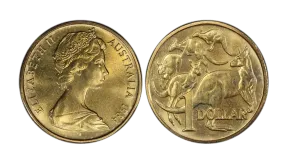
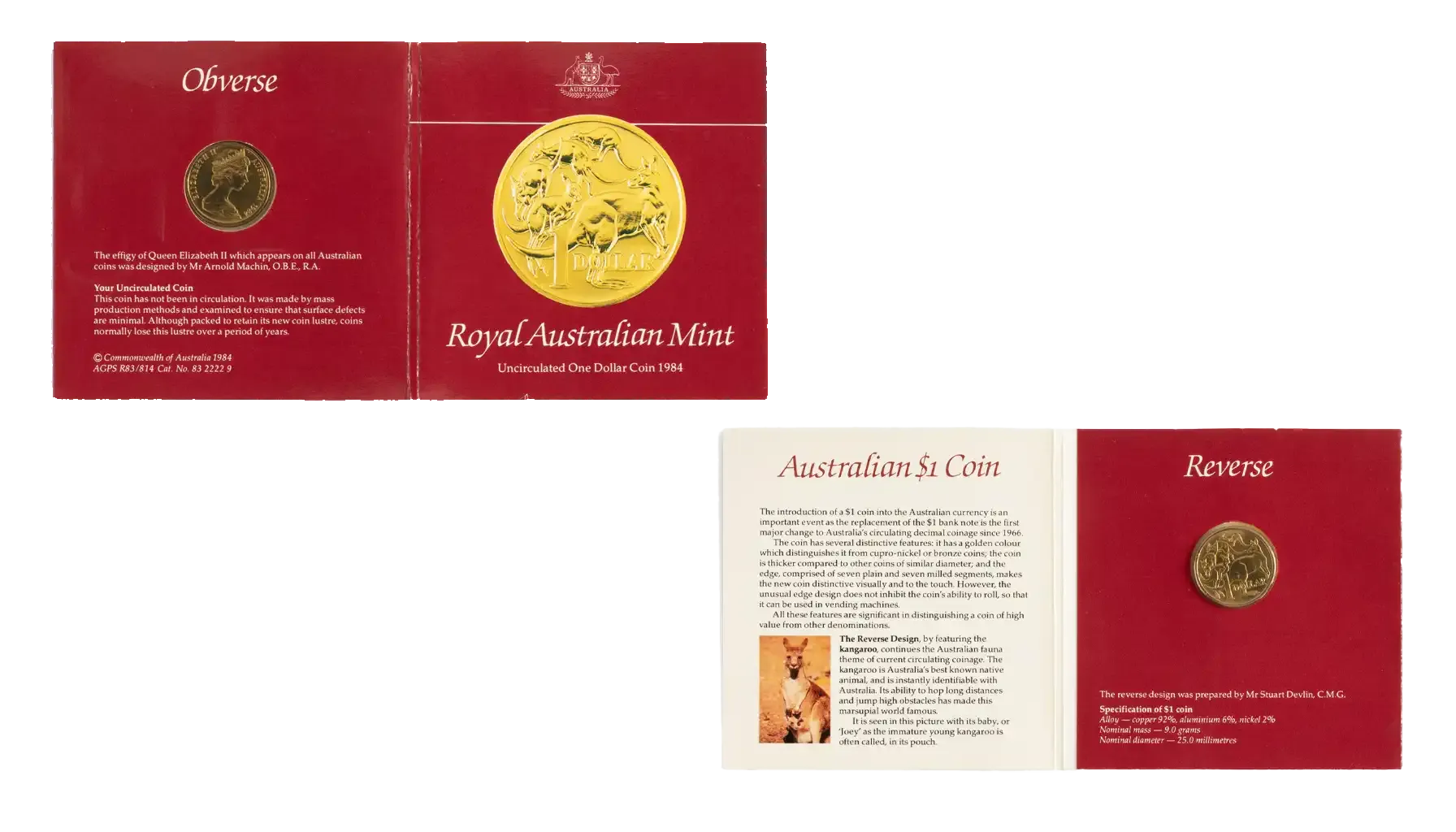
Each token measures 25 mm across, weighing 9.00 grams and having a unique broken pattern on the edge.
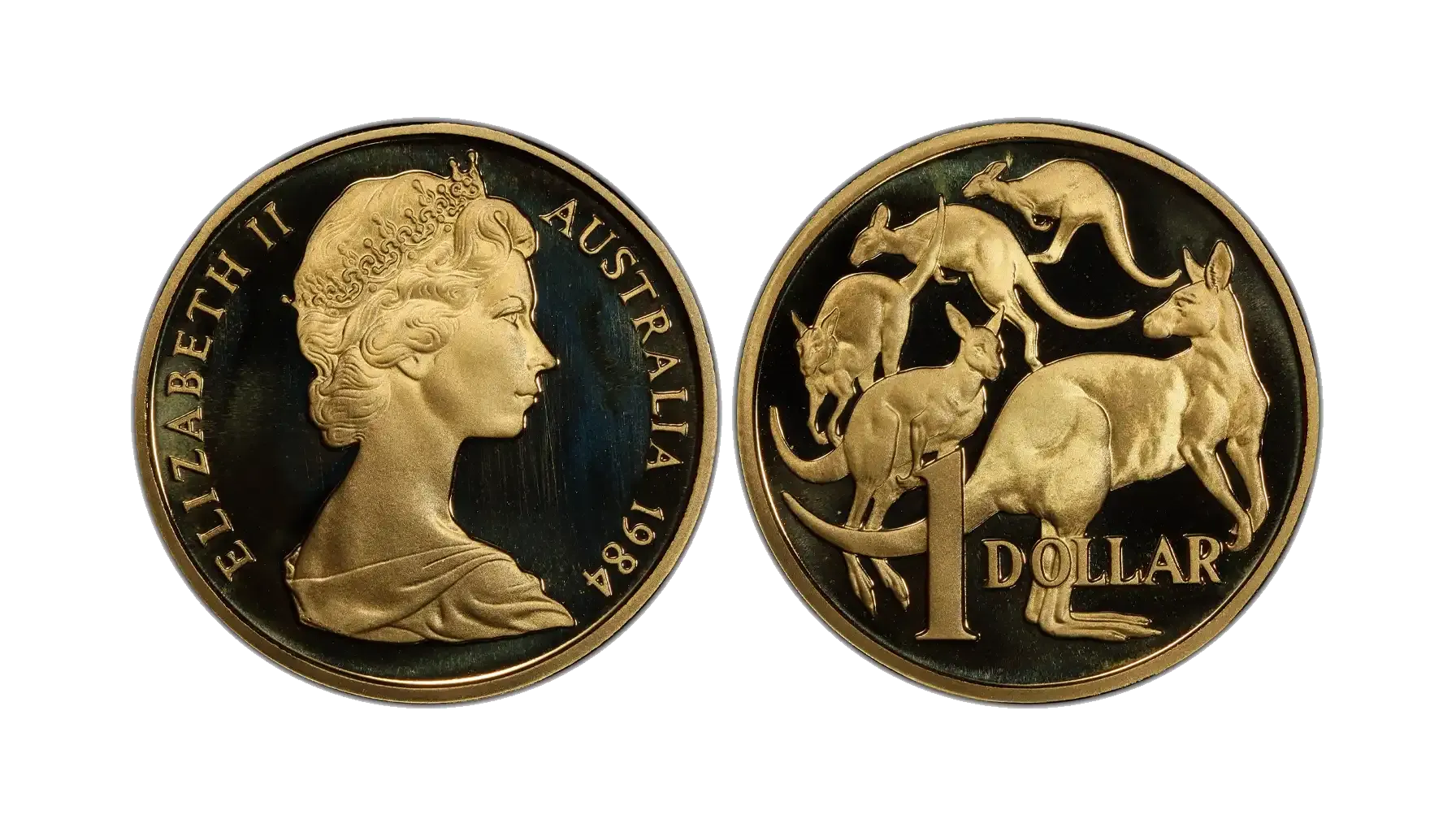
Stuart Devlin created the famous back design showing five kangaroos of different sizes.
Arnold Machin’s portrait of Queen Elizabeth II features on the front for the last time before a design change.
Feature | Detail |
Face Value | 1 Dollar (AUD) |
Weight | 9.00 g |
Diameter | 25.00 mm |
Thickness | 3.00 mm |
Metal Mix | Aluminum Bronze |
Mintage | 186,300,000 pieces |
Huge production numbers make this one very common in Australian change, even decades later.
High copper levels in the metal cause the surface to turn dark quickly when touched by human hands.
Making the 1984 Coin
The Mint worked at full speed to meet the huge demand for new ones.
Using aluminum bronze required more pressure from the machines than older metal mixes.
Fast production speeds in 1984 led to many mistakes, creating rare items for modern collectors.
1984 Australian $1 Coin Value Today
Market 1984 $1 coin value depends mostly on how clean and shiny it looks.
Pocket change showing many marks or a dark surface usually stays worth just the face value of $1.
Rare tokens in Uncirculated (UNC) condition sell for much higher prices today.
Price data from auctions shows high-grade coins growing in value by about 7% every year.
Smart buyers prefer those kept in plastic holders to stop the metal from turning dark.
Condition Grades and Prices
Latest market prices for different token qualities appear in the list below.
Circulated (VF/EF): $1.00 — $2.00
Uncirculated (UNC): $10 — $25
Choice Uncirculated (BU): $45 — $85
PCGS MS66 Grade: $150 — $280
Values change based on market demand, condition, grading, and the specific characteristics of individual coins.
Very few pieces from the 186 million produced still have their original bright shine today.
Only 0.01% of all 1984 dollars survived in perfect condition, making them very special.
Special 1984 Collector Sets
The Mint also sold limited sets for people wanting better quality pieces.
The 1984 Mint Set features a piece with much clearer details, costing around $40 to $60 now.
Proof sets having mirror-like surfaces sell for between $70 and $110 depending on the box condition.
Silver versions from special Masterpieces sets change in price based on current metal market rates.
Rare 1984 $1 Coin Errors
Production mistakes from 1984 form the most expensive part of the Australian dollar market.
Fast manufacturing allowed many broken or wrong pieces to leave the factory.
Rare errors involving wrong shapes or different metals bring the highest prices.
Serious collectors pay hundreds or even thousands of dollars for these unique pieces.
Mule Errors
Unlike the famous 2000 mule one, 1984 errors usually involve wrong edge patterns or small stamp marks.
Confirmed cases of using the wrong front stamp for others sell for over $1500.
Experts must check these finds because many fakes exist in the market today.
Wrong Metal Disks
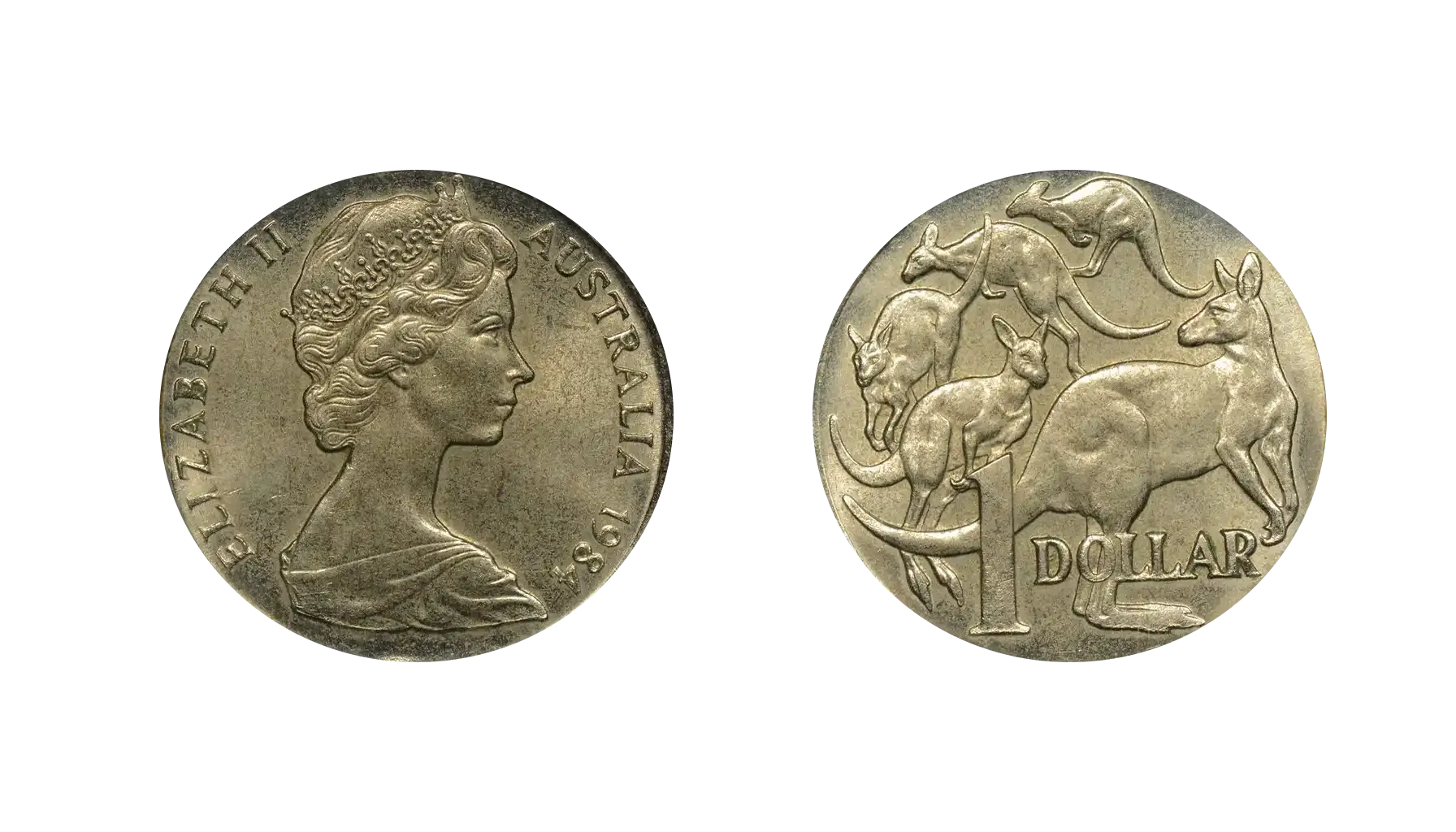
Machines sometimes hit metal disks meant for different tokens or foreign countries.
A 1984 dollar struck on a thinner disk weighs less than the standard 9 grams.
One famous rare Australia 1984 $1 coin error sold for $3200 at a Melbourne auction back in 2021.
Prices for these rare Australian pieces grow by 12-15% yearly due to very low supply.
1984 $1 Coin Error List Explained
Learning about common errors helps new buyers tell the difference between damage and the real 1984 Australian 1 dollar coin value.
Not every scratch on a token happened at the Mint during production.
Error Type | Short Description | Estimated Price |
Die Crack | Raised lines on the coin surface | $15 - $60 |
Off-centre | The design is not in the middle | $100 - $800 |
Clipped Planchet | Part of the coin edge is missing | $80 - $250 |
Lamination Flaw | Metal layers peeling off | $30 - $120 |
Off-centre errors are worth more if the year and the main design stay visible.
Missing more than 20% of the center makes a coin very rare and valuable.
Stamp and Edge Defects
A repeated 1984 1 dollar coin error happens when a damaged tool hits many coins in a row.
A Cud appears as a raised lump of metal near the coin's edge.
Pieces showing large cuds sell for $50 to $150, depending on the size of the lump.
Edge patterns having gaps or double lines add between $20 and $50 to the price.
Sale Records and Market Trends
An MS67 grade piece sold for $410 in 2019, showing how much grading matters.
Top-quality money pieces increased in value by 25% over the last five years.
Poor quality tokens lose about 5% of their value every year because nobody wants them.
1984 $1 Proof Coin — $80
1984 $1 Specimen — $25
Double Strike Error — $1200
Blank Metal Disk — $150
Large Kangaroo Die Crack — $45
Values change based on market demand, condition, grading, and the specific characteristics of individual coins.
Investment Potential for 1984 $1
Buying 1984 dollars makes sense only for perfect tokens or those with rare errors.
The huge mintage means common coins won't grow in value much.
Storing these ones requires a dry place since moisture ruins the aluminum bronze metal.
Getting a professional grade helps guarantee a profit when selling expensive pieces.
Checking eBay sales and Mint catalogs helps find such pieces sold for less than their true worth.
This token stays the base of any Australian collection, marking a new era for the country's money.

 Facebook
  X (Twitter)
  Pinterest
  LinkedIn