Contents:
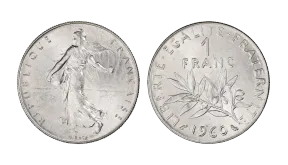
The 1 franc 1960 rare item represents a transitional moment in the history of French coin minting. This product, minted in the last years of the Fourth Republic, carries the weight of the post-war economic recovery.
Unlike later issues of francs, which became commonplace, the 1960 issue stands out in the collections of numismatists. The composition, combined with specific minting conditions, is of interest to scholars of medieval European currency.
Do you know the best app to identify coins and values?
What Is the 1960 1 Franc Coin
The item marks the first year of the new franc, a monetary reform under President Charles de Gaulle, aimed at stabilizing the French economy after years of post-war inflation.
Value | 1 FRF |
Composition | Nickel |
Diameter | 24 mm |
Thickness | 1.79 mm |
Weight | 6 g |
Shape | Round |
Design and Composition of the 1 Franc 1960
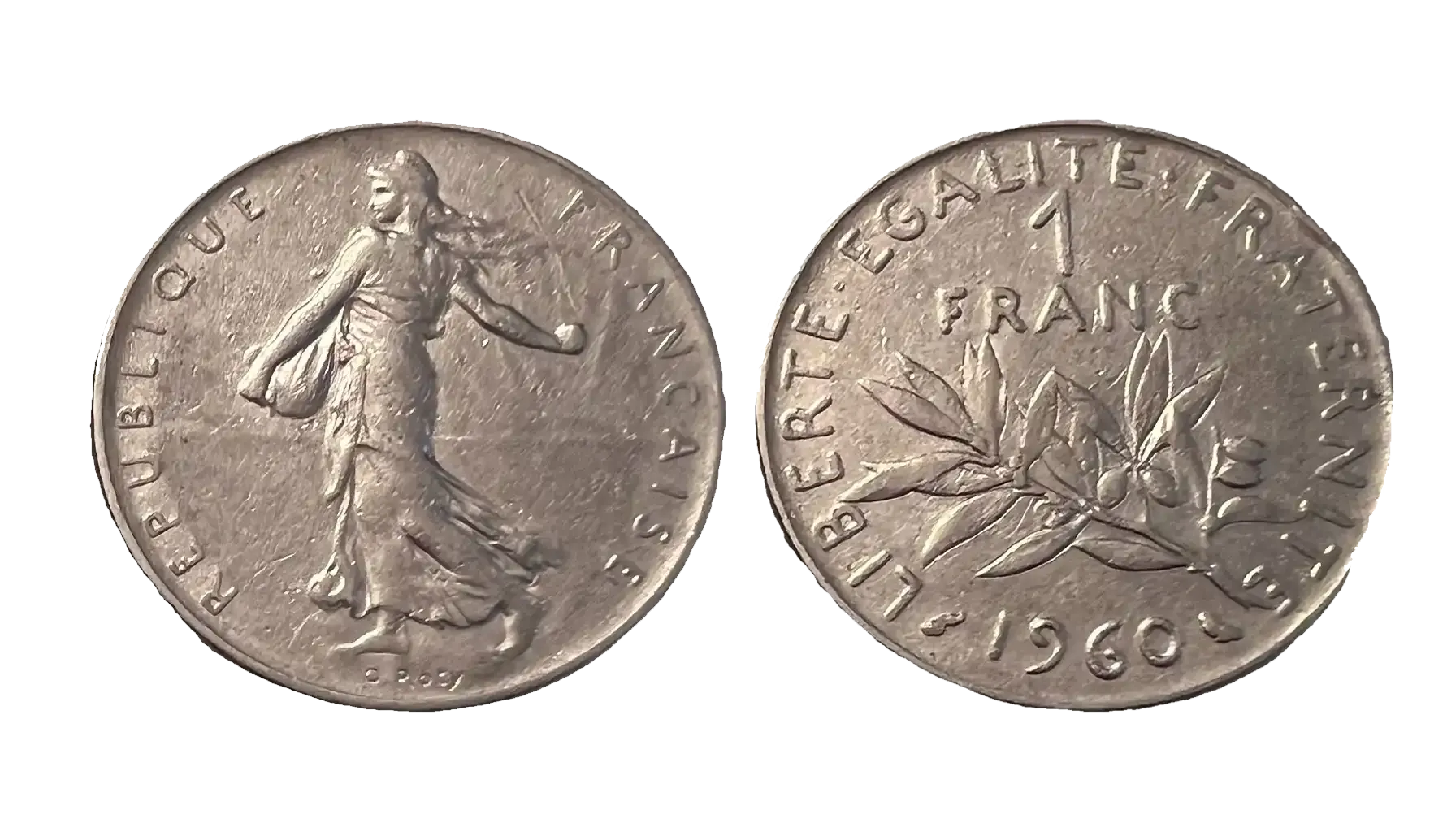
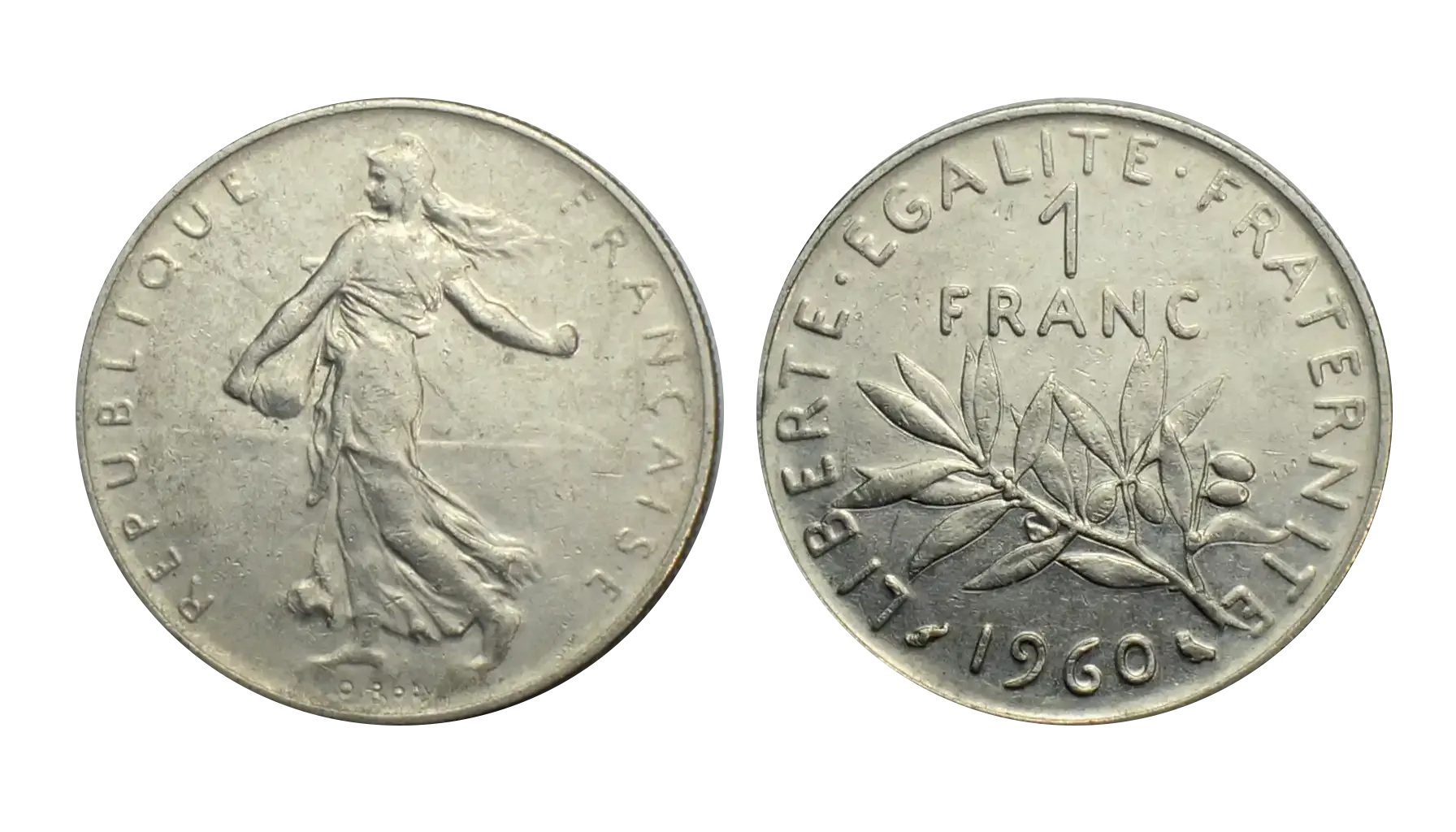
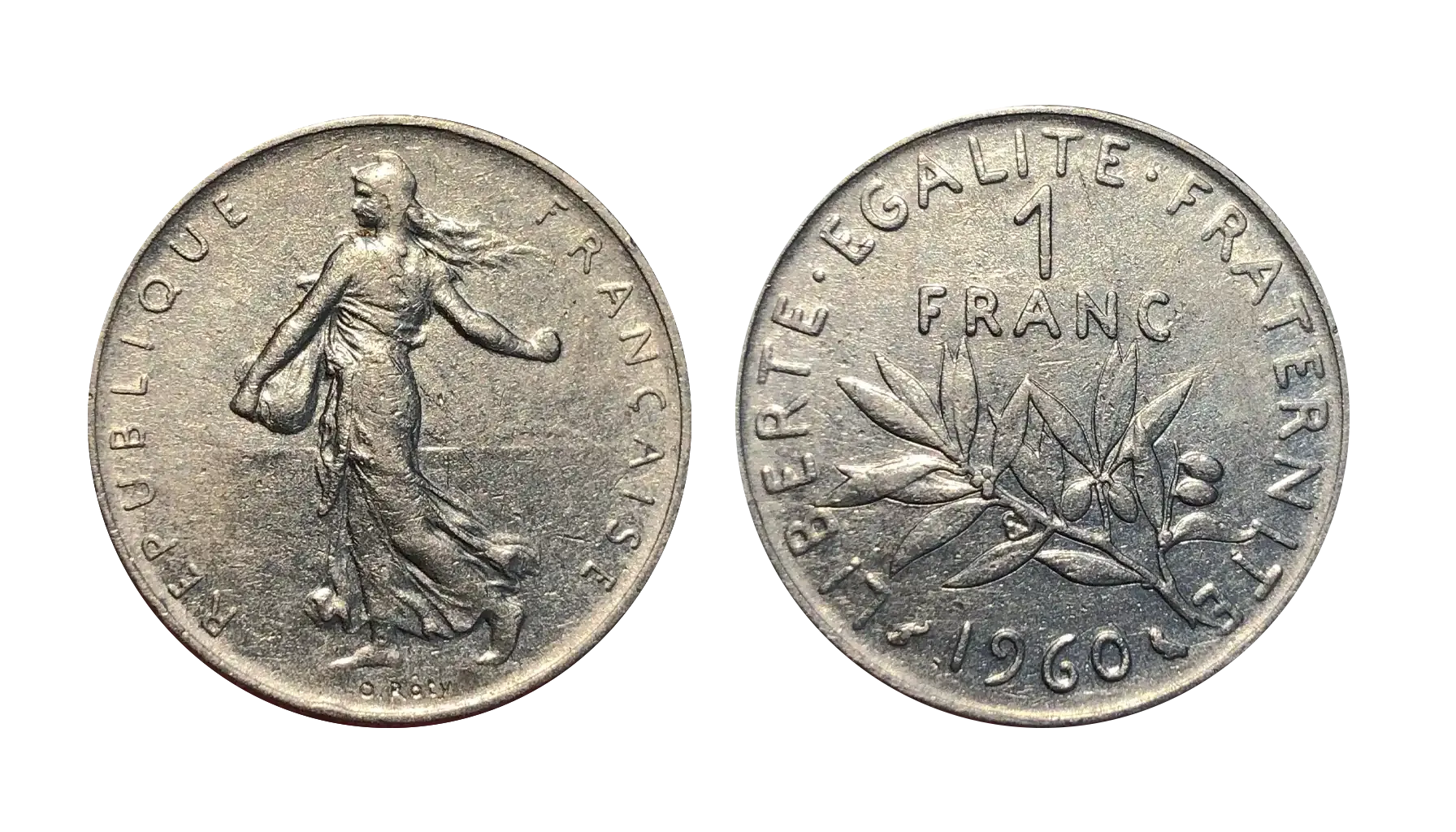
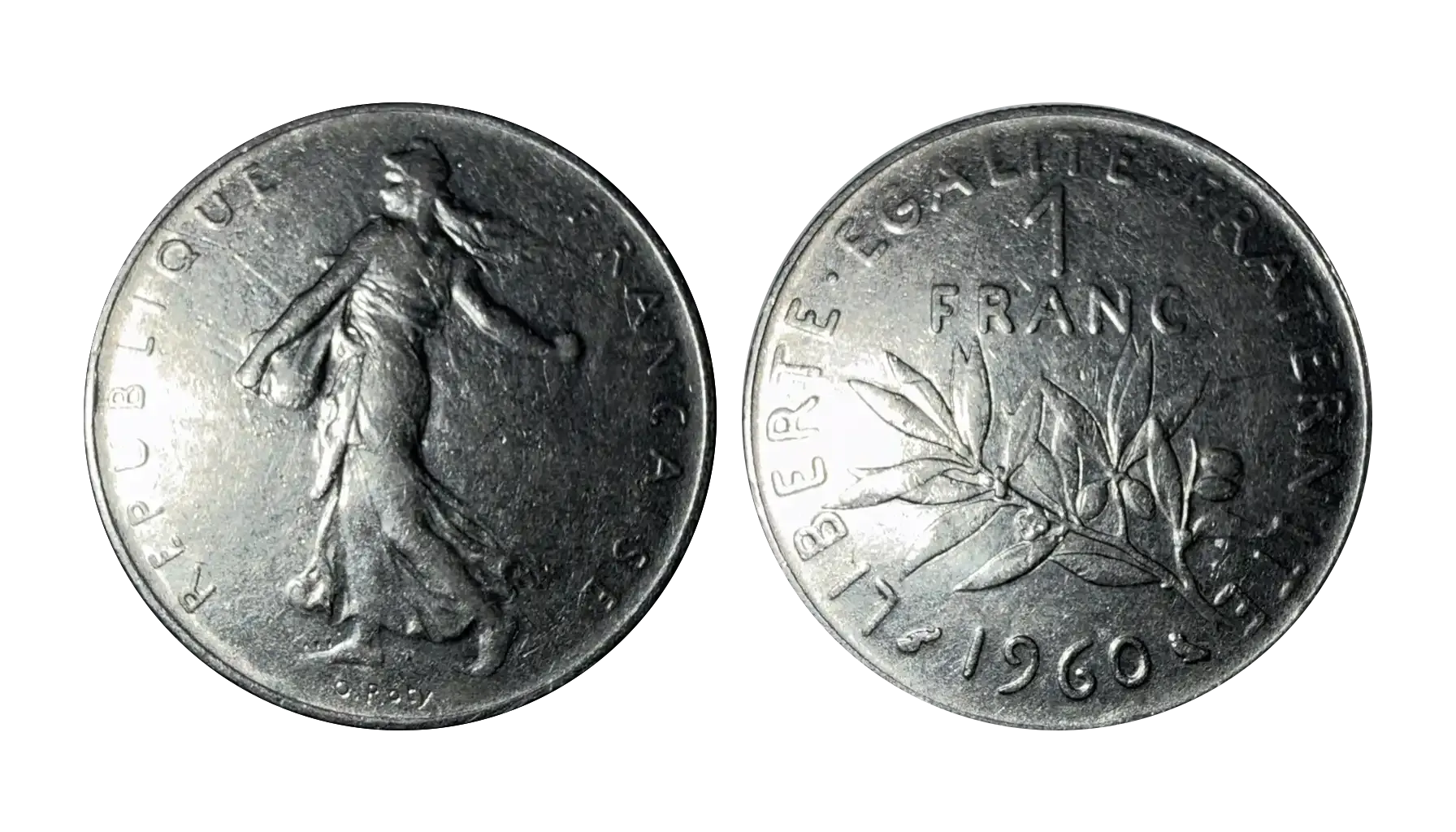
The item features one of the most iconic images in numismatics – The Sower.
Obverse
A woman sowing seeds into the wind against a rising sun by Louis-Oscar Roty in 1897, and had previously appeared on items until 1920.
Reverse
An olive branch, the denomination, the year, and the national motto.
It was a deliberate move to evoke the stability and prestige of the 19th-century gold standard.
Is the 1960 1 Franc Coin Rare
Over 40 million specimens entered circulation across France and its territories; as a result, this substantial production ensures availability for most collectors today.
However, rarity manifests differently across preservation states. While common in worn grades, the franc is surprisingly elusive in mint state.
Circulation stripped most examples of their original luster within years of release. Silver’s relative softness meant daily pieces and routine handling rapidly softened crisp details.
"The reintroduction of the 'Sower' design in 1960 was a strategic choice to inspire confidence during the transition to the 'New Franc.'"
– Unnamed opinion piece “Historical Archives”
Monnaie de Paris
Valuable Item Details
Surviving uncirculated pieces exist but appear far less frequently than mintage totals suggest. France did not widely practice bank-wrapping or systematic preservation of modern coinage during this period.
Consequently, gem condition pieces represent a tiny fraction of the original production.
The die varieties add another dimension to discussions of scarcity. The 1960 issue lacks the dramatic doubled-die errors or repunched dates that excite American numismatists. Nevertheless, subtle variations in digit spacing and privy mark placement exist for dedicated attributors.
Proof strikes were not produced for public distribution during 1960. Unlike later decades when French mints marketed annual proof sets, the 1960 franc exists exclusively as a business strike intended for monetary use.
This absence of specially produced collector versions further constrains the availability of high-grade items.
1960 1 Franc Coin Value Today
As of 2026, the 1960 1 Franc item occupies a unique space in the market.
Condition | Value |
Circulated | $0.50–$10.00 |
Uncirculated | $5.00–$85.00 |
Mint State | $75.00–$200+ |
Proof Sets | $250+ |
Note: Look for other old French items; you'll be surprised by the price.
Factors That Affect 1 Franc Coin Value
Preservation Grade
It constitutes the dominant valuation component for francs. The gap between Extremely Fine and Mint State exceeds typical multiples seen in less condition-sensitive series.
Professional grading removes uncertainty, with NGC and PCGS holders commanding the highest confidence from buyers.
Strike Quality
It varies noticeably across this year's production. Some examples exhibit a complete definition of Marianne’s hair strands and the wheat ear details. Others show weakness in the central reverse portions.
Mint Errors
Error numismatists pursuing world coinage actively seek these anomalies, often paying $75–$150 for visibly dramatic examples.
Should You Keep or Sell a 1960 1 Franc Coin
It should be borne in mind that the demand for post-war copies is growing every year. Increasingly, novice and professional collectors are looking for these coins. Investors seeking to diversify their portfolios may accumulate large numbers of unsold items during periods of market weakness.
And yet, why is it better to keep these jewels in your collection?
Advantages for Collectors
Shipping to specialized French item auctions is the optimal strategy for selling jewelry. Record prices for the highest-quality products are regularly set at competitive auctions among specialists.
The item represents an accessible entry point into French collectibles and, at the same time, offers a wide range of rarities in excellent condition.

 Facebook
  X (Twitter)
  Pinterest
  LinkedIn