Contents:
The worth of the coin cannot be set on a whim: it is a clear reflection of multiple factors that contribute to the numismatic appeal of the piece. Mercury dimes by nature represent one of the most beautiful and, in a sense, gorgeous units of currency ever produced by the United States Mint. However, not every issue is equally valuable after all.
The 1938 edition can be placed somewhere in between: it was relatively far from the early days of the series, yet, at the same time, it had not reached the point of overabundance that could have characterized many dimes of later dates. The response it triggered was still noticeable, though. So, what is important to know about the 1938 silver dime? How much did it cost, and where to check coin value via a simple tap on the phone screen?
The 1938 Dime and the Mercury Dime Series
From the very beginning, the Mercury dime was perceived as a salvation of the American numismatic scene. Before it was released and even developed, it was the Barber coinage that had been in use since 1892. From the perspective of the 21st century, it was definitely a transitional period of experiments and a gradual turn to fresher designs.
The "classic" allure was mainly associated with the word "boring", and such a phenomenon prompted local authorities to release something new – an outstanding design that would withstand constant use and consequent wear. The result of this search was the 1916 introduction of the Mercury dime, officially known as the Winged Liberty Head dime.
After a carefully observed competition, the US Mint appealed to Adolph A. Weinman (an “outsource” artist), whose sketches were chosen for the dime, a half dollar, and the reverse of the quarter. As for 1938, i.e., the time of post-Great Depression recovery and the upcoming World War II, it was no longer an experiment but a relatively mature coin that lacked the extreme rarity and novelty of the earliest dates, but was still iconic and rather popular.
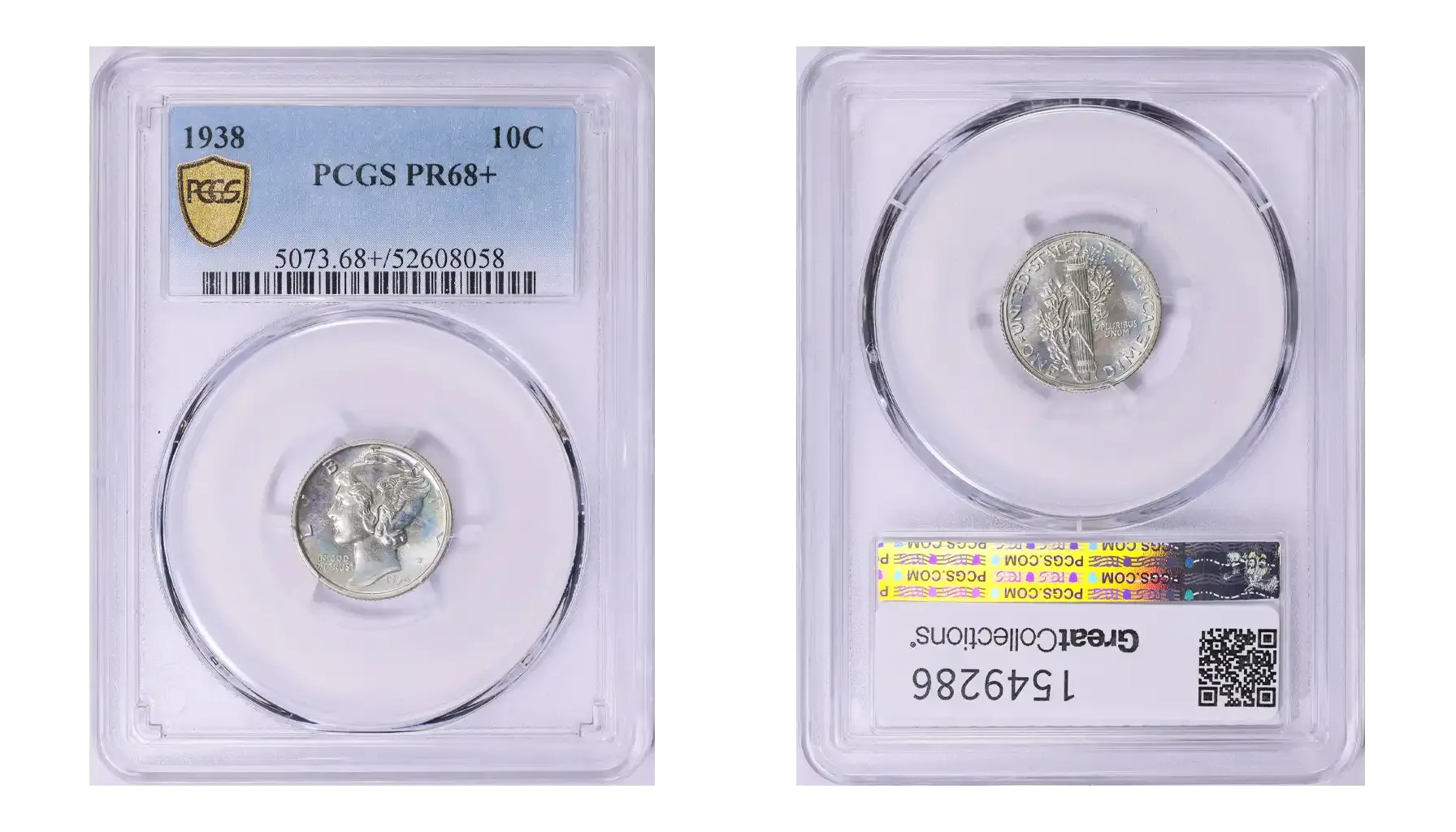
1938 Liberty Dime Silver Content and Specs
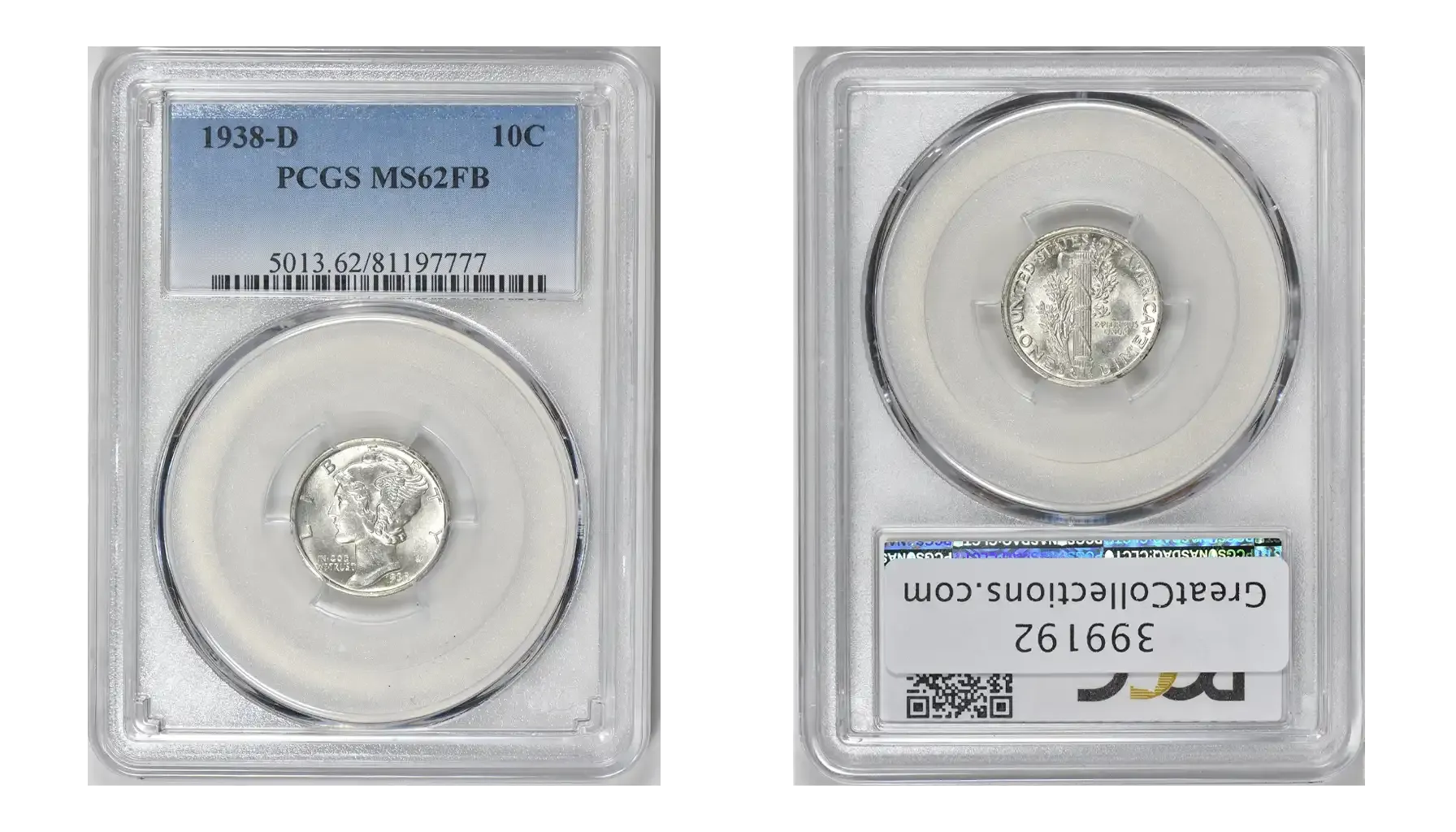
Obverse: Depicted a portrait of Liberty wearing a winged Phrygian cap, which contributed to her being associated with the Roman god Mercury, as well as the inscriptions “LIBERTY” along the upper rim, “IN GOD WE TRUST” to the left of the profile, the initials of the designer “AW”, and the year of mintage “1938” below her neck.
Reverse: Demonstrates a bundle of wooden rods bound together with an axe blade and an olive branch wrapped around, as well as the inscriptions “UNITED STATES OF AMERICA” along the upper rim, the denomination “ONE DIME” near the bottom, “E PLURIBUS UNUM” placed to the right of the fasces, and the mint mark (if present) between the “6 o'clock” and “7 o'clock” positions.
The Main Features and Specifications | |
Composition | 90% silver, 10% copper |
Silver content | ~0.07234 troy oz (2.25 g) |
Weight | 2.50 grams |
Diameter | 17.90 mm |
Thickness | ~1.35 mm |
Edge | Reeded |
Designer | Adolph A. Weinman |
Years of issue | 1916–1945 |
Mint marks | None for Philadelphia (regular + proof) “D” for Denver “S” for San Francisco |
Types by Mint Mark (Auction Records Included)
1938 10C
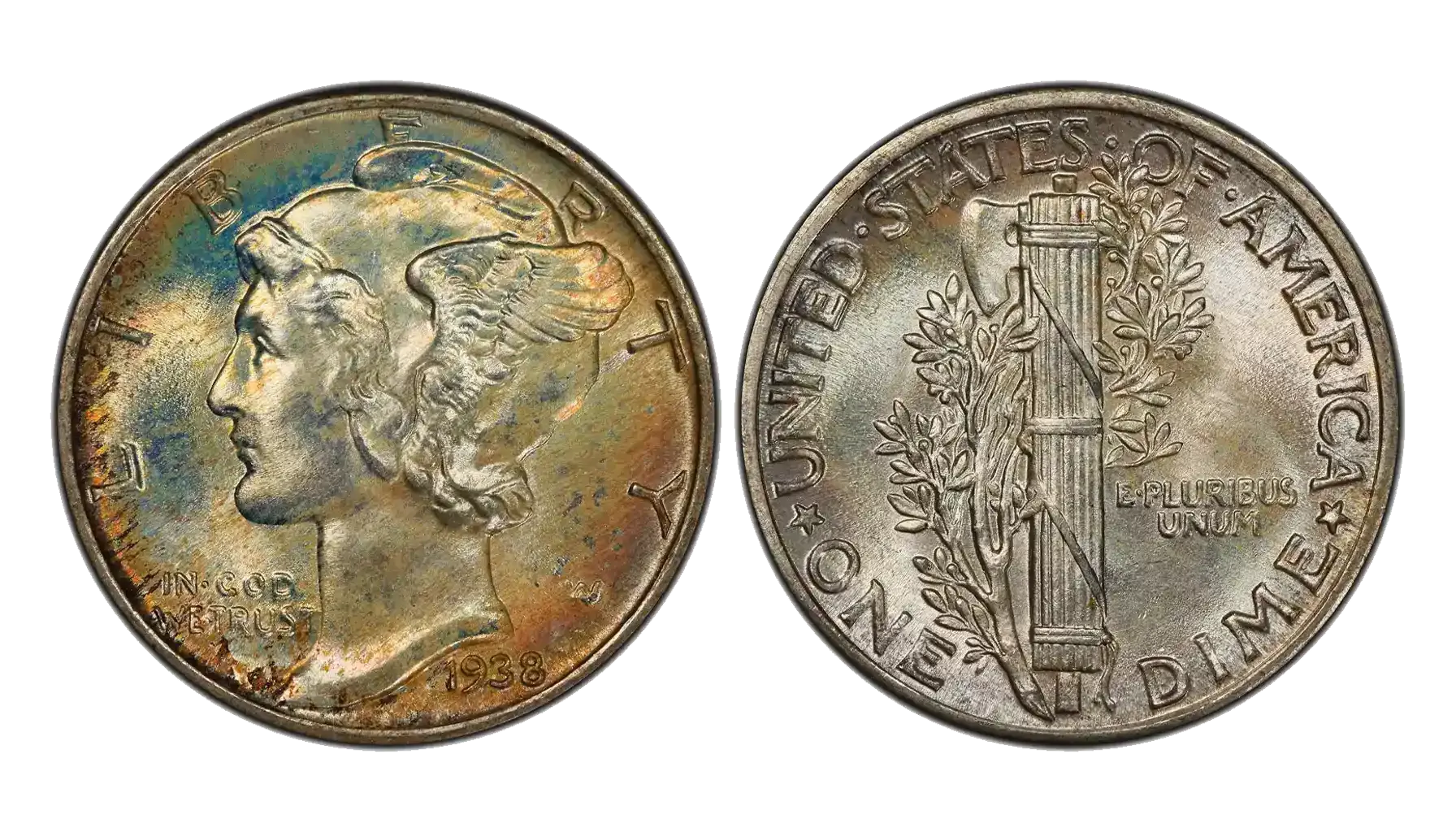
Produced by: Philadelphia Mint
Mintage: 22,190,000
Auction record: $14,375 for MS68
As a rule, the Philadelphia Mint issues are the most abundant, and this case proves it, too. Many examples of this type are found heavily circulated, thanks to the economic collapse of the Great Depression and the decisions to spend cash on something vital rather than preserving it instead.
1938-D 10C
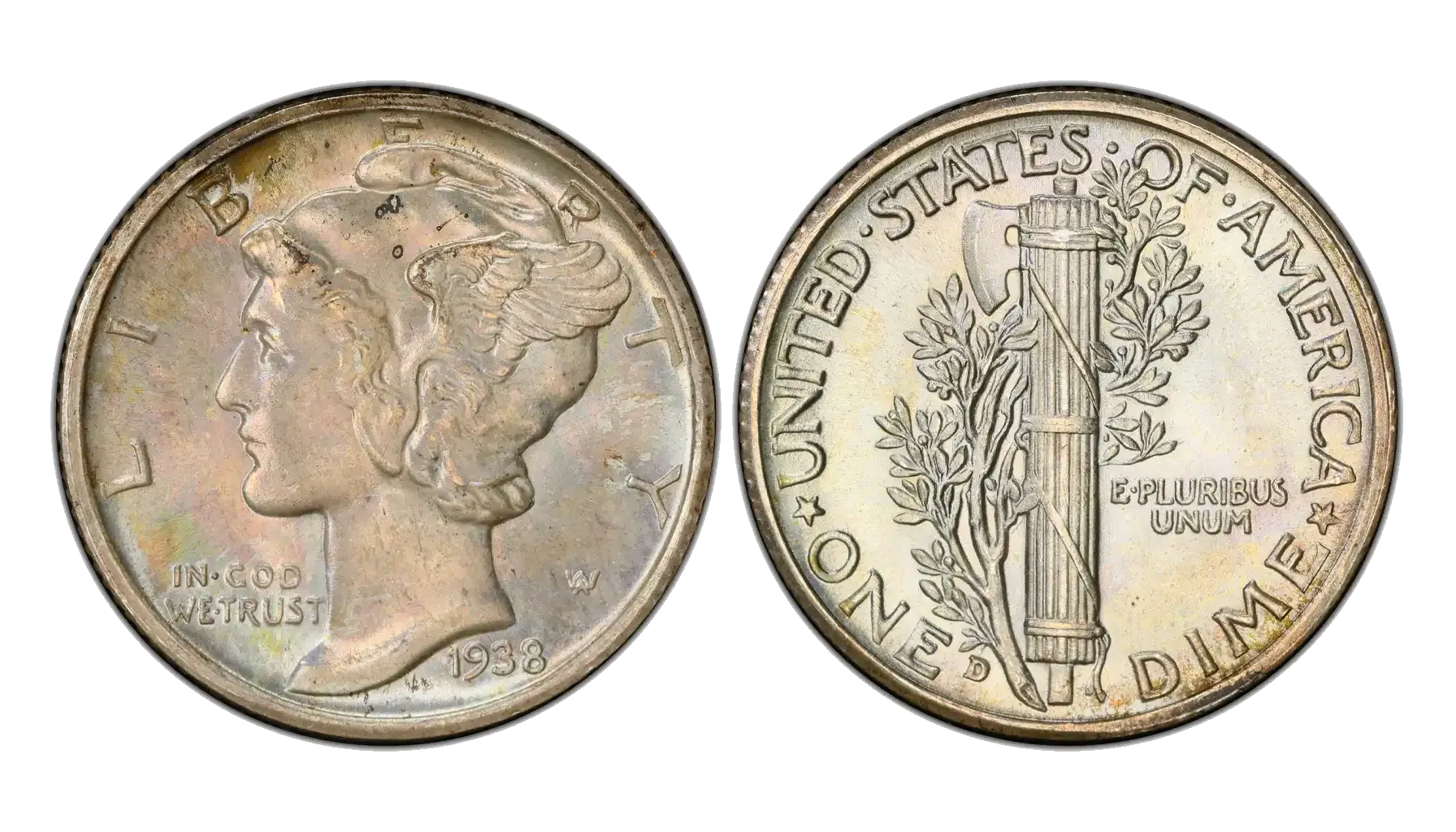
Produced by: Denver Mint
Mintage: 5,537,000
Auction record: $5,635 for MS68
The 1938 D Mercury dime value for a good reason is considerably higher than that of the Philadelphia Mint. According to numismatists, it is one of the scarcest circulation strikes of the year, and its mintage is significantly lower than most issues in the series. Nevertheless, circulated examples remain easy to obtain and affordable up through About Uncirculated grades.
1938-S 10C
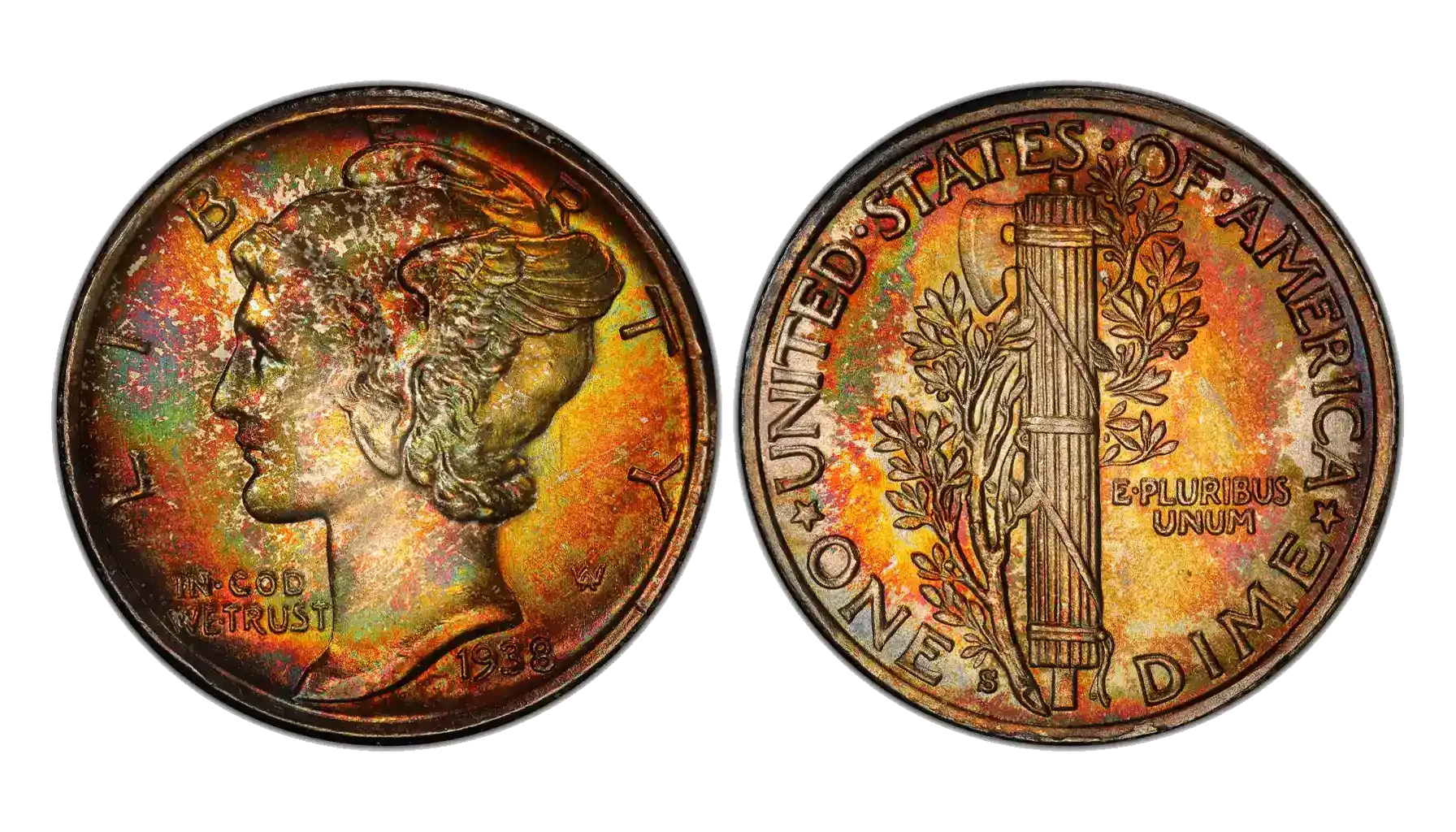
Produced by: San Francisco Mint
Mintage: 8,090,000
Auction record: $364,250 for MS68+FB
The San Francisco issue is widely regarded as a modest variety, but the exceptional rarity at the highest grades makes the 1938 S Mercury dime value grow stronger year by year. This is true since many 1938 S dime pieces entered circulation during economically challenging times, yet a small number survived in superb condition after all.
1938 10C (Proof)
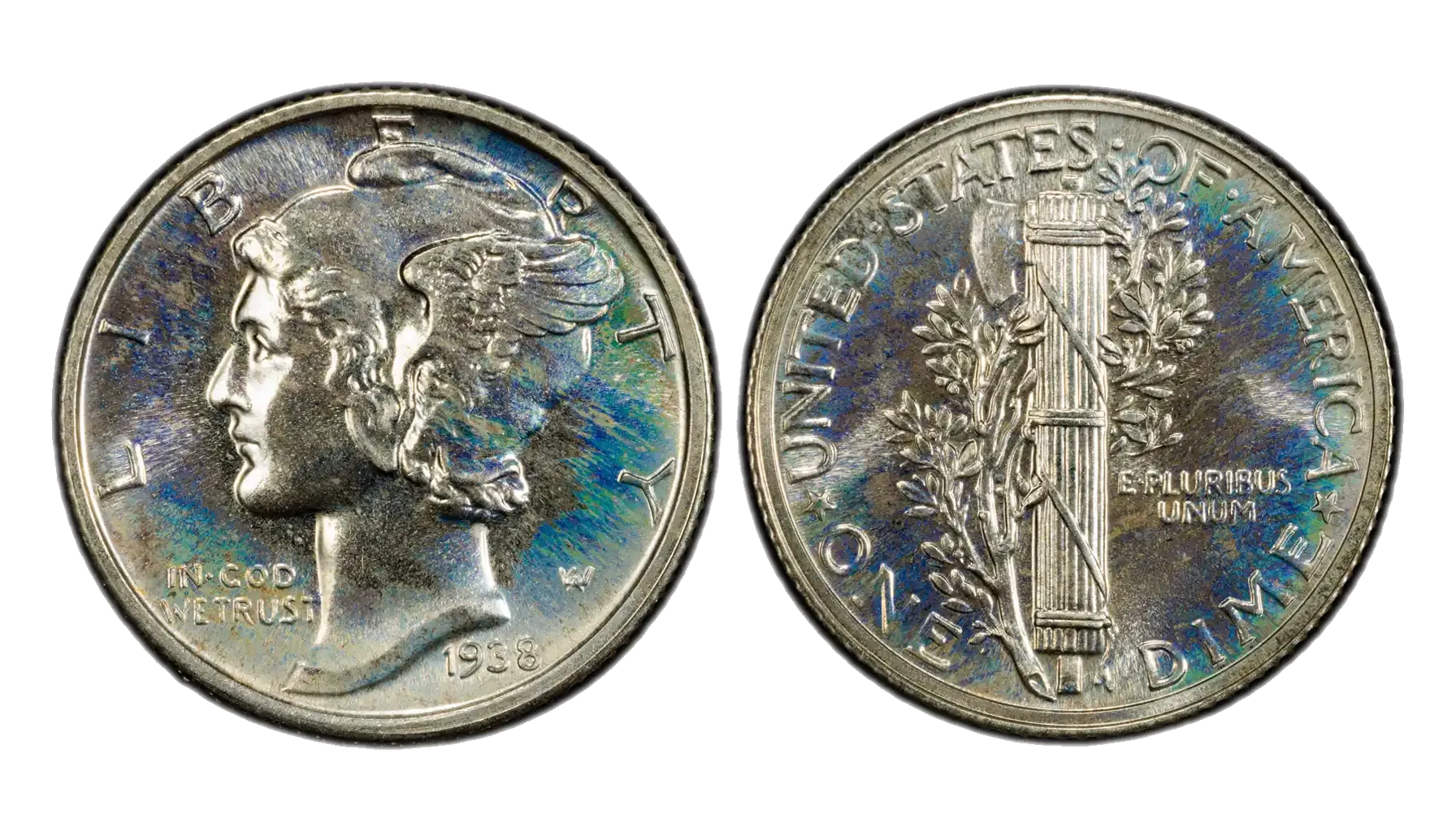
Produced by: Philadelphia Mint
Mintage: 8,728
Auction record: $32,200 for PR68
Finally, here comes the proof edition, released by the Philadelphia Mint (though proofs are usually associated with the San Francisco Mint in fact). From the collector's perspective, it is quite an interesting piece: while the coin was actually well-preserved from the start, its very limited quantity and the low "survival rates" turn it into a fine representative of the Mercury dime design for the year.
How Much Is a 1938 Dime Worth?
“…The center horizontal crossband binding the sticks of the fasces on the reverse of the Mercury dime is actually two separate bands. In an effort to prolong die life, mint workers would sometimes slightly increase the spacing between the dies, which resulted in the failure of these center bands to completely strike up…”
— The CRC editorial team, Stack’s Bowers Galleries
The official website of the Stack’s Bowers Galleries
As we have mentioned above, prices for coins are not set on the market (well, they can be, when coins are distributed right from the mint). The 1938 Liberty dime value, on its part, is generally dependent on its grade, which means how much wear the coin has sustained since its release.
Most 1938 dimes indeed circulated during the final years of the Great Depression, and many examples show severe wear afterwards. The better the condition, the higher the price. But here is one more important aspect: the Full Bands designation (i.e., sharply defined fasces on the reverse) that also boosts the worth for good.
1938 Mercury Dime Value Today
Grade | 1938 (P) | 1938-D | 1938-S | 1938 Proof |
Good (G-4) | $2 – $4 | $3 – $6 | $3 – $7 | – |
Fine (F-12) | $4 – $7 | $6 – $10 | $6 – $12 | – |
Very Fine (VF-20) | $6 – $10 | $9 – $15 | $10 – $18 | – |
Extremely Fine (XF-40) | $8 – $14 | $14 – $22 | $15 – $25 | – |
About Uncirculated (AU-50) | $12 – $20 | $20 – $35 | $22 – $40 | – |
Mint State (MS-63) | $25 – $95 | $30 – $65 | $30 – $60 | $155 – $225 |
Mint State (MS-65) | $130 – $145 | $120 – $140 | $225 – $250 | $325 – $375 |
Top Grades (MS/PR-67+) | up to $12,500 | up to $11,000 | up to $6,000 | up to $50,000 |
Nevertheless, prices may change daily. For more accurate results, please consult reputable resources like PCGS, NGC, or Coin ID Scanner. They offer precise estimates, based on ongoing auction sessions and market trends.
Mercury dimes are fun to explore. Do not stick to the extremes – explore what is hidden in the depths of the series, too.

 Facebook
  X (Twitter)
  Pinterest
  LinkedIn