Contents:
- 1925 Mercury Dime Specifications
- Historical Context and Design
- 1925 Mercury Dime Value Chart
- Understanding Mint Marks: Where and How to Find Them
- How to Grade Your 1925 Mercury Dime
- 1925 Mercury Dime Varieties and Errors
- How to Authenticate a 1925 Silver Dime
- Selling Your 1925 Mercury Dime
- Frequently Asked Questions About the 1925 Liberty Dime
The 1925 Mercury dime is one of the most recognizable silver coins of the early 20th-century in the U.S. If you are looking for investment material or a bright addition to your collection, acknowledge yourself with the 1925 dime value and coin identifiers to assist you in evaluation.
1925 Mercury Dime Specifications
Authentication starts with understanding basic specifications to distinguish counterfeits from true rarities.
Specification | Value |
Composition | 90% Silver, 10% Copper |
Weight | 2.5 grams |
Diameter | 17.9 mm |
Edge | Reeded |
Melt Value | $2.33 (based on $32.15/oz silver) |
At current market prices (October, 2025), with silver trading at $32.15 per ounce, the melt value is approximately $2.33. It is a modest baseline, but collectors pay premiums for rarity, grade, and mint mark.
Historical Context and Design
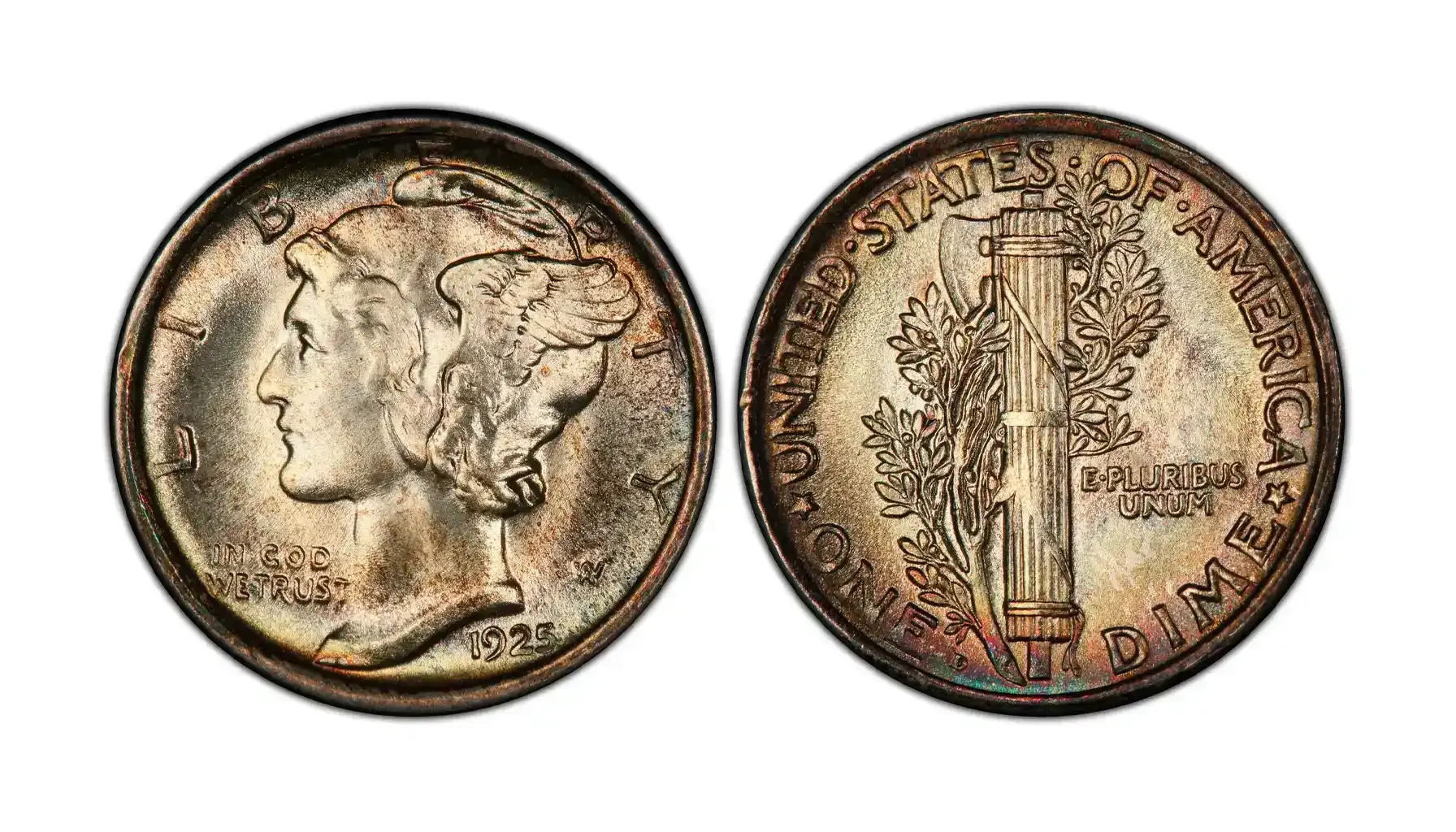
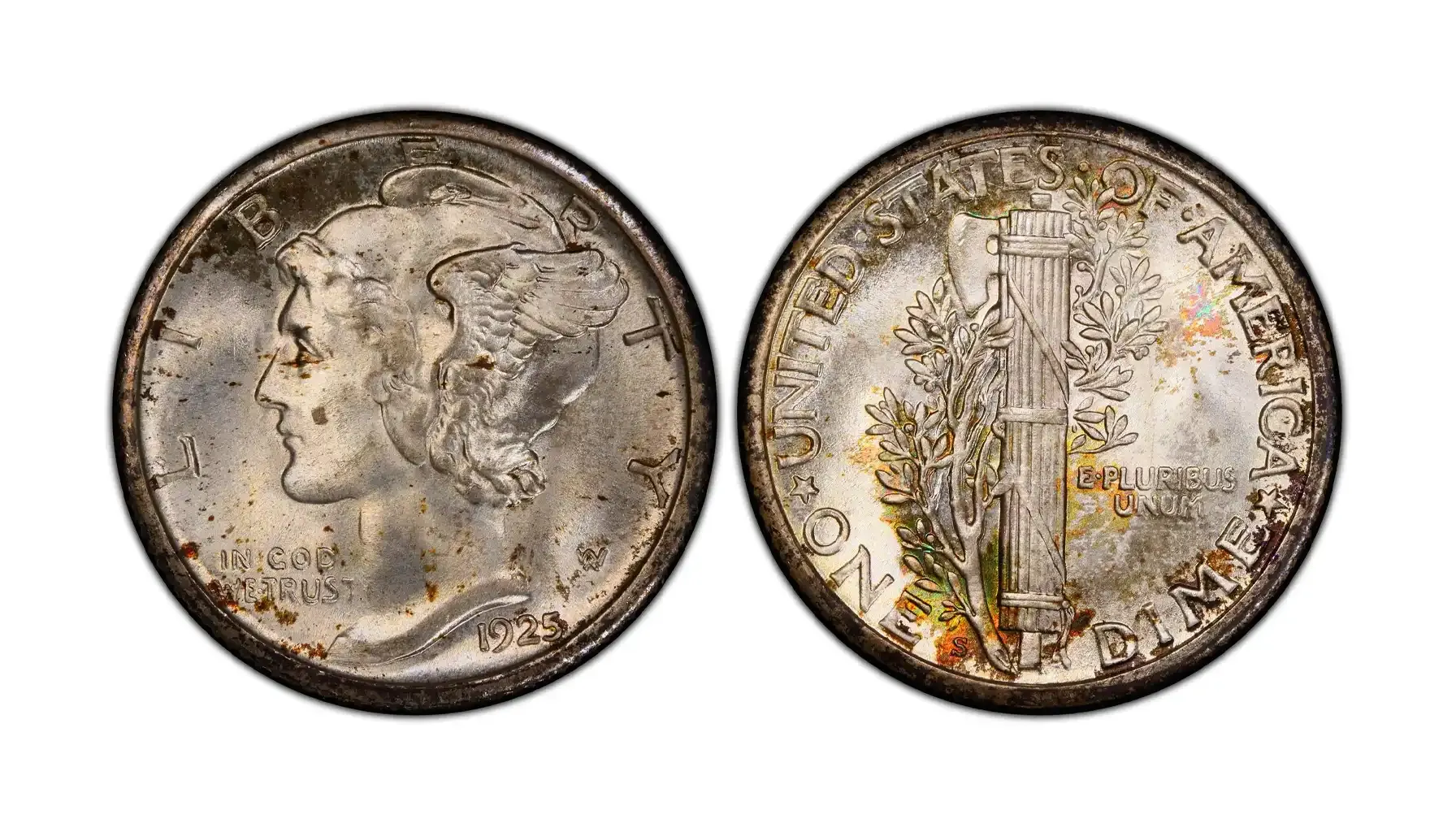
The Winged Liberty Head dime was firstly introduced in 1916 by the US Mint. The obverse features Liberty wearing a winged cap (it was frequently confused for the Roman god Mercury). The reverse depicts a fasces (a Roman emblem of strength) wrapped in olive branches, a patriotic symbol of unity and peace.
By 1925, America was well into the Roaring Twenties, and the Mercury dime was a common everyday currency, leading to heavy circulation wear. However, thanks to an elegant design by Adolph Weinman, many were kept safely just for their beauty.
1925 Mercury Dime Value Chart
How much a 1925 dime worth greatly depends on mint mark, grade, and the Full Bands presence — fully struck horizontal bands on the fasces. The retail prices now look the following way:
Mint | Good (G) | Fine (F) | Extremely Fine (EF) | Uncirculated (MS60) | MS65 | Full Bands (MS65+) |
1925 (P) | $3.50 | $6 | $11 | $32 | $300 | $1,000+ |
1925-D | $4.50 | $50 | $135 | $375 | $1,750 | $45,000+ |
1925-S | $4 | $25 | $85 | $275 | $1,250 | $20,000+ |
*Prices are actual for October, 2025, and might vary when time passes.
Understanding Mint Marks: Where and How to Find Them
Identifying mint marks correctly is the first step in determining value. It is located on the reverse side, to the right of the fasces, beside the “E” in “ONE.” Read the mark right:
No Mint Mark = Philadelphia Mint
D = Denver Mint
S = San Francisco Mint
Be careful: Many misattributions occur because weak strikes make the mint mark appear faint. A quick magnifying glass check can make the difference between a $5 coin and a $5,000 rarity.
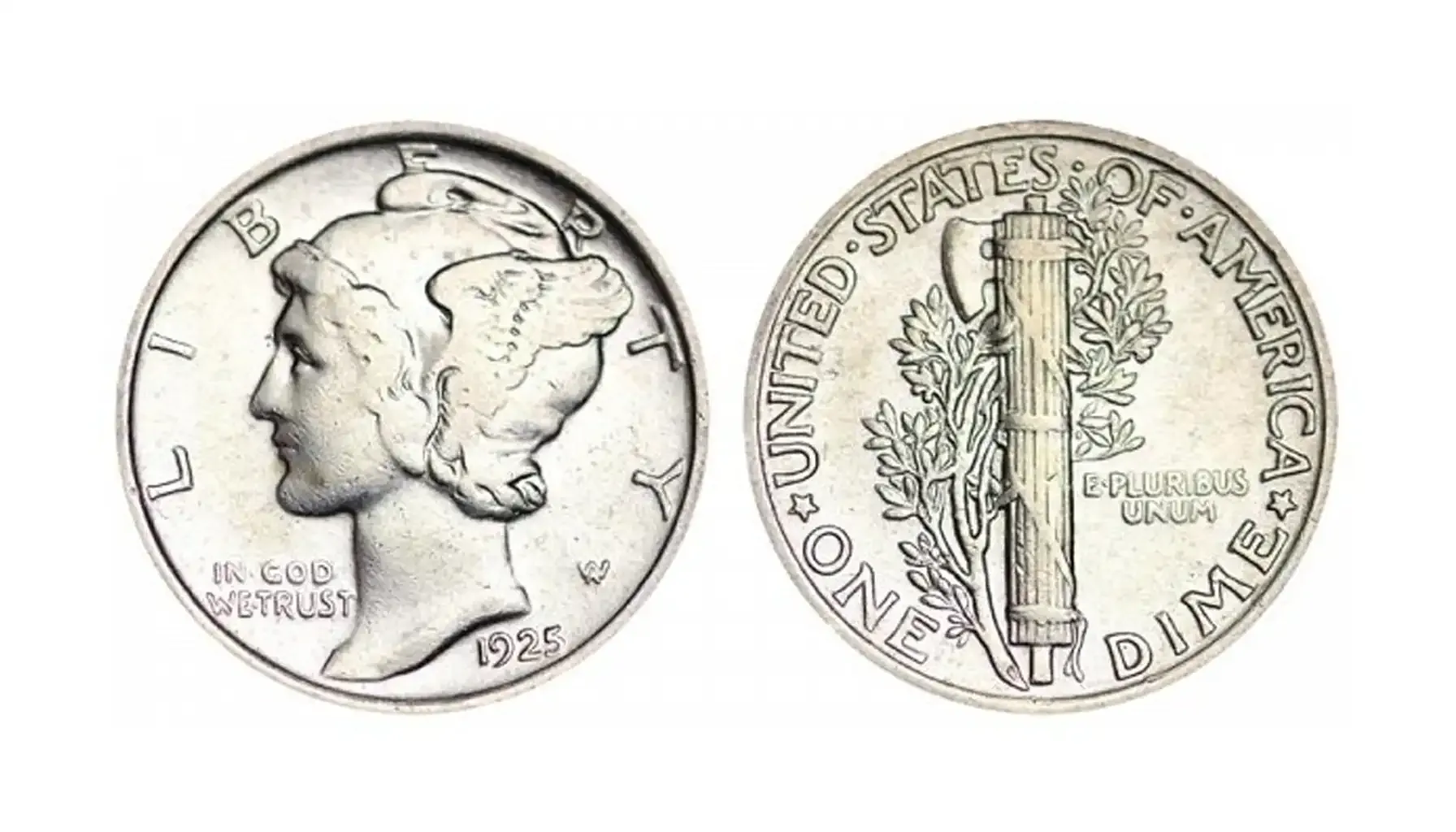
1925 No Mint Mark (Philadelphia) Dime Value
Philadelphia produced 25,610,000 Mercury dimes, making this version the most common. Typically these ones trade close to silver melt value in circulated grades but well-preserved ones command premiums.
Common value range: $3–$32
High-grade uncirculated: $300+
Full Bands examples: $1,000 or more
Pro Advice: Philadelphia strikes are known for slightly soft detail, especially in Liberty’s hair and the fasces bands. When assessing, focus on sharpness rather than toning or luster alone.
1925 D Mercury Dime Value
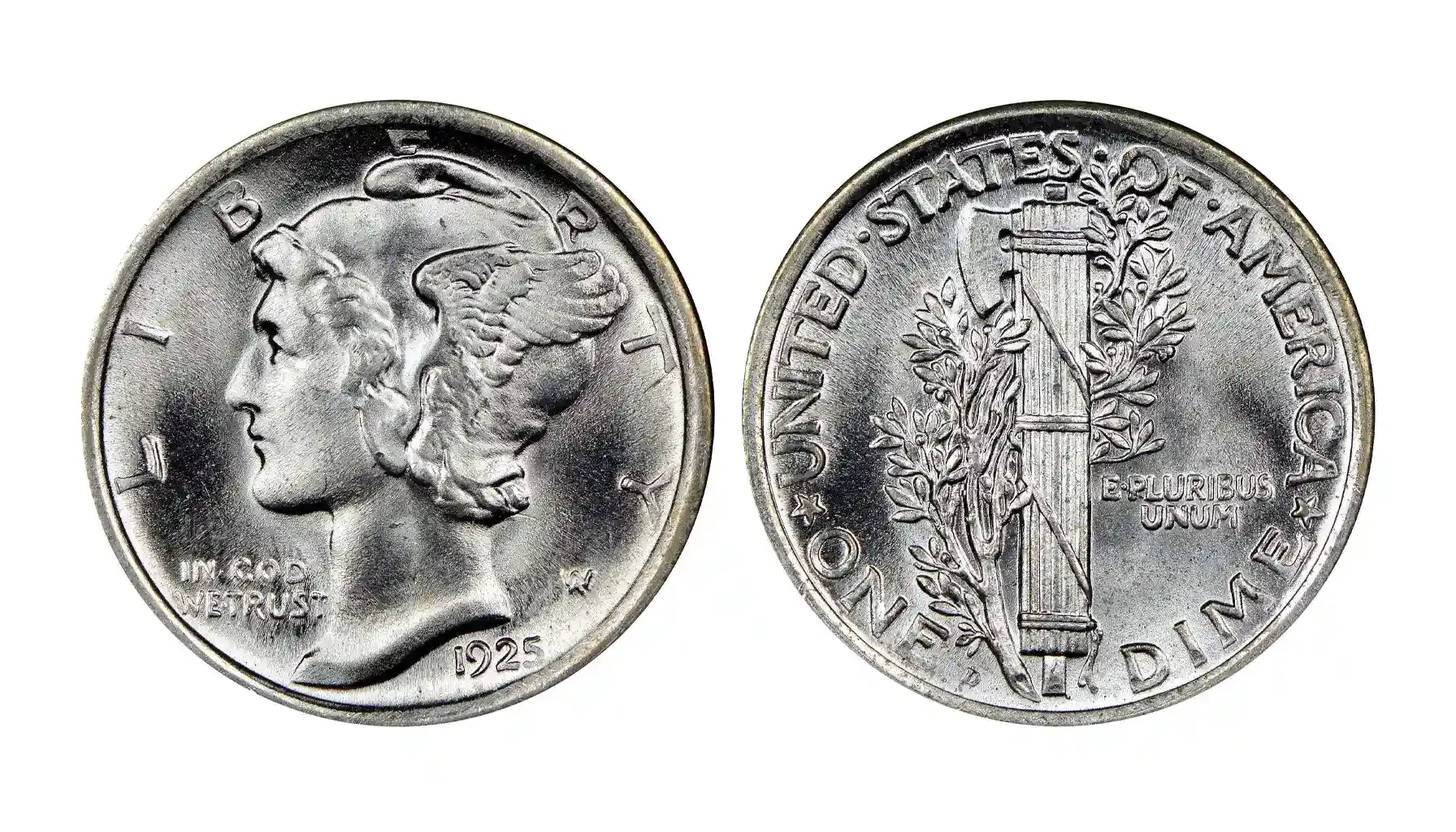
The Denver Mint produced only 5,117,000 coins, so the 1925-D is quite difficult to find. Strike quality was not that pleasing, and many coins show incomplete bands. It makes Full Bands examples exceptionally rare and desirable.
Circulated grades: $4.50–$135
Uncirculated (MS65): Around $1,750
Full Bands: Up to $45,000+
“1925 Mercury dimes minted in Denver are scarcer than Philadelphia issues, and their value reflects this scarcity. Strike quality varies, so Full Bands examples—where the horizontal bands on the fasces are fully separated—are especially prized by collectors and can fetch significant premiums.”
— Team of NGC Coin Explorer
From the article on the scarcity of 1925-D dimes
1925 S Mercury Dime Value
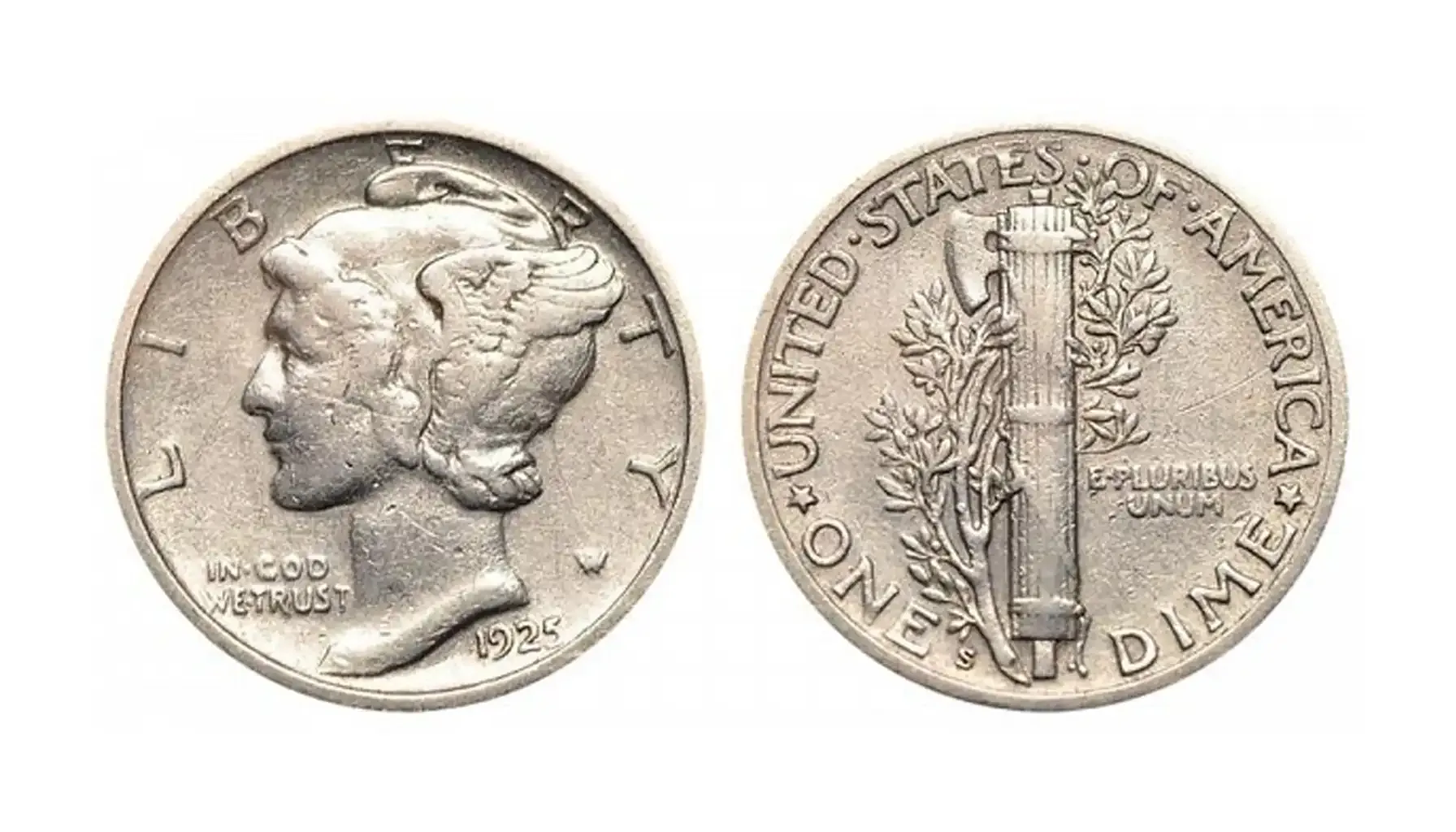
The San Francisco Mint produced 5,850,000 dimes, mostly proofs, but strike quality was often weak, particularly on the reverse bands. As a result, Full Bands 1925-S dimes are the rarest ones.
Circulated grades: $4–$85
Uncirculated: $275–$1,250
Full Bands: $20,000+
Even lightly circulated S-mint examples draw attention if they retain good detail and natural patina. Coins with original surfaces are preferred over polished ones.
How to Grade Your 1925 Mercury Dime
Grading is the most critical step in determining your 1925 Mercury dime’s true value. PCGS or NGC provide certification, but you should predict a price by yourself before submission.
Examine Liberty’s Cheek and Hairline — Heavy wear here usually drops a coin below Fine (F-12). Sharp details and smooth surfaces indicate higher grades.
Inspect the Wing Feathers — The wings above Liberty’s ear should have visible feather separation. Flattened wings signal circulation wear.
Check the Date and Rim — Blurred numbers or weak rims reduce grade.
Study the Reverse Fasces and Bands — Look closely at the horizontal bands in the center. Clear, fully separated lines qualify as Full Bands.
Use Angled Lighting and Magnification — Good lighting reveals luster, micro-scratches, and subtle flattening that the naked eye may miss.
Compare with Grading Reference Images — Use official grading charts or Coin ID Scanner’s assistance to visually match your coin’s condition to the correct grade range.
Key Features to Examine
To avoid confusion between wear and weak striking (a common issue in 1925 issues), focus on these areas:
Liberty’s cheek and hairline: the most exposed and wear-prone zones.
Wing feathers: sharp, layered feathers mean minimal handling.
Fasces and bands on the reverse: these small details often determine premium value.
Rim and field: full, undamaged rims with clean fields increase eye appeal and value.
When grading, tilt the coin gently under a light. Original mint luster reflects evenly compared to dull patches with signals of handling or cleaning.
Numerical Grading System Explanation
Coin collectors use the Sheldon Scale with a range from 1 to 70. Understand common grade levels to interpret price guides or certification labels like a pro.
G-4 (Good): Heavy wear, flat design, date and lettering still visible.
F-12 (Fine): Moderate wear, Liberty’s outline and wing visible.
VF-20 (Very Fine): Light wear, all major features distinct.
EF-40 (Extremely Fine): Minor wear on high points, clear details.
AU-50 (About Uncirculated): Slight friction only on highest spots; most mint luster intact.
MS-60 (Mint State): No wear, some minor contact marks from minting or handling.
MS-65 (Gem Uncirculated): Fully struck, sharp luster, minimal imperfections.
Numismatist’s note: Collectors typically find that most circulated Mercury dimes fall between F-12 and EF-40, while uncirculated pieces are rare and often graded MS-60 to MS-65.
The Full Bands Designation and Its Impact on Value
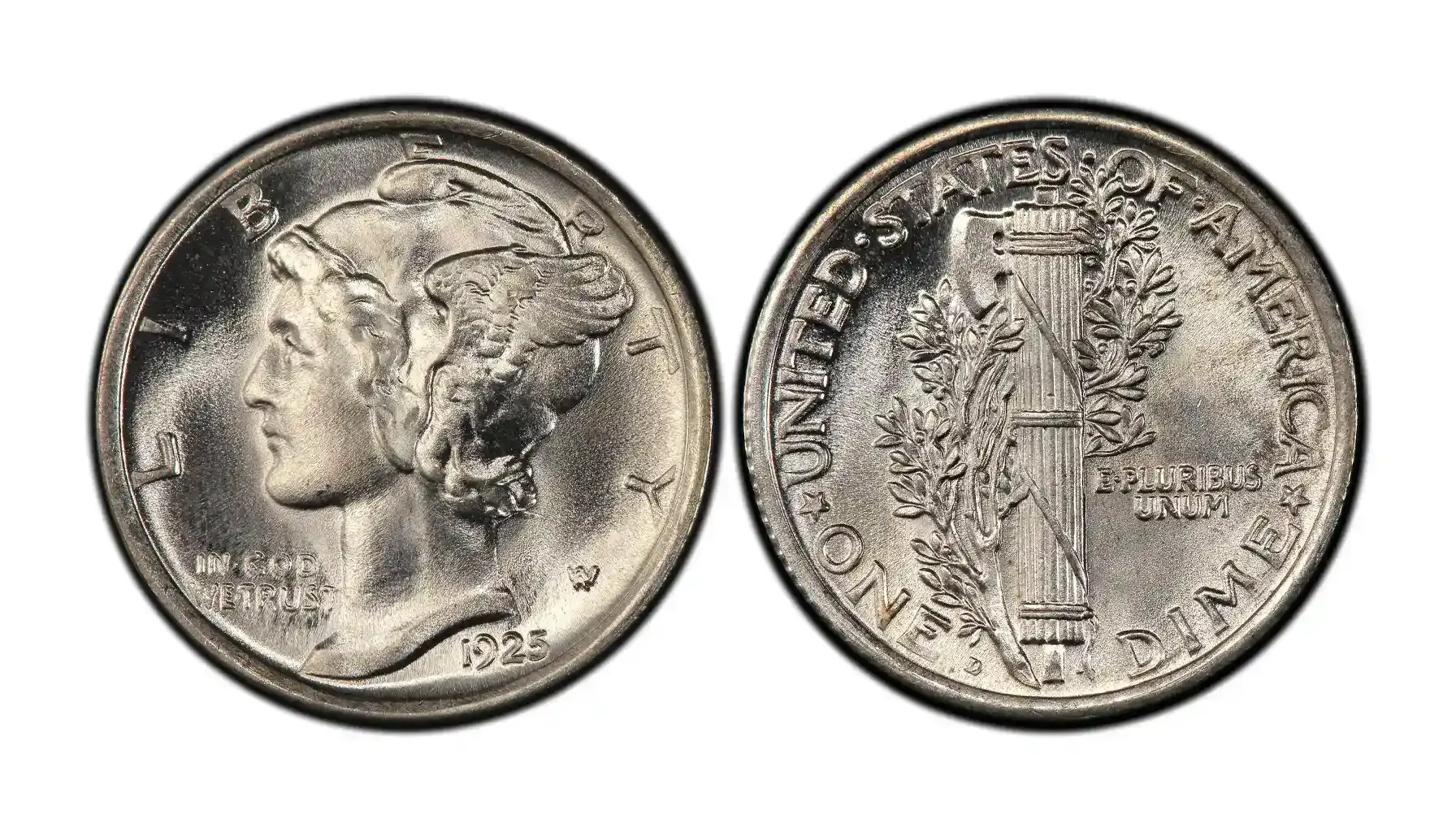
A 1925 Mercury dime graded Full Bands (FB) shows complete separation between the central horizontal bands on the reverse fasces. This designation raises the price from hundreds to thousands.
Full Bands prove a strong, well-executed strike from fresh dies. These examples are scarce, particularly for the Denver and San Francisco mints, and sell for five to ten times the value of non-FB coins.
Grading tip: Use magnification and angled light to confirm band separation—cleaned or worn coins often mimic band definition but lack the crispness of true Full Bands strikes.
1925 Mercury Dime Varieties and Errors
1925 does not feature major doubled dies like other years but shows a few interesting mint errors. They raise the price just as Full Bands do.
Known Error Types on 1925 Mercury Dimes
Broad-struck coins: rim expansion caused by loose collar dies; wider than normal appearance.
Lamination errors: peeling or cracks from metal impurities; adds texture to the surface.
Off-center strikes: part of design missing; collectible for visual appeal.
Die cracks or cuds: raised lines or blobs of metal from damaged dies.
Each of these varieties can increase value from $50 to several hundred dollars, depending on visibility and condition.
How to Authenticate a 1925 Silver Dime
Before paying for pro grading, start with practical checks used by experienced collectors:
Magnet Test – Real silver is non-magnetic. If your coin sticks to a magnet, it’s likely counterfeit or plated.
Weight Test – Authentic dimes should weigh exactly 2.5 grams. Variations beyond ±0.1 g indicate forgery or damage.
Edge Inspection – A 1925 silver dime should show no copper stripe (unlike modern clad coins).
“Ping Test” – Tap the coin gently on a hard surface; genuine silver rings with a clear, high tone.
Visual Detail Check – Counterfeits often show fuzzy lettering, irregular rims, or poor strike alignment.
Advanced verification includes specific gravity tests or XRF scanning, but these are best done by professionals.
Testing for Silver Authenticity
There are some non-destructive ways to confirm your dime’s silver purity in home conditions:
Ping Test: Tap the edge and listen for a bright, sustained ring.
Ice Test: Place an ice cube on the coin to see how real silver conducts heat rapidly, melting ice faster than clad coins.
Density or Gravity Test: Weigh the coin and measure its water displacement to calculate density (should match silver’s 10.49 g/cm³).
For collectors verifying multiple coins, investing in a portable XRF tester or using a coin authentication app like Coin ID Scanner simplifies the process.
Selling Your 1925 Mercury Dime
The best selling option depends on your coin’s rarity and grade. Define your goal firstly before choosing a reselling option.
Selling Option | Pros | Cons | Best For |
Local Coin Shop | Immediate payment | Lower offers | Common coins |
Online Platforms (eBay, Etsy) | Large audience | Fees, scams | Mid-tier coins |
Specialty Auctions (Heritage, Stack’s Bowers) | Highest prices | Longer process, grading required | Rare or certified coins |
Resell smartly: Before listing, photograph both sides under neutral light, provide grade details, and include proof of certification if available. Coins with verified grading certificates often sell 30–50% higher than raw examples.
Frequently Asked Questions About the 1925 Liberty Dime
What is the melt value of a 1925 Mercury dime?
About $2.33, based on silver priced at $32.15 per ounce.
Should I clean my dime before selling?
Never. Cleaning removes surface metal and reduces collectible value.
How do I store Mercury dimes safely?
Use acid-free holders or airtight capsules in a cool, dry place. Avoid PVC or paper envelopes.
Which 1925 dimes are the most valuable?
The 1925-D Full Bands and 1925-S Full Bands are top rarities, with auction results exceeding $20,000–$45,000.
How can I confirm if my dime is genuine silver?
Use non-invasive tests (magnet, weight, edge, and sound) or scan with Coin ID Scanner for quick digital verification.

 Facebook
  X (Twitter)
  Pinterest
  LinkedIn