Contents:
Mercury dimes cannot be considered the most popular or, at least, the most widely collected US coins among numismatists – but their age endured far longer than most. Those peculiar numismatic creations were first launched in 1916 as a fine, more innovative replacement of the Barber design.
Its path before the release was full of ups and downs – several iterations, artistic disagreements, and mint trials took place before the final image of Winged Liberty Head by Adolph Weinman was approved. And these attempts to create a beautiful coin should not be forgotten.
Many coins may vanish, but Mercury dimes should not – they store the potential to grow in value, both in cultural and purely materialistic ways. Certain rare Mercury dimes may be sold for thousands, if not hundreds of thousands of dollars. But how much are Mercury dimes worth, what are the key dates, and which features identify these coins as exquisite and unique?
The Main Characteristics of the Series
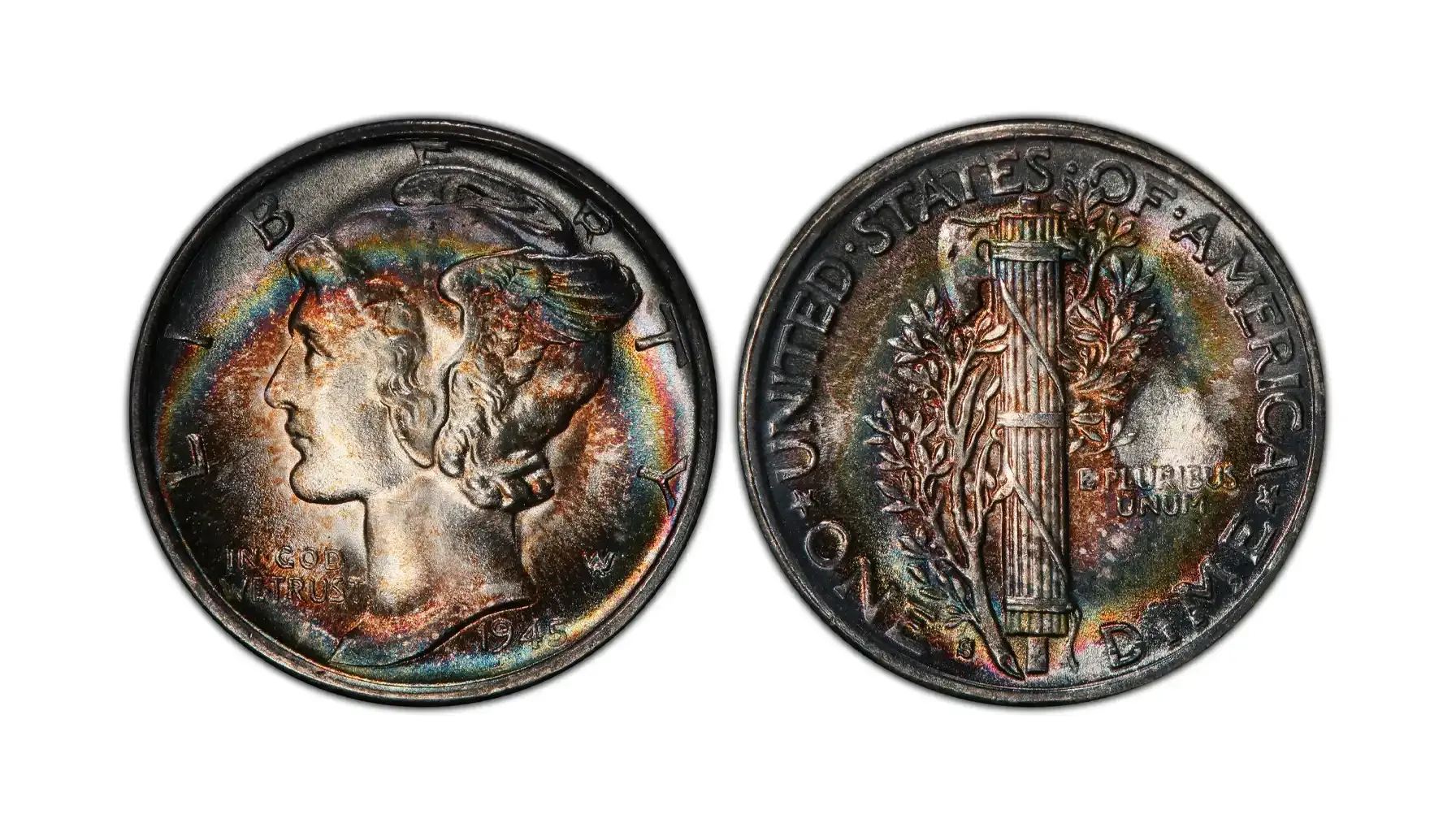
Obverse Design: The obverse features a youthful portrait of Liberty wearing a winged cap (not the Roman god Mercury, in fact), surrounded by the inscriptions “LIBERTY” arching around the upper rim, the motto “IN GOD WE TRUST” to the left of Liberty’s neck, the date at the lower right, and the Weinman’s monogram “AW” above the year.
Reverse Design: The reverse depicts a fasces (i.e., a bundle of rods bound by bands, with an olive branch wrapped around it), along with the inscriptions “UNITED STATES OF AMERICA” around the upper rim, “E PLURIBUS UNUM” to the right of the fasces, the denomination “ONE DIME” at the bottom, and a mint mark in between.
The Main Features of the Series | |
Designer | Adolph A. Weinman |
Years of Issue | 1916-1945 |
Composition | 90% silver, 10% copper |
Weight | 2.50 grams |
Diameter | 17.9 millimeters |
Thickness | 1.35 millimeters |
Edge | Reeded |
Mint Marks | “D” for Denver “S” for San Francisco None for Philadelphia |
Obverse Motto | LIBERTY, IN GOD WE TRUST |
Reverse Motto | UNITED STATES OF AMERICA, E PLURIBUS UNUM, ONE DIME |
The Birth of a Classic Design
The Mercury dime was born during a period of artistic renewal in American coinage. By the mid-1910s, the US Mint strived to replace Charles E. Barber’s long-running Liberty Head designs with more modern, symbolic imagery. After the process of intense selection, sculptor Adolph A. Weinman was commissioned to create a new ten-cent piece that was meant to capture the spirit of the nation of that time.
The first batch of the reimagined coins was launched in 1916, but their legacy circulated through World War I, the Roaring Twenties, and the Great Depression – some of the most important moments in US history. Nonetheless, the end of the series came in 1945, when there appeared the Roosevelt dime, issued to honor President Franklin D. Roosevelt.
It was quite poetic – the war ended, and so did an artistic chapter of American coinage. The symbols of the past were laid to rest, finding their peace as the nation began its recovery. Yet, we shall answer the question: Are Mercury dimes worth anything?
Mercury Dimes Worth Money: An Overview
Year | Mintage | Auction Record | Key Features |
1916-D 10C, FB | 264,000 | $207,000 | Lowest mintage, key date of the series |
1918-D 10C, FB | 22,674,800 | $182,125 | Denver issue, sharply struck Full Bands rarity |
1919-D 10C, FB | 9,939,000 | $156,000 | Early postwar issue, scarce Full Bands strike |
1921 10C, FB | 1,230,000 | $32,200 | Low mintage, postwar production rarity |
1925-S 10C, FB | 5,850,000 | $74,750 | Weak strike issue, highly desirable FB examples |
1926-S 10C, FB | 1,520,000 | $54,625 | Low mintage, weak strike San Francisco rarity |
1931-S 10C, FB | 1,800,000 | $270,250 | Depression-era rarity, exceptional luster in top grades |
1935-S 10C, FB | 15,840,000 | $90,000 | Later issue, limited Full Bands strikes |
1938-S 10C, FB | 8,090,000 | $364,250 | High-grade rarity, record-breaking auction example |
1942/1 10C, FB | 205,432,329 | $120,000 | Overdate error variety, a major collector favorite |
Note: FB (Full Band) refers to Mercury dimes with fully separated horizontal bands on the fasces on the reverse side, which serves as an indicator of a strong strike quality and high potential value.
1916-D 10C, FB
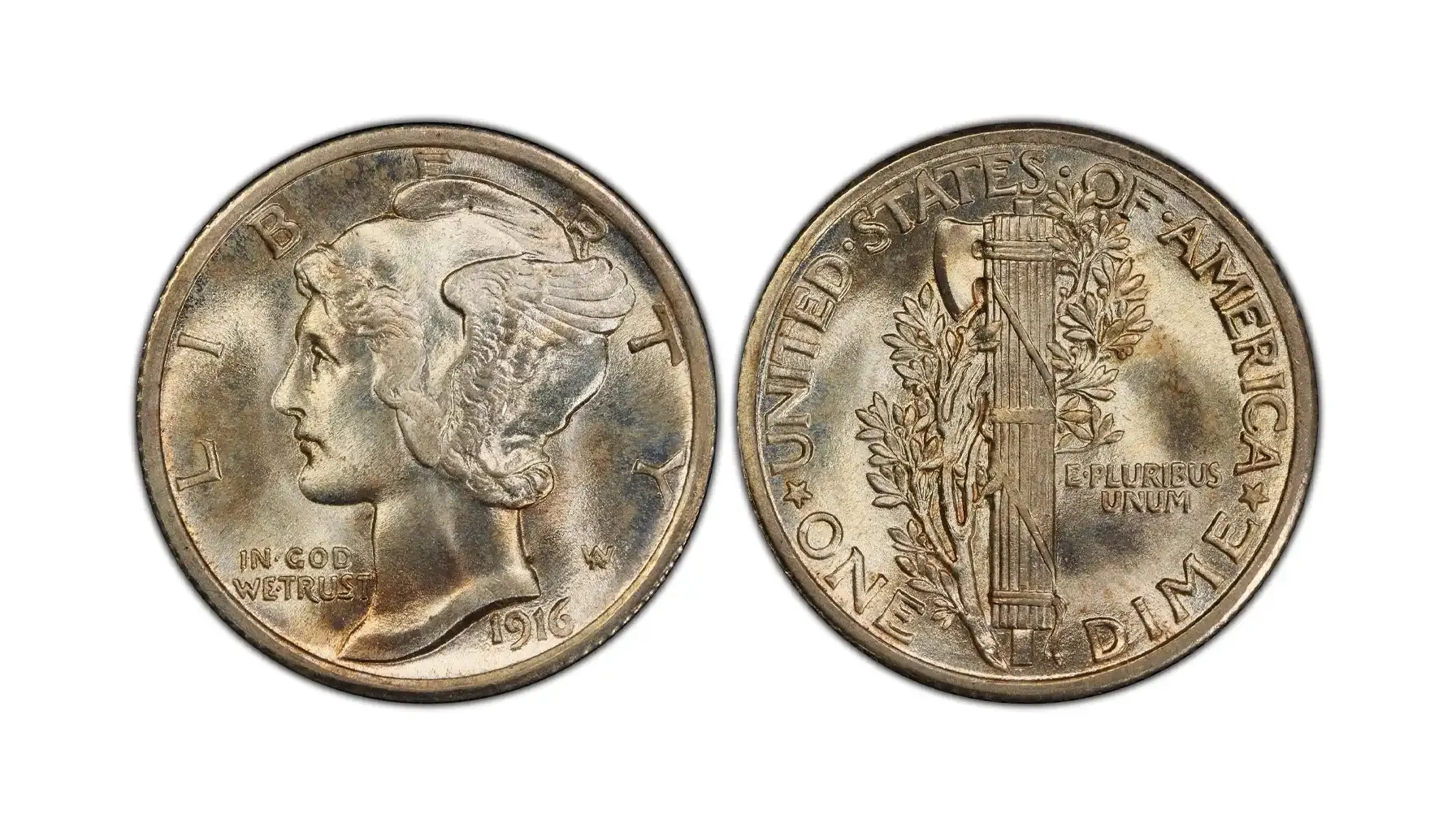
Mintage: 264,000
Composition: 90% silver, 10% copper
Type: Regular issue
Auction Record: $207,000 for MS67
Rarity Level: Extremely rare in all grades
Among the most prominent key date Mercury dimes is definitely the 1916-D issue, the first and the only Mercury dime for sale from Denver with such a low (actually, the lowest) mintage. It was a truly iconic creation, a breath of fresh air in the American coinage that could boast well-defined crossbands, though the luster is typically subdued, and many coins display natural toning.
According to David Hall, the 1916-D Mercury dime is one of the most frequently counterfeited pieces, often created by adding a false “D” mint mark to a 1916 Philadelphia issue. Nonetheless, a true instance may make your collection overly valuable anyway.
1918-D 10C, FB
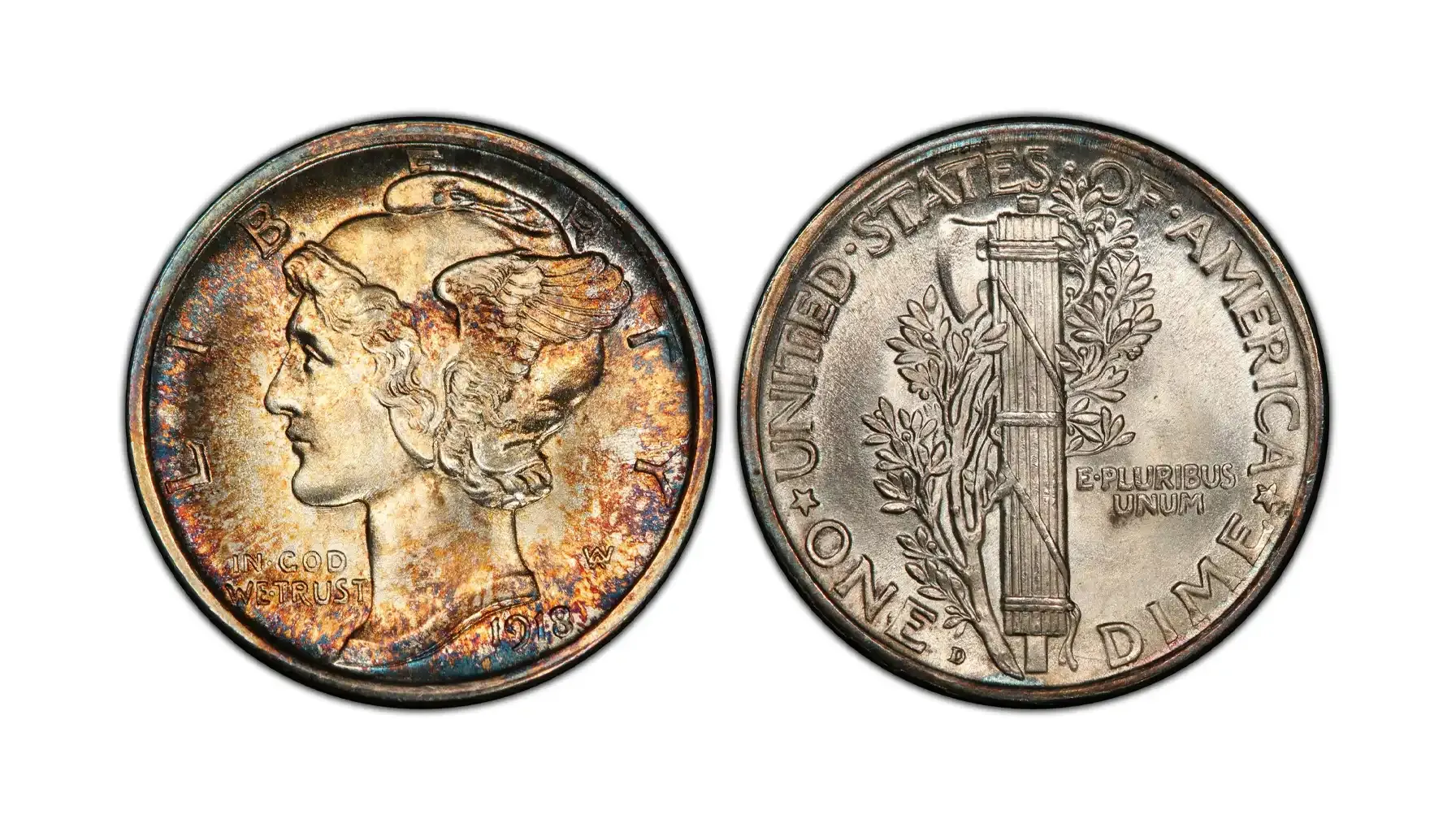
Mintage: 22,674,800
Composition: 90% silver, 10% copper
Type: Regular issue
Auction Record: $182,125 for MS67
Rarity Level: Scarce in mint state, rare with Full Bands
Sometimes, those creations that are closer to the inception of the program may be considered unique and exclusive because of their place and status. This is the case of the 1918-D dime. The mintage was relatively high, but the main part of the coins was weakly struck on the reverse, which made fully defined FB instances rare and exceptionally hard to find.
1919-D 10C, FB
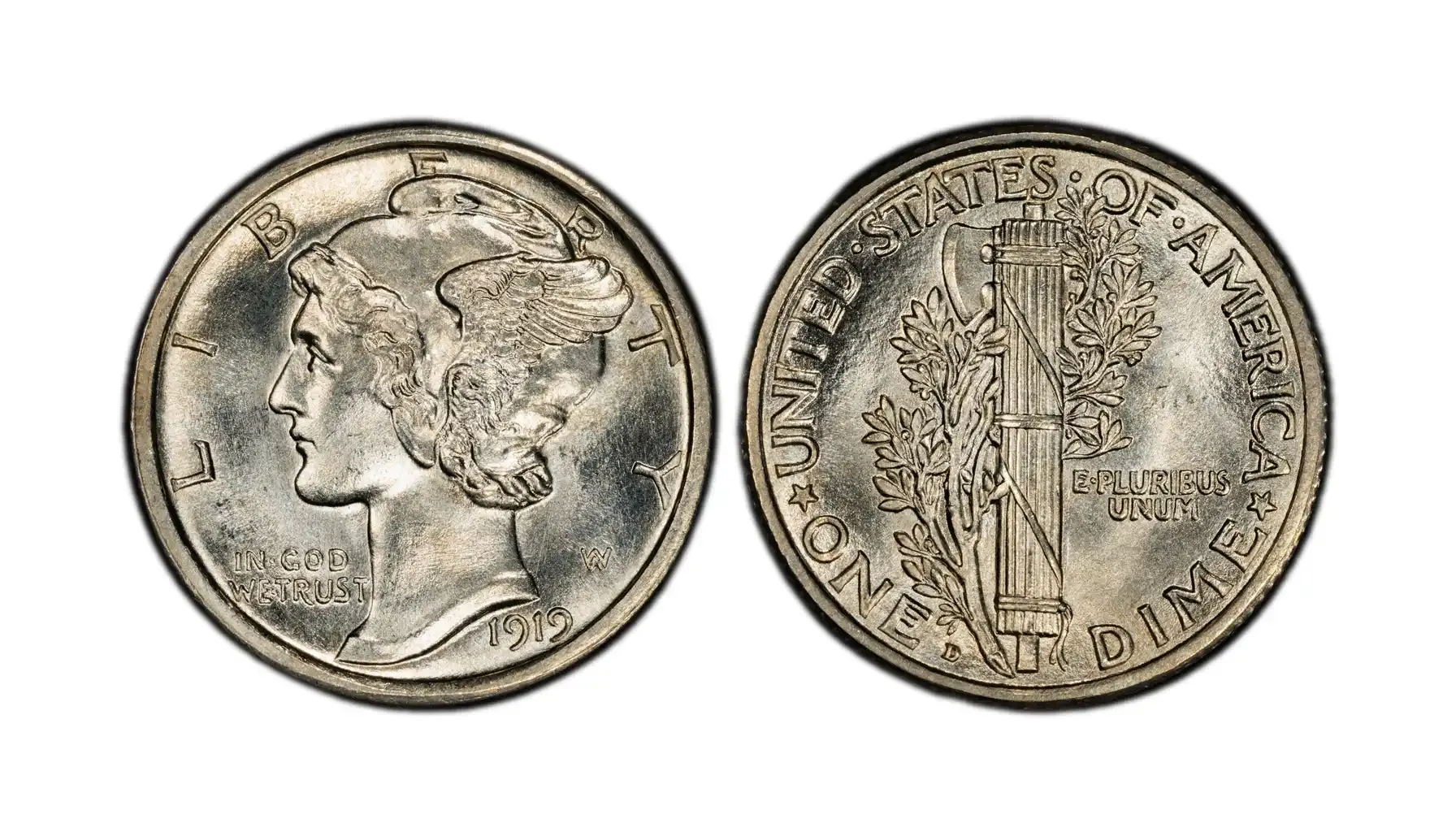
Mintage: 9,939,000
Composition: 90% silver, 10% copper
Type: Regular issue
Auction Record: $156,000 for MS66FB
Rarity Level: Rare in higher grades
During the times after World War I, countries all over the world were different: they strived to establish peace and perpetuate the moment in metals. The 1919-D variety was minted in low numbers when compared to other Denver issues. Although it is not really different from other regular types, well-struck examples are highly collectible, with the Mercury dimes value exceeding $100,000 in high grades.
1921 10C, FB
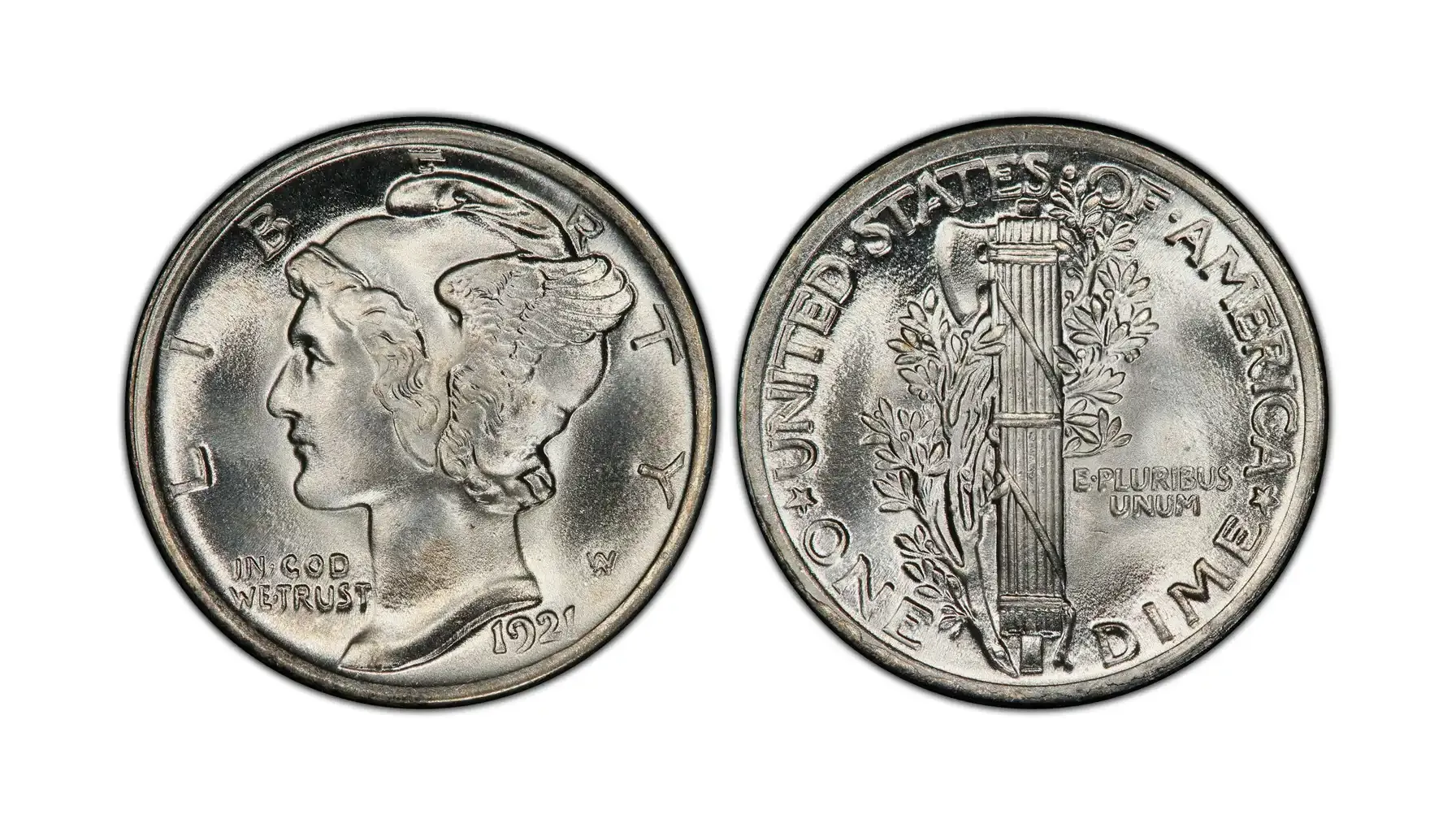
Mintage: 1,230,000
Composition: 90% silver, 10% copper
Type: Regular issue
Auction Record: $32,200
Rarity Level: Semi–key date, scarce in higher grades
As per Jaime Hernandez, an expert from PCGS, the 1921 10C is considered a semi-key date for Mercury dimes, which is characterized by limited production and deep historical context. The low mintage was the result of both weak demand for small change and the Mint’s focus on striking large quantities of Silver Dollars that year.
This led to a peculiar situation: only a few 1921 Mercury dimes were produced, and the more well-preserved they are today, the more influential they get, irrespective of their past.
1925-S 10C, FB
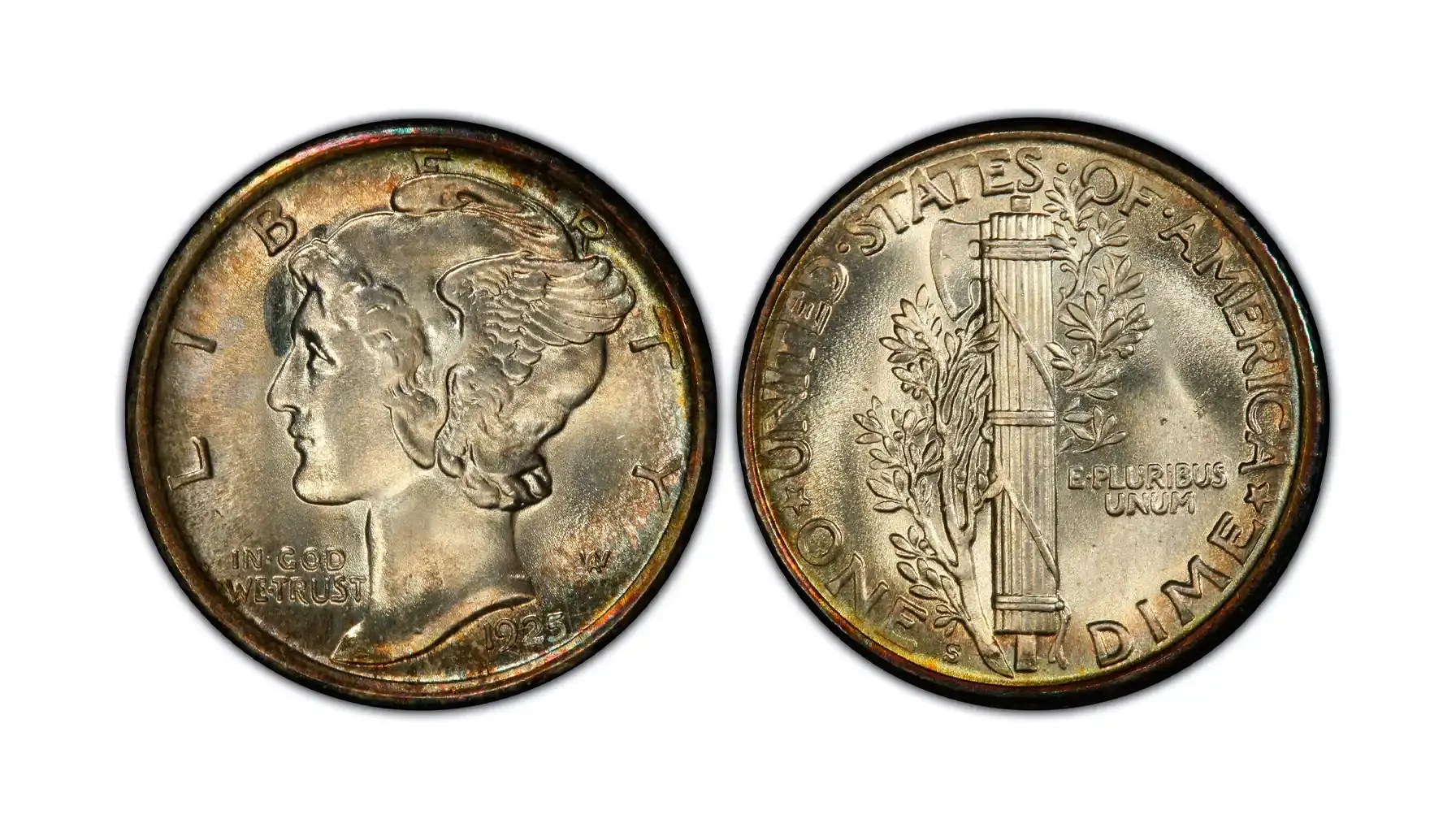
Mintage: 5,850,000
Composition: 90% silver, 10% copper
Type: Regular issue
Auction Record: $74,750 for MS67
Rarity Level: Scarce in mint state, rare with Full Bands
In 1925, the San Francisco Mint released a lot of weakly struck pieces, and this was a major problem that boosted the value of Mercury dimes from the very beginning. Should it be well-defined, with sharp detail, and strong luster, it is definitely a piece to be collected (especially when it features a Full Band designation).
1926-S 10C, FB
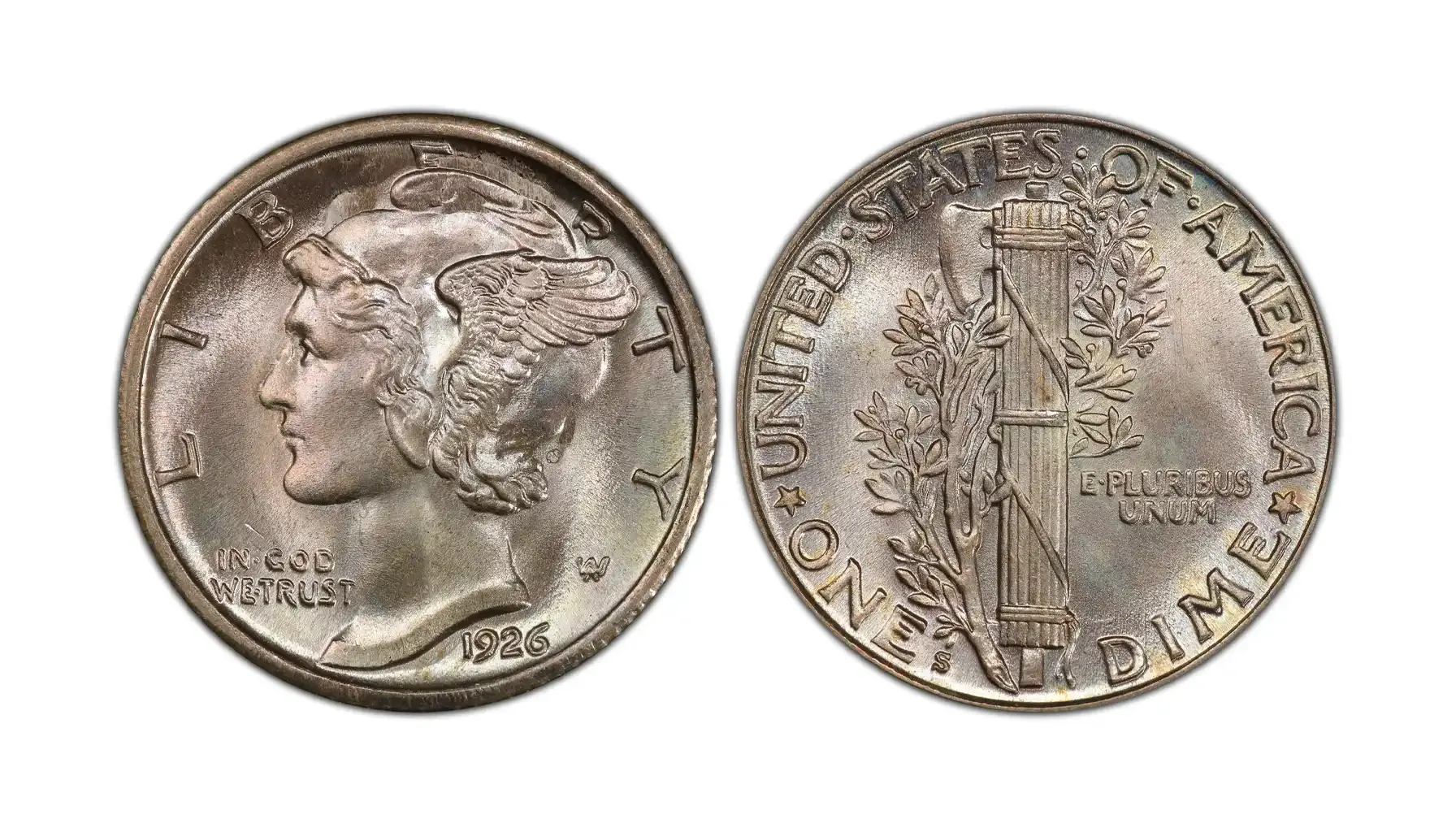
Mintage: 1,520,000
Composition: 90% silver, 10% copper
Type: Regular issue
Auction Record: $54,625
Rarity Level: Rare in mint state, extremely rare with Full Bands
When one strives to obtain one of the toughest numismatic creations to find well-struck, their focus should definitely be set on the Mercury dimes of 1926. Despite a relatively modest mintage, its poor production quality makes sharply defined Full Bands specimens exceedingly scarce (and turns an ordinary year into one of the Mercury dimes key dates, too).
1931-S 10C, FB
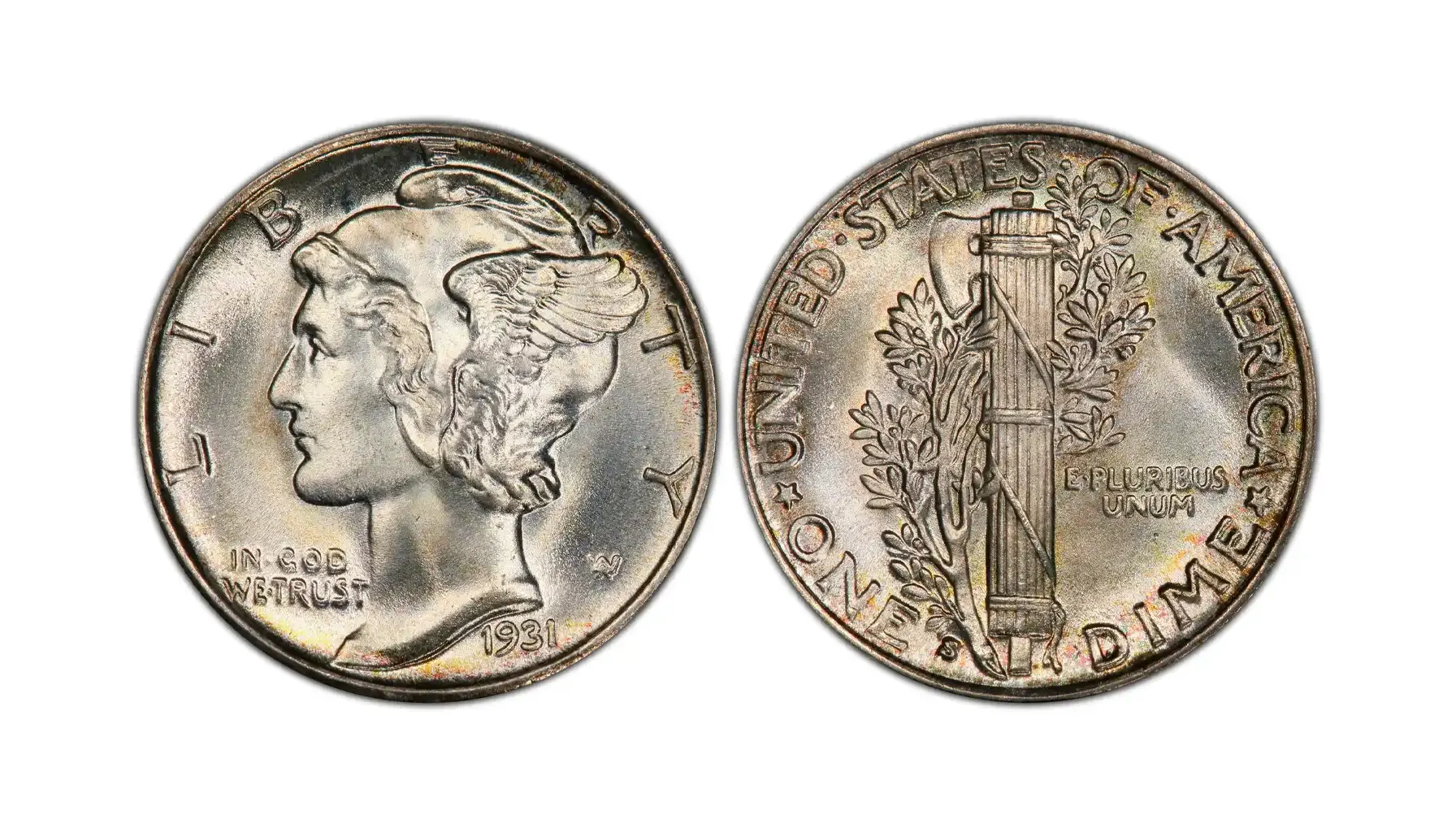
Mintage: 1,800,000
Composition: 90% silver, 10% copper
Type: Regular issue
Auction Record: $270,250 for MS67+FB
Rarity Level: Scarce in all grades, rare with Full Bands
The days of the Great Depression were a bit more fruitful than one could imagine: although it was a period of reduced coinage demand and consequent low mintage figures, its products were astonishing enough to enter collections. As per Ron Guth, these numismatic creations were once obtainable directly from the Mint for face value and postage, as noted in a 1934 issue of The Numismatist – it is when the Mercury dimes worth started to increase.
1935-S 10C, FB
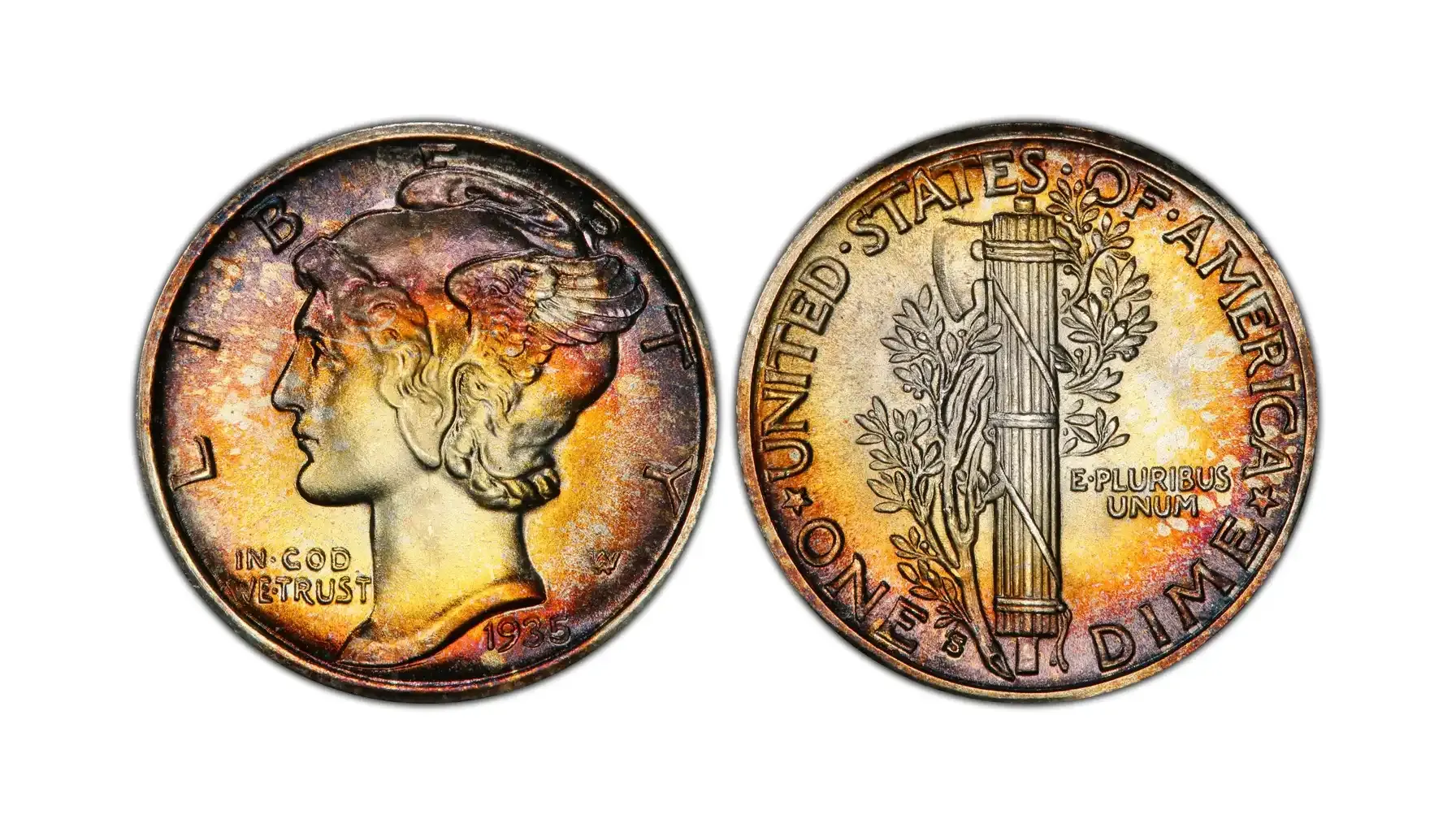
Mintage: 15,840,000
Composition: 90% silver, 10% copper
Type: Regular issue
Auction Record: $90,000 for MS68FB
Rarity Level: Common in circulated grades, rare with Full Bands
Time passed, and so did the 10C iterations, though their design did not change. The 1935 dime, in particular, is a later San Francisco issue known for its generally soft strikes and muted luster, characterized by a modest (quite immense) mintage number. Nonetheless, obtaining examples with clearly defined crossbands is a real challenge – but if you manage to do so, the coin will pay you back as a commonly overlooked but still valuable piece.
1938-S 10C, FB
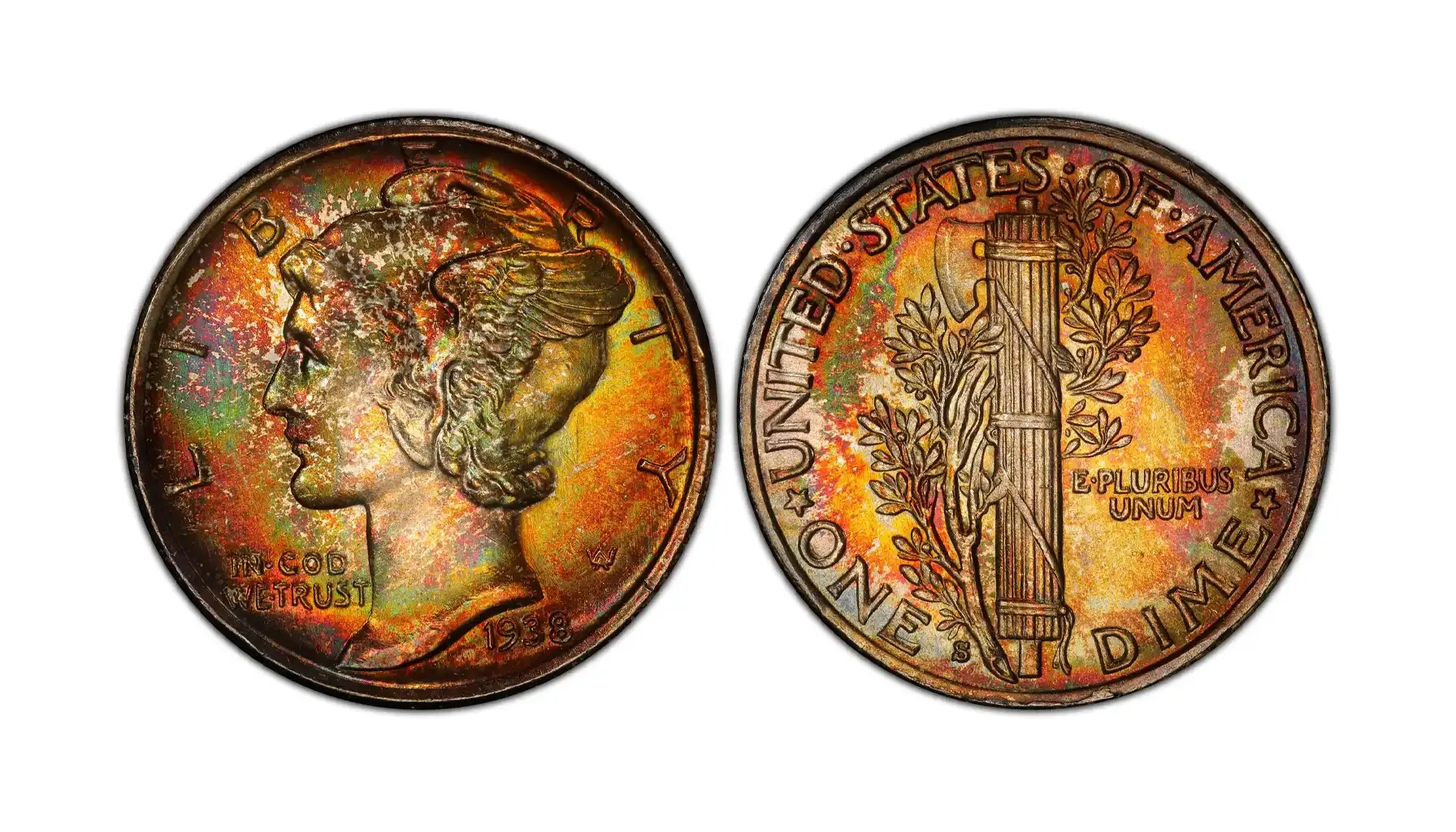
Mintage: 8,090,000
Composition: 90% silver, 10% copper
Type: Regular issue
Auction Record: $364,250 for MS68+FB
Rarity Level: Rare in gem grades with Full Bands
The 1938-S 10C represents one of the finest-quality Mercury dime issues of the late 1930s, as it generally displays strong strikes and bright, satiny luster. Although circulated grades are quite abundant and can easily be found on the market, top-end mint state coins with the FB designation are scarce and can be sold for hundreds of thousands at ease.
1942/1 10C, FB
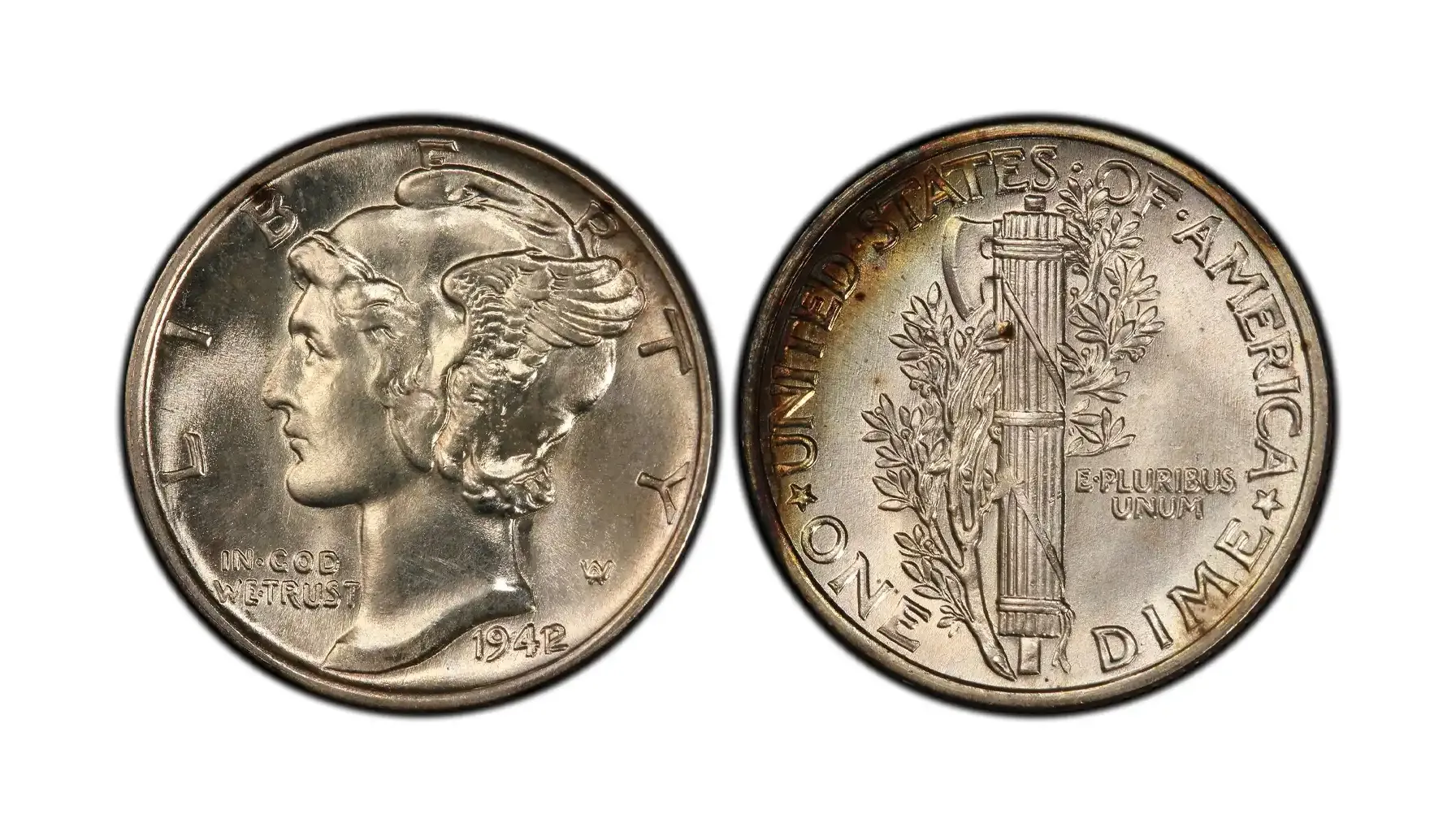
Mintage: 205,432,329
Composition: 90% silver, 10% copper
Type: Error (overdate variety)
Auction Record: $120,000 for MS66FB
Rarity Level: Rare, especially in mint state with Full Bands
Errors usually draw the attention of collectors, for they represent the most exclusive sector of monetary production: they do not appear twice (though such occasions are also possible) and reflect instant deviations in the production process, which are to be fixed soon. One of the most famous erroneous variations is the 1942/1 10C, created when a 1942 die was accidentally struck over a 1941 hub, with this distinctive overdate being seen clearly on both the 1 and 2 of the date.
Should you wish to explore more numismatic creations and make this process as educational as possible, do not hesitate to employ Coin ID Scanner, i.e., an innovative tool that allows one to identify coins and errors, manage collections, review characteristics and backgrounds, and even look for relevant pricing patterns on the spot.
Sometimes, the only thing that collectors lack is support, and Coin ID Scanner is ready to lend a hand.
Frequently Asked Questions (FAQ)
Are Mercury dimes silver?
Yes. All 10-cent coins struck from 1916 to 1945 are composed of 90% silver and 10% copper. Each coin contains approximately 0.07234 troy ounces of pure silver, which means that even heavily circulated examples hold intrinsic melt value based on current silver prices (check APMEX or BullionVault).
What are the key date Mercury dimes?
The most sought-after key dates in the series include the 1916-D, 1921, 1921-D, 1926-S, and the 1942/1 overdate varieties. These are notable for their low mintages, striking peculiarities, or rarity in high grades with Full Bands detail.
What does “FB” mean?
“FB” means Full Bands, which refers to the fully separated horizontal bands on the fasces on the coin’s reverse. It is a vital detail that may also contribute to how valuable this creation is to be.
What are the most valuable 10C coins?
While several rare dates can be considered valuable, the 1938-S 10C (PCGS MS68+ FB) currently holds the record (sold for $364,250 in 2019). The 1916-D remains the most famous key date overall, thanks to its extremely low mintage and historical significance.
Why is it called a “Mercury” dime?
The coin’s nickname comes from the winged cap worn by Liberty on the obverse, which many mistook for the Roman god Mercury. In truth, the figure represents Liberty, with wings symbolizing freedom of thought.

 Facebook
  X (Twitter)
  Pinterest
  LinkedIn