Contents:
The 1898 Morgan Silver Dollar marks a real shift in U.S. coinage — a time when design and policy finally came together to last.
It carries the story of silver’s return to American hands after years away, turning from simple currency into a piece of heritage. Every coin appraiser values it for its artistic merit and connection to American history.
History and Background of the 1898 Morgan Dollar
The late 19th century was a period of change for U.S. currency. Economic growth and the silver trade created the perfect setting for one of the most famous American coins.
The Morgan Dollar Series Overview (1878–1921)
From 1878 to 1921, the Morgan Silver Dollar shaped U.S. coinage and came to represent the Industrial Age itself. It marked silver’s return to everyday use, ending a long break in circulation. The coin’s designer, George T. Morgan, brought together classical European style and American themes.
Production of the 1898 Issue
In 1898, Morgan Dollar production resumed after a several-year interruption caused by a silver surplus in the treasury. The coins were minted at three mints simultaneously: Philadelphia, New Orleans, and San Francisco.
Interestingly, it was during this period that American mint issues were compared to other rare coins of the Imperial period, much like collectors today seek out sixpence coins.
The Mint made about 14.43 million coins in 1898, and the 1898 coins are now some of the most recognizable silver dollars of the 1800s.
Why the 1898 Coin Remains Popular Among Collectors
The appeal of the 1898 Morgan Silver Dollar comes from its balance: it’s not too rare to find, but rare enough to matter.
This is one of those years where both common examples and extremely rare variants in the highest grades of preservation (MS-65+) can be found on the market. Collectors prize this issue for its uniform luster and depth of relief.
Design and Composition Details
The Obverse and Reverse Features
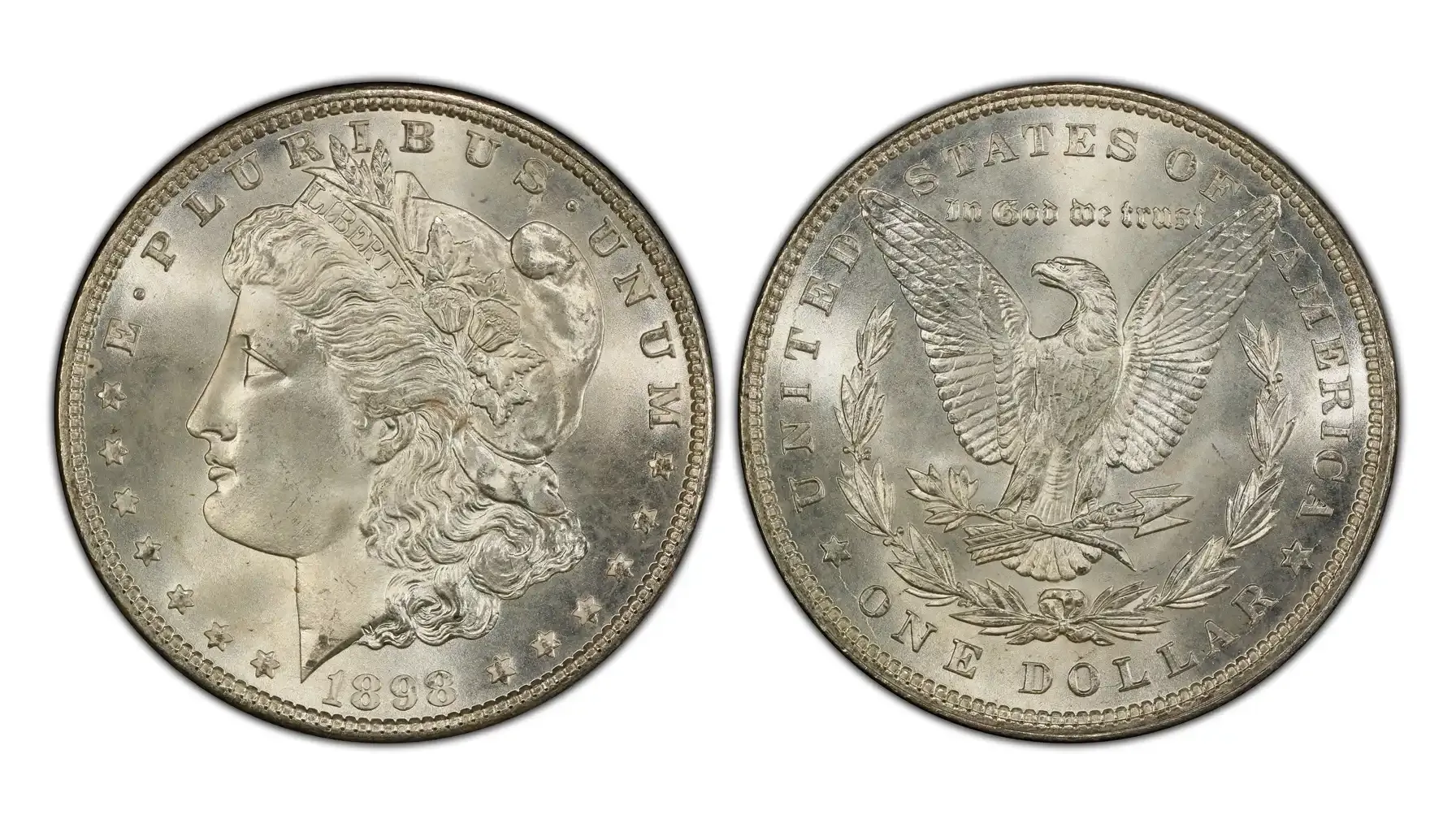
Liberty appears on the obverse, shown in a classical Greek style. Her wreath combines cotton and wheat — a clear symbol of unity between North and South. Above her, the motto “E Pluribus Unum” reinforces the same idea of one nation built from many.
On the reverse side, the eagle spreads its wings wide. In its claws are arrows and an olive branch.
Silver Content and Specifications (Weight, Diameter, Metal Mix)
Parameter | Value |
Denomination | 1 Dollar |
Metal | Silver (90%) / Copper (10%) |
Weight | 26.73 g |
Diameter | 38.1 mm |
Mintage | ~12.29 million pieces |
Designer | George T. Morgan |
The Symbolism Behind the Design by George T. Morgan
Morgan wanted to show strength and independence — the character of a new America. His Liberty design was based on a real woman, Anna Willess Williams, whose features gave U.S. coins a more human look.
The reverse tells a different story. The eagle, wings open, stands for confidence and defense. The wreath adds balance, a sign of growth and prosperity.
Collectors appreciate this level of precision. It’s the same reason sets like the 1950 Proof set remain so valued — every coin still holds its detail and meaning.
1898 Mint Locations and Mint Marks Explained
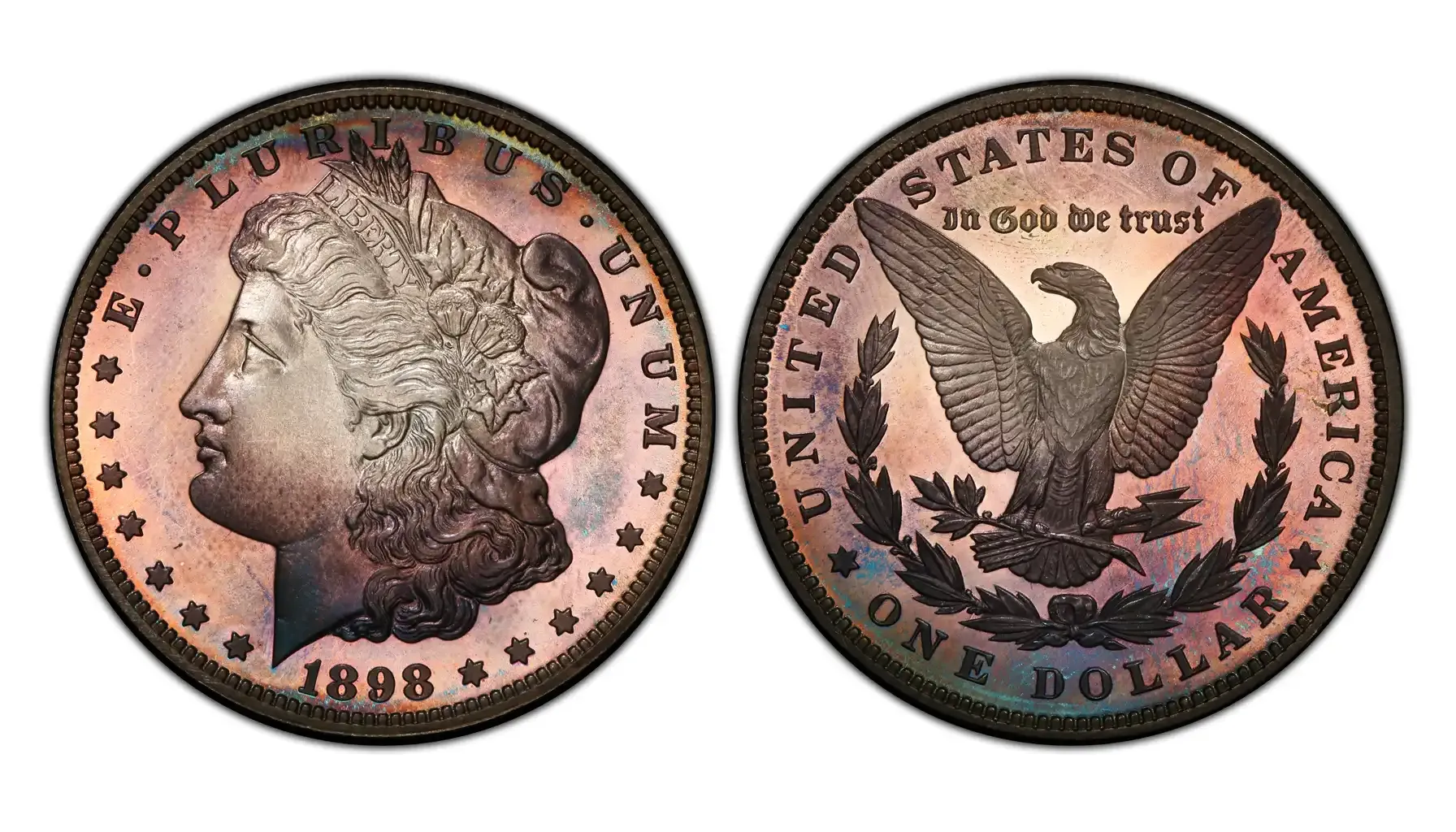
Where to Find the Mint Mark on a 1898 Dollar Coin
On the reverse, the mint mark sits below the wreath and over the word “DOLLAR.” If there’s no mark, it’s a Philadelphia coin. The letter “O” points to New Orleans, and “S” to San Francisco.
Differences Between 1898-P, 1898-O, and 1898-S Coins
Philadelphia (P): clean, even relief, no mintmark.
New Orleans (O): weak minting is common, especially in the Liberty hair area.
San Francisco (S): the clearest and shiniest coins, high quality finish.
Which Mint Marks Are the Rarest and Most Valuable
The 1898-S is considered the rarest, especially in MS67 condition. That’s why the 1898 S Morgan Silver Dollar value continues to rise steadily at Heritage Auctions, where coins of this category often sell for prices exceeding $13,000.
The 1898-O is less frequently found in good preservation but maintains consistent demand due to its southern minting history.
1898 Morgan Silver Dollar Value Chart (By Grade & Mint)
1898 (Philadelphia) Morgan Dollar Value

Philadelphia coins are most often found in VF-EF condition. They are easily identified by their smooth dies and light silver tone. This is a stable option for mid-level collections and long-term investments.
1898-O (New Orleans) Morgan Dollar Value
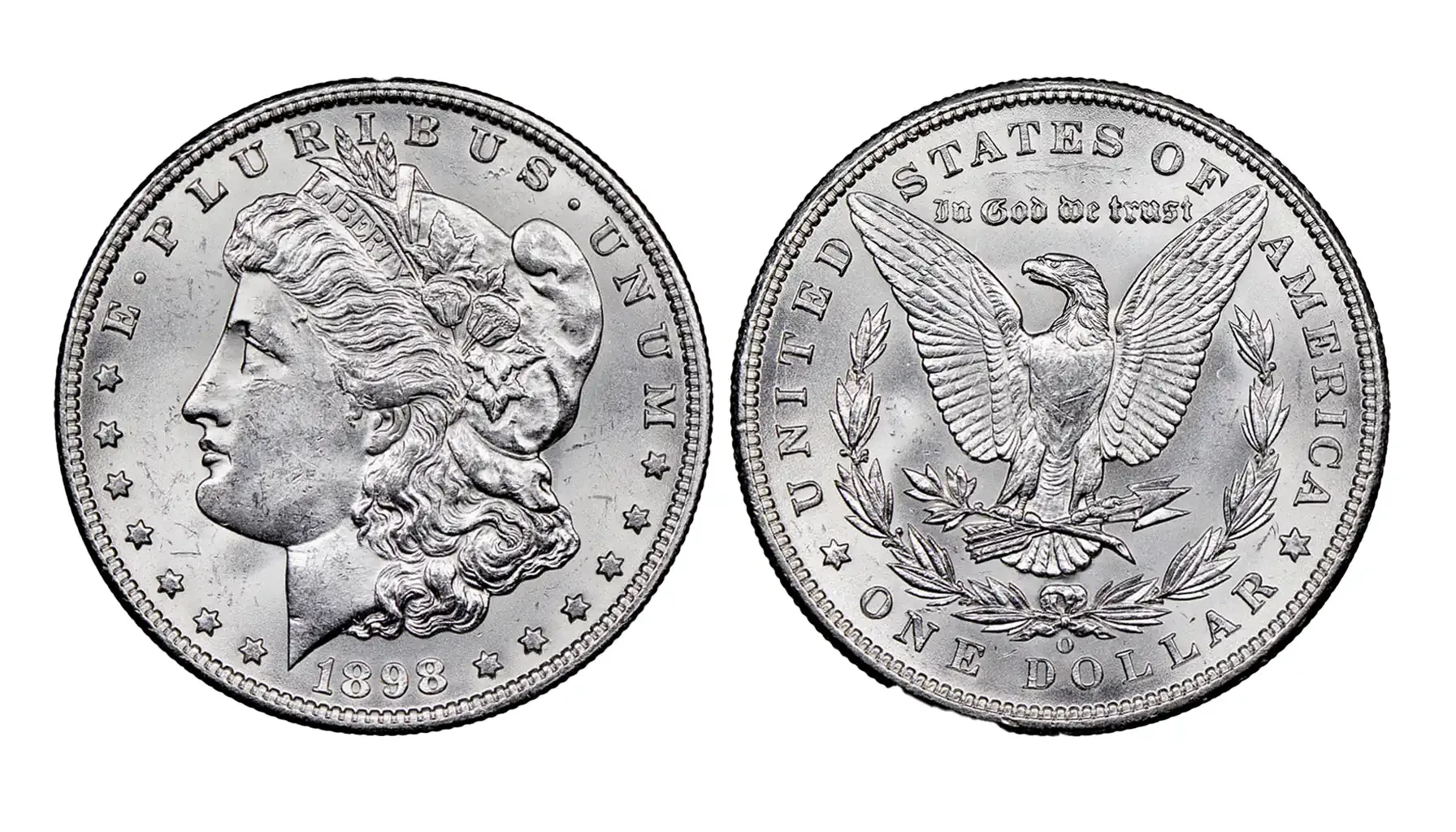
New Orleans coins are attractive to collectors due to their unusual die strikes. Many examples exhibit weak areas of the strike. Rare examples in AU+ condition can fetch significantly more.
While rooted in American history, the 1898-O Morgan Dollar shares the same cultural prestige as the British £100, both symbolizing national pride and fine craftsmanship.
1898-S (San Francisco) Morgan Dollar Value
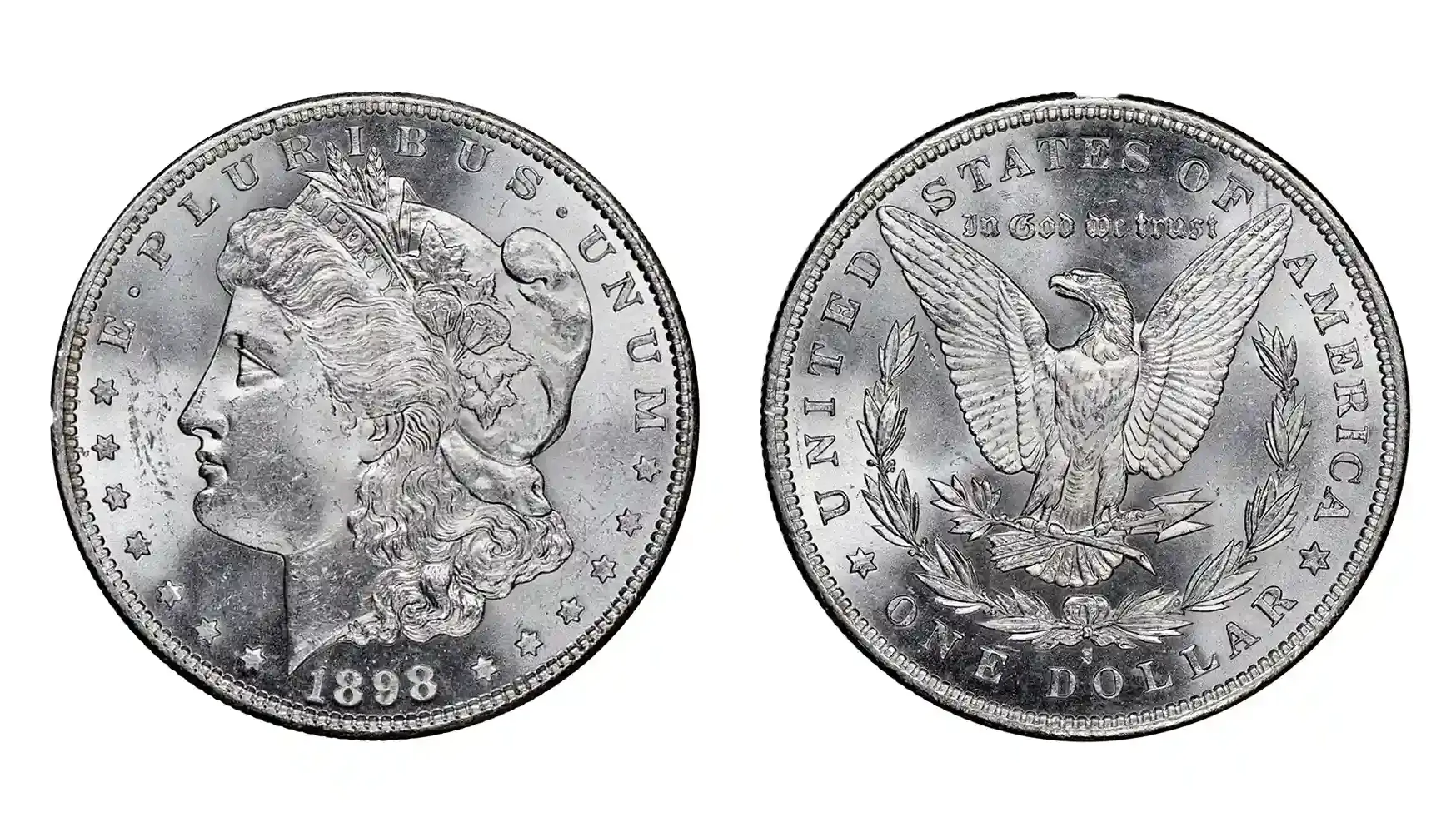
The San Francisco issue demonstrates the best minting quality of all the 1898 issues. Coins with a mirror-like finish and no circulation marks are particularly rare.
Mint | 1898 (P) | 1898-O (O) | 1898-S (S) |
G-4 | $35 | $38 | $40 |
F-12 | $40 | $44 | $48 |
VF-20 | $45 | $55 | $60 |
EF-40 | $60 | $70 | $85 |
AU-50 | $75 | $95 | $120 |
MS-60 | $110 | $140 | $210 |
MS-63 | $180 | $240 | $400 |
MS-65 | $320 | $480 | $950 |
Note: Prices are current at the time of writing and are averaged.
Factors That Influence the 1898 Silver Dollar Value

Condition and Coin Grading Standards (G–MS)
Condition is a key factor:
G-4: Heavy wear, details are smoothed.
F-12: Major features are visible.
VF-20: Partial relief, facial features are visible.
AU-50: Minimal handling signs.
MS-60+: Original luster, full relief.
Want to know the current price of your coin? Download the Coin ID Scanner app—take a photo, and the system will show you the approximate market value, variety, and rarity level.
Rarity, Strike Quality, and Eye Appeal
A coin’s rarity isn’t set by mintage alone; its survival rate plays an equal role. Due to technological differences in equipment, the New Orleans Mint often suffered from weak striking pressure.
Visual appeal is also important: uniform luster and the absence of scratches can increase value by 20-30%.
Market Demand and Silver Spot Price Trends
The coin market is directly dependent on the price of silver and collector interest. The current value also depends on the spot price of silver and the dynamics of demand for rare coins.
“Medicine and numismatics have kept me alive.”
— Eric P. Newman, American numismatist
Coin World interview, October 2011
FAQ — 1898 Morgan Silver Dollar
How much is an 1898 Morgan Silver Dollar worth today?
From $40 to $950, depending on condition and mint.
What makes the 1898-S Morgan Dollar rare?
Its rarity stems from the excellent strike quality and the limited number of surviving specimens.
Where is the mint mark located on an 1898 dollar coin?
On the reverse side, just below the wreath and above the word “DOLLAR.
What is the silver content of the 1898 Morgan Dollar?
90% silver, 10% copper, weight 26.73 g.
What is the melt value of an 1898 silver dollar?
About $22 at the current price of silver.
Is the 1898 Morgan Dollar a good investment?
Yes — it’s a highly liquid coin with a history of steady price growth.
Should I clean my 1898 Morgan Silver Dollar?
No. Once cleaned, a coin loses its patina and much of its collector appeal.
How to use a coin identifier to verify value and authenticity?
Take clear pictures of the coin’s obverse and reverse, then upload them to a reliable service such as PCGS CoinFacts, NGC Coin Explorer, or CoinSnap.

 Facebook
  X (Twitter)
  Pinterest
  LinkedIn