Contents:
- How Much Is a 1989 Dime Worth?
- 1989 Roosevelt Dime Value by Mint Marks
- Is a 1989 Dime Worth Anything Above Face Value?
- 1989 Dime Error List With Values
- Rare 1989 Dime Errors That Can Be Valuable
- 1989 Copper Dime: Error or Damage?
- 1989 Dime Specifications
- What Makes a 1989 Roosevelt Dime Valuable?
- How to Identify a Valuable 1989 Dime
- Where to Sell or Appraise a 1989 Dime
- FAQ
The Roosevelt item design has been in place since 1946, the first in the series. Most Americans at the time held the piece in their hands and were unaware of its future potential. The value for the average item is $3–$10.
How Much Is a 1989 Dime Worth?
As you track technical hierarchies, remember that the Full Bands designation is the primary value driver for business strikes. You should look for the defect identification:
Broadstruck / Off-Center - a P off-center strike of 70 %+ recently sold for $150. Minor off-center strikes under 10 % are common and worth $15–$30.
Missing Clad Layer - look for pieces that appear copper-colored on one side (not a gold dime 1989). These major errors currently trade for $20–$100, depending on the surface area affected.
Clipped Planchet - a clip on a P can fetch $30–$60 in the current auction cycle.
Denver
While over 896 million were minted in Denver, an MS-68 FB is a significant rarity. Current 2026 price guides list this at $475, with recent auction records showing steady sales around $260 for verified pieces.
Philadelphia
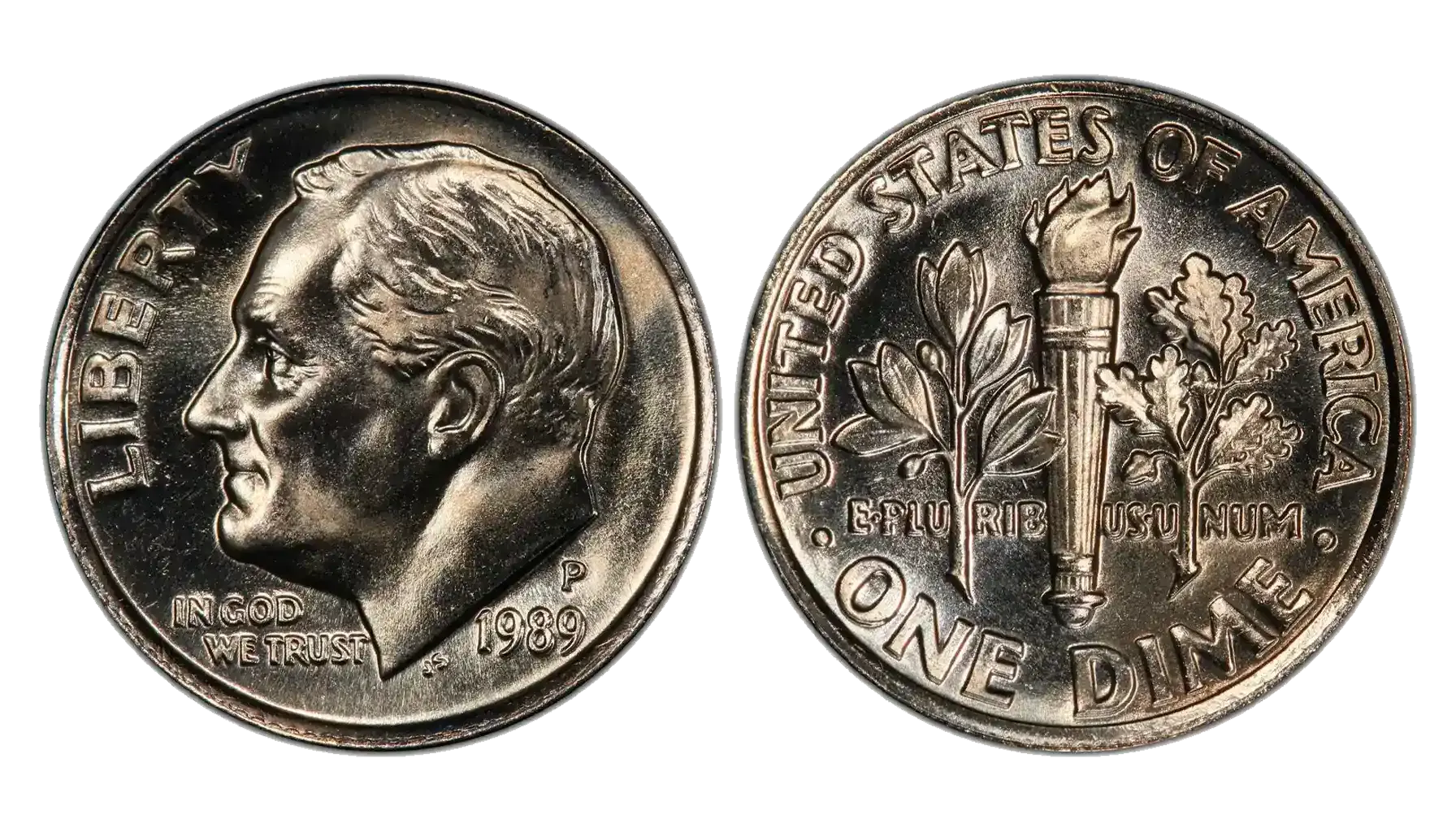
The Philadelphia mint produced over 1.2 billion pieces. Finding an item from this massive run with Full Bands in a grade of MS-68 is extremely difficult because of the marks sustained during high-speed production.
1989 Roosevelt Dime Value by Mint Marks
The item is generally common, but value spikes more for pieces that achieve the Full Torch (FT) or Full Bands (FB) designation. For a technical collector, these designations indicate that the horizontal bands on the reverse torch are perfectly separated and distinct.
Grade | 1989 P Dime Value | Denver |
MS-65 | $3–$7 | $3–$10 |
MS-67 | $20–$45 | $25–$55 |
MS-68 | $150–$300 | $260–$475 |
MS-68 | $3,350+ | $900+ |
San Francisco
PR-69 DCAM – $15–$30
PR-70 – $50–$80
Nearly all S proofs are Deep Cameo (DCAM). Many have developed spots or planchet haze over the last 40 years. Only a PR-70 DCAM with perfect mirrors and zero spots will command the $80 bonus. Lower-tier PR-69s are currently trading in the $15–$30 range on the actual market.
2026 Market
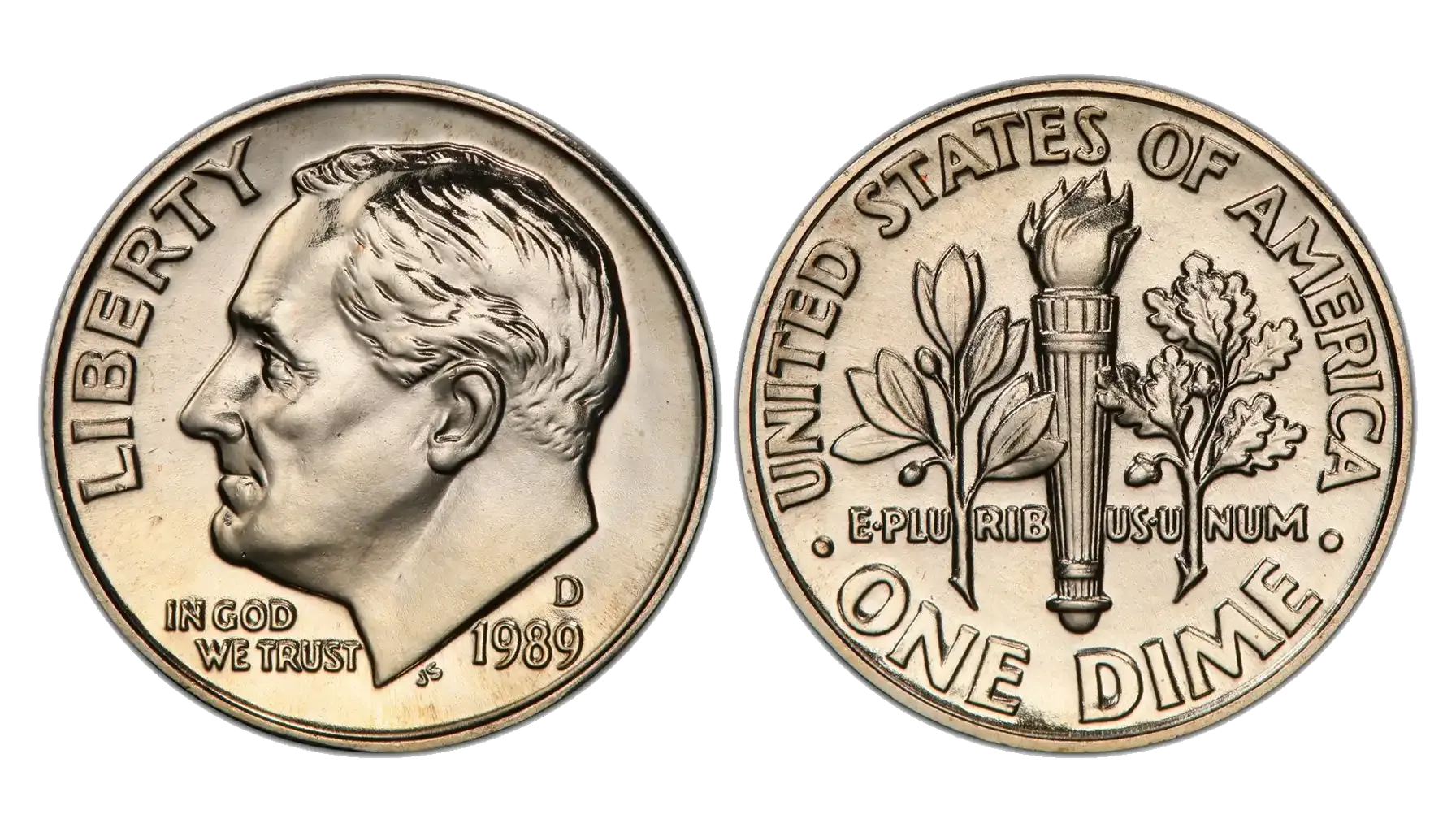
The MS-68 Record – the auction record for a D has been eclipsed by private registry set sales reaching $475 for pieces with liquid luster and perfect bands. Do you hear about the 1989 D gold dime value?
The 2026 Shift – with the 2026 Enduring Liberty redesign taking center stage in the U.S. Mint's lineup, collectors are looking back at the late-80s Roosevelt strikes as the last classic era of high-mintage business strikes before the digital-die era of the 2000s.
Is a 1989 Dime Worth Anything Above Face Value?
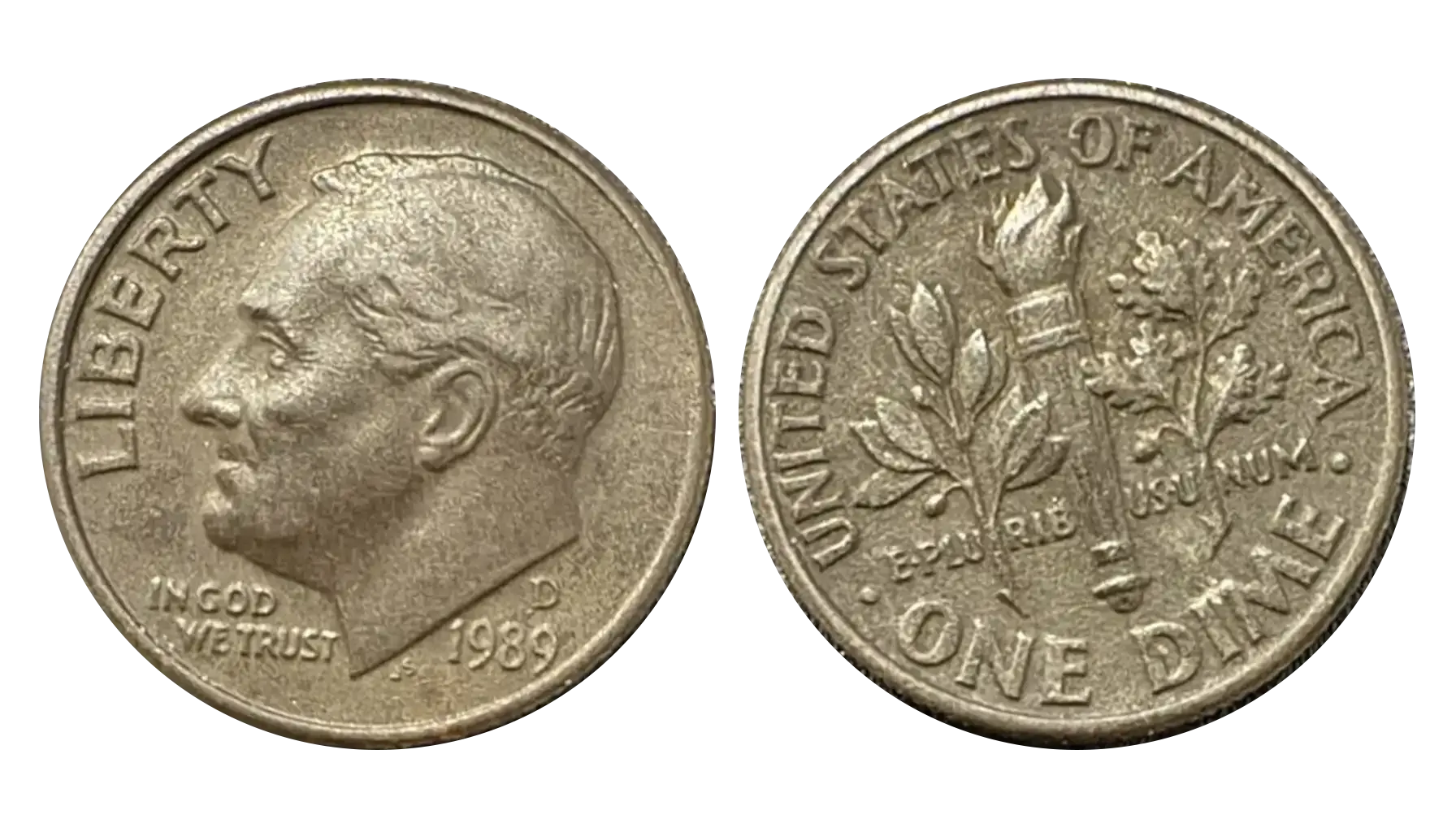
Most ordinary, everyday 1989 P Roosevelt dimes found are worth exactly their face value – 10 cents. Because they are made of copper-nickel clad and have a huge mintage – billions, they lack the intrinsic silver value found in gems from the year and earlier.
Item History
The Production
By the year, the United States Mint was operating at high capacity to meet the demands of a growing economy. The Philadelphia Mint struck over 1.2 billion items this year. Because production was so high, the focus was on quantity rather than individual strike quality.
While no "W" mint mark items were released for circulation in the year, the West Point Mint was becoming an increasingly vital part of the production infrastructure. The process sets the stage for the special 1996-W commemorative.
The 1989 Dime P Mint Mark Transition Period
The item sits at the end of a transformative decade for how the Mint identified its coins. Until 1980, Philadelphia items had no mint mark. By the year, the small "P" above the date was a standard fixture, but the hand-punching of dies was still transitioning toward more automated processes.
The Grading Evolution
As the numismatic community moved into the 21st century, technical standards for the Roosevelt piece became much more rigorous. Collectors began to prioritize the Full Bands designation—the requirement that the horizontal bands on the reverse torch be completely split.
Data shows that nearly 46 % of D items certified by PCGS/NGC earn the FB/FT designation, which is higher than the P. This reveals that Denver’s machinery was superior or better calibrated than Philadelphia’s in the year.
1989 Dime Error List With Values
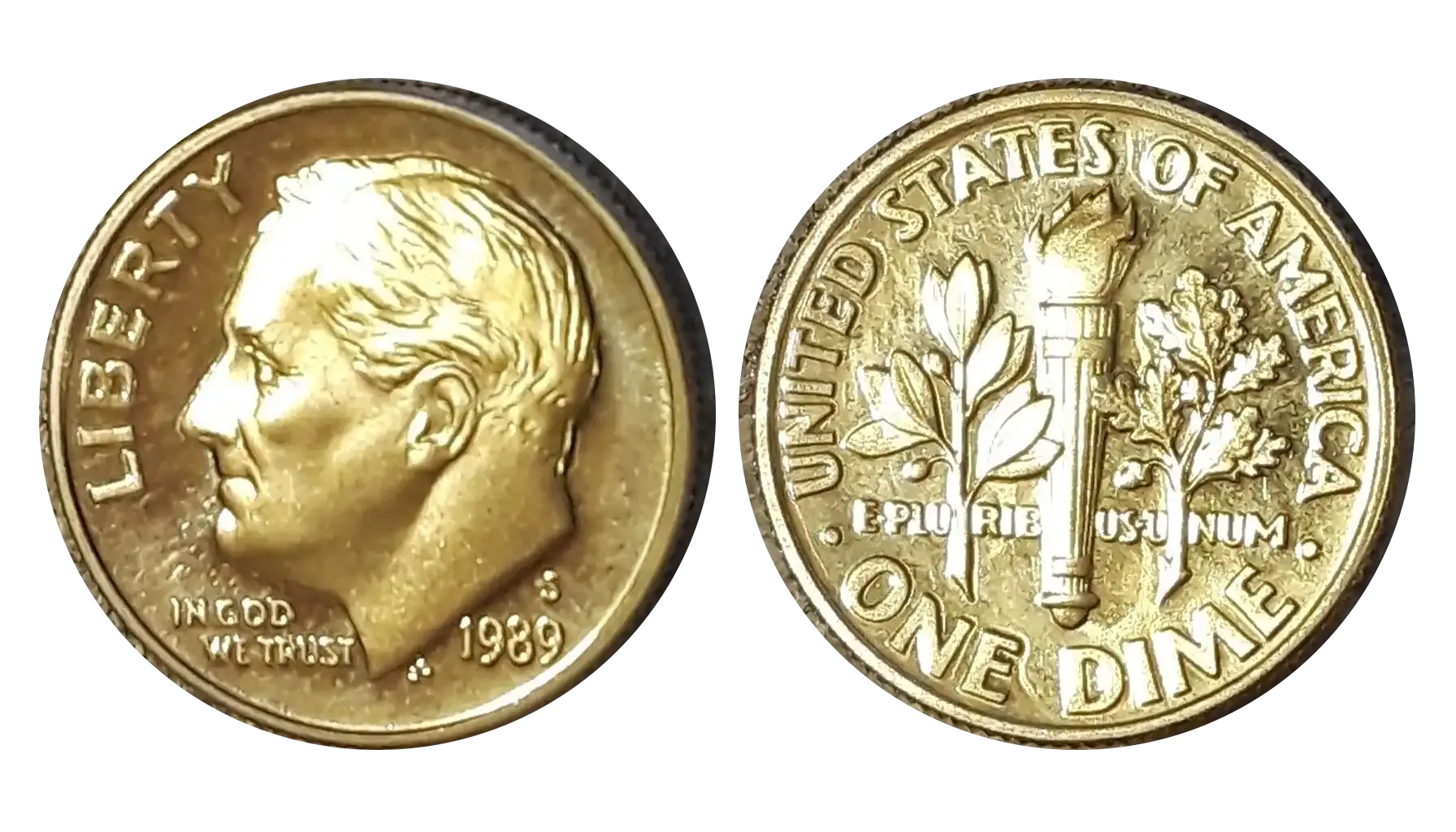
Off-Center Strike – the item is missing a portion of the design because it wasn't centered. Check the 1989 P dime error list with pictures and value $15–$150+
Broadstruck – the coin was struck without the collar, appearing flatter and wider $15–$50
Missing Clad Layer – one side is pure copper (red) because the nickel layer didn't bond, 1989 D dime error value $20–$100
Clipped Planchet – a crescent-shaped piece is missing from the edge of the coin, $15–$60
Struck-Through – an object on the 1989 D dime error list value (grease or cloth) was pressed into the coin's surface, $5–$40
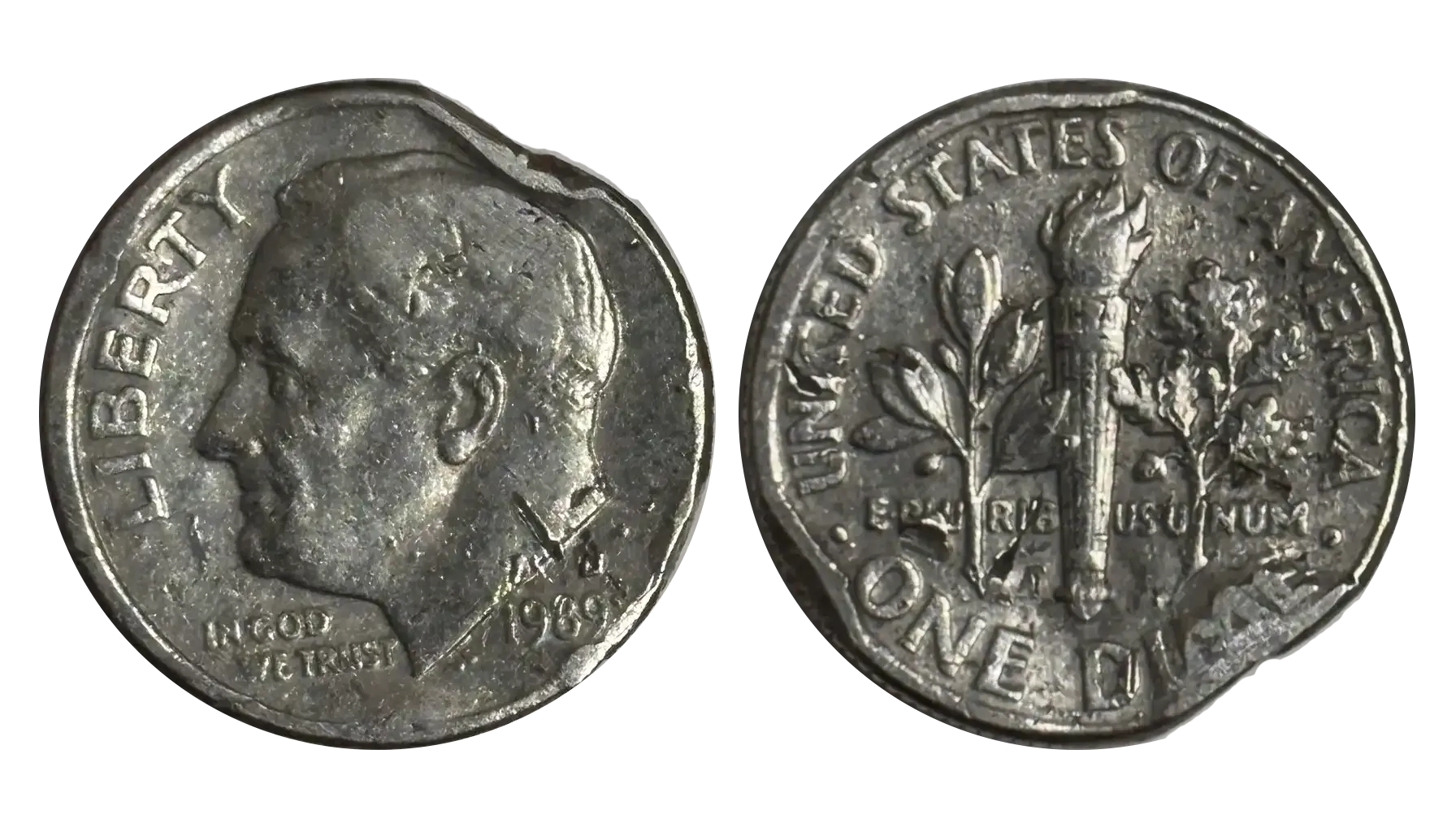
Attention: A P 70 % off-center strike recently sold for $150 at a major auction and demonstrates the high demand for dramatic mis-strikes.
Die Varieties
These 1989 P dime error values are on the die itself and appear on multiple coins.
Doubled Die Obverse (DDO) – look for subtle thickening or shelving on the letters of "LIBERTY" and "IN GOD WE TRUST." In contrast, it is less common this year.
$20–$100
Die Clash - occurs when the obverse and reverse dies hit each other without a coin blank in between. You may see faint outlines of the reverse torch on the obverse.
$5–$25
Rare 1989 Dime Errors That Can Be Valuable
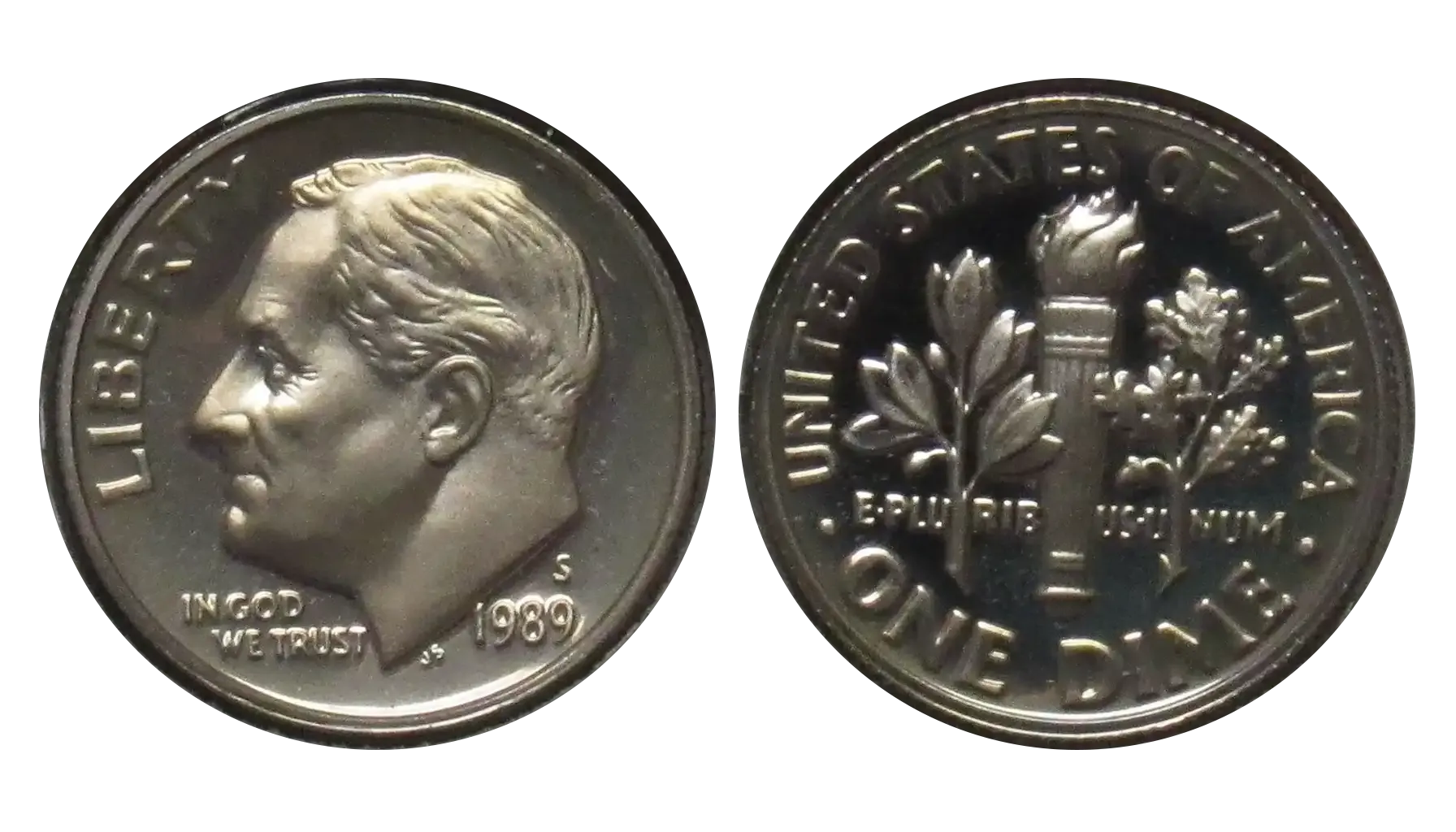
Struck-Through Grease
Occurs when grease fills part of the die, causing details to be faint or missing entirely. Look for a D missing the "ER" or "ICA" in AMERICA.
$10–$65
Full Bands (FB/FT)
This designation is given to items where the horizontal bands on the reverse torch are completely separated.
$25–$300
D MS–68
A 1989 dime D graded MS-68 FB is a major rarity. While the auction record stands around $677 from an older sale, the market 1989 D dime value in elite MS-68 FB ranges from $260 to $475.
1989 Copper Dime: Error or Damage?
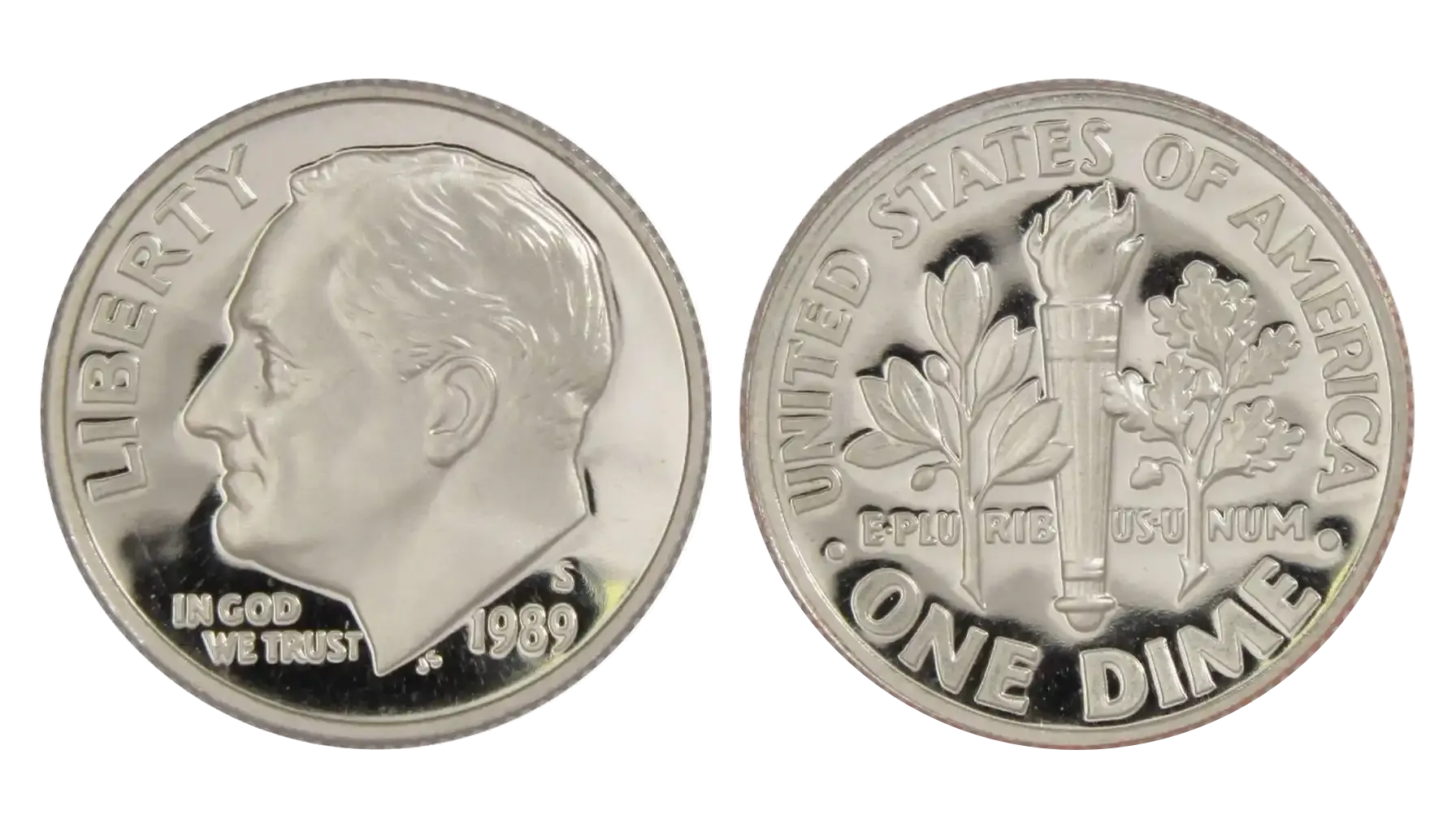
The best low-cost hunting ground for these errors in 2026 is 1989 Uncirculated Mint Sets. The sets often retail for $12–$20 and are the most likely source for Struck-Through defects and Full Bands candidates that haven't been damaged by circulation.
Check the 1989 D dime error list with pictures.
Feature | Missing Clad Layer Error | Environmental Damage | Wrong Planchet |
Color | Bright copper on one side | Dull / Brown on both sides | Bright / Toned copper on both |
Weight | Almost 1.9 g (light) | 2.27 g (standard) | 2.5 g (heavy) |
Strike | Very sharp | Weak / Pitted | Cut-off at edges |
Diameter | 17.91 mm (normal) | 17.91 mm (normal) | Almost 19.00 mm (slightly larger / thin) |
Do not confuse with fake 1989 gold dime color.
1989 Dime Specifications
The surfaces often look grainy or acid-etched. The design details might look mushy or worn down. These coins usually weigh the standard 2.27 grams or slightly less if acid has eaten away the metal. Check the color before the fake check of the 1989 gold dime value.
Composition | Copper-nickel Clad |
Weight | 2.27 g |
Thickness | 1.35 mm |
Edge | Reeded |
Designer | John R. Sinnock |
Diameter | 17.91 mm |
The item features a reeded edge, which consists of small, vertical grooves. These were originally designed for silver coins to prevent clipping, but they were retained for clad coins to help the visually impaired distinguish denominations. Check the 1989 dime error list with pictures.
What Makes a 1989 Roosevelt Dime Valuable?
The distinction between a standard D and an FB version is purely technical but financially massive. The horizontal bands on the reverse torch must show 100% separation. In the modern market, an MS-67 without Full Bands might sell for $25, but that same coin with the FB designation jumps to $55+. At the MS68 level, it jumps from $100 to $475+.
The PR-70 DCAM
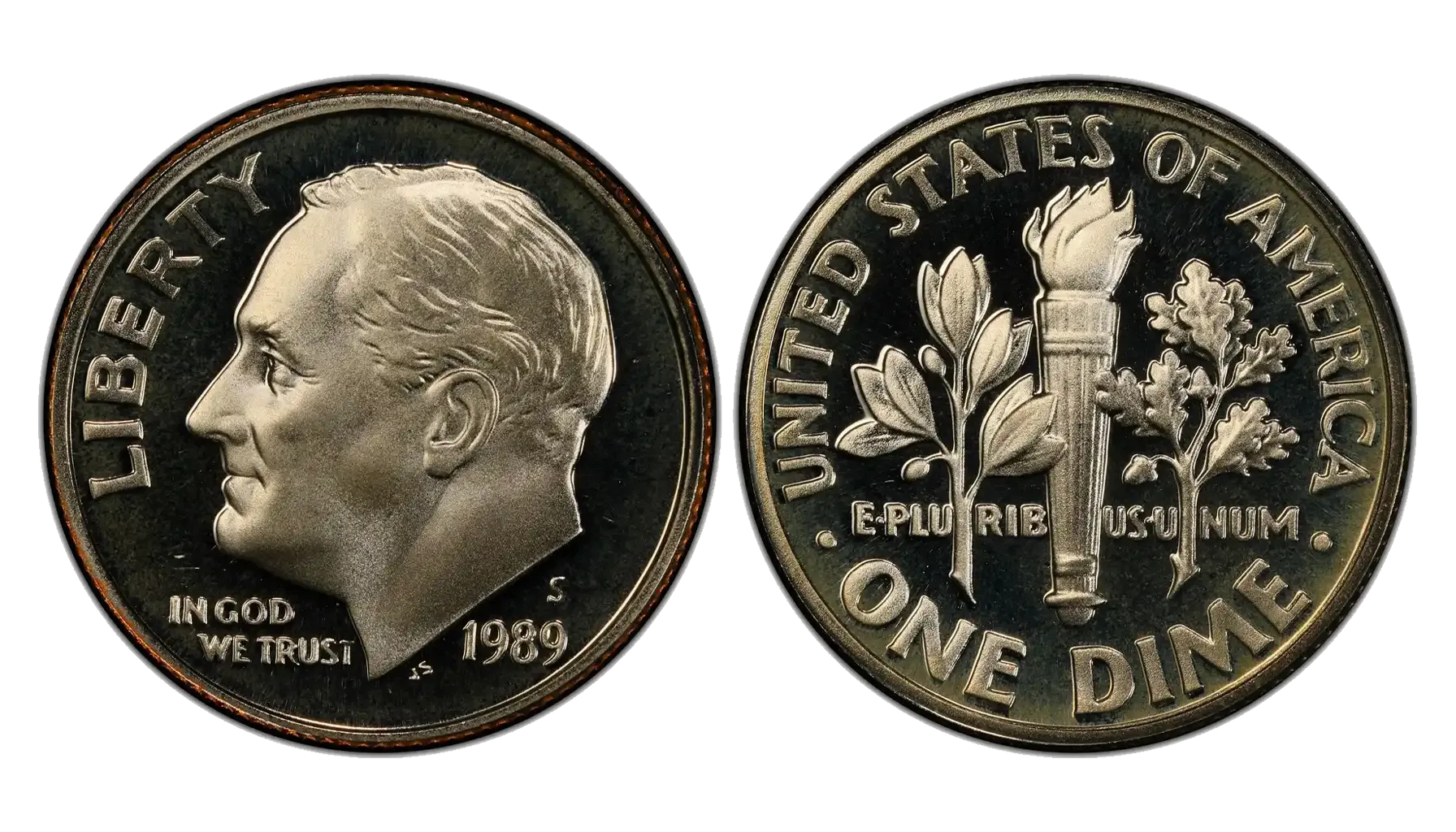
Because modern quality control is so high, many S proofs grade at PR69. The jump to a perfect 70 is where the value lies, often tripling the price from $25 to $75–$125.
Sets
"For the Registry Set collector, the difference between an MS-67 and an MS-68 is not just a point of grade, but a leap in market value driven by the scarcity of 'Top Pop' specimens."
– James Bucki, expert
Technical Analysis of Modern Clad Rarities
The set competition is the single biggest driver of high prices for pieces that year. When two collectors are one coin away from the 1st-ranked Roosevelt Set in the world, they will often bid far above the book value to secure a top coin. This is likely where the higher price estimates originate – private buy-it-now sales or high-stakes registry battles.
How to Identify a Valuable 1989 Dime
How much is a 1989 P dime worth on the secondary market? The six pillars of modern numismatic value:
Edge
Errors
Condition
Packaging
Designation
Proof Quality
Registry Demand
An MS-68 FB (Full Bands) piece is indeed the top tier for this year. The actual confirmed auction records for a D MS68 FB usually top out around $600 to $900, with many selling in the $250–$475 range in the market. Here is the technical reality of why those factors matter so much.
Three Package Types
Uncirculated Mint Set – P & D (Best for FB) – $15
Prestige Proof Set – S (Best Protection) – $45
Standard Proof Set – S (Deep Cameo) – $10
The Prestige Proof Set is a premium deluxe package issued by the Mint in a book-style velvet case. Includes all five standard proof coins plus the Congress Bicentennial Silver Dollar. While the item inside is the same as the standard proof set, the packaging provides better protection against environmental damage.
Where to Sell or Appraise a 1989 Dime
Where to sell:
eBay (Self-List) – best for minor errors / raw coins, fastest cash, high fees (~13%); requires good macro photography. Always check the 1989 P dime error list with pictures.
American Rarities – large collections, they provide free text and photo appraisals, and buy directly.
Local Coin Shop – immediate cash, convenient, but they will likely offer 50–70 % of the wholesale 1989 dime P value to cover their overhead.
Professional Appraisal
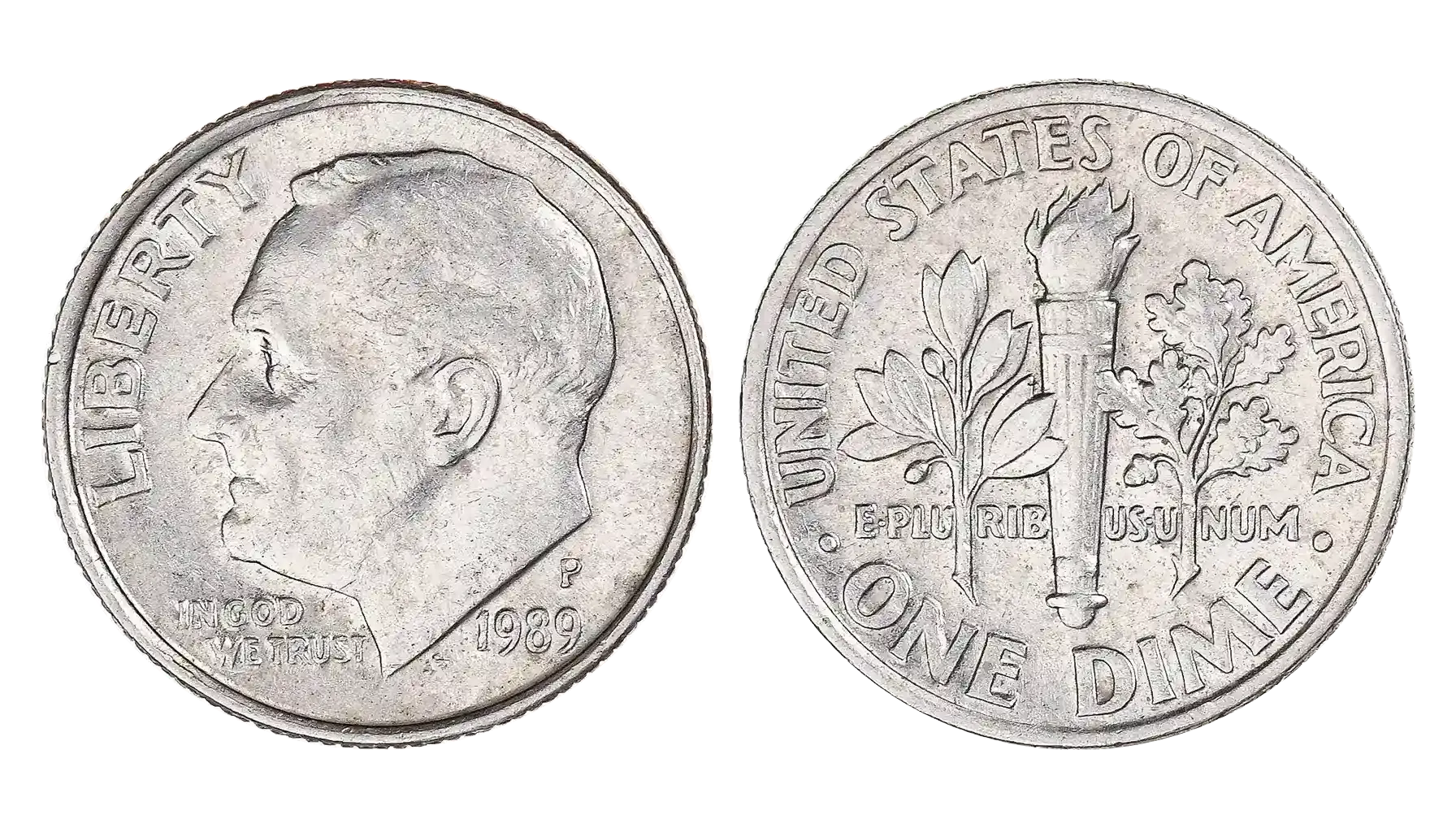
If your technical check suggests an MS-67+ FB or a major error, you need a professional slab to prove its value to buyers. PCGS or NGC are the best grading services. Average cost is $23–$40 for "Economy" or modern tiers, plus membership and shipping fees.
You must send the coin to their labs. They will authenticate and encapsulate it in a protective holder. If your coin is already graded by PCGS / NGC, sending it to Certified Acceptance Corp (CAC coins) for a Green Bean sticker can increase the final sale price by 15–20 % in the market.
FAQ
How much is a 1989 dime worth today?
The value for the average item is $3–$10.
Is there anything special about a 1989 dime?
Check the Full Bands variety with MS-68 mint and 1989 P dime errors.
What is the error on the 1989p dime?
The 1989 P dime error list includes classic defects such as clad layers and clipped planchets.
How much silver is in a 1989 dime?
The item contains zero silver.
What does a 1989 dime look like?
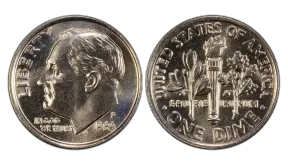
The item shows classical words and a motto with the Franklin D. Roosevelt portrait.
What is a 1989 dime made of?
The pieces are made of nickel and copper.

 Facebook
  X (Twitter)
  Pinterest
  LinkedIn