Contents:
The 1863 US penny, the copper-nickel Indian Head, was born right in the middle of the American Civil War, when pocket change vanished and the Mint released cents. All of them are pretty big in price, but of course, some are more valuable than others. To know what you're holding, download Coin ID Scanner. It’s an online scanner that tells you what price you may offer for this specific coin.
There are lots of Civil War coins left, and some of them are pretty valuable.
Indian Head Cent History & Value Background
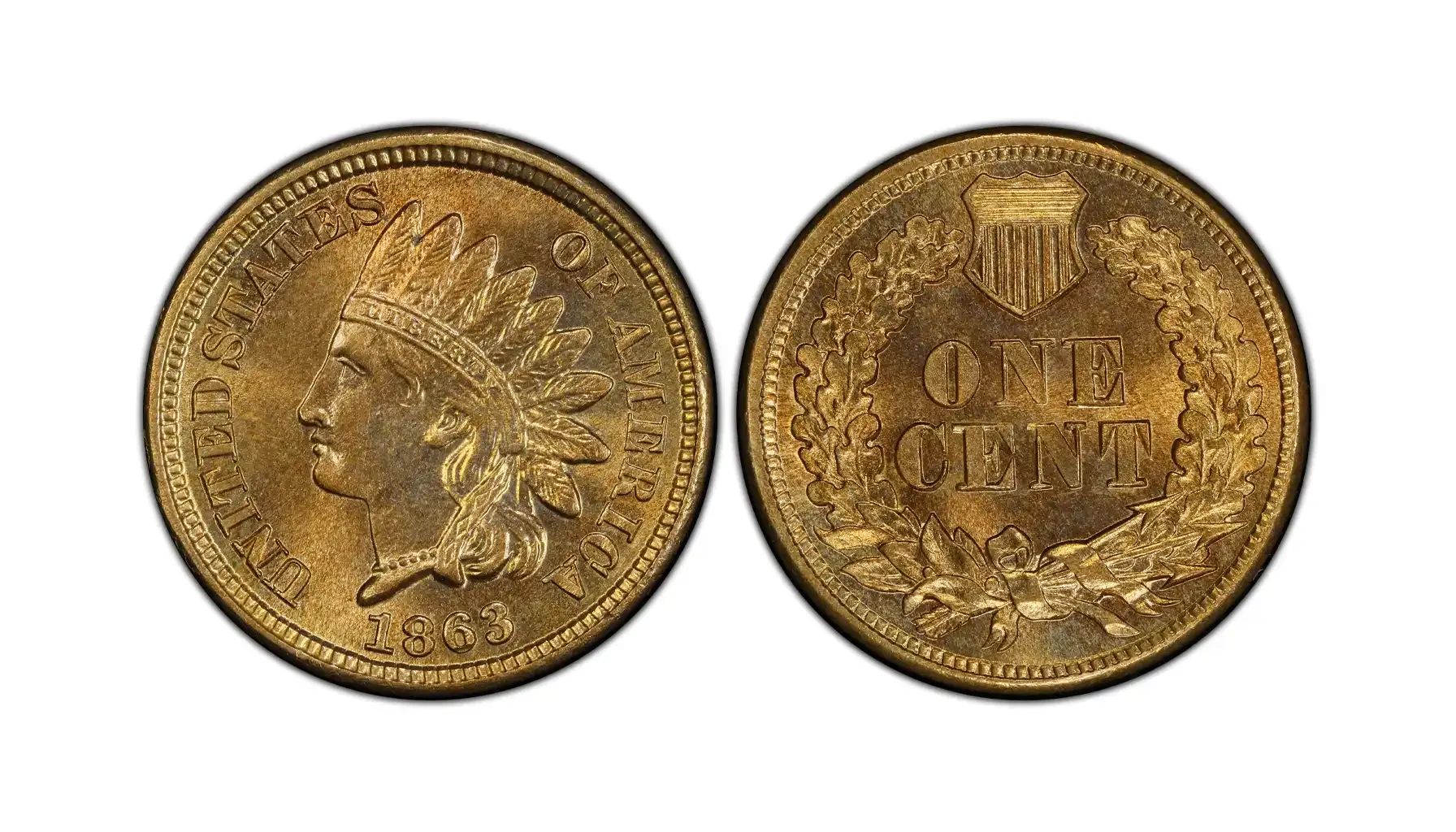
The Indian Head cent was the everyday coin of late 19th-century America, struck from 1859 to 1909, designed by James Barton Longacre, and showing Liberty in a Native American feathered headdress. It had a face value of one cent.
Before it, U.S. cents were large copper coins (1793–1857), nearly the size of a half dollar. After the California Gold Rush, gold flooded the economy and raised copper prices. The Mint needed a cheaper coin, so in 1857 it shrank the cent and mixed in nickel, creating the Flying Eagle cent: bright and heavy, nicknamed the White cent. That design proved hard to strike, so in 1859, the Mint switched to Longacre’s new Indian Head design.
The first version carried a laurel wreath reverse (1859), replaced in 1860 by an oak wreath with a shield—the design used for the rest of the series.
During the Civil War, people hoarded coins made of real metal. Small change disappeared, forcing the Mint to pump out millions of copper-nickel cents. By 1864, the government authorized a cheaper bronze alloy (95% copper, 5% tin, and zinc), which was easier to mint and circulate.
After the war, Indian Head cents became a fixture in pockets nationwide. Production exploded as vending machines and coin-operated devices spread. Most dates are common, but some, like 1877 and 1909-S, are scarce and command high prices today.
In 1909, the series ended, replaced by Victor D. Brenner’s Lincoln cent for the president’s 100th birthday.
1863 IndianHead Penny Value
Spec | Detail |
Designer | James Barton Longacre |
PCGS # | 2067 |
Mint | Philadelphia |
Mintage | 49,840,000 |
Diameter | 19.00 mm |
Weight | 4.70 g |
Composition | 88% Copper, 12% Nickel |
Edge | Plain |
How much is a 1863 penny worth? Depends; grade drives price. Most examples are in affordable territory, except for top-end pieces.
Grade | Typical Value (USD) |
Good-4 | $18 |
Very Good-8 | $15 |
Fine-12 | $30 |
Very Fine-20 | $40 |
Extra Fine-40 | $70 |
Almost Uncirculated-50 | $110 |
Uncirculated (slider) | $171 |
MS-63 | $382 |
MS-64 | $550 |
MS-65 | $1,119 |
MS-66 | $3,030 |
MS-67 | $21,250 |
People call it the 1863 Indian Head penny thick not a special variety, more a vibe: these copper-nickel cents are chunkier than the later 1864-1909 bronze run.
What Actually Happened in 1863
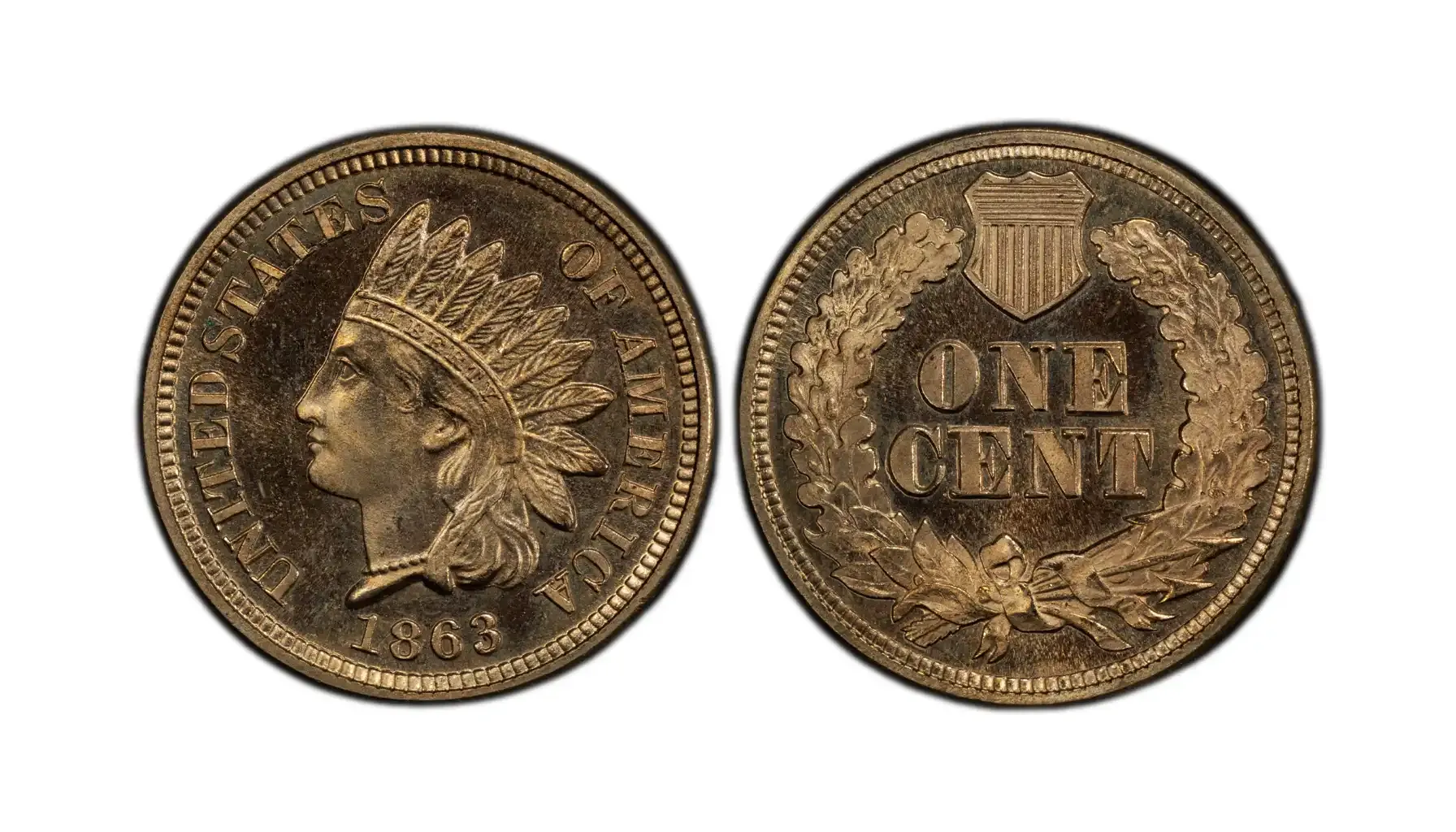
Silver vanished, gold stopped circulating, and paper money lost buying power by the month. Soon, even small changes became a problem. To keep commerce moving, the Mint flooded the country with cents.
Merchants scooped them into 25¢ and 50¢ bags, using them like makeshift quarters and halves until fractional paper notes arrived. Nearly 50 million coins poured out that year, wearing down the dies; you can still see the fatigue in the soft wreaths, blurred feathers, and faint flow lines. These cents stood in for missing silver. People hoarded them, spent them, hoarded again.
The 1863 Civil War penny doesn’t have stars. Pieces with stars dated 1863 are Civil War tokens, private substitutes issued by merchants when coinage dried up. Great collectibles; not federal coins. If you found one, awesome.
While we’re clearing fog, a 1863 wheat penny isn’t a thing. Wheat's reverse begins in 1909 with Lincoln. Internet searches sometimes lie.
Varieties, Die States, and The Fun Mistakes
Common sights
Die erosion/flow lines: radiating texture, soft rims, overused dies
Die cracks: hairlines linking letters, shield, feathers. Harmless, cool
Weak strikes: center wreath berries fade; lower curls flatten
Actual errors (harder, real premiums depend on boldness)
Off-center strikes
Broadstrikes (out-of-collar, flat rims)
Clipped planchets (curved or straight clips, look for the Blakesley effect)
Doubled die obv/rev (uncommon here; demand confirmation)
Misaligned dies (tilted obverse; reverse fine)
If you think you’ve got a 1863 Indian Head penny error, slow down. Compare known devices, inspect denticles, then submit to PCGS or NGC if your gut says “this isn’t normal.”
How to Tell You Own The Right Coin
Obverse: Liberty’s head wearing a feathered headdress. Date 1863 under the truncation. Longacre’s portrait is Caucasian; that’s a 19th-century artistic choice, not an ethnographic model
Reverse: Oak wreath with shield at top. No stars
Ring test? Useless here. Copper-nickel lies to your ears
Weight/diameter: ~4.70 g, ~19 mm.
Surface look: copper-nickel can tone to champagne, stone gray, or olive. Bronze-looking 1863? Be suspicious.
Why Top Grades Cost So Much
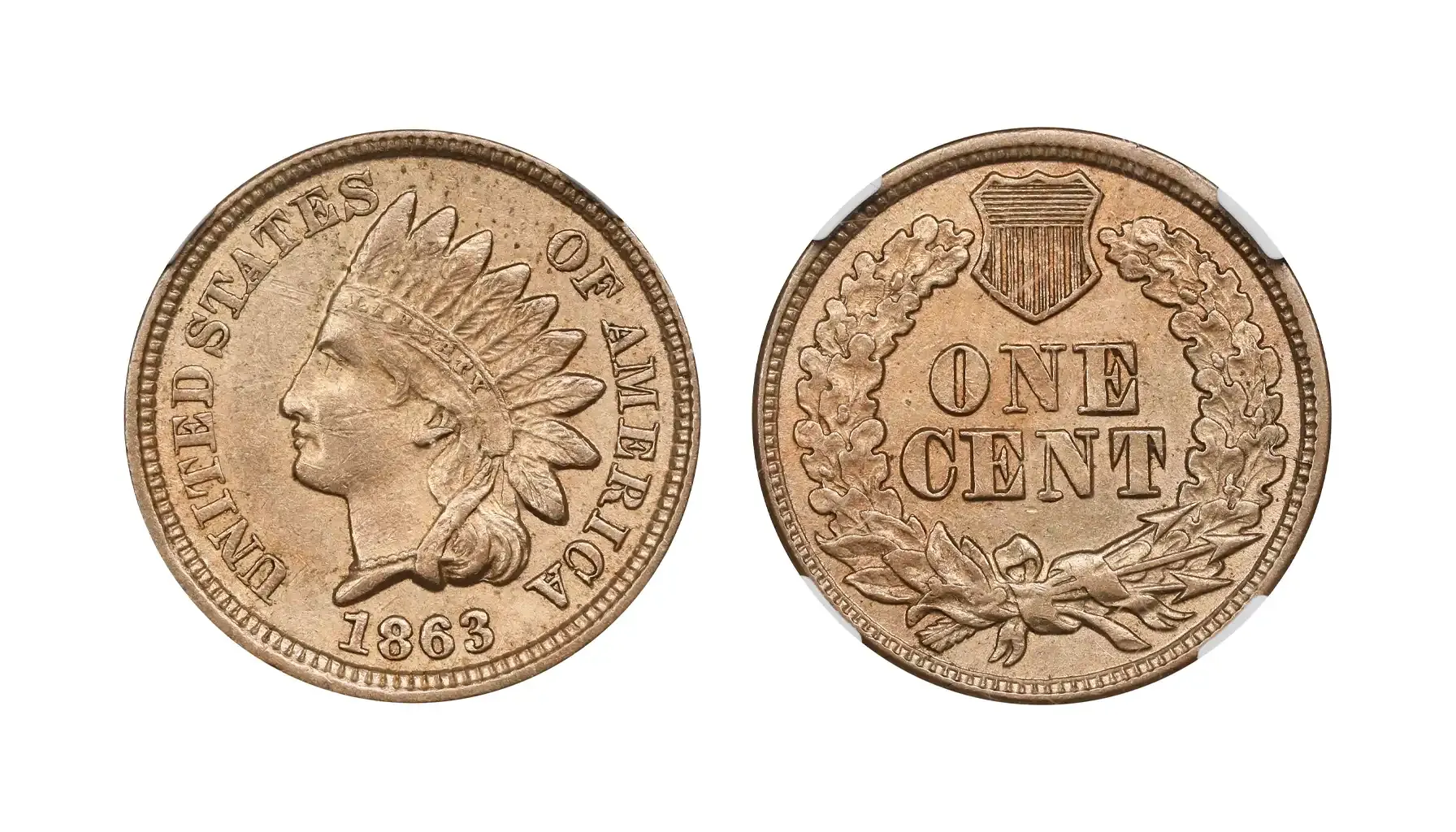
Copper-nickel surfaces show every tiny mark. Even a light wipe made a century ago can still hurt the grade today.
During the Civil War, the Mint ran dies nonstop, which left many coins with weak strikes and uneven details. That’s why finding one with sharp feathers, a clean shield, and smooth, glowing fields is rare, and collectors pay big when all those boxes are checked.
Grades MS-65 and higher are tough territory. By MS-66 or MS-67, only a few exist, and prices jump fast because collectors compete for the best examples.
Smart Buying Tips
Look first, then numbers. A nice-looking MS-64 is worth more than an ugly MS-65
Watch the color. Coins with bright, even red-brown luster stand out. Dull, dark, or uneven tones drag value down
Avoid cleaned coins. Fine scratches, hazy surfaces, or flat high points mean trouble
Buy certified. Grading from PCGS or NGC protects you from fakes and inflated grades
Be realistic. Minor die wear is normal for 1863. Focus on eye appeal, not myths of “perfect strikes”
Quick Checklist for Coin Shows or Online Bids
Spin test: tilt under light, look for a clear cartwheel shine
Details: sharp shield and wreath mean a stronger strike overall
Date clarity: crisp, square numbers signal fresher dies. Soft digits mean a late die, which will cost a lower value
Rim hits: one heavy nick can knock a full grade off
Verify rarity: check population reports before paying big money. MS-67s are truly rare; average coins with fancy names often aren’t
Final Word
The Indian Head penny 1863 is a coin that appeals to both reason and emotion. In Fine to Extra Fine, it’s an affordable piece of Civil War history. In high grades like MS-66 or better, it is a collector’s prize: crisp design, smooth luster, and that silvery glow of copper-nickel.
If your coin looks exceptional, it’s worth having it graded by PCGS or NGC to confirm its condition and authenticity.
FAQ
How much is a 1863 penny worth right now?
Anywhere between roughly $15 and $170 in circulated grades, then several hundred into the low thousands in mint state; elite pieces can reach five figures.
Is there an 1863 Indian Head penny with stars?
That’s a token, not a federal cent.
What makes mine valuable?
Grade first, then eye appeal, then strike. After that: certification, color, and absence of problems.
Is this the “Civil War penny”?
Yes, this date circulated smack in the middle of it, so the nickname sticks.

 Facebook
  X (Twitter)
  Pinterest
  LinkedIn