Contents:
Wars are cruel, and the aftermath of them is bitter. Yet we have to remember these times to never let them repeat. The UK Royal Mint also knows this, and so in 2014, they started a series of coins commemorating the First World War.
How much is the First World War £2 coin worth? Discover here! We will also provide info on possible variations and their collector's values.
We’ve heard of AI artists and AI chatbots, but have you heard about an AI Coin Identifier? These new technologies can easily recognize most coins.
What Is the First World War 2 Pound Coin?
It’s a commemorative piece, issued to commemorate the centenary of World War I (1914–1918). The £2 coin of the First World War marks the contribution of British and Commonwealth armed forces during the Great War.
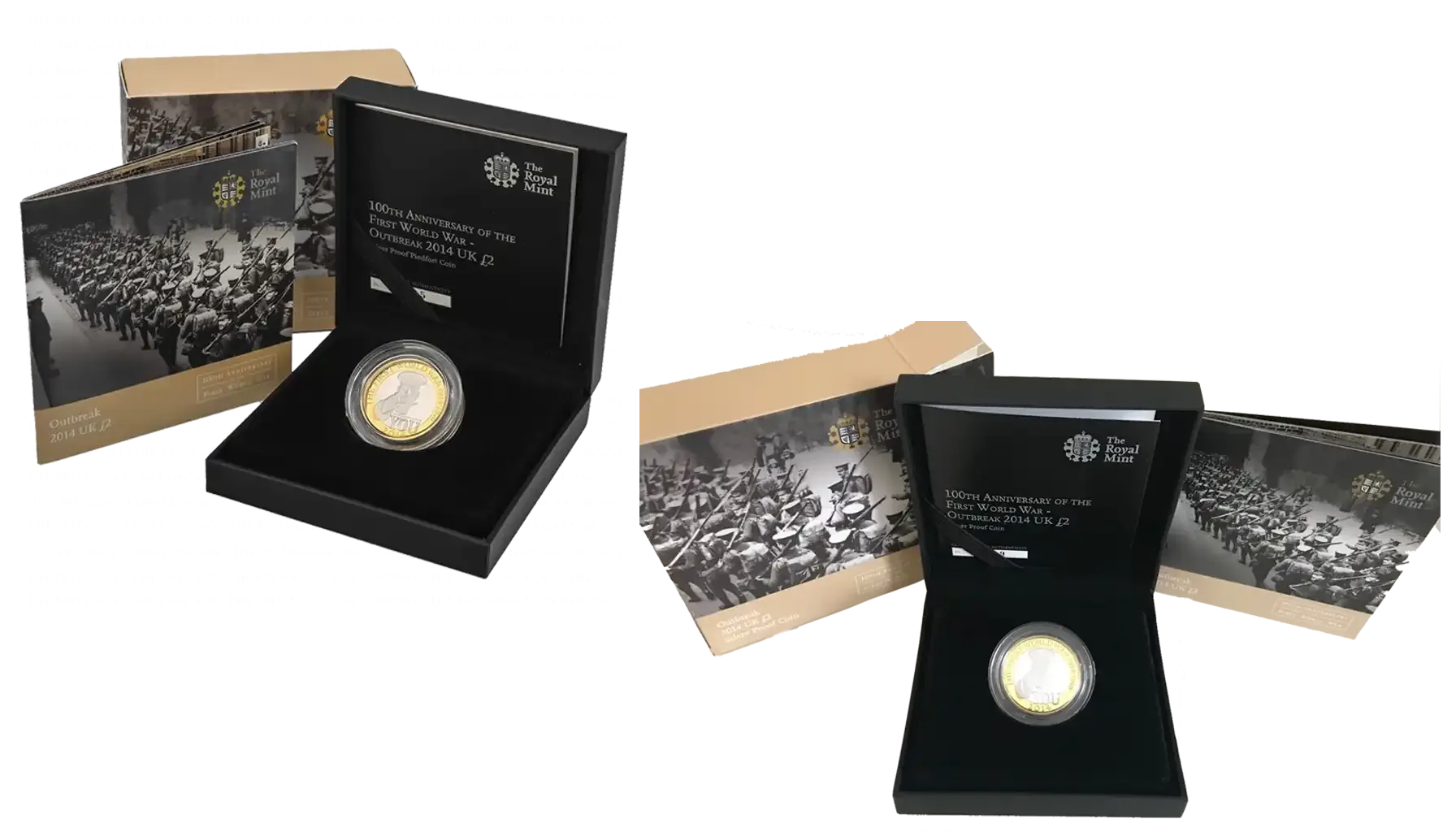
At this point, it is a UK tradition to make commemorative £2 coins to highlight historical events. The US, by the way, also likes to commemorate important events. The 1976 Bicentennial Half dollar marks the 200 years of American independence, for example.
Let’s return to the UK now. In 2014, a century after the First World War, the Royal Mint began its new military series.
2 Pound Coin First World War Overview | |
Country | United Kingdom |
Years of Minting | 2016 |
Type: | Standard circulation |
Shape: | Round |
Composition and metal content | Outer ring: Nickel-brass (76% copper, 20% zinc, 4% nickel) Inner ring: Cupro-nickel (75% copper, 25% nickel) |
Diameter | 28.4 mm |
Weight | 12.0 g |
Main Editions
From 2014 to 2016, the piece had three issues, and each year brought a new reverse design, from concrete soldiers to more abstract figures.
The obverse, meanwhile, stayed the same. The front side features the portrait of Queen Elizabeth II by Jody Clark (the fifth definitive portrait) and includes the usual inscription: “ELIZABETH II D G REG F D 2 POUNDS”. This motto is iconic, akin to the " In God We Trust coins the US has.
The reverse was different each year. The only thing in common is the military theme and edge inscription “For King and Country”.
2014 – Lord Kitchener
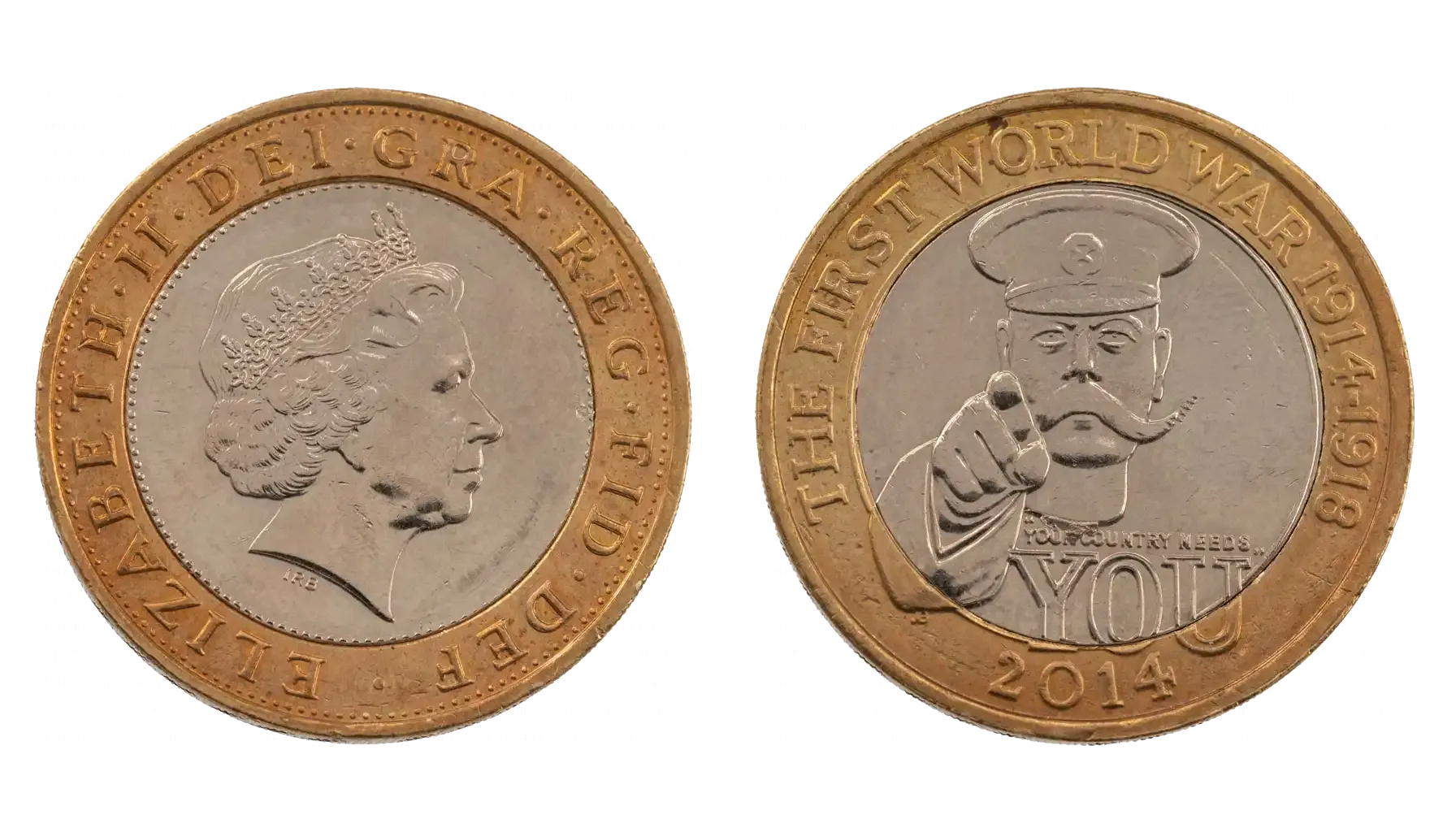
Lord Kitchener (Field Marshal Horatio Herbert Kitchener) was a celebrated British military leader and colonial administrator. Today, he is revered for his campaign in Sudan and South Africa, and his iconic role as the face of Britain's WWI recruitment drive with the "Your Country Needs You" poster.
The same poster made it into the coin's reverse. Lord Kitchener is pointing forward, as if beckoning the viewer to join. The design was brought out by Philip Nathan.
In a wider circle, the piece was nicknamed “Outbreak” because it covers the time when the War broke out.
The First World War £2 coin 2014 had a mintage of ~5,720,000 pieces, fairly standard. But there is a catch. You should know that, depending on the mint location, coins have different mintages. In the US, the Philadelphia Mint often made more pieces than other facilities; therefore, the value was lower.
In the UK, a certain mint facility made considerably fewer pieces, thus increasing the value of the bits they produced. Northern Ireland's mintage was much lower (~485,500) than Wales’, making that version very collectible.
2015 – Royal Navy
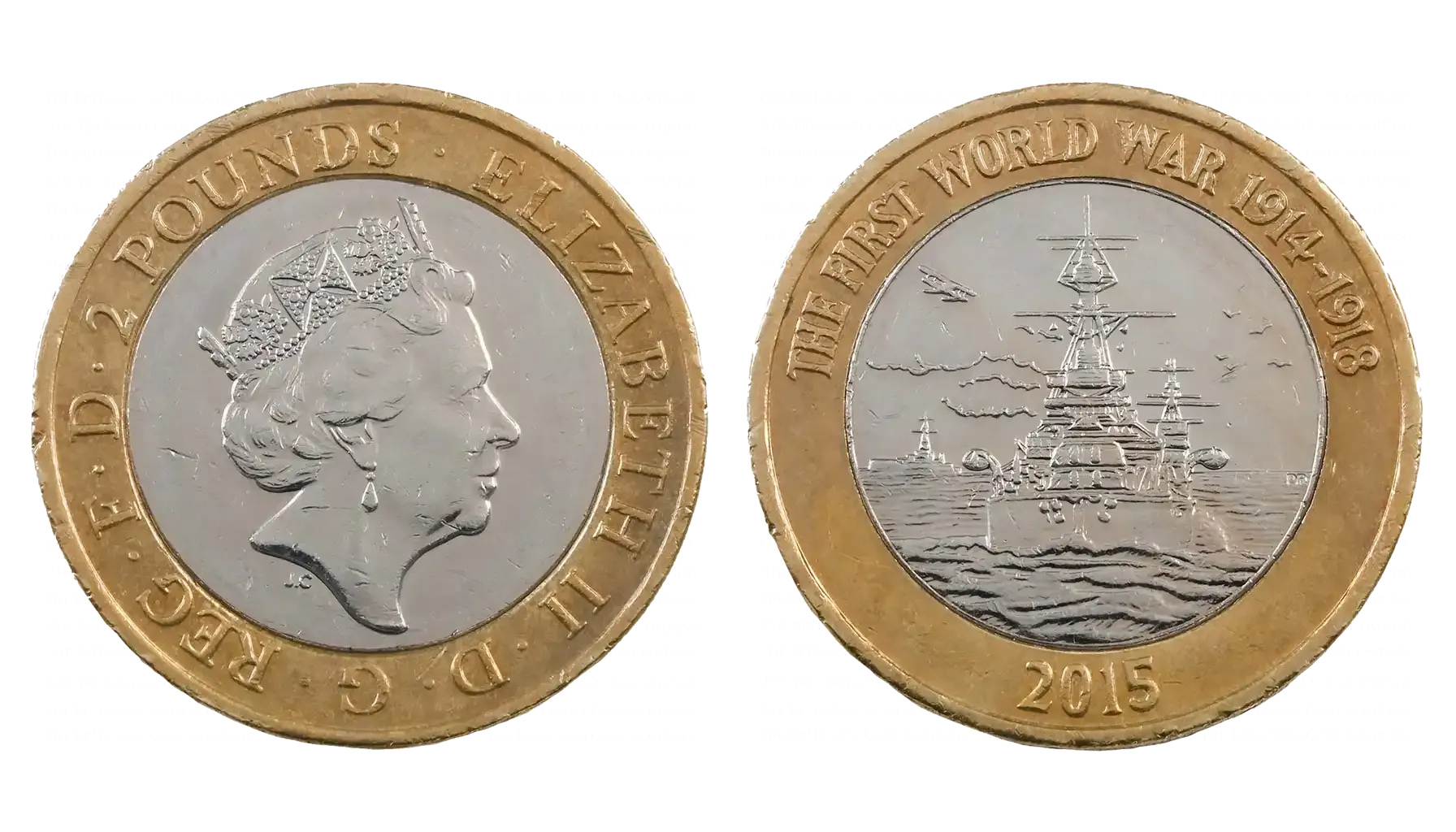
The reverse depicts the Royal Navy, representing the naval contribution during WWI. The British fleet has always been a point of pride for the UK, and during the Great War, the UK had the strongest fleet.
Military artist David Rowland created an image of a battleship sailing forward in the seas. In the background, you see a plane and another battleship.
Unlike other editions, the First World War £2 coin 2015 doesn't feature an inscription “For King and Country” on the edge, and instead displays “The Sure Shield of Britain”.
The 2015 edition had an extremely scarce mintage of ~650,000, making it one of the rarest circulating £2 coins in the UK. Just to compare, in the US, a 2023 Maria Tallchief Quarter was also commemorative, and made 502,560 in just one of three Mints (over 300,000 million throughout all Mints).
2016 – Army
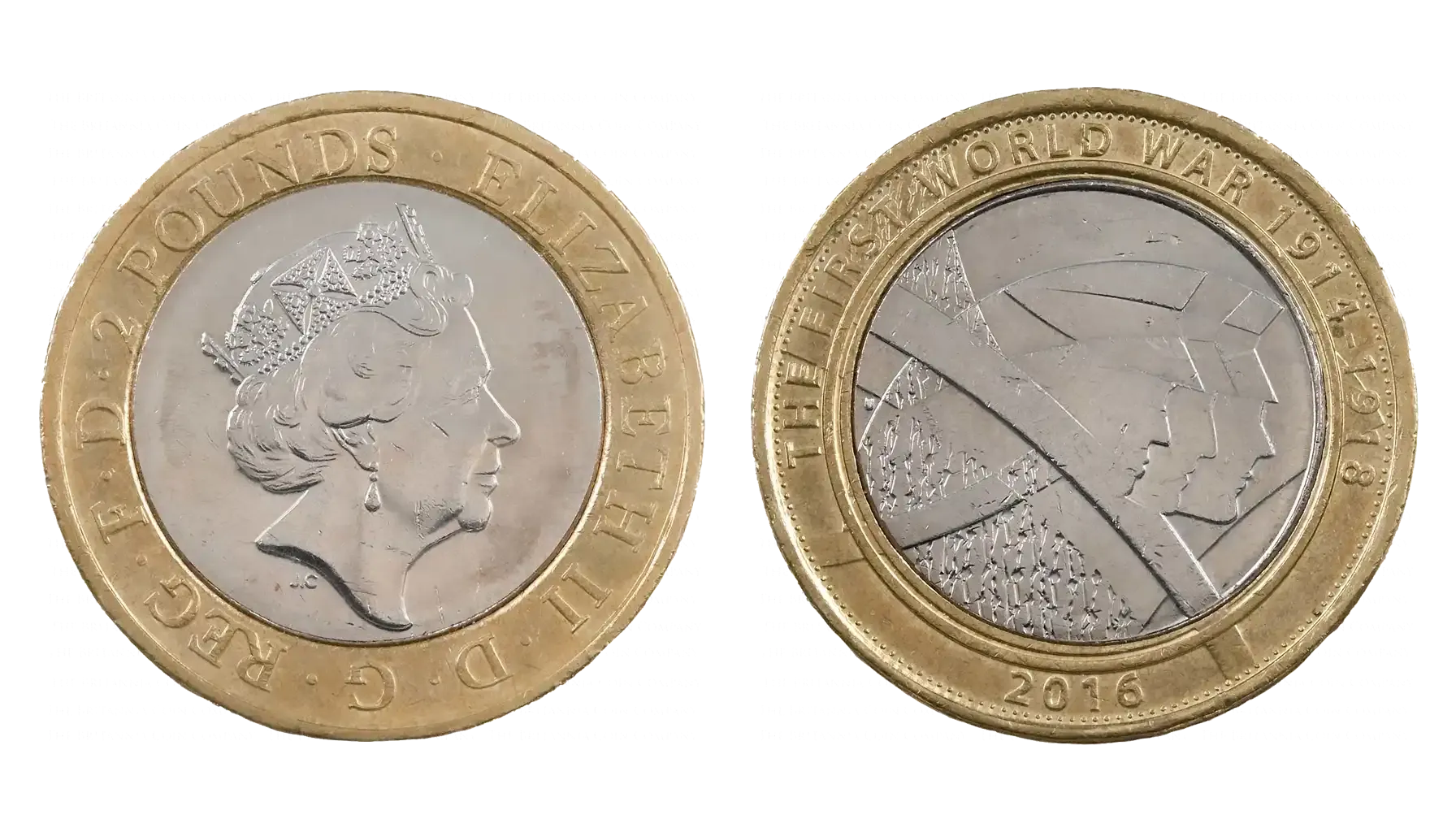
The last edition had a theme of Infantry Soldiers. The reverse shows a line of infantry soldiers marching across the battlefield. Philip Nathan made the design.
The First World War £2 coin 2016 was widely circulated. With a mintage of ~9,550,000, it became the most common coin in the series.
First World War £2 Coin Minting Errors
Coins with errors have always been in favour. Sometimes they can increase the value tenfold, and most of the highest bidders had various errors.
Out of the three yearly editions: 2014, 2015, and 2016, only one had an error of note, the 2014 Lord Kitchener 2 pound.
A very rare variety exists where the denomination (“TWO POUNDS”) is missing from the obverse. Some also call it a “mule” piece, a common nickname for coins that have mismatched obverses or reverses. Other design elements, like the inscription “ELIZABETH · II · DEI · GRA · REG · FID · DEF”, stay the same.
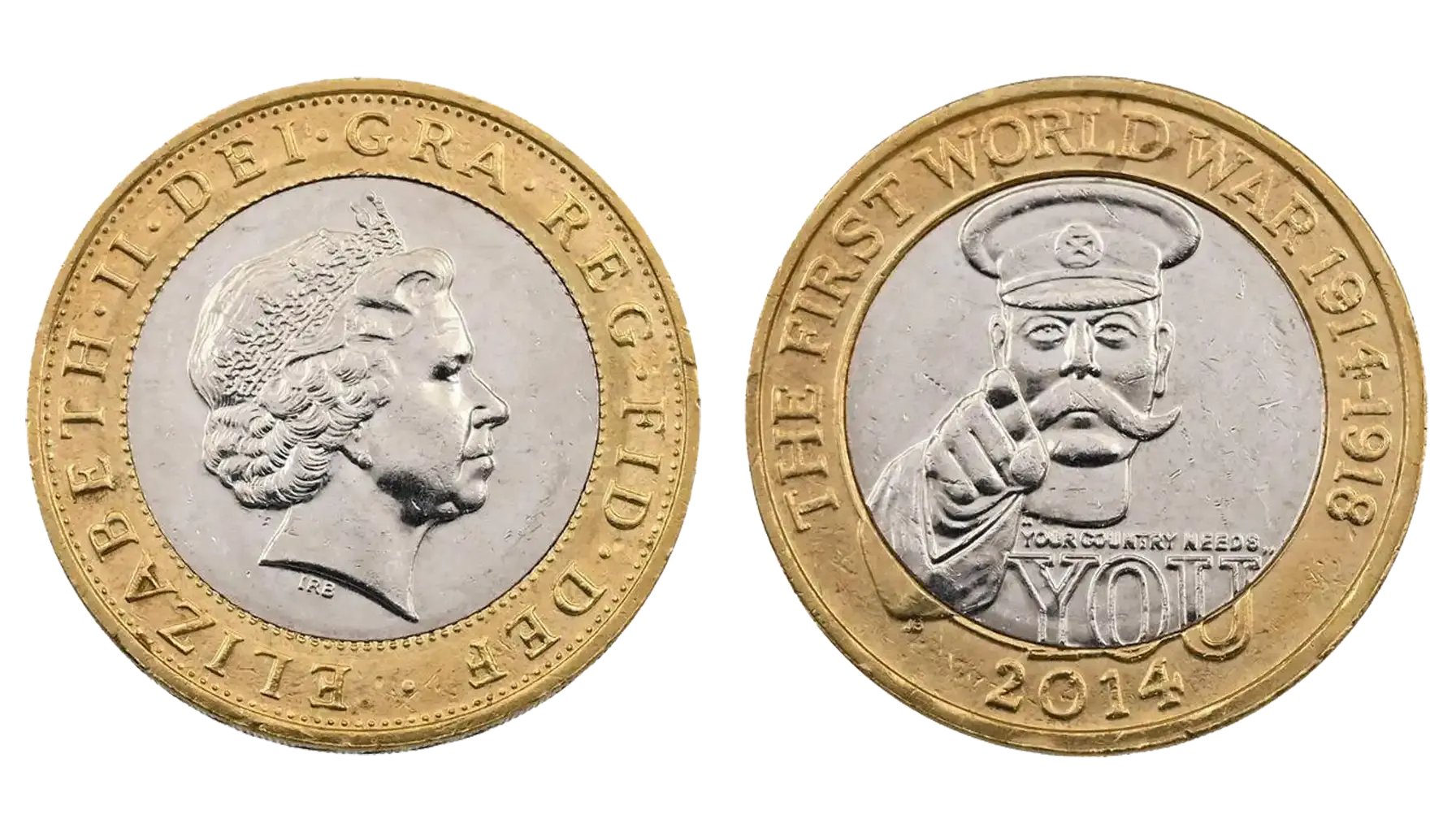
Such pieces are extremely scarce and can reach £1,000+ at auction, 500x of their face value!
Perhaps, we will learn about other eros in the future, as some people keep these bits without checking them. Perhaps one of the prospective pounds had one of these errors:
1. Planchet Errors: The planchet is the blank metal disc used to strike the coin. In some cases, the planchette can be clipped during production. In that case, you see a curved or missing section where the blank was cut incorrectly.
2. Die Errors: The die is the engraved stamp that strikes the coin design. Sometimes the die gets cracks, resembling raised lines on the coin. In rare cases, a blob of extra metal appears where a piece of the die broke off, called a “cud”.
3. Striking Errors: Occur during the actual stamping of the coin. Sometimes the design is not aligned, and a part of the coin is blank, as if shifted. In extremely rare cases, you’ll find a double strike, leaving overlapping images.
First World War £2 Coin Value
Most commemorative pieces are mediocre in terms of their actual value. Most end up a bit higher than their face value, but barely. We will go over every edition.
The First World War £2 Coin 2014 Worth: £2–£3, but without the denomination inscription on the obverse, can be £1,000+ ($1,350+).
The First World War £2 Coin 2015 Worth: £2–£3.
The First World War £2 Coin 2016 Worth: £2–£3.
It seems that the WWI 2-pound series fits into this pattern of mediocre values. Perhaps, with time, the First World War 1914 to 1918 2 pound coin value will be higher. You see, erosion often ruins the surface, and with time, well-preserved pieces will become very rare.
As for now, we can only wait and build on our collection. One app can help you with your collecting hobby.
Coin ID Scanner
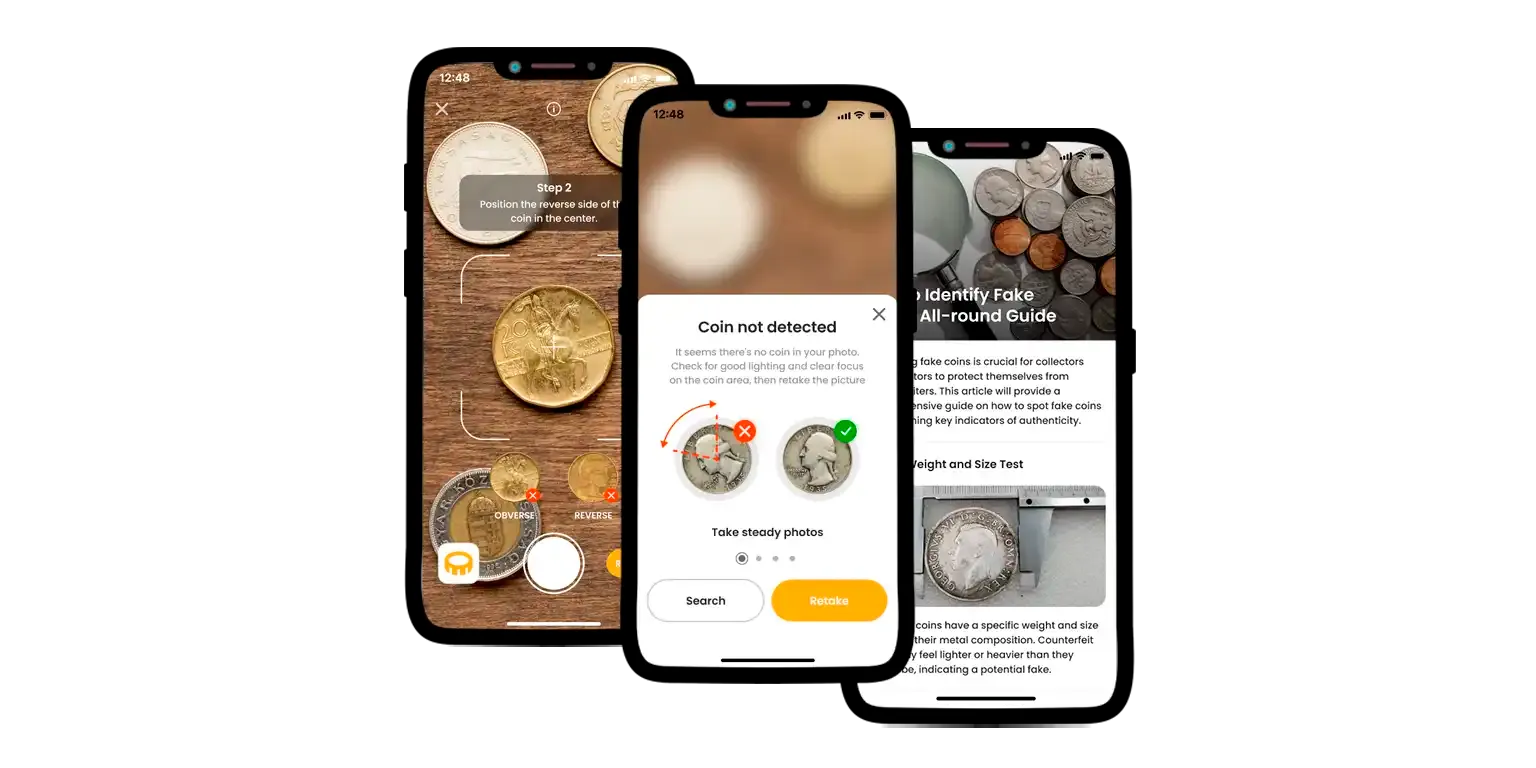
Coin ID Scanner App is a free app that lets users identify, value, and learn about coinage by using photo recognition. It includes organizational tools, educational content, and handles a wide variety of coins globally.
If you wish to learn more about core functions:
AI-Driven Photo Recognition: You can take or upload a photo of a coin, and the app uses artificial intelligence to identify its country of origin, denomination, rarity, composition, and even estimated value within seconds.
Extensive Coin Database: The database covers over 150,000 bits, including ancient, modern, rare, and commemorative pieces.
Collection Management Tools: Identified pieces can be saved and organized in a personal “My Collection” section inside the app.
Numismatic News & Guides: Provides educational resources such as numismatic history, grading tips, mint mark guides, and recent blog posts on collectible coins.
AI Consultant Assistant: A built-in assistant that answers coin-related questions and helps beginners or enthusiasts navigate coin collecting.
FAQ
Were there 2017 and 2018 Editions for the WWI £2 Coin?
Yes. The UK Mint intended to make a dedicated piece for every war year: 2014 – Lord Kitchener, 2015 – Royal Navy, 2016 – Army Infantry / Battle of the Somme, 2017 – Aviation, and 2018 – Armistice. Thus, 2016 and 2017 complete the set. We should note that both late editions were less popular than those from 2014–2016.
Does the UK Have World War II Coins?
Yes. The UK issued a few commemorative pieces for WWII. The most notable ones were minted in 2005 (60th Anniversary of the End of World War II) and in 2020 (VE Day 75th Anniversary £2). Perhaps in 2039, there will be a proper series of commemorative bits.
Where can I buy WWI £2 coins?
The Royal Mint is an official maker and supplier of UK coins. They always have new collector issues. If you don't live in the UK, you can still order bits from the Royal Mint via shipping. Coin auctions in 2025 and numismatic shops often have many pieces to offer in various conditions, from circulated to proof.

 Facebook
  X (Twitter)
  Pinterest
  LinkedIn