Contents:
The United States Mint is a prime example of how authorities pass new initiatives to commemorate some of the most significant events that shaped the nation and paved the way for it to prosper. Throughout its minting history, there were several memorable releases, each capturing the spirit of its era and feeling the need for the nation to honor its milestones through tangible symbols. One of the most notable releases by far is undoubtedly the 1976 Kennedy Bicentennial silver half dollar.
Having been produced for more than a decade, the Kennedy 50-cent pieces culminated in the iconic 1976 issue – the iconic design and historical significance did their job to make “one more coin” a legend in the metal flesh. So, what do these numismatic creations look like? What may define the 1976 Kennedy half dollar value, and which features identify this coin as superior and unique?
Background Matters: The History of the Kennedy Half Dollar 1976
The history of the Kennedy 50C started abruptly, without long-lasting preparations and mild transitions from one design to another. As such, the first issue in the series was the 1964 half dollar coin, which was meant to become a tribute to President John F. Kennedy after his cruel assassination in 1963. By the mid-1970s, the design had turned into the symbol of American coinage with a solid legacy and love from the public.
1976 was truly special to the nation, for it was the 200th anniversary of American independence, i.e., a moment that reminded Americans of their heritage and their fight. So as to celebrate such a memorable date, Congress authorized a temporary redesign of three circulating coins, which included the quarter, half dollar, and dollar.
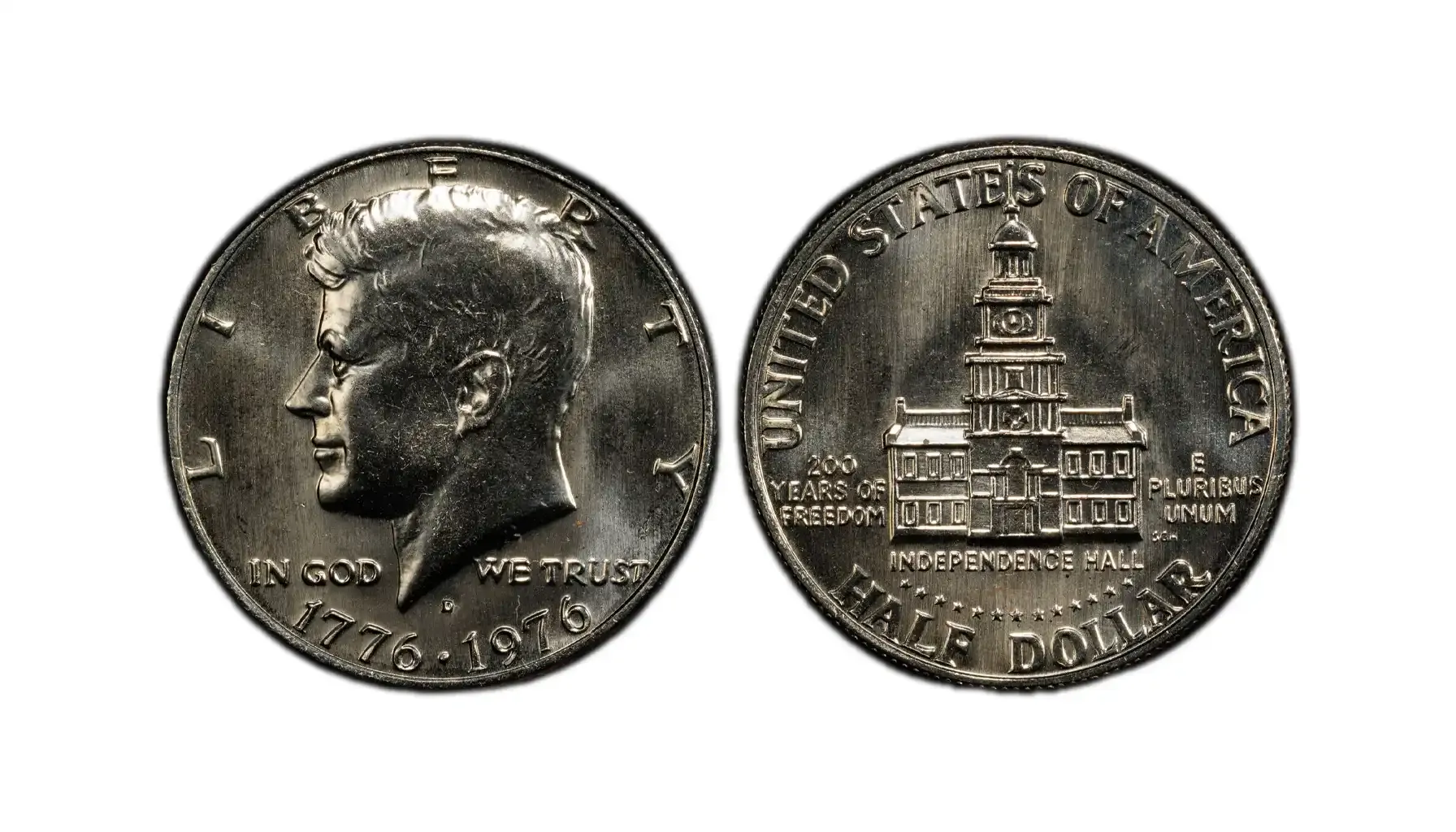
As for the 50-cent coin, the only modification was the replacement of the traditional presidential seal on the reverse with a detailed depiction of Independence Hall in Philadelphia (i.e., the place where both the Declaration of Independence and the Constitution were signed).
Although all pieces bear the dual date “1776–1976”, production actually began in 1975, with no half dollars having been struck with this date. Yet, the Mint was quite productive during that year: there were two major varieties of the coin, i.e., silver and the usual copper-nickel “clad”. Each kind, on its part, might also be categorized according to the strike quality (=type). Such a unique release with a great numismatic potential to hold.
Design Features and the Man Characteristics
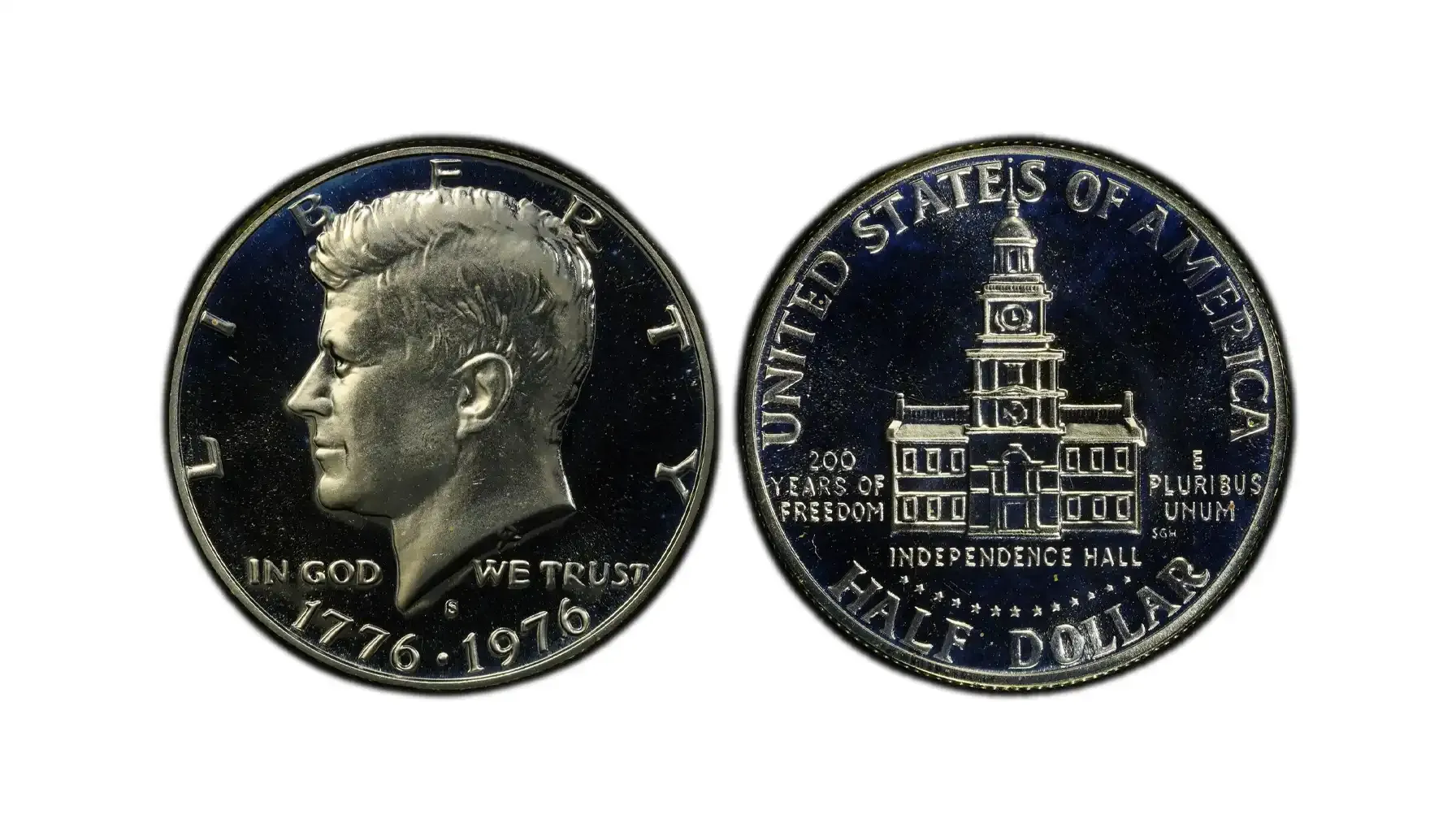
Obverse: The obverse side, by tradition, retains a well-known portrait of John F. Kennedy, along with the inscriptions “LIBERTY” across the upper rim, “IN GOD WE TRUST” below Kennedy’s chin, the dual date “1776–1976” at the bottom, and a mint mark above the year.
Reverse: The new reverse design introduced a detailed depiction of Independence Hall in Philadelphia by Seth G. Huntington, supported by the inscriptions “UNITED STATES OF AMERICA" and the denomination “HALF DOLLAR” along the edge (surrounding the main picture), “200 YEARS OF FREEDOM” to the left of the building, and “E PLURIBUS UNUM” to the right.
The Main Characteristics of the 1976 Kennedy Half Dollar | |
Designer (Obverse) | Gilroy Roberts |
Designer (Reverse) | Seth G. Huntington |
Weight | Clad: 11.34 g Silver: 11.50 g |
Diameter | 30.6 mm |
Thickness | 2.15 mm |
Composition (Clad) | Clad: Outer layers of 75% copper, 25% nickel, and the core of pure copper Silver: 40% silver, 60% copper |
Silver Content | 0.1479 troy oz pure silver |
Edge | Reeded |
Mintages | Philadelphia Regular (Clad): 234,308,000 Denver Regular (Clad): 287,565,248 San Francisco Proof (Clad): 7,059,099 San Francisco Regular (Silver): 11,000,000 San Francisco Proof (Silver): 4,000,000 |
Silver Content and Composition
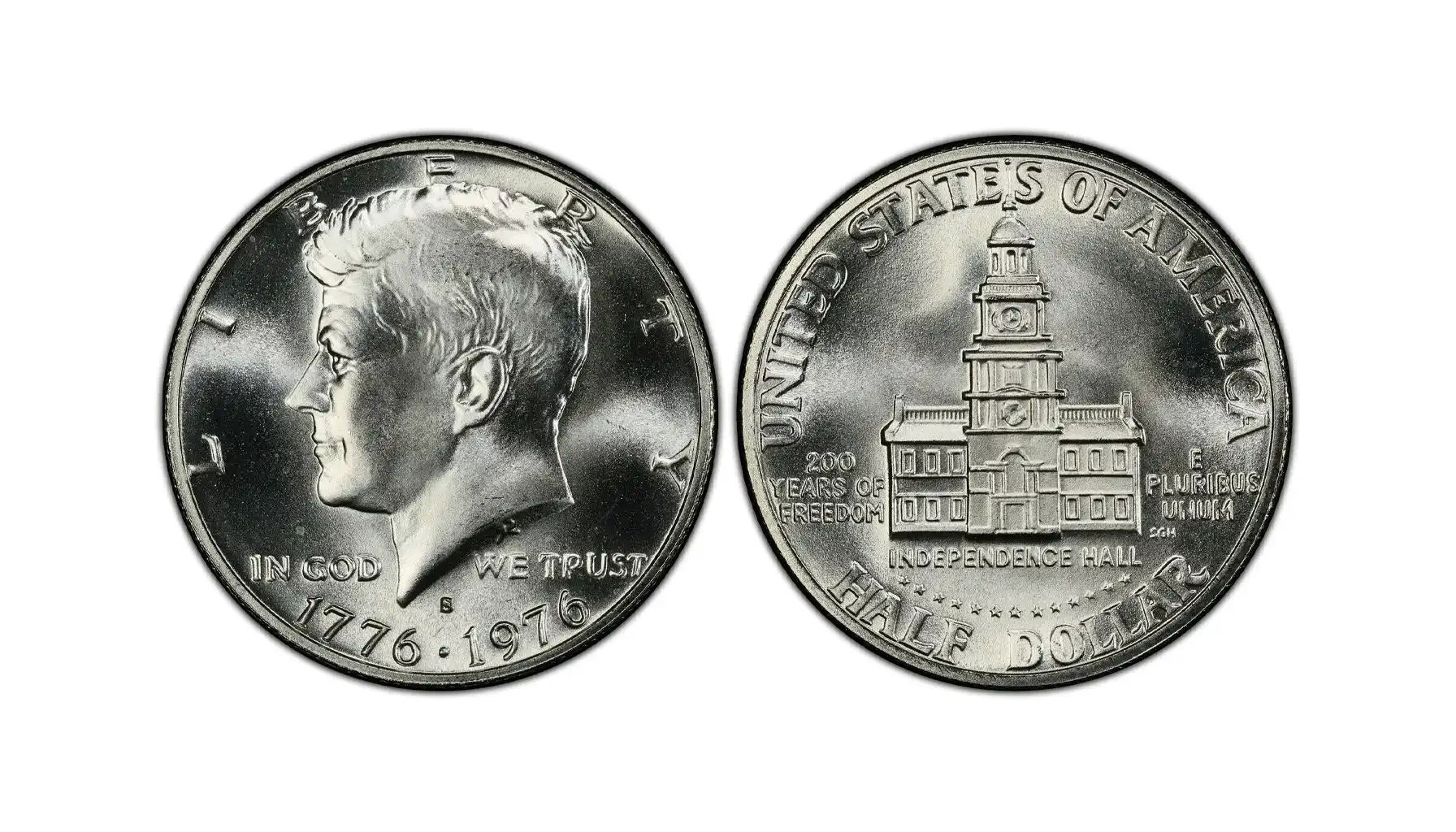
As we have mentioned above, the US Mint released two major varieties of the same Bicentennial 50C of two compositions, i.e., clad and silver. The vast majority of these coins were struck at the Denver and Philadelphia Mints, and they were made for regular circulation. These pieces followed the same copper–nickel clad composition used in half dollars since 1971.
To honor the Bicentennial in a more distinguished way, the San Francisco Mint produced special editions in 40% silver-clad composition, which were sold in proof and uncirculated sets. The precise composition was as follows:
80% silver, 20% copper (outer layers)
79% copper, 21% silver (core)
Each of these pieces contains 0.1479 troy ounces of pure silver, which is why they are basically more valuable than their clad counterparts. As of August 2025 (with silver currently selling at $38.43 per troy ounce), the bullion (melt) 1976 bicentennial half dollar value is:
0.1479 × 38.43 ≈ $5.68
Nevertheless, the worth of the 1776 1976 half dollar is a bit more complicated than that of its composition only. This may depend on the condition, special designations, mint mark, and whether the coin has errors or not. So, how much is a 1976 half dollar worth if the instance is erroneous?
Related article: Silver Price Predictions 2030: How High Could It Go?
Current 1976 Half Dollar Value by Errors and Types
Each 50-cent coin released in 1976 is inherently unique, but there are situations when even the most exceptional pieces may become even more appealing and most wanted -- errors. The 1976 Kennedy half dollar errors are incredibly scarce and peculiar in their forms, which is why they do deserve a closer look at the most notable varieties and their current values on the market.
Note: The following information is taken from open resources like numismatic auction platforms and coin grading services like NGC or PCG and is subject to alterations. Please consult relevant channels for more relevant data when needed.
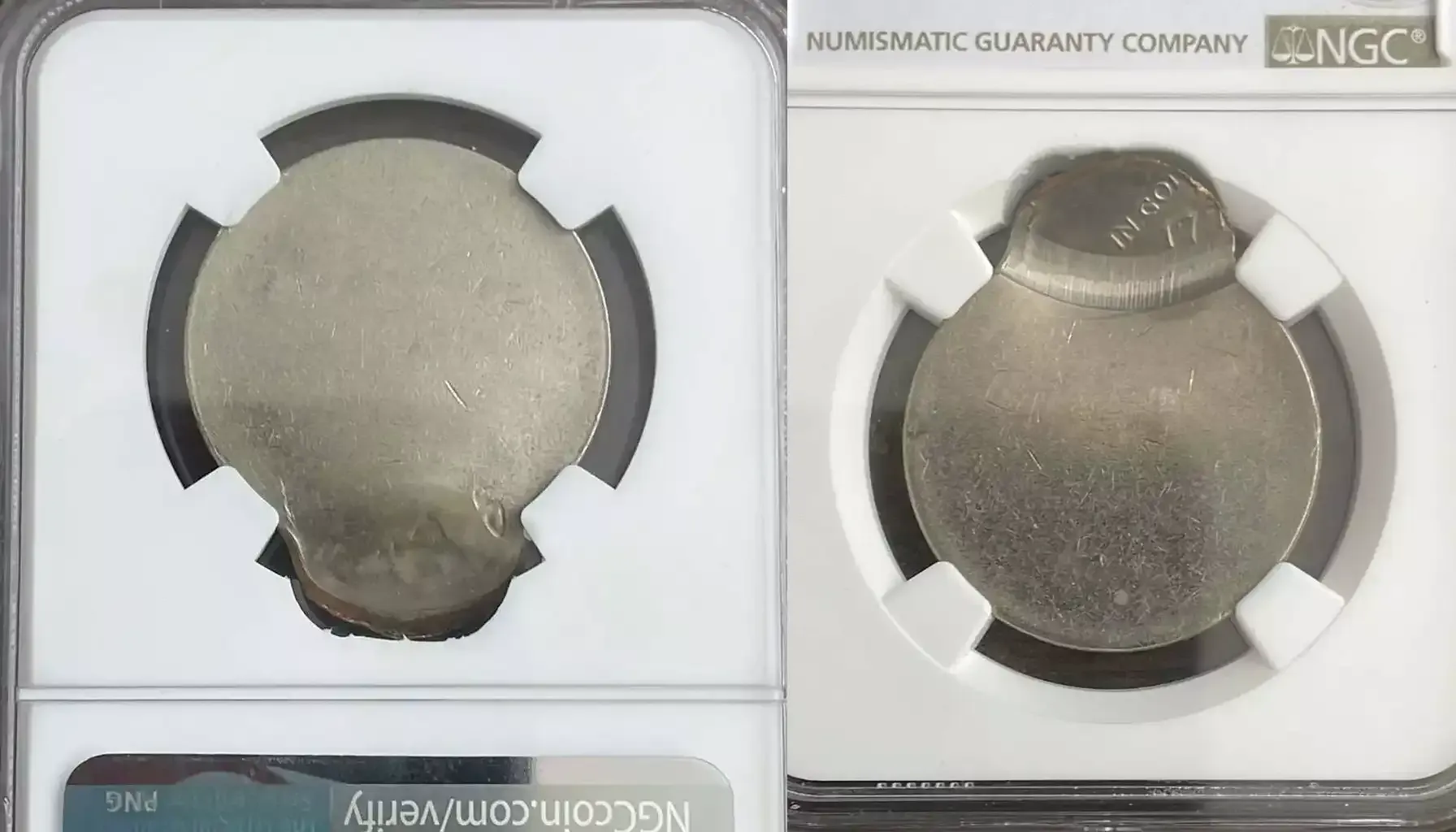
80% Off-Center Strike
Estimated Value: $2,750
An off-center strike is one of the most valuable deviations associated with the Bicentennial 50Cs, especially if the degree exceeds 50% of misalignment. As such, the error presupposes that the coin blank (planchet) was misaligned during striking, which consequently caused much of the design to appear outside its intended position.
Severe misstrikes (just like the one we are currently reviewing) usually never leave the mint, and if this happens, its value breaks the records in an instant. Beware of scams, though – they are frequent.
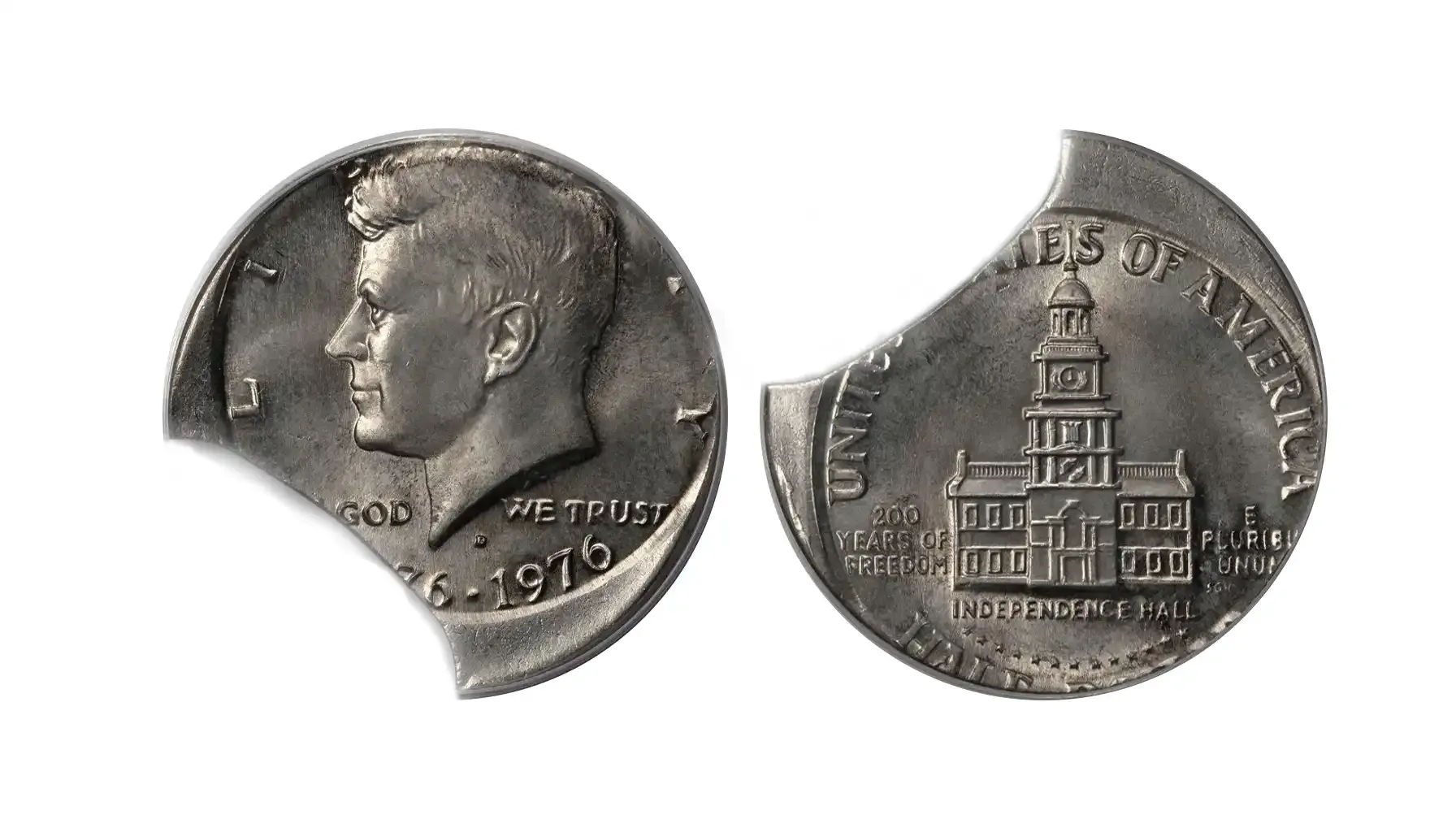
Clipped Planchet
Estimated Value: $2,250
The second 1976 half dollar error is a clipped planchet that happens when the blank metal disc is improperly cut from the sheet. As a result, one may see a crescent-shaped “bite” out of the coin with different degrees of severity. For a half dollar 1976, it is the key variety, for it visibly disrupts the Bicentennial design while still leaving the main features identifiable.
DDO & DDR (Doubled Die Obverse/Reverse)
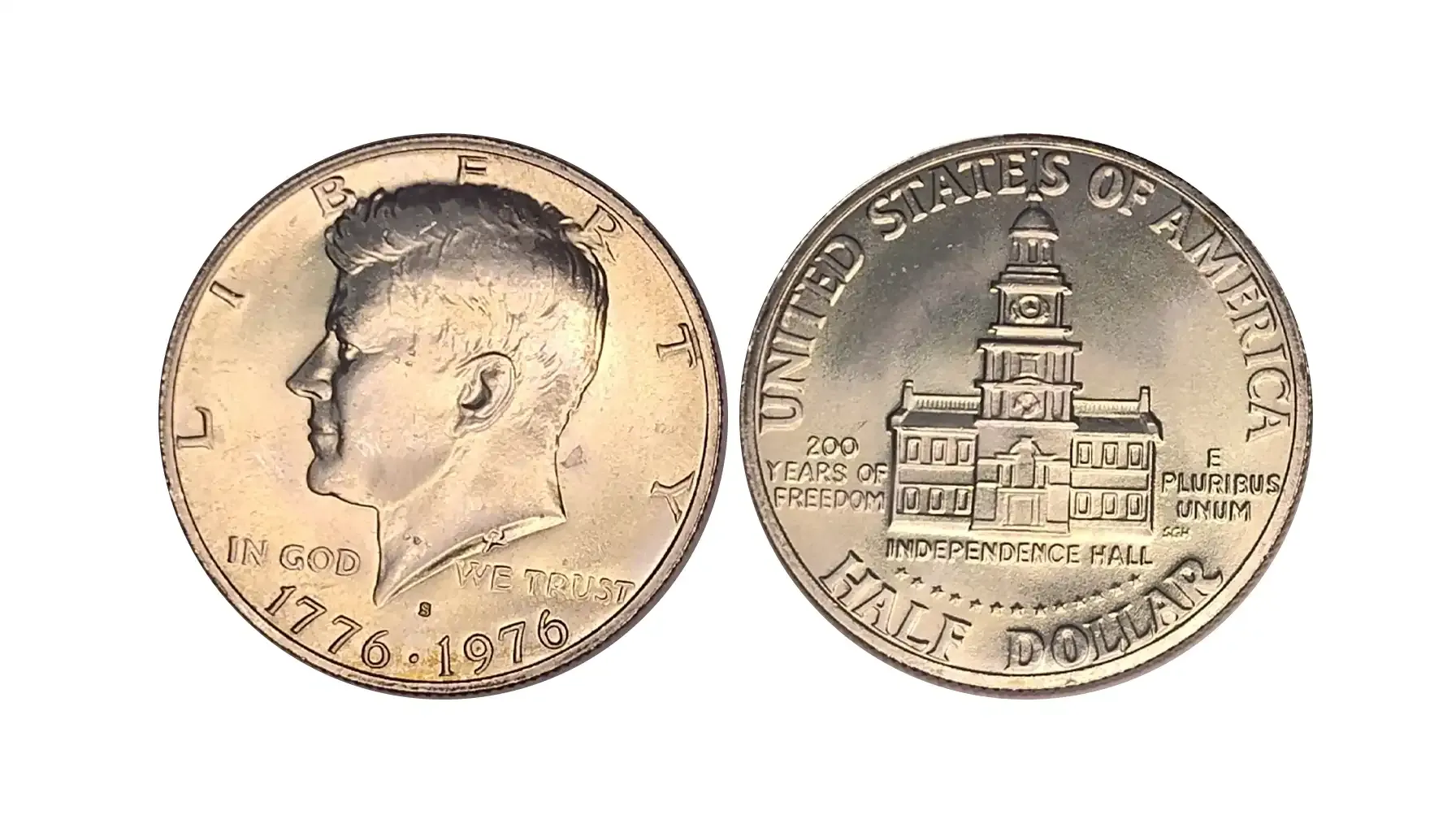
Estimated Value: $2,250
Nonetheless, there are errors that may be considered the most popular among collectors – doubled die obverse/reverse ones. When the coin die itself is improperly prepared, some elements (lettering, numbers, or even design features) may appear doubled, which grants this deviation such a distinctive name. The more doubled the elements are, the more valuable the coin can get in the end.
Struck Thru Threads
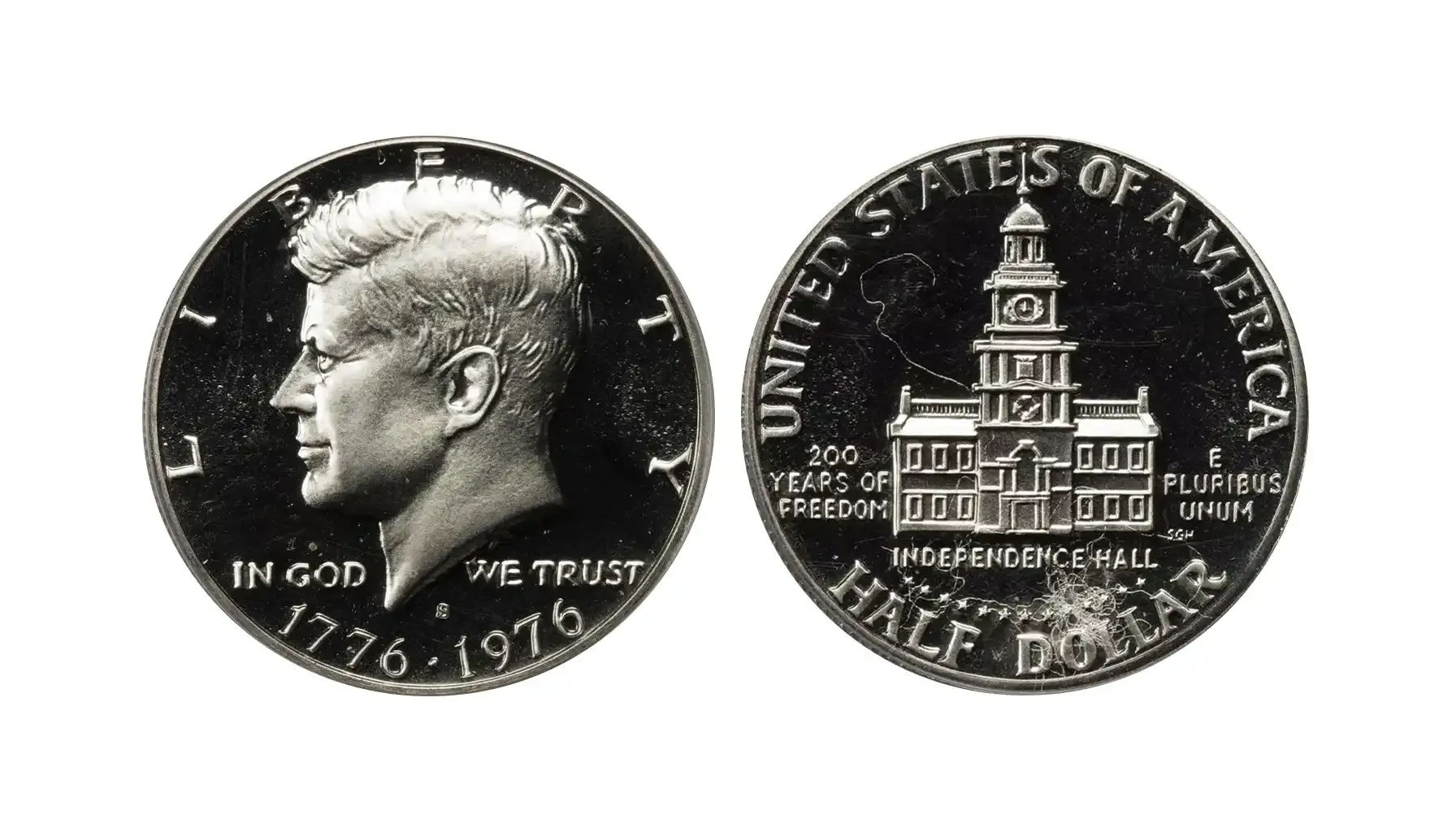
Estimated Value: $1,150
A “struck thru” error is an exclusive yet subtle deviation with a foreign object, be it cloth or thread, coming between the die and the planchet during striking. Therefore, there might appear faint (or, vice versa, well pronounced) impressions on the surface of various patterns and forms. Imagine having lightning on the coin without the initial intention for it to be present – a unique occasion that leaves one-of-a-kind markings on the original design.
D Over D (Repunched Mint Mark)
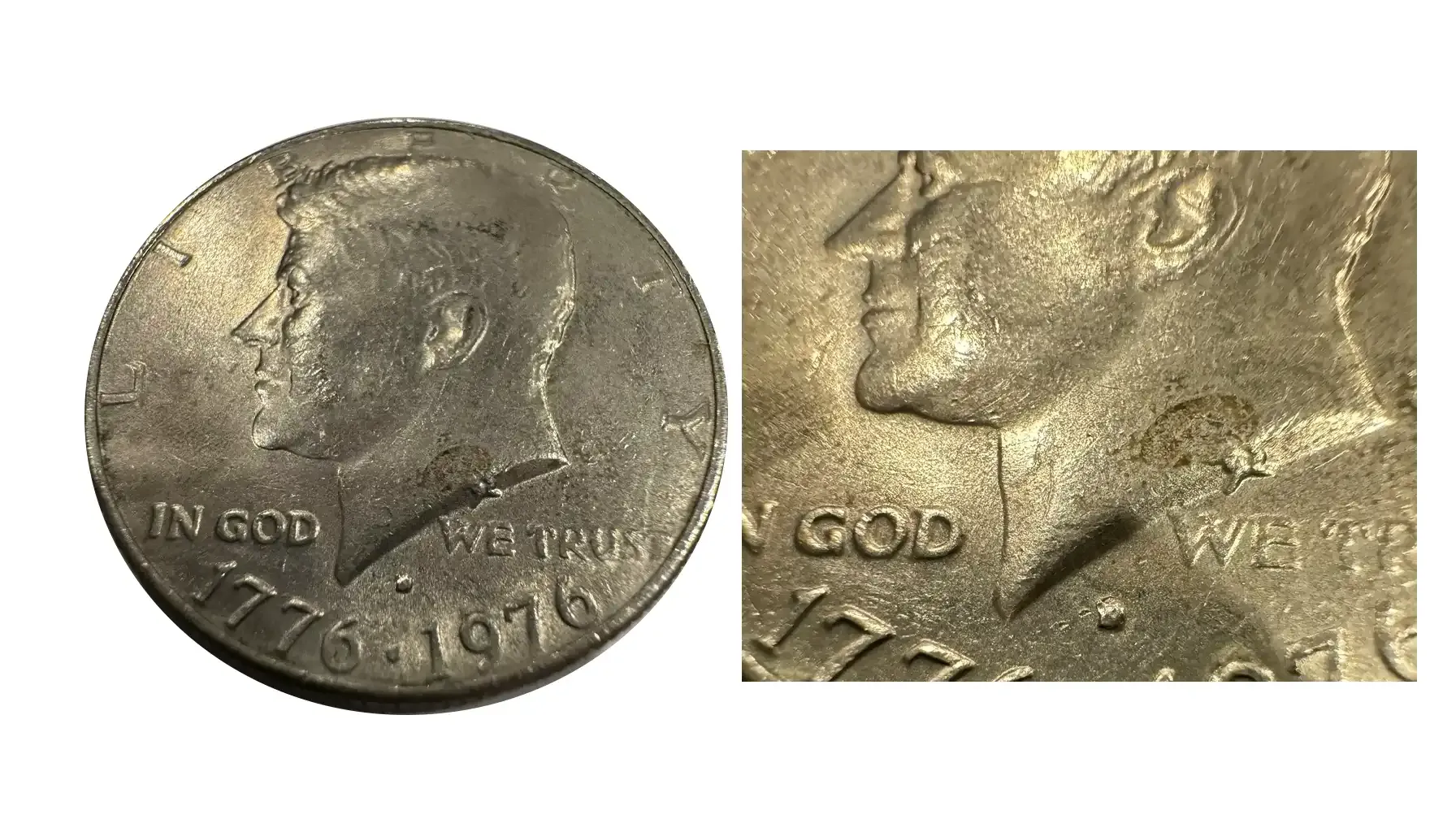
Estimated Value: $900
Sometimes, coins may bear confusing mint marks, but this does not necessarily mean that they are counterfeit. In fact, such a deviation points to a genuine mint error, which means that it was accidentally punched more than once in slightly different positions. On Bicentennial 50Cs, the “D over D” error is subtle but highly collectible, for it reveals the manual nature of minting at the time and appeals to collectors anyway.
“Missing Stars”
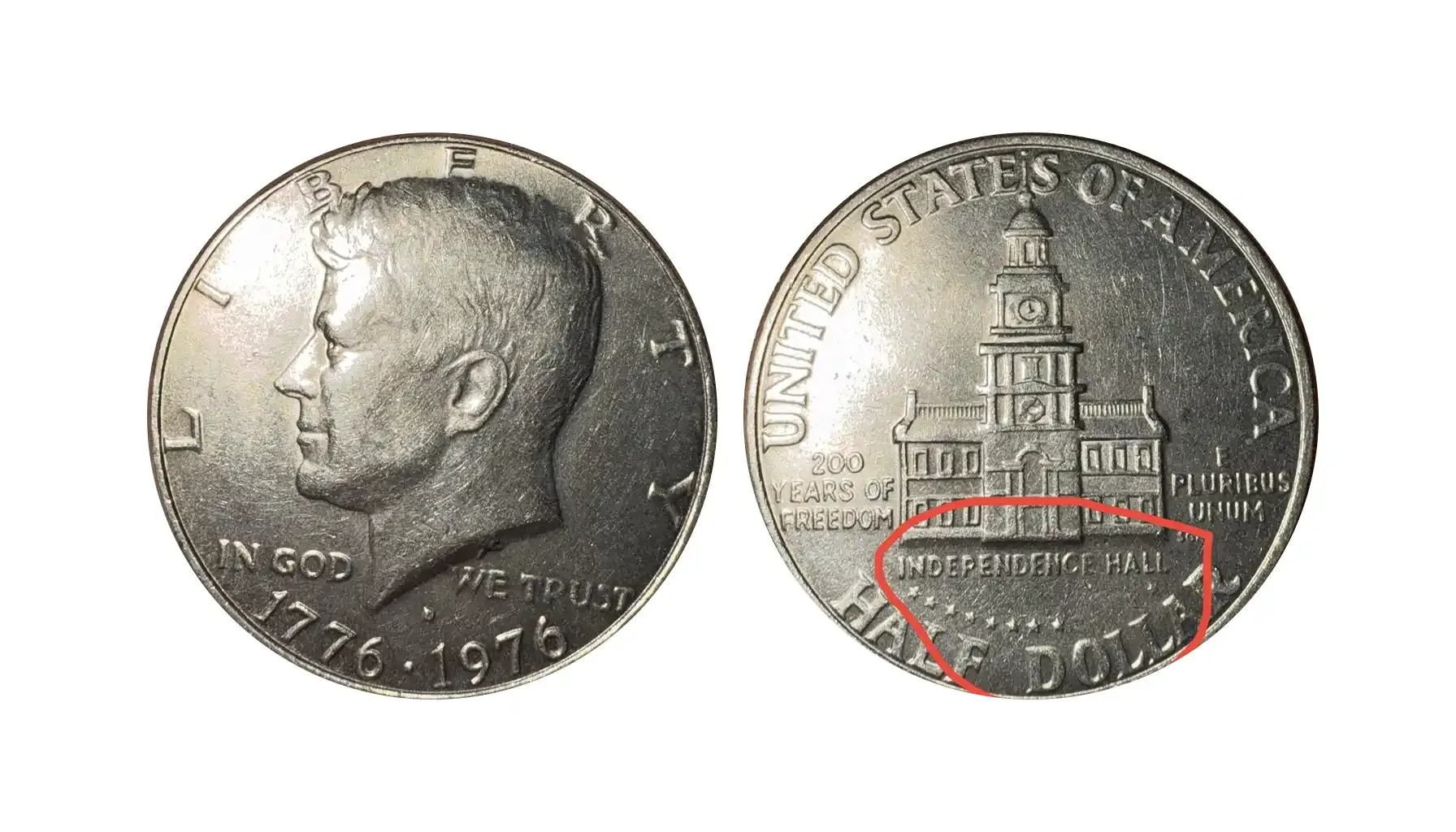
Estimated Value: $900
Let us turn to the error that significantly modifies the appearance of the coin and its design as a whole. At times, Bicentennial halves may partially miss stars or have them weakly struck below Independence Hall on the reverse. This usually results from filled or worn dies and, hence, makes these numismatic creations rather scarce.
Broadstruck Out of Collar
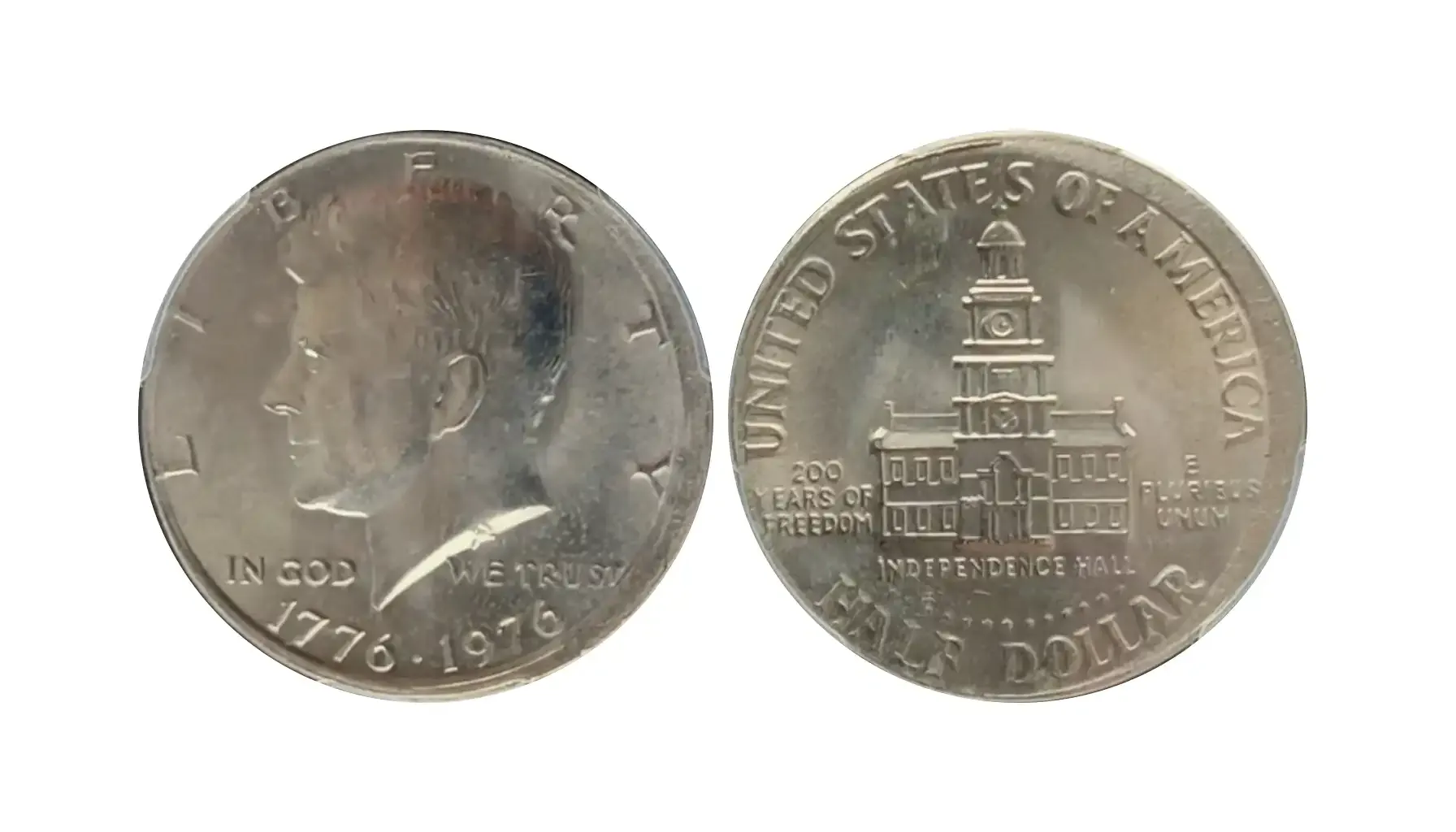
Estimated Value: $600
Finally, here comes a relatively common anomaly that affects the alignment of the design without some parts being missing. By and of itself, when a coin is struck without the restraining collar that normally shapes its edge, there might occur broadstrikes, which cause its features to spread out. This usually affects lettering (e.g., "IN GOD WE TRUST").
A Few Tips for Those Who Hunt
Collecting may be daunting and even misleading every so often, and this can be as much about patience as it is about knowledge and preparation. Here are a few essential tips for one to keep in mind:
Check for Silver Content: Remember that two types were issued: the copper–nickel clad strikes made for circulation, and the 40% silver-clad editions produced for collectors. Knowing the difference is the key -- do not fall into the trap of sellers.
Look Closely for Errors: Striking mistakes such as doubled dies, clipped planchets, or off-center strikes are among the most desirable. Even subtle flaws can turn an otherwise common coin into a rare find worth hundreds or even thousands of dollars.
Examine Condition Carefully: A coin’s grade, attributed by PCGS, NGC, or ANACS, can make the difference between face value and significant market premiums.
Pay Attention to Provenance: Proof issues, especially those struck in silver, were minted with collectors in mind. Spotting one in pristine condition could be a great addition to any collection.
Employ Additional Tools for Instant Analysis: Should you be serious about collecting, you do not have to do it all alone. Modern technologies make coin hunting far easier, especially when one uses tools like Coin ID Scanner*.
*Coin ID Scanner is an innovative app that allows you to identify coins, detect errors, check their backgrounds, manage collections, and learn more about numismatics itself on the spot. Make it smart, or someone may spot that rarity before you do.
Commemorative coins are always about the legacy rather than instant profit. Get one, and your collection is going to become culturally significant and financially worth it.

 Facebook
  X (Twitter)
  Pinterest
  LinkedIn