Contents:
The 1887 Seated Liberty dime represents a mature phase of a design that circulated for over half a century in American numismatics. For collectors, the 1887 issue presents an accessible entry point into the classic series. For investors, its value hinges on a clear set of objective market factors.
For new insights about rare dimes and other items – download the best free coin identifier and value app.
The 1887 Seated Liberty Dime at a Glance
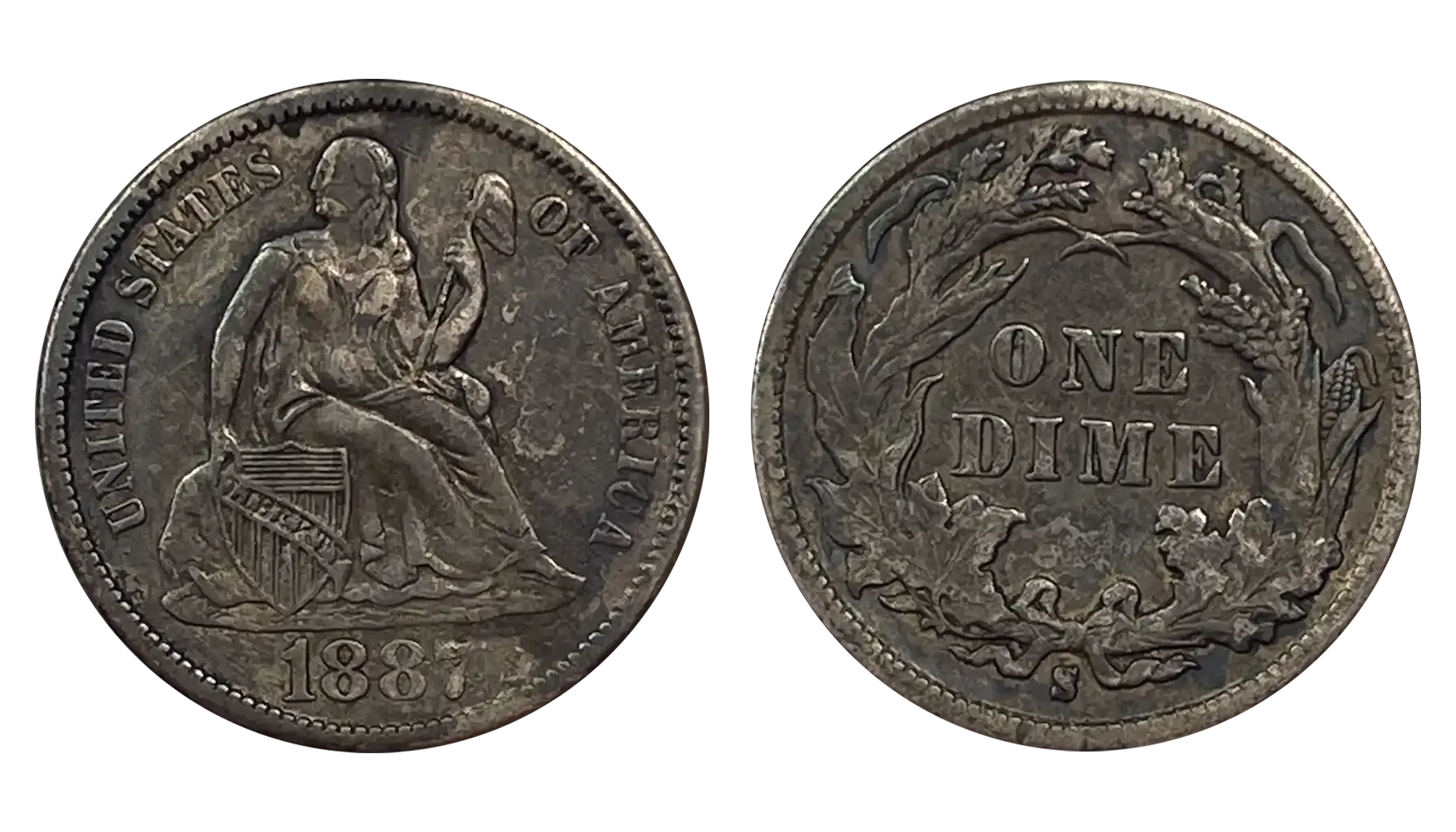
The United States Mint struck the 1887 Seated Liberty dime as part of a long-running series. Minting a relatively large number of items this year set it apart, and today that high mintage still determines how easy the coin is to find and what it costs. The item consists of a standard 90 % silver and 10 % copper alloy. Collectors frequently target this issue to finish their series date runs.
Period | 1837–1891 |
Diameter | 17.9 mm |
Weight | 2.5 g |
Edge | Reeded |
Composition | Silver |
Designer | James B. Longacre |
From Mint to Market: Dime History
Production Era
The item was minted under the Coinage Act of 1873, which halted the free coinage of silver dollars but allowed subsidiary silver coins like the 1876 dime to continue.
The Philadelphia Mint struck over 11.2 million pieces for general commerce. The New Orleans Mint produced only 5,950 items, primarily for regional use.
The Design Legacy
By 1887, Christian Gobrecht's Seated Liberty design had circulated for 50 years. This issue featured the final design with arrows removed from the date, a style used since 1875. It represents the closing chapter of this iconic series before the Barber dime replaced it in 1892.
Modern Numismatic Recognition
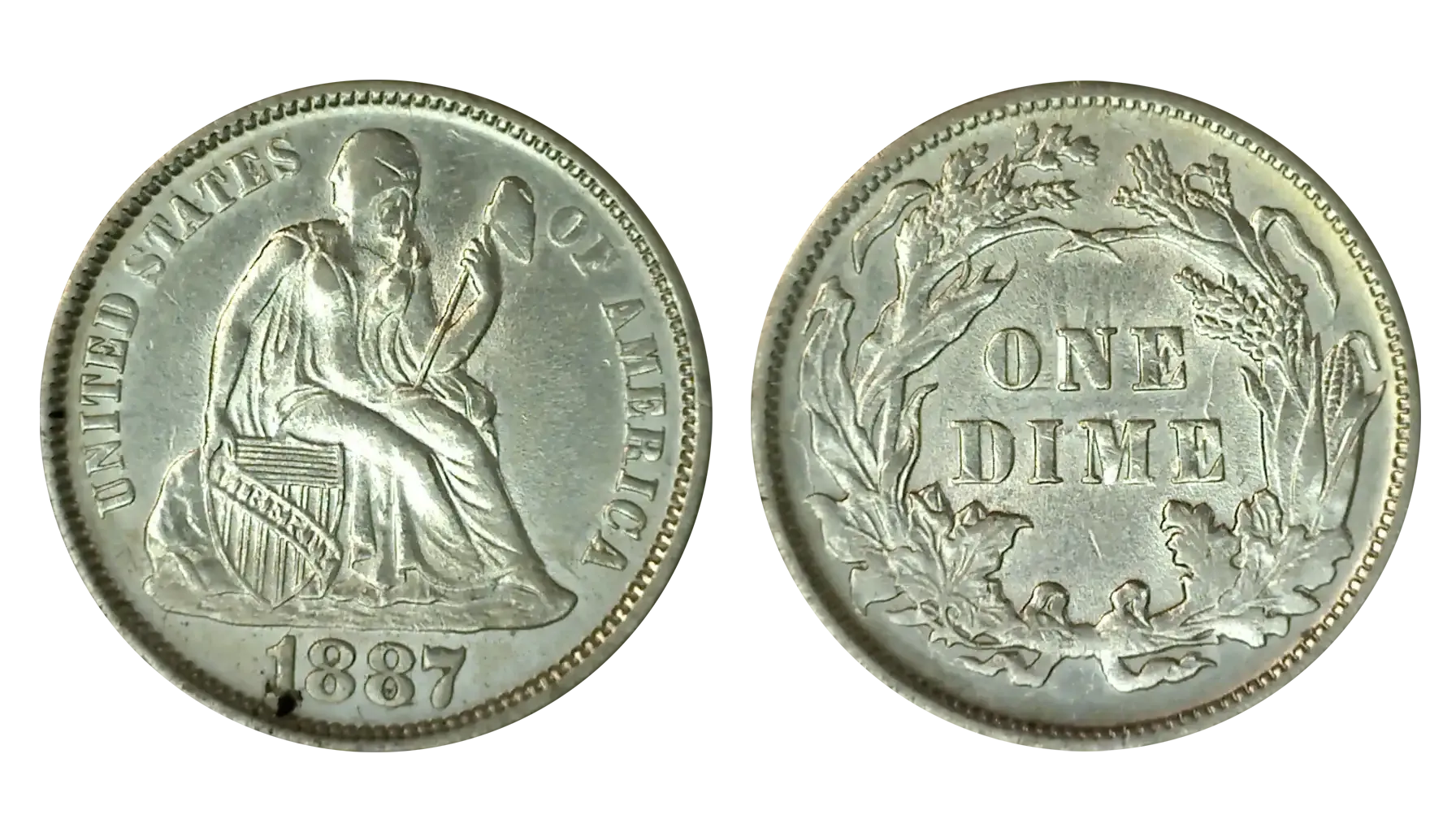
These days, collectors frequently seek out the 1887 Philadelphia one. The items are known for their conditional rarity, and specimens in superior condition often bring the highest prices in the series.
What makes them scarce is the combination of low initial production and the substantial number that didn’t survive over the years – this dual factor cements their importance in the collector community.
Design and Key Details of the 1887 Seated Dime
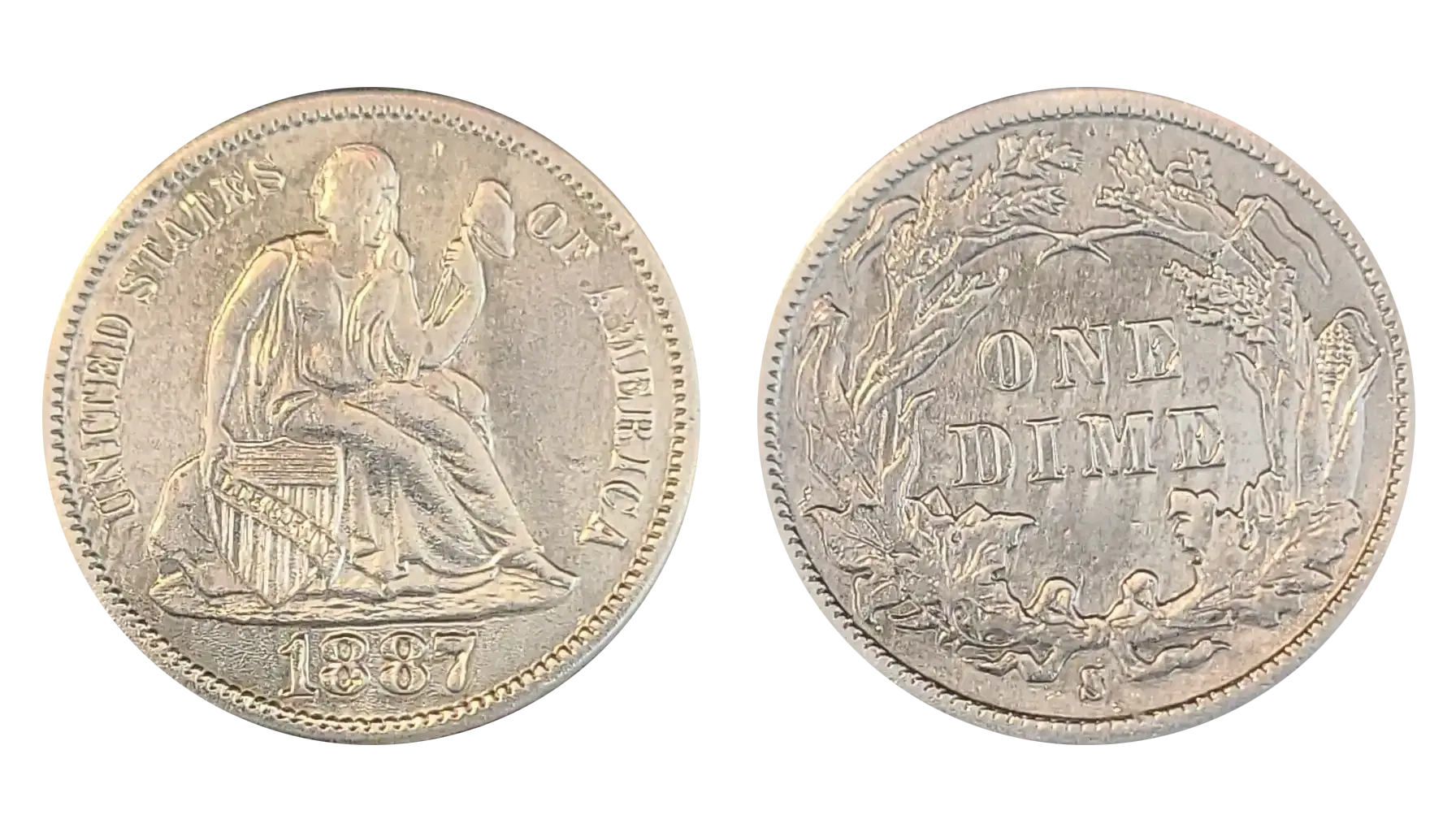
The front of the coin bears Christian Gobrecht’s Seated Liberty design. Liberty is shown sitting on a rock, with a shield in her right hand and a liberty cap atop a pole in her left. The date 1887 is positioned underneath. The reverse side presents a laurel wreath encircling the text, and the words follow the coin’s perimeter.
List of Main Features
Grade controls the coin’s appearance.
Retains its full luster and crisp details.
When heavily circulated, the item shows wear on Liberty’s knee, breast, and the wreath’s raised areas.
The reverse displays the mint mark beneath the wreath.
Issues from Philadelphia do not have a mint mark.
1887 Dime Value Today
Today’s market shows a significant spread in 1887 item values – from mere dollars for worn coins to thousands for pristine, rare specimens. The item’s grade determines the primary value, and its mint mark follows as the secondary factor.
The Philadelphia mintage is 11,283,229, and San Francisco is 4,454,450.
This table illustrates the direct correlation between grade and market value for both mint marks:
G | VF | EF | MS-60 | MS-65+ |
$18–$30 | $60+ | $95+ | $210+ | $675+ |
The following are high‑quality mint examples:
MS-66 – $1,175
MS-66+ – $1,750
MS-67 – $3,000
MS-67+ – $5,500
MS-68 – $15,000
Attention: Approximate retail prices in USD are shown here, and they tend to fluctuate with changes in the silver market and collector demand for rare ones, such as the future 1952 and other silver quarters.
What Drives the Value of an 1887 Dime
Three concrete factors determine the 1887 seated liberty dime value.
The Grade
Professional services like PCGS or NGC assign grades that define an item's state of preservation. A single point on the grading scale can alter the price by hundreds or thousands of dollars. This grade, expressed on the 70-point Sheldon scale, is the single most critical determinant of value.
For the 1887 one, specific wear points are scrutinized. On the obverse, graders examine Liberty's knee, breast, and left leg for friction. On the reverse, the high points of the laurel wreath and the central details are key indicators.
The Mint Mark
It creates a major price divergence. The presence or absence of a mint mark creates a fundamental and often extreme price divergence. The Philadelphia Mint produced 11,283,939 items in 1887 without a mint mark.
Attention: Kennedy half dollars highlight the pronounced price spread.
Silver Content
The bullion value of its silver content sets a firm price floor. The item contains 0.0723 troy ounces of pure silver. This built‑in bullion value creates a hard price floor that applies to every specimen, regardless of condition or rarity.
Auction Records
Mint | Year | Price | Auction |
68 | 2007 | $10,350 | Heritage |
68 | 2014 | $9,694 | Goldberg |
67 | 2015 | $6,463 | Heritage |
Daily changes in the global silver spot price cause the value of this silver content to fluctuate. Because melt value is the rock‑bottom baseline, even the most battered or corroded 1887 one typically fetches at least its silver value.
How to Value Your Item?
“The Liberty Seated Dime series is an advanced collection...Even a mid-range (very fine) grade set will be expensive and challenging to complete. Most collectors attempting to work on a set of Liberty Seated Dimes will not complete it.”
– Thomas Coulson, a numismatist
Liberty Coin Service, 2016
Getting ready to upgrade your collection? Here’s what you should know beforehand.
Demand in the certified item market is robust.
When leading grading services encapsulate a coin, they certify its authenticity and grade.
This certification typically results in higher auction prices.
Sharper strike is important.
It’s important for collectors to inspect surfaces for signs of cleaning, damage, or alteration, since those issues can greatly reduce value.
Understanding these elements enables a well‑informed evaluation of any 1887 item on the market.

 Facebook
  X (Twitter)
  Pinterest
  LinkedIn