Contents:
1957 seems like a distant age. It’s when the first artificial satellite was launched, the fight against Polio was going strong, and a particular coin was minted. The item is worth $5.85–$150+.
How Much Is a 1957 Dime Worth Today?
Coins are usually categorized according to their errors, grades, and, most importantly, mint mark letters. These tiny letters signify the place where the coin came from. Throughout the years, different mint facilities came and went. In the past, the New Orleans mint was going strong, and today, the West Point mint is growing.
Out of them all, two mint facilities steadily produced coins, and they were the only mints behind the item:
(Philadelphia mint): No mintmark coins.
D (Denver mint): Coins with a letter "D".
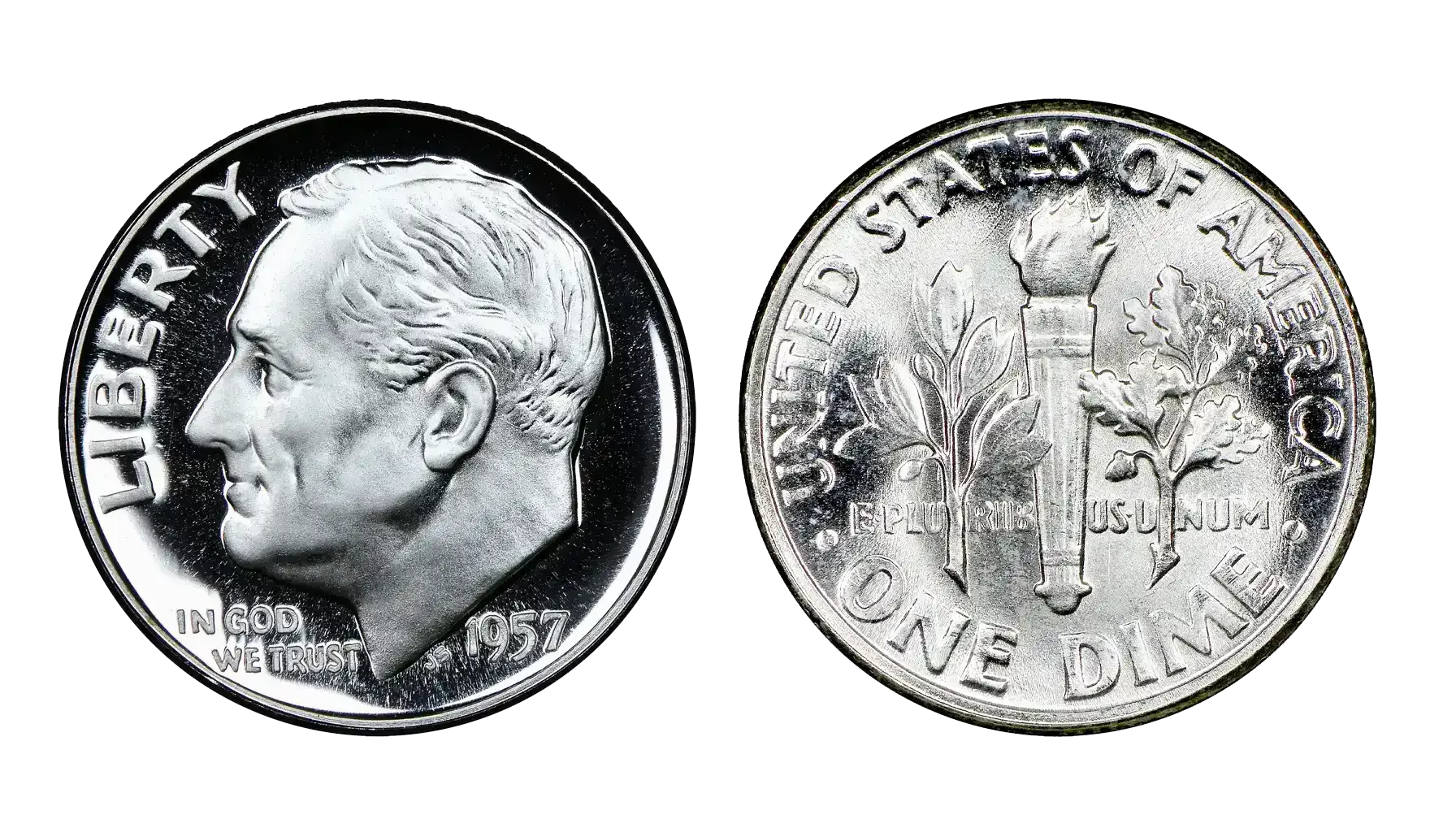
Where exactly can you find the mint mark? It’s trickier than you could think! Most Roosevelt issues had their mint marks on the obverse, right under the president’s neck, but the year release and a few others have a different spot. The Philadelphia-originated pieces have no mint mark, so you’ll see just a blank spot.
1957 Dime No Mint Mark Value
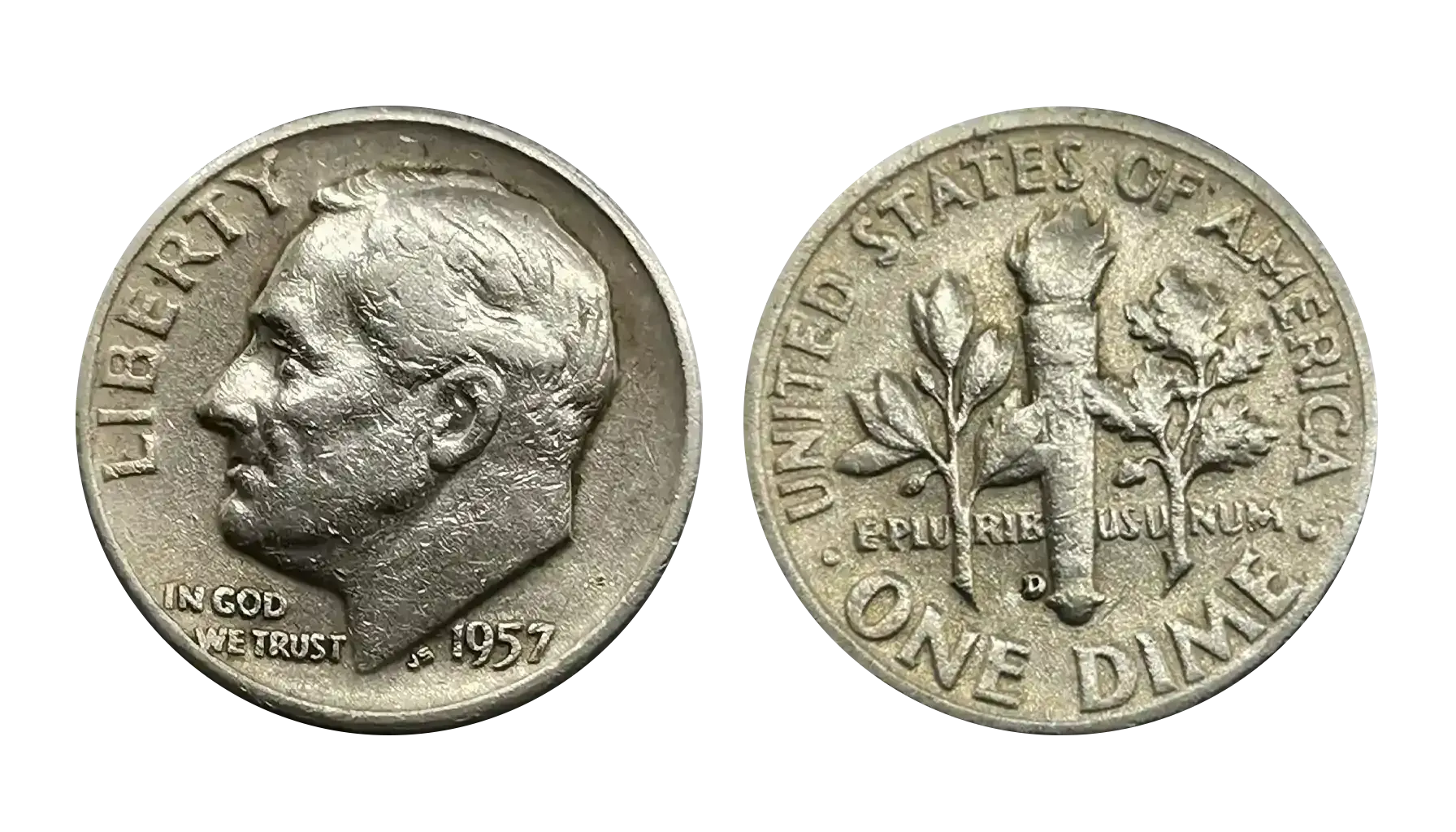
160,160,000
Estimated 1957 Dime Value Today: $5.85+ in circulated condition.
Philadelphia was a minting king back in the 50s, and even the Denver Mint couldn’t keep up. The face value of their coins should be $0.10 as an item, but the true value is much higher.
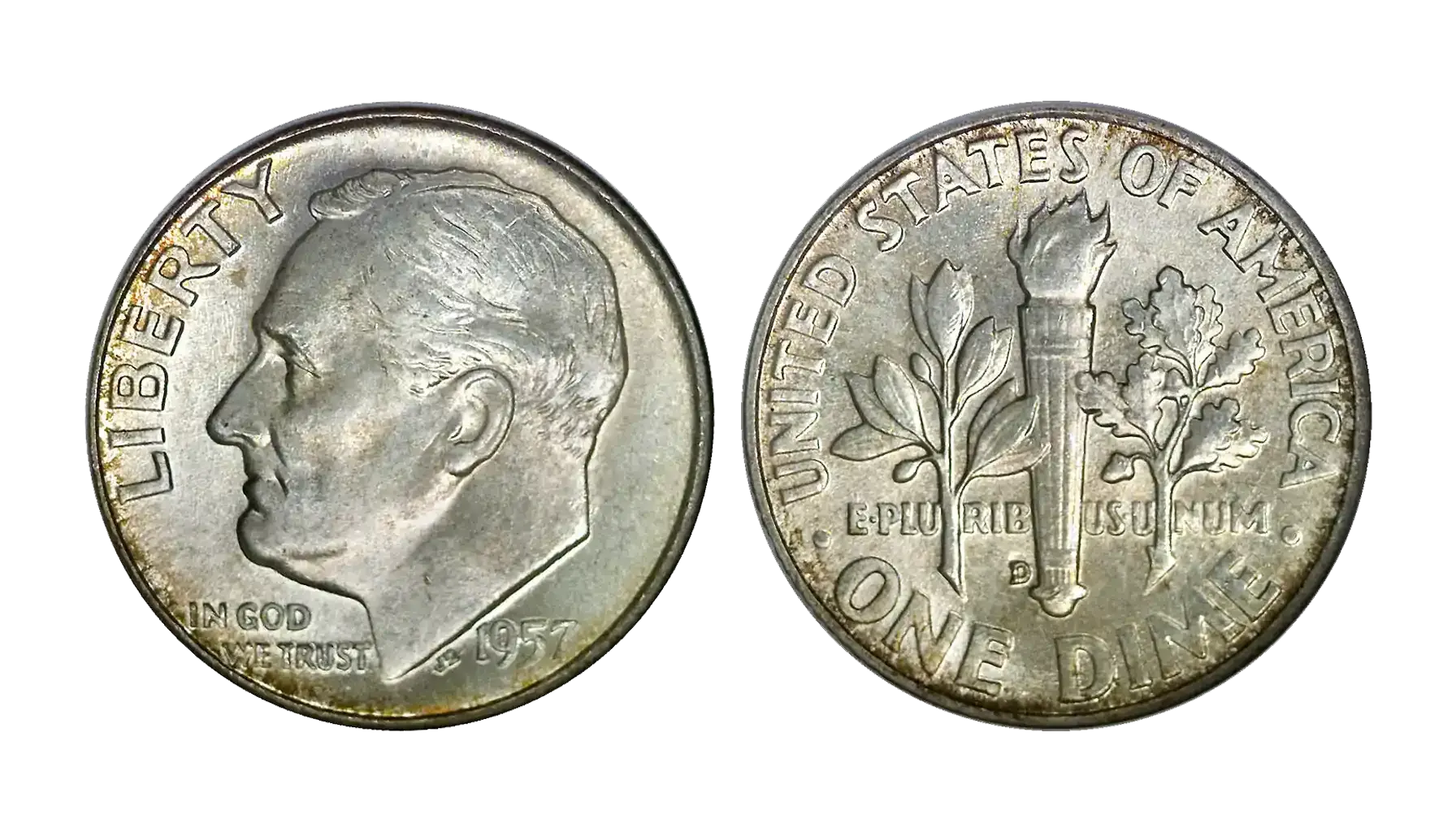
1957 D Dime Value
113,354,330
Estimated Value of a 1957 Dime: $5.85+ in circulated condition.
The value of 1957 dime D issues is similar to the Philadelphia-made coins, even if their mintage was smaller, technically making D issues rarer.
1957 Roosevelt Dime Overview
Weight | 2.27 g |
Diameter | 17.90 mm |
Thickness | 1.30 mm |
Edge | Reeded |
Designer | John R. Sinnock |
The Roosevelt item is often found in many collections. It’s a part of the classic Roosevelt series, likely the most popular issue series in the US. In terms of popularity, only Mercury items could rival them, but they ended with the 1945 dime issues.
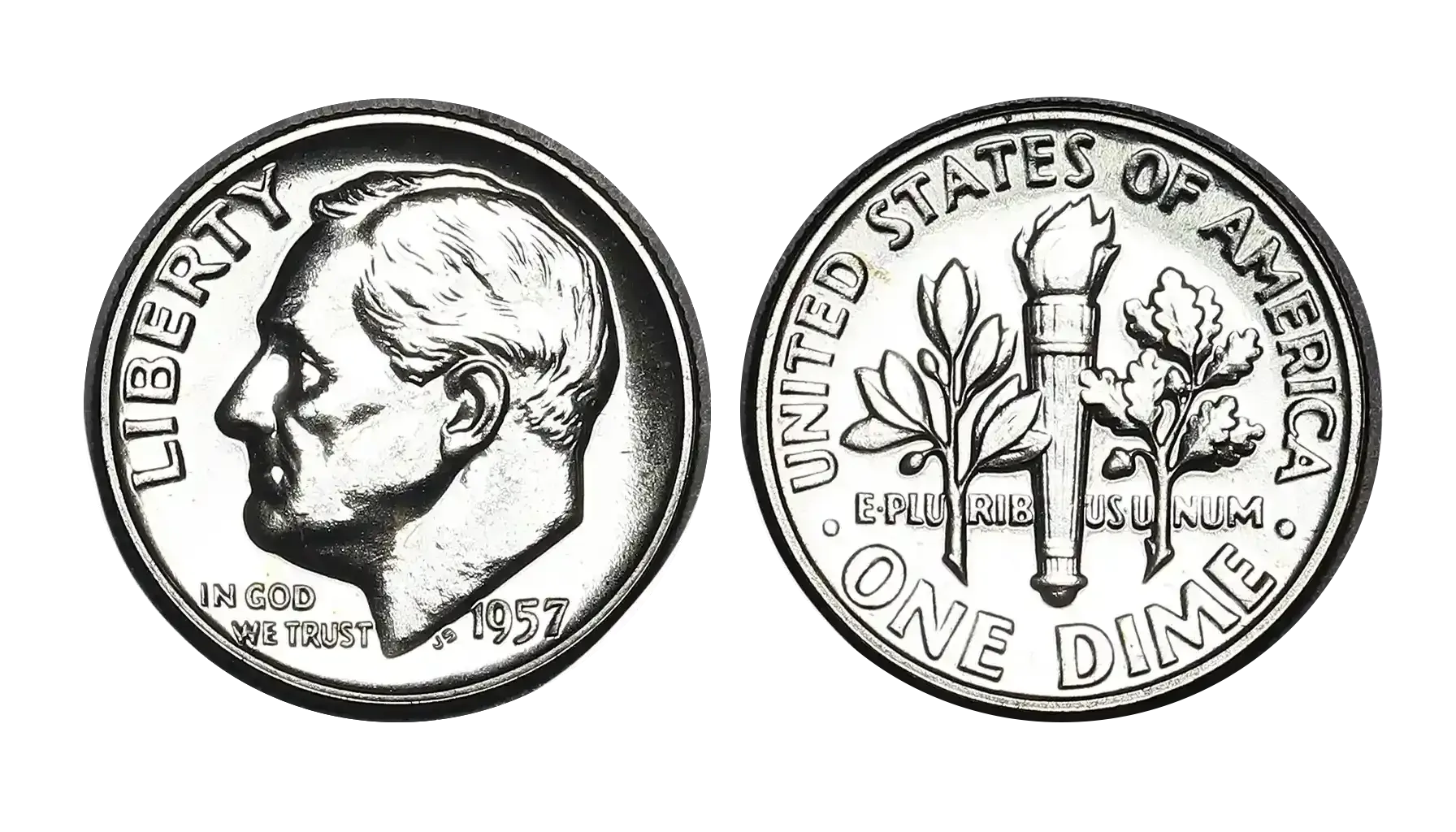
Soon after President Roosevlewt’s death, the first Roosevelt item was minted in 1946. On the obverse is a portrait of President Franklin D. Roosevelt, inscriptions, and the year.
Reverse – features a torch in the center and Inscriptions.
1957 Dime Value Chart
How much is a 1957 silver dime worth in the modern world?
Grade | Philadelphia | Denver |
Circulated | $5.85–$7.00 | $5.85–$7.00 |
MS-63 | $10–$15 | $10–$15 |
Ms-65 | $20–$30 | $18–$25 |
MS-67 | $100–$150 | $80–$120 |
PR-67 – $45–$65
PR-69 – $250–$350
The Missing S on the Items
The San Francisco Mint stopped striking circulating coinage in 1955 and did not resume proof coin production until 1968. All Proof issues for the year were struck at the Philadelphia Mint. These do not have an "S" mint mark; they simply have a mirror-like finish and sharp details.
If you see an "S", it is either an altered coin (someone added the letter) or a different year that has been misread.
What Makes a 1957 Dime Valuable?
When people talk about the 1957 silver dime value, most often they look at grading and errors, but metal influences the price to a great degree, too.
Old ones, from the very first member of the Roosevelt series (1946 dime), were all silver-based. Being a 90 % silver coin, it’s popular with both collectors and investors.
Coins made from precious metals like silver or gold have a distinct bullion value, and today they all go for more than their face value.
The year was a record-breaking year for Proof Set production (over 1.2 million sets). Proof items from this year often have much sharper, squared-off edges compared to business strikes, which can make them feel slightly thicker in the hand even if the official measurement is the same.
"The 1957-D is a classic example of a 'common' coin that becomes a monster rarity in high grades. While Denver minted over 113 million pieces, finding one with Full Bands and a clean cheek is a major challenge. In today's market, the premium for that strike quality is where the real investment growth lies."
– James Bucki, expert
CoinWorld
1957 Dime Error List
Doubled Die Obverse (DDO) – Variety FS-101
This is the most famous 1957 error. It is most commonly found on Proof coins, but business strikes exist. Look for distinct doubling on the date and the words "IN GOD WE TRUST." The doubling usually shifts toward the left or bottom. You should use magnification. If the doubling looks flat or like a shadow, it is likely machine doubling (common). A true Doubled Die will have clear, raised, split serifs on the letters.
$150–$300+
Re-Punched Mint Mark (RPM)
Specific to the D (Denver) pieces. Look for a second "D" slightly offset behind or below the primary mint mark. This happened when the mint worker punched the letter into the die twice. The most valuable RPMs show a clear separation between the two "D" shapes.
$15–$60
Off-Center Strike
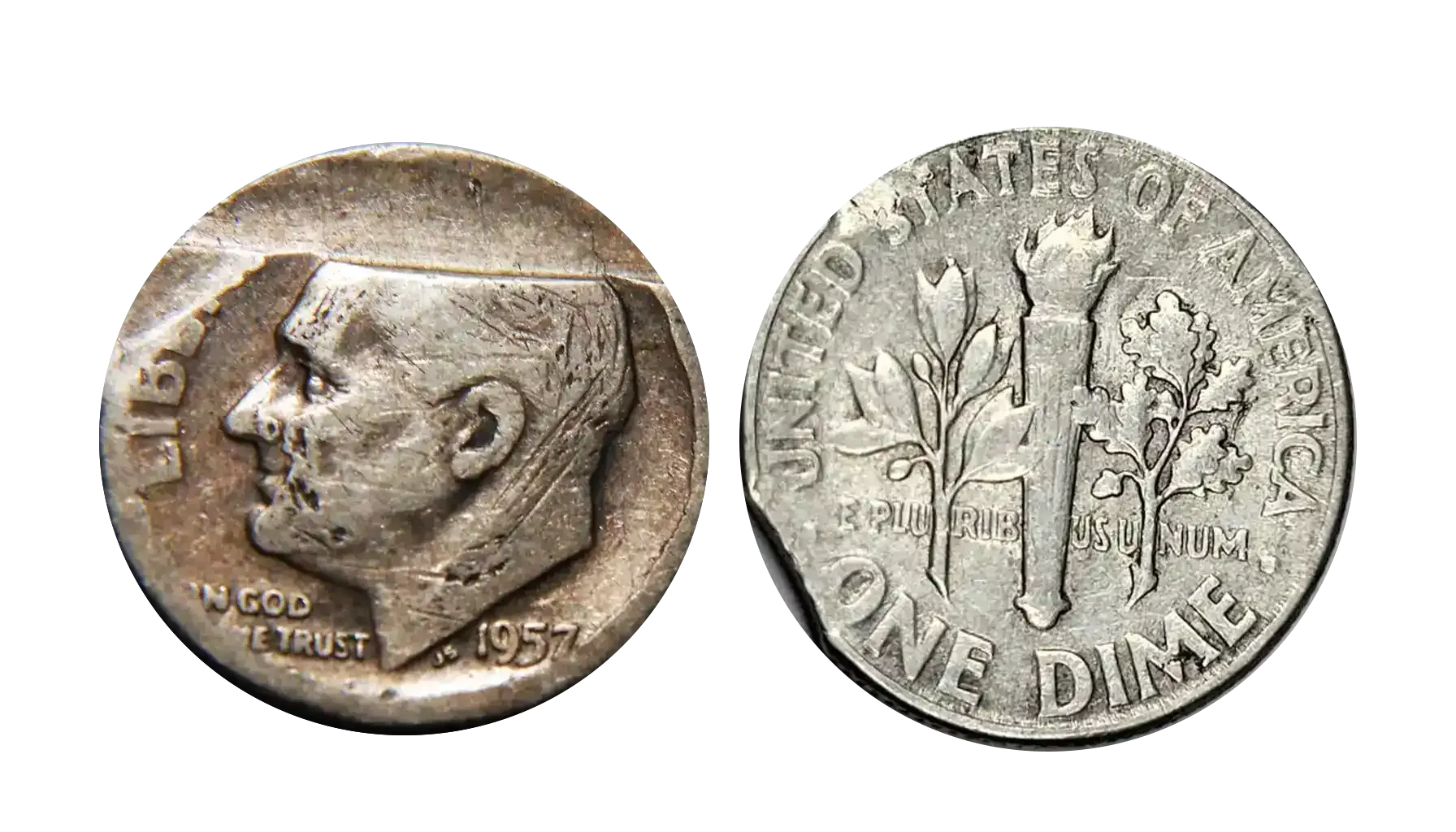
This occurs when the silver planchet is misaligned with the dies. For the maximum 1957 Roosevelt dime value, the date (1923) and the mint mark must be fully visible.
$25–$250+
Clipped Planchet
A piece of the coin is missing because the silver blank was punched from the end or side of the metal strip. A crescent-shaped (curved) or straight cut is missing from the edge. Look for the Blakesley Effect—the rim directly opposite the clip will often be weak or flat because the metal didn't have enough pressure to form correctly.
$20–$120
Die Breaks and Cuds
By 1957, the Mint was pushing dies to their limit, leading to cracks. Raised, jagged lines of metal. A Cud is a large, raised blob of metal that occurs at the edge of the coin when a piece of the die breaks off entirely. If the line is indented into the coin, it is damaged. A genuine error is always raised above the surface.
$10–$150
How to Identify a 1957 Silver Dime
Several tests you should do for the best item identification. Below is a full list of them.
Type of Test | Details |
Visual Inspection | Color differences |
Magnet Test | Silver has no magnetic attraction |
Weight Verification | Weight differences |
Mint Mark Location | Check the letters |
Sound Test | A distinct ring |
Visual Inspection
A silver item has a distinct white-gray color, in contrast to the brownish hue of copper-nickel clad issues (1965–present). Silver tarnishes to a black or blue-gray patina over time. Clad ones develop a dull, grayish appearance without the same depth. The edge offers a clear clue. A silver item shows a solid silver-colored edge. A clad one reveals a copper stripe between two nickel layers.
Magnet Test
Is a 1957 dime silver compared to other issues? Silver has no magnetic attraction. An item will not stick to a magnet. Copper-nickel clad issues also resist magnets, so this test only separates steel cents or foreign coins. Use a strong neodymium magnet. No attraction confirms non-ferrous metal, but it does not guarantee silver.
Weight Verification
The 1957 dime silver content produces a precise weight. The original silver issue weighs 2.5 grams. A digital scale accurate to 0.01 grams confirms authenticity. Clad pieces weigh 2.27 grams, lighter because copper-nickel has a lower density. An item under 2.4 grams may show wear or damage. Over 2.6 grams suggests a wrong planchet or counterfeit.
Mint Mark Location
Turn the coin to the reverse. No mint mark means Philadelphia. There is no “S” for circulation strikes. Proof coins from Philadelphia also lack a mint mark. The issue with no mint mark is standard for Philly issues.
Sound Test
Silver has a distinct ring when dropped on a hard surface. Clad ones produce a dull, short thud. This test requires practice but works reliably for silver versus clad.
Is a 1957 Dime Worth Anything Today?
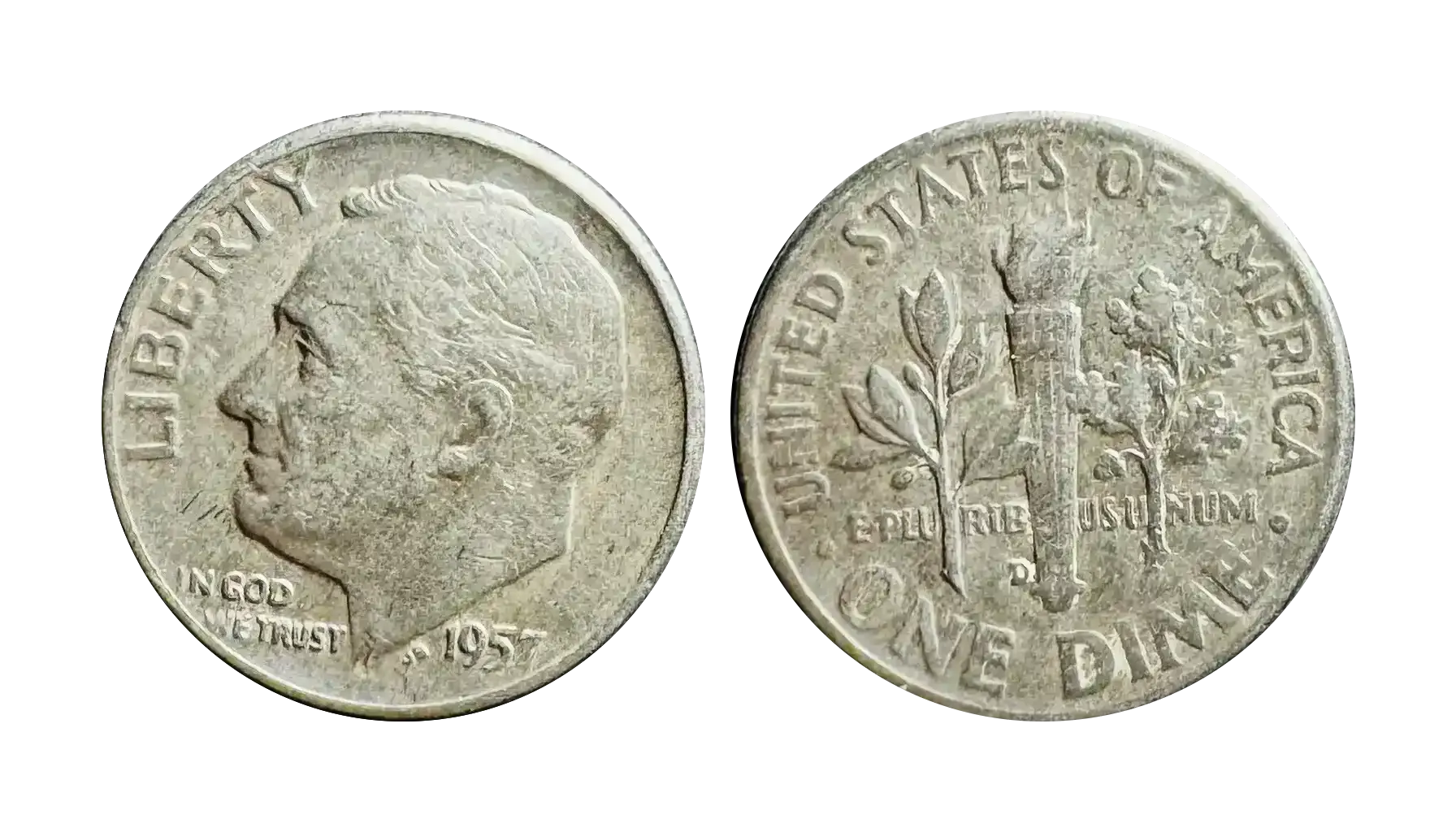
Of course, after 69 years, this coin is definitely a good investment for the future and worth a reasonable price. What is a 1957 dime worth to investors and collectors? Below, we'll consider two perspectives – one from a collector's perspective and one from an investor's perspective – on the value and future of this coin in your collection.
The Investor View
For the defensive investor, the item is a premier inflation hedge. With silver prices reaching record highs of $80.81 per ounce, every piece has an intrinsic melt value of roughly $5.85. These are highly liquid.
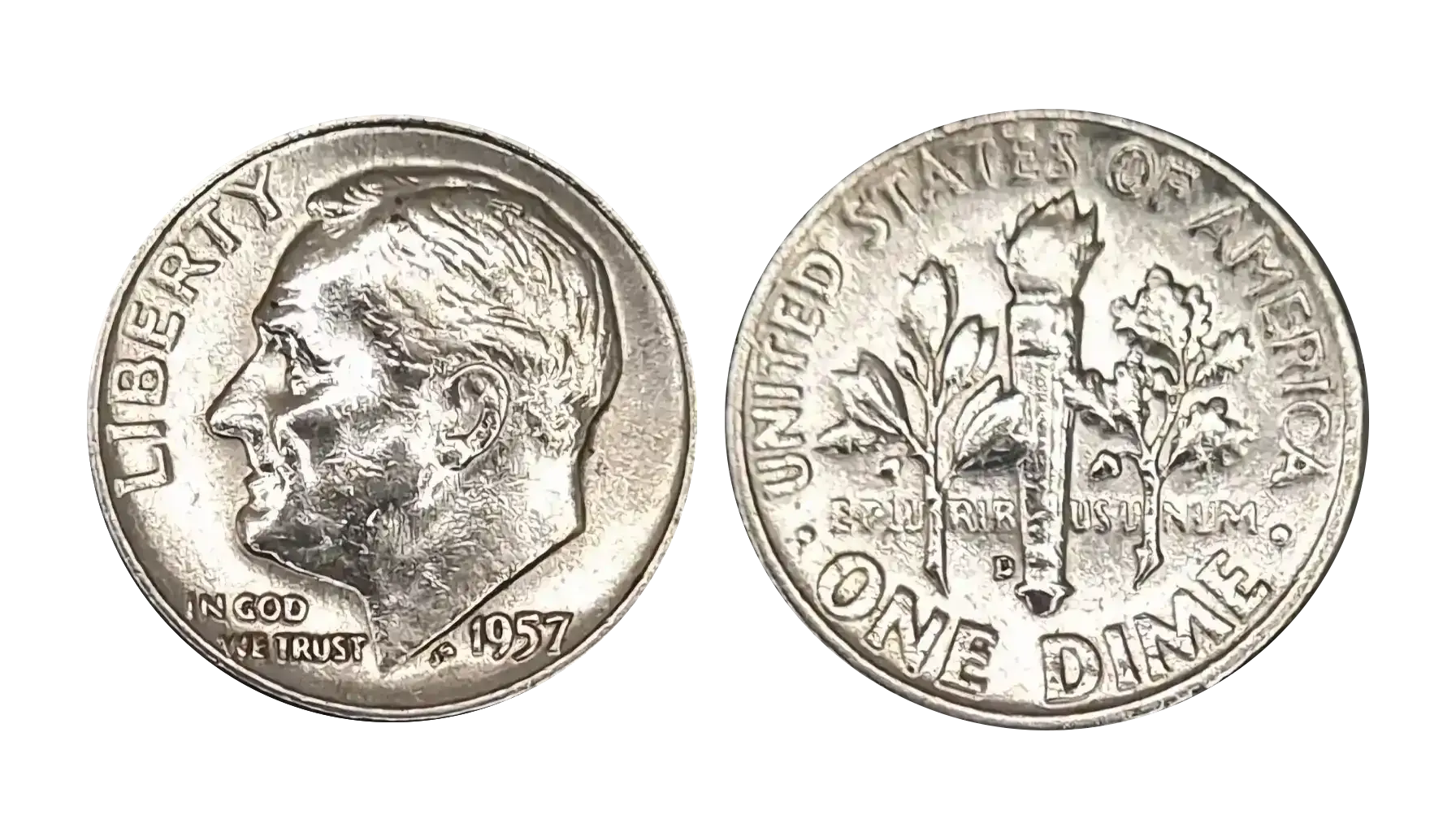
In the modern economy, where silver is a hot commodity, junk silver (90 % silver coinage) is often easier to sell to local shops or other investors than large bars, as it is already divisible into small units.
Summary: A solid, low-risk variant for those looking to preserve wealth through physical commodities.
The Collector View
For the numismatist, an issue is only an investment if it is in the top 0.1% of survival quality. Millions of items exist, but very few survived in pristine, uncirculated condition. A standard MS-65 coin might only fetch $20, but a D in MS-68 can command $650 to $1,500+ at auction.
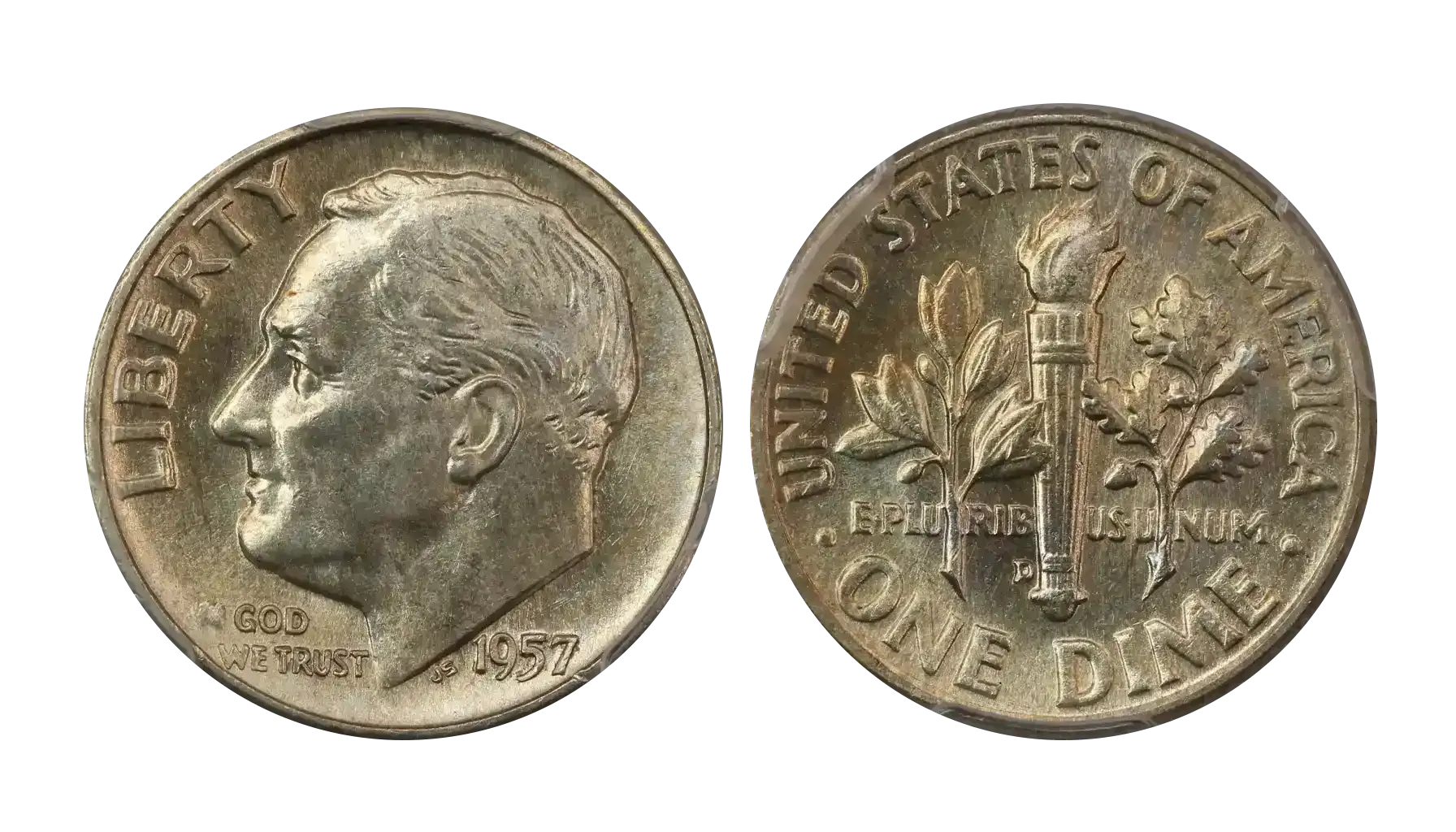
Collectors are obsessed with the Full Bands designation. A D item with perfectly struck bands is a trophy coin that has seen significant price appreciation over the last few years.
Summary: High risk, high reward. You are betting on the market, where wealthy collectors compete for the finest known examples.
FAQ
How much is a 1957 dime worth?
The circulated issue is worth $5.85–$7.00.
Are 1957 dimes made of silver?
Yes, most of it is silver – 90%.
What does a 1957 dime look like?
The item features the Franklin D. Roosevelt portrait and patriotic words and motto.
Is a 1957 dime pure silver?
The answer is negative, since 10% of the composition is Cu.
How much is a 1957 D Mercury dime worth?
The price ranges from $5.85 to $120 for high mint.
How much should a 1957 dime weigh?
A silver issue weighs 2.50 grams.
Is a 1957 dime all silver?
The item contains 10 % copper, and the remaining percentage is silver.

 Facebook
  X (Twitter)
  Pinterest
  LinkedIn