Contents:
What is a 1906 dime worth in 2026? Is it actual now for numismatists? For more than a century, the world has witnessed a surge in Barber items in America. There are many valuable pieces in this series on the market, especially the 1906 US dime.
The cost today ranges from a few dollars to tens of thousands of dollars. The price is influenced by a variety of factors, as well as the historical situation described in this guide.
How quickly can you identify coins with your phone?
The 1906 US Dime at a Glance
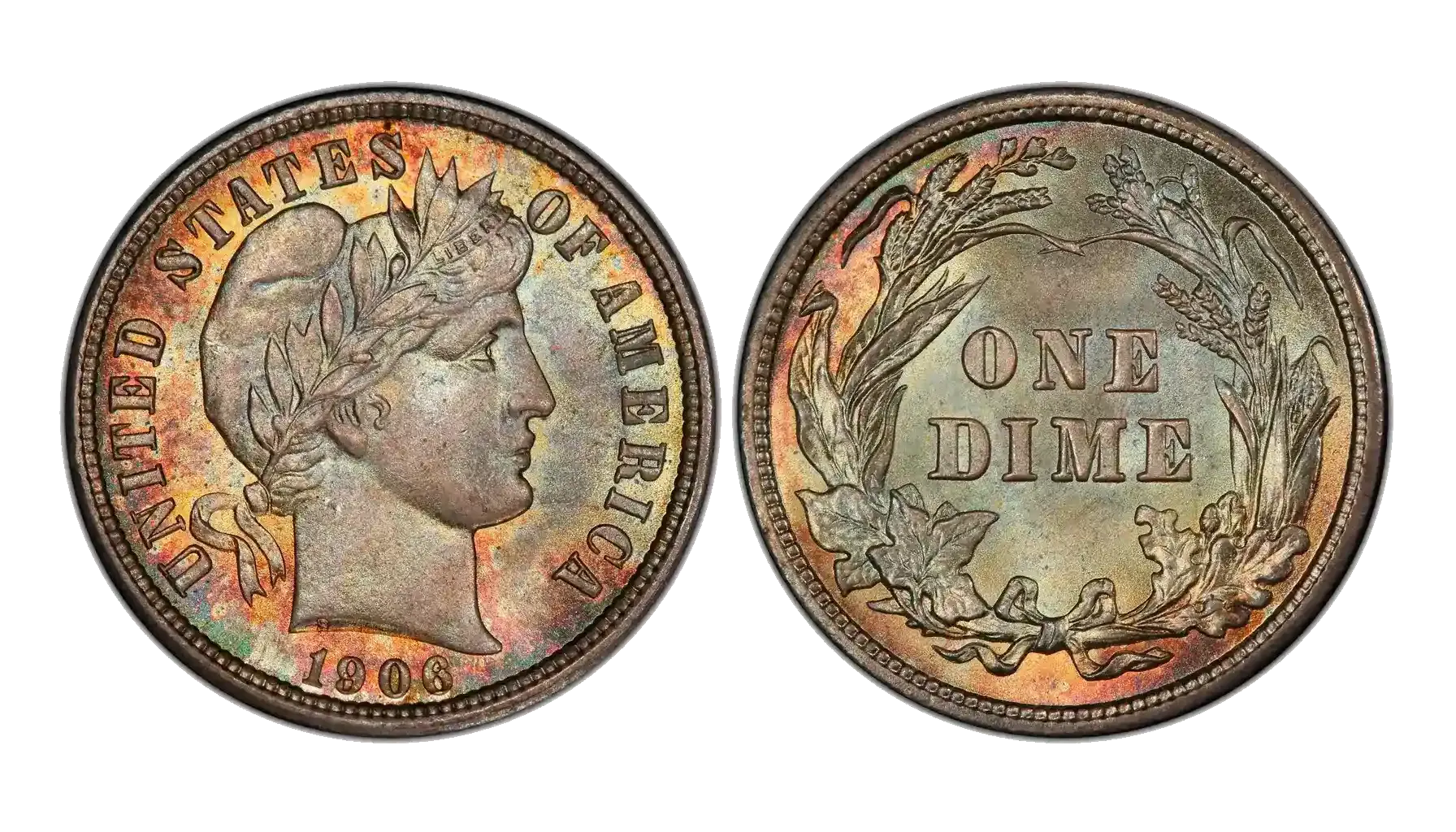
The dime 1906 belongs to the Barber series designed by Charles E. Barber. To study this item, observe that production occurred exclusively at the Philadelphia, San Francisco, and Denver mints.
Examination of surviving specimens typically reveals wear consistent with regular circulation. In the collecting community, this issue is recognized as widely available, though the desirability and value of 1906 dime are strongly tied to its condition.
Principal Characteristics
The structure delineates the parameters of durability and long‑term preservation capacity for the item and other mints.
Period | 1892–1916 |
Diameter | 17.9 mm |
Weight | 2.5 g |
Edge | Reeded |
Composition | Silver |
Designer | Charles E. Barber |
The same features are equal to the 1900 Barber item.
Historical Periods
The year 1906 is a pivotal chapter in the history of the Barber series, defined by a major, tragic event in the West and a milestone expansion of the U.S. Mint system.
The Great Earthquake
The most defining event for the 1906 coinage was the April 18 earthquake and the fire that leveled most of San Francisco. Employees famously stayed behind to fight the fires with water from the building's own artesian well, saving $200 million in gold and silver stored in the vaults.
Historians believe many S items were buried in the rubble or melted in the intense heat of the fires that followed the quake. This contributes to the scarcity of high-grade survivors today compared to their original mintage of 3.1 million.
The Denver Mint Birth
The D is the first-ever item to carry the D mint mark.
Denver hit the ground running, producing over 4 million items in its first year. While not a major date, the D is a must-have for series collectors because it represents the beginning of one of the world's most productive minting facilities.
The New Orleans Transition
1906 – the end of the era for the New Orleans Mint, which would stop producing items just three years later in 1909.
Among the four mints active in 1906, New Orleans had the lowest output at 2.6 million coins. Like many New Orleans issues, the O is known for often having a weak strike. A sharply struck 1906 silver dime is a rare find and highly valued by professional collectors.
Mintage Summary Table
The 1906 Barber Dime value in major mints:
Location | Mark | Mintage | Influence |
Philadelphia | None | 19,957,731 | Middle |
Denver | D | 4,060,000 | High |
San Francisco | S | 3,136,000 | High |
New Orleans | O | 2,610,000 | Low |
1906 Barber Dime and Silver Composition
The obverse – the Liberty portrait is pointing to the right with a laurel wreath, and the main country words are around.
The reverse – the wreath around the denomination, which helps distinguish the later item issues, for example, the 1909 Barber item.
Attention for Collectors
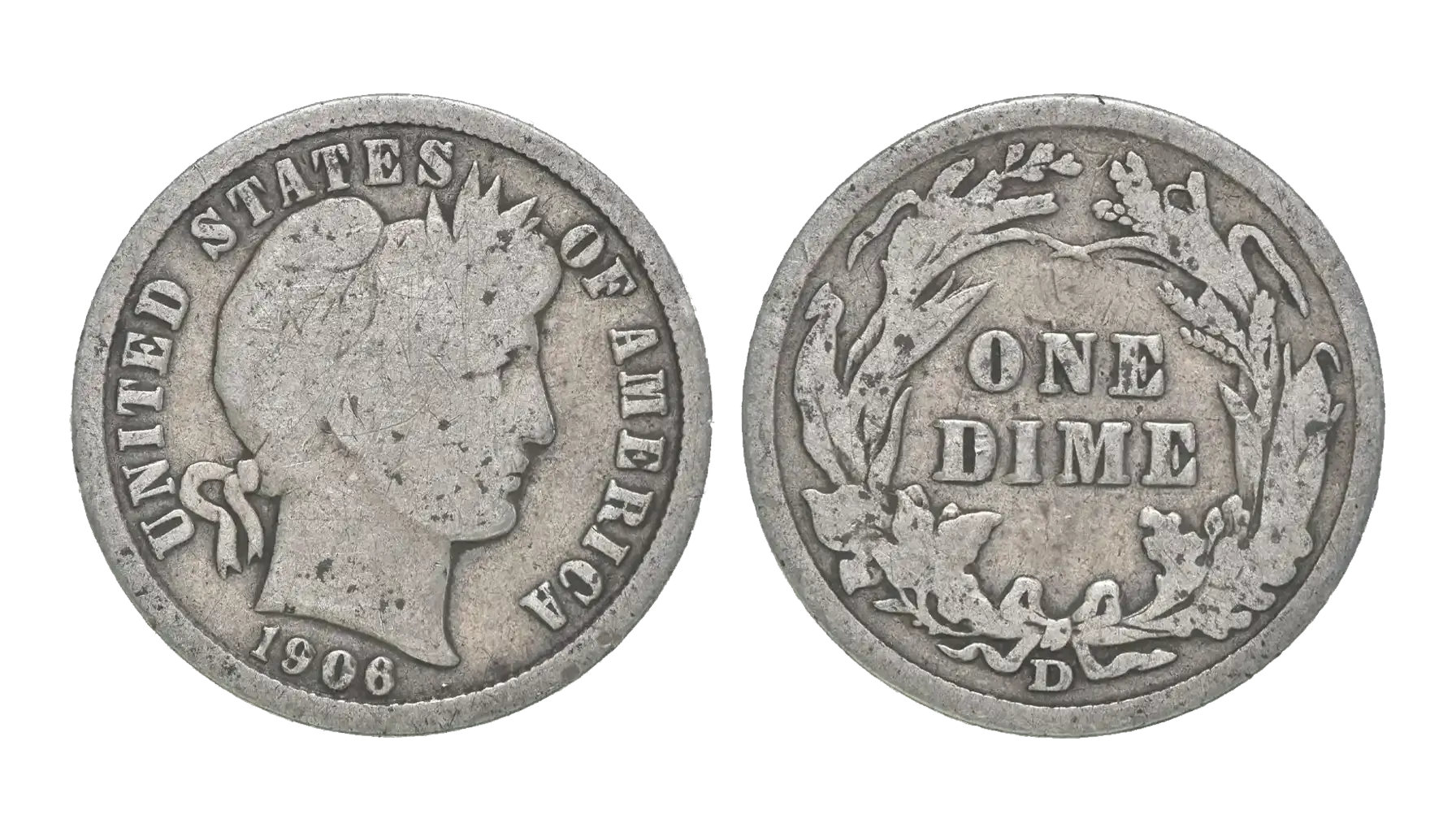
In numismatics, the 1906 Liberty Dime and the Barber Dime are actually the same coin. If the topic of discussion is the 1906 Mercury Dime value, this coin does not exist.
The series has the same name because the coin features the head of Liberty. By 1906, the older Seated Liberty design (where she is shown sitting down) had been out of production for 15 years.
Another tricky situation with the 1906 dime with V on back. If you have one, it is a nickel item. It may be confusing for novice numismatists, since the designer and the year are the same, but the concept of a valuable item differs.
What Drives the Value of a 1906 Dime
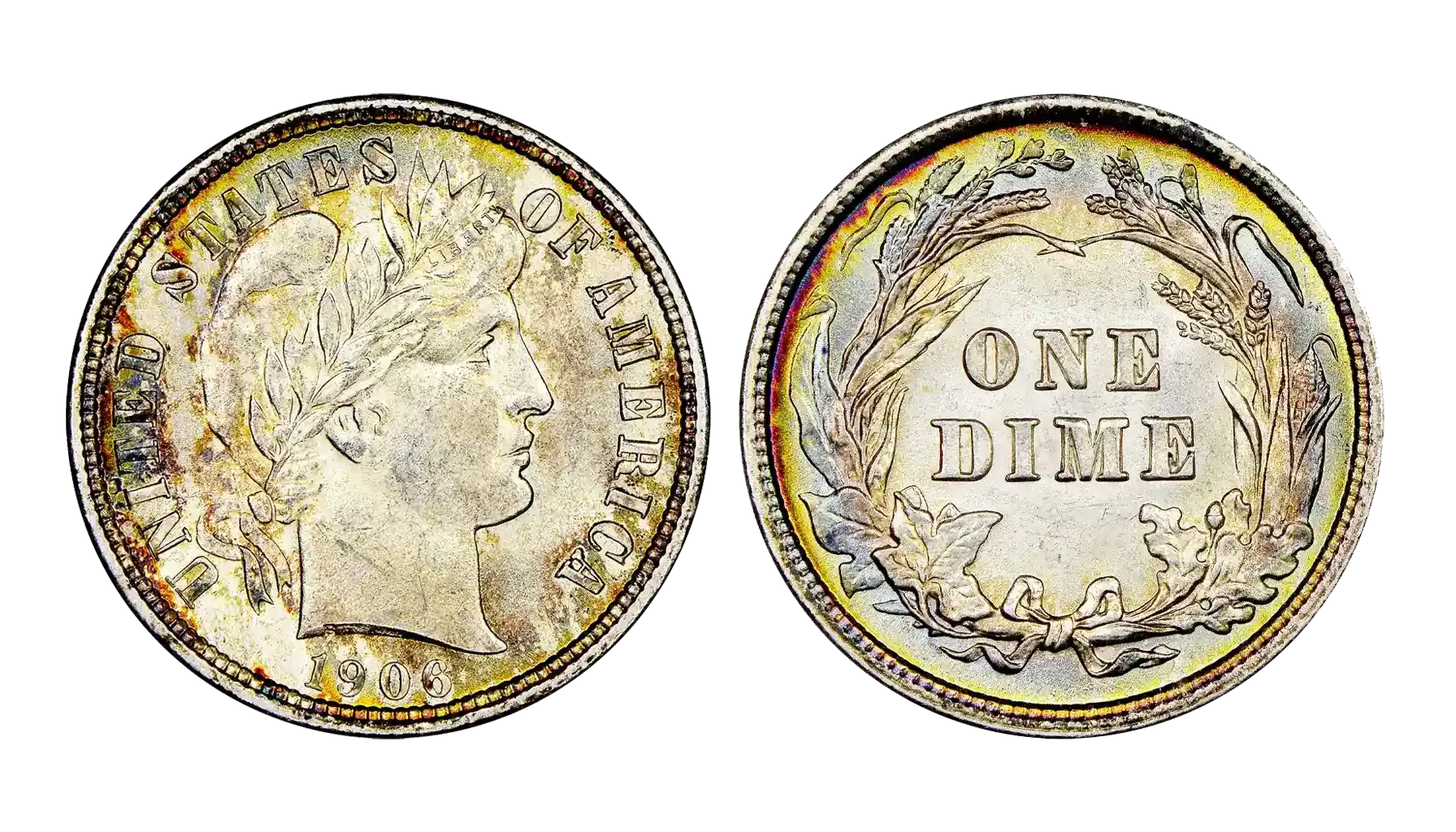
How much is a 1906 dime worth? Important factors determine the market value. The 1906 dime value today maintains a steady presence in today’s market, fueled by reliable interest from type collectors.
Grade
Mint mark
Appeal
Certification (NGC / PCGS)
Circulated specimens typically trade at or slightly above silver melt value, with modest premiums. Uncirculated items, however, fetch significantly higher prices. Specialists systematically monitor auction results and certified population data to track trends.
2026 Actual Prices
The table shows actual item prices in 2026 (Q1). Ranges from Good, Very Good, Fine, and Extremely Fine conditions.
Mint | G | VG | F | XF |
P | $4 | $6 | $25 | $75 |
D | $4 | $8 | $35 | $80 |
O | $6 | $45 | $110 | $130 |
S | $4 | $13 | $45 | $110 |
Attention: The price range for MS-60 and MS-65+ is $190–$600; for MS-65+ and MS-67 is $600–$3,750. The price span can be equal for the 1899 Morgan Dollar.
Auction Records
“According to the NGC Price Guide, as of January 2026, a Barber Dime from 1906 in circulated condition is worth between $2 and $85. However, on the open market 1906 Dimes in pristine, uncirculated condition sell for as much as $3950.”
– NGC Coin Explorer
NGC
Two main auction platforms have taken the numismatic world by storm. The skyrocketing prices were at the Philadelphia and Denver mints. In 2008, by Heritage Auctions, and later in 2013 by Stack’s Bowers.
2008, MS-67 – $19,550
2009, SP-64 – $28,750
2009, MS-67 – $3,750
2013, MS-65 – $42,594
2018, MS-67+ – $14,100
Use the Coin ID Scanner online app to compare your coins and create collections.

 Facebook
  X (Twitter)
  Pinterest
  LinkedIn