Contents:
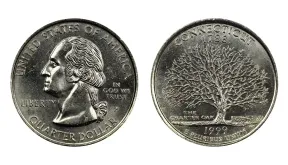
The 1999 state coin interests as traders review fresh market data and search for new high-grade examples. The coin honors the Charter Oak and marks the final release of the first year in the State Quarters Program.
Public demand grows as new buyers study the 1999 Connecticut Quarter error list with pictures, which helps them compare surface traits and die faults. You should be aware of auction records for actual price ranges.
1999 Connecticut Quarter Error List Overview
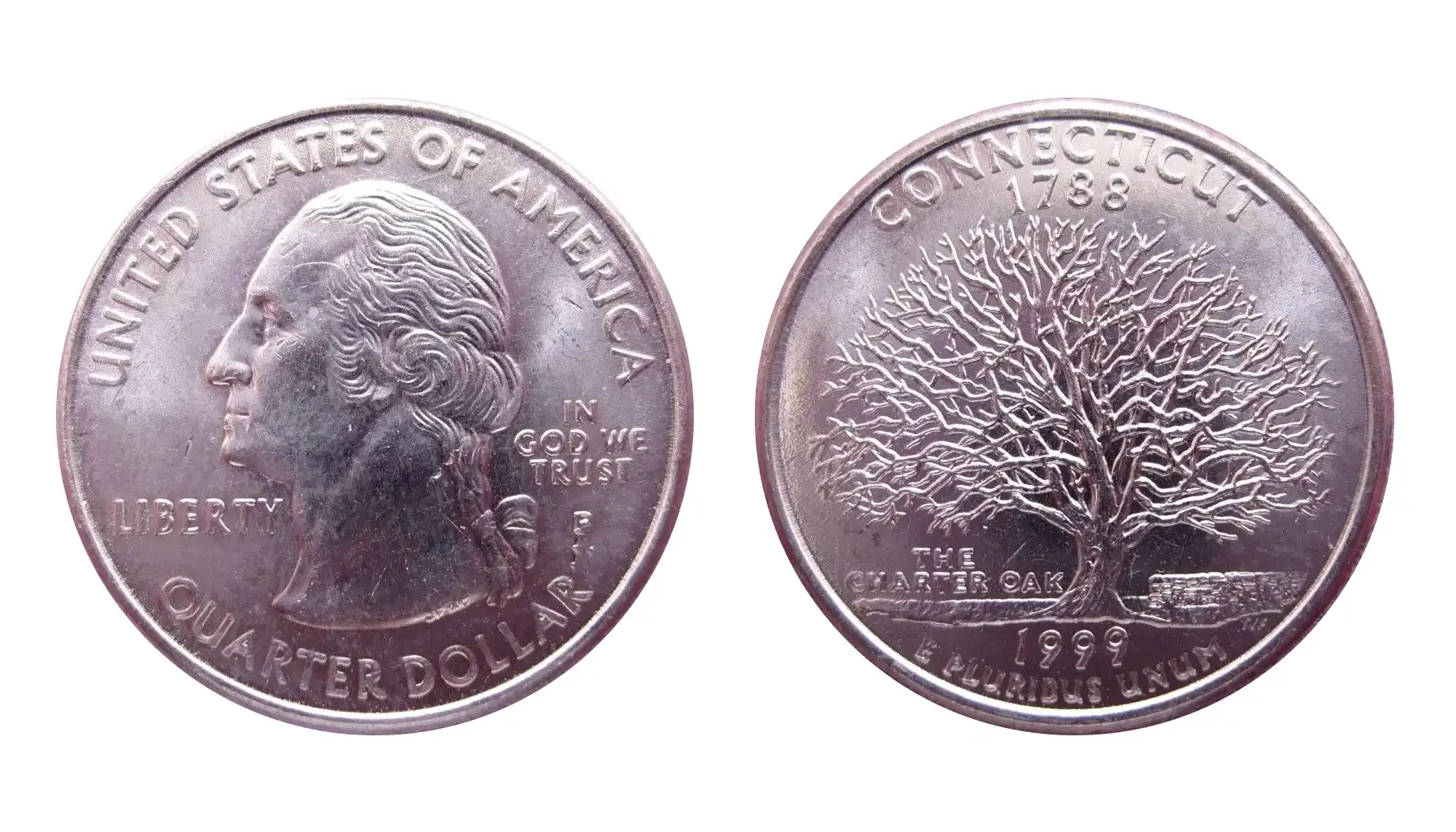
The 1999 coin exhibits a wide range of faults from early and mid-stage production. Some coins show:
Die chips (that form small raised units on branches or select letters)
Thin strike-through traces (creates short recessed marks)
Slight off-center positions (that shift the tree toward the rim)
Light doubling (extra outline)
Specialists record these issues in broader surveys that support accurate estimates for the 1999 coin value across multiple grade levels. Separate studies highlight mild doubling on a small number of Philadelphia pieces. Clear examples show extra outlines along parts of the date or small reverse features.
These traits appear rarely and draw strong attention as traders update the 1999-P Connecticut Quarter error segment with new data. Groups that follow 1999 Connecticut Quarter errors confirm that early die wear often softens small segments of the tree, which creates subtle visual shifts without major structural faults.
Coin Overview
“The obverse of the 1999-D Connecticut State Quarter is the same Washington bust design used on all State Quarters from 1999 to 2008.”
– 1999-D 25C, Regular Strike Overview
PCGS
The table below outlines standard retail ranges for this coin and helps traders follow current patterns for errors that show measurable influence on market outcomes.
Diameter | 24.3 mm |
Weight | 5.67 g |
Metal | Copper-Nickel Clad Copper |
Edge | Reeded |
Mintage | 688,744,000 |
Designer | John Flanagan / William Causins |
The same designer, John Flanagan, developed the 2000 Maryland coin.
1999 Connecticut Quarter Value Guide for Collectors
Market values depend on:
Strike strength
Surface stability
Mint origin
Clean fields
Full rims
Uniform tone
Although circulated examples are widely available, high‑quality Mint State coins continue to command steady attention from collectors due to their superior condition. Traders review the 1999 Quarter Connecticut performance each year, since new auction records shift expectations across the series.
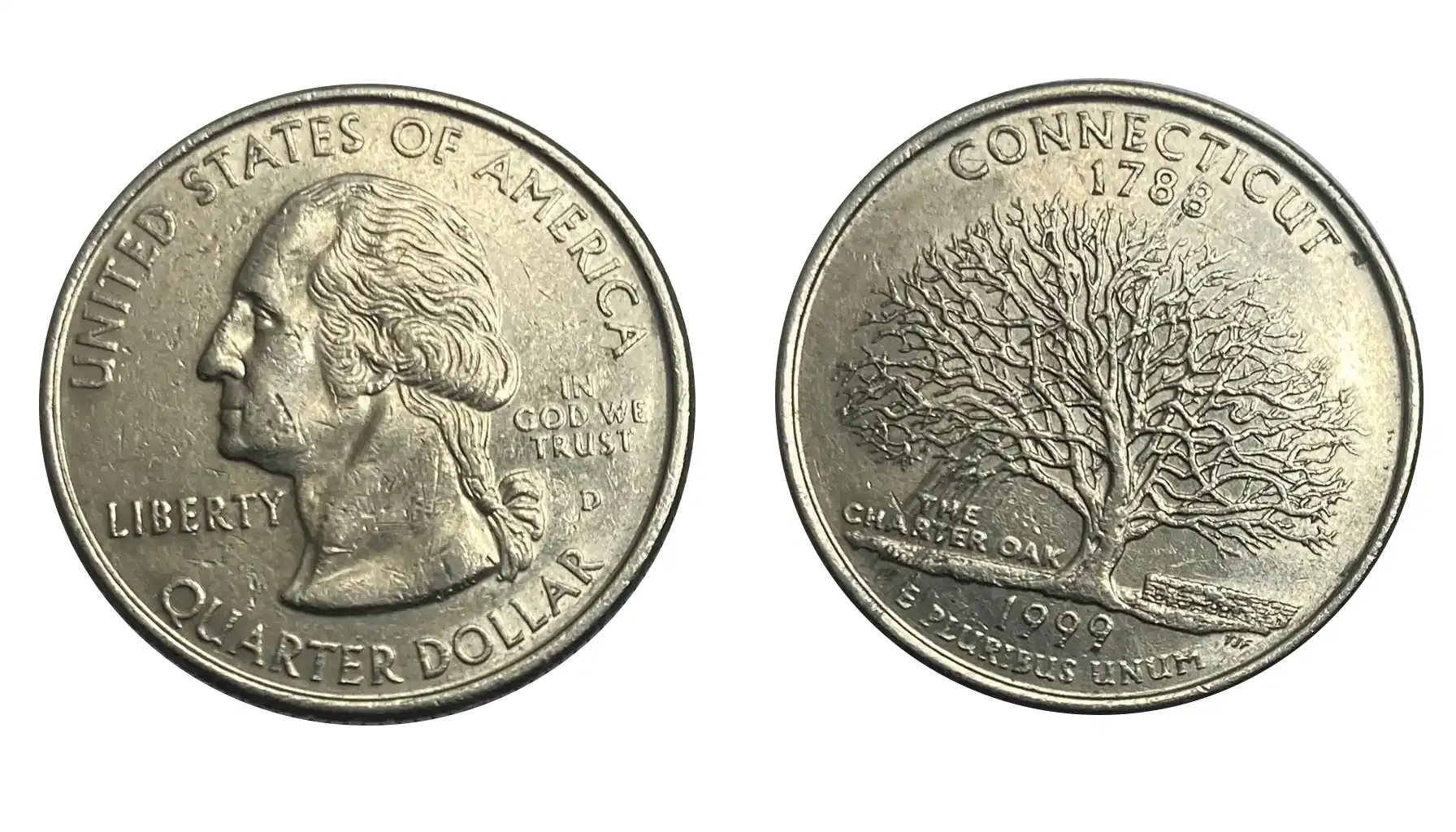
Proof coins from San Francisco show separate price paths based on clad or silver composition. To assess relative value, collectors examine price movements for both sets and contrast them with pricing data from other state releases.
Mint | Circulation | Mintage | MS-67 | MS-68 |
P | Standard | 688,744,000 | $30–$60 | up to $4,362 |
D | Standard | 657,880,000 | $30–$60 | up to $2,300 |
S | Collector Proof | 3,713,359 | $10–$25 | N / A |
S | Silver Proof | 804,565 | $30–$60 | up to $1,610 |
Note: Compared to the values presented in the 2000 Massachusetts coin price table, the current price range is notably higher, a difference attributable to the increased rarity of this particular coin.
Analysis of auction records reveals consistent collector interest across the highest grade tiers. Notably, coins that display exceptional sharpness of detail and a well‑defined reverse branch structure typically realize higher prices. The next list reflects auction records across major venues and supports comparisons within the wider 1999 state field.
1999-D, March 2018 – $2,300 (eBay)
1999-P, August 2006 – $4,362 (Superior Galleries)
1999-S, November 2007 – $1,610 (Heritage Auctions)
Silver Proof Item
Mint Mark: San Francisco
Composition: 90% silver / 10% copper
Weight: 6,25 g
Reverse Design: THE CHAPTER OAK
Source: Collector Sets Only (1999 Silver Proof Set)
Coins in perfect PF‑70 DCAM grade usually sell for $30–$60 at retail – significantly more than the clad version because they contain silver.
Connecticut State Quarter Errors to Look For
Distinct design elements produce rare but notable faults. A small group of coins from Philadelphia shows raised metal near the rim. Some Denver pieces show surface texture shifts across the reverse tree. These traits appear in detailed surveys that track all documented Connecticut State Quarter value variations. Separate studies highlight early die states for the 1999 P Connecticut State Quarter, which reveal faint recess marks along the trunk and branches.
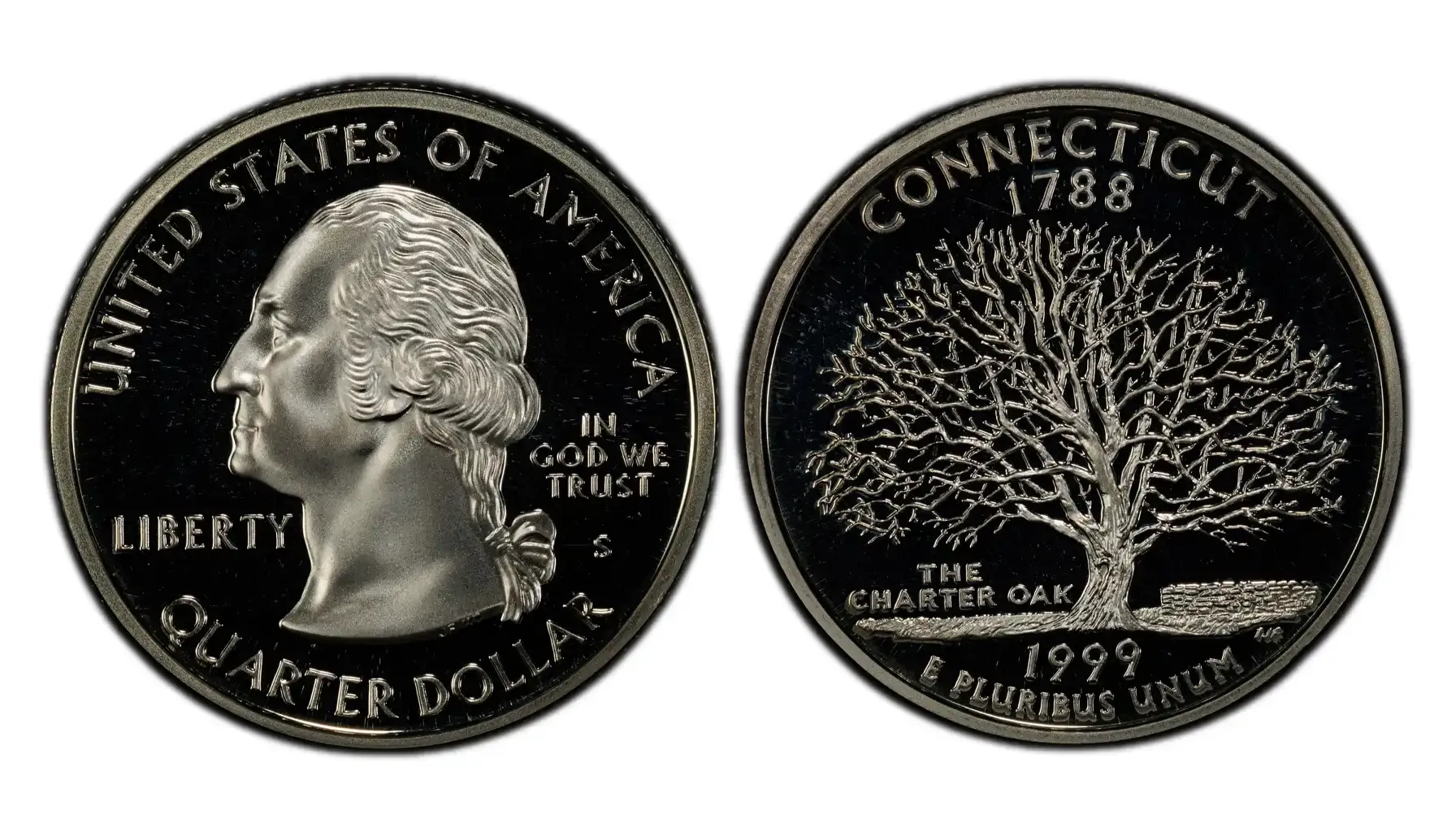
These features draw interest because they form unique visual patterns that help specialists map production stages. Traders who pursue high-grade examples with faults often focus on strong detail on the tree and minimal abrasion. The broad range of faults within this issue maintains strong engagement among participants and encourages further research that clarifies long-term supply.
Conclusion
For collectors, the 1999 coin is a pivotal piece - it’s part of the very first set issued in the state program. The combination of exceptional design work, the presence of multiple fault types (valuable for study), and consistent collector interest makes this coin a meaningful addition to beginners and professional numismatists.
Through diligent examination of a coin’s grade and mint of origin, traders can form precise assessments. Continued research across this issue ensures that this coin remains an active subject in modern numismatics and preserves its influence within the national fifty-state series.

 Facebook
  X (Twitter)
  Pinterest
  LinkedIn