Contents:
The 1977 penny looks like any other copper-colored cent. But some high-grade or error examples can be worth more than face value.
Use our coin appraiser to get a quick answer about the coin’s worth. But if you are just starting your collection, you need to know some details below.
Even the more common 1977 penny no mint mark, made in Philadelphia, has value if it’s in Mint State condition. And if you happen to find a high-grade one, don’t spend it, check, its value can surprise you.
The 1977 Penny: A Brief History and Overview
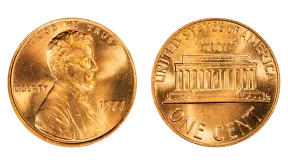
This coin is a standard Memorial cent series. The US Mint started this series in 1909 to mark the 100th anniversary of Abraham Lincoln's birth.
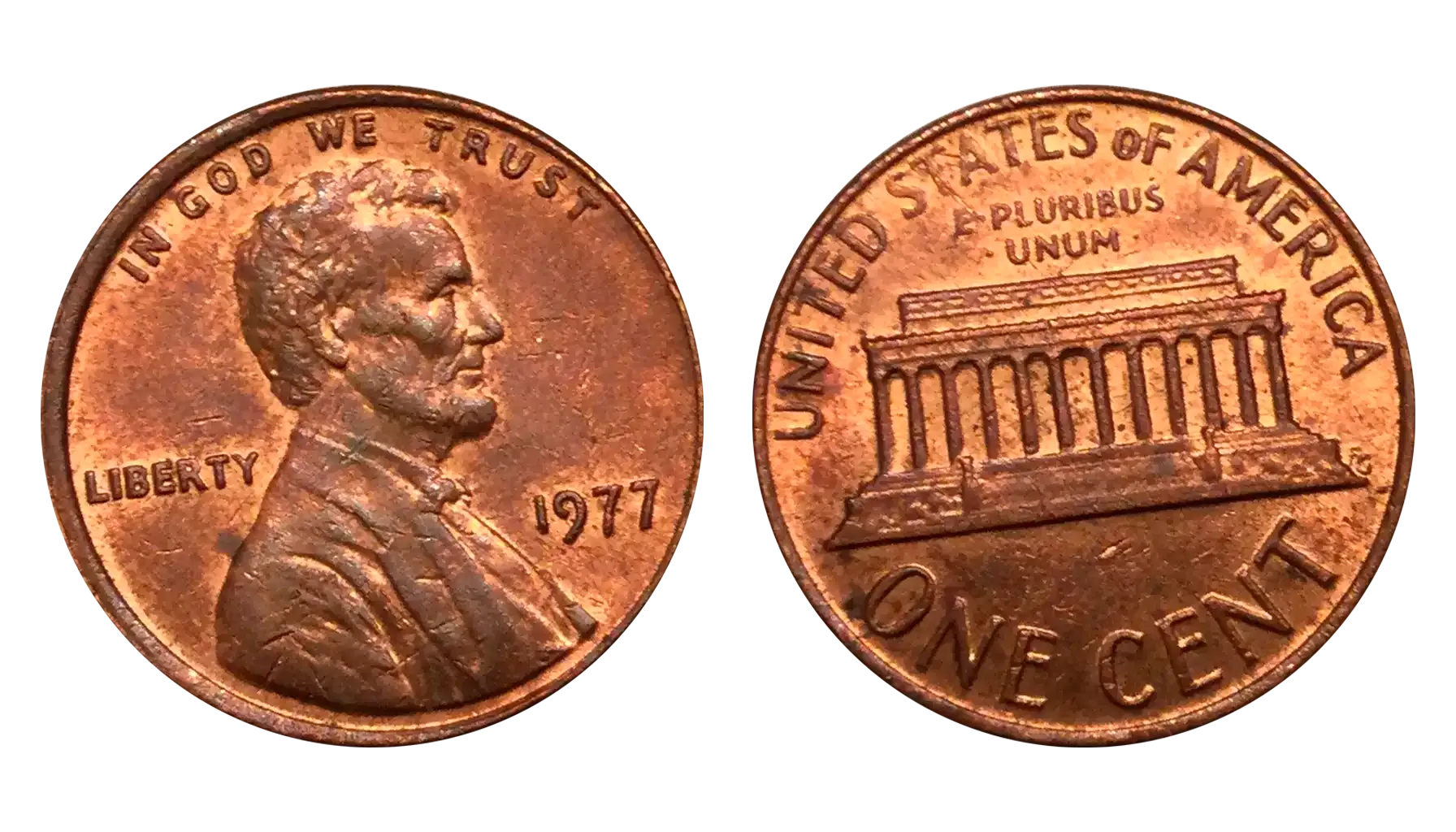
The Mint updated the reverse in 1959 for Lincoln’s 150th birthday. Frank Gasparro created the new Lincoln Memorial design. It shows a tiny seated figure of Lincoln inside the monument. This made it the first U.S. coin to feature the same person on both sides.
The reverse design has changed several times:
1909-1958: Wheat ears (Brenner design).
1959-2008: Lincoln Memorial (Gasparro design, used on the 1977 penny).
2009: Four commemorative issues for Lincoln’s 200th birthday.
2010-present: The Union Shield reverse.
“Collectors seeking a coin with an interesting story, considerable variety, and wide availability will find a lot to like about the Lincoln Memorial cent.”
— Mitch Sanders, author
American Numismatic Association
Identifying Your 1977 Penny: Types and Mint Marks
Mint Location | Type | Mintage |
Philadelphia 1977 | no mint mark/ regular | 4,469,930,000 |
Denver 1977 D penny | D mint mark/ regular | 4,194,062,300 |
San Francisco 1977-S | S mint mark/ Proof | 3,251,152 |
Total | — | 8,622,244,452 |
With billions of coins produced, most 1977 pennies aren’t rare. But the 1977 D penny value in mint condition can reach $30 or more.
Here’s a quick reference chart for this coin:
Feature | Description |
Denomination | One cent |
Composition | 95% copper, 5% zinc |
Weight | 3.11 grams |
Diameter | 19 mm |
Thickness | 1.52 mm |
Obverse Designer | Victor D. Brenner |
Reverse Designer | Frank Gasparro |
Edge | Plain |
Mint Marks | None (P), D (Denver), S (San Francisco) |
Years of Design Use | Obverse: 1909–present Reverse: 1959–2008 |
1977 Penny Value by Mint Type
1977 Penny No Mint Mark Value (Philadelphia)
Common in circulation, but top-grade examples can bring serious money:
MS63: $3
MS64: $6
MS65: $18
MS66: $47
MS67: $200
MS68: about $2,000–$3,000+ depending on auction
1977 D Penny Value (Denver Mint)
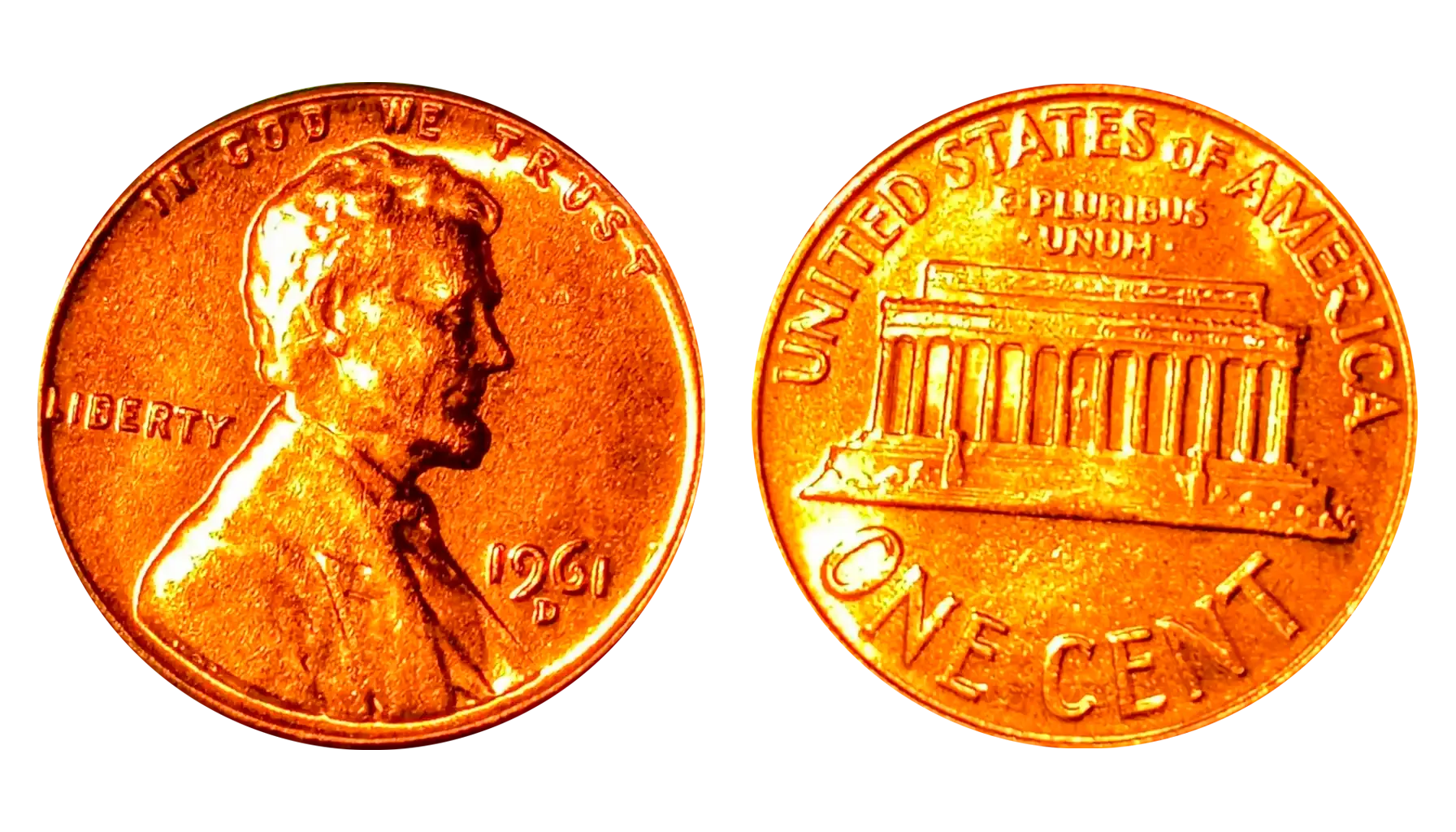
Known for more striking issues and a few rare gems in high grade:
MS63: $8
MS64: $14
MS65: $24
MS66: $60
MS67: $240
MS68: $7,000 (RD, record auction)
1977-S Proof Penny (San Francisco)
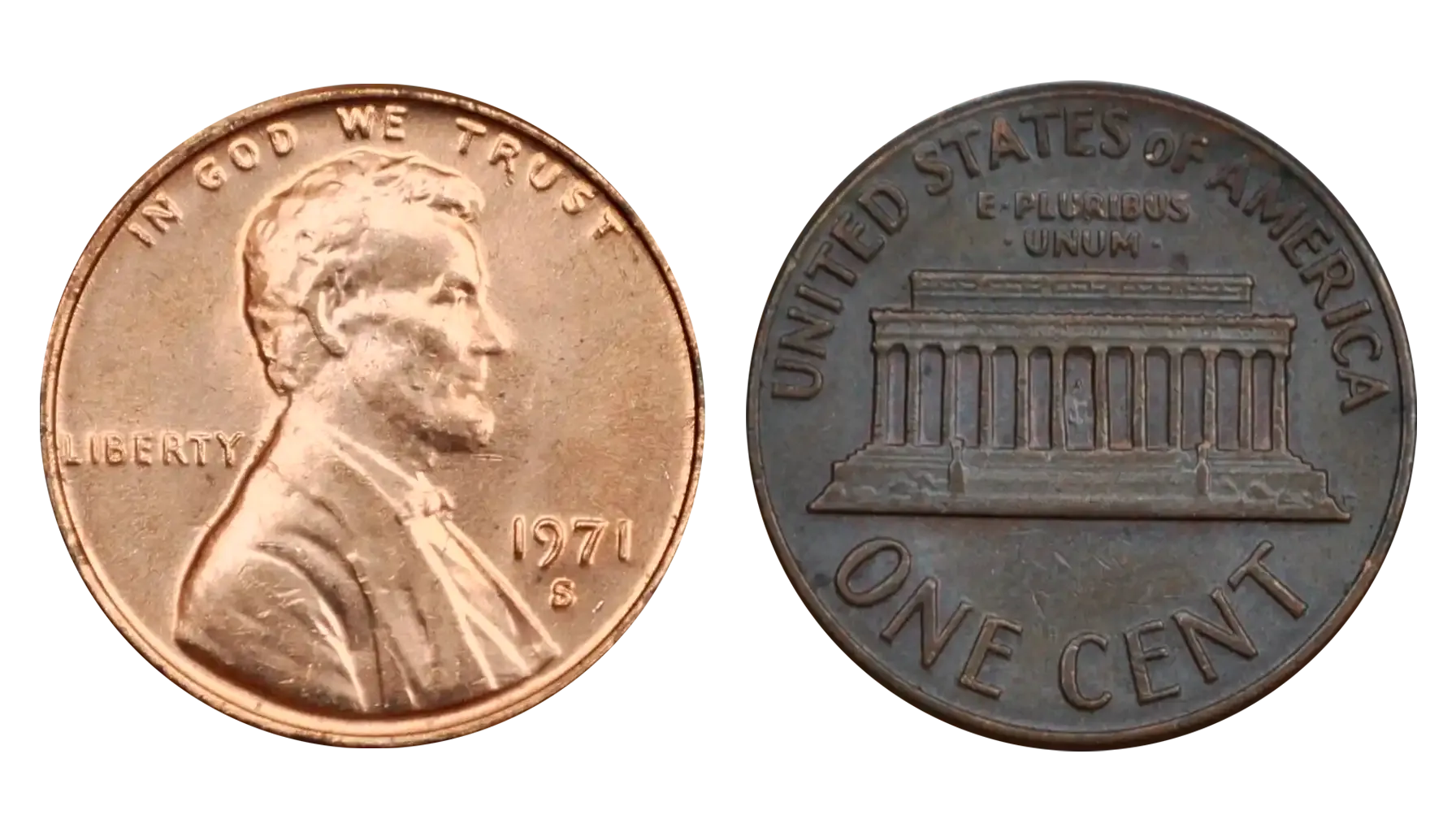
Proof-only issue with high demand among collectors:
PR64-PR68: $5–$8
PR69 DCAM: $15–$25
PR70 DCAM: about $200–$500 (typical market), occasionally higher depending on auction
1977 Penny Error Varieties Worth Spotting
Is the 1977 penny worth so much? In some cases, the value can impress you, especially if we are talking about some minting of errors.
1977 Double Die Penny (Obverse). This is one of the most sought-after errors on the 1977 penny. You’ll notice extra lines or shadowing in the date (“1977”) and in inscriptions like “LIBERTY” and “IN GOD WE TRUST.” These doubling effects can vary, but the strongest examples have sold for hundreds. While not every doubled die is worth a fortune, collectors frequently use a 1977 penny error list with pictures to identify the good ones.
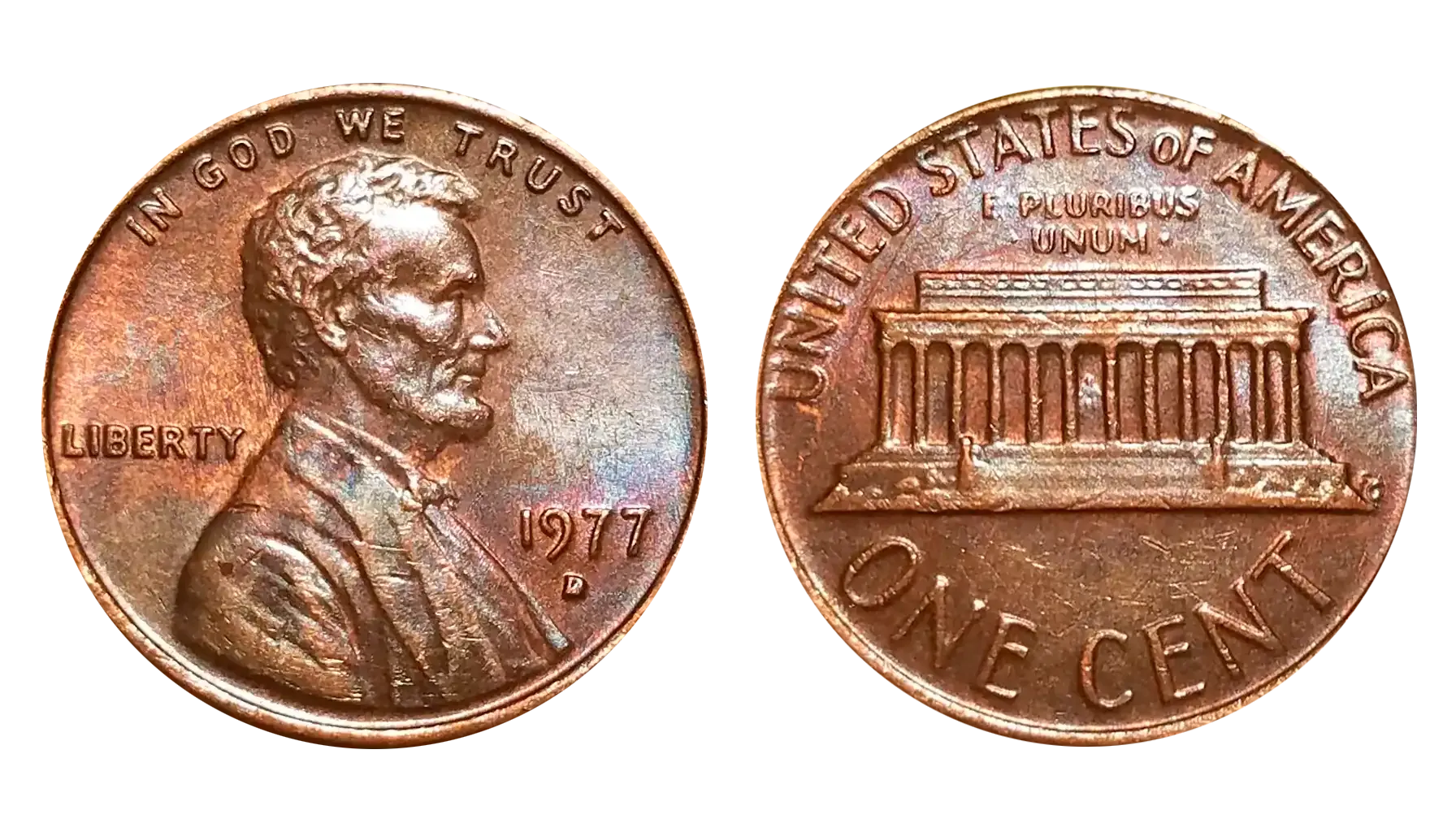
Off-Center Strikes. If the coin’s design is shifted noticeably off-center, you may have a winner. Coins with a 10–20% off-center strike that still show a full date are especially collectible. These kinds of errors can add $20 to $100+ to the 1977 penny value, depending on how dramatic the misalignment is.
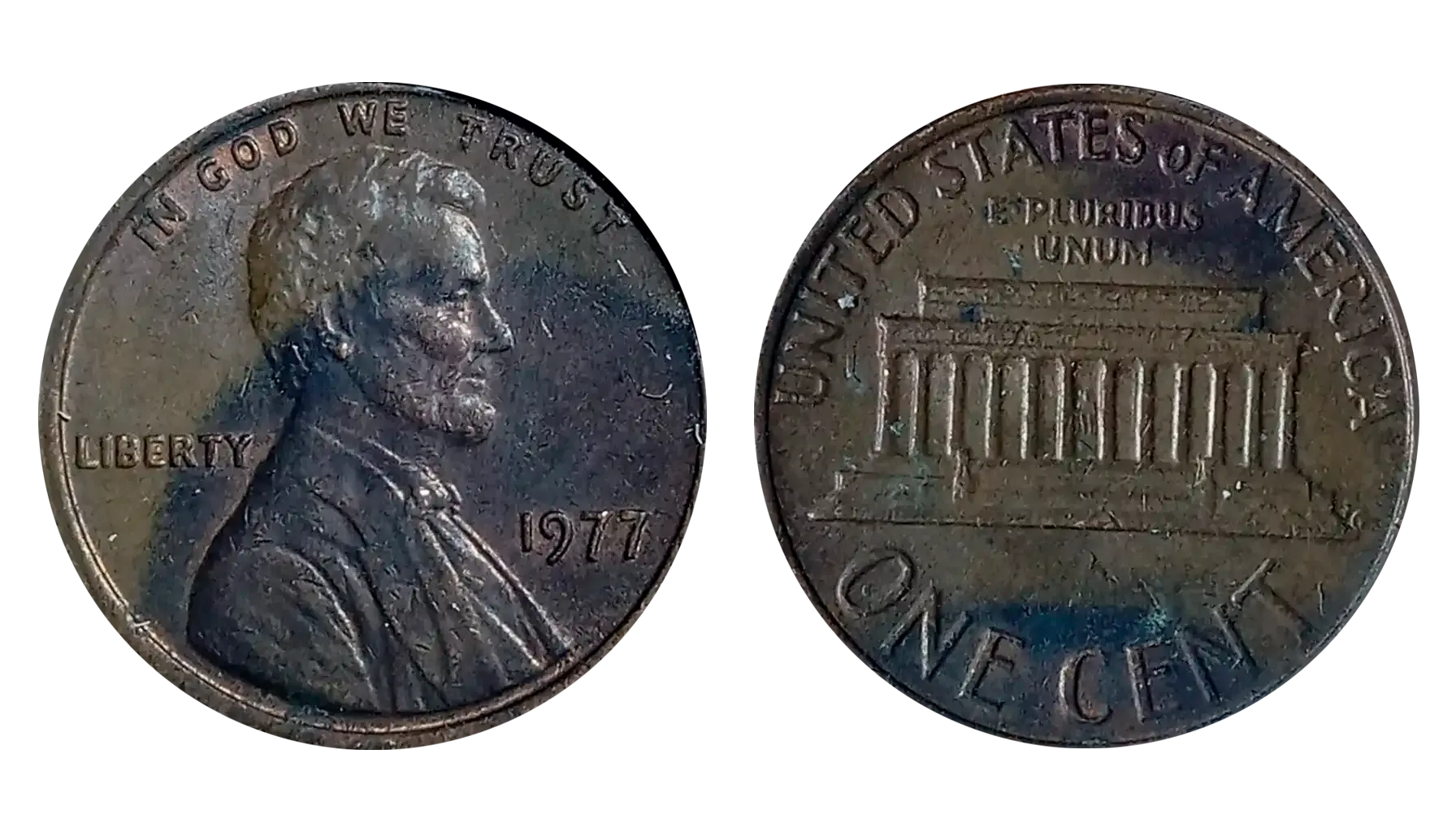
Clipped Planchets. This error occurs when part of the penny’s metal blank is missing during the minting process. A coin that looks like it has a crescent-shaped section missing from the edge. This is one of the more easily visible mistakes, and it often fetches $10–$75+ based on how clean the clip is.
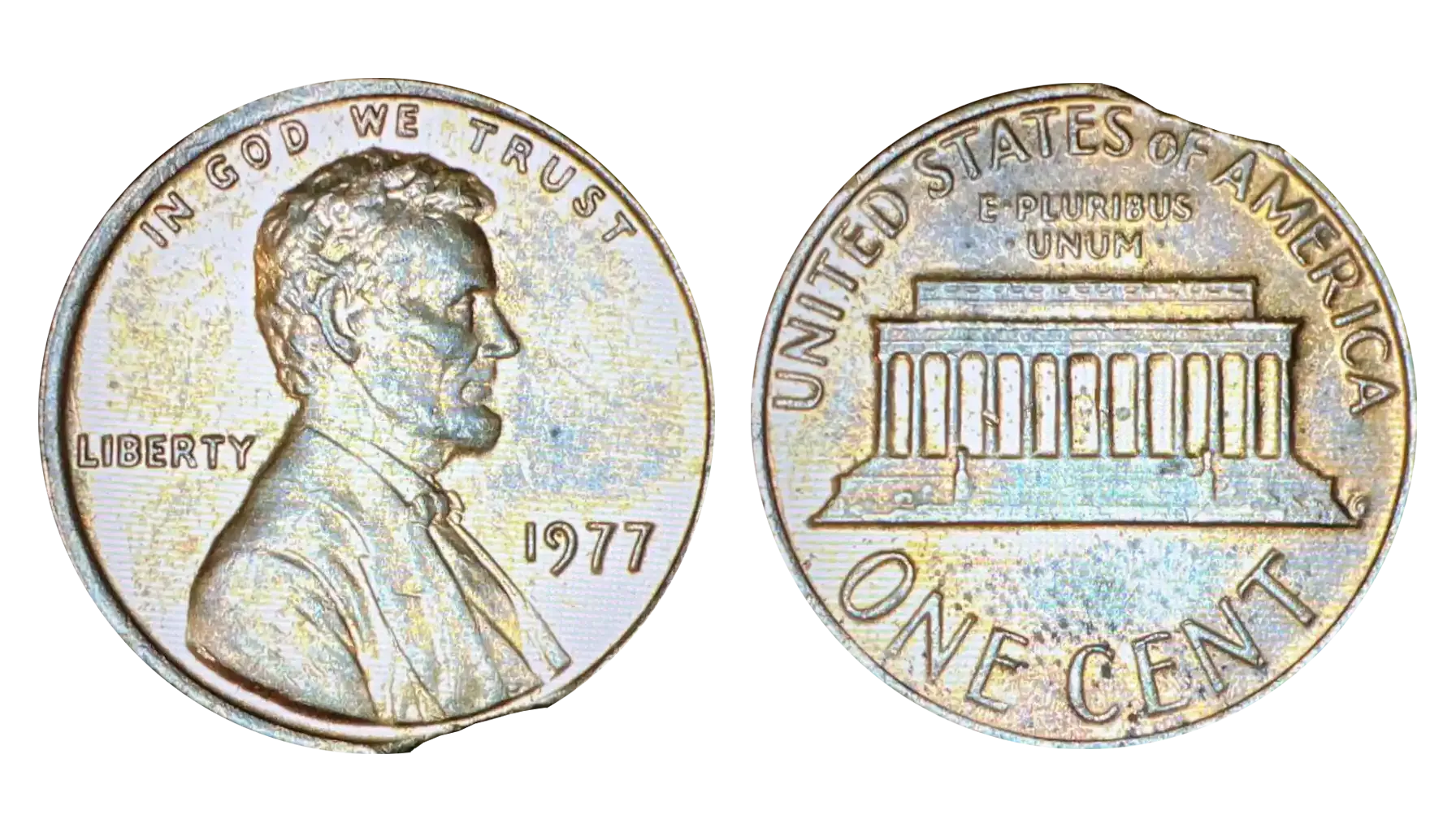
If you're examining a 1977 no mint mark penny, keep a sharp eye out. While most were made in Philadelphia and are common, some error varieties can greatly boost their value. How much is a 1977 penny worth? Error coins are usually at the top of the price chart.
Some collectors confuse this coin with the 1977 50 cent piece (Kennedy Half Dollar), which is a different coin entirely. It doesn’t belong to the Lincoln series but is sometimes mentioned by new collectors looking for valuable finds from the same year.
What Affects 1977 Penny Value?
Is a 1977 penny worth anything? Yes. But like most collectible coins, the 1977 value depends on several details. Even though billions were minted, the right features can push this little cent far above face value.
If you’ve already checked your piece’s worth, check also where to sell coins online.
Mint Mark: 1977 No Mint Mark Penny vs. 1977 D Penny
No mint mark (Philadelphia): are the most common. A 1977 no mint mark found in your change is probably worth 1 cent. But in pristine, red condition graded MS65 or better, these can go for $5 to $15. Want to know the 1977 penny value no mint mark? Start by checking its color and grade.
D mint mark (Denver): The 1977 D is also common, but collectors like this version in Mint State. If you have a shiny red 1977 penny D graded MS66 or higher, its value can jump to $10–$30. Mint errors or strong eye appeal can push that even higher.
S mint mark (San Francisco): The San Francisco facility produced 1977 S pennies exclusively for collectors. The mint did not release these proof coins for general circulation. Every specimen features sharp details and mirror-like surfaces. A proof coin graded PR69 DCAM typically sells for $15 to $25. Specimens achieving a PR70 DCAM grade can reach prices between $200 and $500. Current market conditions and surface preservation determine the final value.
Condition & Grade
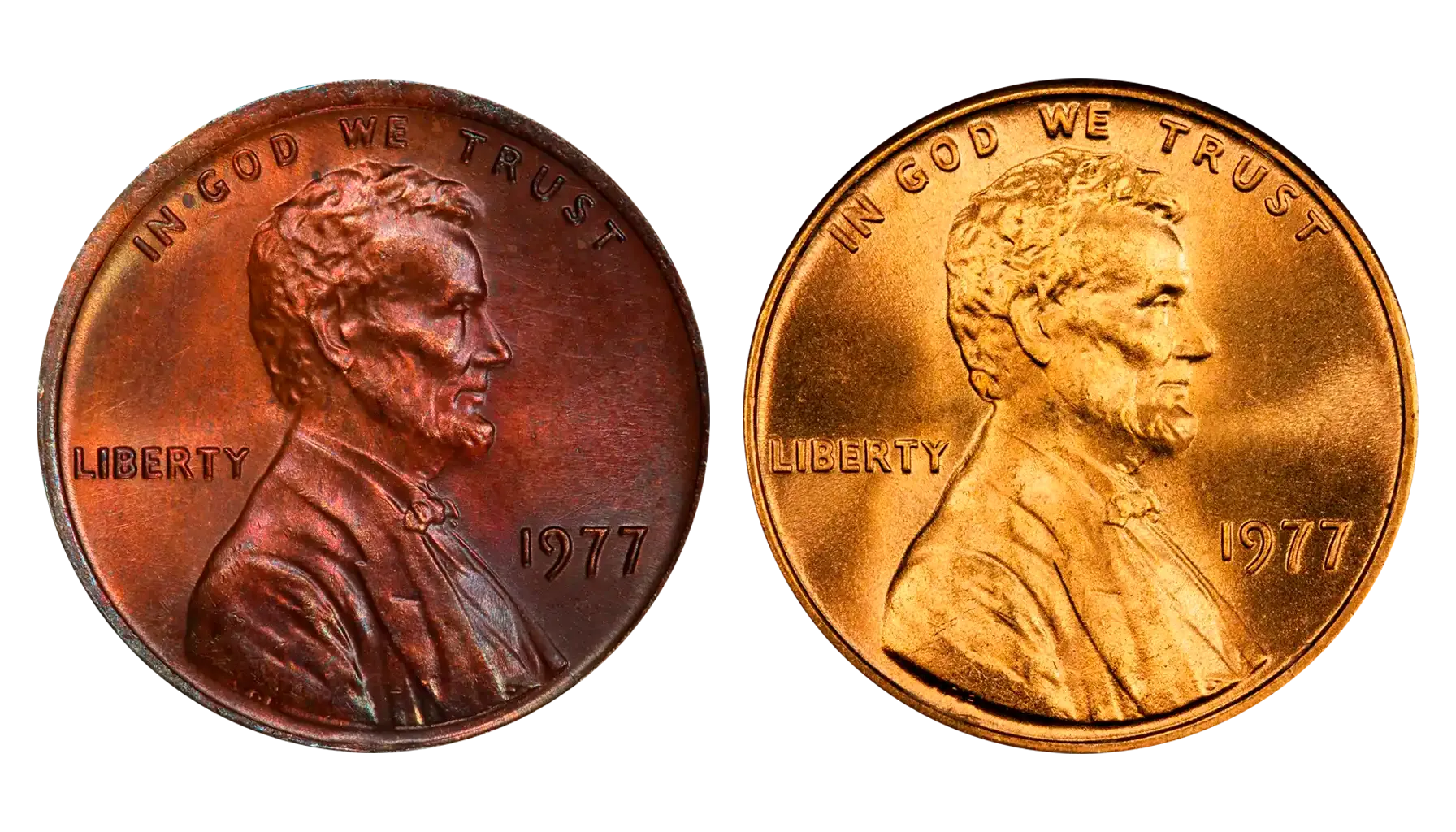
A high-grade 1977 Lincoln with full red color and no visible damage can sell for much more than a worn one.
Red (RD): The bright red luster from the mint is what collectors want. A clean, red 1977 D in MS67+ can be quite valuable.
Red Brown (RB): These coins show some fading or brown tones on the surface. These pieces remain collectible in Mint State despite the color change.
Brown (BN): Such coins usually represent circulated pieces with a duller tone. These specimens often carry the lowest market value.
Professional grading services like PCGS or NGC evaluate coins using a numerical scale from 1 to 70. Coins graded MS65 and up (or PR69–70 for proofs) are typically more in demand
Errors & Varieties
The 1977 penny error list has some eye-catching mistakes that can boost a coin’s worth.
1977 Double Die Penny (Obverse): Look at the date or lettering. Doubling is a known error and can raise the value significantly.
Off-center strikes: Misaligned designs are collectible. The more off-center (while still showing the full date), the higher the value.
Clipped planchets: Crescent-shaped cuts on the edge are what make them unique.
Struck through grease: These look faded or weak due to debris in the minting process. They're subtle, but collectors still want them.
And a quick note: while the 1977 50 cent coin value applies to the Kennedy Half Dollar, not the Lincoln cent, many new collectors ask about it when researching coins from that year. Read about 13 Valuable Kennedy Half Dollars to know more.
Proof vs. Circulation Strike
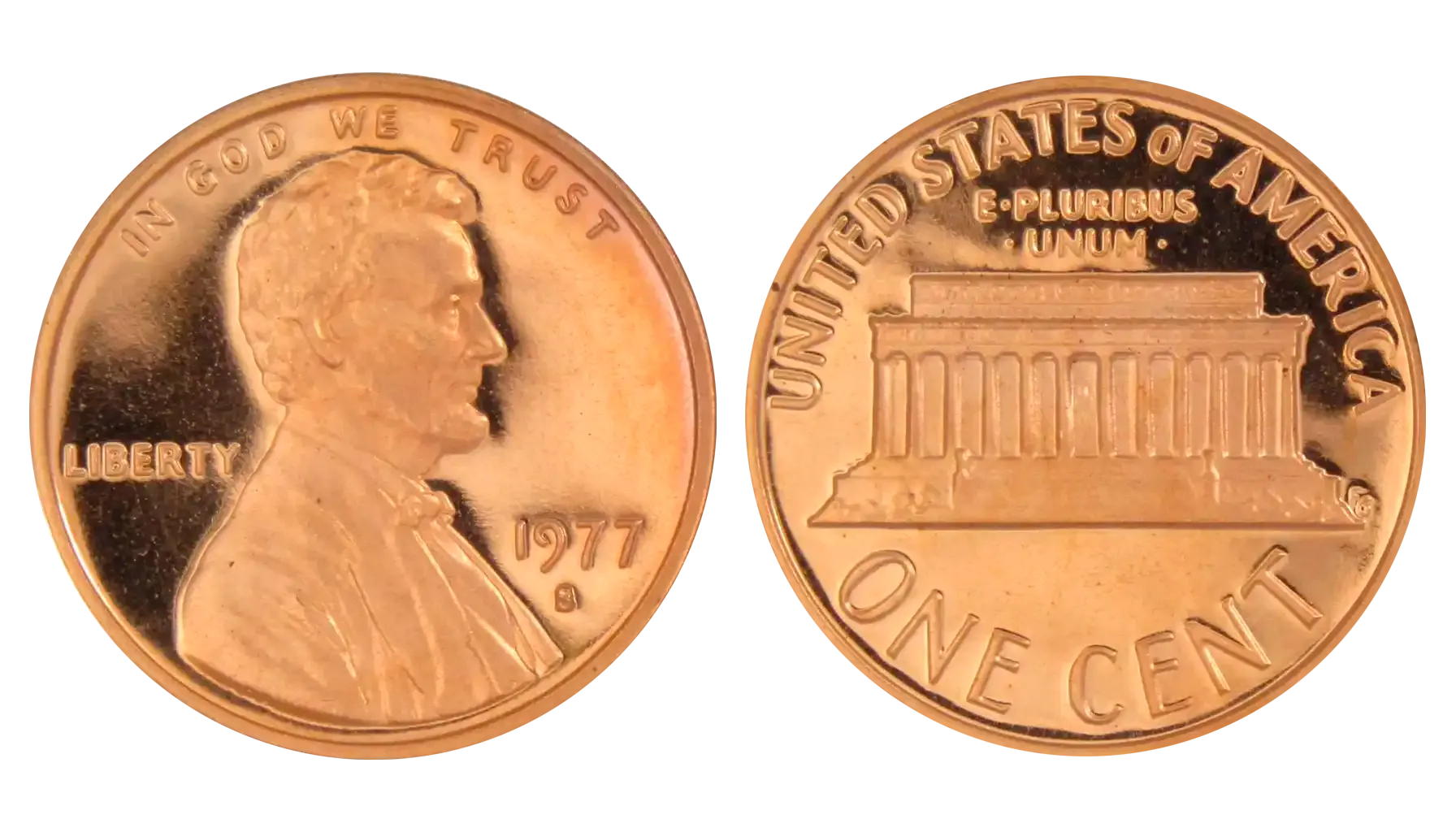
Proof coins are made differently; they are struck using special dies and polished blanks. These are made for collectors and not meant to be spent.
A 1977-S can be easily spotted by its mirror finish. The mint produced millions of these collector pieces. But only a small number survive in PR70 Deep Cameo grade today. The 1977 D and 1977 no mint mark pieces were also struck in massive quantities for circulation. Thus, most of these common coins carry little premium. Only high-grade specimens or rare errors possess significant market value.
To identify and estimate errors accurately, refer to verified examples from PCGS or NGC. If it looks off, it’s worth getting a second opinion; you might be sitting on a small treasure. To know what you need, read about PCGS CoinFacts vs. Coin ID Scanner: Which App is the Best?
Conclusion
So, is a 1977 penny worth anything? Absolutely, but under the right conditions. With over 8.6 billion minted, you’re likely to meet one in a drawer or coin jar.
What to Take Into Account
If you want to check it immediately and get an approximate price, there is a solution - the Coin ID Scanner app. It’s an application that will give you an instant result based on AI technology. It's best if you need a digital collection and a fast new coins scan.
And remember: an error, sharp strike, or pristine condition is what adds to the value. So, learn all the basics to be able to find these valuable specimens. If you don’t face worthy examples, don’t worry: there are also other years of American pennies that can be pretty valuable, so if you don’t find anything in 1977, there are lots of years to discover.

 Facebook
  X (Twitter)
  Pinterest
  LinkedIn