Contents:
The 1876 Seated Liberty dime, minted in the nation's centennial year, represents more than just a ten-cent piece. This guide examines the coin's context, the significance of the Carson City mint mark, and the factors that define its modern market value.
Download an app for identifying coins and their values.
The 1876 Seated Liberty Dime in Context
The United States Mint struck items in three locations in 1876:
Philadelphia
San Francisco
Carson City
This production occurred during the nation's 100th anniversary, a period of economic recovery after the Panic of 1873.
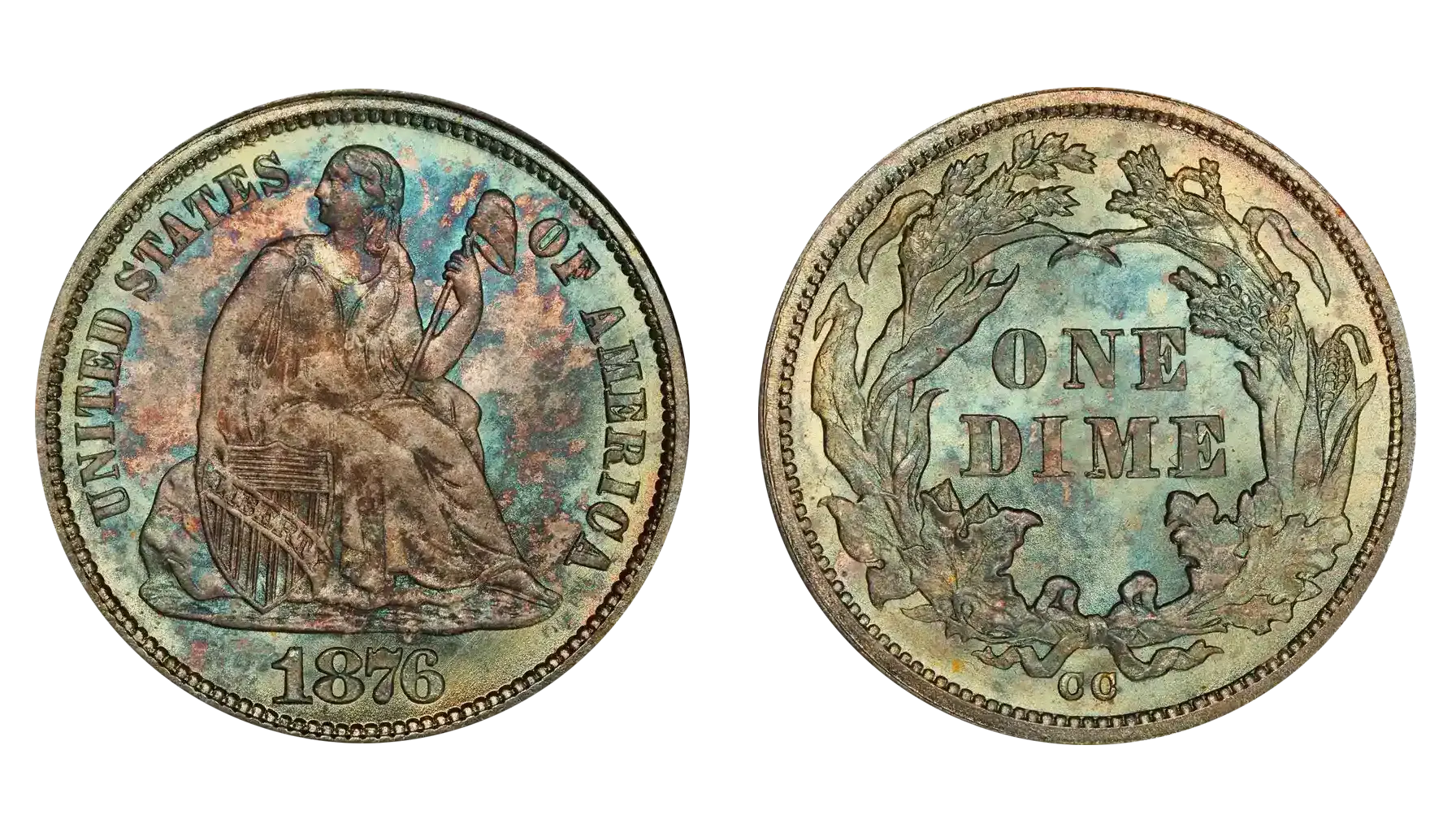
The Seated Liberty design, by Christian Gobrecht, was the standard silver coinage motif of the era. The obverse shows Liberty seated on a rock, holding a shield and a liberty pole. The reverse features a simple laurel wreath encircling the denomination.
The table provides the basic specifications and mintage figures for the 1876 Seated Dime:
Period | 1837–1891 |
Diameter | 17.9 mm |
Weight | 2.5 g |
Edge | Reeded |
Composition | Silver |
Designer | James B. Longacre |
Note: The same designer created the 1887 item.
1876 Carson City Dime and CC Mint History
Items from this mint carry a distinctive CC mint mark on the reverse, below the wreath. The 1876 CC Seated Liberty dime value is a product of this short-lived, frontier-era mint.
“The Carson City Mint issues are scarce and highly popular, which puts a very high price floor on them. The mintage for each date is low, and many pieces are damaged.”
– Thomas Coulson, a numismatist
Liberty Coin Service, 2016
Many Carson City items entered hard circulation in the Western states, leading to greater wear. Furthermore, significant quantities of silver coinage, including items, were melted during later silver bullion acts.
These events make a 1876 CC in high grade a notable find. The mint's romantic history and finite coinage period create a persistent demand among series collectors.
Historical Periods
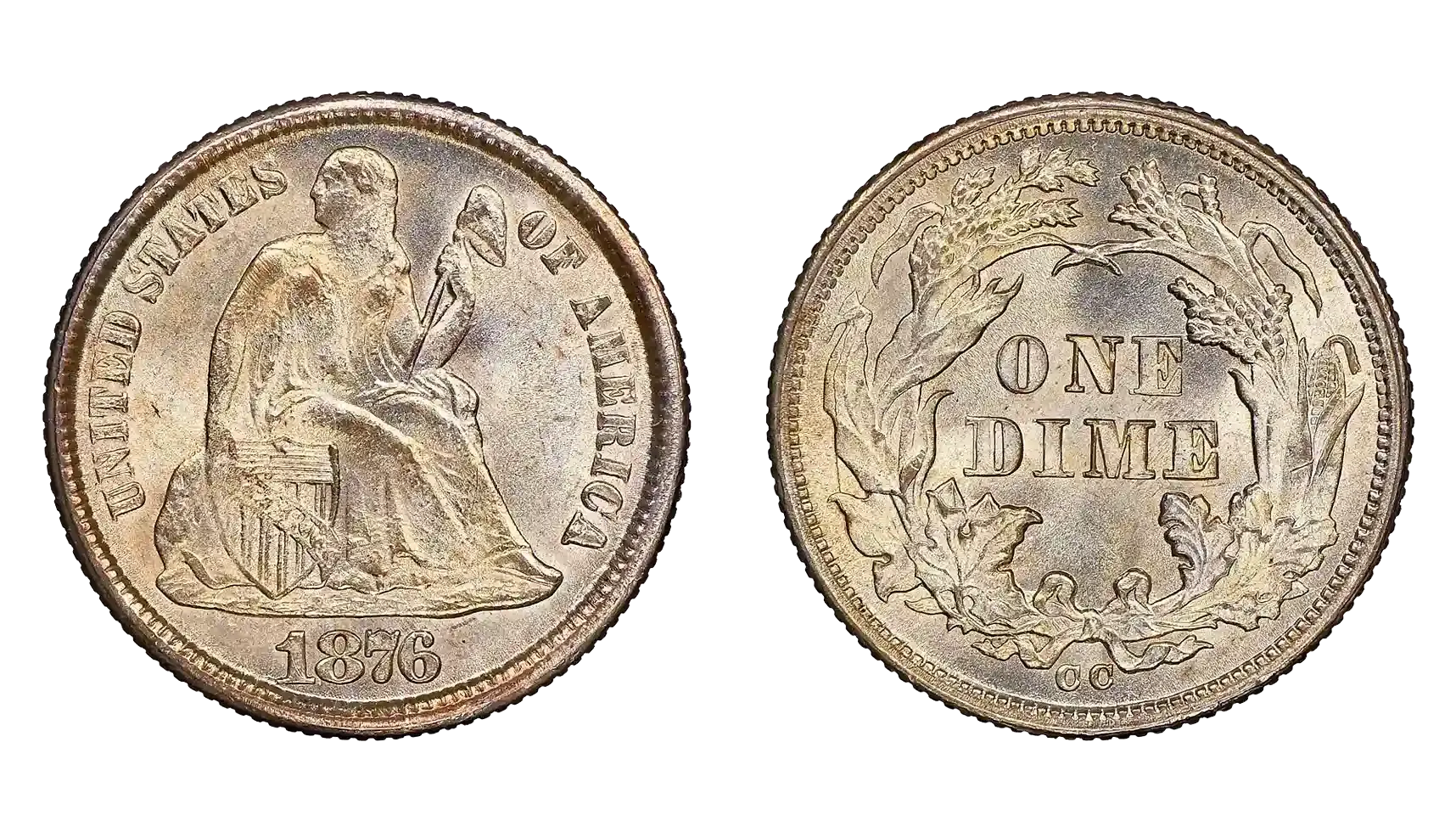
The Centennial Era
1876 – the United States' 100th anniversary. The nation focused on unity while recovering from unfortunate events.
This patriotic climate increased demand for American symbols. The Seated Liberty design is connected to Revolutionary ideals. Many citizens saved 1876 items as centennial souvenirs.
The Silver Rush
The 1876-CC is a product of the "Big Bonanza" silver strike in Nevada's Comstock Lode. The Carson City Mint processed this enormous silver output. In 1876, it produced over 8.2 million, its highest annual production.
The Monetary Policy
A political battle over monetary policy peaked in 1876. The Coinage Act of 1873 had stopped silver dollar production, moving the U.S. toward a gold standard. With silver dollars halted, the Mint channeled silver into subsidiary coinage.
The government purchased silver from Western mines under the law. The high 1876 mintage resulted from using this silver for items, quarters, and halves instead of inflationary silver dollars.
Technical Design Period
The 1876 dime is an early example of this final design that continued until the series ended.
What Affects the Value of a 1876 Dime
Three primary elements determine the 1876 dime value today:
Condition
Mint Mark
Appeal
Certification (NGC, PCGS)
For the 1876 Seated Liberty Dime value, wear on Liberty's knee, breast, and the reverse wreath's leaves is critical. A single grade point can change the price significantly.
Attention: The mint mark is the most decisive factor.
The 1876 CC dime value always surpasses the Philadelphia or San Francisco item in an equivalent grade because of collector demand for the CC mint mark. The San Francisco issue typically holds a moderate premium over the Philadelphia one.
Actual Prices
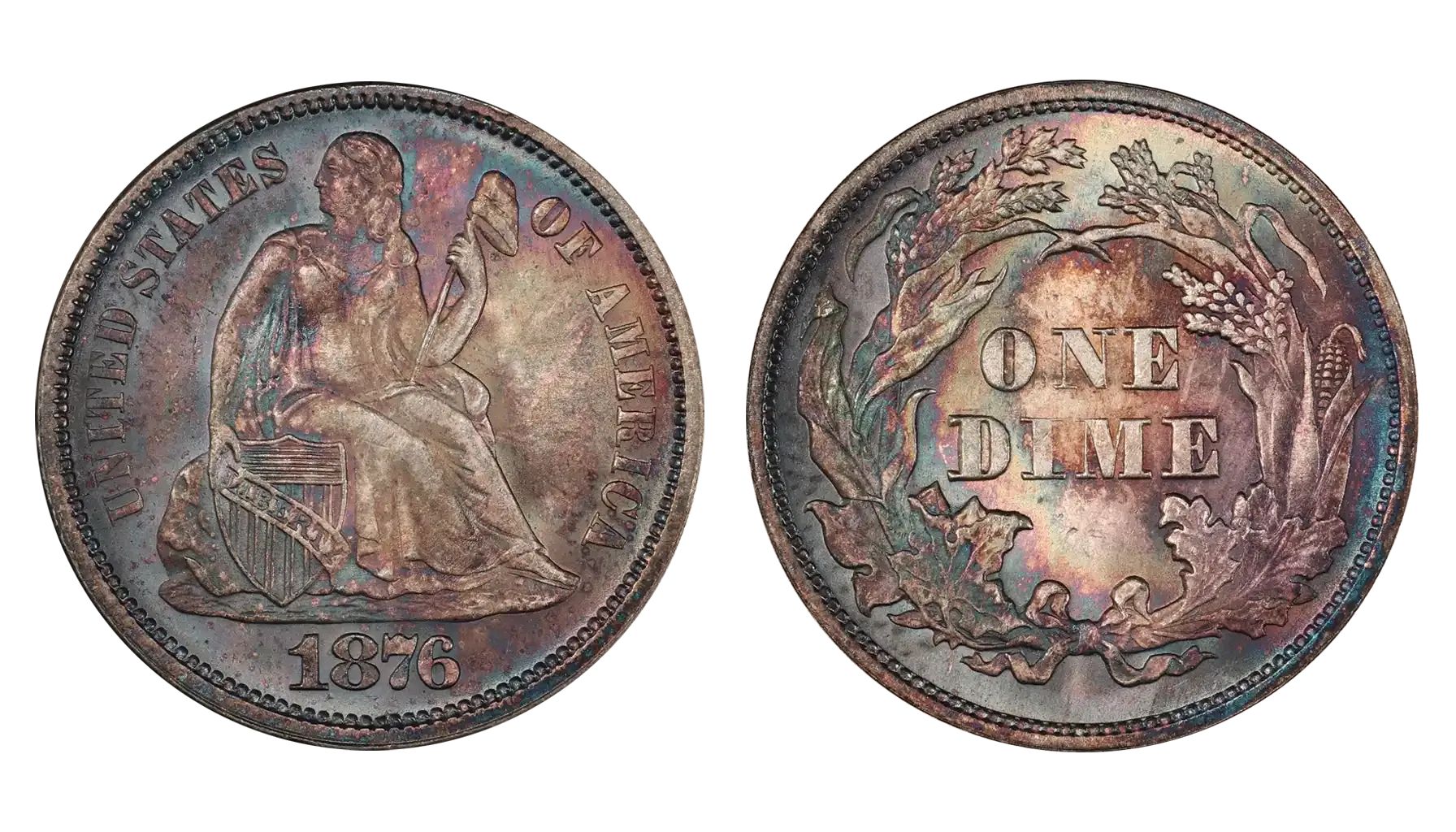
The following table illustrates current market valuations for the 1876 dime CC in circulated grades.
G | VF | EF | MS-60 | MS-65+ |
$18–$30 | $60+ | $95+ | $210+ | $675+ |
An item with original surfaces and a strong strike will sell for a premium within its assigned grade.
Auction Records
Heritage Auctions is the most popular platform for professional collectors.
Mint | Year | Price | Auction |
SP-65 | 2003 | $48,875 | Heritage |
67 | 2008 | $6,325 | Heritage |
68 | 2015 | $10,575 | Eugene H. Gardner Collection |
67 | 2023 | $6,300 | Heritage |
Important Collectors Steps
Forgot about Cleaning Your Item
Even gentle rubbing with a cloth or using "safe" home remedies like baking soda, vinegar, or toothpaste creates micro-scratches (hairlines) that are visible under a magnifying glass.
Collectors actually prefer patina (the natural darkening or toning that occurs over 120+ years). A "shiny" one that has been scrubbed is often worth only its silver weight, whereas an uncleaned item can carry a massive collector premium.
Avoid Oils
Always pick up the item by its edges between your thumb and forefinger. Never touch the "faces" (the front or back surfaces).
Environment Control
Store your gems in a cool, dry place. A home office is better than a basement or attic, where humidity fluctuates.

 Facebook
  X (Twitter)
  Pinterest
  LinkedIn