Contents:
The study of Soviet coins always begins with an attempt to "decode" the era. Each image, symbol, and metal carries a tangible historical context.
And to quickly navigate denominations, varieties, and estimated values, collectors can easily use an online coin scanner—the service helps quickly compare a piece with reference examples and determine its rarity.
What Was the Soviet Ruble?
The Soviet ruble was the main currency of the USSR from 1922 to 1991. Its story usually breaks into a few stages, and each one reflects what was happening in the economy at the time—reforms, the shape of industry, and the state’s changing rules for issuing money.
Major periods of the ruble:
1922–1924—Post-hyperinflation reforms;
1924–1947—Stabilization and unification of the monetary system;
1947—Monetary reform without market-rate exchange;
1961—1:10 redenomination and transition to more convenient denominations;
1991—Final transition to the Russian ruble.
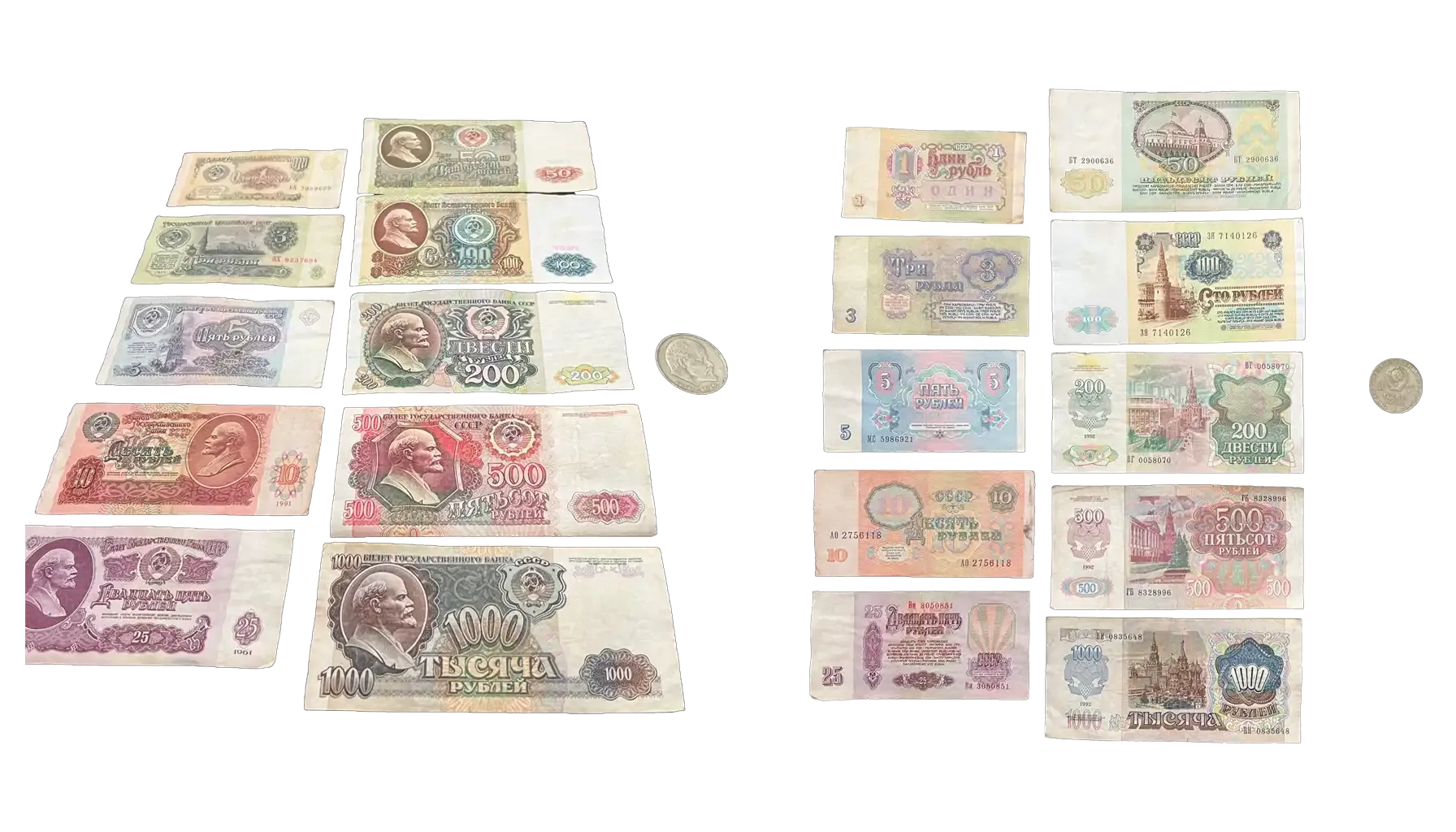
During this period, people used several forms of money at once. There were banknotes and bonds, and there were also metal coins struck in copper, nickel, and aluminum bronze. Researchers usually start with the basics—the coat of arms, the hammer and sickle, the USSR lettering, and the strong relief on the surface.
“The ruble collapsed under my watch? Come on, guys! When did you even manage to do all that? Someone messed things up here, and now it turns out I also crashed the ruble!” (Regarding the 1998 crisis, translated from Russian).
—Viktor Stepanovich Chernomyrdin, Russian economic and political figure
Ru Citaty website
Soviet Ruble Coin Overview
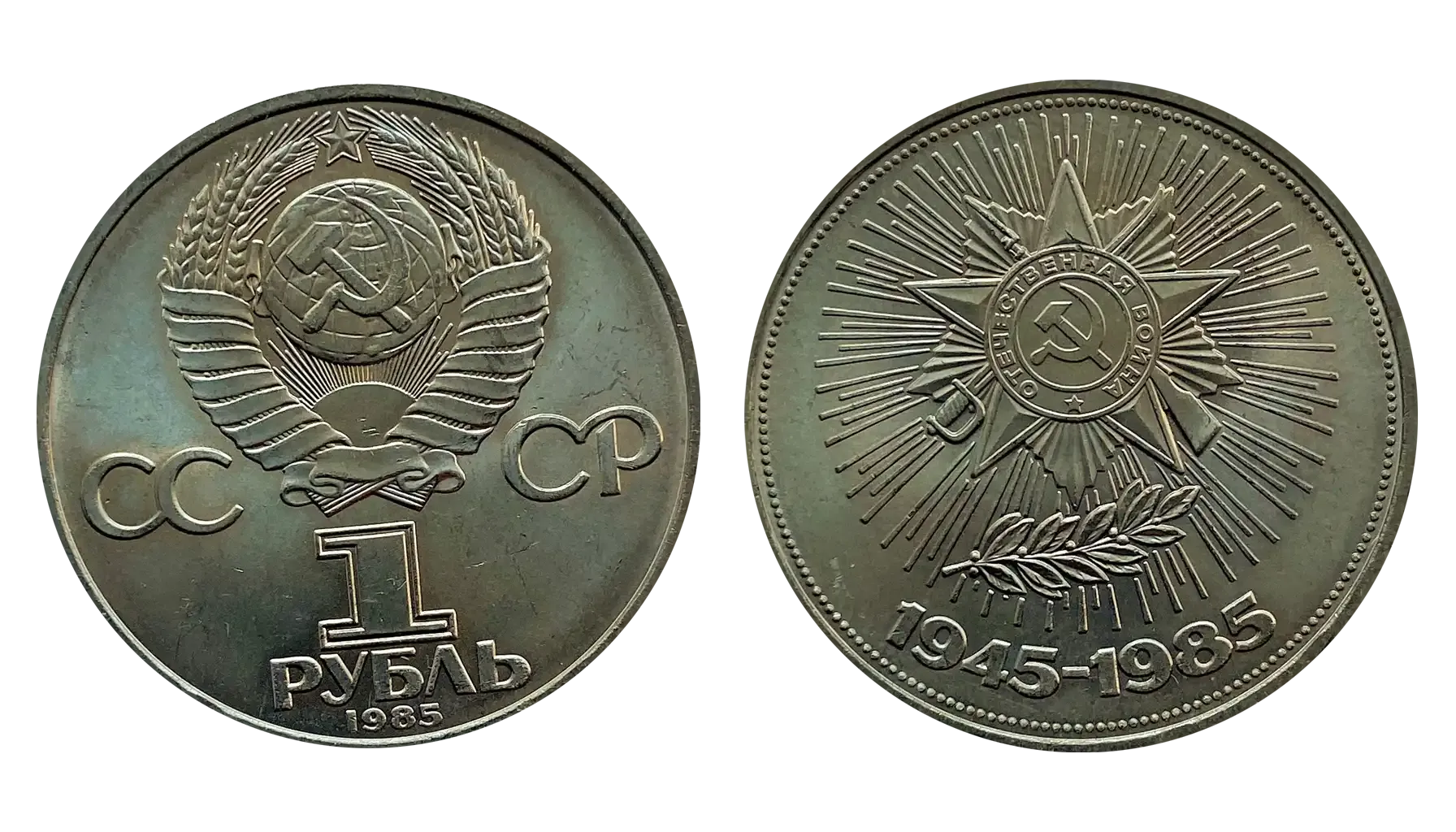
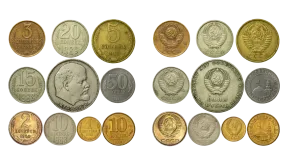
Minted units form the foundation. The most common are the Soviet ruble coin (1 ruble) and smaller denominations of 1, 2, 3, 5, 10, 15, 20, and 50 kopecks.
Key features:
Durable alloy (based on copper-nickel and aluminum bronze);
Strict state design style;
Consistent size and weight over the years;
Differences between the Moscow and Leningrad mints.
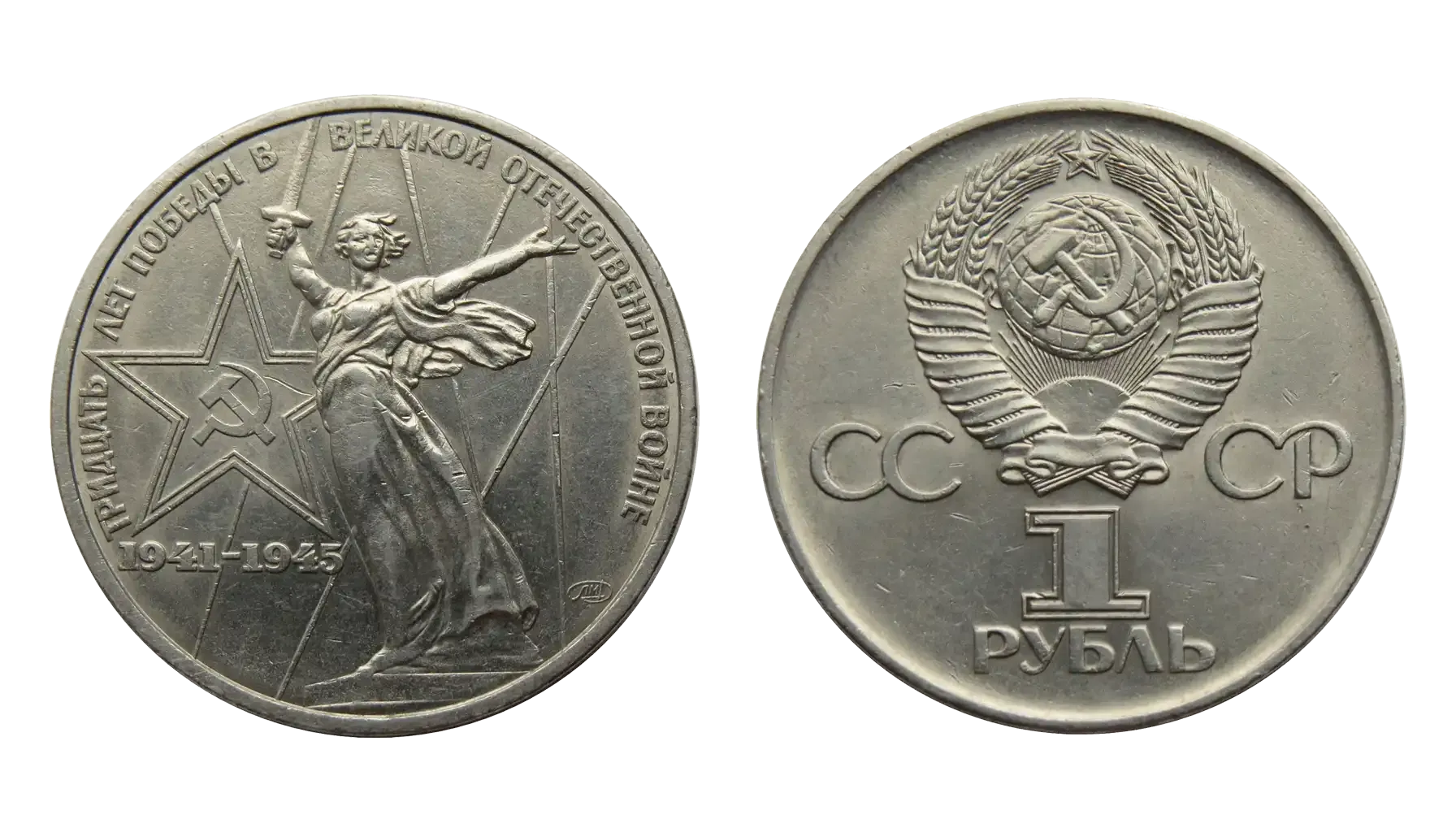
Anniversary releases tend to draw the strongest attention. Coins issued for the 50th anniversary of the October Revolution, the 1980 Games, several Victory Day dates, and pieces highlighting well-known military figures are usually among the first coins and pieces to collect that collectors look into.
Soviet Coins and Their Characteristics
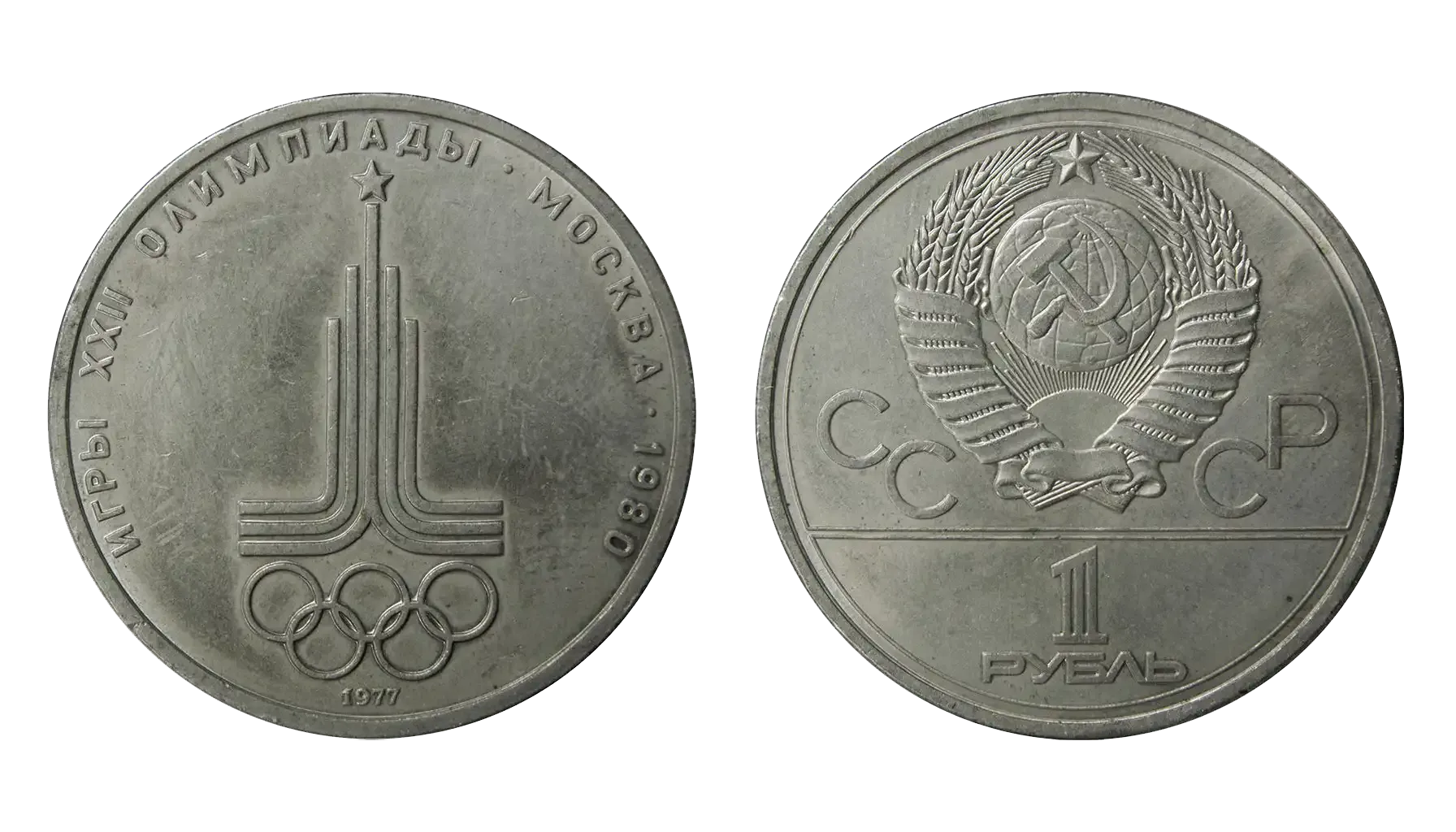
The diversity of the issue is explained by three types of state minting:
Circulating coins
These formed the basis of daily transactions. Depending on the period, they could differ in alloy—at the beginning of the century, harder metals predominated, while towards the 1990s, lighter materials were widely used. Struck pieces dating back to the later Soviet era have sharp edges and a machine-made texture.
Jubilee and commemorative minting
The classic ruble, two-ruble, three-ruble, and five-ruble denominations were accompanied by thematic series:
Politics;
Sports;
Culture;
Major events.
Most of the commemorative series can now be found in many collectors’ lists of valuable coins, because mintages are limited, and some specimens have survived in minimal quantities in Proof quality.
Precious metal coins
For the domestic and export markets, the following were issued:
Soviet silver coins—denominations of 1, 3, and 5 rubles;
Gold items, including a rare series of Soviet gold coins, primarily for numismatic sets.
Table of characteristics of the main denominations:
Denomination | Years of Issue | Metal | Weight |
1 ruble | 1961–1991 | Melchior (Cu–Ni alloy) | ~6.45 g |
3 rubles | 1987–1991 (commemorative) | Cu–Ni or Ag | ~12.8 g (Cu–Ni) / 31.1 g (Ag) |
5 rubles | 1980–1991 | Cu–Ni | ~19.8 g |
10 kopecks | 1961–1991 | Aluminum bronze | ~1.7 g |
Soviet Coins Value: What Affects Pricing?
The value of USSR coins is determined by more than one factor. The main factors are:
Mintage and rarity (especially for the Small Coat of Arms series of the 1950s);
Year and type of die;
Presence of factory defects;
Condition, including surface color and luster;
Origin—specimens from sets are valued higher;
Belonging to rare series such as "Victory," "Peter the Great," and "Tolstoy."
Types of Errors on Coins That Affect the USSR Coin Value
Soviet minting errors are valued significantly higher than standard examples. Rarely encountered are:
Die splits;
Relief doubling;
Die-stamp splits;
Alloy distortions.
For a quick initial assessment, take a photo of the piece and upload it to the Coin ID Scanner app. It compares the photo against the database of sold specimens and displays the price range across actual markets—especially useful when analyzing the Soviet Union coin value and practically indispensable for beginners.
Demand for Soviet coins for sale is stable. People search for them on numismatic forums, at auctions, in antique shops, and through private dealers.
And those who study the modern market may be interested in learning about high-value coins to keep in 2025, which already mentions modern denominations that are gaining value.

 Facebook
  X (Twitter)
  Pinterest
  LinkedIn