Contents:
Pence, penny... Everyone knows about this currency. It might be small, but it is ubiquitous. The U.K. is one of the many countries that use a penny.
How much is a British pence worth? What metals are they composed of? What does it mean to be a decimal coin? We will answer those questions.
Here is a new technology, a coin value checker app. This app can scan coins just by taking a photo and tell their values.
What Is a British Pence?
A British pence (or penny in singular) is a unit of currency used in the United Kingdom. You might know that the British pound sterling (£) is the “main” UK currency. One pound is equal to 100 pence, which makes the pence the smallest common monetary coin in Great Britain.
Those who live in the U.S. might remember how the dollar is the main currency and denomination, but one dollar is technically 100 pennies. While in the U.S., the penny is discontinued, in the U.K., this denomination is thriving.
The pence has a “p” symbol. You might have already seen this letter in pricing. 50p means fifty pence, while £1.50 equals one pound and fifty pence.
Pence is widely used for small purchases. For example, you can buy a pen, a candy, or take a deal that has .99 pricing with this denomination.

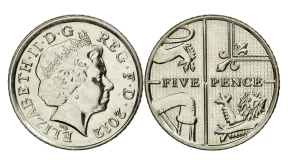
A penny has two different designs. The obverse commonly shows the reigning monarch, and the reverse features the Royal Shield.
Penny (British Decimal Coin) Explained
The penny was introduced to British people in 1971 following the UK’s move to a decimal currency system. What does this system mean?
You see, before decimalisation, the pound was divided into shillings and old pence, which was more complex to calculate. Now, after the arrival of the decimal currency system, denominations are calculated in tens and hundreds. For example:
1 pound (£) = 100 pence (p)
1 penny = 1/100 of a pound
The decimal system makes calculations simple and consistent because all conversions are based on tens.
How Much Money Is a Pence Worth?

Being the smallest denomination, a single penny is worth one-hundredth of a British pound (£0.01). Therefore, these coins are generally worth minimal value.
Of course, there are exceptions:
There are bigger penny denominations. For example, 50p coins, and some of them are valuable due to their rarity. They might be small in technical terms, but some collectors are ready to pay dozens of pounds just for one penny. Olympic and the Atlantic Salmon (2023) issues are exceptionally valuable.
Some pence are made with errors, another valuable rarity. British coinage can come with wrong inscriptions (e.g., “New Pence” instead of “Two Pence”), double strikes, off-centre strikes, etc. These cases can also go for dozens of pounds.
British Penny Composition
The British penny has changed over time. The denominations started as a bronze coin (1971–1992), but since 1992 and onwards, switched to copper-plated steel.
Attribute | Details |
Country (Issuer) | United Kingdom |
Years of Minting | 1971–present |
Type | Standard circulation coin |
Shape | Round |
Diameter | 20.3 mm |
Metal Composition | Copper-plated steel (since 1992) |
Weight (Total) | 3.56 grams |
Minting Facilities | The Royal Mint (UK) |
The modern penny has a steel core coated with copper. A very popular composition, and for good reasons. The copper gives the bit its traditional reddish appearance, while the steel is reducing production costs.
“The first copper-plated steel 1p coins were struck in 1992. The reason for this change was the increase in the price of metals on the world markets. The coins have a mild steel core and are electroplated with copper - consequently, they are magnetic.”
— The Royal Mint
Official Website
An interesting fact: in the U.S., to reduce money making cost even further, the 1943 penny was pure steel.
Pence VS Pounds Conversion
Now that we know how the decimal system works, here is a little chart showing how pounds and pence correlate:
Pence (p) | Pounds (£) |
25p | £0.25 |
75p | £0.75 |
100p | £1.00 |
150p | £1.50 |
240p | £2.40 |
500p | £5.00 |
Conclusion
There is a trend in many countries that smaller denominations like pence are disappearing, and only the bigger denominations prevail. Inflation may one day take the pence too, but for now it stands in the ranks of British denominations.
The Coin ID Scanner app might help you enter the collecting field. The app comes with a big coin database (150,000+ bits), and it can help you identify almost any coins with just one photo.

 Facebook
  X (Twitter)
  Pinterest
  LinkedIn