Contents:
Have you ever heard about coins with unusual forms? An octagon item is one of them because of its strong visual contrast that separates it from other “standard” items.
Make your collection great with the coin identifier app for free.
Introduction to Octagon Shaped Coins
Minting facilities typically use circular blanks for production. However, historical records show that certain periods featured items with angular outlines.
These items frequently served as presentation pieces. They also appeared as pattern strikes and bullion‑related issues. The eight‑sided design provided engravers with an opportunity to test new collars.
It allowed them to experiment with edge designs and different levels of striking pressure. Additionally, the octagonal shape assisted issuing authorities in reducing instances of clipping and counterfeiting.
If you pick up the item, you will notice that it feels different from a round one. When you put it in a tray or an album, you can see right away that it is not like other items on the marketplaces.
History of Octagon Coins
Ancient Origins and the Ahom Kingdom
The most famous long-running tradition of coinage comes from the Ahom Kingdom (modern-day Assam, India), where items were struck in this shape from the 17th to the 19th century.
According to the Yoginitantra (a 16th-century text), the Ahom kingdom was described as having eight sides. Minting items was a way for kings to symbolize their rule over the eight directions of their domain.
These items were primarily silver (rupees) and gold (mohurs), featuring inscriptions in Assamese, Sanskrit, and occasionally Persian or Chinese.
The California Gold Rush (1851–1855)
In the mid-19th century, California faced a severe shortage of official federal currency. To facilitate large transactions, private mints and the U.S. Assay Office produced massive $50 gold slugs.
“Among the most evocative of all the Gold Rush issues, the huge octagonal $50 gold pieces nicknamed 'slugs' have been favorites of numismatists for generations.”
– Unnamed opinion piece “United States Assay Office”
Stack’s Bowers
The Humbert Slug: Produced by Augustus Humbert, these 2.4-ounce gold pieces are among the most famous artifacts of the Wild West. Because of their high gold content, many were later melted down.
The Panama-Pacific $50 Gold (1915)
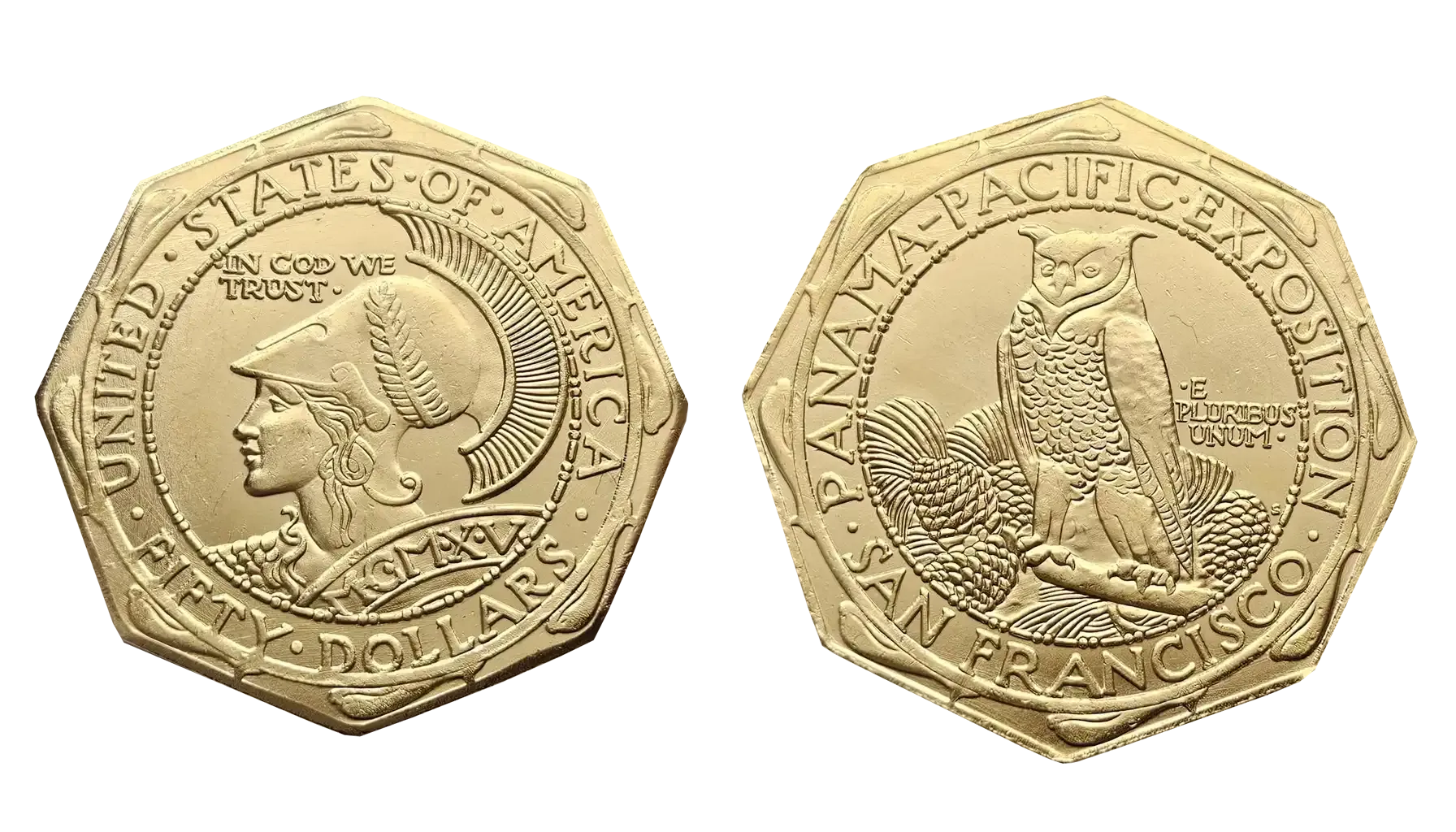
The only official octagonal item ever issued by the United States Mint was the $50 commemorative gold piece for the Panama-Pacific International Exposition in San Francisco.
Note: The Mint intentionally chose an octagonal shape to pay homage to the 1851 Gold Rush slugs.
It features the helmeted head of Minerva on the front and an owl (symbolizing wisdom) on the back. It is encircled by swimming dolphins – a nod to the Panama Canal connecting the two oceans.
Notable Octagon Dollar and Gold Coins
The octagon dollar coin concept appeared in pattern issues and private gold pieces rather than circulating federal dollars. California fractional gold remains the most famous category.
An octagon gold coin dating to the 1850s frequently includes inscriptions and denominations that differ from standard U.S. Mint practices.
Additionally, its decorative borders show differences when compared to standards. These distinctive features enhance the rare and precious item’s value for scholarly study. They also contribute to the stability of its market price over time.
Year & Item | Metal | Actual Price |
1915, 50 dollars | Gold | $50,000–$400,000+ |
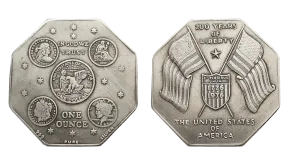
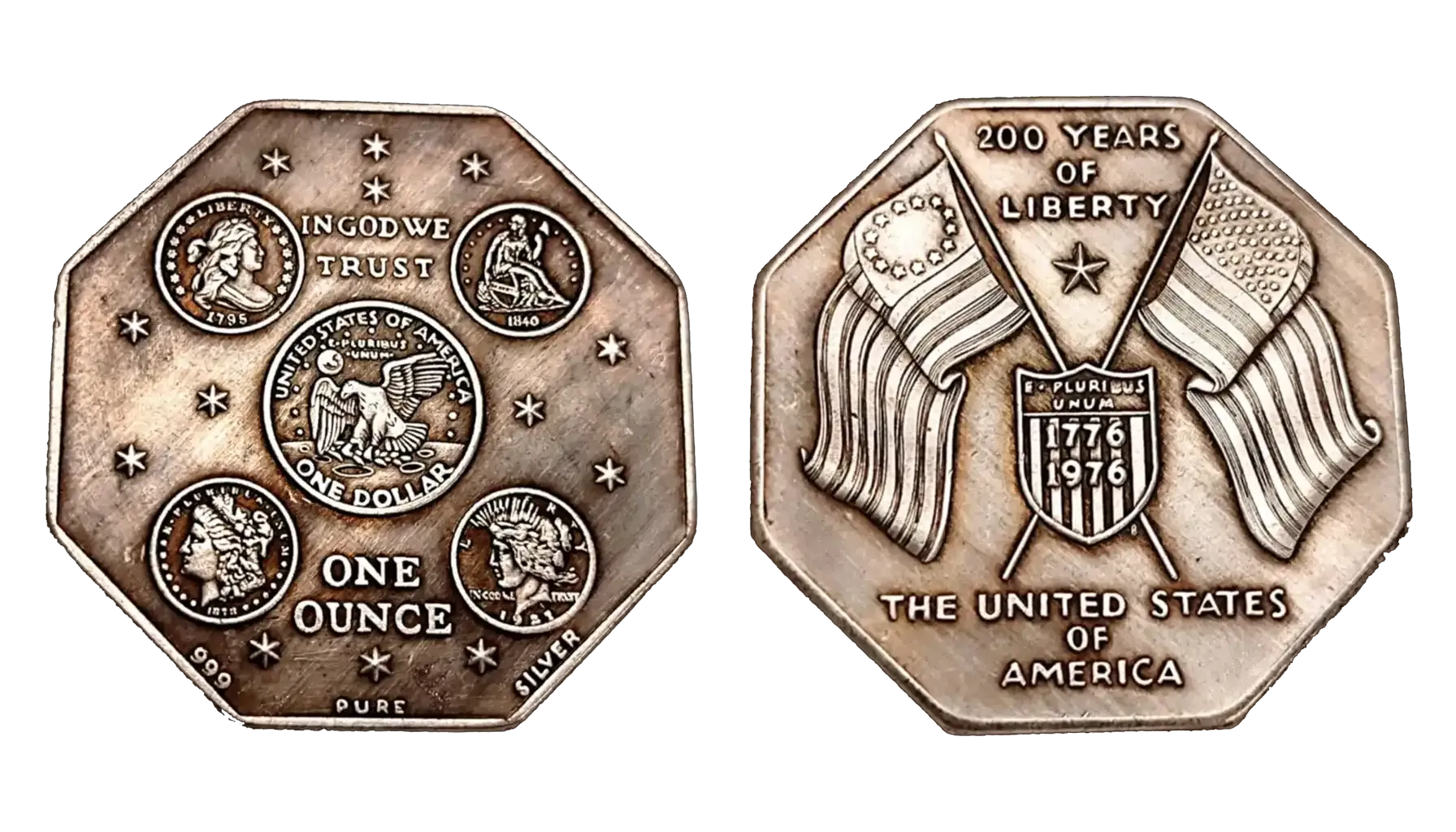
1976, 1 dollar | Base / Silver coins | $5–$35 |
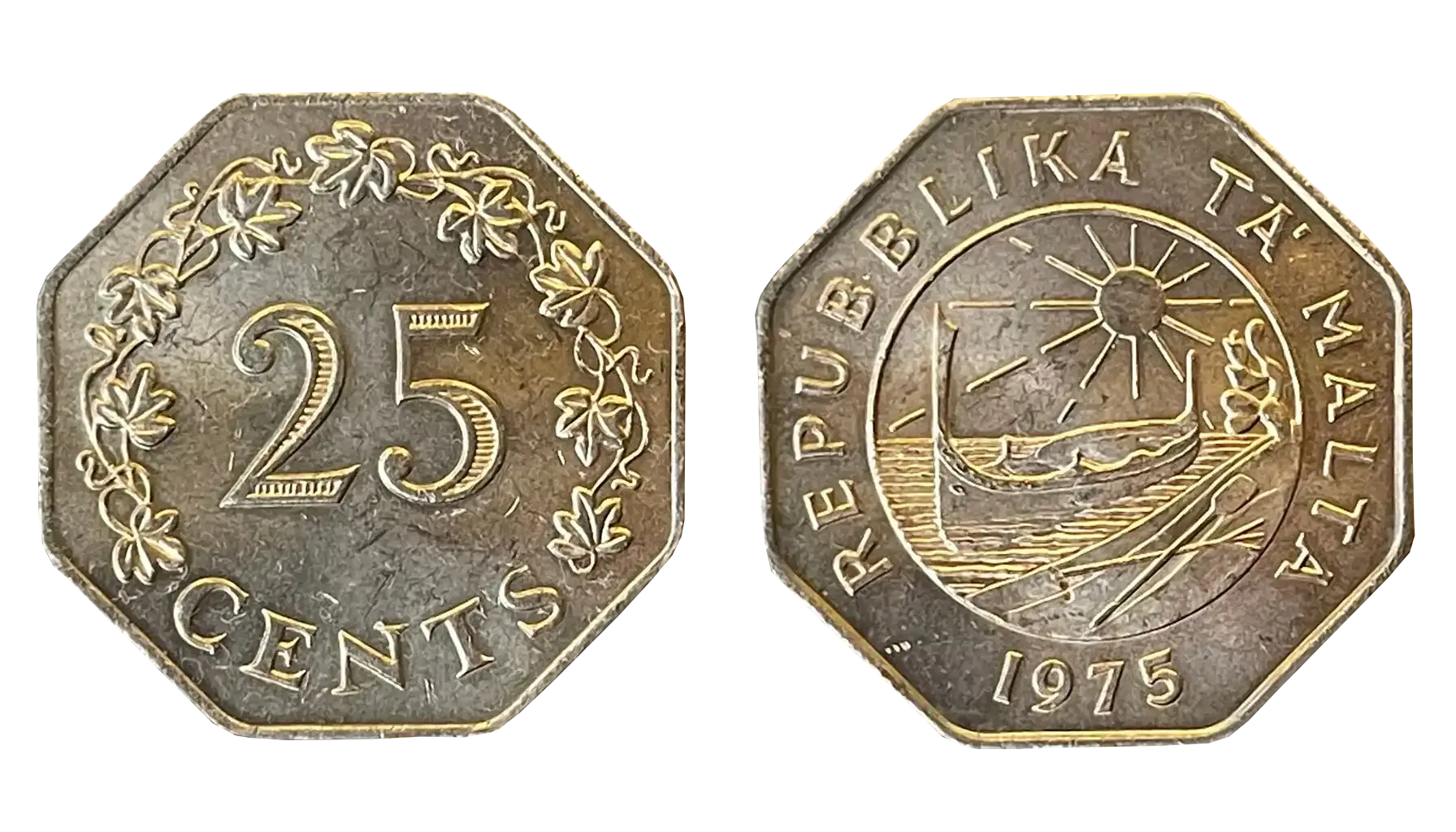
1975, 25 cent (Malta) | Bronze | $2–$35 |
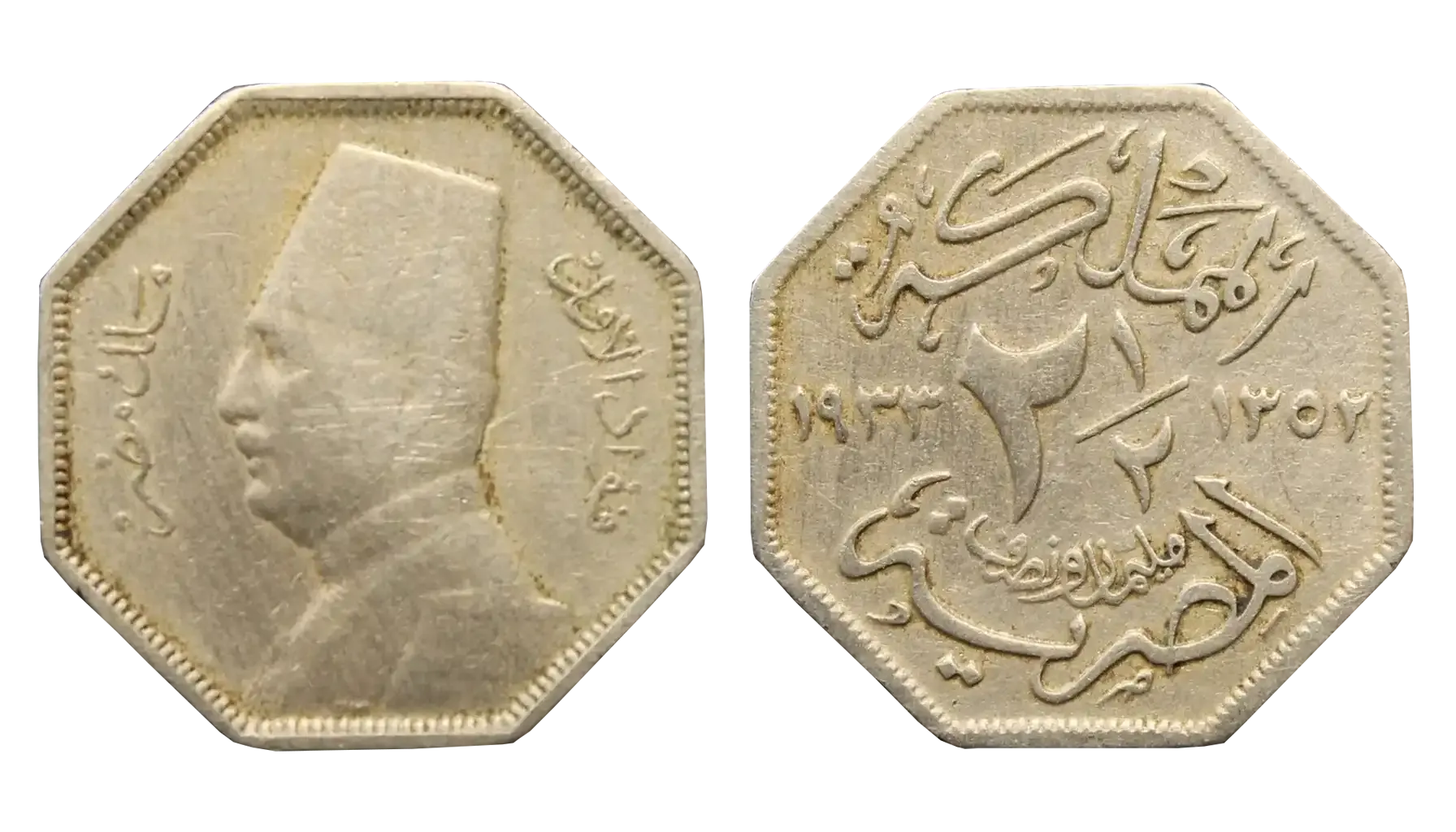
1933, 2 1/2 Milliemes (Egypt) | Cu-Ni | $5–$150+ |
Note: The 1976 one dollar is a round coin, but some online platforms present an octagon, not official versions, to fulfill your personal collection.
Collectibility and Rarity of Octagon Coins
Collectors recognize octagonal item acquisition as a distinct specialty in numismatics. This specialty integrates technical scarcity with cultural significance because octagonal pieces are not like regular round coins.
Mints often produce them intentionally to deviate from standard practices. As a result, these items are highly sought after by type collectors.
How to Identify Genuine Octagon Coins
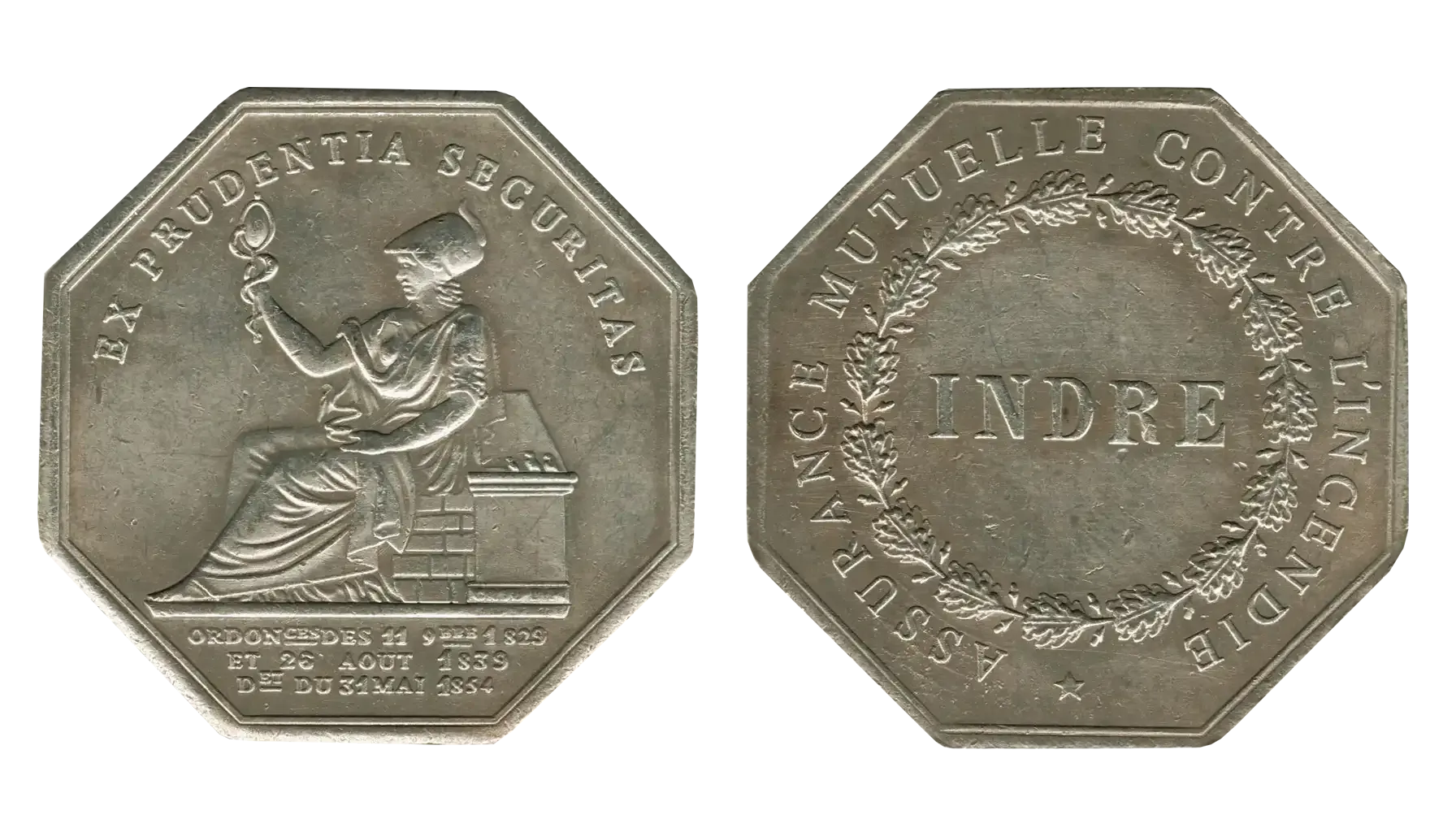
The corner sharpness check, the points where the edges meet, should be crisp and deliberate. The fake indicator can be in cast counterfeits; these corners often look soft or rounded because the molten metal didn't fill the mold completely.
Check denomination – if it does not have a stated one, it is almost certainly a modern souvenir token worth only a few dollars.
Denomination | On the item |
Corners | Not soft |
Tips for Collectors and Market Value Trends
A unique phenomenon in 2026 is that the market value of many premium numismatic items has not risen as fast as the raw price of gold. In many cases, the premium (the extra value for rarity) is being eaten by the surging spot price.
Tip: Experts suggest selling common bullion gold bars to acquire underpriced pre-1933 U.S. Gold or high-grade classic rarities. As the market catches up, these items are expected to see catch-up growth, potentially outperforming bullion in late 2026.
Digital Authentication
New tools provide real-time market analytics by aggregating global auction data. Collectors are using these to identify undervalued lots in real-time during live bidding.
Tip: Go with AI tendencies, install the Coin ID Scanner app.

 Facebook
  X (Twitter)
  Pinterest
  LinkedIn