Contents:
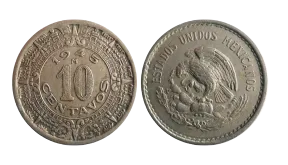
Mexican centavos do not have a very high face value; however, they are still a part of the history of Mexican currency development, and, consequently, their value is quite significant for true numismatic connoisseurs. To identify centavos, collectors often use the Free Coin App, however, this can be replaced by our detailed guide.
What Is a Centavos Coin?
First and foremost, it is a monetary unit that is used not only in Mexico but also generally throughout Latin America. For instance, this includes Portugal and Philippine coins.
Typically, one centavo makes up one hundredth of the country's main monetary unit. As, for example, in Mexico, one hundred centavos make up Mexican peso coin. Historically speaking, "centavo" translates from Latin as hundred. That is, originally, it was a fractional coin and served for small transactions.
However, most often, despite the fact that these specimens exist in different countries, they are most characteristic of Mexico, as it is there that they have a rather complex, intricate history.
But it is also important to list the countries where these coins are also issued:
Argentina
Brazil
Chile
Colombia
Cuba
Dominican Republic
And others
Centavos are usually made from non-precious metals, for example, copper, bronze, brass, nickel alloy, or stainless steel. The designs also differ.
Mexican Centavos Coin History
Until the Mid-19th
Before the decimal system was introduced in Mexico, a system based on reales was used. The escudо was the larger unit, and the real was the smaller one.
The escudo was made of gold, and the real of silver; overall, a similar system existed in other Spanish-speaking countries.
The Mid-19th
The decimal system, which was based on the Peso and Centavo, was officially adopted. This was part of reforms aimed at unifying the monetary system. The first copper centavos appeared in circulation precisely at this time and laid the foundation for everything else.
Late 19th to Early 20th
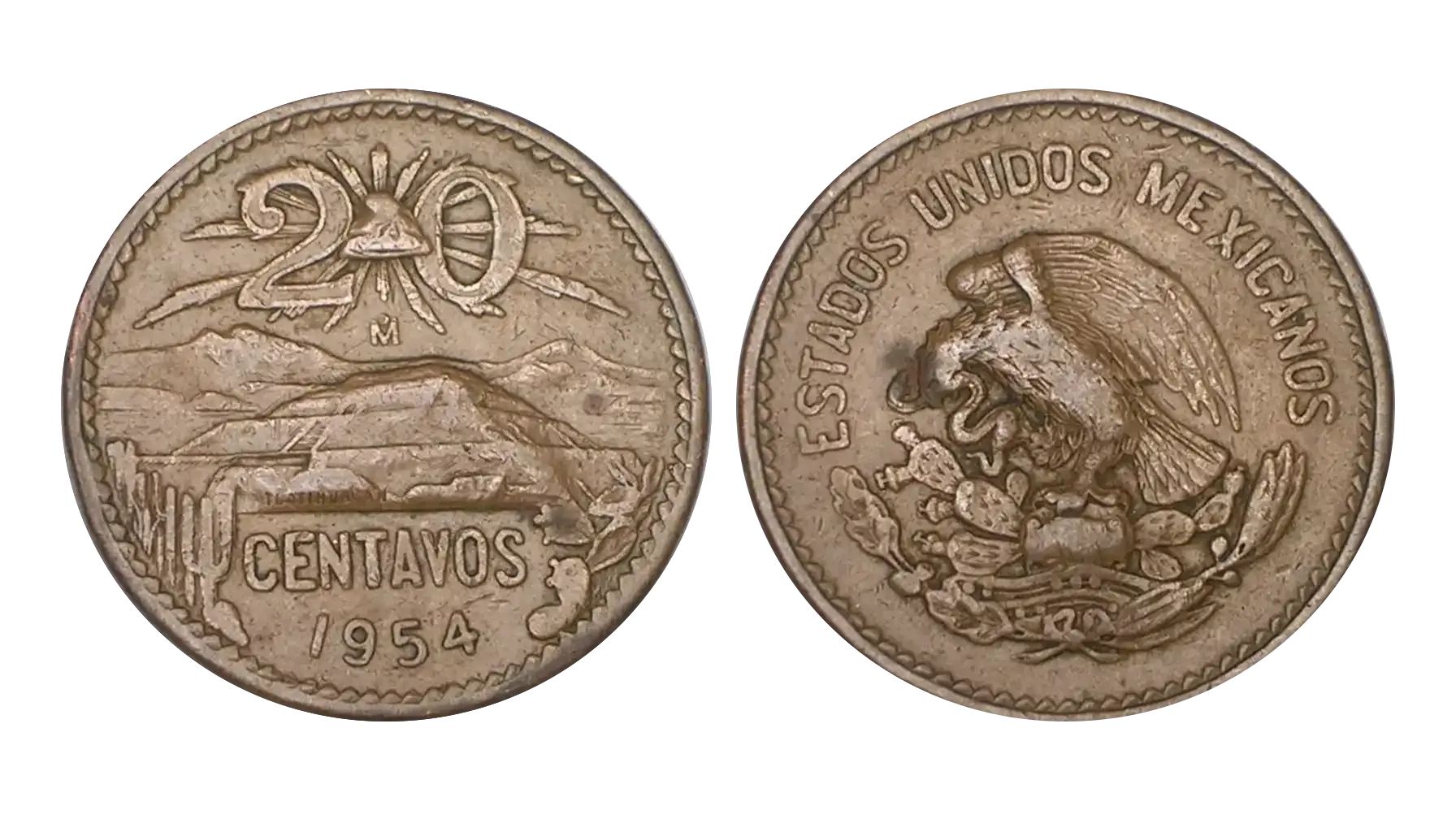
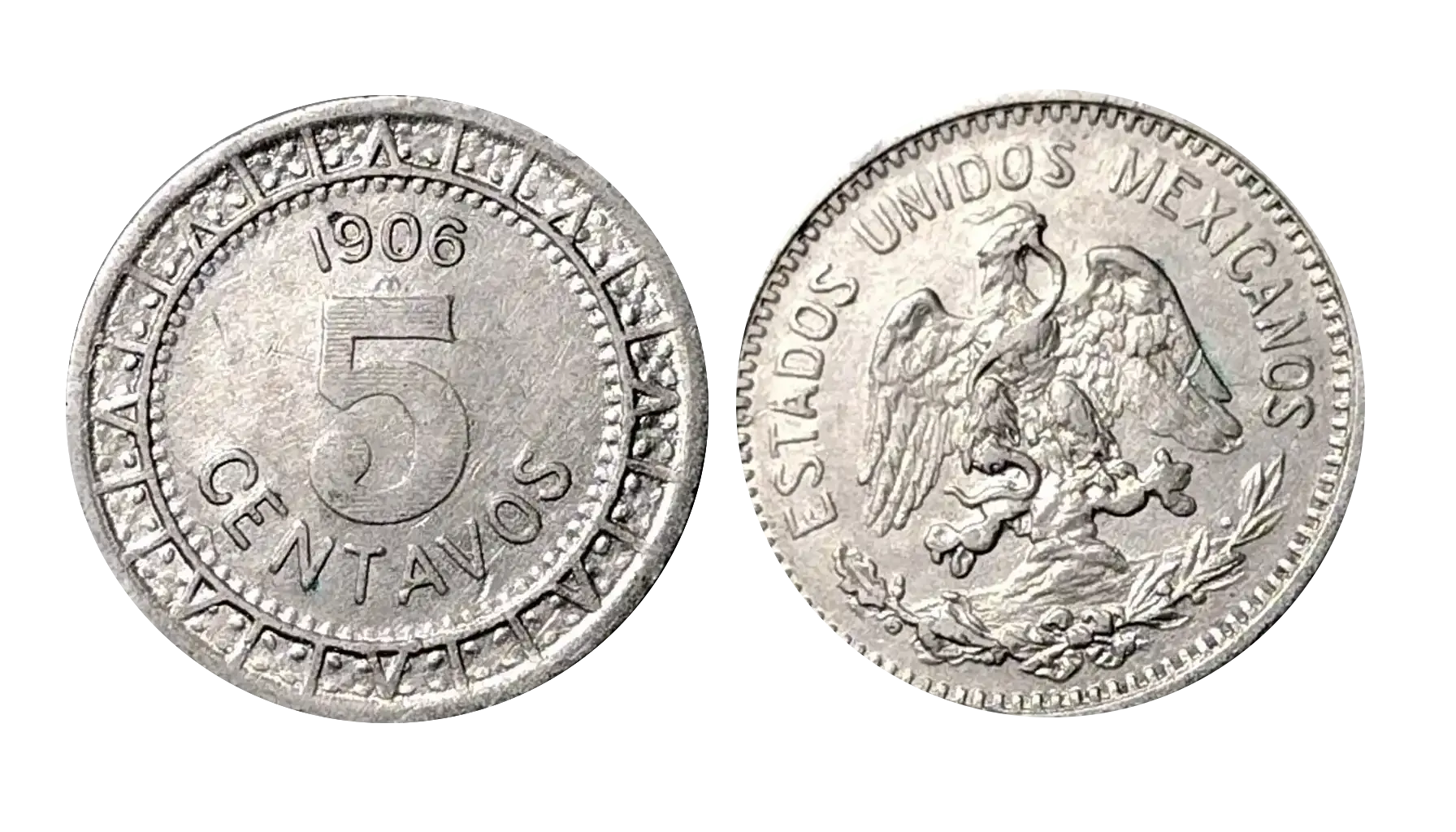
During this period, copper 1 and 2 centavo coins were minted, followed by bronze 5 centavo coins. Specimens from this period featured a design with the national coat of arms of Mexico and the denomination with the year of mintage on the reverse. These early issues, in good condition, are of particular interest to collectors.
1910 to 1920
It was one of the most challenging periods in Mexican history, and it had a huge impact on the monetary system. This was the period of the Mexican Revolution, and due to the lack of centralised money production, many states and cities issued their own coins, including centavos.
These revolutionary specimens were not made to standards and not always correctly; they also included completely different metals and designs, which is why this period is particularly interesting and in demand.
1920 to 1970
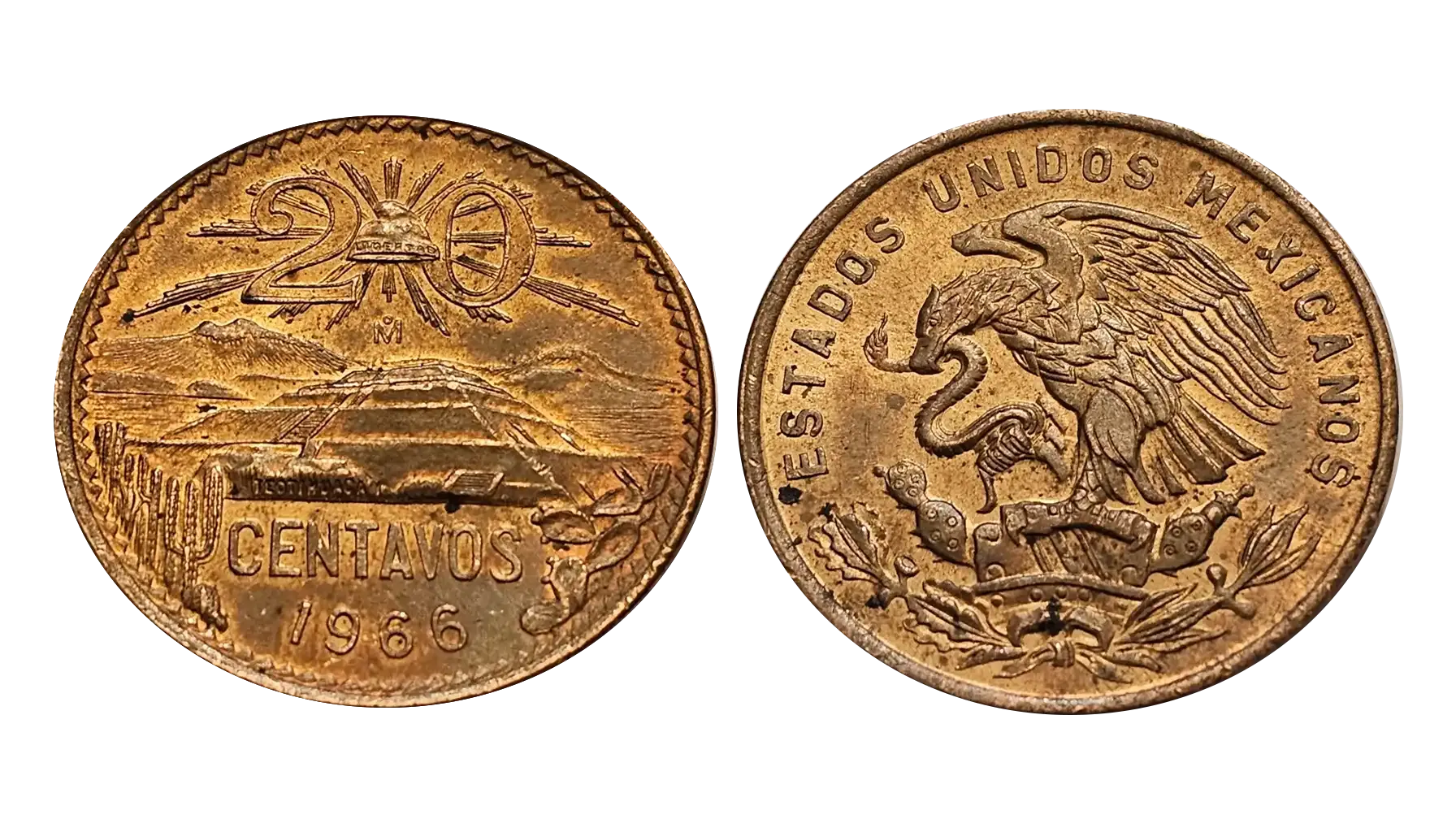
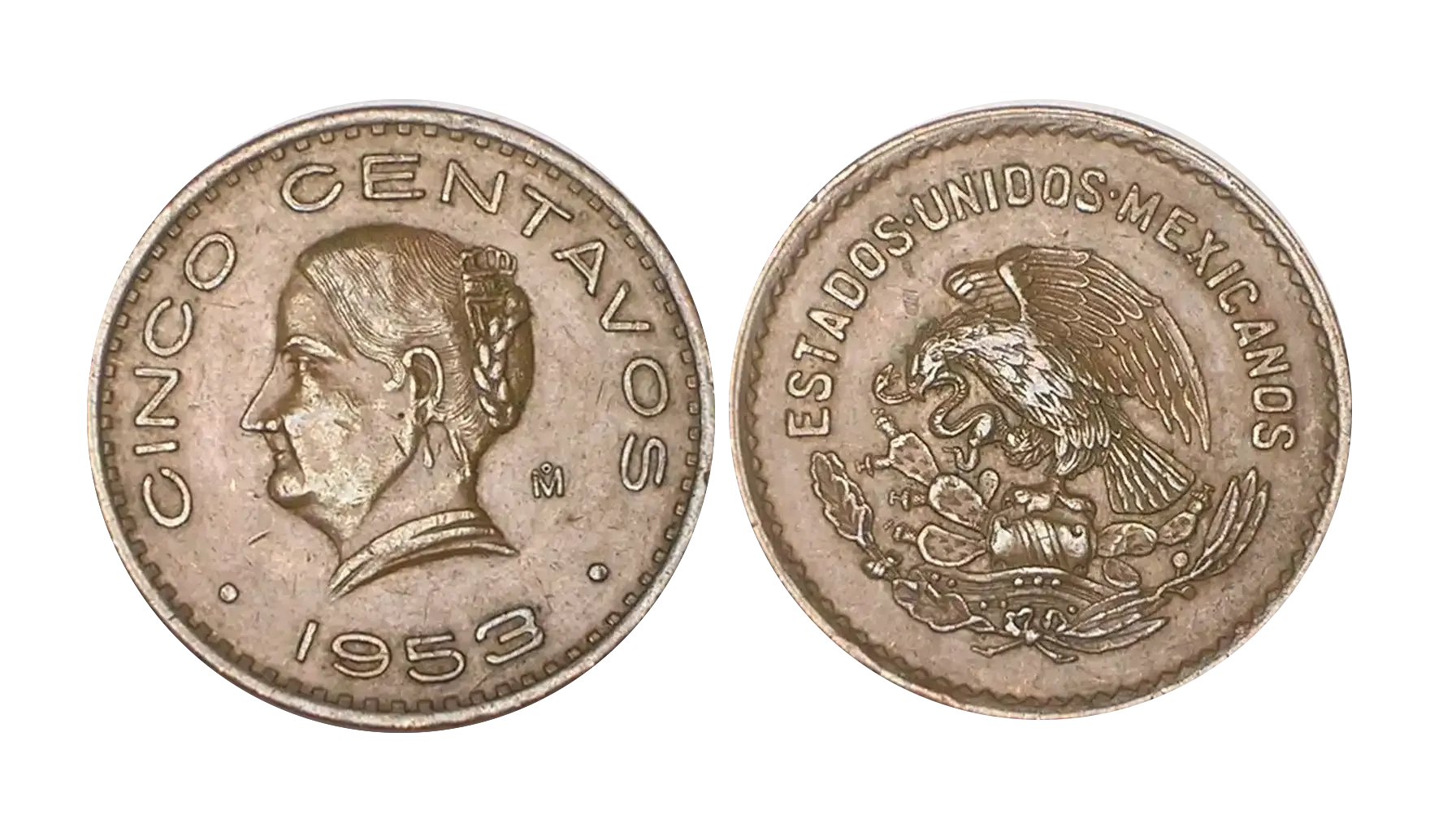
After the revolution, the monetary system, of course, began to stabilise. Coins began to be minted centrally and under a single standard. Metals changed from bronze to brass and copper-nickel alloy. The design still retained the coat of arms, but important historical figures also appeared.
Late 20th
High inflation significantly affected the Mexican peso. In 1993, a monetary reform occurred, resulting in the appearance of the Nuevo Peso, where one new Peso became equal to a thousand old ones.
Centavo coins were also reissued with new denominations and designs, and now new centavos began to be minted, marking the modern period.
Modern Period
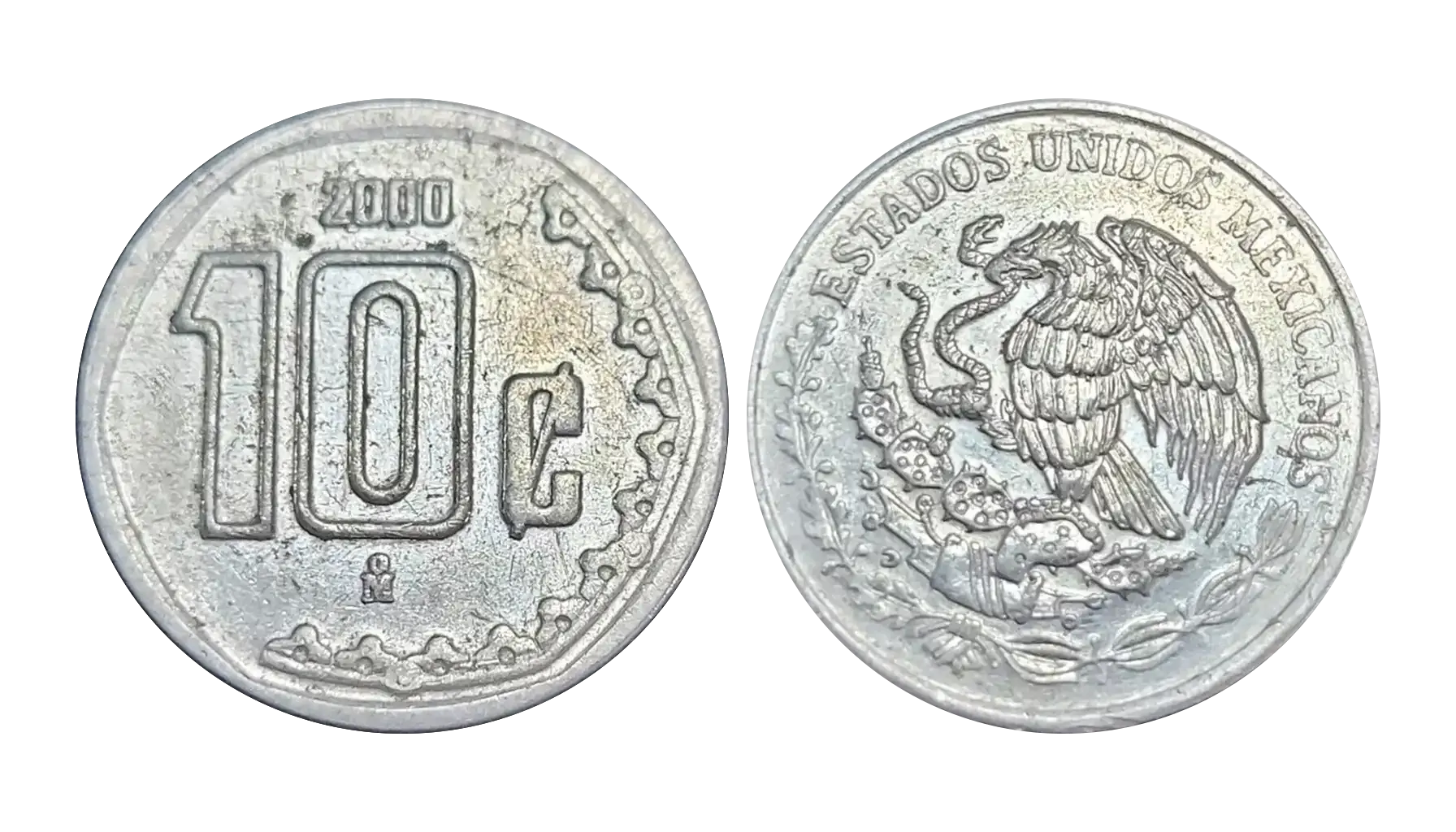
Modern centavos have a stable design that has not changed since 1993. They depict the national coat of arms and various symbols. For example, the 50-centavos coin depicts a ring from the Sun Stone, which is from the Aztec calendar.
However, due to high inflation and the discontinuation of production for 10-centavo coins, they are increasingly ceasing to be actively used, and perhaps soon they will become a thing of the past.
Centavos Coin Value Factors
Grade
Grade is calculated according to the international Sheldon scale from 1 to 70. The closer the value is to 70, the higher the value of the specimen will be. The scoring is mainly divided into several categories.
Uncirculated and About Uncirculated are considered the most attractive for collectors. These particular specimens will be worth the most.
Rarity and Mintage
Rarity and mintage are generally interconnected. If the mintage in certain years was smaller, then, accordingly, the price for these coins will be higher. As they are rarer, they are harder to find in a good grade.
Key Dates
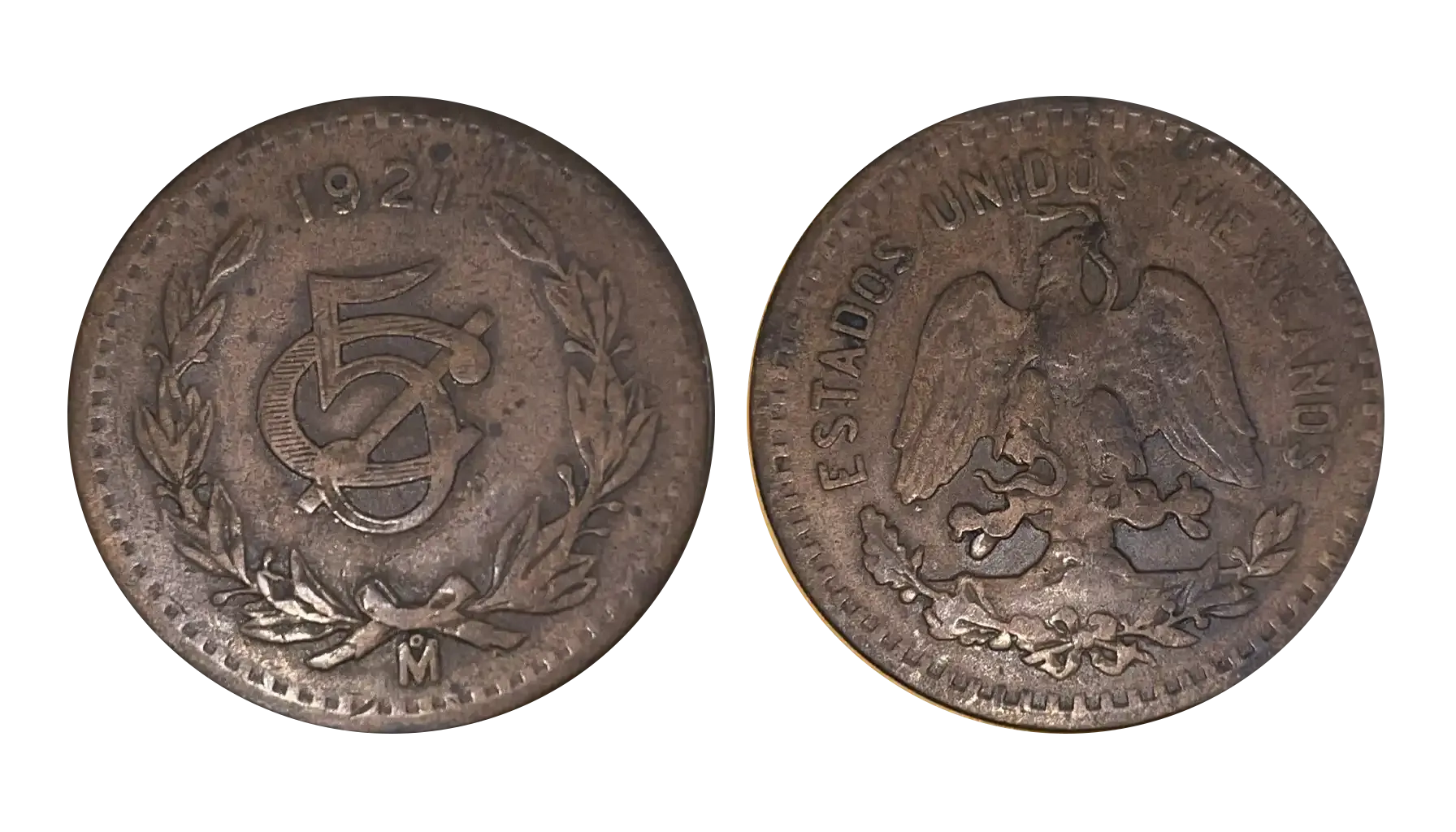
This refers to periods characterised by specific historical events that may be of interest to numismatists. Mostly, these are just special political or economic circumstances.
Metal Content
Non-precious metals are characteristic of Centavos, but early issues did contain precious metals. Therefore, if you find a specimen with silver content, it will be quite valuable.
Errors
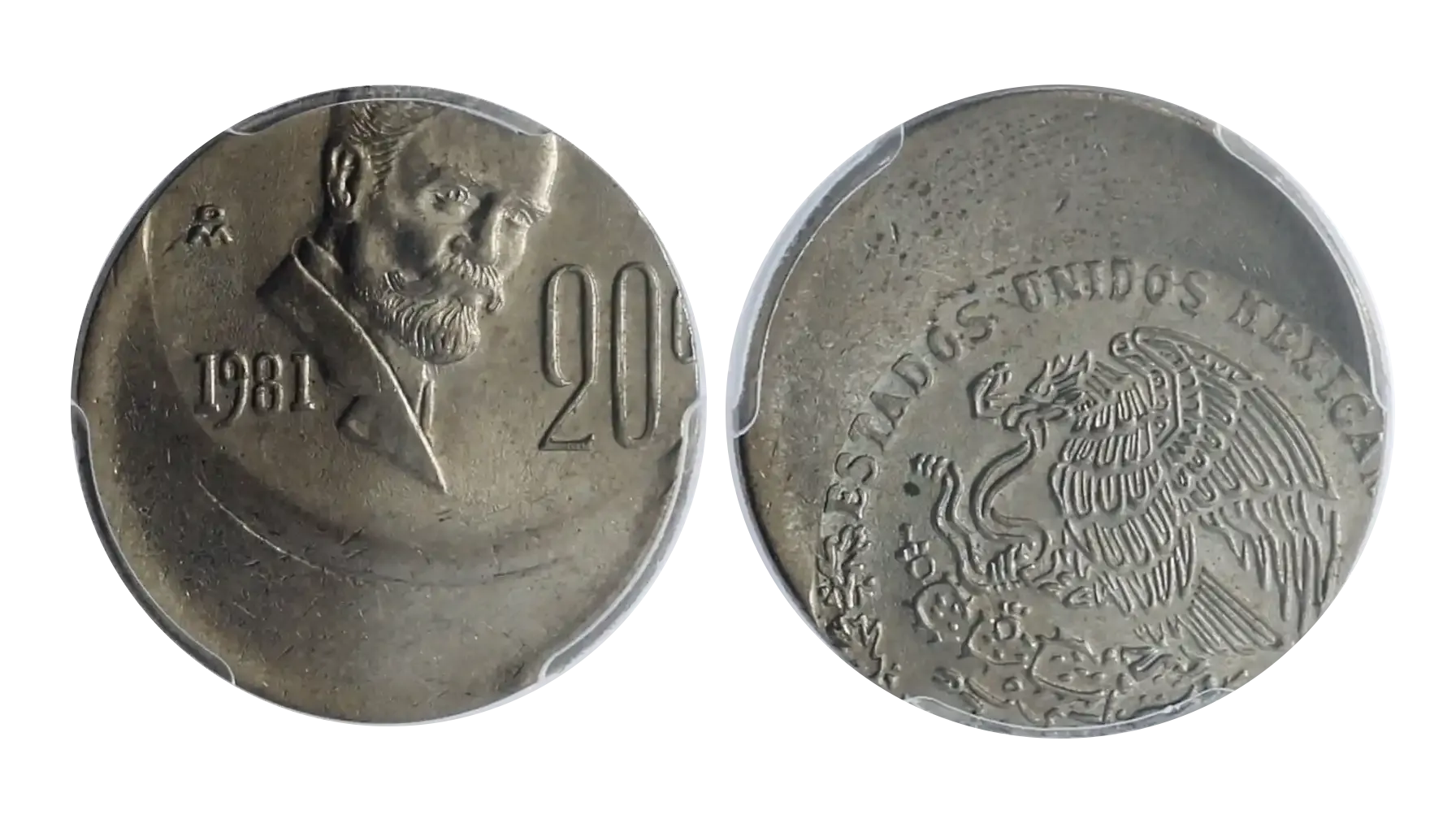
Initially, beginners might think that errors, on the contrary, reduce value. But in reality, this is not the case at all. Rare errors or some of the most popular ones, such as Double Die, can actually bring significant value.
Common and Collectible Centavos Coins
Common
Most modern centavos, issued after 1993, are generally identical and differ only in their year of mintage, unless rare errors are taken into account. Consequently, they possess only nominal value and low numismatic worth. This is because their mintage was quite large, and people continue to use them today.
Also, some of the most common specimens are those from the 1980s. These also had large mintages, which is why they are not considered very rare and, consequently, are not very popular as collectable coins among numismatists.
Collectible
Centavos minted before the 1920s are considered the rarest and most valuable, as traces of silver can still be found in them.
Specimens minted during the Mexican Revolution are also in demand. They bear witness to historical events and are therefore valuable.
How to Identify Valuable Centavos Coins
Identification
First of all, you need to determine what specific specimen it is. That is, you need to know the year of mintage, the denomination, and the specific country it's from. It is also important to ensure that it is indeed Mexico.
To identify everything correctly, we recommend using the Coin ID Scanner app. It's a smart tool for true numismatists that allows you to identify even the rarest coins.
Grading
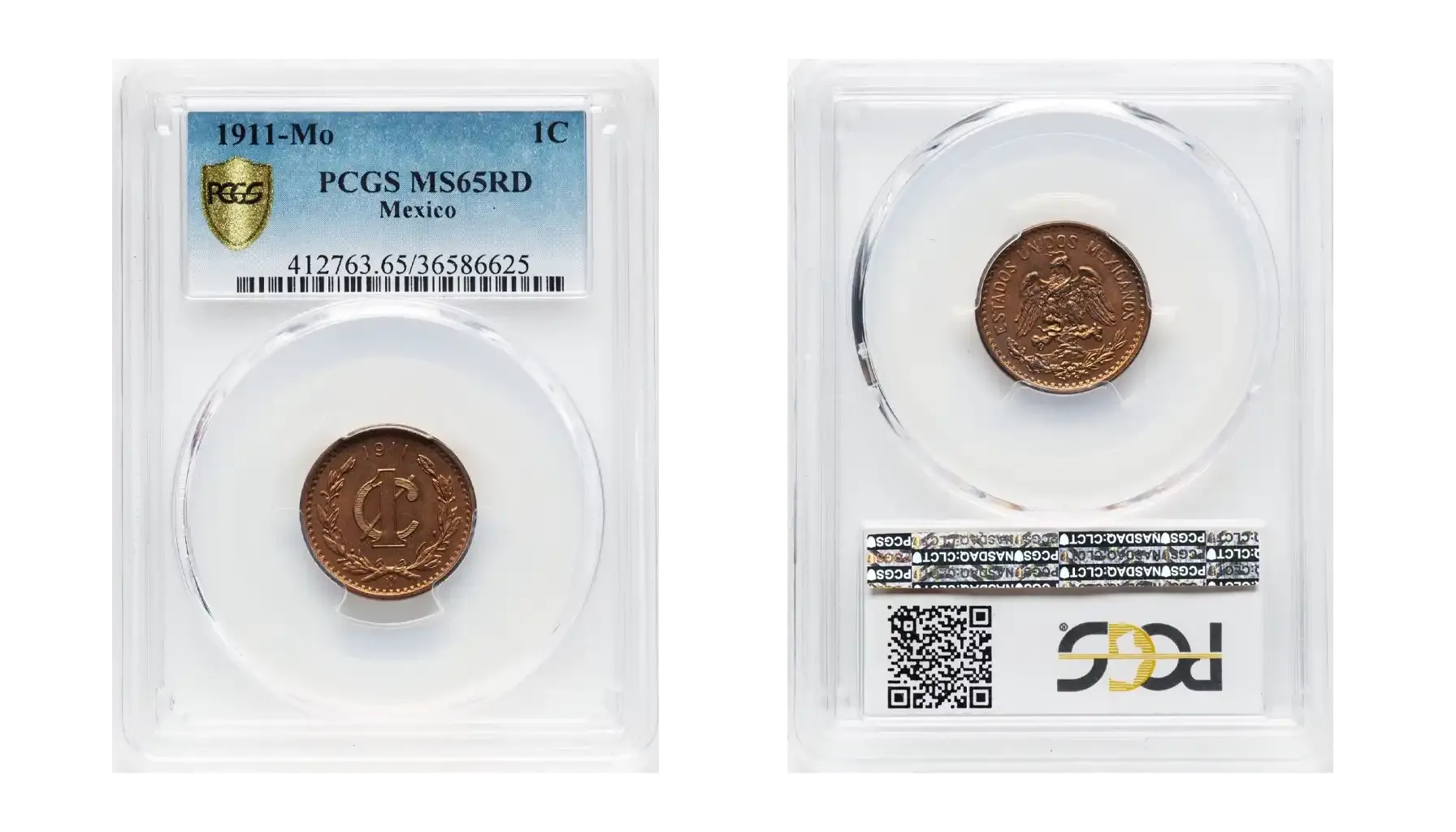
Examine your specimen. It's best to use a loupe with 10x magnification. If you believe it is in good condition and could have a high grade, we recommend sending it for official certification.
For example, some of the most popular services are PCGS and NGC. They will examine your specimen, determine its grade, issue an official certificate which will increase the value of your coin, and package it in a special slab that will protect it from external influences, allowing you to store your coin there.

 Facebook
  X (Twitter)
  Pinterest
  LinkedIn