Contents:
I'll tell you a story. One day, I was walking through the streets of my small town. And suddenly, I see a strange coin. But I am a person seasoned by time.
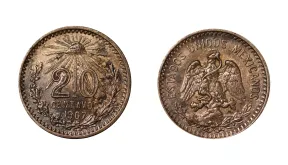
I take out my phone, open the Coin Identifier Free, point the camera at the strange object, and it turns out to be 20 centavos Mexican coin.
That was quite a surprise. I didn't know back then how interesting this specimen was, but fortunately, you have this guide, and now you will find out everything.
Mexican 20 Centavos Coin Overview
Starting from the beginning of the 20th century and almost up to today, this is the centavos coin 20. It continues to be minted. Although its mintage decreased towards the end of the 20th century due to inflation, it is still an interesting specimen.
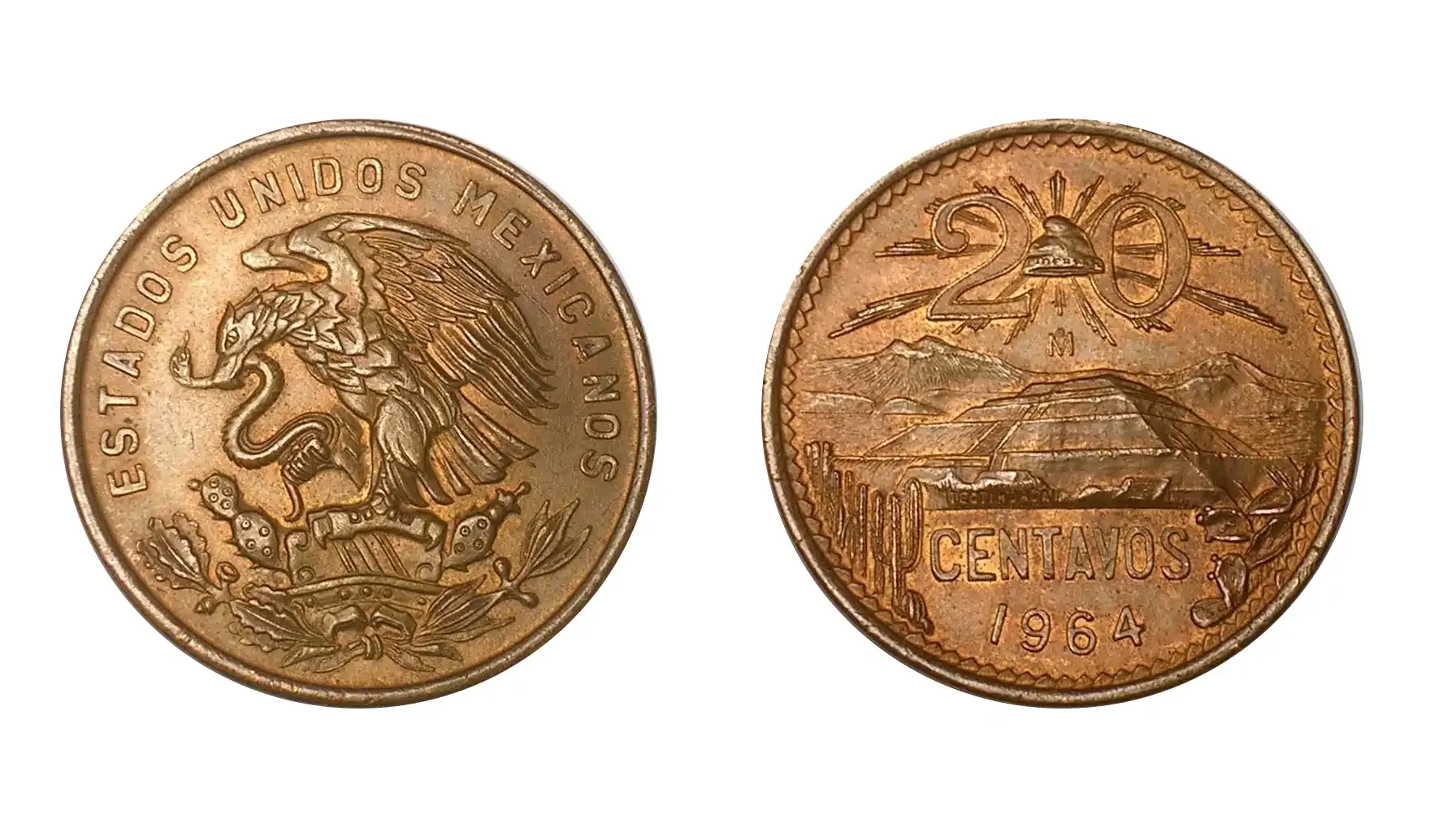
Towards the end of the 20th century, due to inflation, it was still an interesting specimen. Throughout this entire period, there were many different mintages, which included various designs, metals, and sizes.
Early issues were silver; however, in later issues, like the 50 centavos coins, the alloy became cheaper. Namely, copper, bronze, brass, or copper-nickel alloy.
The designs of the 20 centavos coin of Mexico featured their famous eagle, depicted on the coat of arms, revolutionary figures, and even symbols of ancient civilizations.
20 Centavos Coin Value by Year
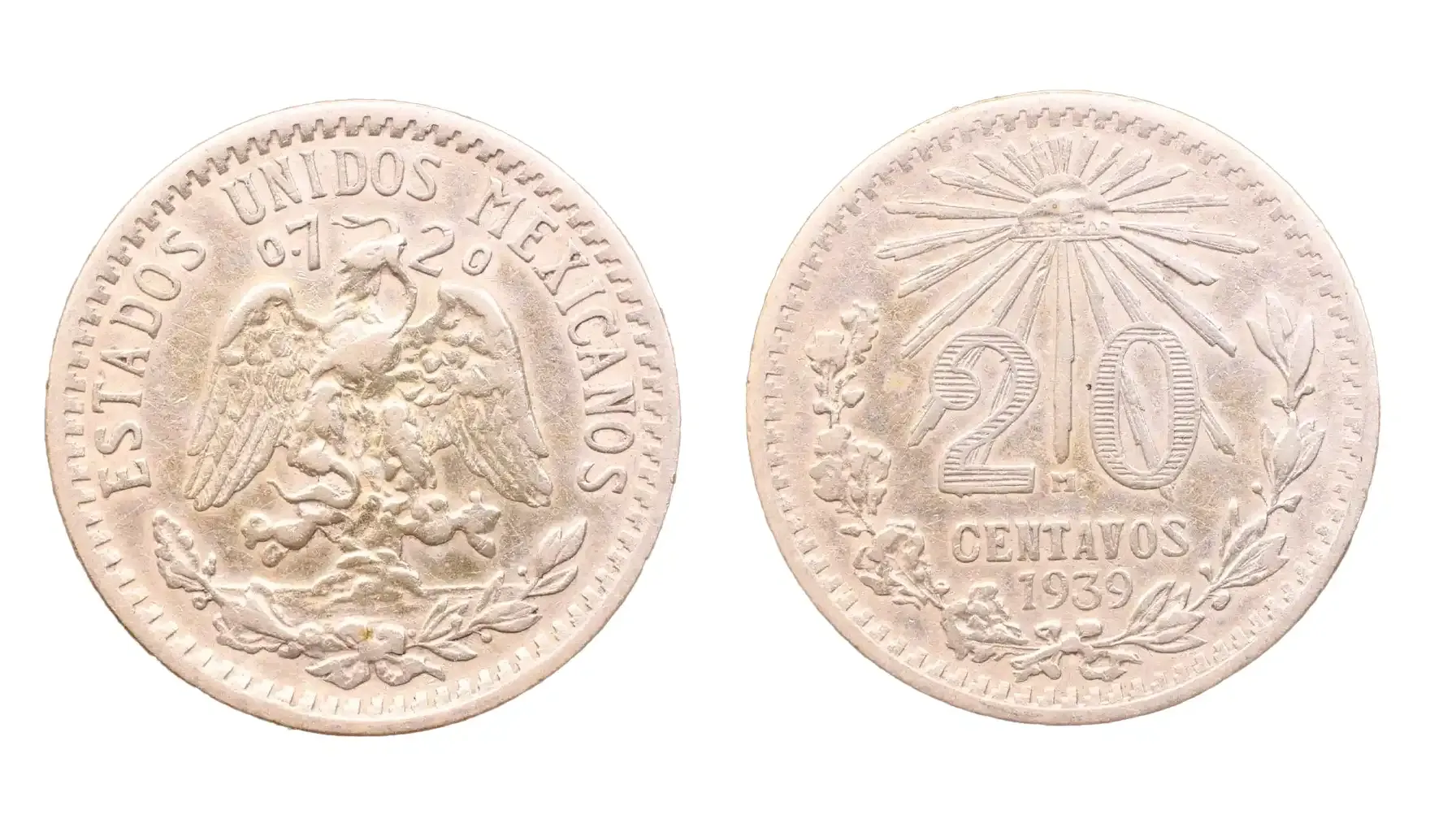
Valuable Mexican coins were usually minted in specific years, most often in years with low mintage. This is one of the main factors. Accordingly, a low mintage means a low probability of obtaining a valuable specimen in good condition among a small quantity.
Key Dates
In addition to low mintage, this also includes key dates. These can include dates with low mintage, but also important historical events that are of interest to numismatists.
Early Silver Issues
Coins minted at the beginning of the 20th century, especially before the 1940s, contained more silver and had a relatively low mintage. This is precisely why these specimens are more valuable compared to others.
Transition Years
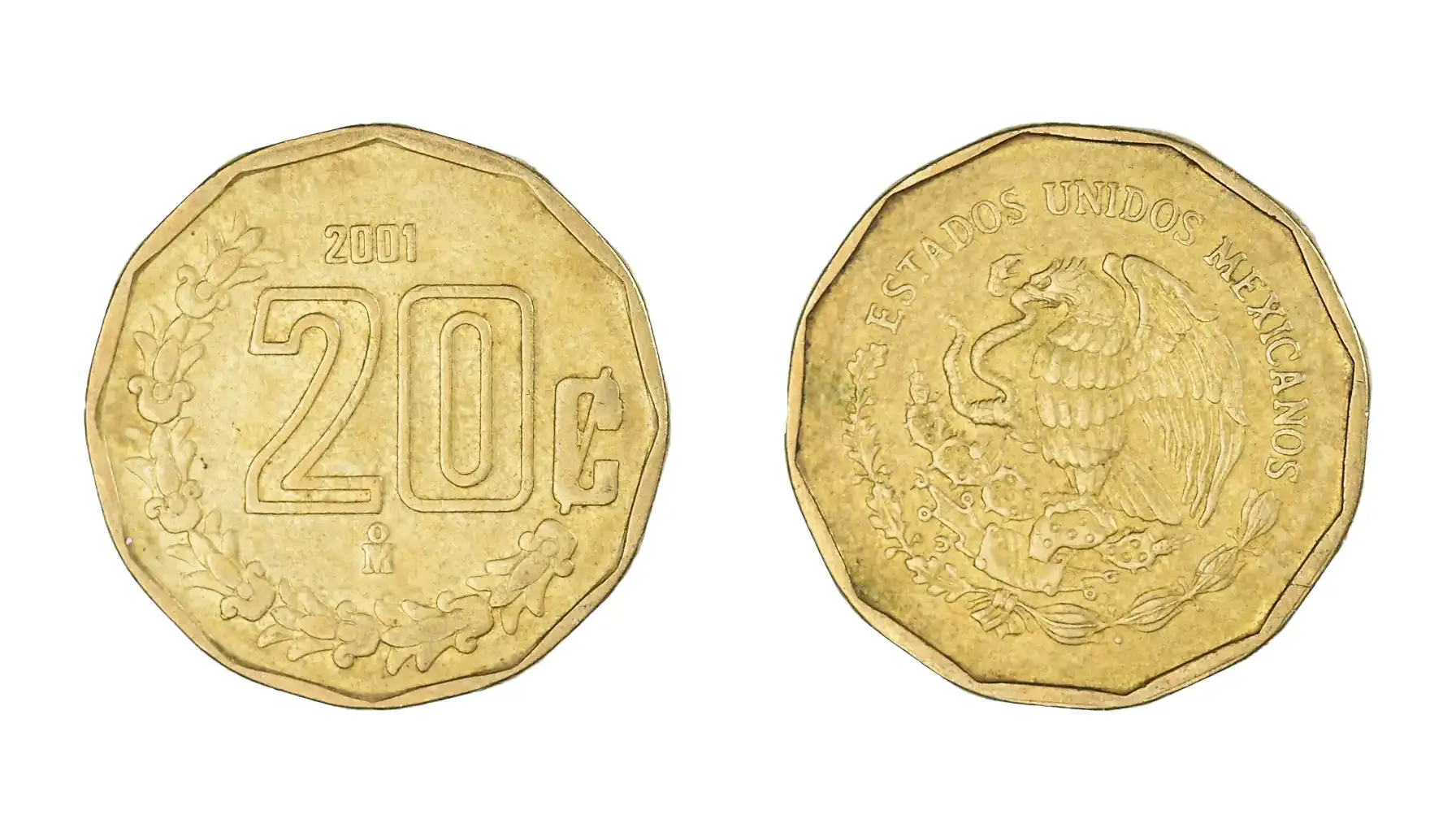
This refers to the time when there was a change in design, metal alloy, or mint. The mint did not change, but the design and metal composition did. Therefore, you need to look at each year when the design and alloy changed.
Silver and Base Metal Issues
This is precisely the factor that most influences the prices of specimens.
Silver Issues
Most silver coins were minted in the first half of the 20th century.
The most popular types with the design of the goddess of Liberty or the golden eagle contained a high percentage of silver, 70% or 80%. This is where their intrinsic value comes from. The main value is determined by the silver content.
Therefore, if the spot price of silver is high, then the value of these specimens is also high. But here, of course, you also need to consider the weight and the purity.
Base Metal Issues
After silver became too expensive, minting began using various inexpensive alloys such as bronze, brass, and copper-nickel. This happened from the mid-20th century onwards.
And the intrinsic value of these specimens will not be as high, as these metals themselves have low value. Accordingly, only historical context or any rare errors can increase the value of these specimens.
What Collectors Look for
Rarity
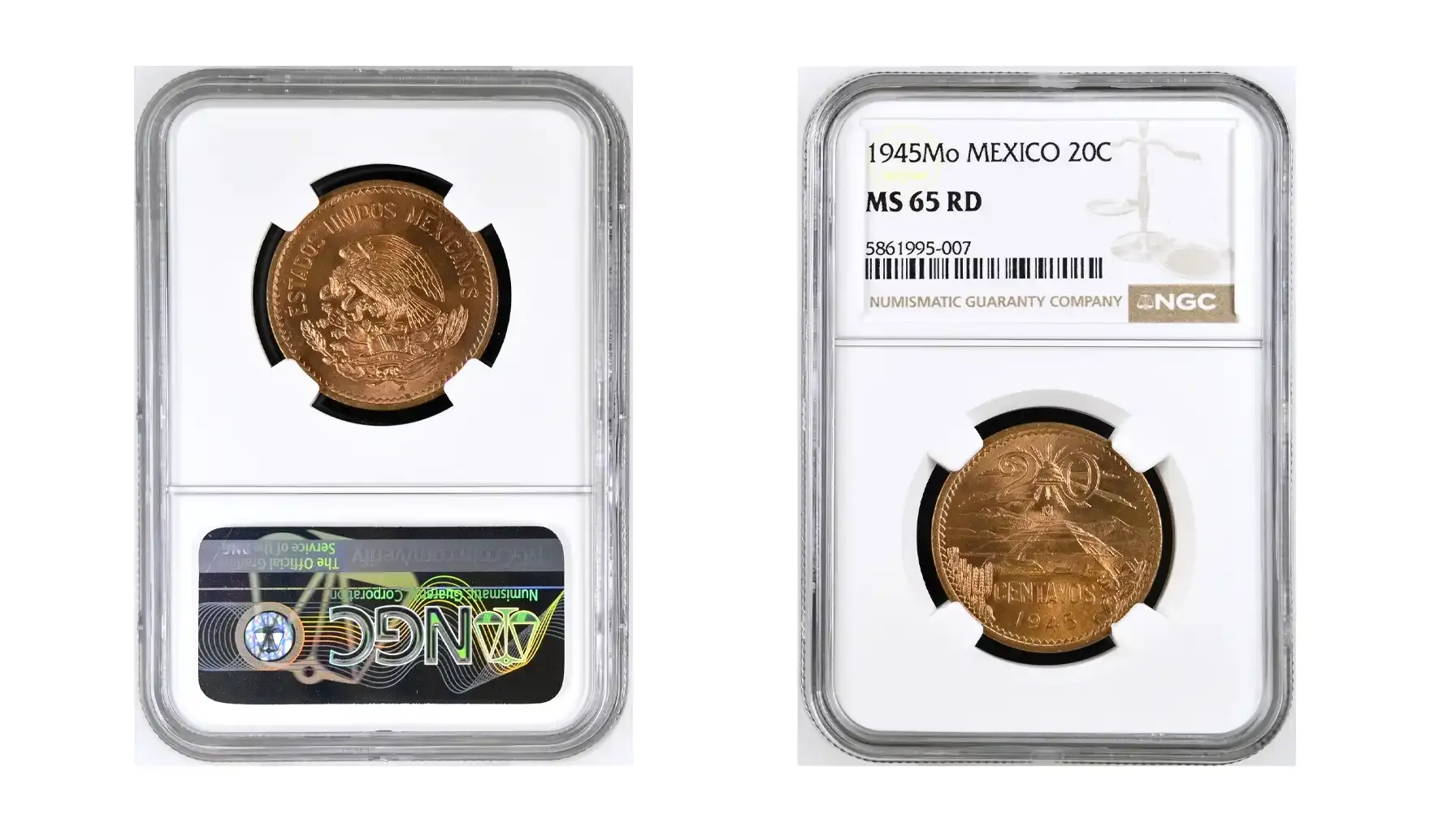
This includes key dates, transition years, and especially early silver issues. This is what determines rarity. Errors are one of the most important factors that can make the simplest coin very expensive and valuable.
Errors
Among errors, there can be double dies, off-center strikes, or clipped planchets. They all arise from problems with the die or the planchet during minting.
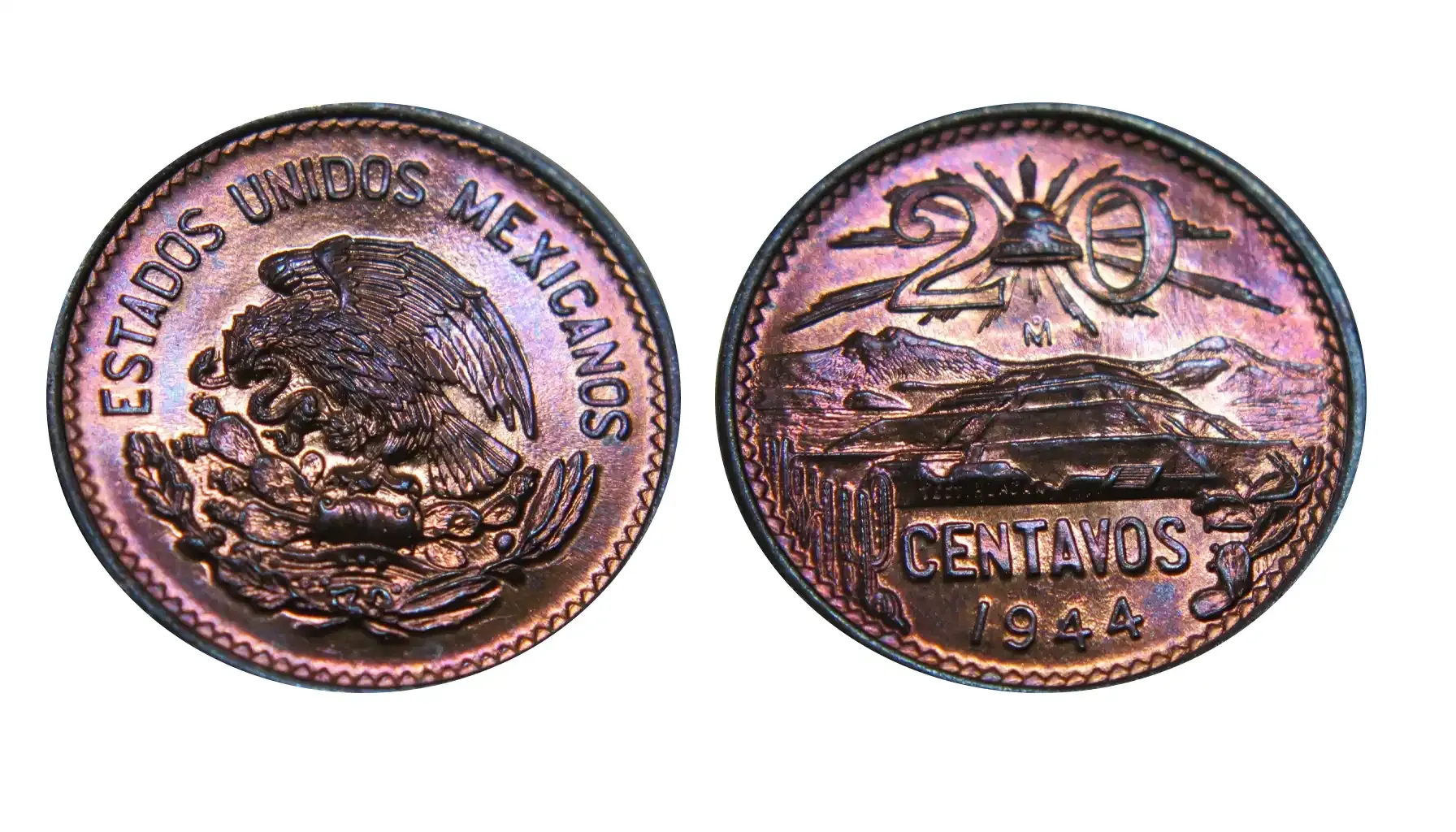
Also, there can be increased demand for toned coins, which is when a specimen changes its color under the influence of external factors.
How Condition Affects Value
In fact, grade is a very important factor that also undoubtedly affects the value of specimens. First and foremost, it is all assessed on the Sheldon scale from 1 to 70. The closer it is to 70, the higher the price and value of the specimen, respectively.
Poor and Fair: significant wear, most details are erased
Good and Very Good: significant wear, but the design and inscriptions are visible.
Fine and Very Fine: noticeable wear, but design details are visible.
Extremely Fine and About Uncirculated: minimal signs of circulation, almost all details are clear.
Uncirculated and Mint State: the coin has never been in circulation. It retains all its original luster, with no signs of wear.

 Facebook
  X (Twitter)
  Pinterest
  LinkedIn