Contents:
Toned silver coins have a certain charm and interest among professional numismatists. But here, prices are not only silver. Identifying rare coins in interesting variations is always difficult, and it's important to understand them. Only with professional information will you be able to know what is toning on a coin.
What Coin Toning Is
So, first and foremost, the toning coin is the process of changing the color and luster of a coin's surface. This usually occurs under the influence of external factors. It can be identified by the appearance of iridescent, golden, blue, or other colors, halos, spots, and gradients.
For collectors, naturally toned coins represent an important aspect and an additional point of interest.
How Coins Develop Natural Toning
As for the natural coin toning, it's a chemical reaction. If we're talking about the silver coin toning, then silver reacts with hydrogen sulfide in the air, and a black-gray sulfide is formed. How do coins get toned? That's from a scientific deal.
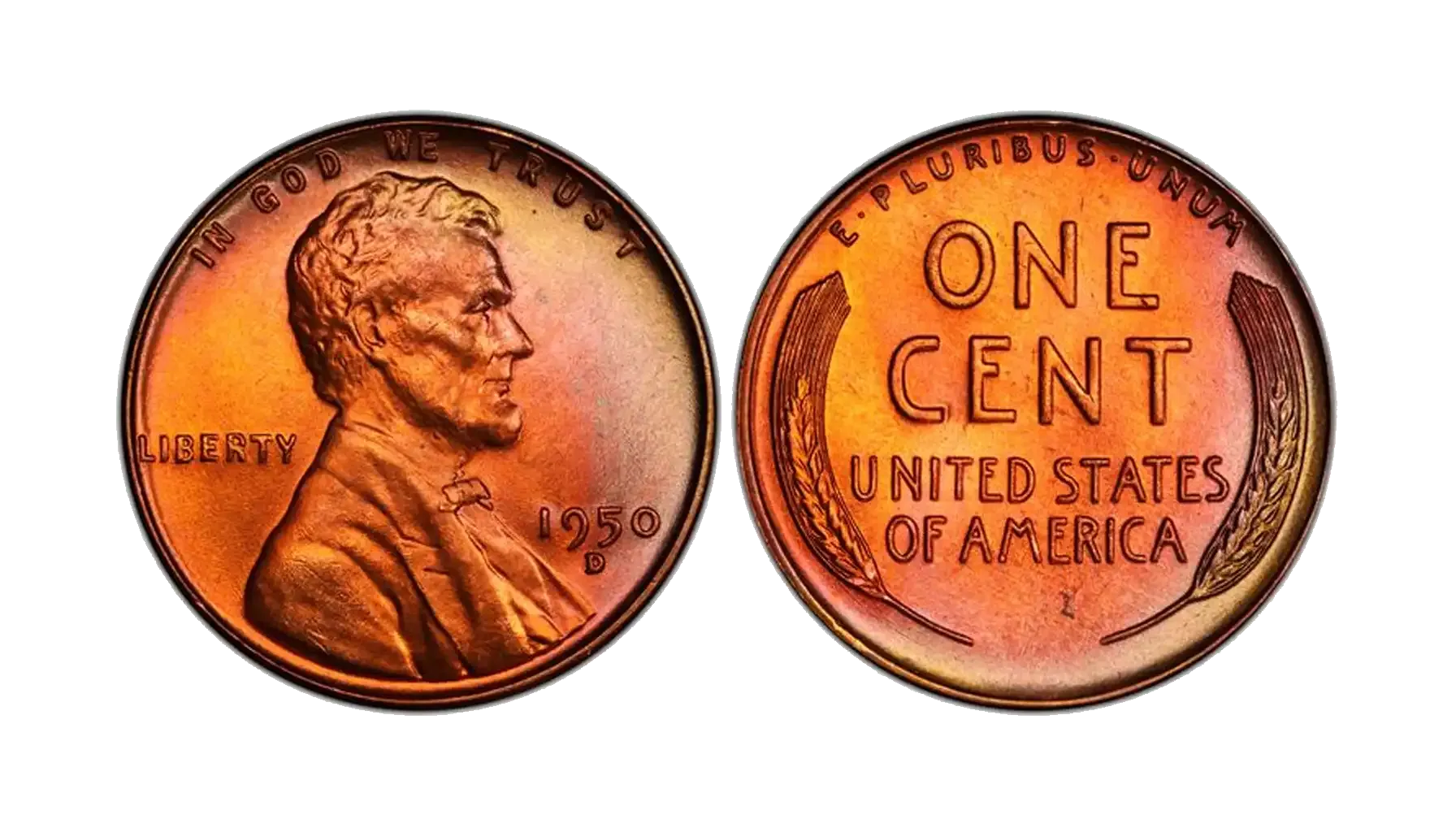
If we're talking about copper, it oxidizes and produces a green or brown patina. One of the famous examples of it is the 1950 Wheat Penny with its red shadow.
Storage Conditions
If there's high humidity, the toning becomes more intense.
If it's wooden boxes, cases, cardboard albums, or old paper envelopes, they give different shades. The process can last for years, even decades, gradually creating this gradual formation of thin, but multi-layered films, and it creates this iridescent effect.
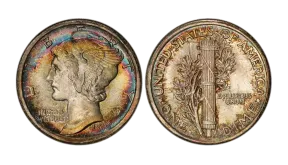
For example, the Mercury Dime 1916-D. This specimen has a warm reddish-golden highlight in the center and cool blue iridescence on the relief. And this is a classic example of a natural patinated surface.
Artificial Toning Explained
The goal of the artificial coin toning is to accelerate the formation of this patinated layer, in order to sell it afterward.
Main Methods
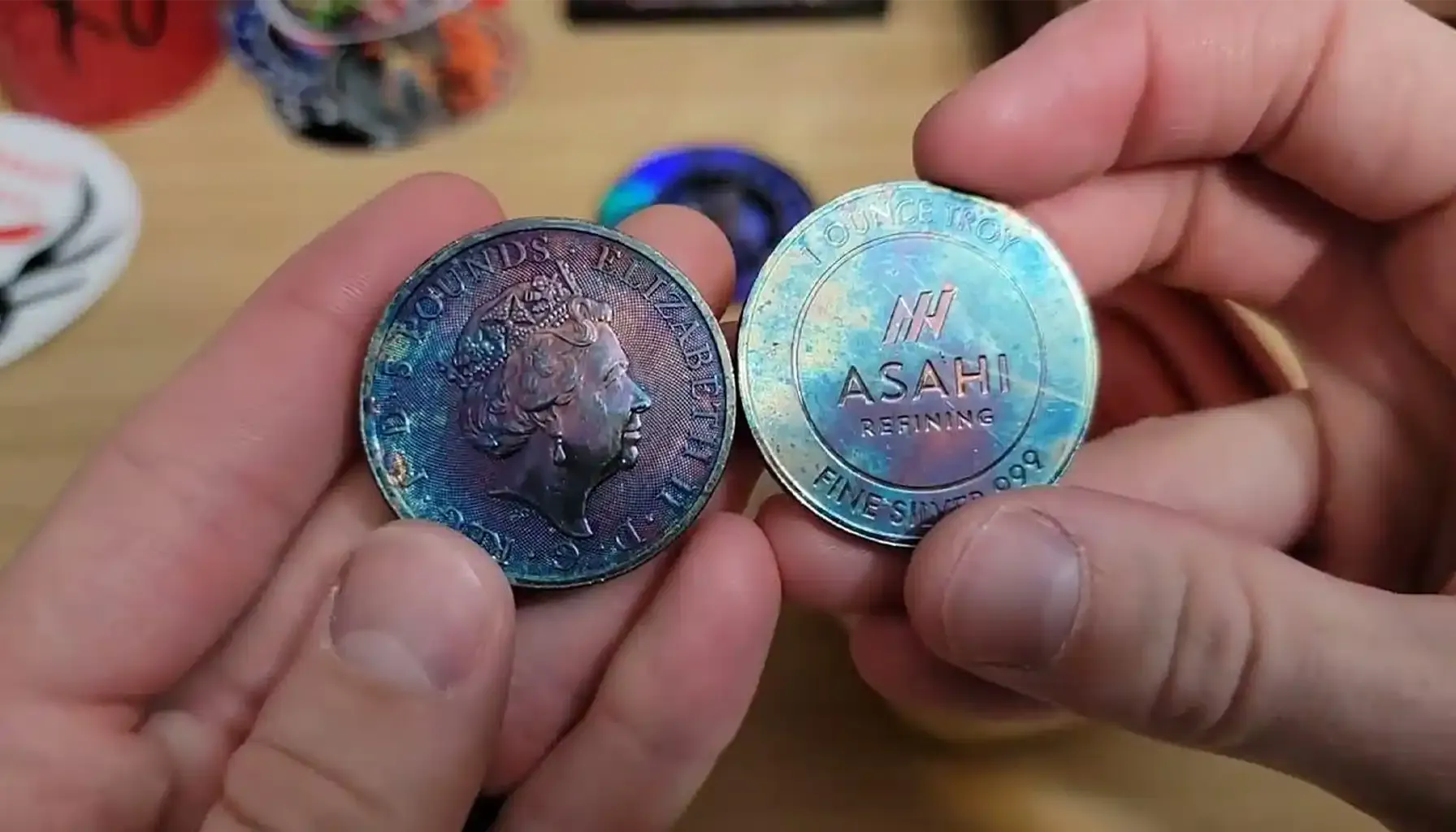
Thermal treatment
This is when the specimen is heated over a flame until yellowness, blueness, or redness appears. This way, artificially toned coins are produced.
Chemical baths
Here, bromine, sulfur, ammonia, and other substances are used for rapid coloring.
Dyes and paints
These substances are applied to the surface and imitate natural gradients, but often they turn out too bright, uneven, and it's clear that these are painted spots.
Natural vs. Artificial Toning
Feature | Natural | Artificial |
Color Gradient | Smooth, multilayered | Sharp, patchy |
Contour Uniformity | Soft, diffuse | Sharp, sometimes with “rings” |
Layer Depth | Fine iridescent layers are visible | Superficial, sometimes flaky |
Durability | Improves over time | May crack or peel |
Odor | No foreign odors | Possible pungent “chemical” smell |
Does Toning Increase a Coin’s Value?
Well, does toning affect the value of a coin? Short answer: yes. But let's examine everything in more detail.
Natural and harmoniously appearing changes to a coin are always worth more and are highly valued. Artificial toning may not always be worth a lot of money in general.
So, if you ask, are toned coins worth more? Yes, but only if it's a natural process, not one made by human hand.
Factors influencing the rarity
As mentioned, each metal has its own reactions to exposure, and therefore, if you see a purple-blue rainbow on silver, it will be significantly higher in value than other variations.
The quality of coin preservation, both in this context and in the usual definition where the value of specimens is great, also plays its role here. The higher it is, the higher the cost.
If the toning was done artificially or spoiled the coin's design, it will, on the contrary, lower the price, perhaps even below the specimen's face value. This is almost the same as if you cleaned the coin yourself at home.
Why Silver Coins Tone More Dramatically
Why silver, specifically? Besides being generally one of the most valuable metals on the market, it reacts quickly with hydrogen sulfide.
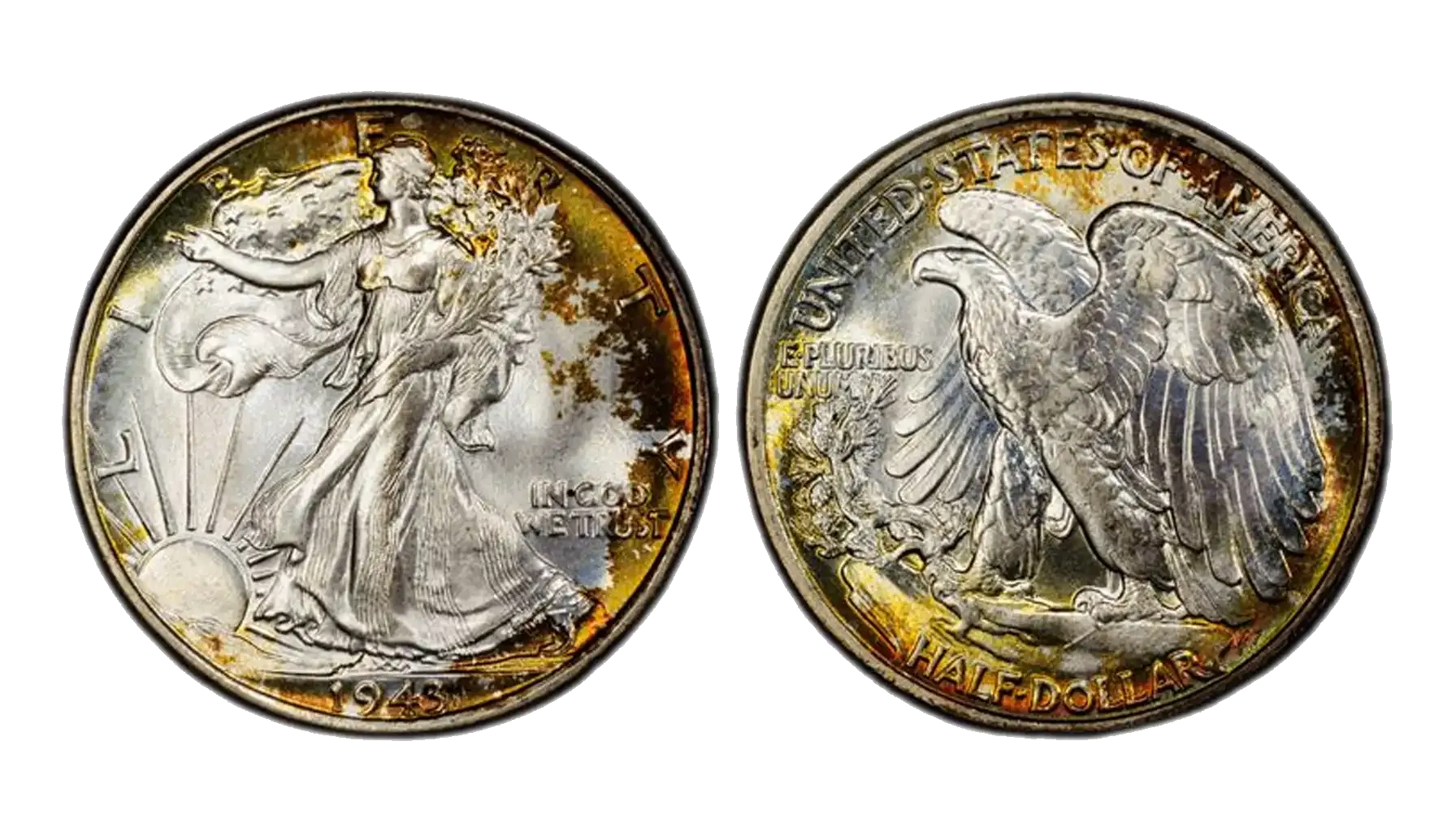
Therefore, a film of varying thickness is formed. The layered structure gives iridescent hues. This is precisely why it's so interesting. Dimes and half-dollars are often stored in paper bags, which are another source of hydrogen sulfide.
The thin surface also plays a role, being only 35-40 microns thick. It allows different shades to appear quickly.
For example, the Walking Liberty Half Dollar 1943. This specimen has a deep blue-green spectrum on the obverse, which smoothly transitions into a warm golden glow on the reverse. This is also a classic example of a highly sought-after silver coin.
Buying Toned Coins Safely
So, if you've understood all aspects of this process, you've probably thought about toned coins for sale. First and foremost, contact reputable dealers or auction houses. It's best to do this on the PCGS or NGC websites. They have a separate section on their websites for approved dealers.
Certificates
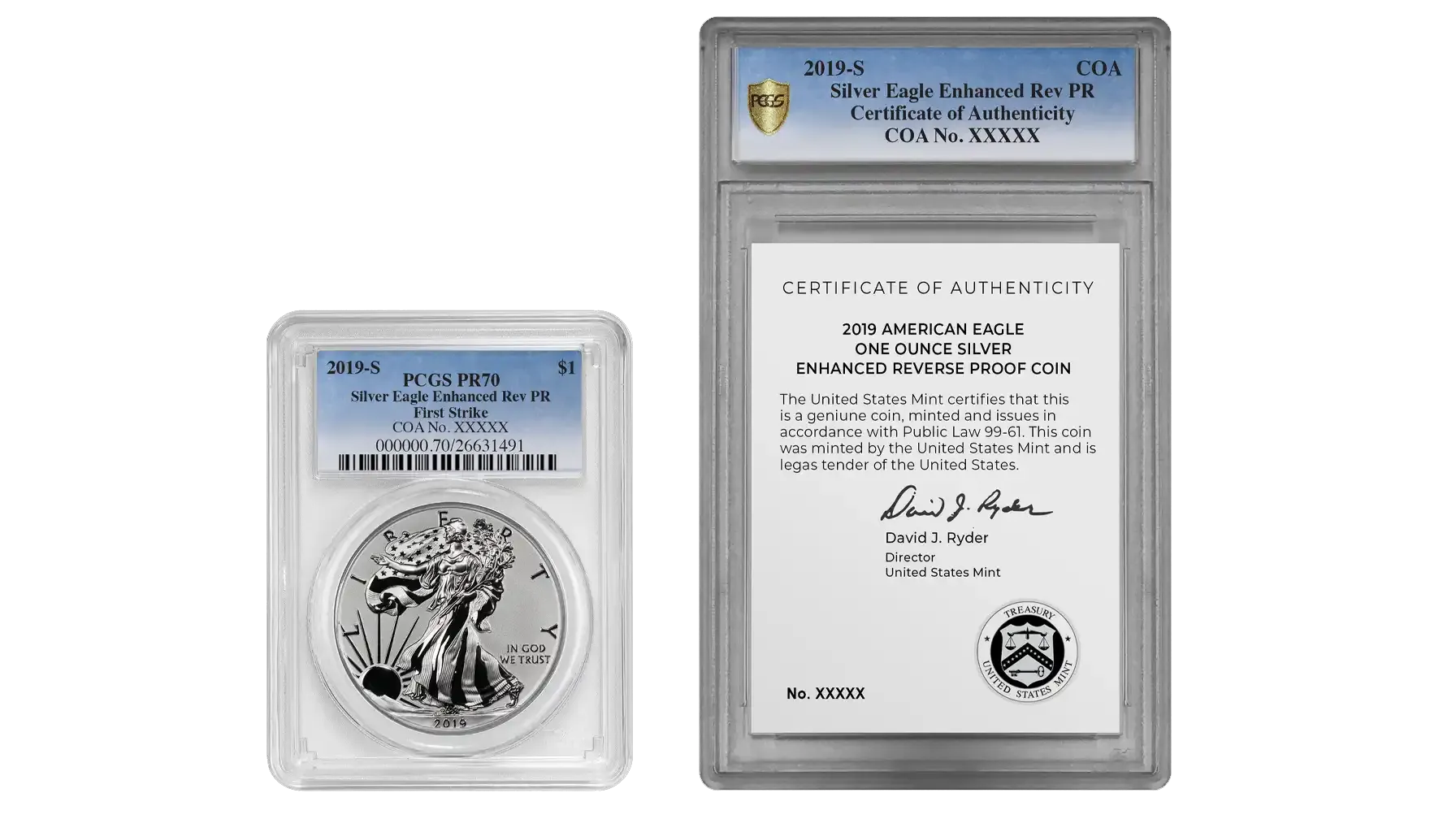
Always request certificates and detailed photos. If the photo quality is poor, you won't be able to inspect the specimen for possible counterfeits. Look for grades from MS- 60. They are of better quality, and the toning will look better on them.
If possible, it's better to inspect the specimen in person or ask a professional dealer to accompany you for the purchase. Then you will definitely be able to avoid counterfeits and fraud.
How to Spot Problematic or Artificial Toning
In reality, it's not that difficult. A fake will have unnatural spots, as if they were painted with a brush. There might be cut-out segments of iridescent color, without smooth borders.
Factors
Thin chemical sheen. If you feel the coin is varnished, you're not imagining things; this can be one of the signs of a fake.
The coin's edge. Be sure to look at the edge. With artificial toning, it is often clean or contrasts with the overall toning.
Also, look for residues of chemical solutions on the surface; they look like smudges and drips.

 Facebook
  X (Twitter)
  Pinterest
  LinkedIn