Contents:
There were different metals, designs, and even different monetary systems. And having gone through all this, the 50 centavos Mexican coin remained just as interesting for numismatists. It often appears in trends, in coin collection value trends.
Mexican 50 Centavos Coin Overview
Here, it is important to note that the Centavos coin 50 has a rather long history. This specimen has existed for over 150 years and has undergone significant changes.
19th to Early 20th
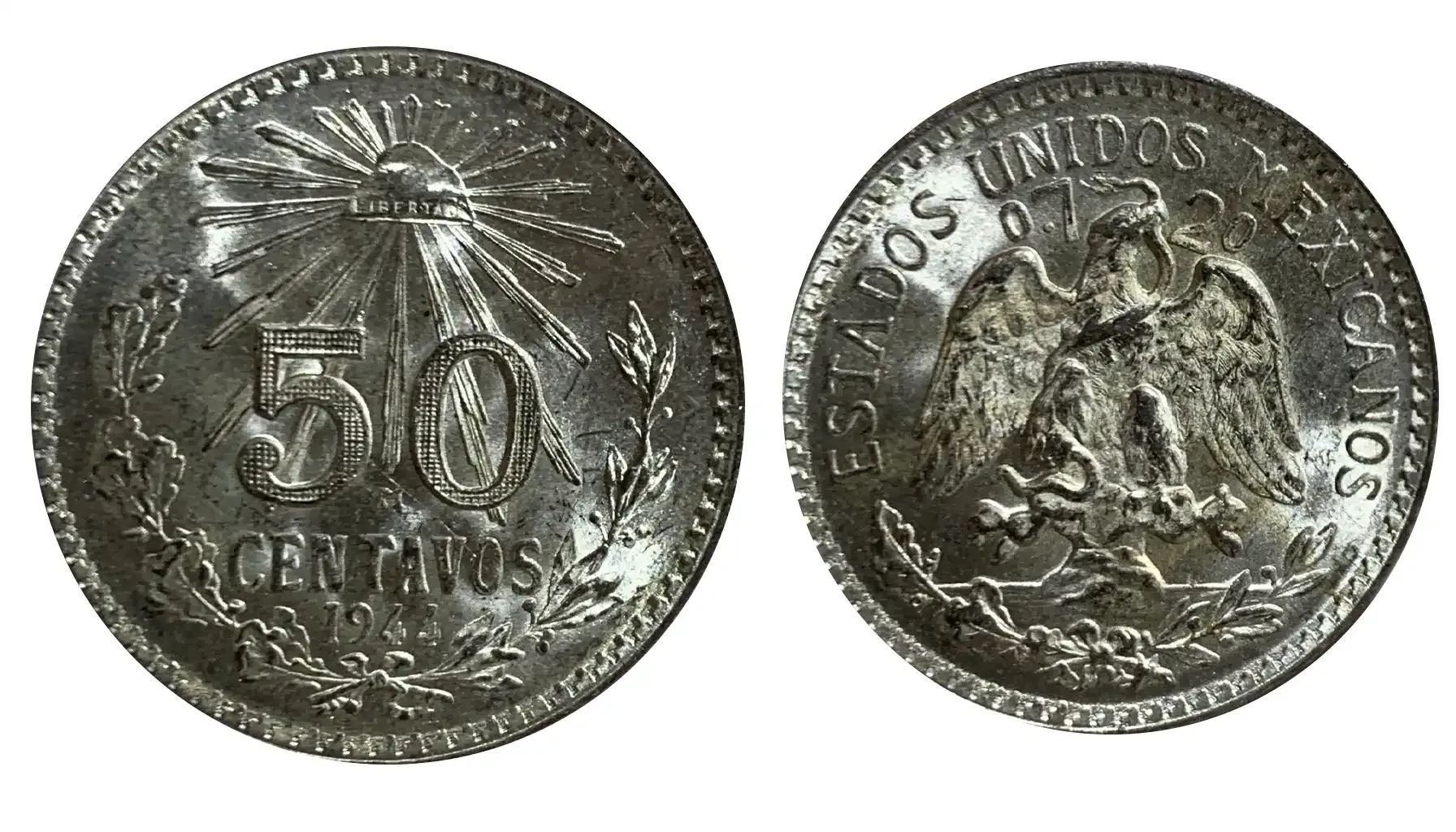
During this period, coins were mainly silver, part of the real system, and later Mexican peso coins. One of the most popular designs of that time is called Cap and Ray. It features a Phrygian cap surrounded by rays. A similar design can also be seen on the 20 centavos coin 1944, Mexican eagle fighting a snake.
Mid-20th
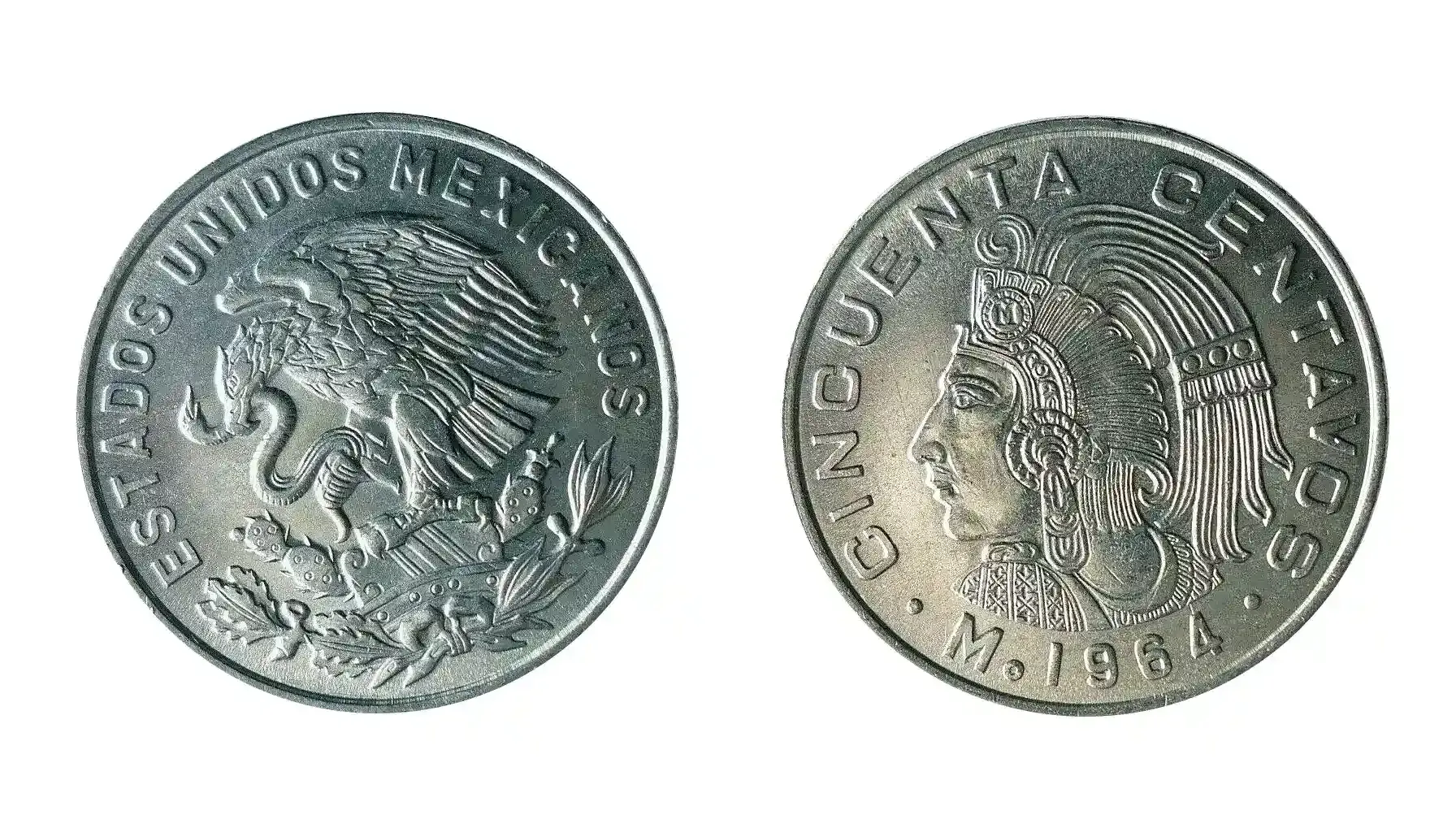
Here, as in most countries, the use of precious metals began to decline. The peso and 50 centavos coin of Mexico also began to lose their silver content, and eventually their alloy became copper-nickel.
New designs also appeared, such as the portraits of Miguel Hidalgo y Costilla, Benito Juárez, and José María Morelos. As well as slightly modified versions of the Eagle.
Modern Period
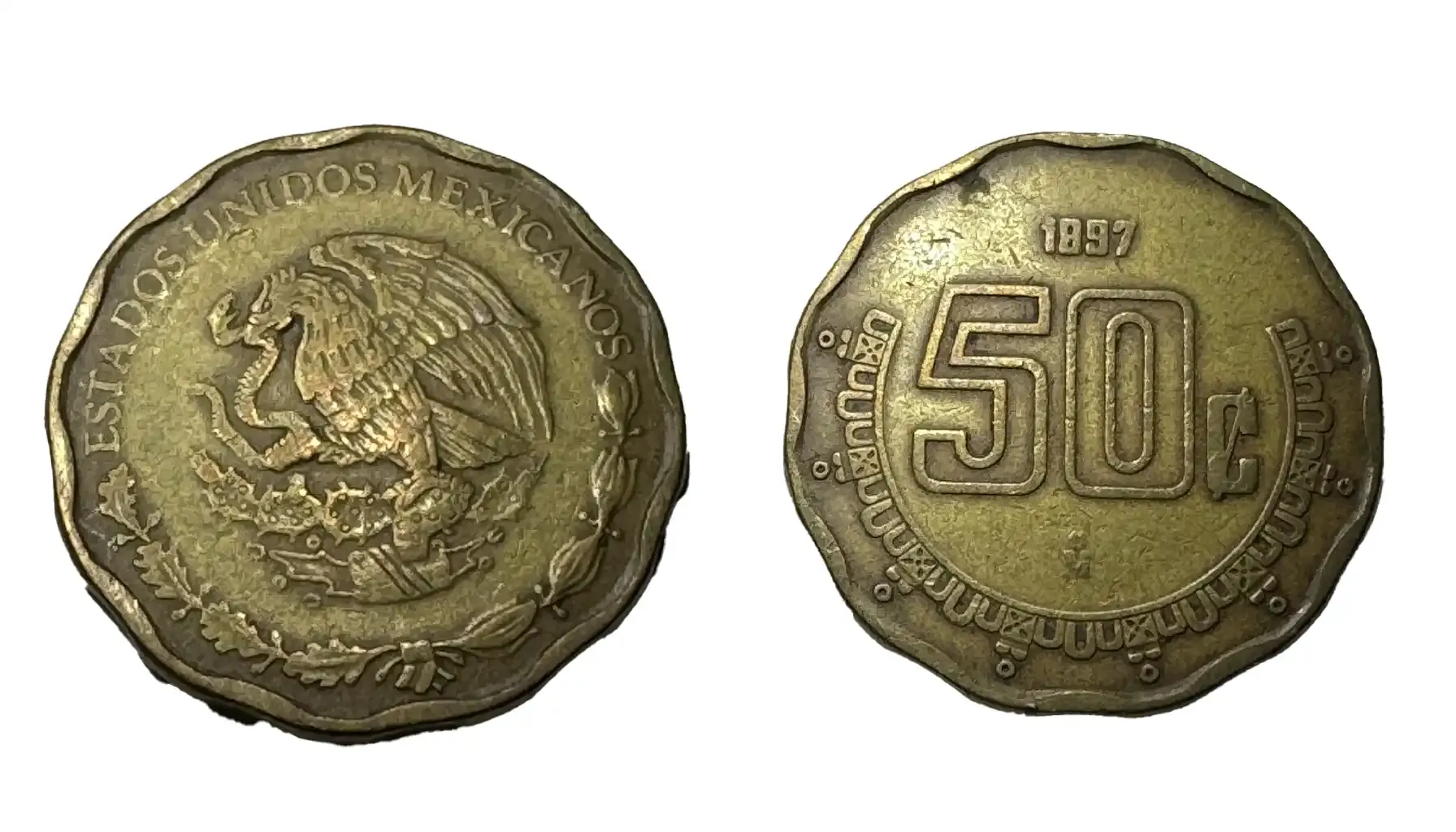
In 1993, a monetary reform was carried out in Mexico. As a result, old pesos were replaced by new pesos at an exchange rate of 1000 to 1. That is, 1000 old pesos became equal to one new peso. And precisely 50 centavos, issued after this reform, have a denomination of 0.50.
They are minted from non-precious metals, such as steel or bimetallic alloys. Their design consists of the national coat of arms of Mexico and the denomination, surrounded by a pattern.
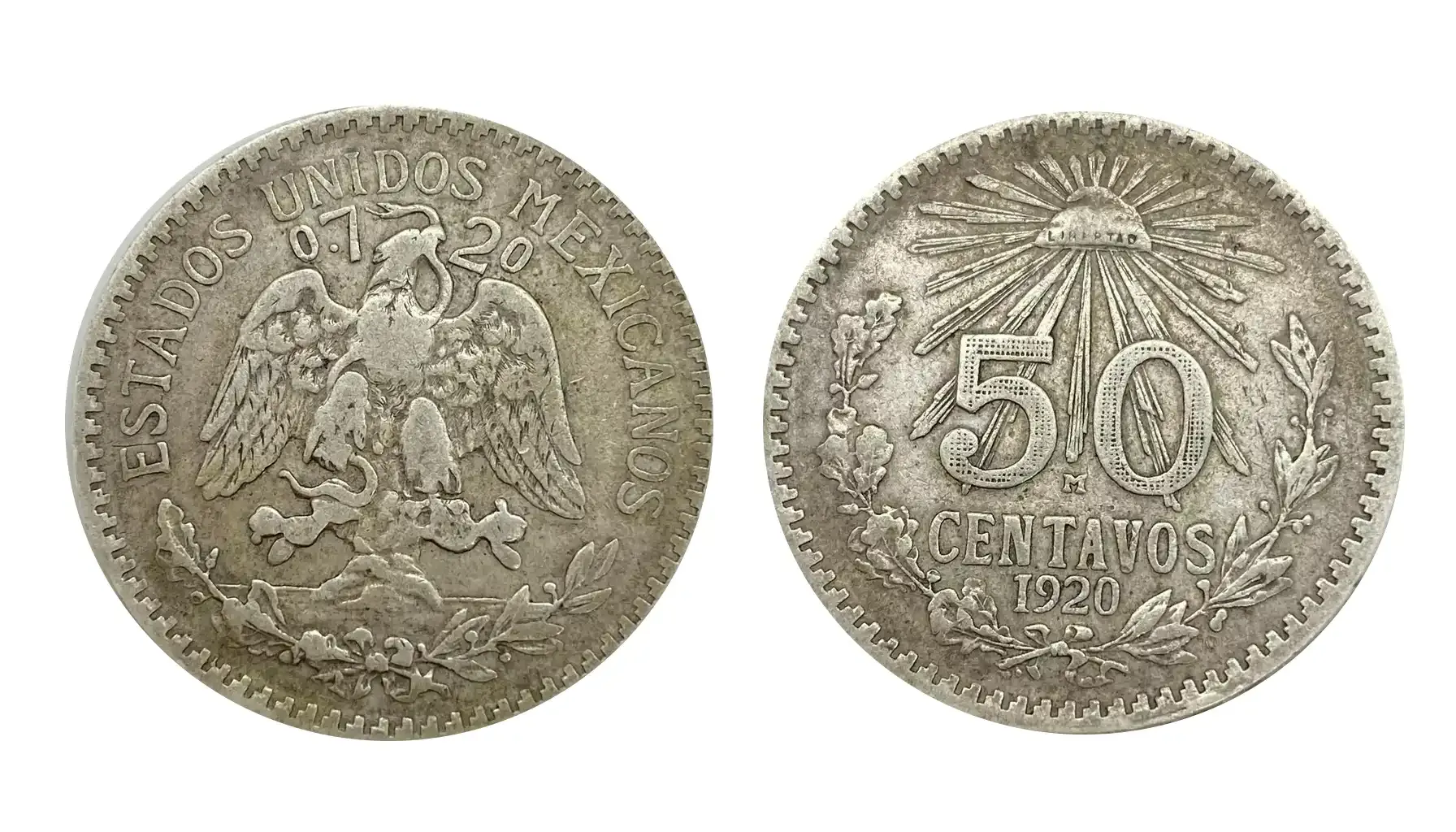
50 Centavos Silver Coin Years
In fact, it is the silver specimens that are most interesting to collectors among all the 50 centavos.
Type | Years mint | Metal composition | Weight |
Cap and Ray/ Cap and Scales | 1869-1905 | 90.3% pure silver | 12.5 grams |
1905-1918 | 80% pure silver | 8.33 grams | |
Águila o Resplandor | 1918-1939 | 72% pure silver | 8.33 grams |
1940-1945 | 42% pure silver | 8.33 grams | |
Cuauhtémoc | 1947-1949 | 30% pure silver | 6.25 grams |
It is also important to note that after 1949, all 50-centavos coins minted for regular strike no longer contained silver. Therefore, if someone tries to sell you a later coin and claims it is made of silver, it is either a very rare error or a counterfeit.
How Much Is a 50 Centavos Coin Worth?
In general, their nominal value is 0.50 Mexican pesos. This is a fairly small amount, equivalent to a few US cents. However, for collectors, the price can be slightly higher. For example, any uncirculated specimens might cost a bit more than face value. For instance, not a few cents, but $1-$5.
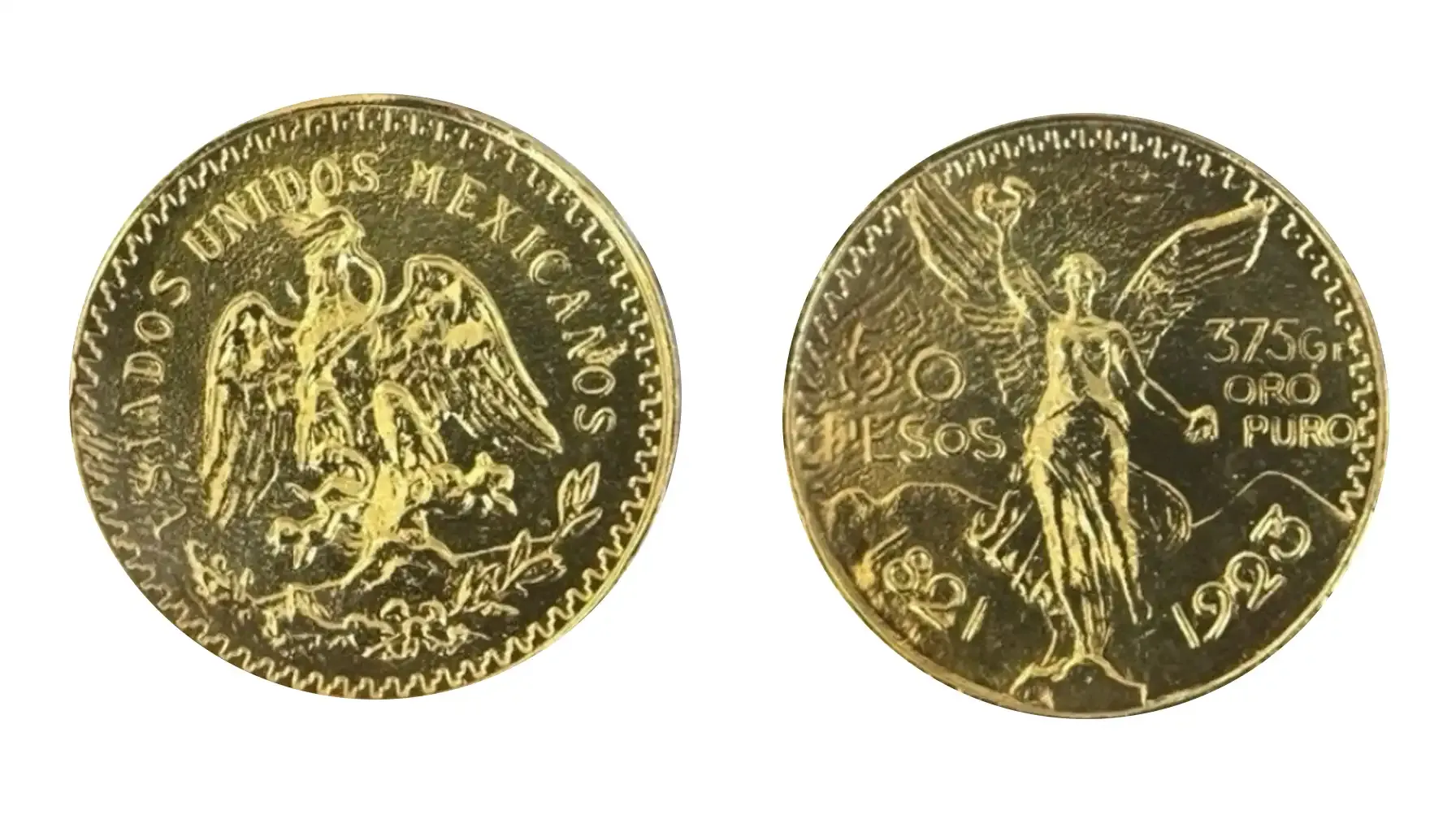
Therefore, if you want valuable 50 centavos, it is recommended to buy silver ones from before 1950. Here you'll find not only historical value but also the metal composition, specifically silver prices.
And such a price will be calculated based on the weight of pure silver in the coin and the current market spot price for the metal. It can actually vary quite a bit, so we also recommend directly monitoring prices in precious metals markets.
Also consider the weight of your coin. For example, from 1905 to 1918, the weight was only 8.33 grams and only 80% silver. This means about 6 grams of pure silver. If the price of silver is $25 per ounce, the metal value will be around $5-6. This isn't a lot, but everything needs to be taken into account, based on the condition of your coin.
Key Dates and Varieties
In general, what is a key date? Logically, it's some special date for a specific issue, or an important historical one. But what makes it so?
Low Mintage
This could be a year when fewer specimens were minted than usual, or it marked the end or beginning of a particular series.
Accordingly, the smaller the mintage, the rarer the specimen, and the more popular and valuable it is.
Errors
And here we're not talking about defects, a broken coin, or one that's somehow "not right." This usually refers to unusual features.
For example, there's the Off-Center Strike error, where the blank is poorly gripped, and the die strikes it in such a way that the design is shifted, resulting in an area of the coin remaining without design, just bare metal.
Proof Issues
These are special specimens for collectors. Polished dies and blanks are used for their minting. They have a beautiful matte relief, but they may not be as valuable or popular because they are made specifically for collectors and were not in circulation.
Key dates for different varieties
Cap and Ray
Years before 1900
1905
And 1918
Águila o Resplandor
1918
1928
Mexican 50 Centavos Coins for Collectors
Reason
Despite the fact that these specimens are not as valuable as they might seem at first glance, their numerous changes actually play a significant role.
Availability
For those looking to start a collection, these are quite good options; their prices are not high, making them affordable for beginner numismatists or simply those interested.

 Facebook
  X (Twitter)
  Pinterest
  LinkedIn