Contents:
The centavos coin 10 is a small exchange coin. It's not as popular as some of the others, but it definitely deserves your attention. And for a successful foreign coin identification, you definitely need to read this guide.
10 Centavos Coin of Mexico
The 10 centavos is a small exchange coin in Mexico. It is worth only one-tenth of a regular Mexican peso coins. That is, one hundred centavos is one peso. That is, 100 centavos is 1 peso.
Throughout its history, this series has undergone major changes. However, this also applies to other specimens of small denominations, including the 50 centavos coins. These examples have seen the country's difficult economic situation, inflation, and even the development of minting technology.
10 Centavos Coin Value Today
Before 1905
There were early silver coins with a denomination of 10 centavos. However, the difference between modern specimens and those of that time is very large. They differ in design and metal.
1905 – 1992
This period is marked by active regular mintage for the 10 centavos. Even though there were major changes in metal and design due to economic factors, these coins were still popular during this period. However, high inflation at the end of the 20th century led to the 10 centavos losing their purchasing power.
1993 – Present
In 1993, a large-scale monetary reform took place. And the 10 centavos were not left untouched. New 10 centavos coins began to be minted. The old type was demonetized and no longer has face value.
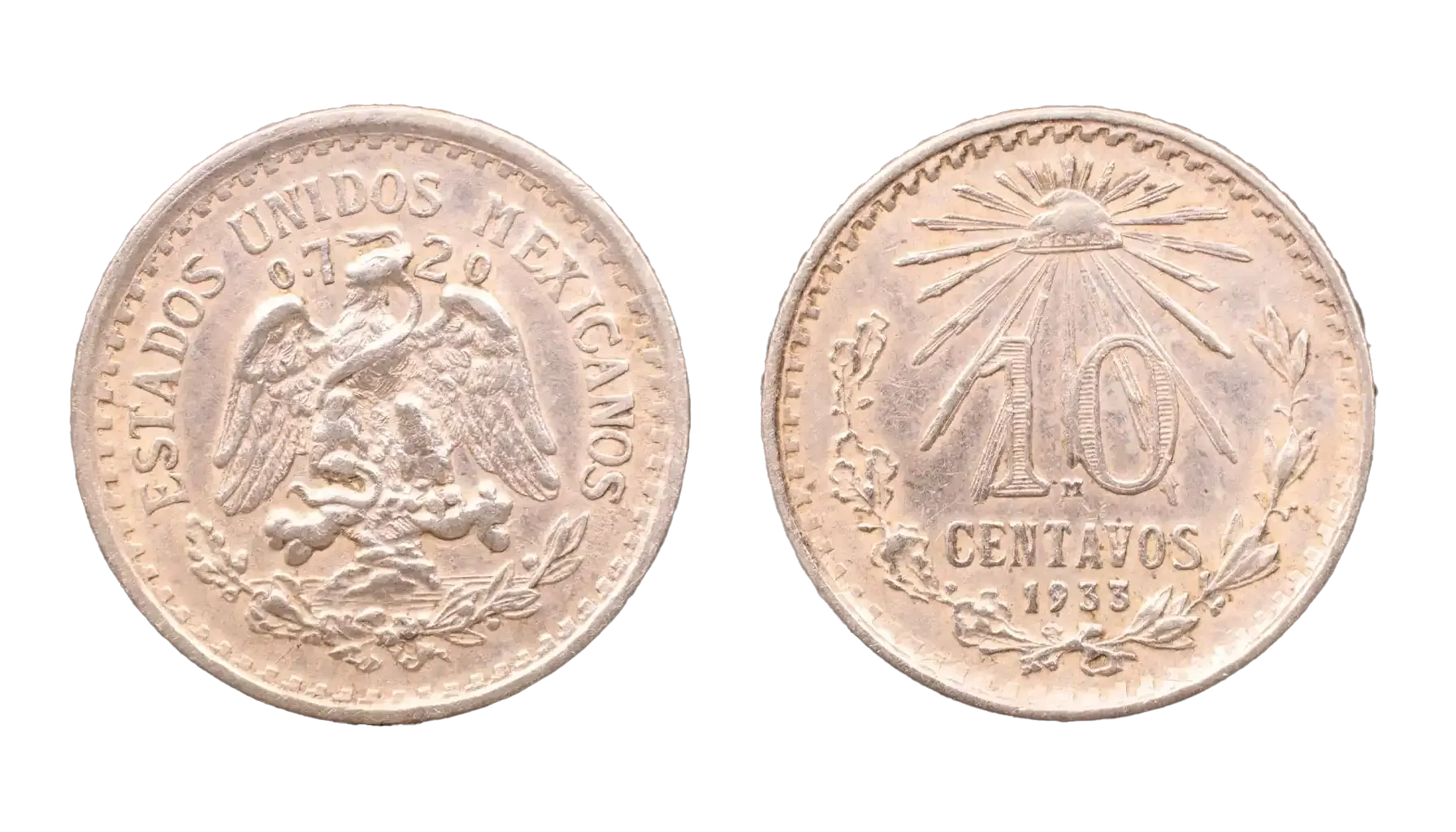
Metal Composition and Design
1905 – 1955
Initially, during this period, the specimens were made of bronze, but later of aluminum bronze.
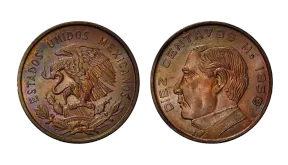
As for the design, the national coat of arms of Mexico is also depicted there. It includes a golden eagle battling a snake and perched on a cactus. On the reverse is the denomination and floral patterns with a Phrygian cap.
1955 – 1964
Here, the material changes to pure bronze, while the design remains almost unchanged. 1964-1992. The coins are made of stainless steel.
As for the design, the obverse remains the same, while the reverse becomes more minimalist. Because these specimens had a fairly large mintage and were made of cheap metal, these coins are usually not in high demand.
1993 – Present
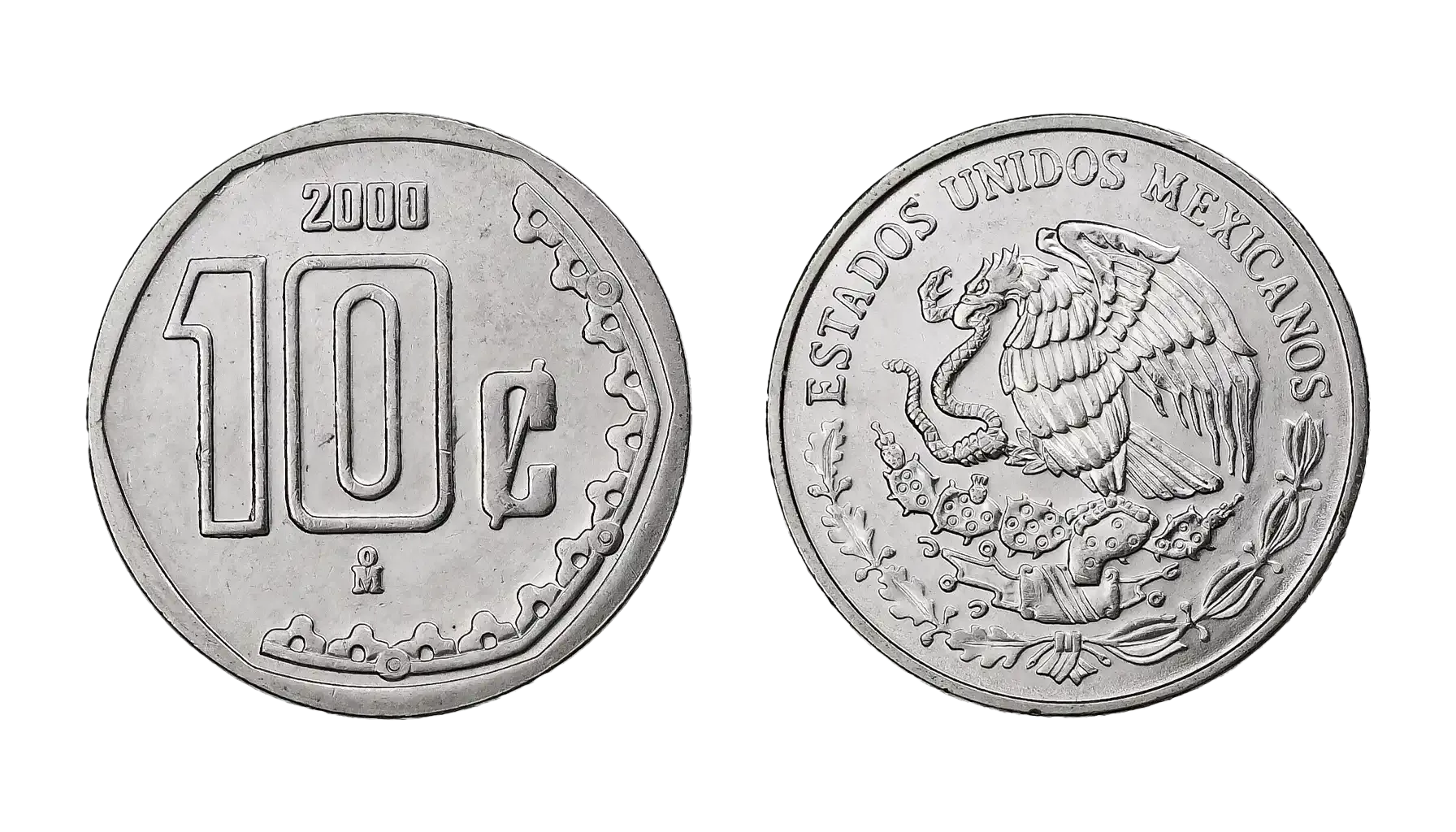
As for the metal, it is the same stainless steel. On the obverse is the national coat of arms of Mexico, and on the reverse are the ring markings from the famous Aztec Sun Stone. This is a small reference to Aztec coins.
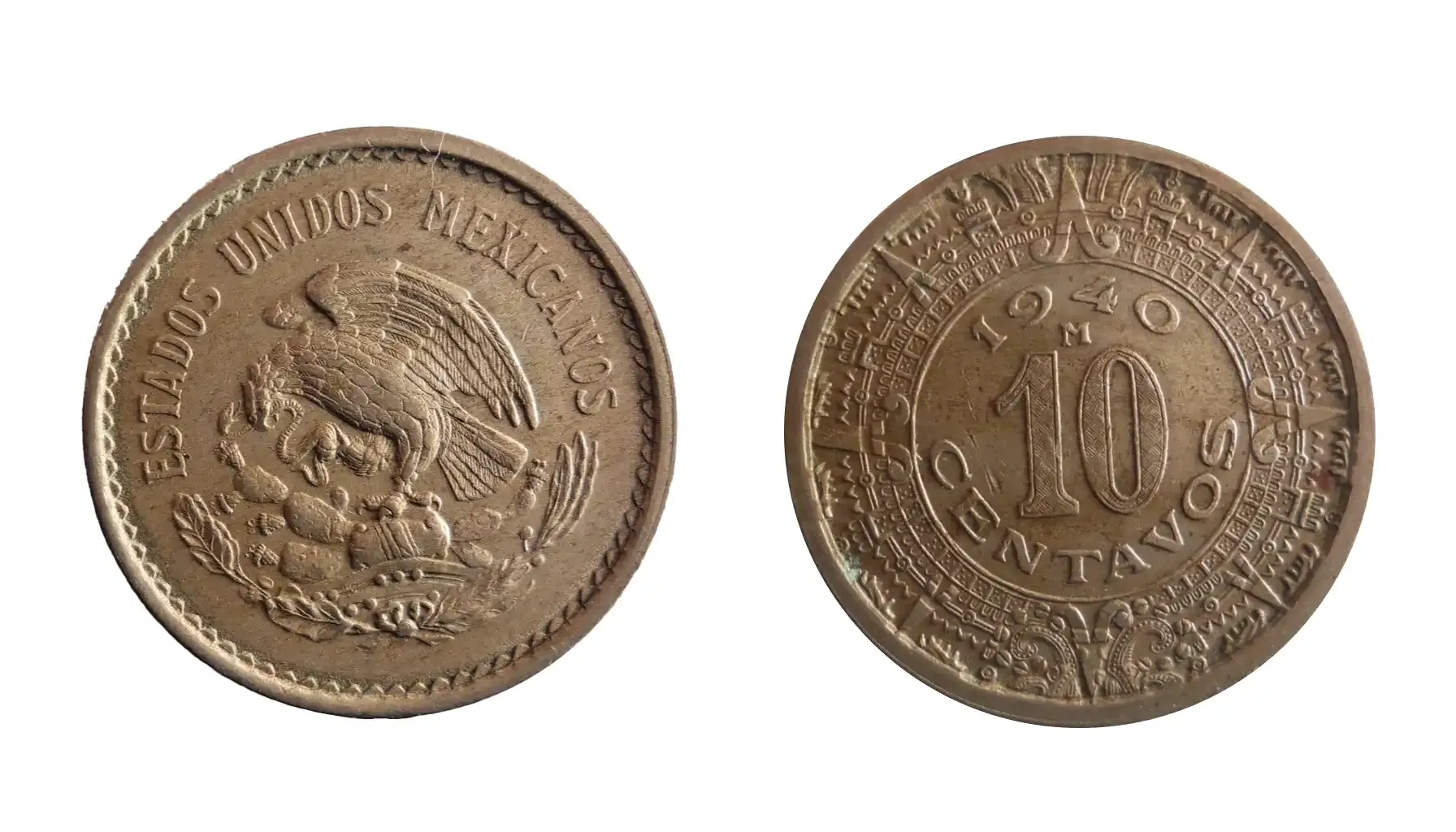
Common and Collectible Dates
Common Dates
The country's coins most prevalent on the market were minted between 1940 and 1992. This is due to their large mintage, which is why these specimens are relatively easy to find. However, their collector's value is quite low. But this will suit you if you are just starting your collection.
As for all coins from 1993 to the present day, they also have low value because they are still in circulation, and they are the easiest to obtain. They are still in circulation, and they are the easiest to obtain. The only exceptions here will be specimens with unusual errors.
Collectible Dates
It is traditionally believed that 1905-1907 were the years when some of the most valuable specimens were minted, as these were the first years of issue with the new design. If you acquire them in a high grade, you will have a valuable specimen.
1920-1930: Some years in this period had quite low mintages, and it is precisely because of this that they will be more in demand, such as 1920, 1921, 1930, and 1935.

 Facebook
  X (Twitter)
  Pinterest
  LinkedIn