Contents:
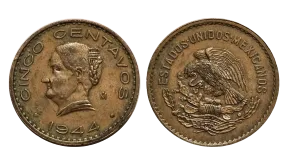
The moneda de cinco centavos, which is precisely how this beautiful specimen is called in its homeland, Mexico.
In reality, it is a small coin that actually has a rich history, and it is precisely because of this that it is so interesting to numismatists. And it can sometimes be found in Mexican coin value charts.
What Is a Cinco Centavos Coin?
And in general, "cinco centavos" in Spanish means 5 centavos. This is an ordinary change coin, which is equal to 1/100th of a Mexican peso coin. 1 peso is equal to 100 centavos.
Throughout its history, it has played a sufficiently important, though not very noticeable, role. It was used in everyday transactions and allowed for small purchases.
And now it has almost lost its relevance due to inflation and low purchasing power. Formally, it is still considered legal tender, but almost no one uses it anymore.
5 Centavos Coin of Mexico Overview
Like any coin, the five centavos are also linked to various historical and economic situations in the country.
Late 19th and Mid-20th
The first specimens were minted from bronze and copper. The design varied greatly from year to year. Sometimes it was a portrait of a ruler, other times historical events. For example, one of the most popular is the Mexican Revolution.
Therefore, some early issues can be quite valuable not only because of their age but also due to their mid-20th-century design.
1940 to 1970
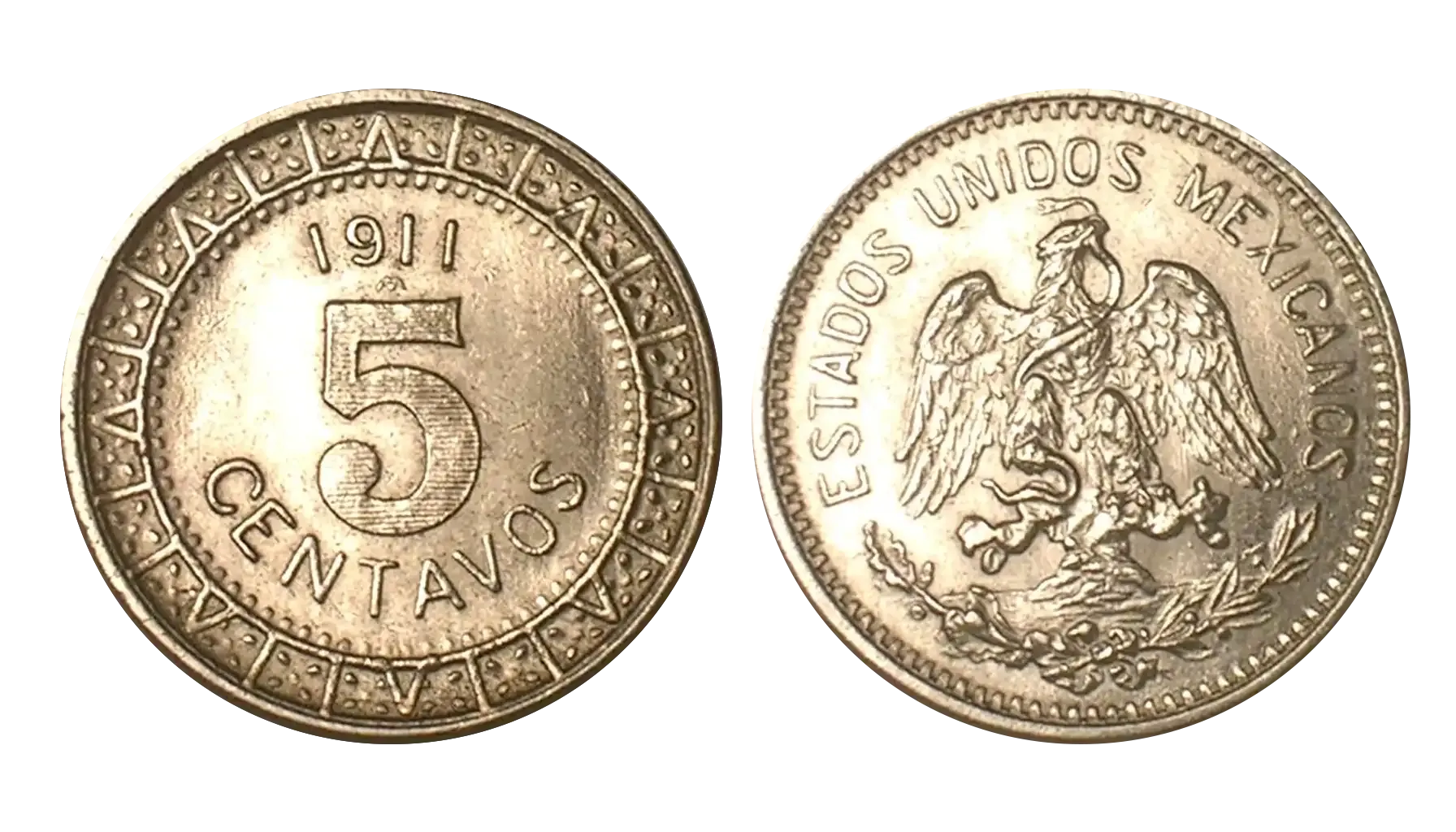
In the period from 1940 to 1970, specimens continued to be minted from copper, and the design became more common. The Mexican coat of arms was traditionally depicted on the reverse. It is an eagle leaning over a snake.
On the reverse are the denomination, year of minting, and traditional ornaments. Overall, the same design can be seen on the 10 centavos.
The New Peso
From the 1990s to the present marks one of the most significant stages in the history of Mexican currency. In 1992, Mexico carried out a redenomination, and as a result, the old peso was replaced by the new one.
The new-style 5 centavos coins began to be minted in that very year, 1992. They became smaller in size, and the material they were made from became cheaper—specifically, stainless steel. Overall, this fate also affected the 20 centavos coins.
5 Centavos Coin Value by Year
Mintage
A great deal depends on this factor. If the mintage for a specific year was small, then the value will correspondingly be higher. Usually, a small mintage is associated with the beginning of a certain series, when alloys were changed.
Grade
Even if your coin is super rare and interesting, its price might be small if it has too low a grade. And it, in turn, is calculated from 1 to 70 on the Sheldon scale. This is an international scale used to measure most coins in numismatics.
And, accordingly, the higher the score towards 70, the more valuable the specimen will be.
Metal Composition
Despite the fact that 5 centavos primarily contain inexpensive metals, the earliest issues could contain impurities. And it is precisely this that can make them even more valuable.
Metal Composition and Design
Design
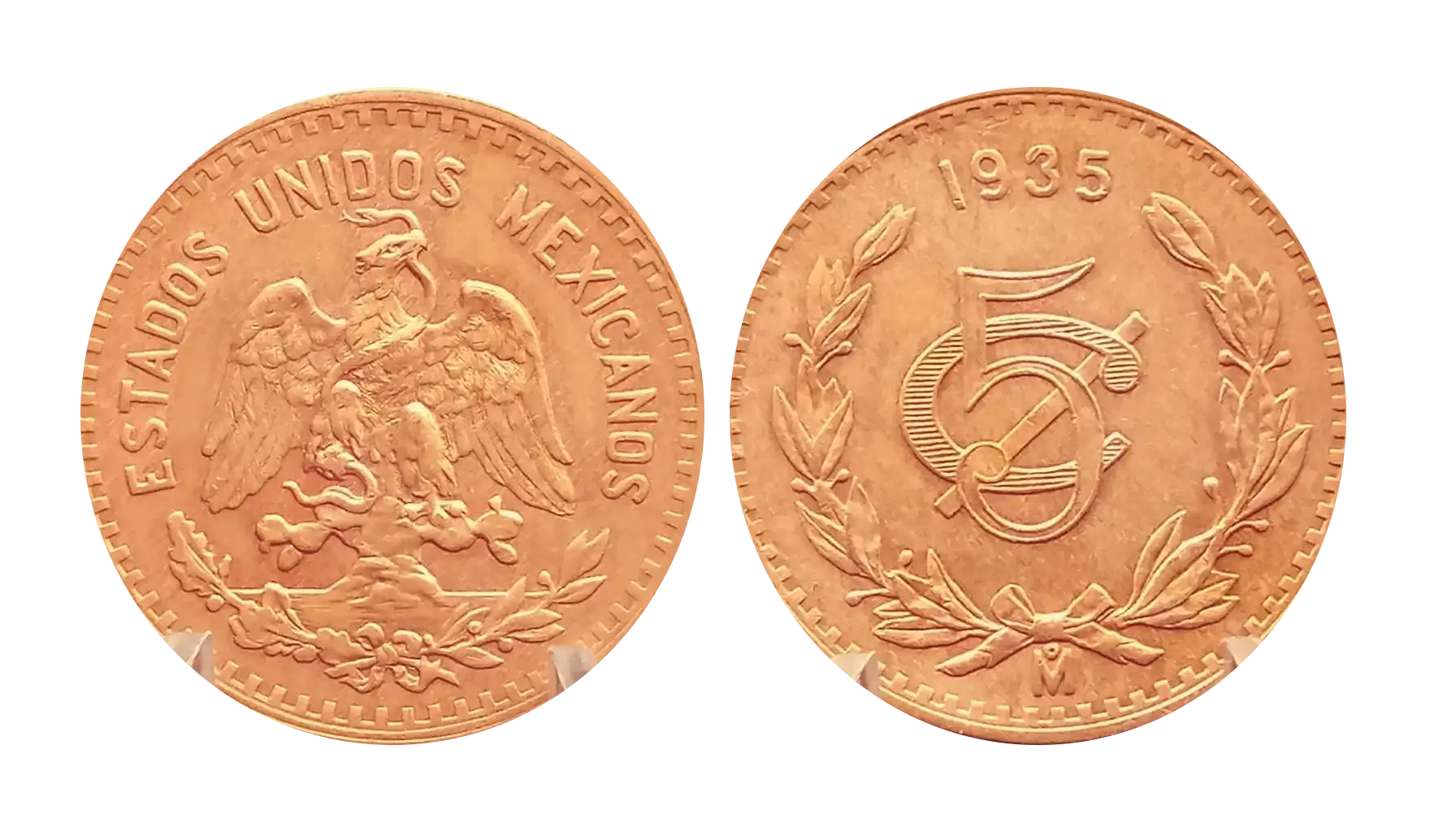
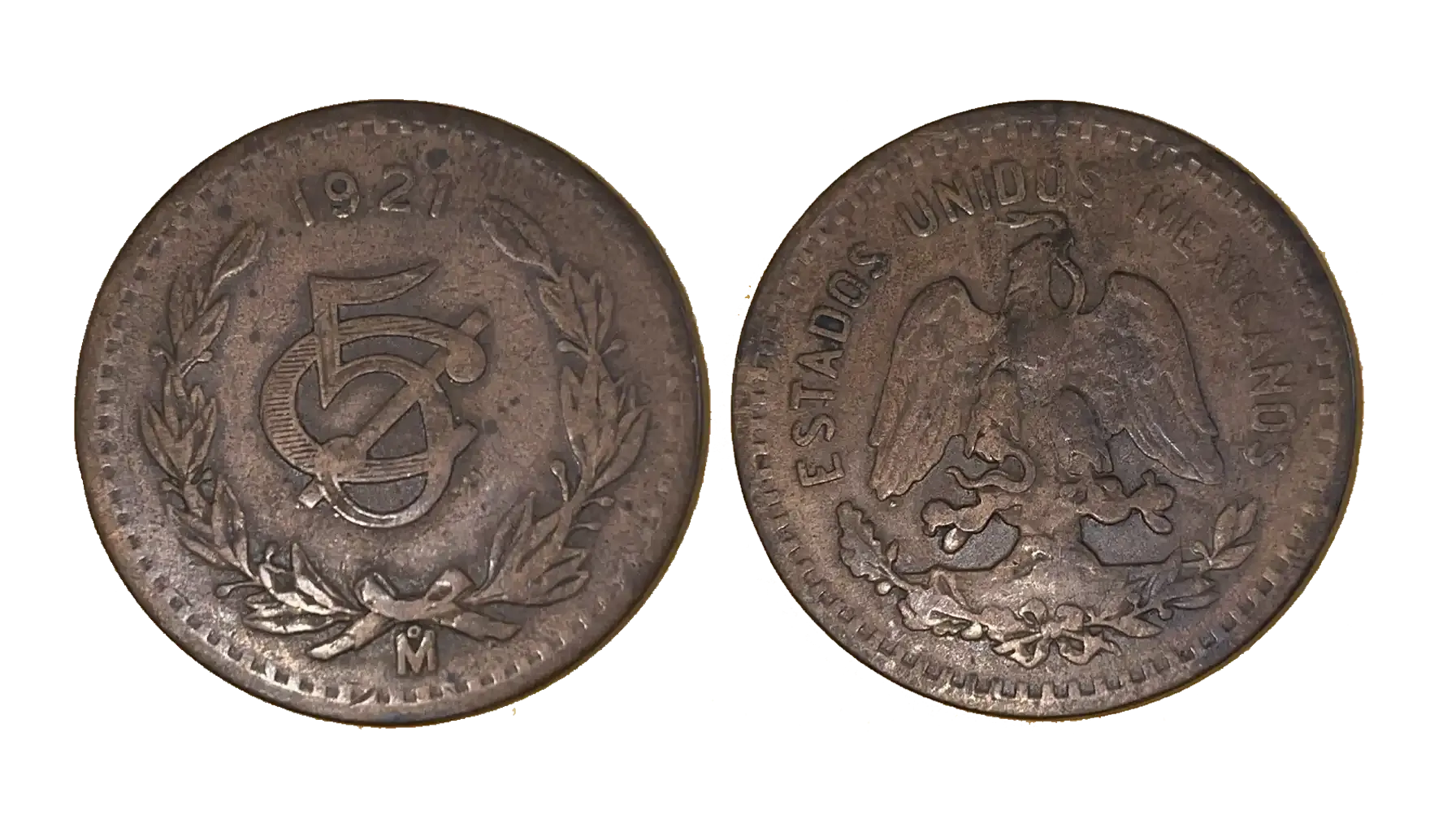
The design on the obverse traditionally features the national coat of arms of Mexico: an eagle perched on a prickly pear cactus, battling a snake. In some variations, decorative patterns or scrolls may also be present.
As for the reverse, it includes the denomination, the inscription "Centavos," the year of mintage, and the mint mark, which for all coins is "M," indicating the Mexico City Mint.
Additionally, there may be the same decorative patterns or various wreaths.
Metal Composition
Late 19th and early 20th | bronze, an alloy of copper and tin, or copper |
Mid-20th | bronze or aluminium bronze |
Late 20th | stainless steel or aluminium |
New Peso period | stainless steel |
Rare and Collectible Cinco Centavos Coins
Low Mintage
Most 5 centavos do not represent significant value at the moment; however, you can find quite valuable specimens if they possess certain characteristics.
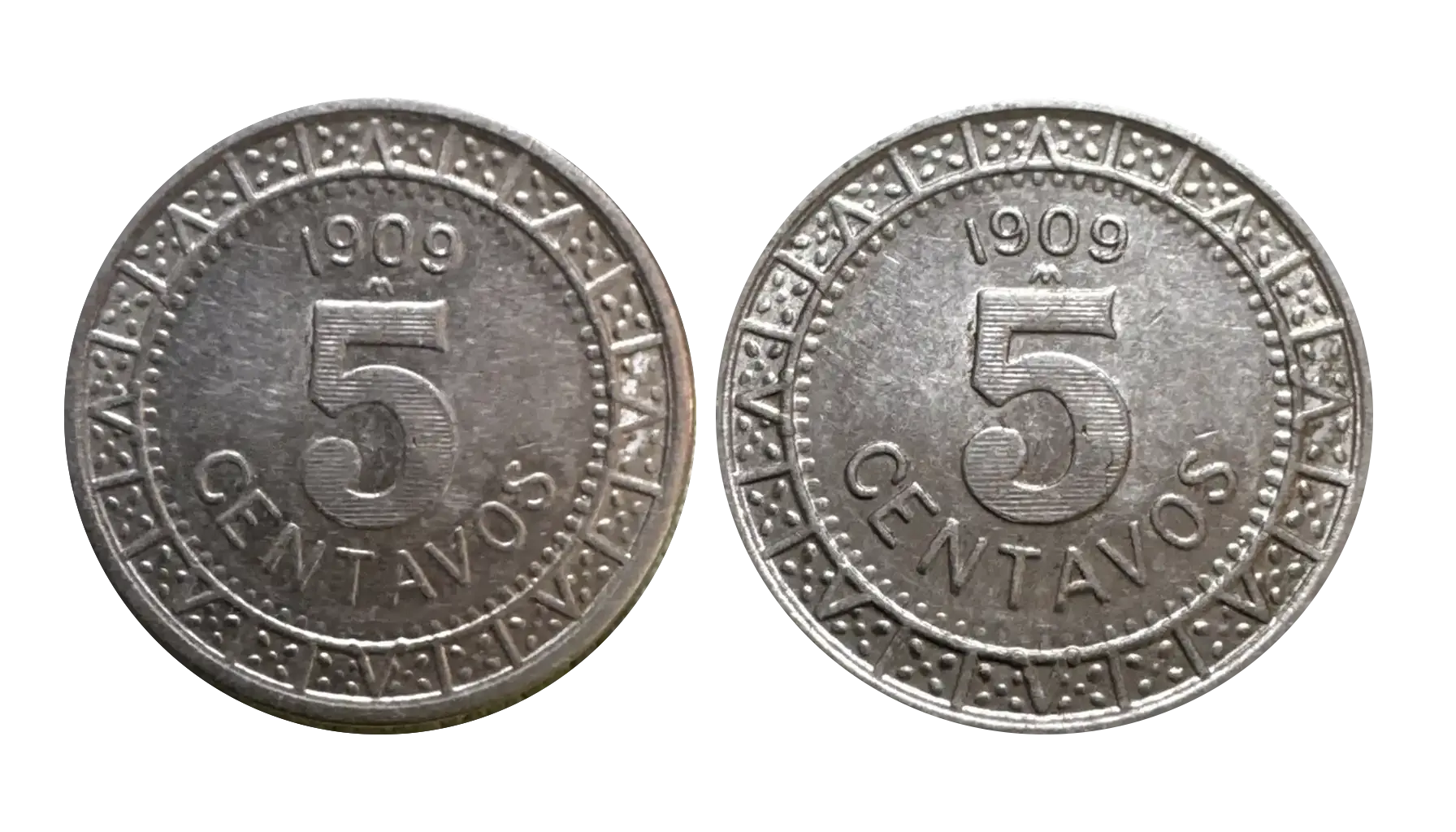
Low mintage, as we already said, is an important aspect, and as an example, here we can cite dates from the early 20th century, years associated with revolution or other political instability.
It was precisely during these times that there were low mintages, and they also hold historical significance. Therefore, such specimens will be more valuable than others.
Errors
Off-center strike
One of the most common errors occurs when the blank is not securely fixed, and because of this, when the die struck it during minting, the blank shifted slightly, and as a result, the design came out uneven, meaning parts of the unstruck planchet were visible.
This error is measured in percentages. The higher the percentage of displacement, the more expensive.
Double Die
This happens when the die strikes the same blank several times, resulting in "shadows" on the design elements; this is best seen on dates and inscriptions.

 Facebook
  X (Twitter)
  Pinterest
  LinkedIn