Contents:
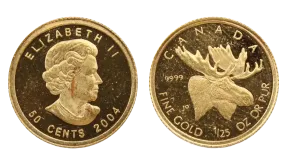
The 50 cent Canada coins were first introduced in 1870, and they could be seen as a fine representative of the first national coinage of the newly formed Dominion of Canada, ruled under the ongoing Crown’s influence and royal past.
Throughout its production period, the issuing authority (the Royal Mint in London before 1908 and the Royal Canadian Mint afterwards) released six major design iterations, in compliance with the monarch depicted, as well as non-circulating special editions and commemorative types. As for the 50 cent coin Canada value, it mainly depends on the year and the composition.
According to published auction records, the most valuable 50 cent Canadian rare coin was sold for $240,000 in 2019, which guaranteed it the title of "King of Canadian Coins". The prices for common coins struck from the 1960s, however, tend to reach a few dollars at their peak. So, how much is a Canadian 50 cent coin worth, and may one find such a numismatic creation in circulation today?
Is There a 50 Cent Coin in Canada?
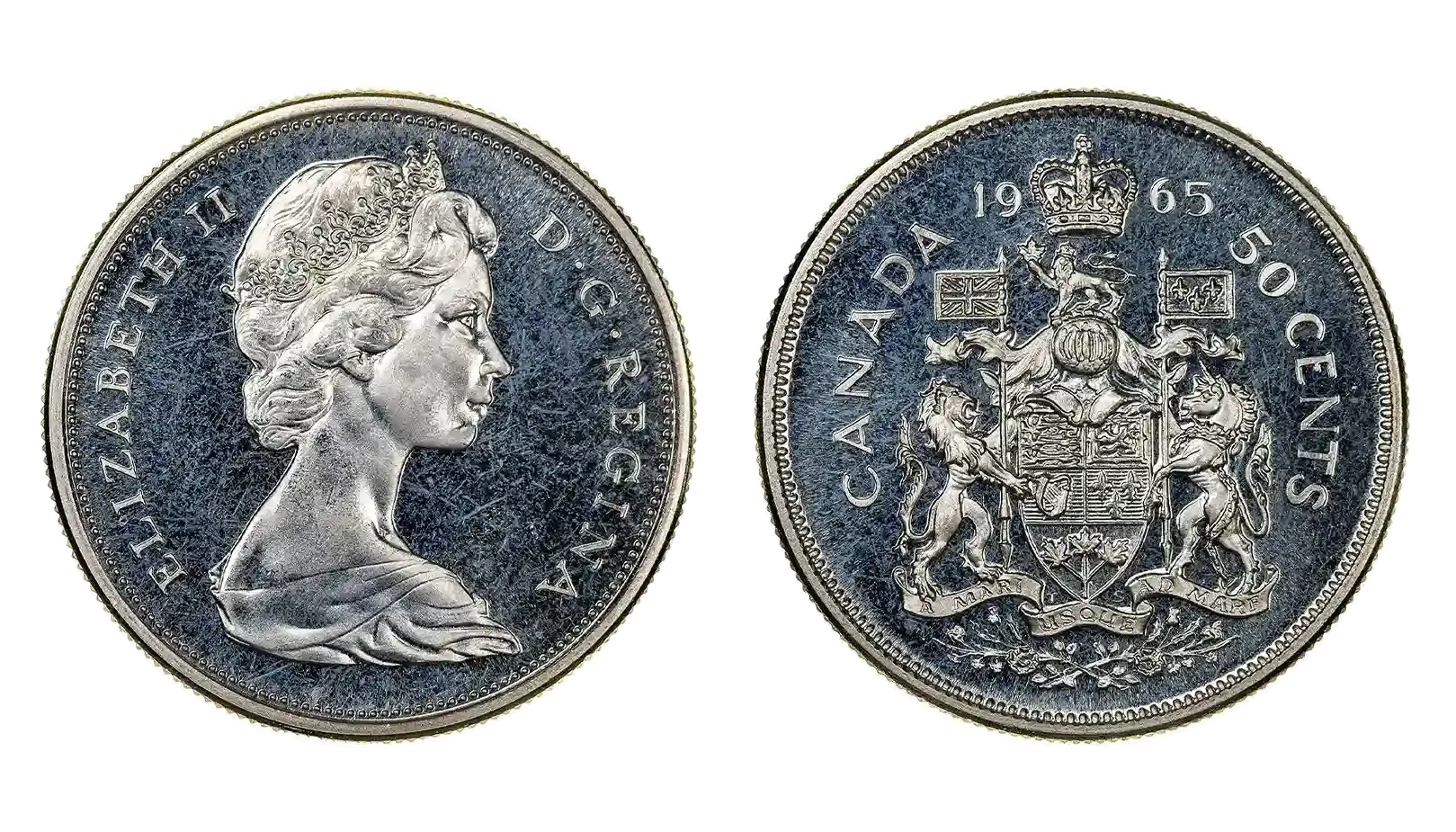
Canada welcomed a few notable variations of the 50-cent coins, as they had been introduced in 1870 and continued the developmental path further. Here is the question: Does Canada have a 50 cent coin? As of today, it is still an official circulating denomination, which is, nevertheless, rarely seen in regular use.
What is a 50-cent coin called in Canada? It is a half dollar (just like the original silver US half dollars), and at first, the idea hidden behind the introduction of this unit was simple and equally obvious, for the system urgently needed a reliable half-dollar denomination. Upon the launch, the minting authorities repeatedly modified the obverse and reverse layouts, according to the reigning monarch and the official Canadian arms (the design changed when the country’s coat of arms changed).
Over time, the denomination has appeared under six rulers, but each could be further divided into several distinct subtypes based on portrait updates, finishes, composition changes, and collector-only types.
Monarch | Years | Description |
Queen Victoria | 1870–1901 | The first Canadian 50-cent pieces. Were made of silver during the post-Confederation period and laid the foundation for the entire series. |
King Edward VII | 1902–1910 | A continuation of the early silver half-dollar series. The final years before coin production shifted from the Royal Mint in London to the Ottawa branch in 1908. |
King George V | 1911–1936 | The representatives of the earlier reverse style that preceded the major 1937 redesign. |
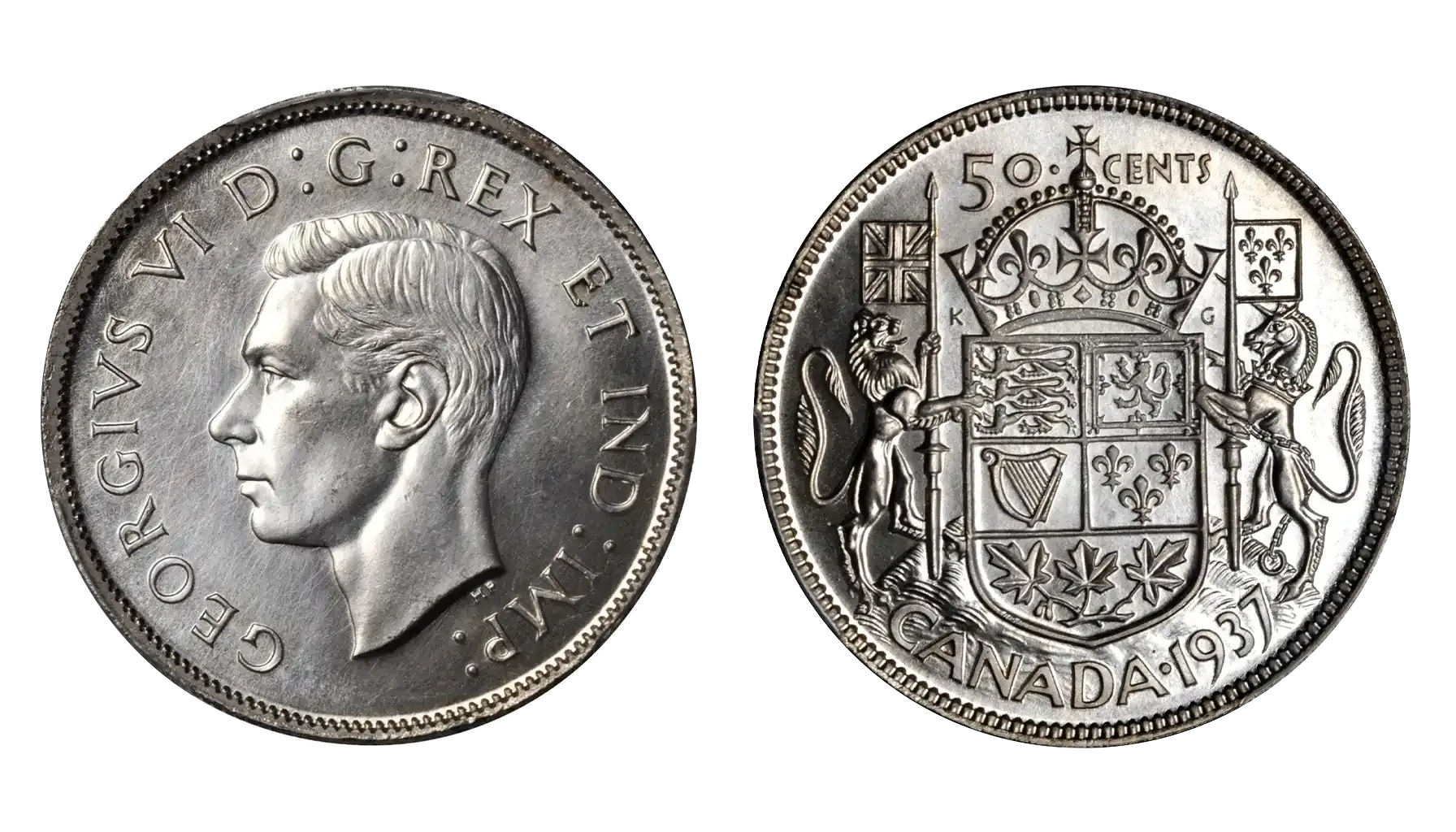
King George VI | 1937–1952 | Introduced the first coat-of-arms reverse of the modern era. A major design change. |
Queen Elizabeth II | 1953–2023 | The largest and most varied group in the series. Featured several portrait updates. Changes to the Canadian arms on the reverse, the 1968 switch from silver to nickel, and many collectible types. |
King Charles III | 2023–... | The current type. The introduction of Canada’s first new monarch in decades and the newest royal effigy. |
When Was the 50 Cent Coin Discontinued in Canada?
Well, this coin has never been truly discontinued, as there was no Coinage Act passed to suspend the use and production of the 50-cent units. It remains legal tender in Canada, but, rightfully so, it has disappeared from everyday circulation as financial institutions and consumers no longer request it for regular transactions.
Hence, the Royal Canadian Mint still issues this denomination, yet it comes in limited quantities and special-edition designs to please the collector's public.
Why the 50¢ Coin Is Rarely Seen in Circulation
The presence of the $0.5 coin is very scarce in circulation, though the status of legal tender has never been withdrawn. According to the Royal Canadian Mint, financial institutions and consumers have not requested the denomination for daily use, but it still belongs to the group of the most valuable Canadian coins of all time.
As a response, the minting authorities do not distribute large volumes of these numismatic creations, and their production remains limited (for collectors only via special sets and rolls). The survival rates, hence, are also low, since it had not been treated as a rarity from the very beginning (the wear affects the way it sells).
So, the coin is rarely seen in circulation because:
Financial institutions and consumers no longer request it for daily use
The Mint produces it only in limited quantities
Most new coins are distributed through collector products
It has become more of a collectible denomination than an actively circulating one
“The 50-cent coin bears the Canadian Coat of Arms, given to Canada by King George V via Royal Proclamation in 1921. The Arms feature the arms of England, Scotland, Ireland, and France with a sprig of three maple leaves. <...> The current design was produced by former Royal Canadian Mint engraver Thomas Shingles and was first used in 1959.”
— The unknown representative of the Royal Canadian Mint, the “50 CENTS” page
The official website of the Royal Canadian Mint
Canadian 50 Cent Coin Value Today
The Canada 50 cent coin value may vary significantly, depending on the year, type, overall rarity, and the level of preservation. Earlier silver issues are usually more valuable than any other silver numismatic creation of that type. However, those units that are meant to commemorate certain occasions/legacy/historical figures may be valuable, too (e.g., the 2022 Canada Elizabeth II coins, released after the untimely passing of the Queen).
How Much Is a 50 Cent Canadian Coin Worth?
Years | G | VG | F | VF | XF | AU | UNC |
1870–1901 | €41 | €52 | €86 | €130 | €290 | up to €4,500 | – |
1902–1910 | €43 | €43 | €43 | €87 | €240 | €490 | €2,000 |
1912–1919 | €22 | €39 | €39 | €63 | €150 | €300 | €1,600 |
1920–1936 | €20 | €30 | €110 | €130 | €160 | €320 | €1,200 |
1937–1947 | €14 | €18 | €18 | €26 | €26 | €53 | €190 |
1953–1958 | €12 | €18 | €19 | €19 | €25 | €34 | €34 |
1959–1964 | €13 | €16 | €18 | €18 | €18 | €19 | €20 |
1968–1989 | – | €0.33 | €0.33 | €0.50 | €0.87 | €1.10 | €1.10 |
1990–1996 | – | – | €0.34 | €1.40 | €1.40 | €1.50 | – |
1997–2000 | – | – | €0.34 | €0.63 | €0.97 | €1.50 | – |
1999–2003 | – | – | – | – | – | – | up to €4.10 |
2003–2006 | – | – | – | – | – | – | up to €4.80 |
2006–2022 | – | – | – | – | – | – | up to €6.90 |
2023–present | – | – | – | – | – | – | up to €8.40 |
The Most Valuable 50-Cent Coins: A Quick Overview
1921 50C (George V)
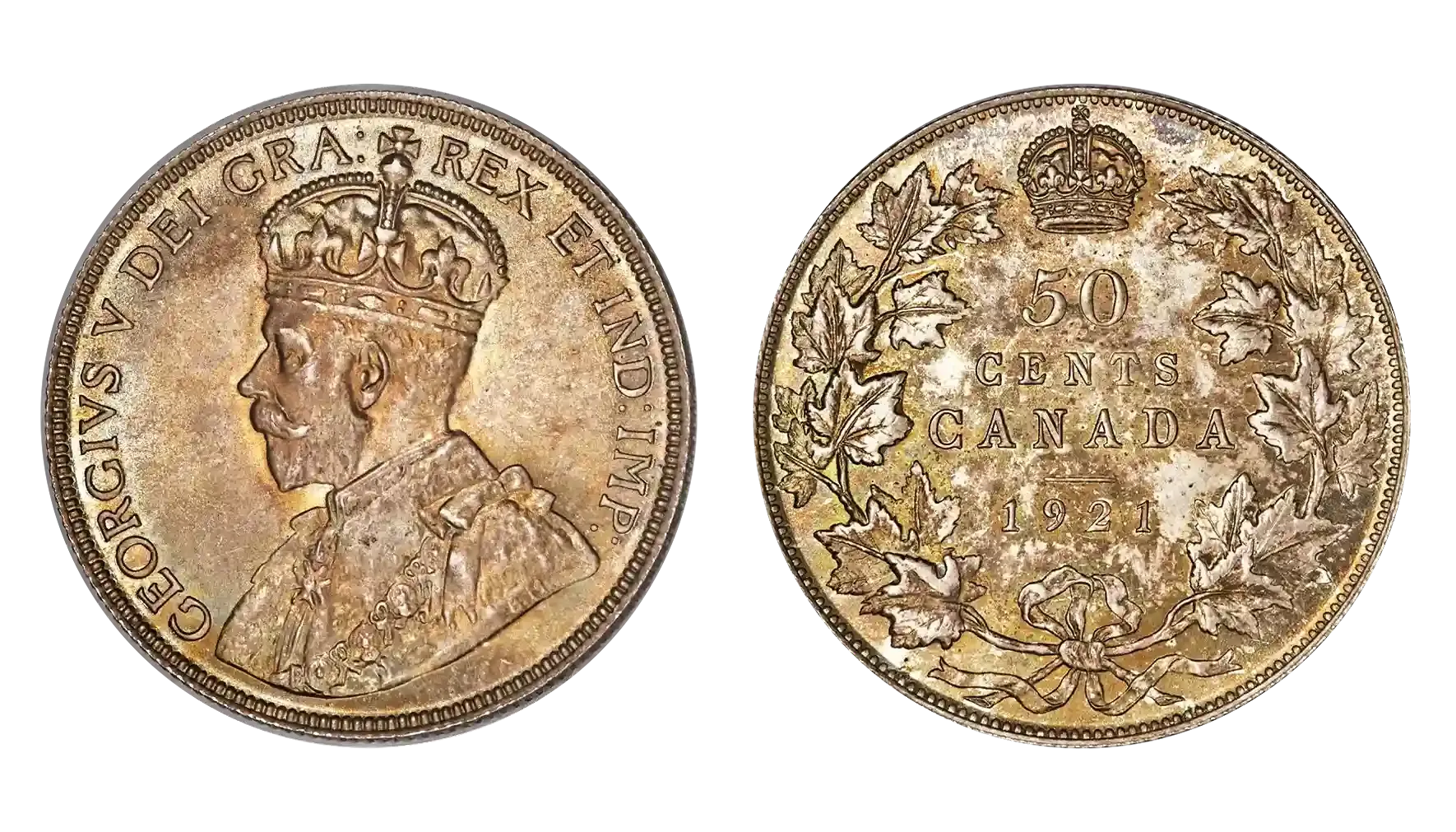
Mintage: 206,398
Auction record: $240,000
The 1921 50C of George V is one of the most famous rarities in the relevant half-dollar series. Although the original mintage figures were huge, almost the entire issue was later melted, and only a few examples managed to survive.
In the 1920s, the demand for these numismatic creations was weak, and many remained in storage instead of entering circulation. By 1929, the demand rose, and the Ottawa Mint melted its remaining 1920 and 1921 half dollars and recoined the silver into 1929 types.
1890H 50C (Victoria)
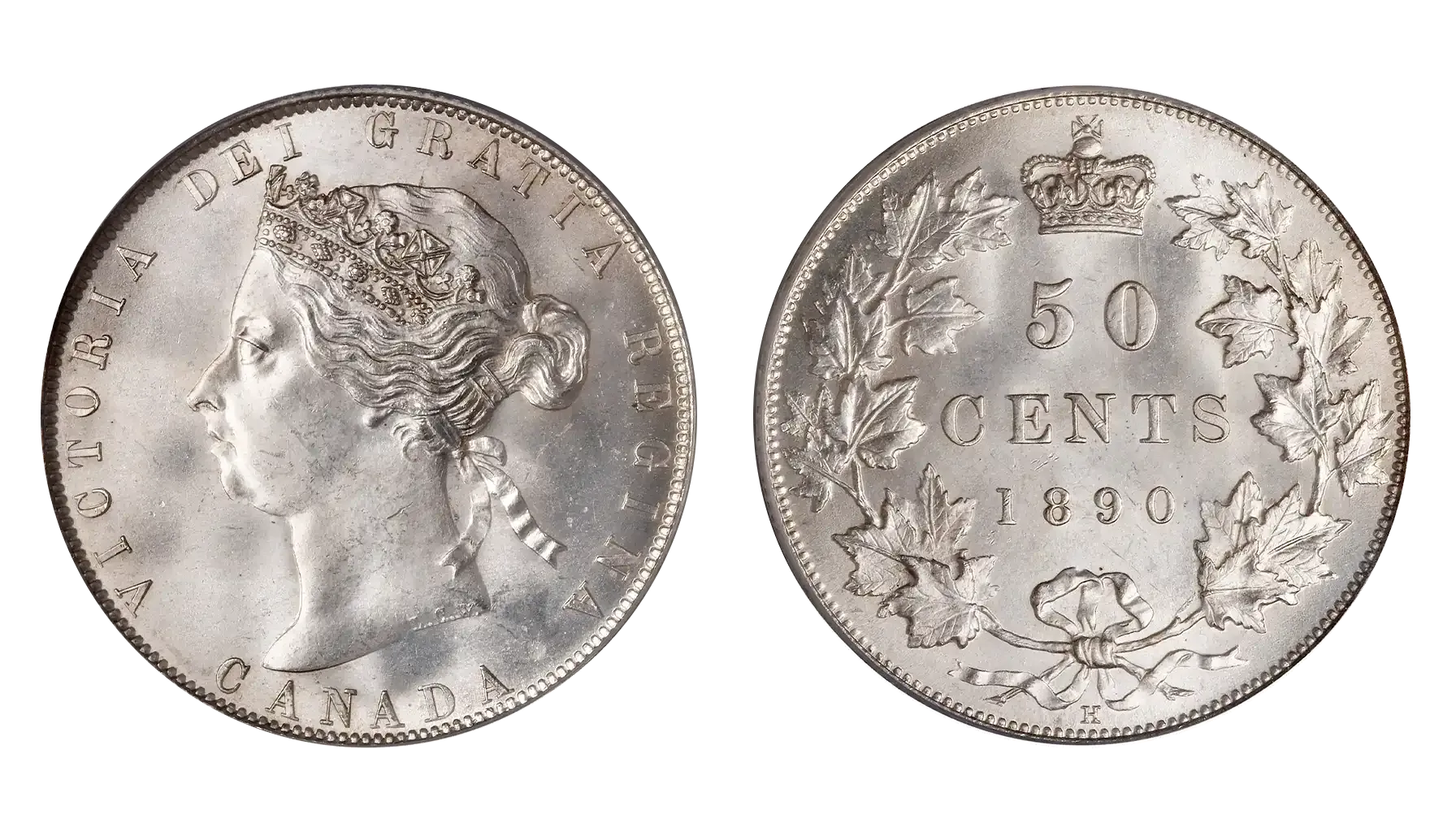
Mintage: 20,000
Auction record: $149,500
The 1890H 50C struck in the name of Queen Victoria is the second most valuable coin of this denomination ever sold. In 1890, the mintage was really modest, i.e., only 20,000 pieces during that year. Therefore, these are very difficult to locate in any grade: Mint State examples are exceptionally exclusive. Besides, only a small number of top-quality survivors are known today – owning one is pure luck.
1872H Inverted A for V (Victoria)
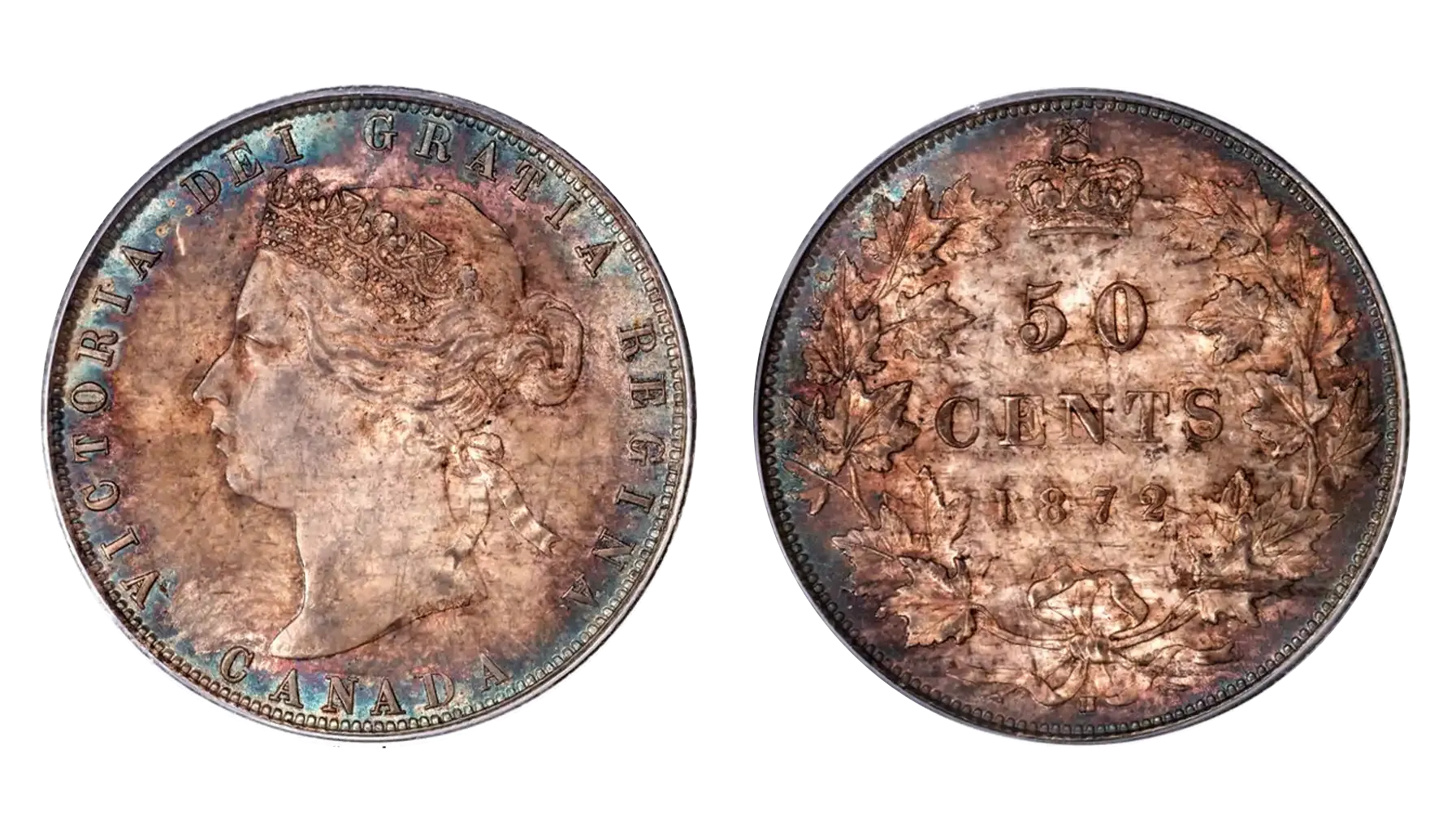
Mintage: 48,000
Auction record: $86,250
As per the online coin auction platforms, the 1872 Inverted A for V is a genuinely rare variety, as it comes from a distinctive engraving mistake in the word VICTORIA (i.e., the opening letter appeared as an inverted A, which is obvious). The errors tend to be extremely expensive, thanks to their "one-of-a-kind" nature, let alone the original scarcity of the coin across all grades.
1870 50C “No L.C.W” (Victoria)
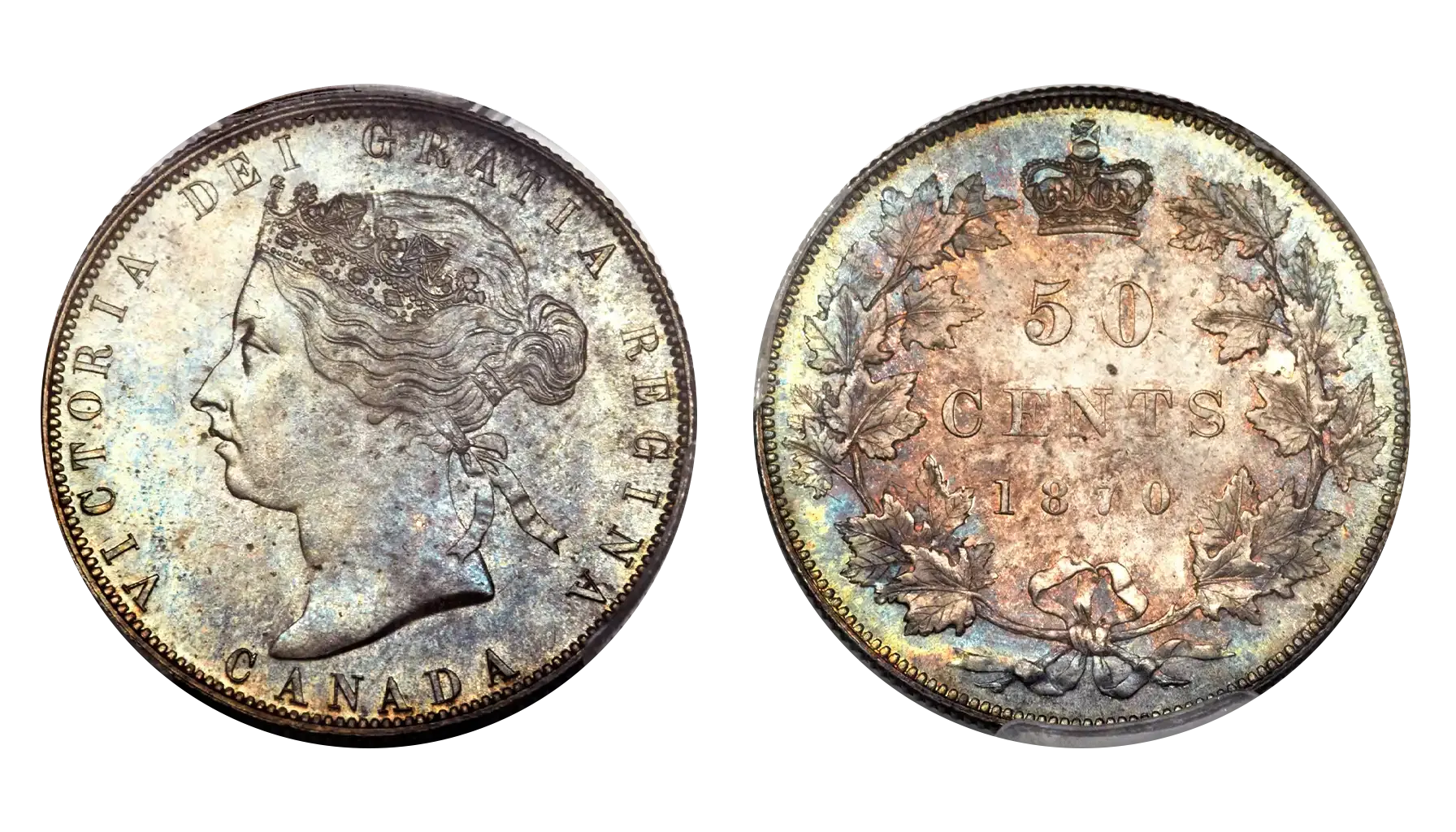
Mintage: 450,000
Auction record: $70,500
The earliest coins in the series are usually among the most valuable ones. This 1870 variety was struck during the debut year and belongs to a short list of early Canadian rarities that are highly respected by advanced collectors. In fact, in contrast to other numismatic creations of the series, this type lacks the designer's initials on Queen Victoria’s truncation, along with several small obverse differences, including the missing shamrock detail near the crown.
The true 50 cent Canadian coin value is hidden in Mint State (e.g., MS 65), which is also scarce.
1905 50C (Edward VII)
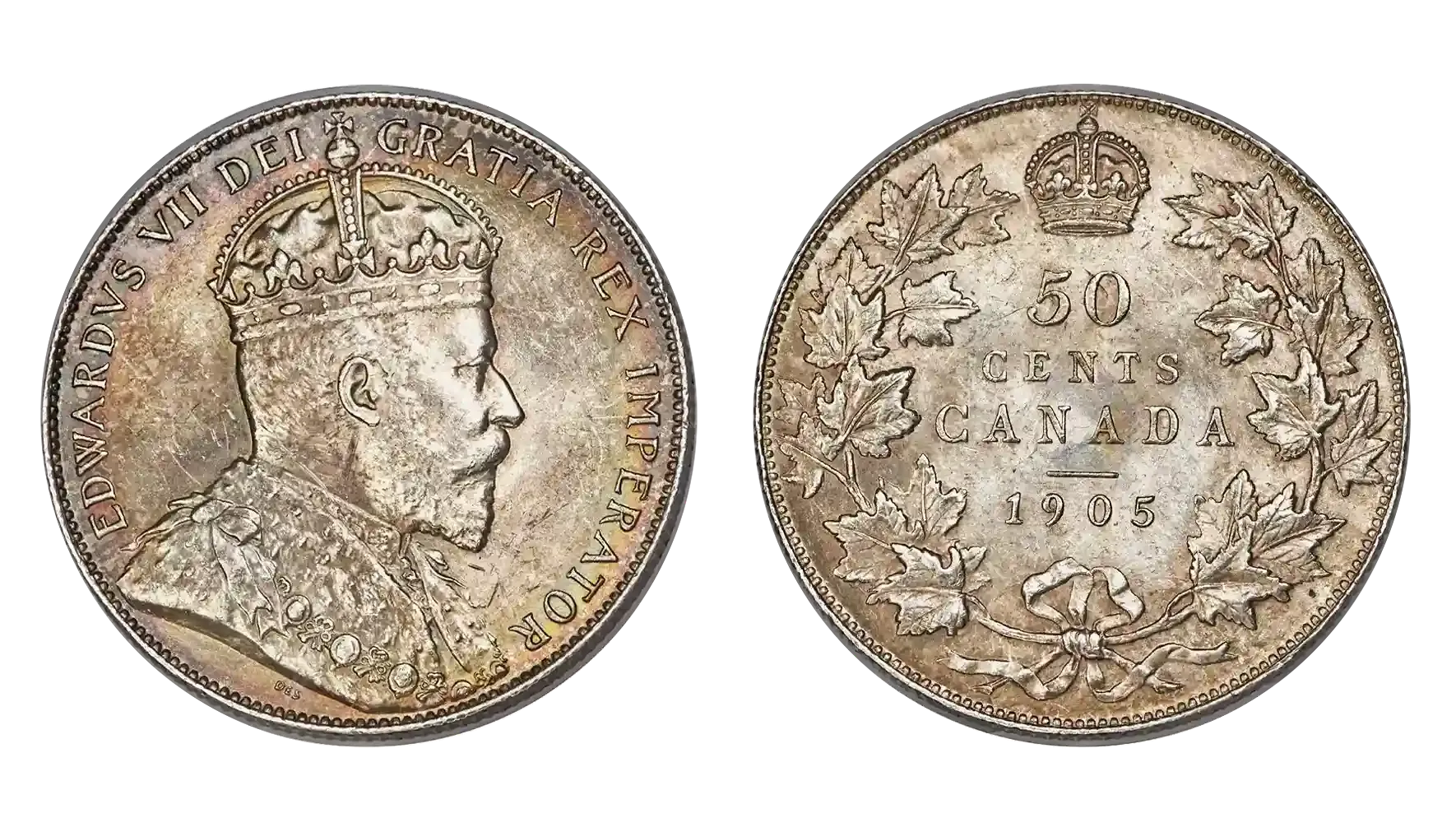
Mintage: 40,000
Auction record: $42,000
Finally, here came the 1905 50C coin of Edward VII, which could boast the lowest mintage for its type. As soon as the series, released in the name of Edward VII, was short-lived, scarce dates are among the most desirable to obtain. Well-preserved pieces are top-notch, but even when in lower grades, collectors are ready to pay thousands of dollars because of their limited production and the importance within the group.
But What About the Value Check?
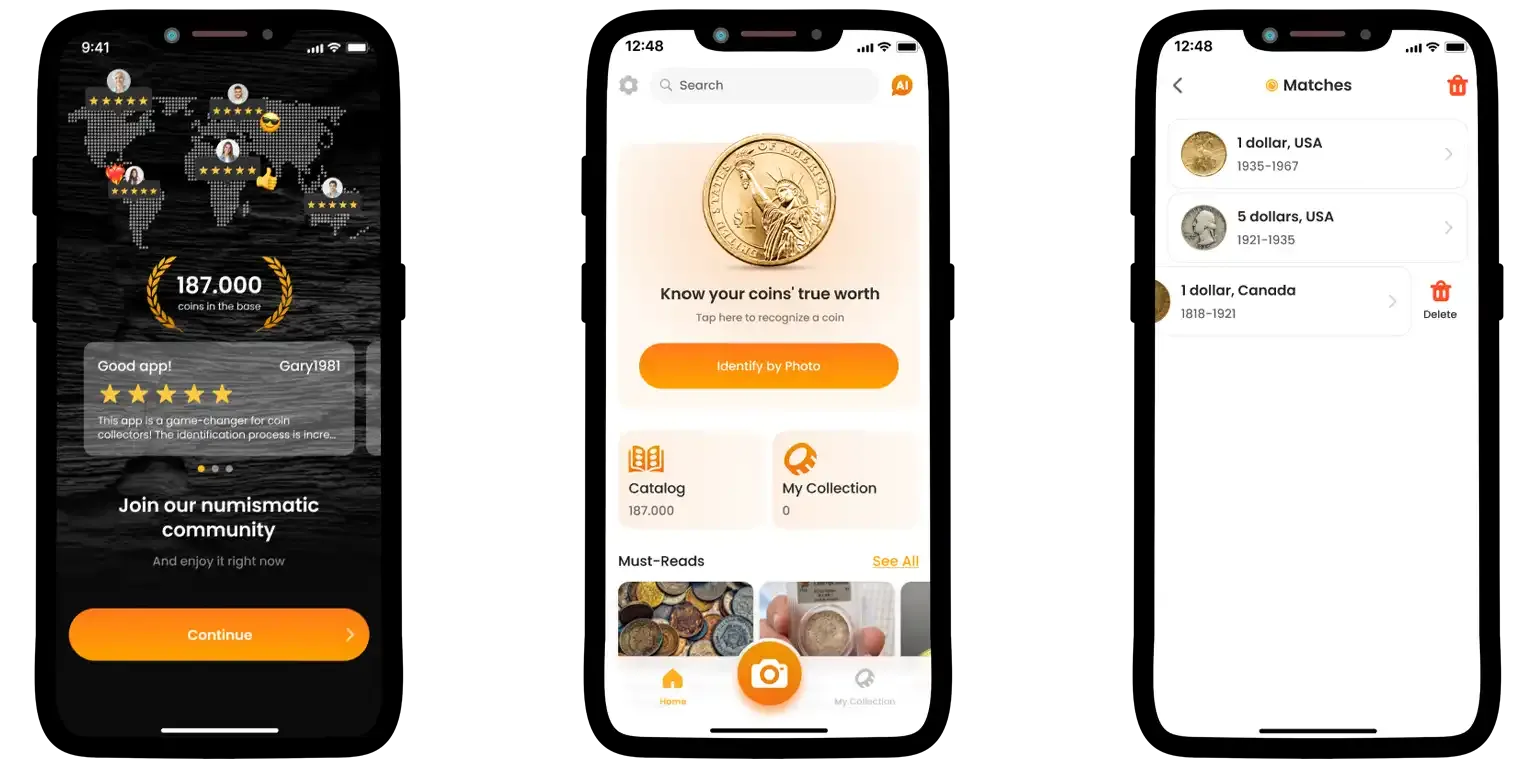
Should you strive to understand the true worth of the coins you own or are willing to get, always appeal to trusted, reputable tools and instruments. Coin ID Scanner, for example, is an "all-in-one" app whose core features revolve around coin identification by photo, numismatic analysis, value reference guidelines, collection management, and educational paths.
Know what you are dealing with. The 50-cent coins can be extremely valuable, even though their true worth is not always clear.

 Facebook
  X (Twitter)
  Pinterest
  LinkedIn