Contents:
Do you know one of the most important historical moments in Canada? This day is the centenary of the country's confederation. The Royal Canadian Mint has released a series of unique Canadian nickels in honor of this event. They have become especially important in the numismatic community, particularly through modern online stores and auctions.
How to identify coins with your phone?
What Is the 1867 Confederation 1967 Coin?
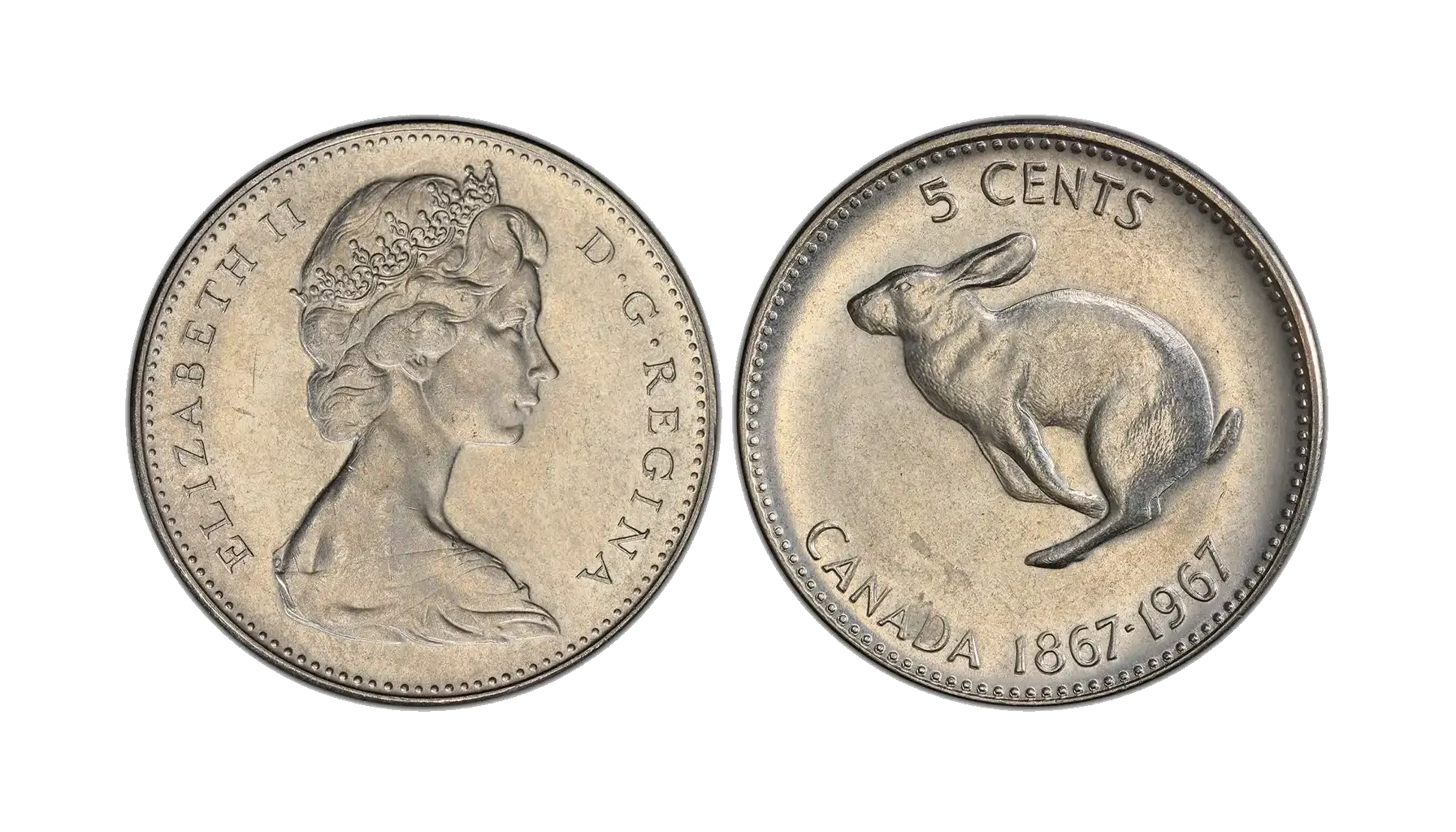
This 1867 confederation coin is generally different from other non-commemorative items. There are no heraldic symbols in the design. They have been replaced with other images, and it is an entire commemorative series released by the Royal Canadian Mint to celebrate the Centennial of Canadian Confederation.
Diameter | 32.13 mm |
Weight | 15.62 g |
Composition | Nickel |
Mintage | 11,812,000 |
Edge | Smooth |
Magnetism | Magnetic |
Note: How to know your item has magnetism? Check a complete collector’s guide about magnetic items.
The 1867 to 1967 Canadian Confederation Coin Set Value
Instead of a single year, the reverse of every confederation coin 1867 to 1967 value carries the dual date 1867–1967. The Obverse features the second portrait of Queen Elizabeth II (the Arnold Machin effigy), showing her at age 37 wearing a tiara.
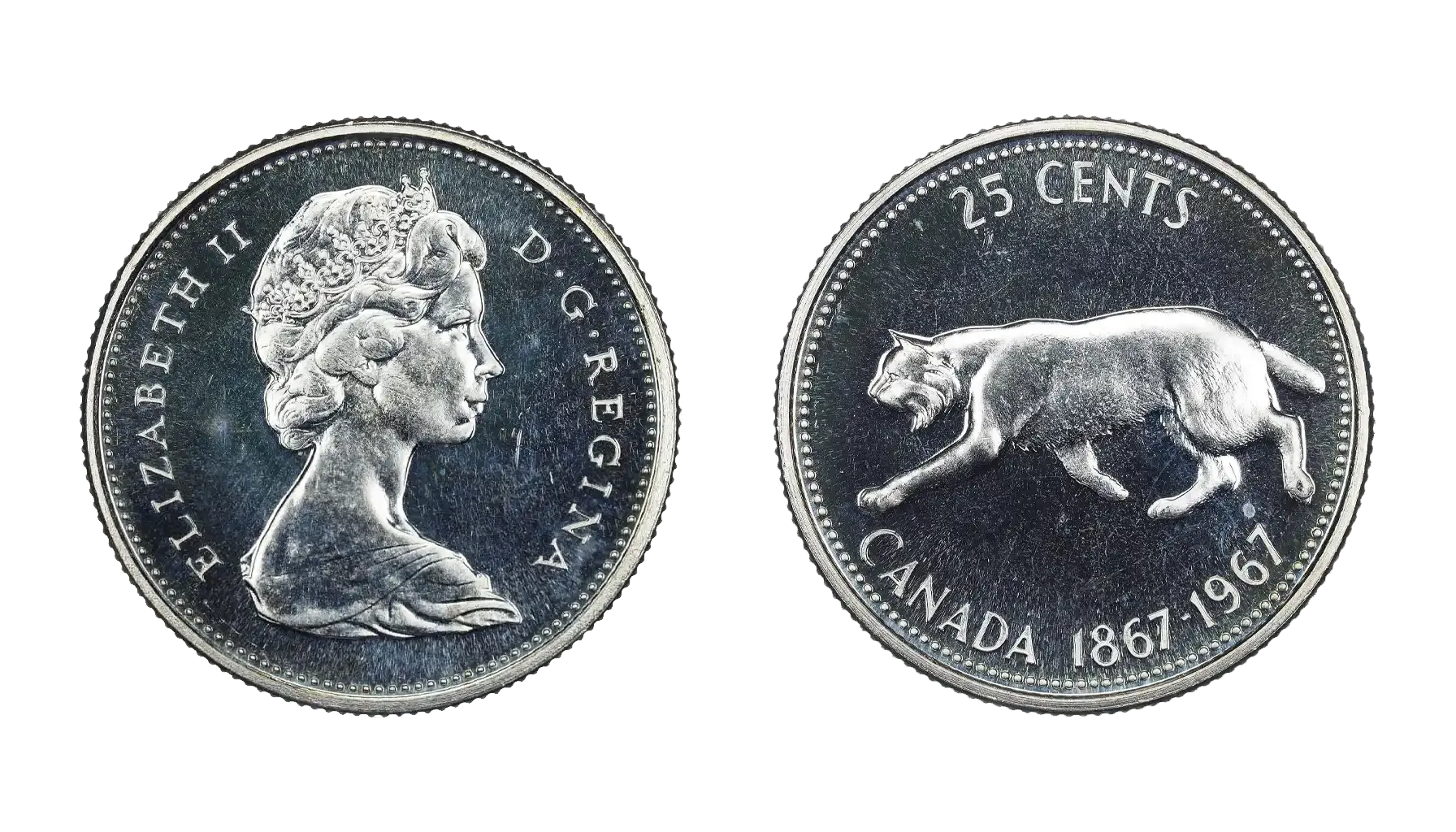
1967 was a transitional year for Canadian currency. The 10-cent and 25-cent items were struck in both 80% and 50% silver as the Mint began phasing out precious metals. The 50-cent and $1 remained 80% silver.
The entire series was designed by the renowned Canadian painter Alex Colville. He chose wildlife themes to represent a whole century of Canada through images that were natural and timeless. His signature minimalist, high-relief style gives these items a sculptural quality that differs from standard currency.
"It is a question of finding images which are worthy and appropriate for use in celebrating our country's Centennial, images which will express not merely some particular time, place, or event, but a whole century of Canada, and even more."
– Alex Colville, designer
The Royal Canadian Mint
The Series History
The Design
In 1964, the Canadian government launched a nationwide competition for new 1867 confederation coin value designs. Surprisingly, the initial round produced no clear winner. The panel of judges then invited five of Canada's most prominent artists to submit concepts.
The Silver Transition
The history of this series is also a history of economic change. In 1967, the price of silver began to rise so sharply that the Royal Canadian Mint had to pivot mid-production:
The 10-cent and 25-cent items were struck in 80% silver for the first half of the year and 50% silver for the second half. The 50-cent and $1 remained 80% silver for the entire year, making them the last true silver circulating items in Canada (production of silver circulation coins ceased in 1968).
Canada Confederation Coin 1867 to 1967 Overview
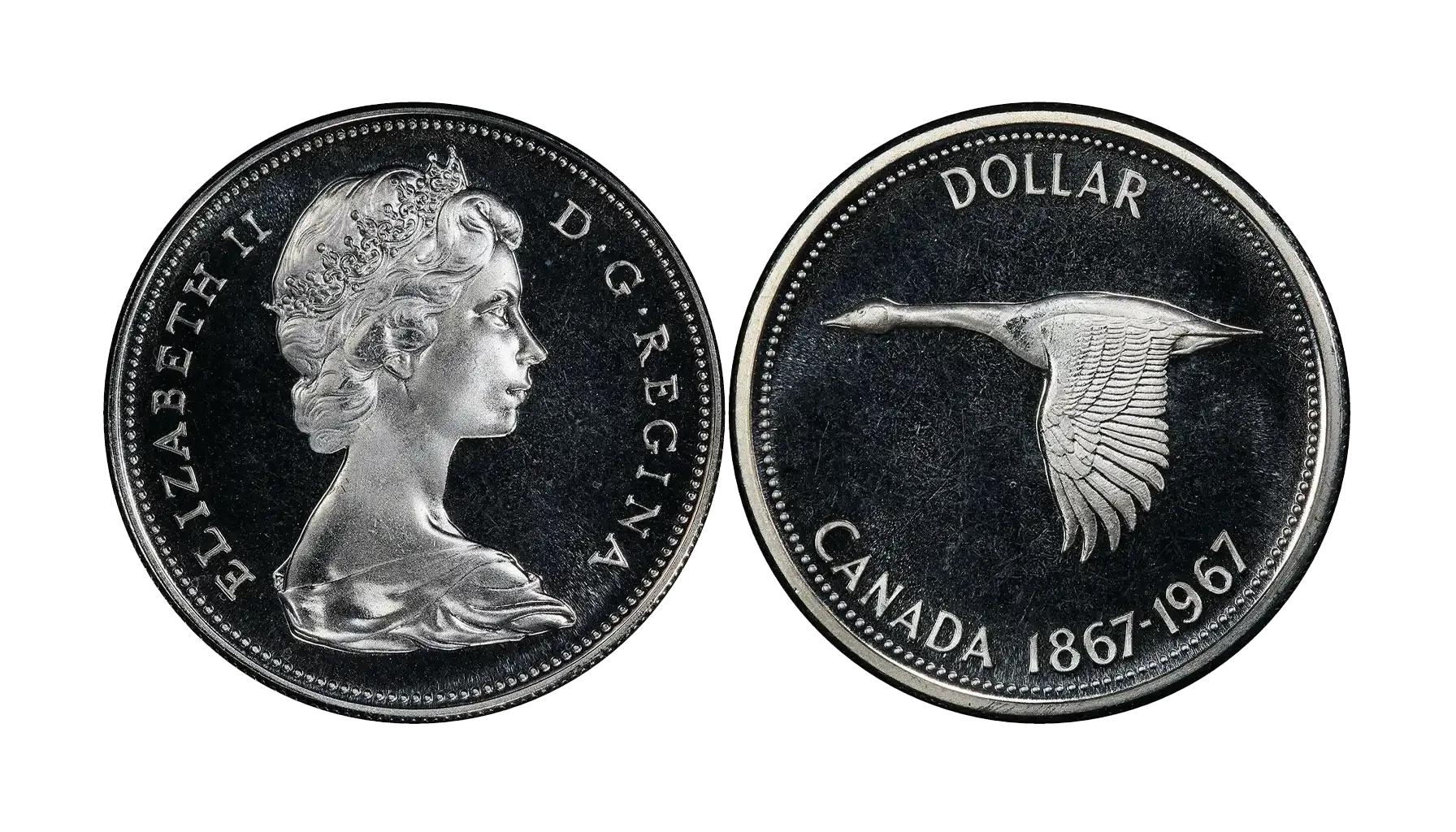
To celebrate the 100th anniversary of Canada's founding, the Royal Canadian Mint replaced all standard 1867 to 1967 Canadian Confederation coin value designs with a special Wildlife series that circulated throughout 1967.
List of the Items
This series includes some items with different images of animals, such as:
1 Cent – Rock Dove, the symbol of spiritual values and peace
5 Cents – Rabbit, the symbol of fertility, and new life
10 Cents – Mackerel, continuity, and maritime resources
25 Cents – Bobcat, resilience, and adaptability
50 Cents – Howling Wolf, the vast, untamed wilderness
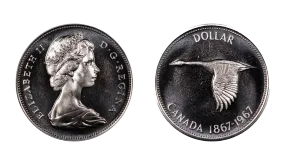
1 Dollar – Canada Goose, freedom, and the interconnectedness of nature
$20 Gold – Coat of Arms, national sovereignty (issued in sets)
Rare Variations
The Diving Goose Dollar: On some $1, the reverse die was rotated, making it look like the goose is diving toward the ground at a 45-degree angle rather than flying level. These ones can be among the top 100 most valuable items and can fetch over $1,000 AUD in high grades.
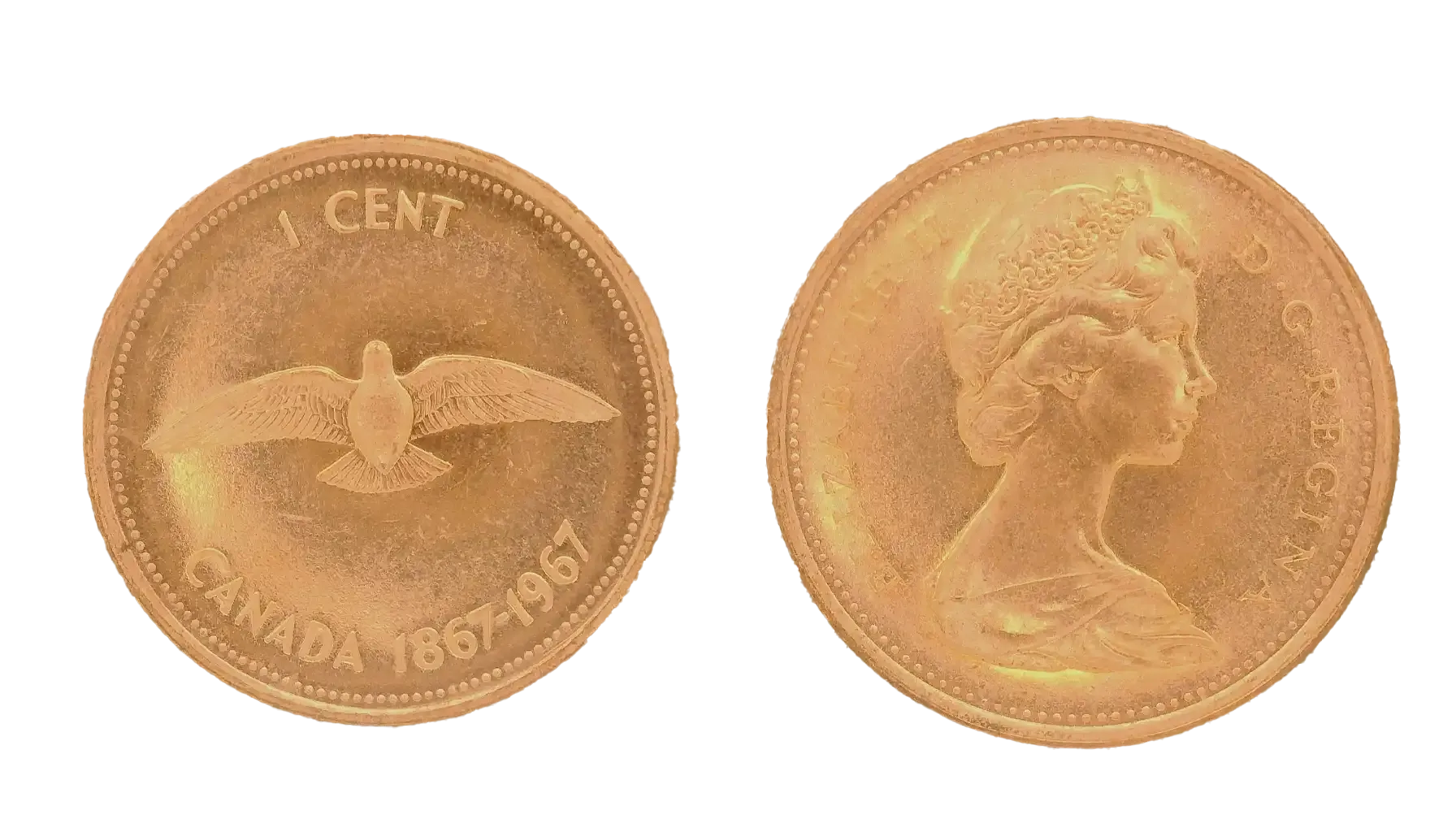
Doubled Die Penny: Some 1-cent 1867 to 1967 confederation coins show clear doubling in the letters or the dates.
$1 Centennial Banknote: While not an item, a matching $1 bill was also issued featuring the Centennial logo and the years 1867–1967.
Note: The Ontario government and private companies issued specific tokens and medals to celebrate the province's role in the 100th anniversary. The 1867 confederation 1967 Ontario coin value starts from $2.
How Much Is a 1867–1967 Confederation Coin Worth Today?
The 1867 confederation 1967 coin value depends primarily on its silver content and condition. While circulated pennies and nickels are worth only a few cents, the silver coins (dimes through dollars) have a significant melt value that keeps their price high even in poor condition.
Denomination | Circulated | Uncirculated |
1 Cent | $0.05–$0.15 | $1.00–$5.00 |
5 Cents | $0.10–$0.50 | $1.50–$10.00 |
10 Cents | $3.50–$5.00 | $6.00–$15.00+ |
25 Cents | $8.50–$12.00 | $20.00–$35.00+ |
50 Cents | $28.00–$35.00 | $45.00–$75.00+ |
$1.00 | $55.00–$75.00 | $90.00–$150.00+ |
If you are buying a lot of junk silver, always carry a magnet with you. In 1968, Canada switched to pure nickel. If a 1968 coin sticks to your magnet, it has zero silver. While all 1967 coins are silver (except the penny/nickel), some people try to pass off 1968 nickel coins as silver – the magnet is your fastest defense.
Collectors Tips
Besides the basic things on the Canada Confederation coin 1867 to 1967 value, like:
Certificate availability
Excellent condition
Preservation of packaging
There are several things that you should do to keep your collectibles in excellent condition. Firstly, it is storage and toning.
The Rainbow Effect: Items stored in original cardboard or leatherette holders often develop beautiful blue, purple, or gold rainbow toning. Collectors often pay a 20%–50% premium for items with attractive, natural toning.
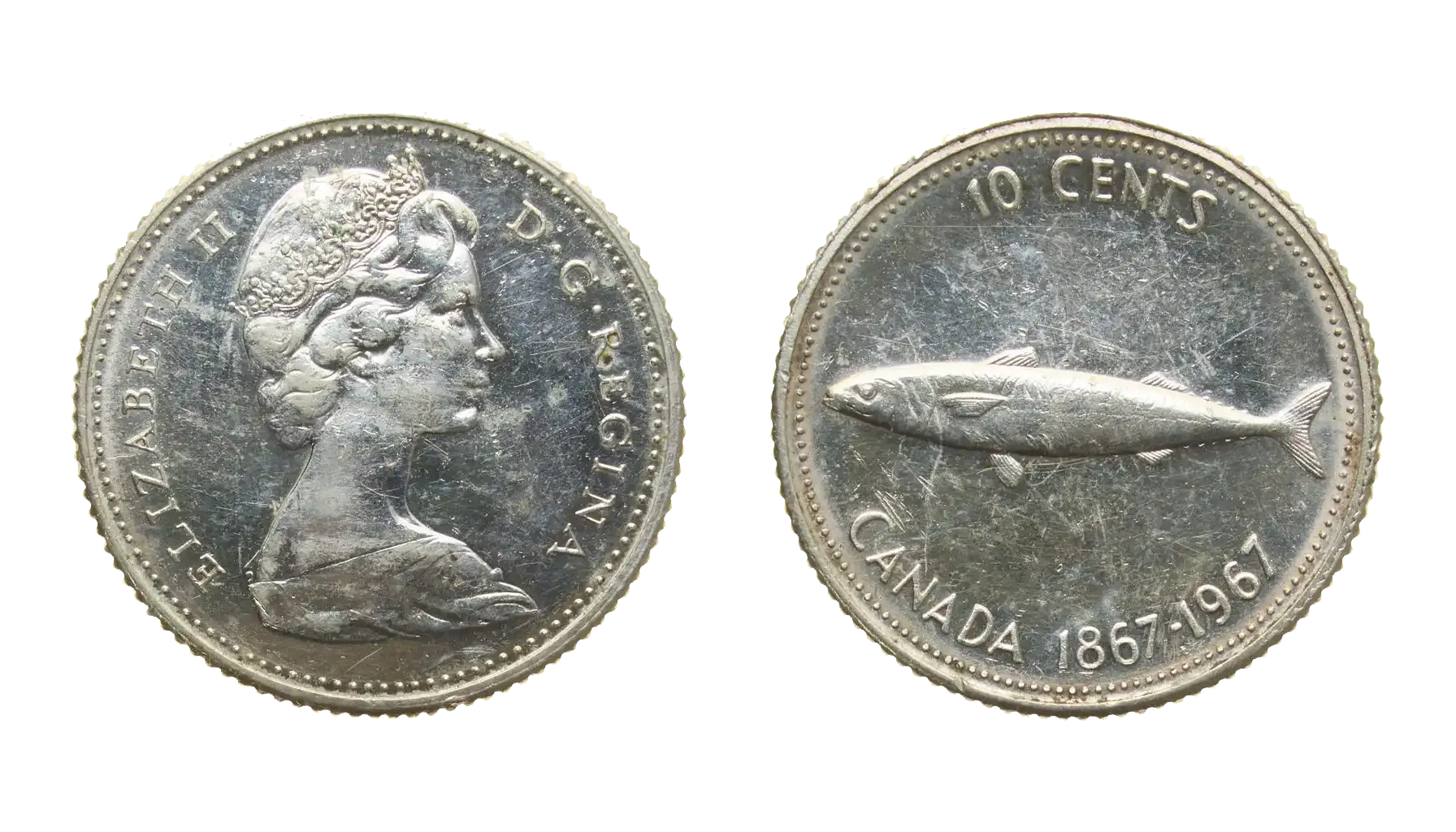
Avoid PVC: If you move your items to flips, ensure they are PVC-free. PVC can cause defects that permanently corrode the silver.
Handling: Always handle these items by the edges only. The oils from your fingertips can leave permanent, dark fingerprint stains on the high-silver surfaces.

 Facebook
  X (Twitter)
  Pinterest
  LinkedIn