Contents:
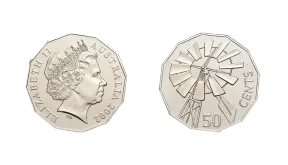
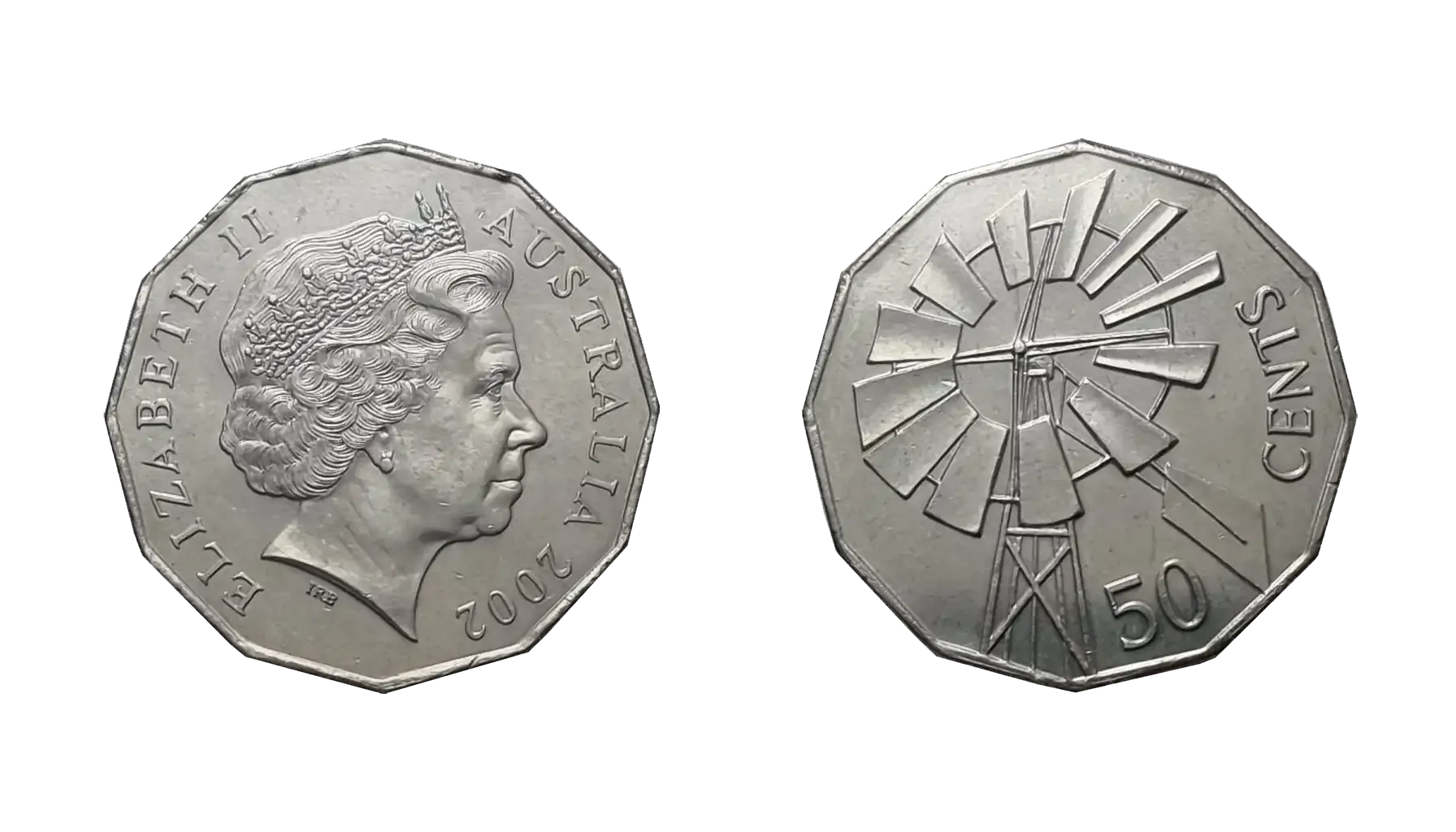
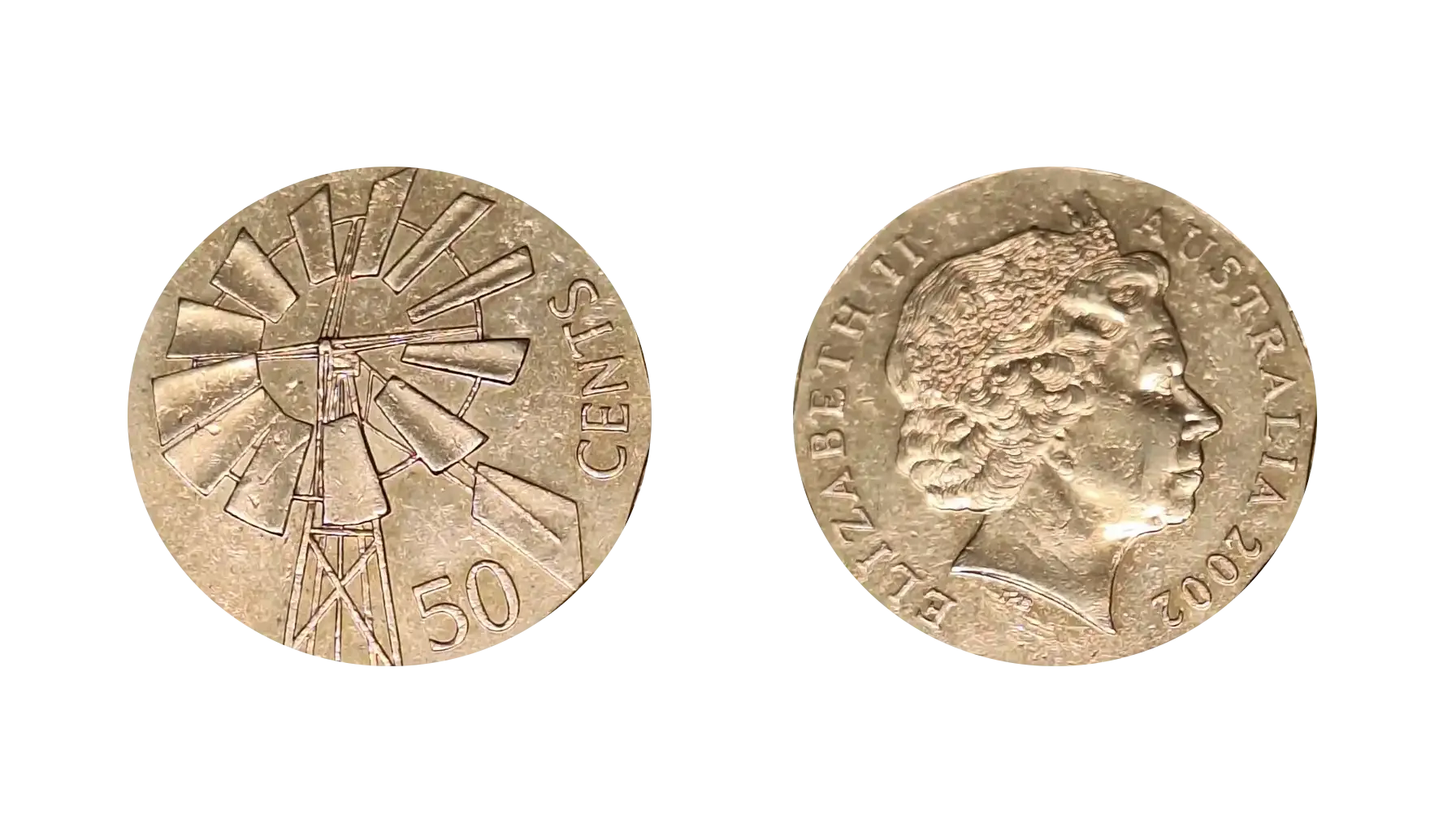
In 2002, the Royal Australian Mint released a truly original one featuring a windmill. The purpose of the design is to embody the country's connections with its interior regions. Since then, the 2002 50 cent coin error has attracted the attention of the numismatic community.
For more insights, use the coin identifier app free download right now.
What Is the 2002 Windmill 50 Cent Coin?
Commemorative Series: Year of the Outback
Reverse Designer – Wojciech Pietranik
Obverse Designer – Ian Rank-Broadley
A windmill design – symbol of perseverance and water preservation across the continent.
Diameter | 31.51 mm |
Weight | 15.55 g |
Thickness | 3 mm |
Composition | Copper–nickel |
Edge | Plain |
Shape | 12-sided |
Years of Minting | 1969–present |
The Royal Australian Mint in Canberra produced more than 11 million circulation docecagonal strikes, with 39,000 proof examples in special collector sets. These windmill structures represent human ingenuity triumphing over environmental adversity, a fitting metaphor for outback settlement and survival.
“Pietranik’s design captures the isolation and utility of the Southern Cross windmill—a machine that turned the arid inland into habitable country. It is a quintessential Australian icon on a dodecagonal canvas.”
– Greg McDonald, writer
Pocket Guide to Australian Coins and Banknotes
Australian Fifty-Cent Item History
The history of the Australian fifty-cent piece is a classic tale of an item that was too successful for its own good. It has evolved from a round silver treasure into the heavy, 12-sided classic of the Australian economy.
Two periods of the item highlight nowadays:
1966 Round Silver
From 1969, 12-sided
Decimal currency came in 1966. At that time, the 50‑cent coin had a circular shape. The composition was 80 % silver. Shortly after release, the price of silver skyrocketed. The metal in the item became worth significantly more than 50 cents.
The public began hoarding them, and the Royal Australian Mint (RAM) stopped production in 1968. They are still legal tender today, though you’d be better off selling one for its silver value (often $10–$15+).
To prevent hoarding and make the item easily distinguishable from the 20-cent piece, the RAM reintroduced the 50-cent piece in 1969 with a 12-sided (dodecagonal) shape and a cupro-nickel composition (25% nickel).
It remains the largest and heaviest Australian item in circulation. Because of its large surface area, it has become the Mint’s favorite billboard for commemorative designs.
2002 50 Cent Coin Value (Circulated vs Uncirculated)
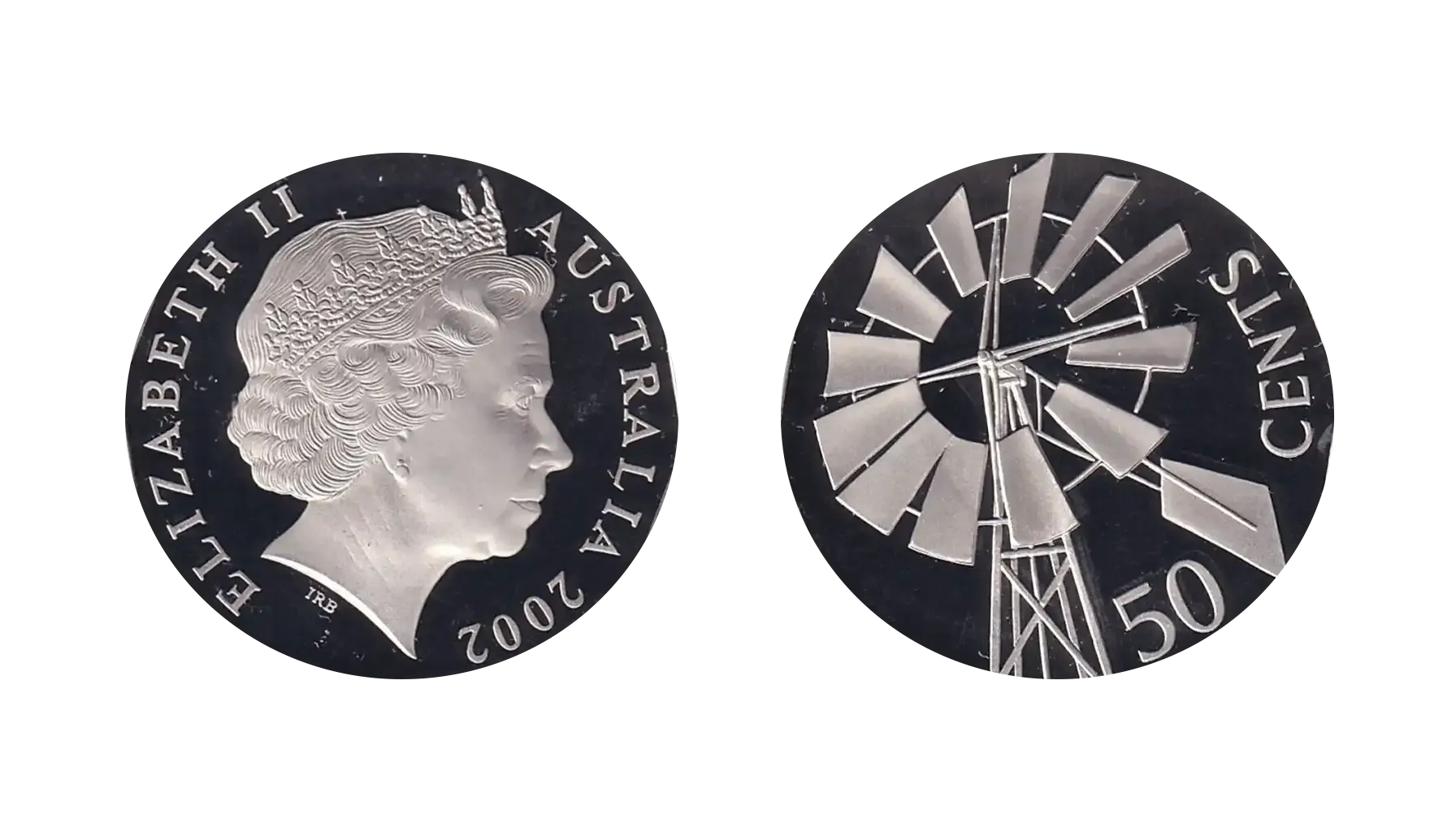
Prices for standard 2002 fifty‑cent pieces show notable differences. These variations are directly linked to two factors: the physical condition of the item and its overall presentation.
Circulated Examples
Fifty‑cent pieces that remain in general circulation typically sell for a modest premium over face value. Items with moderate wear often achieve prices of one to two Australian dollars above their nominal worth.
Uncirculated
Some fifty‑cent pieces achieve higher prices than others. The highest 2002 Windmill 50 cent coin values go to those that retain their original mint luster and have no handling marks.
Item Value Comparison Table
The highest quality examples of this issue are the proof versions. Special dies and specially prepared planchets were used to strike them. The Mint created almost 40,000 of these proof strikes for collector sets. Their surfaces show mirror‑like fields, and their devices have a frosted appearance.
Condition | Value |
Circulated | $0.50–$3.00 |
Extremely Fine | $3.00–$7.00 |
Uncirculated | $10.00–$25.00 |
Proof | $45.00–$80.00+ |
The 2002 Proof Set
It contains six denominations: the 5c, 10c, 20c, 50c (Windmill), $1 color commemorative (do not confuse with $1 note), and the rare $2.
While the Windmill 50-cent item is a highlight, the set is actually anchored by a specially designed $1 item. In the Proof version, this $1 features a pad-printed color Year of the Outback logo, making it stand out significantly from the standard circulating version.
The Royal Australian Mint fully embraced the Outback theme for this release. The set comes in a clear plastic case. This case is placed inside a fold‑out presentation wallet.
The wallet features photographs of the Australian bush and rustic landscapes. An outer cardboard sleeve matches the wallet and provides additional protection for the entire package.
Rare 2002 50 Cent Errors to Look For
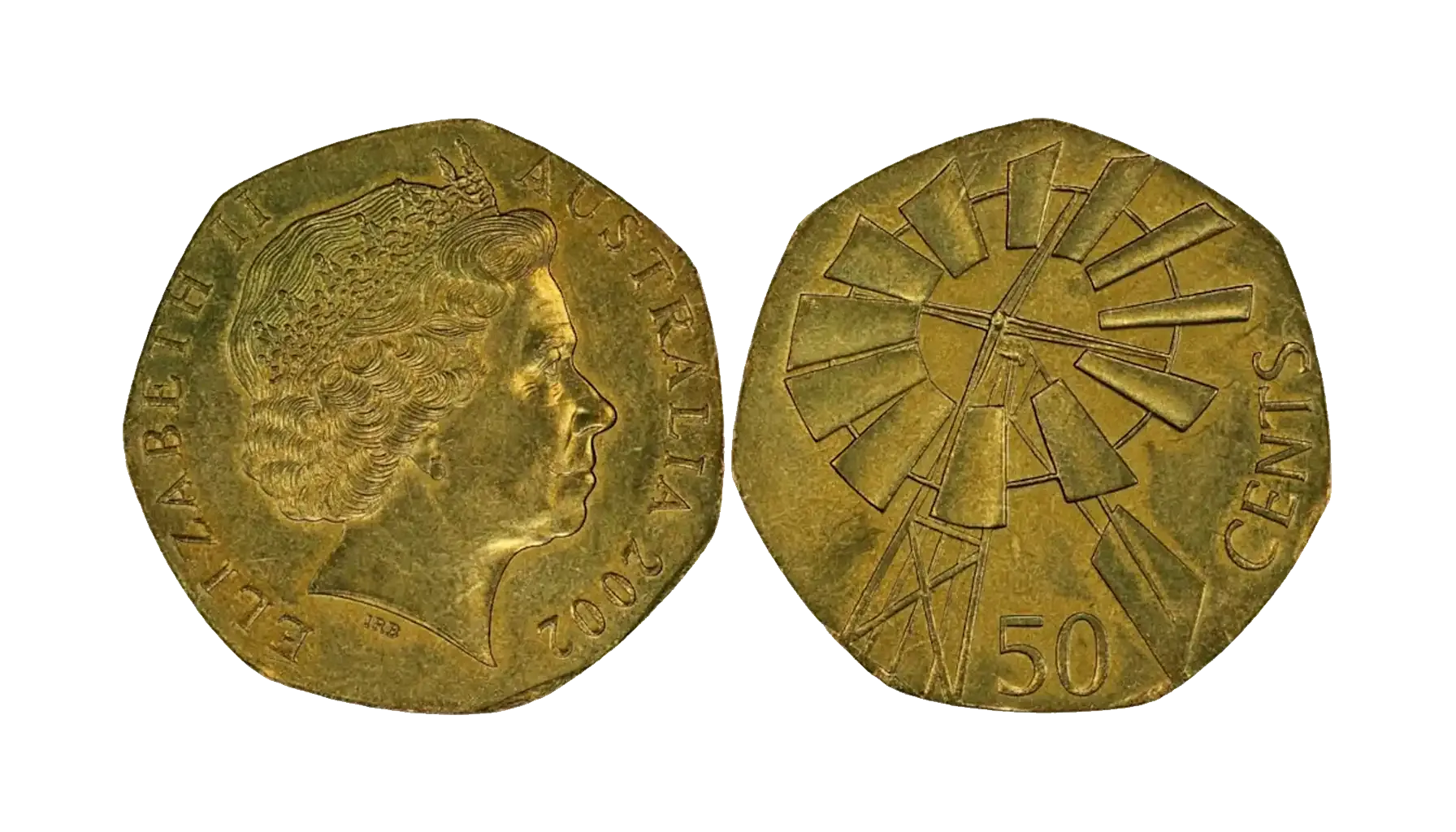
Before the list, you should look at the Australian 50-cent item value chart. Because the Royal Australian Mint (RAM) was producing millions of these, small mistakes in the minting process created some hidden gems.
The Samoan Planchet
This is the unique 2002 50 cent coin Windmill error. A small number of these items were accidentally struck on blank planchets intended for the Samoan 1 Tala item. The coin will be slightly smaller than a standard 50-cent piece, as the Samoan planchet is circular rather than 12-sided. It also has a different weight and metal composition.
Over $3,000 AUD at auction
Die Cracks & Cuds
As the metal dies used to strike the items wear out, they develop cracks. If a piece of the die actually breaks off, it leaves a raised blob of metal on the item called a Cud.
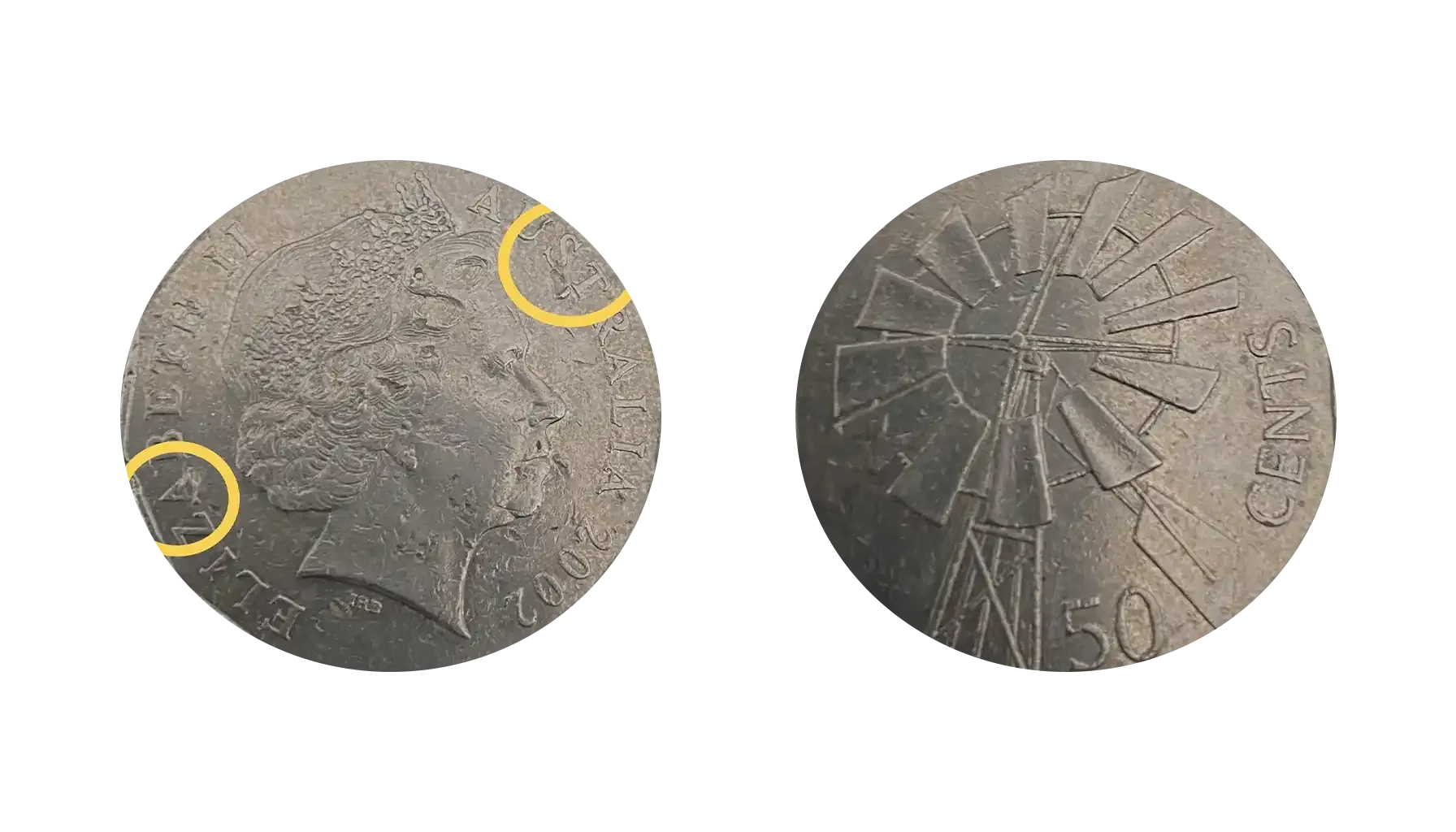
Look for raised lines (die cracks) running through the windmill blades or around the Queen’s crown. A cud often appears as a smooth, raised lump of metal along the rim or over part of the lettering.
Minor cracks add $5–$10, but a large one is worth $50–$100+
Double Rim
This happens when the coin isn't sitting perfectly in the collar when it is struck. One side of the item will look like it has a lip or an extra-thick rim, while the other side might look slightly tilted or thin. It gives the item a misaligned appearance.
$20–$150
Split or Cracked Edges
Rarely, the pressure of the strike causes the metal to split or crack along the edge of the item, specifically on the flat sides of the 12-sided shape. Check the smooth edge for deep vertical splits that occurred during the minting process.
$30–$60
How Much Is a 2002 50 Cent Coin Worth Today?
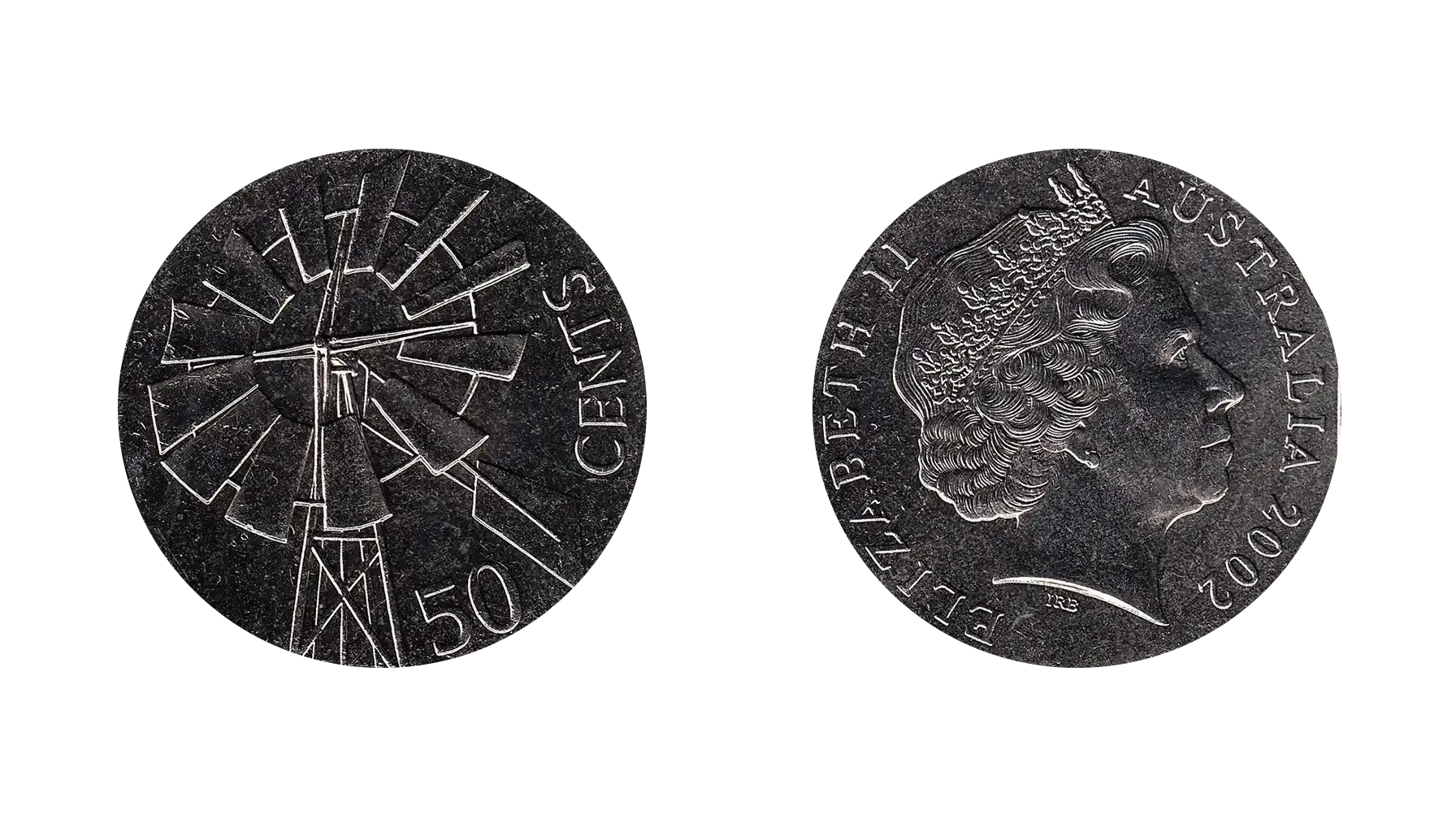
Standard examples of the 2002 50‑cent coin in typical circulated grades are still easy to obtain. These items frequently appear in everyday pocket change. Numismatists can also acquire them from dealers. The price usually exceeds fifty cents by only a small amount.
Of course, price mobility depends on several factors:
Proof Status
NGC or PCGS certificate
A single one or a set of several items
Errors High-Price Summary
If the suspected error appears as a raised feature, it is probably a mint error. If the feature is sunken instead, it typically indicates post‑mint damage that occurred during circulation.
Error Type | Price |
The Samoan Planchet | $3,000+ |
Die Cracks & Cuds | $5–$100+ |
Double Rim | $20–$150 |
Split or Cracked Edges | $30–$60 |
Online Platforms
For numismatists of various levels, there are online communities for buying and selling these valuable items. Below are some good and relevant options for 2026.
eBay Australia: The most active market. You can find carded circulated examples for $3.00–$6.00. Sellers often offer deals on common commemoratives like this.
Facebook Collector Groups: Groups like Australian Coin Sellers & Collectors often have members selling bulk lots or individual coins at slightly lower prices than eBay because there are no seller fees.
Downies Collectables: A major Australian dealer. They often stock the 2002 50c in Strictly Uncirculated condition for around $24.00–$30.00.
Wynyard Coin Centre (M.R. Roberts): A highly reputable Sydney-based dealer. They are great for finding the more expensive 2002 Proof Sets ($120+) or silver versions.
Note: On these platforms, you can find rare Australian Kookaburra silver items too.

 Facebook
  X (Twitter)
  Pinterest
  LinkedIn