Contents:
The Jefferson Nickel series began in 1938 and remains one of the longest-running designs in U.S. history. It was issued for everyday circulation. Most dates are common, with collector interest focused on condition, strike quality, and varieties such as Full Steps rather than age or metal content.
Today, we are going to tell you more about the 1988 issue. Is a 1988 nickel worth anything? And how can we replace the Coin Snap app free of charge with something more reliable?
1988 Jefferson Nickel Overview
Coins dated 1988 were struck in large numbers at the Philadelphia, Denver, and San Francisco mints. As a result, the date itself is common. Collector interest is driven almost entirely by condition, strike quality, reverse detail, and 1988 nickel errors rather than scarcity.
Year | 1988 |
Series | Jefferson Nickel |
Composition | 75 % Cu, 25 % Ni → 1988 copper nickel |
Weight | 5.00 g |
Diameter | 21.21 mm |
Thickness | ~1.95 mm |
Edge | Plain |
Identifying the 1988 Jefferson Nickel
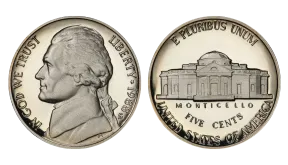
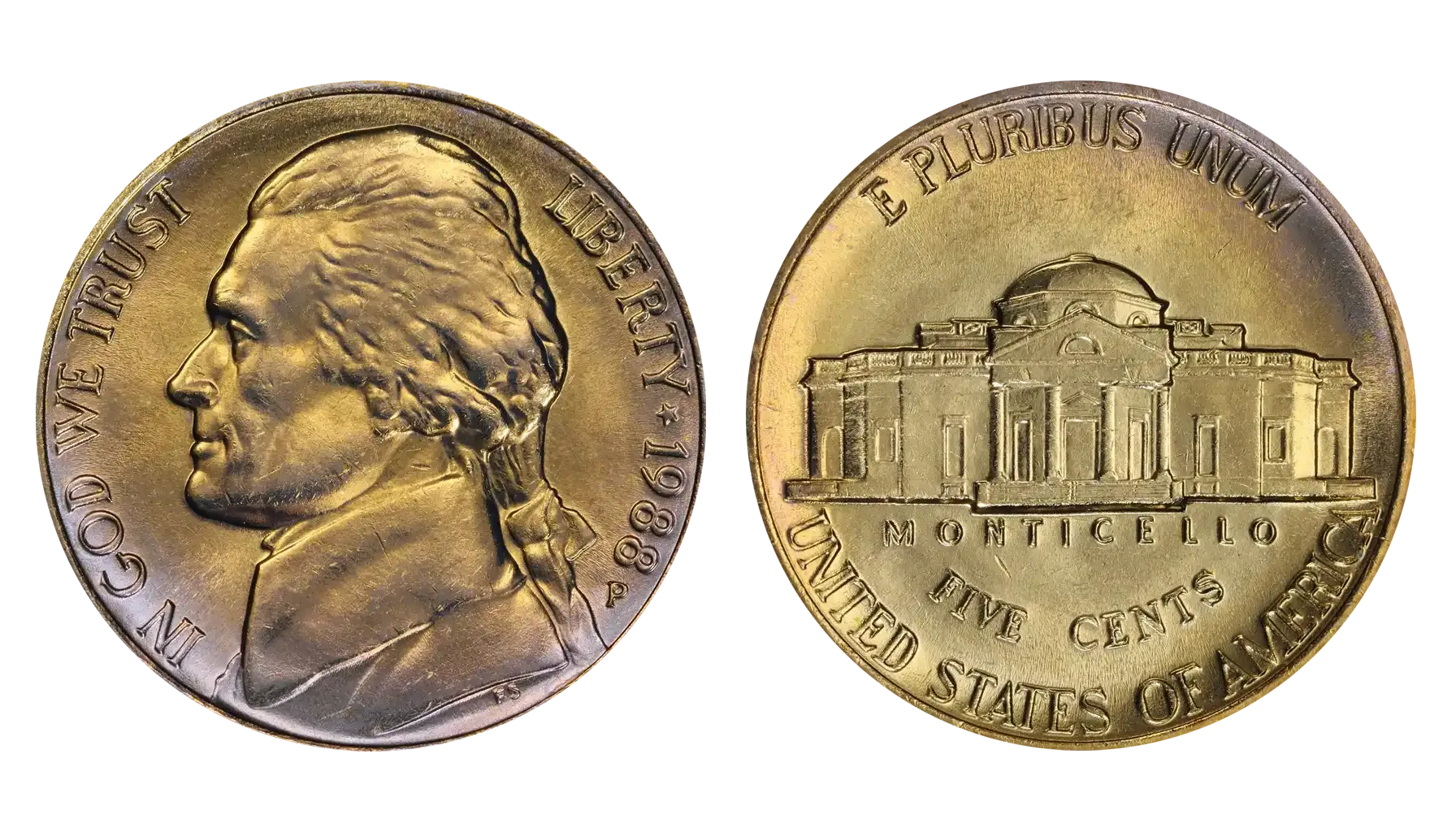
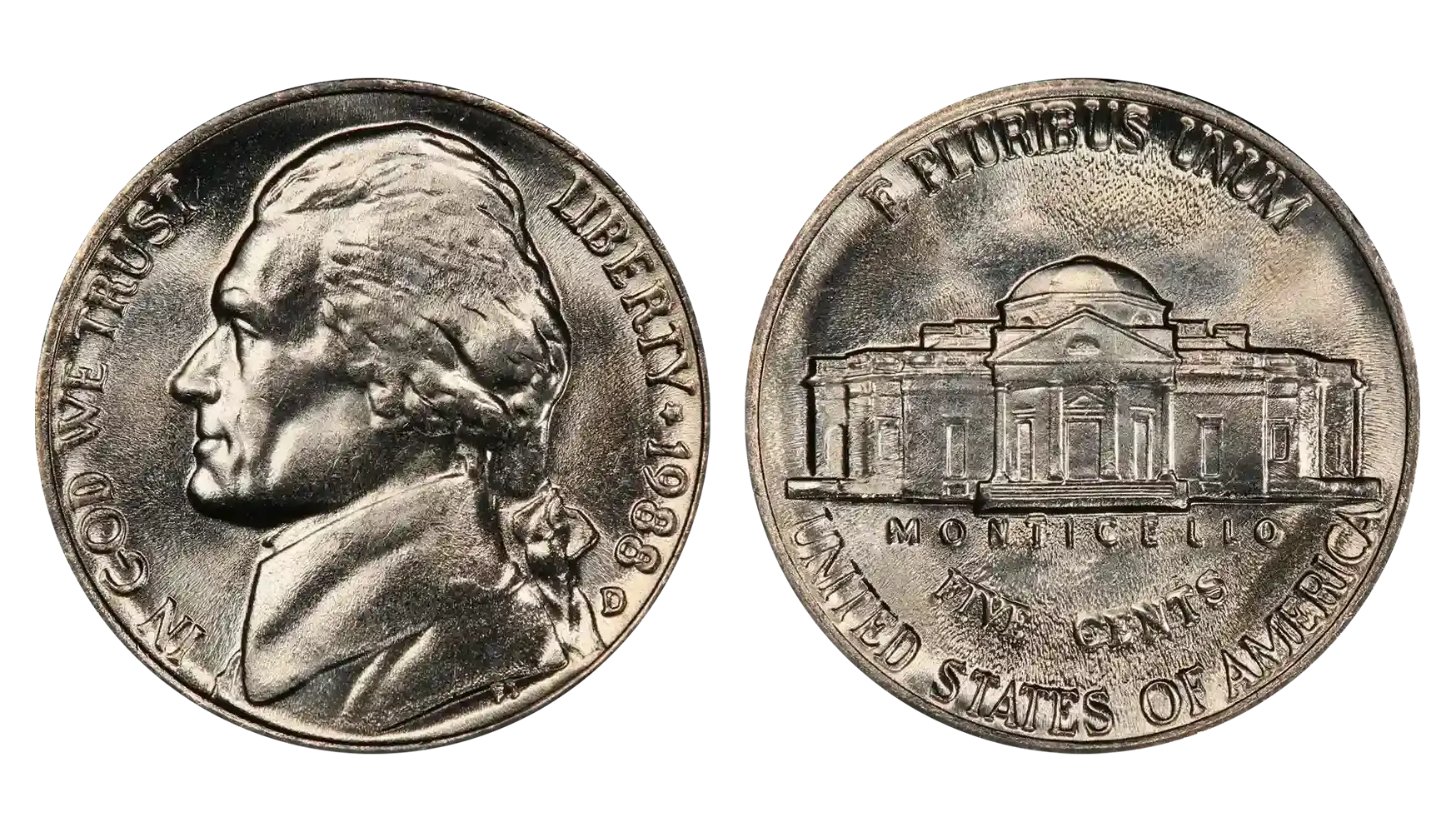
The obverse shows Thomas Jefferson facing left. LIBERTY and the date 1988 appear to the right of the portrait, with a small mint mark placed just behind Jefferson’s ponytail. The reverse features Monticello, with FIVE CENTS and UNITED STATES OF AMERICA surrounding the building.
Specifications are standard for modern nickels: plain edge, approximately 21.21 mm in diameter, and a target weight of 5.0 grams. Coins that fall noticeably outside these measurements are usually damaged rather than misstruck.
A photo check with Coin ID Scanner can quickly confirm the year, mint mark, and basic specifications before closer inspection.
After you realize which coin you have, try to check the 1988 nickel error list. Who knows, you may have a rare find.
Mint Marks and Varieties: P and D
1988 Nickel P (Philadelphia)
Philadelphia struck the majority of 5-cent coins this year. Many examples show weak reverse detail, especially on Monticello’s steps. Sharply struck pieces, as well as the 1988 P nickel error list, exist but are less common.
1988 Nickel D (Denver)
Denver issues generally display stronger strikes and cleaner reverse detail. For collectors searching for high-grade coins, Denver pieces offer better odds. If you have found a strange-looking specimen, start with the 1988 D nickel error list with pictures to understand whether you might have something more valuable than a standard piece.
Other Varieties
There are no widely accepted major doubled-die varieties for 1988. The main collectible distinction is the Full Steps designation, which requires fully separated and uninterrupted steps beneath Monticello.
“Full Steps (FS) is the designation following the numerical grade of some regular-strike MS60 or higher Jefferson nickels that have at least five separated steps (lines) at the base of Monticello. Any major disturbance or interruption of these steps or lines, whether caused by contact, planchet problems, or another source, will result in the coin's not being designated FS.”
— Mike Sherman, numismatist
PCGS
Design Features and Copper Content
The coin follows the original Jefferson–Monticello design used for decades. The portrait is restrained and formal, while the reverse emphasizes Monticello’s structure. On most circulation strikes, finer architectural details appear soft due to die wear and strike pressure typical of the period.
The coin is composed of 75% Cu and 25% Ni. It contains no silver. This alloy produces a light gray color and holds up well in circulation, which is why many examples survive with moderate wear rather than heavy corrosion.
1988 Jefferson Nickel Value by Condition and Mint
Grade | 1988 P Nickel Value | 1988 D Nickel Value |
G–VF | Face value | Face value |
EF40–45 | $0.10–$0.25 | $0.10–$0.25 |
AU50–58 | $0.25–$0.75 | $0.25–$0.75 |
MS60–62 | $0.75–$1.50 | $0.75–$1.50 |
MS63 | $2–$4 | $2–$4 |
MS64 | $6–$12 | $8–$15 |
MS65 | $15–$30 | $20–$40 |
MS65 Full Steps | $300–$700 | $500–$1,200+ |
Circulated examples are worth face value. Premiums begin only in higher Mint State grades. Coins certified with Full Steps account for the highest prices, with Denver issues leading the market. Moreover, the 1988 P nickel error value (D as well) is higher too.
The 1988-S Jefferson Nickel was struck at the San Francisco Mint exclusively as a Proof coin for collectors. Because of high proof mintages and steady availability, the 1988 nickel value with an S mint mark is modest. Most examples sell for $2–$6 in Proof grades (PR65–PR69).
Common Errors and Collector Tips for 1988 Nickels
Errors
Errors from 1988 are usually minor and condition-dependent:
Off-center strikes with part of the design missing
Broadstrikes caused by collar issues
Clipped planchets showing curved or straight clips
Small die chips or die cracks near lettering or Monticello
How much is a 1988 nickel worth in these cases? Most carry limited value unless the error is visible and the coin is well preserved.
Tips
Ignore heavily worn coins; they rarely exceed face value.
Inspect Monticello’s steps under magnification.
Favor Denver, especially the 1988 D nickel error value, when searching for sharp strikes.
Avoid cleaned or polished pieces, even in higher grades.

 Facebook
  X (Twitter)
  Pinterest
  LinkedIn