Contents:
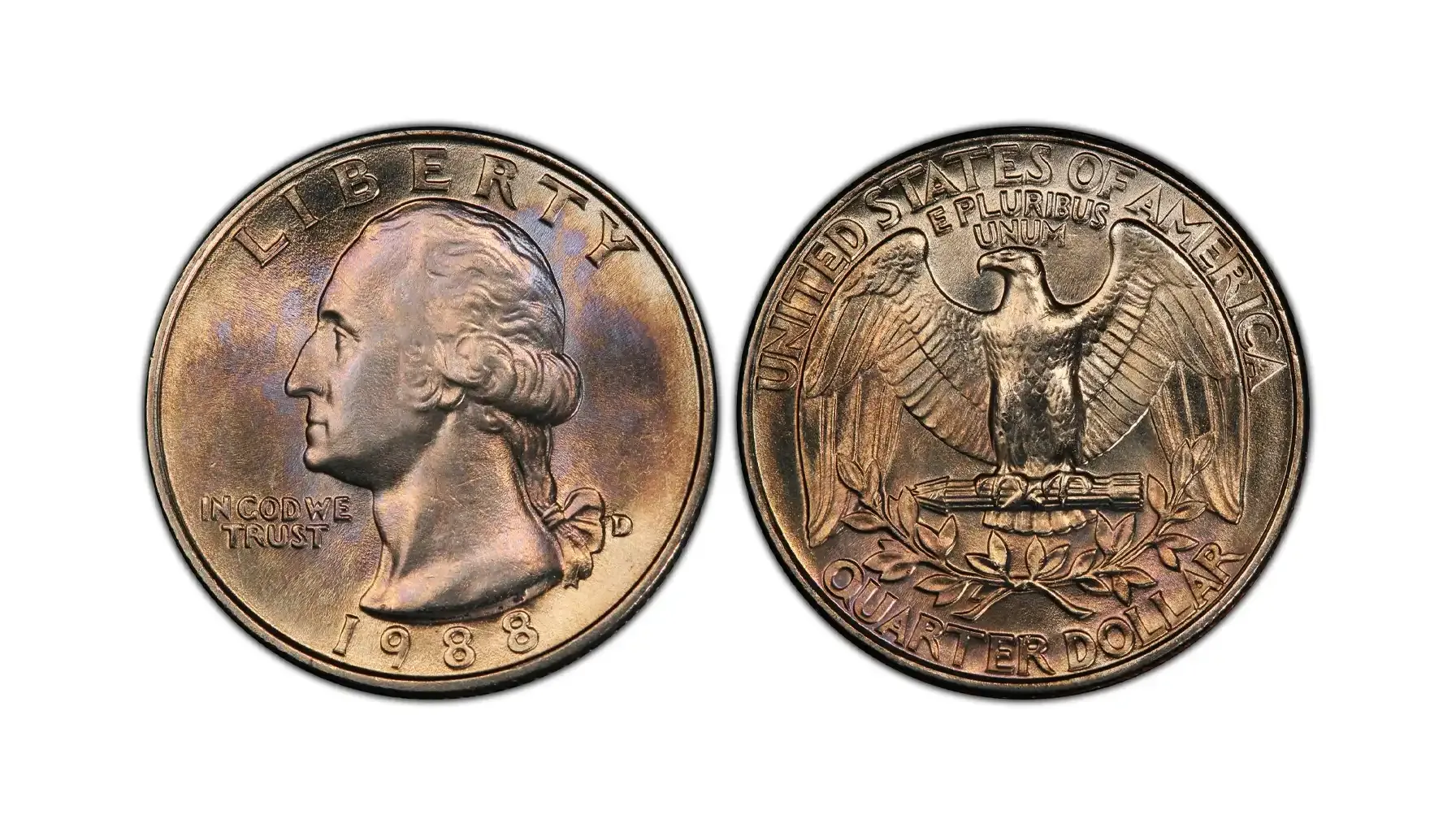
The 1988 quarter is part of the long-running Washington quarter series, first issued in 1932 to honor the 200th anniversary of George Washington’s birth. By 1988, these coins were copper-nickel clad and struck in huge numbers for everyday use, so most have only face value unless in exceptional condition or with notable errors.
So, how much is a 1988 quarter worth? What are errors that can influence the value? And how can you identify the coins fast and easily?
Specification | Detail |
Denomination | 25 Cents |
Year | 1988 |
Mints | Philadelphia (P), Denver (D), San Francisco (S) |
Designer | John Flanagan |
Composition | Copper-nickel clad (outer layers: 75% copper, 25% nickel; core: pure copper) = 1988 Copper quarter |
Weight | 5.67 g |
Diameter | 24.3 mm |
Thickness | 1.75 mm |
Edge | Reeded |
Obverse Design | Portrait of George Washington |
Reverse Design | Heraldic eagle with outstretched wings |
Historical Context
By 1988, the U.S. Mint was still producing the traditional heraldic eagle reverse design by John Flanagan. The State Quarters program would not begin until 1999, so the 1988 issue is considered part of the “pre-Statehood” clad quarters.
This year saw coins minted at three facilities:
Philadelphia (1988 quarter P)
Denver (1988 quarter D)
San Francisco (1988 quarter S)
“P” Mint Mark Explained
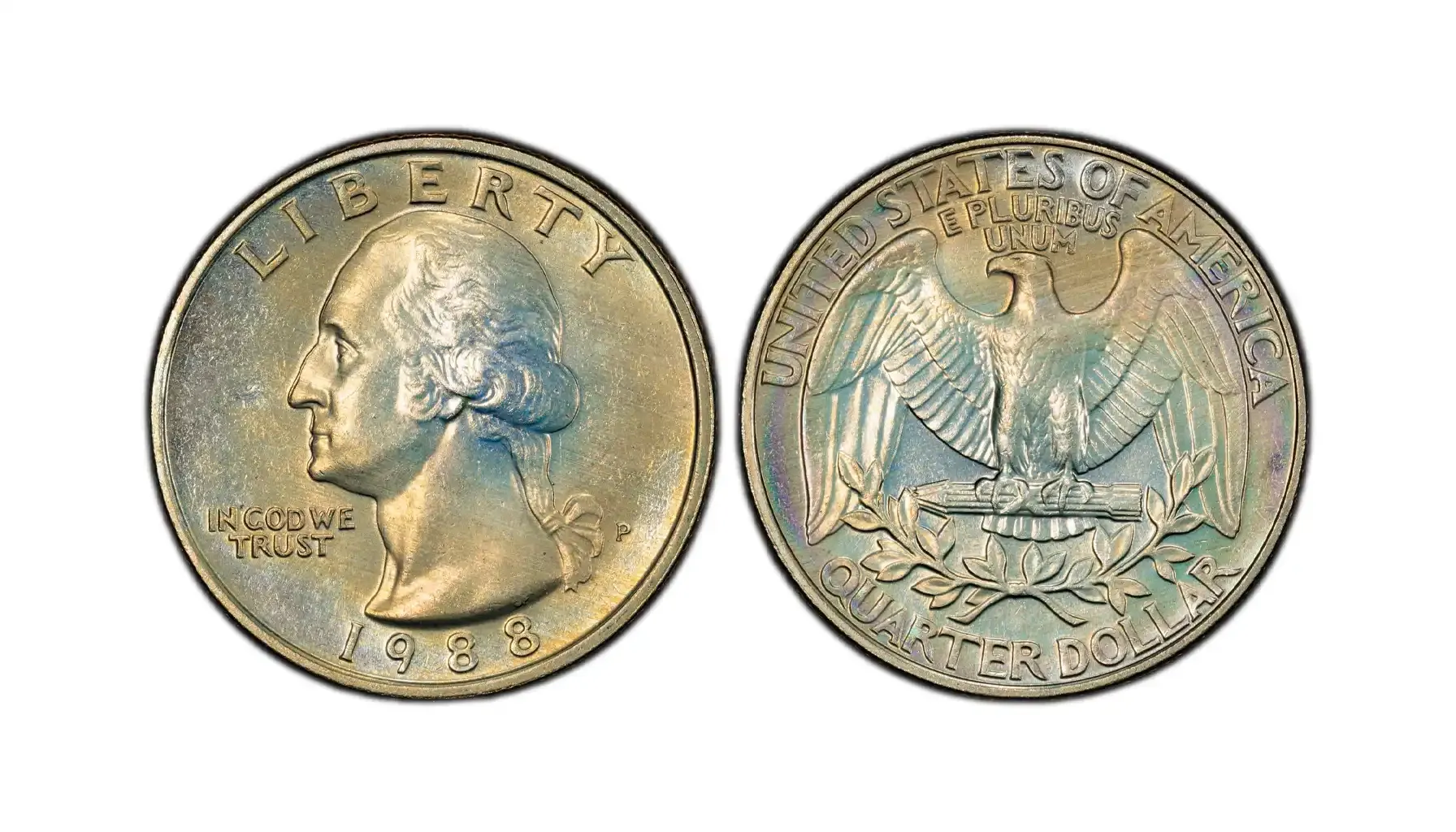
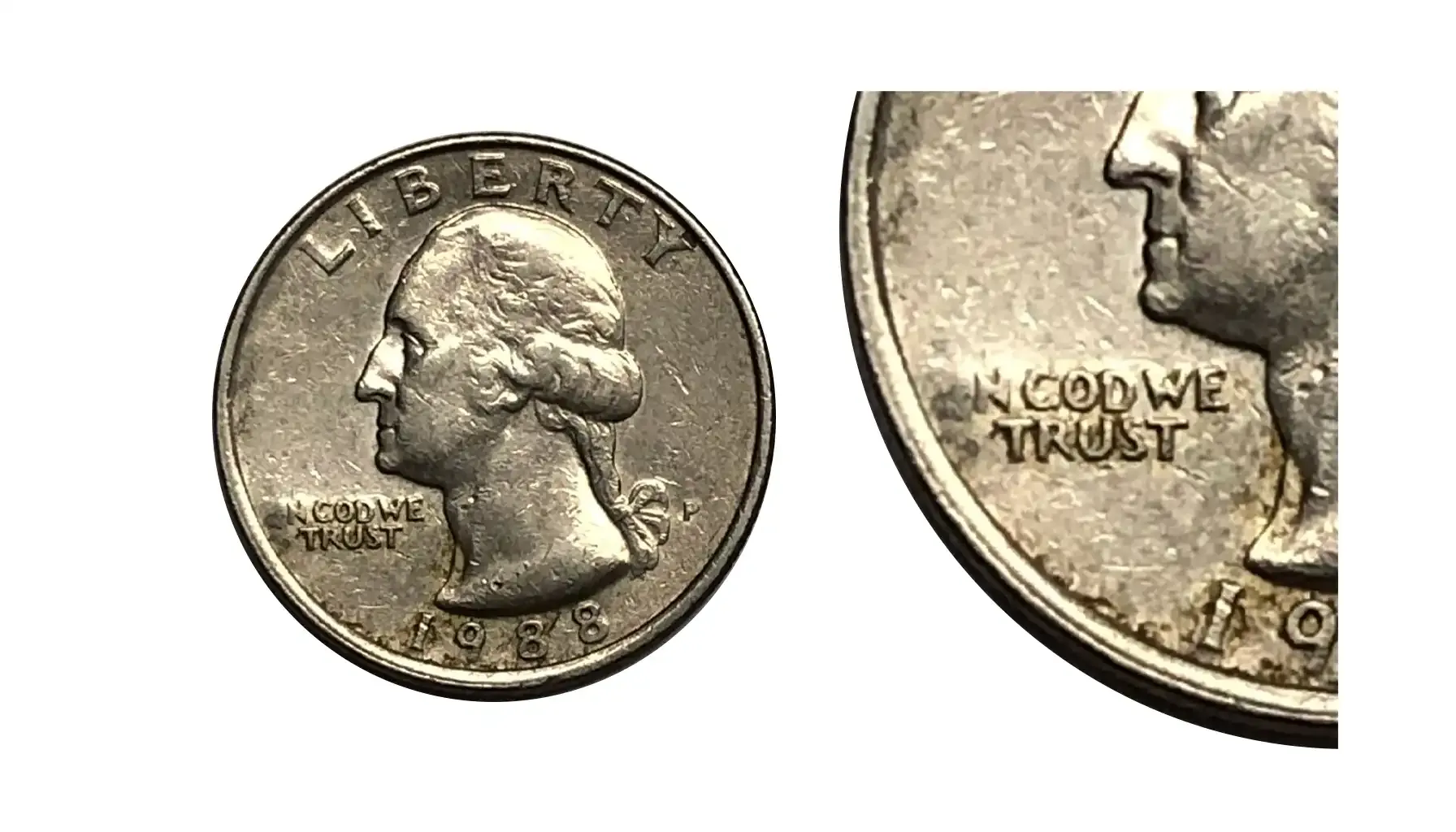
Every circulation-strike quarter made at the Philadelphia Mint in 1988 carries a small “P” mint mark on the obverse (front) of the coin.
The “P” is placed just to the right of Washington’s ponytail ribbon and above the date “1988.”
By 1988, the U.S. Mint had already been adding the “P” to Philadelphia quarters for eight years (since 1980) to distinguish them from Denver (“D”) and San Francisco proof (“S”) issues.
Philadelphia struck 562,052,000 quarters in 1988. The “P” mint mark version was common in circulation.
In general, the 1988 quarter value P mint mark is equal to only face value unless in MS67+ condition or with a notable mint error.
Is there a 1988 quarter no mint mark?
Yes — but only in a specific sense.
For 1988, all quarters struck for circulation at the Philadelphia Mint carried the “P” mint mark. There were no intentionally produced Philadelphia quarters without a mint mark that year.
If you find a 1988 quarter with no mint mark, it’s almost certainly because:
Mint mark wear: Heavy circulation or damage has worn the “P” off.
Filled die error: A rare minting flaw where grease or debris clogged the mint mark area, making it appear blank. Is a 1988 quarter worth anything in this case? This can be collectible.
So unlike coins from earlier years (e.g., 1968 Philadelphia quarters) where no mint mark was normal, a missing mint mark on a 1988 quarter would be considered an error.
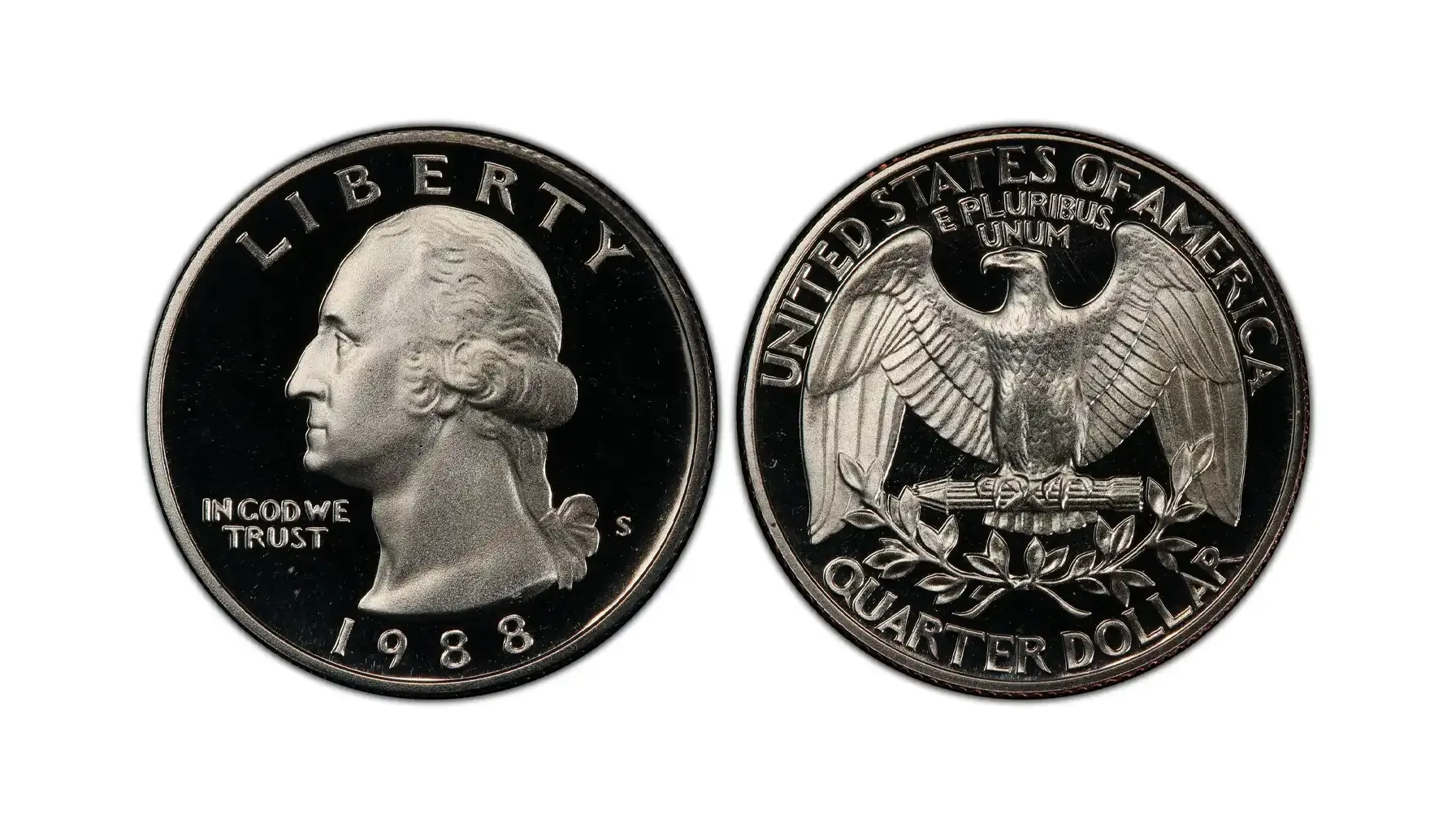
1988 Washington Quarter Value
Type | Grade | Estimated Value (USD) |
1988 P quarter value | Circulated (G–XF) | $0.25 – $0.35 |
About Uncirculated (AU) | $0.35 – $0.50 | |
MS60–MS63 | $1.00 – $4.00 | |
MS64 | $5.00 – $8.00 | |
MS65 | $10.00 – $18.00 | |
MS66 | $25.00 – $45.00 | |
MS67 | $40.00 – $75.00+ | |
MS68 (rare) | $500.00 – $1,000.00+ | |
1988 D quarter value | Circulated (G–XF) | $0.25 – $0.35 |
About Uncirculated (AU) | $0.35 – $0.50 | |
MS60–MS63 | $1.00 – $4.00 | |
MS64 | $5.00 – $8.00 | |
MS65 | $10.00 – $18.00 | |
MS66 | $25.00 – $45.00 | |
MS67 | $35.00 – $70.00+ | |
MS68 (rare) | $400.00 – $800.00+ | |
1988 S quarter value | PR60–PR64 | $1.50 – $3.00 |
PR65 | $3.00 – $5.00 | |
PR66–PR67 | $5.00 – $7.00 | |
PR68 | $8.00 – $12.00 | |
PR69 DCAM | $15.00 – $25.00+ |
1988 Quarter Error List with Pictures
1. Broadstrike Error
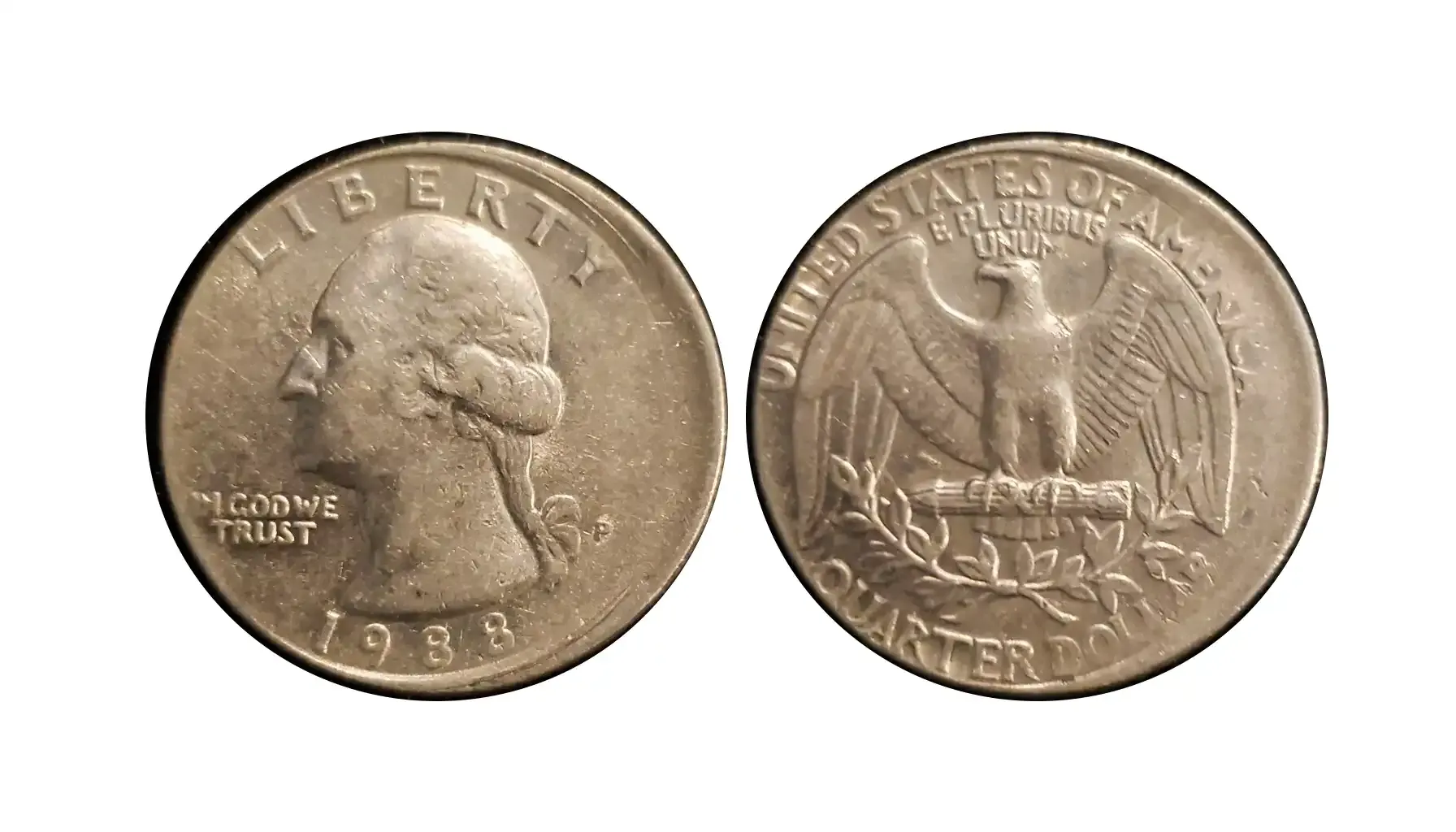
Occurs when the quarter is struck without the retaining collar in place. The collar is the metal ring that keeps the planchet (coin blank) in position and forms the reeded edge. Without it, the metal flows outward freely during striking.
Diameter is wider than the standard 24.3 mm
The edge is completely smooth (no reeding)
Design elements near the rim may appear stretched or thinner
Weight remains the same (~5.67 g), so it’s still within tolerance
Causes: Collar failure, incorrect collar placement, or mechanical malfunction during striking.
Value for this 1988 error quarter: $20 – $100+
2. Off-Center Strike
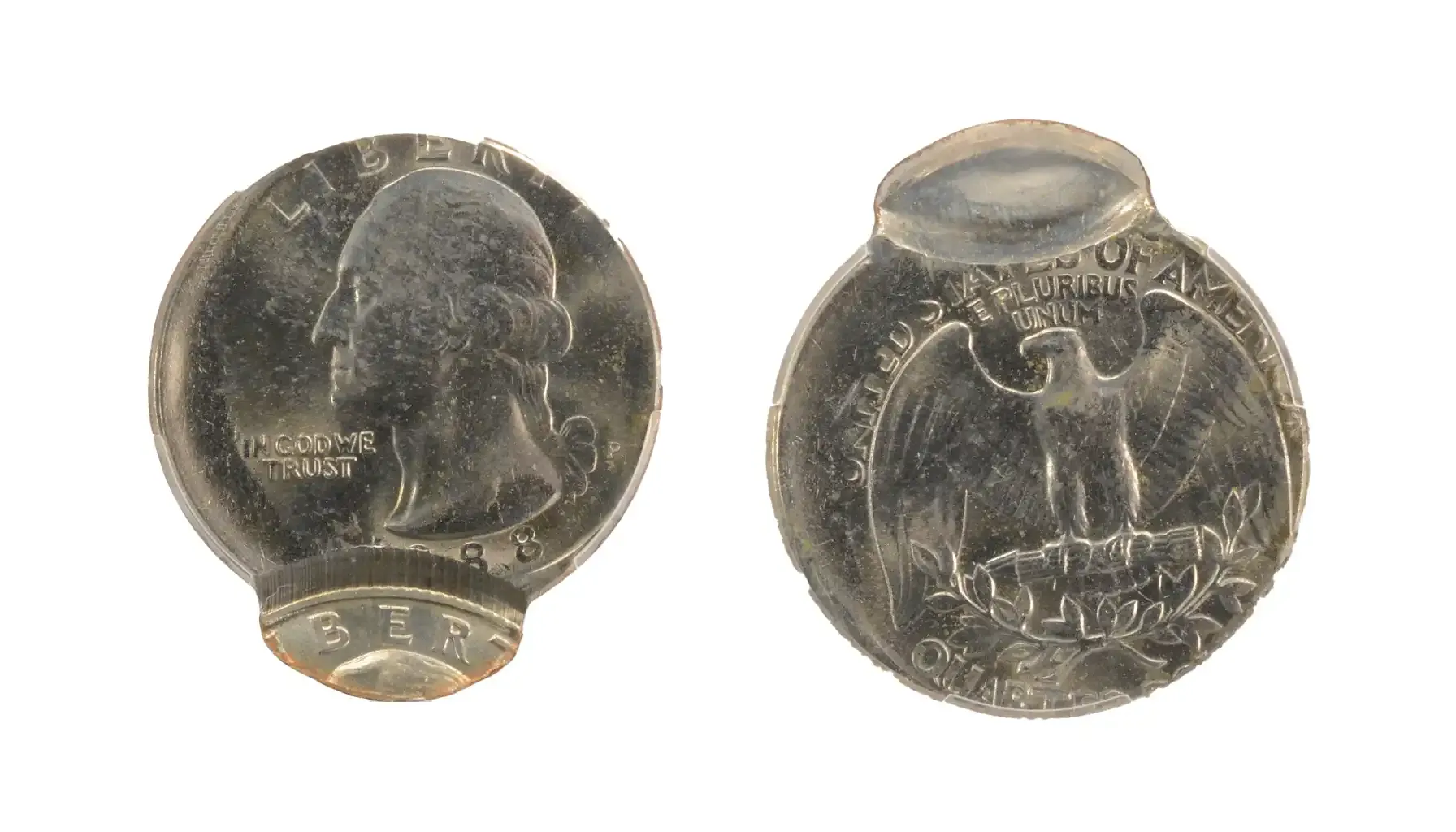
Happens when the planchet is misaligned with the dies before striking, so the impression is shifted to one side.
Blank crescent-shaped area where no design was struck
Remaining design is shifted away from center
If the date is still visible, the coin is worth more
Off-centers can be single-sided or occur on both obverse and reverse
Causes: Planchet not seated properly in the striking chamber.
Value:
5–10% off-center: $25 – $50+
20–40% off-center with full date: $60 – $120+
50%+ with full date: $150 – $300+
3. Missing Clad Layer
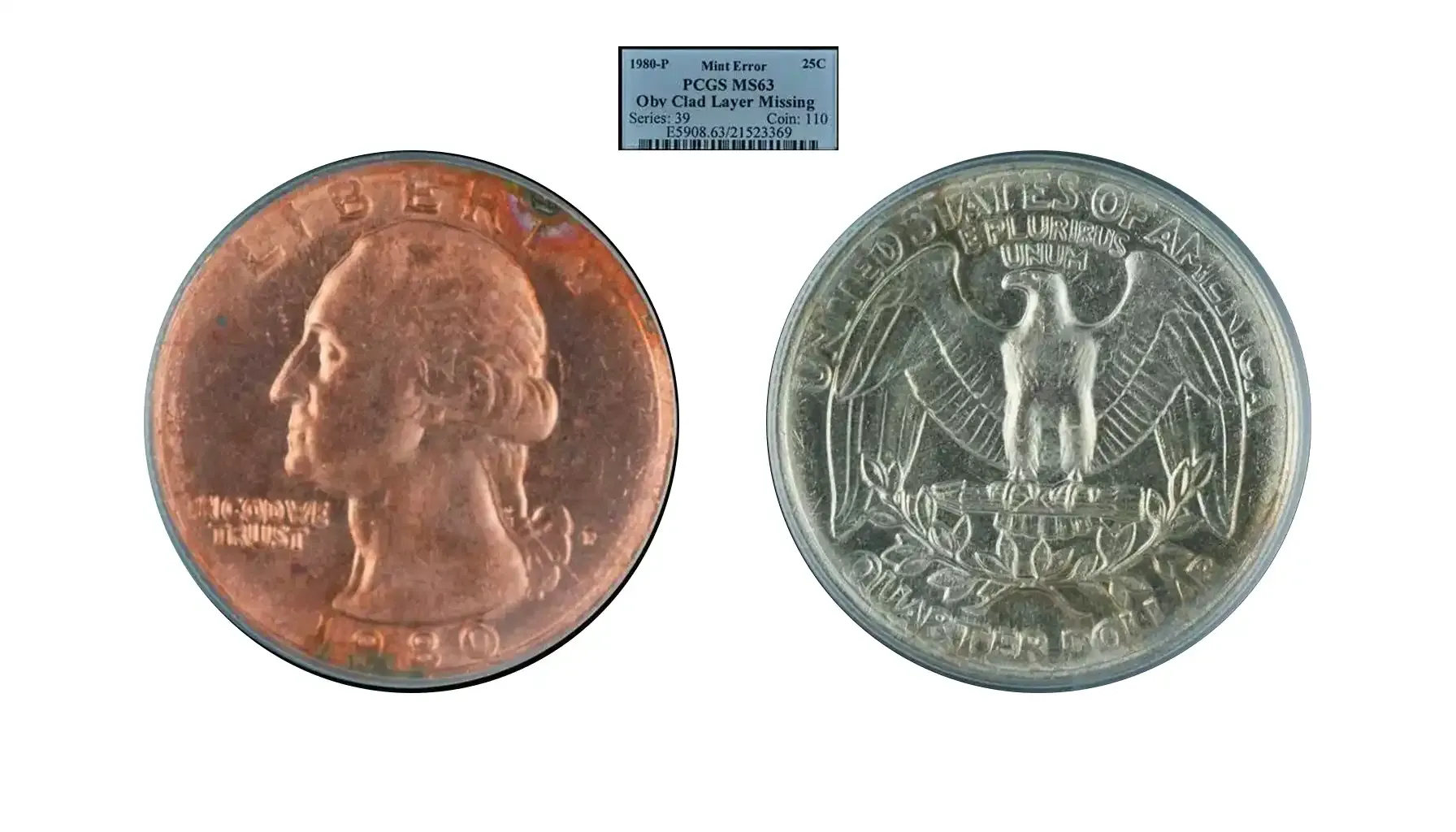
A quarter is made of a pure copper core sandwiched between two cupronickel layers. In this error, one clad layer fails to bond to the copper core before striking.
One side shows the normal silvery cupronickel color
The other side appears reddish-brown from exposed copper
Weight is slightly lower than standard (usually 4.7–5.2 g)
Can be full side missing or partial missing layer (split look)
Causes: Bonding failure in the metal sheet before blanking, or the layer peeling off during the striking process.
Value:
Full side missing: $100 – $250+
Partial missing layer (25–50% area): $80 – $150+
Extreme and high-grade examples: $300+
4. Smooth Edge (Missing Reeding) Error
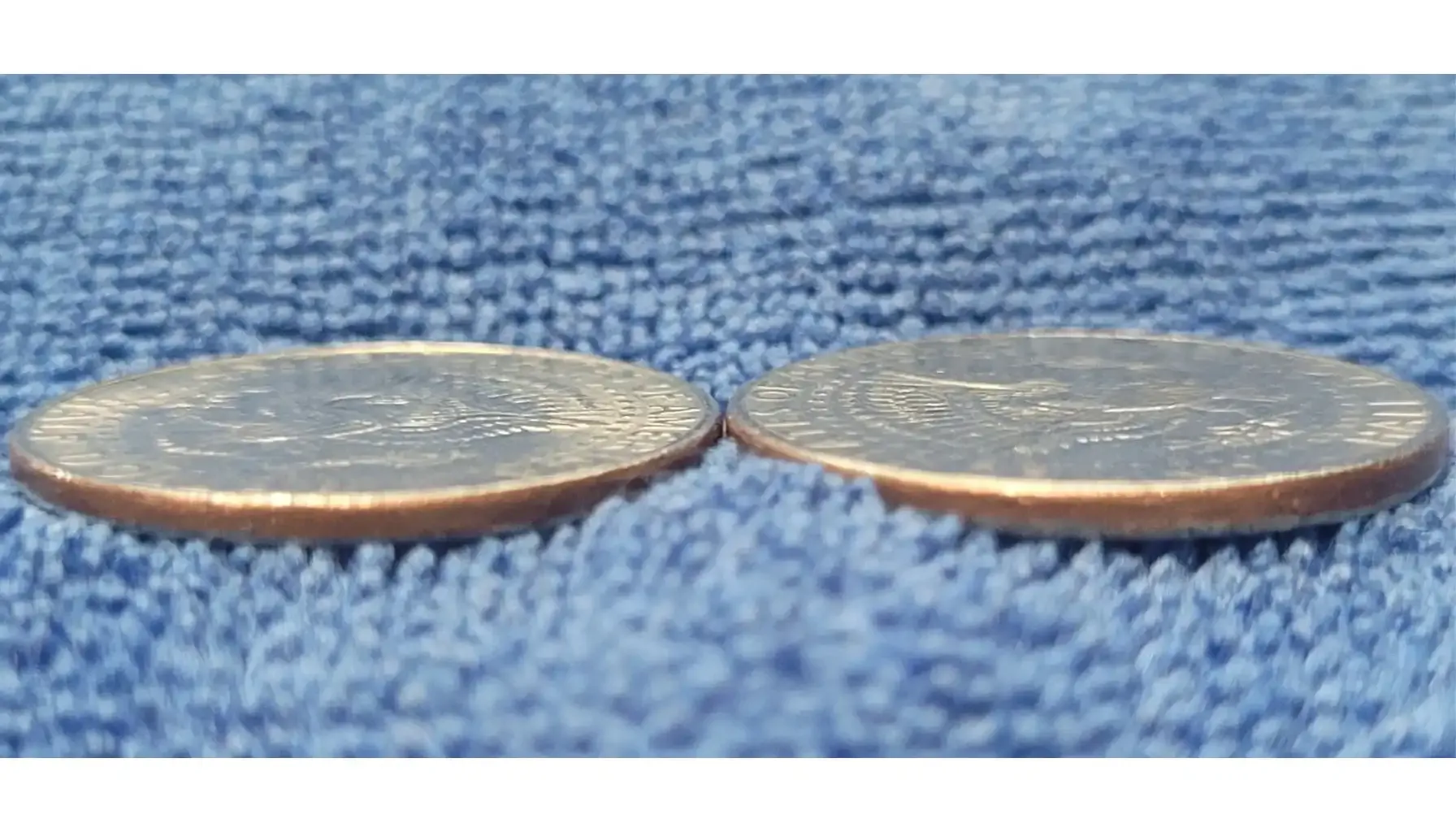
A normal quarter has a finely reeded edge created by the collar during striking. If the collar is smooth, damaged, or absent, the coin will come out with a smooth edge.
Edge is completely smooth, like on a nickel
Diameter may be slightly larger than normal
Weight usually remains correct
Some coins may also show faint or partial reeding
Causes: Collar malfunction, overuse of equipment, incorrect die setup.
Value:
Smooth edge only: $15 – $30+
Smooth edge plus other striking errors: $50 – $120+
Important!
Many coins with “odd” appearances are actually post-mint damage (PMD), not true 1988 quarter errors. For example:
A ground-down edge can mimic missing reeding
A chemical reaction can change metal color, imitating a missing clad layer
Off-center looks can be faked by pressing a coin in a vice
How to Protect Yourself: Compare weight and diameter to official specs, check for matching error patterns on both sides. For valuable finds, submit to a grading service like NGC or PCGS.
Disclaimer: All coin values listed are approximate retail estimates based on recent market trends, public auction results and dealer listings. Actual prices may vary depending on a coin’s exact grade, eye appeal, luster, strike quality and current demand. Rare varieties and 1988 P quarter errors (as well as other mint marks) may command higher prices, while coins with damage or cleaning may sell for less than the ranges shown. For an accurate appraisal, consider having your coin professionally graded by a third-party grading service such as PCGS or NGC.
Identification
Spotting a 1988 Washington quarter starts with the date itself — “1988” tucked beneath Washington’s chin, a timestamp in metal. Shift your gaze slightly right and you’ll find the mint mark, a “P” from Philadelphia (1988 P Washington quarter), a “D” from Denver, or an “S” of San Francisco proofs.
Flip the coin and the reverse shows you with a heraldic eagle, wings spread wide, talons gripping arrows and olive branches. In your hand, the coin should feel precise: copper-nickel skin over a pure copper heart, 5.67 grams of weight, 24.3 millimeters from rim to rim, its edge a tight series of reeds unless an error has smoothed them away.
If you have a specimen with oddities, try to compare it with a 1988 D quarter error list with pictures. If you can’t understand it, there are other solutions.
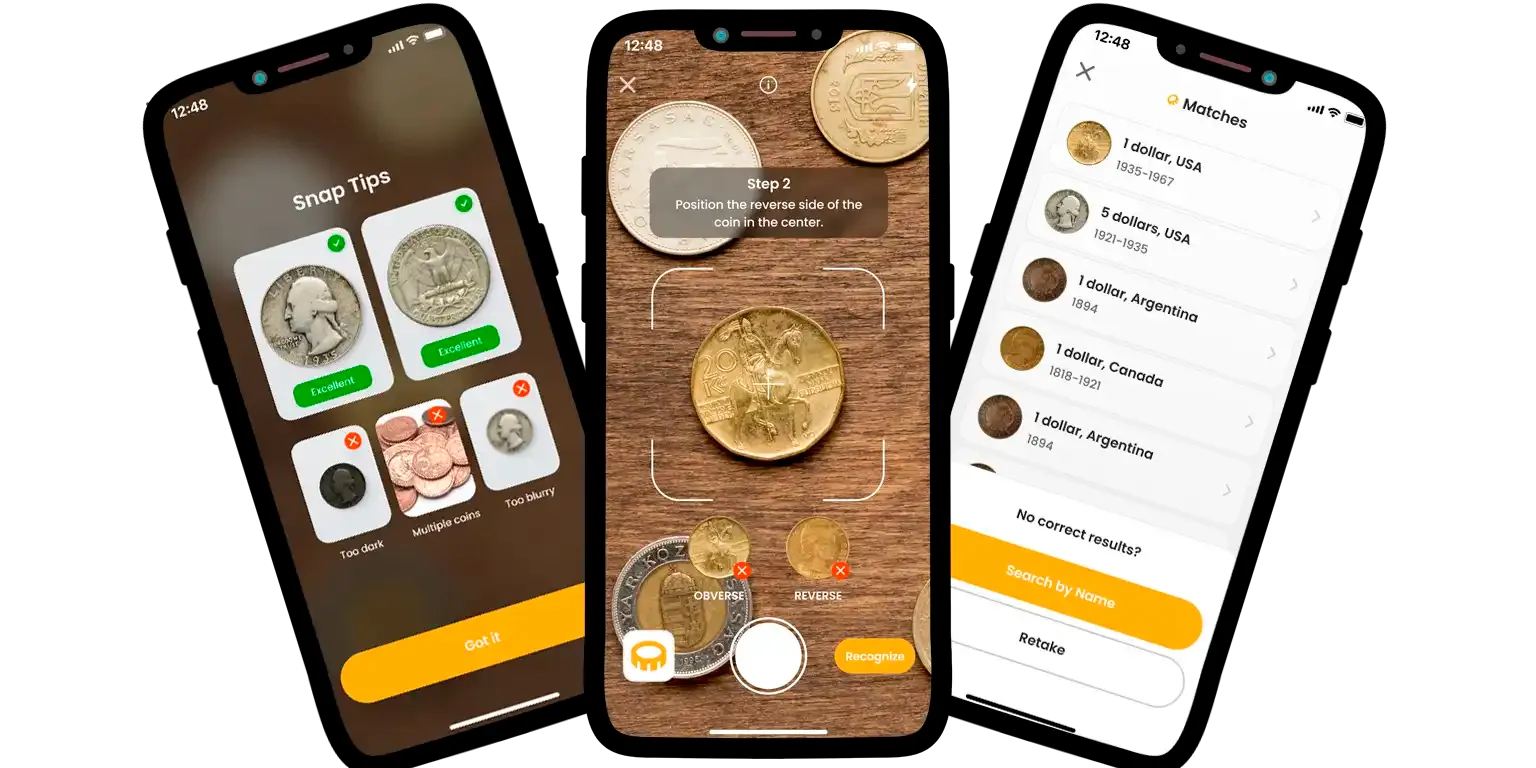
When the guesswork gets tricky, the Coin ID Scanner app becomes your quickest ally, offering:
Instant identification from a simple photo
Value estimates based on recent market data
Digital collection tracking so your finds stay organized and secure
Predictions for 5 Years
Circulated examples will likely stay close to face value, yet uncirculated pieces in MS67 and higher already command notable premiums, and truly rare errors like those from the 1988 P quarter error list with pictures or MS68 grades are drawing strong bids at auction.
Price Outlook for the Next 5 Years:
Circulated (G–XF): Expected to remain at $0.25–$0.35
Uncirculated MS65–MS66: Possible increase of 10–20% as supply tightens
High-grade MS67: Projected rise of 20–40% due to collector demand
MS68 and 1988 quarter error value: Potential value growth of 50–100% if market interest continues
Expensive mint errors: Could double in value as error collecting gains momentum

 Facebook
  X (Twitter)
  Pinterest
  LinkedIn