Contents:
- How Much Is a 1988 Half Dollar Worth Today?
- 1988 Kennedy Half Dollar Value by Mint Marks
- 1988 Half Dollar Value Chart
- What Affects the Value of a 1988 Half Dollar Coin?
- 1988 Kennedy Half Dollar Errors and Rare Varieties
- Is a 1988 Half Dollar Silver? Composition Explained
- 1988 Half Dollar vs Other Kennedy Half Dollars
- Where to Buy or Sell a 1988 Half Dollar
- FAQ
Kennedy items, perhaps, are the most popular series among half dollars. The item price ranges between $0.50–$80.00 dollars on the auctions and markets.
How Much Is a 1988 Half Dollar Worth Today?
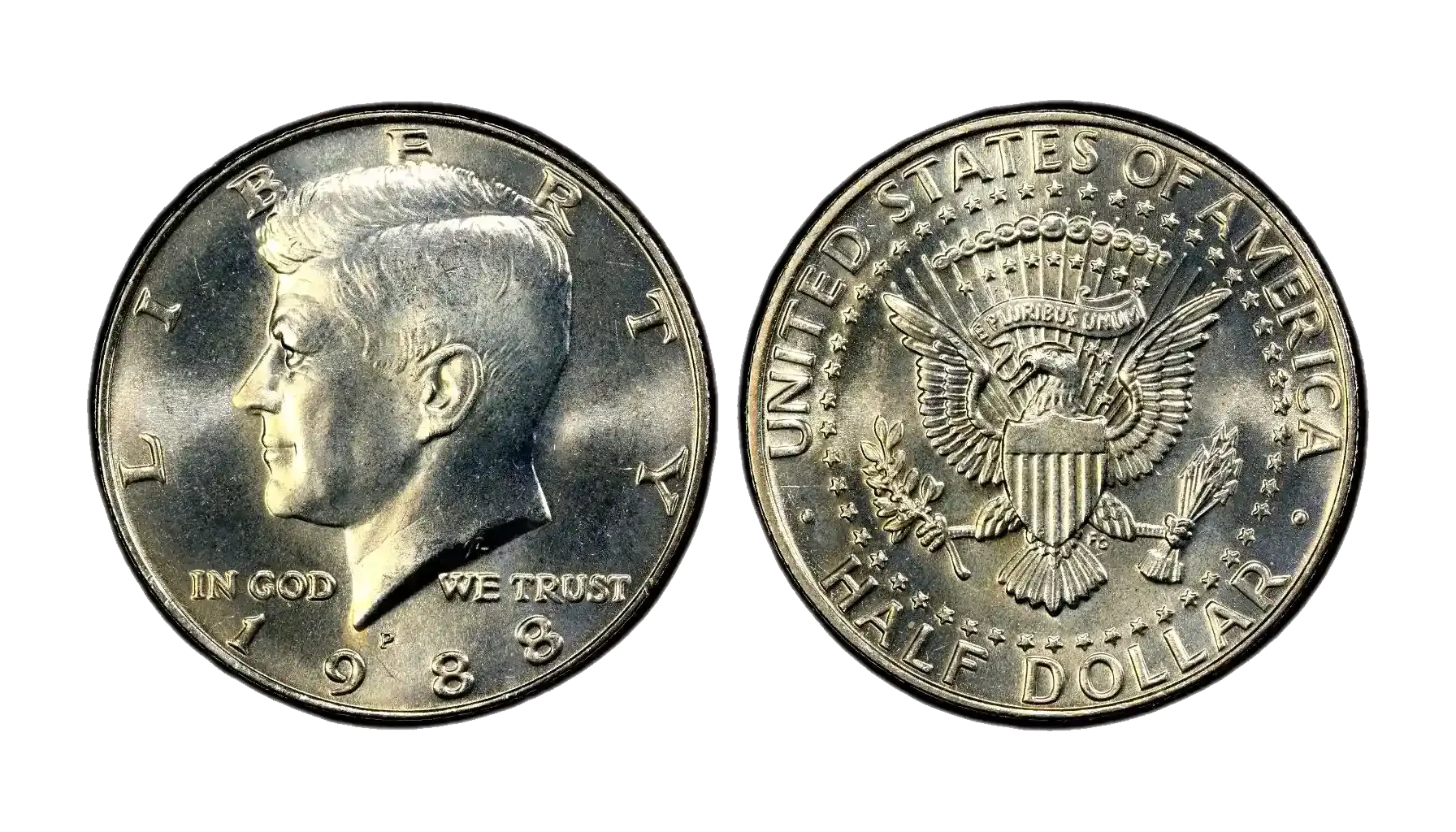
The Kennedy series today is a staple. You might have already seen a 2024 Kennedy item somewhere. Back in 1988, the series was at its midpoint.
1988-P (Philadelphia): 13,626,000
1988-D (Denver): 12,000,096
1988-S (San Francisco): 3,262,948
Designer | Frank Gasparro |
Diameter | 30.6 mm |
Weight | 11.34 grams |
Thickness | 2.15 mm |
Composition | Copper-nickel clad |
Edge | Reeded |
1988 Kennedy Half Dollar Value by Mint Marks
The 1988 edition had three mint marks. Each mint mark identifies the production location, with small differences in strike sharpness and finish visible between mints.
Here is how you can discern these mint marks:
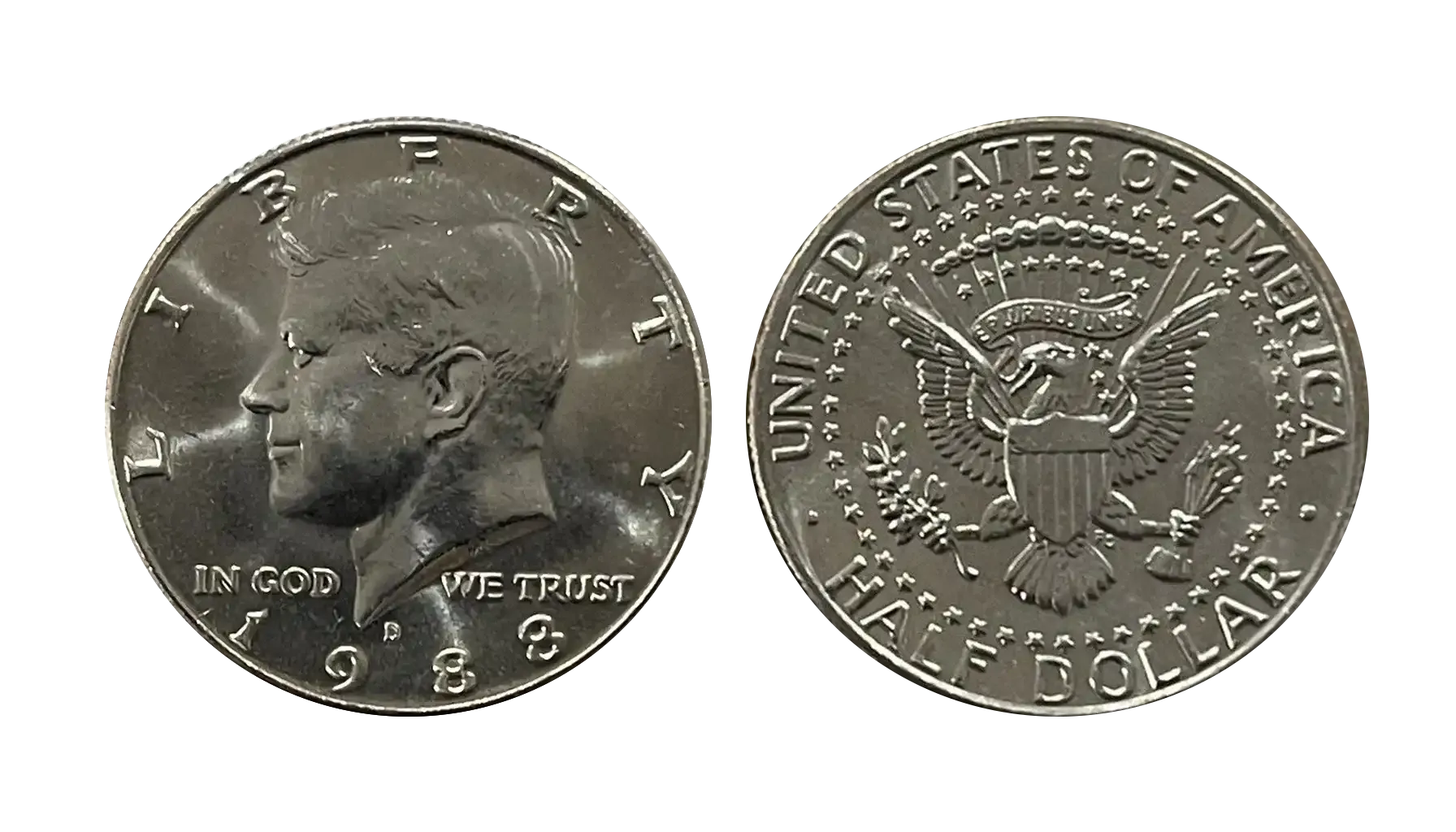
P (Philadelphia Mint): Has a letter “P” on the obverse. Look to the right of Kennedy’s neck, below the motto IN GOD WE TRUST. 1988 half dollar P and D were made for circulation.
D (Denver Mint): Has a letter “D” on the obverse. Same position as “P”.
S (San Francisco Mint): Has a letter “S” on the reverse. Same position as “P”. The surface has a mirror-like finish, and overall, it is very detailed. Made for collectors, not circulation.
Mint marks by themself impact the value only marginally. The 1988 D half dollar value is not different from the “P” version. We do know of certain error die varieties, which could be much more valuable than ordinary pieces.
1988 Half Dollar Value Chart
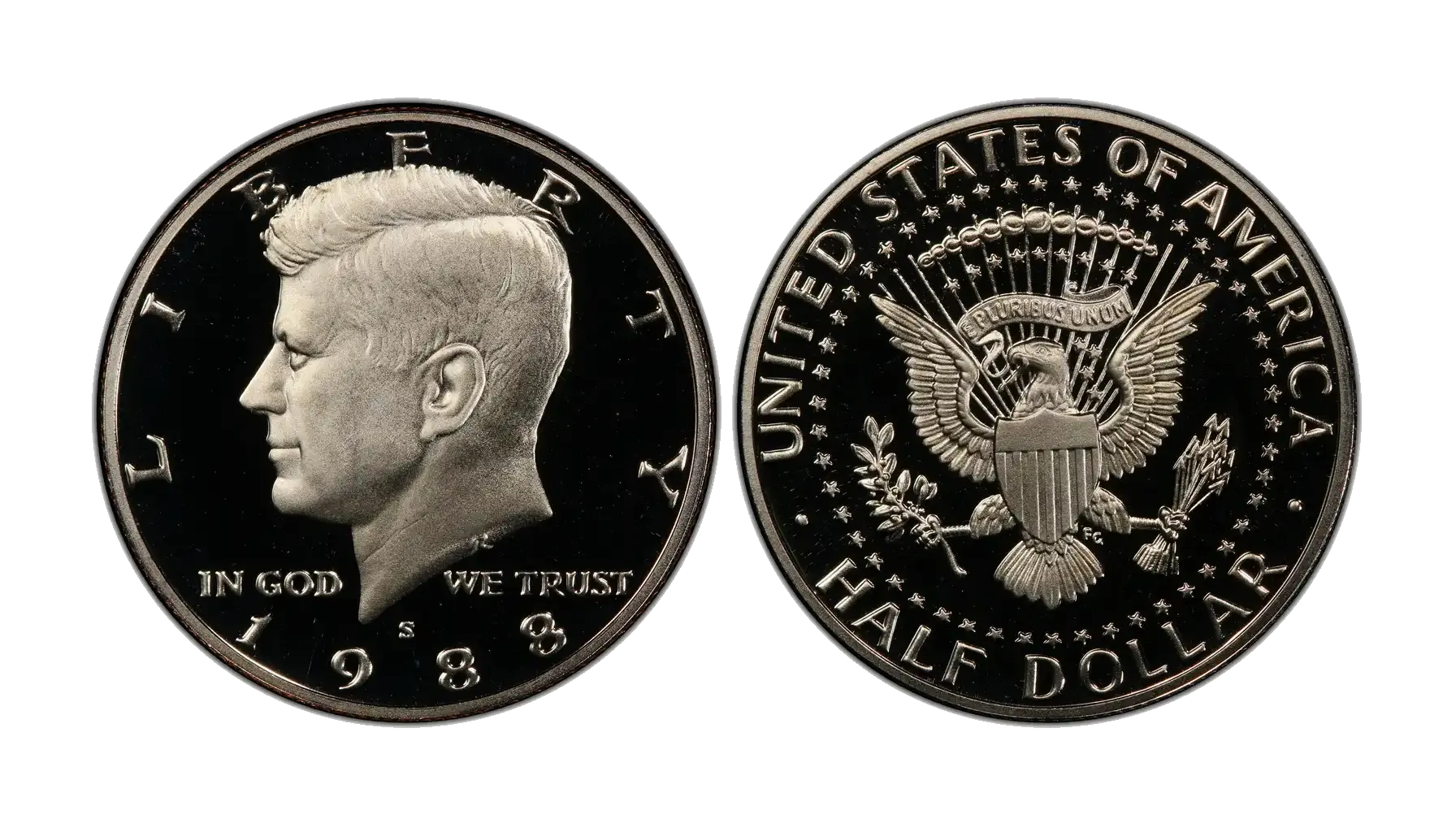
The item value differs from bit to bit. An older edition, the 1965 item, was quite a catch, being 40 % silver. What about the 1988 edition? Let’s see:
Grade | Philadelphia | 1988 Half Dollar D |
Circulated | $0.50–$1.00 | $0.50–$1.00 |
Uncirculated | $2.00–$4.00 | $2.50–$5.00 |
MS-65 | $6.00–$12.00 | $10.00–$18.00 |
MS-67 | $45.00–$80.00 | $55.00–$120.00 |
1988 S Kennedy half dollar value PR-69 DCAM $12.00–$25.00
S PF-70 DCAM $60.00–$130.00
What Affects the Value of a 1988 Half Dollar Coin?
Several factors affect the market 1988 P Kennedy half dollar value:
The Denver issue is considered slightly scarcer than the Philadelphia issue in higher uncirculated grades. Because fewer were saved in pristine condition, a D MS-67 often commands a higher price at auction than its P counterpart.
Proof Condition – In the San Francisco mint, these were only issued in Proof Sets. Most remain in Deep Cameo (DCAM) condition. A PF-70 is the goal for collectors; anything below PF-68 sells for under $10.
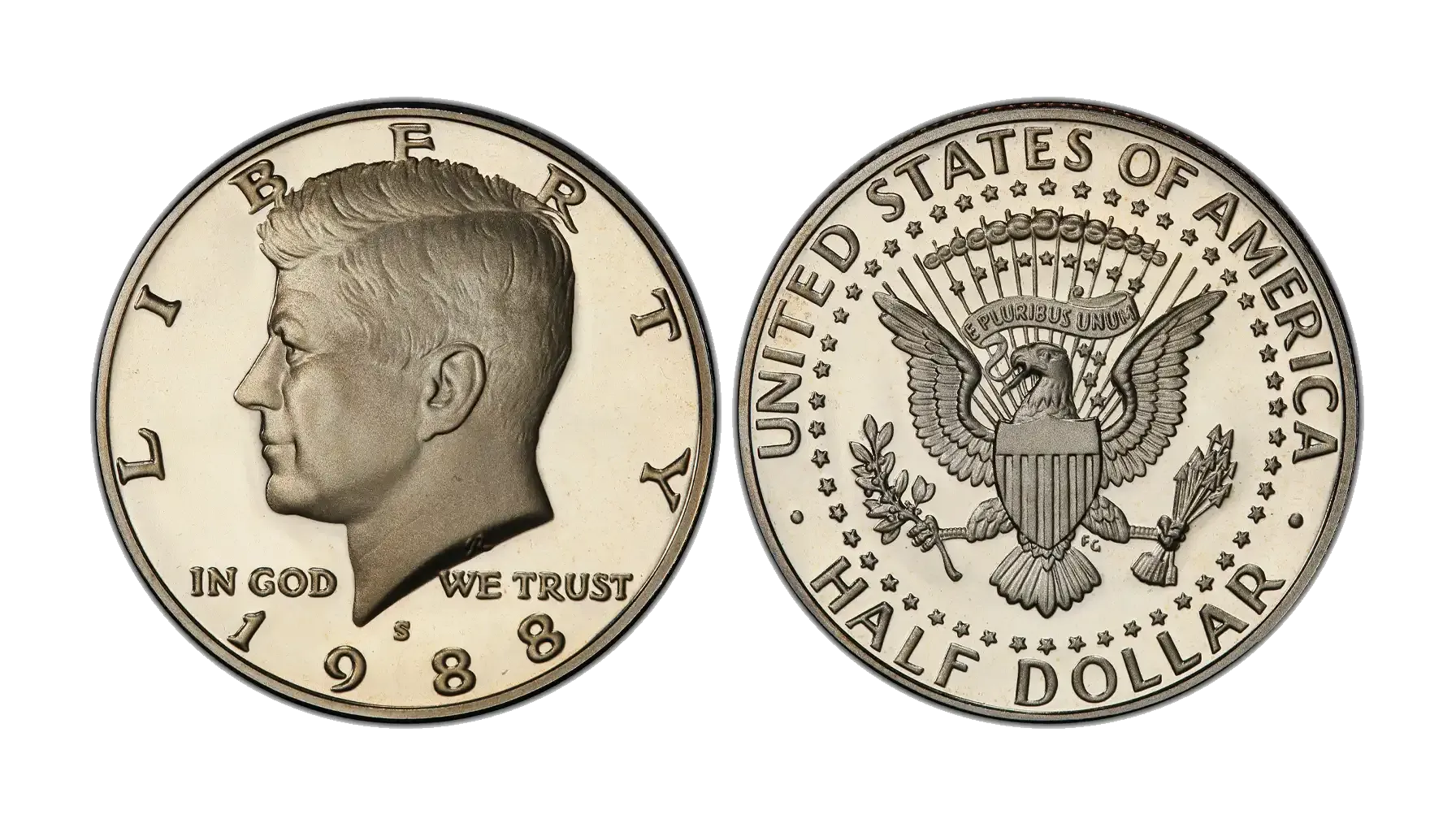
The No FG Error – always look for P pieces where the designer's initials ("FG" for Frank Gasparro) on the reverse are missing because of over-polishing of the die. These No FG varieties can fetch $25 to $100+, depending on the condition.
Note: the initials must be completely missing. If you can see even a faint trace of the letters under a magnifying glass, it is not the true "No FG" variety.
1988 Kennedy Half Dollar Errors and Rare Varieties
At first glance, this year's coin's defects don't seem much different from others, but that's not the case. Unique defects and variations aren't readily available on secondary markets or in the numismatic community.
Double Die Obverse or Reverse
While no major doubled dies (like the 1955 Wheat penny) exist for 1988, there are several minor doubled dies reported. Look for thickness or slight notching in the lettering of "TRUST" or the date. On the reverse, check the lettering in "UNITED STATES OF AMERICA."
Do not confuse this with Machine Doubling, which looks like a flat, shelf-like secondary image. True Doubled Dies will have distinct, rounded separation.
Value $20–$150+
Clipped Planchets
This occurs when the item blank (planchet) is punched out of a strip of metal that has already had a circle removed, resulting in a crescent-shaped piece missing from the item. Look for the "Blakesley Effect" – the rim directly opposite the clip will usually be weak or poorly formed.
Value $20–$50
Off-Center Strikes
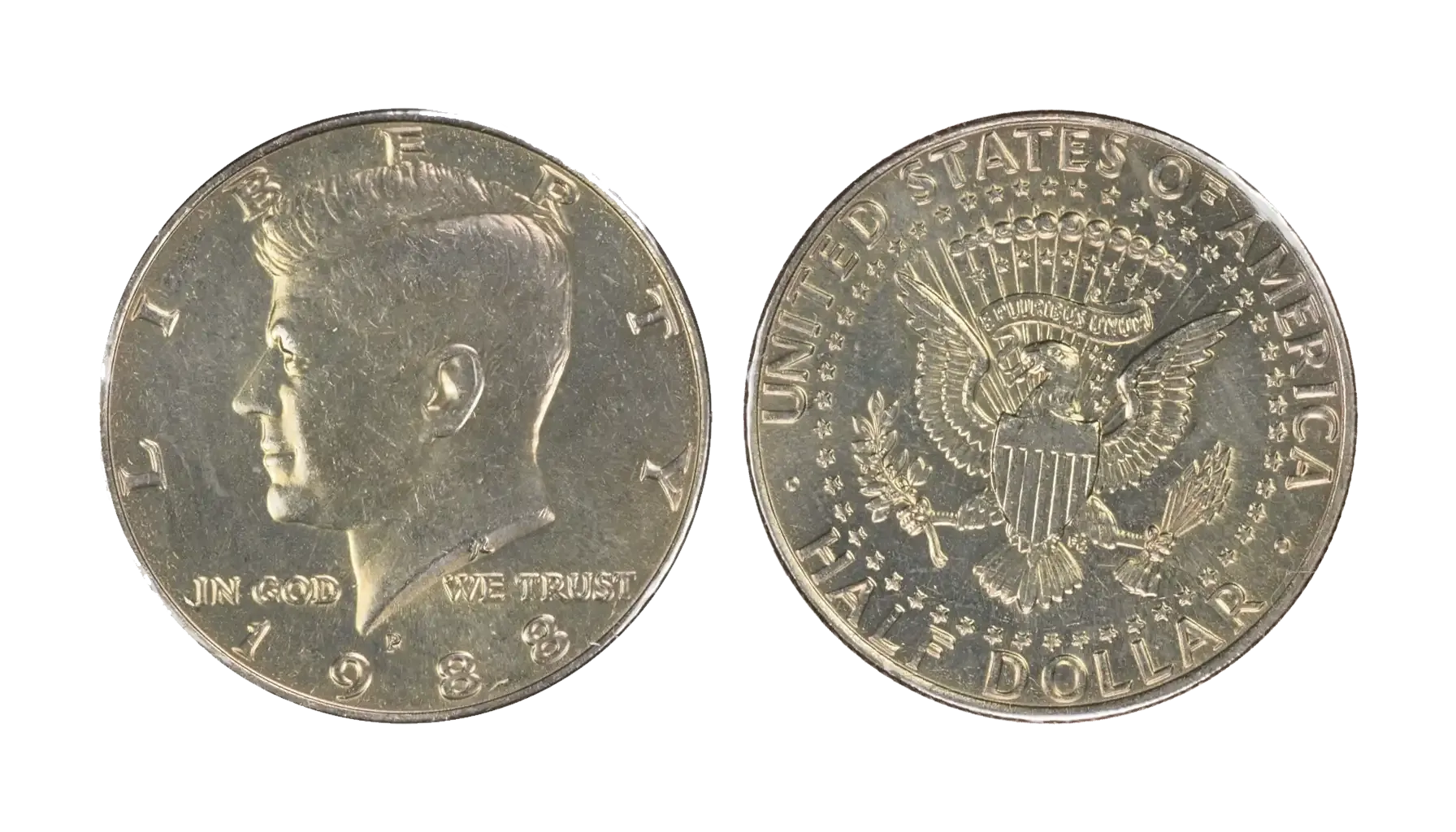
These happen when the planchet is not properly centered between the dies when struck. A portion of the design will be missing, and a portion of the blank planchet will be visible.
Value $10–$250
Die Chips and Cracks
As dies age, pieces of the steel can break off. When the issue is struck, the metal flows into these holes, creating raised bumps on the item. Look for small chips in the gap of the number 8 in the date or around the eagle's feathers.
Value $50+
Unique Varieties
Four categories are the rarest for the year:
MS-67
P No FG
1988 S half dollar value FS-101
Item Defects
Is a 1988 Half Dollar Silver? Composition Explained
Why does such a conflict exist in the numismatic community? Many people remember that pieces were once silver, and they were. Here is the timeline of the Kennedy item's metal content:
1964: 90 % silver
1965–1970: 40 % silver clad
1971–Present: 0 % silver
Note: While the Mint began producing 90 % silver Proof Sets again in 1992, this program did not exist in 1988. Therefore, even an S Proof issue is made of base metals.
How to Check Your Item Composition
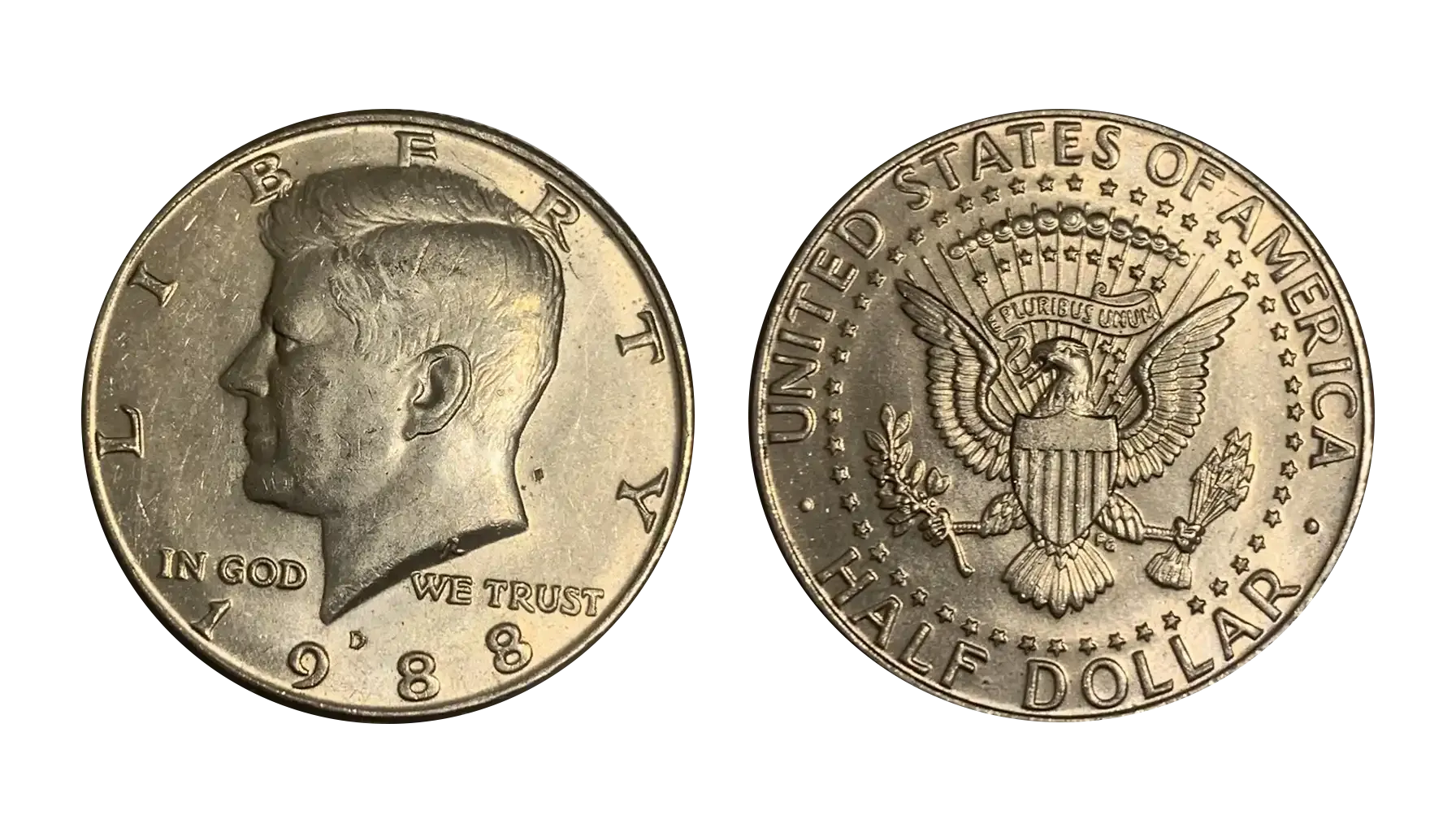
If you want to be 100 % certain, you can perform these quick checks at home:
The Edge Test
Look at the rim of the item. If you see a distinct copper-colored stripe (like a sandwich), it is definitely a copper-nickel clad one. Silver issues have a solid, bright white/silver edge.
The Weight Test
A standard clad item weighs 11.34 grams. A 90 % silver piece weighs 12.50 grams, and a 40 % silver one weighs 11.50 grams.
The Sound Test
If you gently tap a clad one with another item, it will produce a dull "thud." A silver issue produces a high-pitched, clear ringing sound that lingers.
1988 Half Dollar vs Other Kennedy Half Dollars
The main distinctive feature is intrinsic value. Earlier versions have a melt value because of the silver content.
Feature | 1964 Issue | 1965–1970 Issues | 1988 Issue |
Silver Content | 90 % | 40 % | 0 % |
Weight | 12.50 g | 11.50 g | 11.34 g |
Edge Appearance | Solid silver | Silver with faint grey | Bright copper stripe |
Raritry | Common | Moderate | Common |
The Mintage
In the year, pieces were still being minted for general circulation. By 2002, the Mint stopped producing them for banks and began selling them only in rolls and bags, directly to collectors at a bonus.
"The 1988-D Kennedy Half Dollar is a scarcer issue than most dates from the same time frame…"
– Jaime Hernandez, expert
PCGS’s CoinFacts
The mintage in 1988 was 25 million issues. While this sounds high, it is actually quite low compared to the 1970s, which often saw 100M+ per year. Years such as 2008 and 2010 often saw mintages as low as 3.5 million.
You can still occasionally find it in a bankroll. Finding a 2019 or 2021 issue in the wild is much rarer, as they were never technically released for spending.
Starting in 1992, the San Francisco Mint began offering a 90 % Silver Proof Set alongside the standard clad set. This created a split in the market. In 1988, there was only one type of Proof Clad, meaning there was no confusion about which S you had.
Is Your Coin Fake?
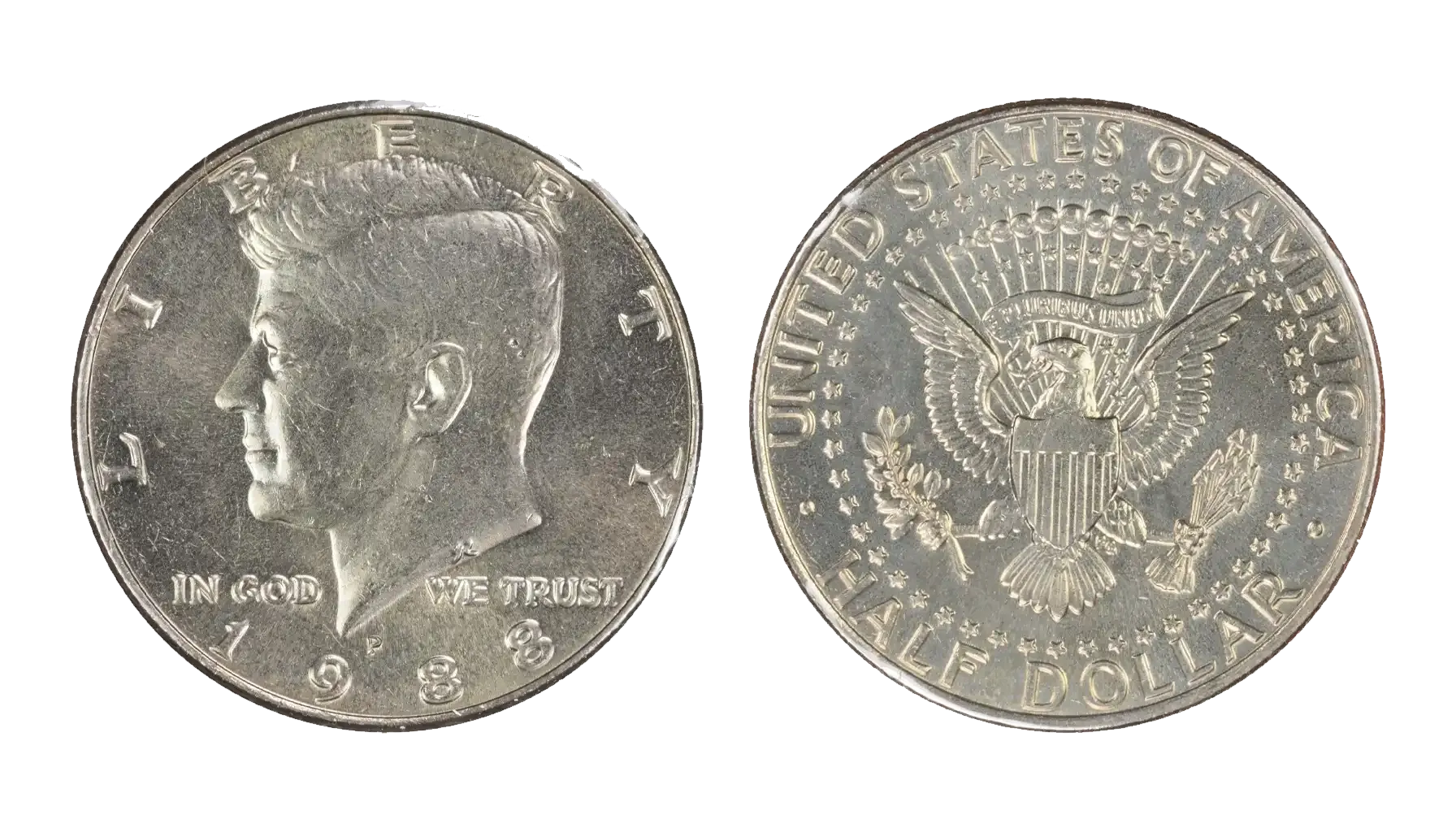
Fakes are another variety, technically, and not a favorable one. How do you identify fake coins? The 1988 edition rarely gets altered or faked, but this little guide builds work for both the 1988 edition and any other item from the Kennedy series.
Check weight (should be 11.34g).
Inspect edge reeds (missing or uneven reeds may signal a fake).
Use a magnet (the coin should not be magnetic).
Compare details with known genuine examples (you can find examples in apps, Red / Blue books).
Where to Buy or Sell a 1988 Half Dollar
Online Forums – Communities like PCGS CoinFacts or Reddit allow private sales. A 1988 half dollar error listed on a forum might sell and avoid for 13–15 % fees.
Online Auctions – eBay and Heritage Auctions provide real-time price discovery. Search completed listings for 1988 P half dollar value trends. Communicate with others, make bids, check photos and comments, and buy your item.
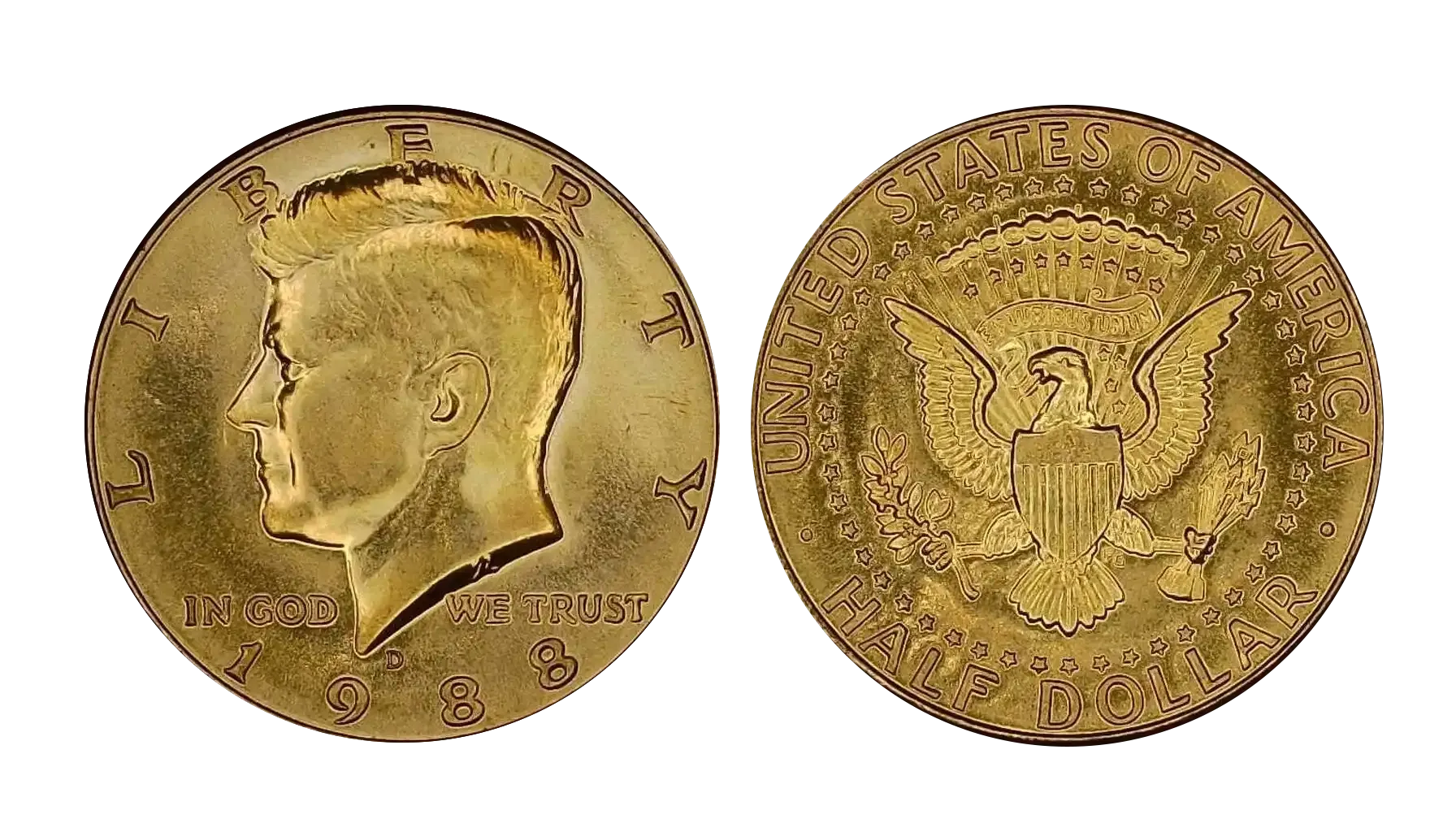
Coin Shows – Regional shows attract competitive buyers. A Kennedy half dollar 1988, with an error often sees bidding wars. Bring certified coins for the best results. Remember that uncertified errors sell at a discount.
Coin Dealers – Local shops purchase coin pieces at wholesale prices. Expect 50–65 % of the Red Book or retail 1988 D kennedy half dollar value. A dealer might offer dollars for an MS-65 coin retailing at twice the 1988 half dollar coin value.
Note: Always use a selling strategy based on your item's condition.
FAQ
How much is a 1988 half dollar coin worth?
The half dollar 1988 value ranges between $0.50–$80.00 dollars.
What makes a 1988 half dollar rare?
Unique defects, such as No FG variety or DDO / DDR.
Is a 1988 Kennedy half dollar silver?
Early it was, but for the year it is copper and nickel clad.
What is a 1988 half dollar worth?
The DDO or DDR item prices up to $150+ on the online auctions.

 Facebook
  X (Twitter)
  Pinterest
  LinkedIn