Contents:
Most coins from the Washington quarter series are rarely considered scarce or exclusive: many have been minted in large quantities, and their usage is literally ubiquitous (the most notable exception is the 1932 Washington quarter).
The later dates, however, should be studied carefully, as these include proof-only and silver proof editions, low-mintage special issues, high-grade condition rarities, and occasional error varieties (even within the same date).
The 1992 quarter is a fine, yet frequently missed opportunity to see the difference between regular circulation units and genuinely collectible modern issues, because a mint mark and the presence of minting deviations may identify coins as rare. So, let us take a look at the 1992 quarter errors with pictures and learn more about how much these numismatic creations may cost today.
1992 Quarter Overview
As a series, it was launched in 1932, and the original intention was to release a commemorative issue related to the 200th anniversary of George Washington’s birth. Although it was not intended to become a regular circulation coin, it did (and not without success). It quickly became one of the most well-recognized American units of currency, produced in large quantities.
The long run matters as the series has had a few major iterations that define what collectors should be looking for. These included:
Type 1 (1932–1964): Original Washington quarter, 90% silver. The first long-running format of the series.
Type 2 (1965–1998): Clad Washington quarter (copper–nickel over a copper core). The post-silver composition, produced for circulation.
Type 3 (1976): Clad, Bicentennial reverse. A one-year special.
Type 4 (1976): Silver, Bicentennial reverse. The same one-year special, minted in silver.
Miscellaneous: Type 1 silver (1992–..., return of silver composition as proofs).
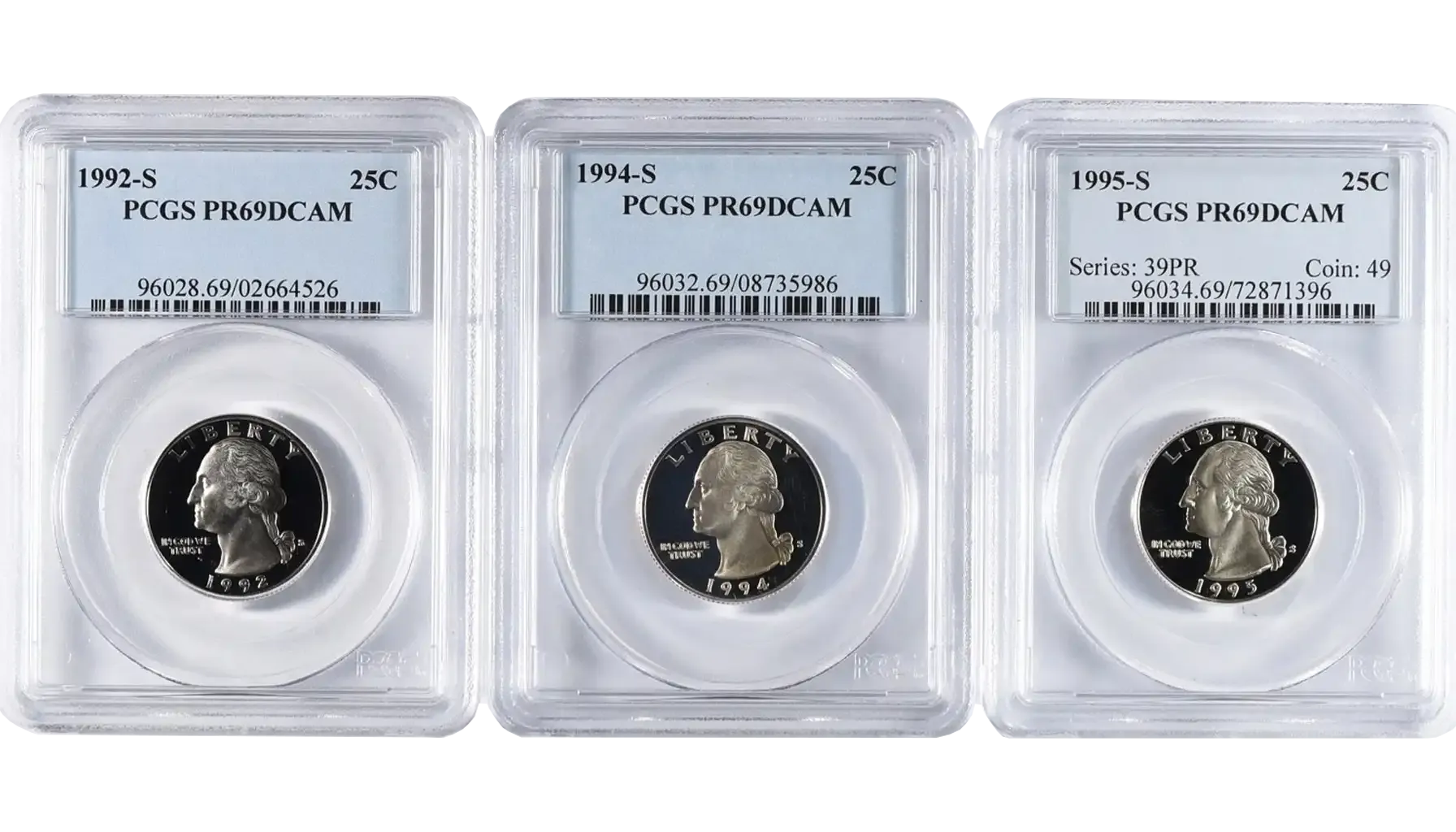
Identifying the 1992 Washington Quarter: Design & Specs
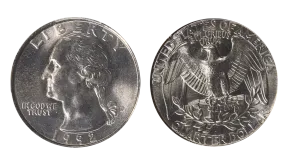
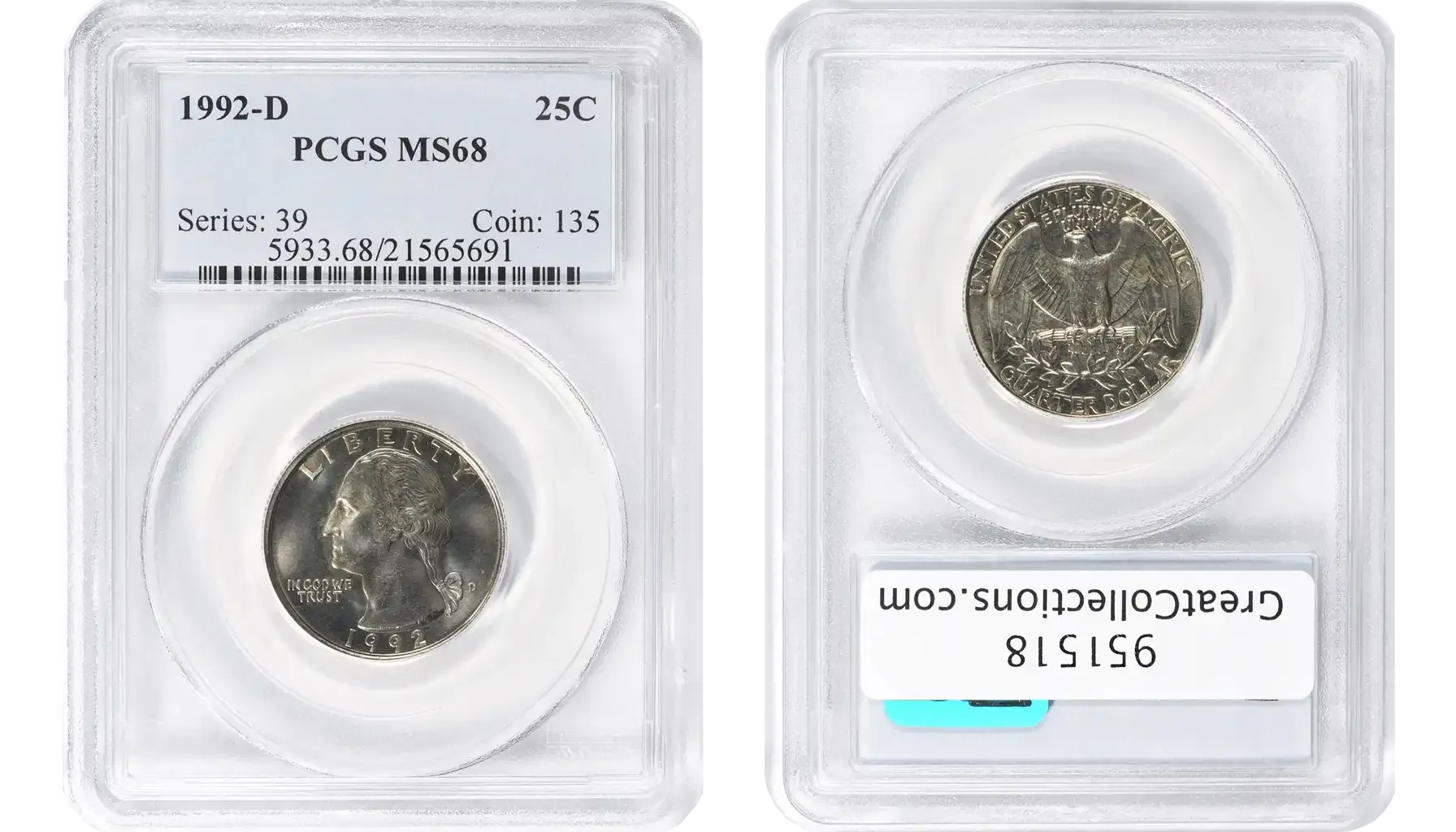
Obverse: The profile of George Washington by John Flanagan, “LIBERTY” closer to the top rim, the motto “IN GOD WE TRUST” on the left side, and the year “1953” placed at the bottom.
Reverse: An eagle with its wings opened up, arrows in its talons, two olive branches placed below this arrangement, “UNITED STATES OF AMERICA” across the top, the phrase “E PLURIBUS UNUM” right below the previous inscription, the denomination “QUARTER DOLLAR” along the bottom rim, and a mint mark above.
Feature | 1992 Clad | 1992 Silver Proof |
Composition | 75% copper, 25% nickel over a pure copper center | 90% silver, 10% copper |
Weight | 5.67 g | 6.30 g |
Diameter | 24.30 mm | 24.30 mm |
Thickness | 1.75 mm | 1.75 mm |
Edge | Reeded | Reeded |
Mint Marks | “P” for Philadelphia “D” for Denver “S” for San Francisco | “S” for San Francisco |
Common Varieties and Errors of the 1992 Quarter
1992-P 25C
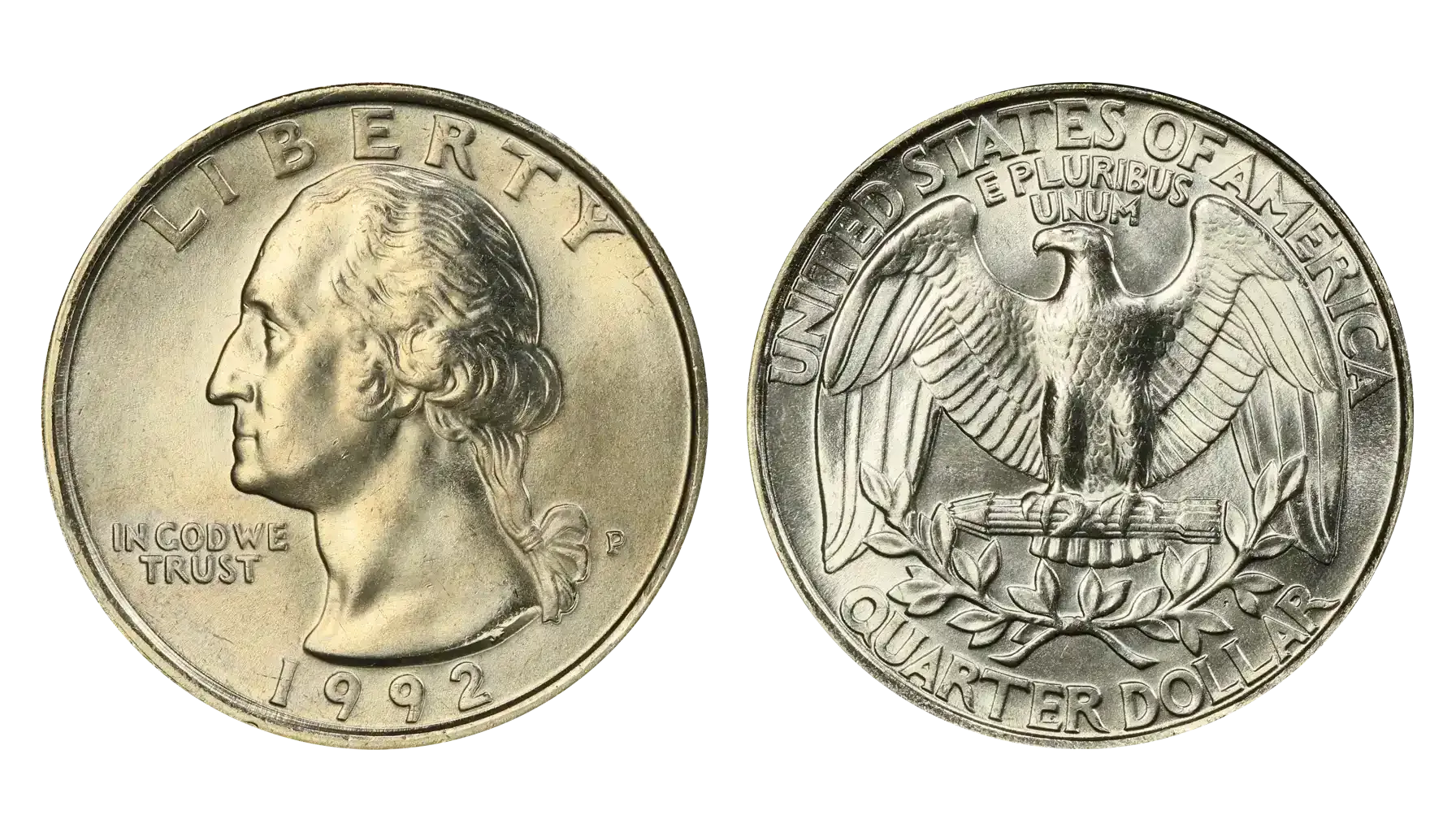
Produced by: Philadelphia Mint
Mintage: 384,764,000
Auction Record: $764 for MS67
Although the production was fruitful, some of the 1992-P quarters can be difficult to find in top grades. Most pieces show noticeable marks and weak surface quality, which is why the exceptional pieces (MS66+) are especially treasured, and the 1992 P quarter value may grow even more.
1992-D 25C
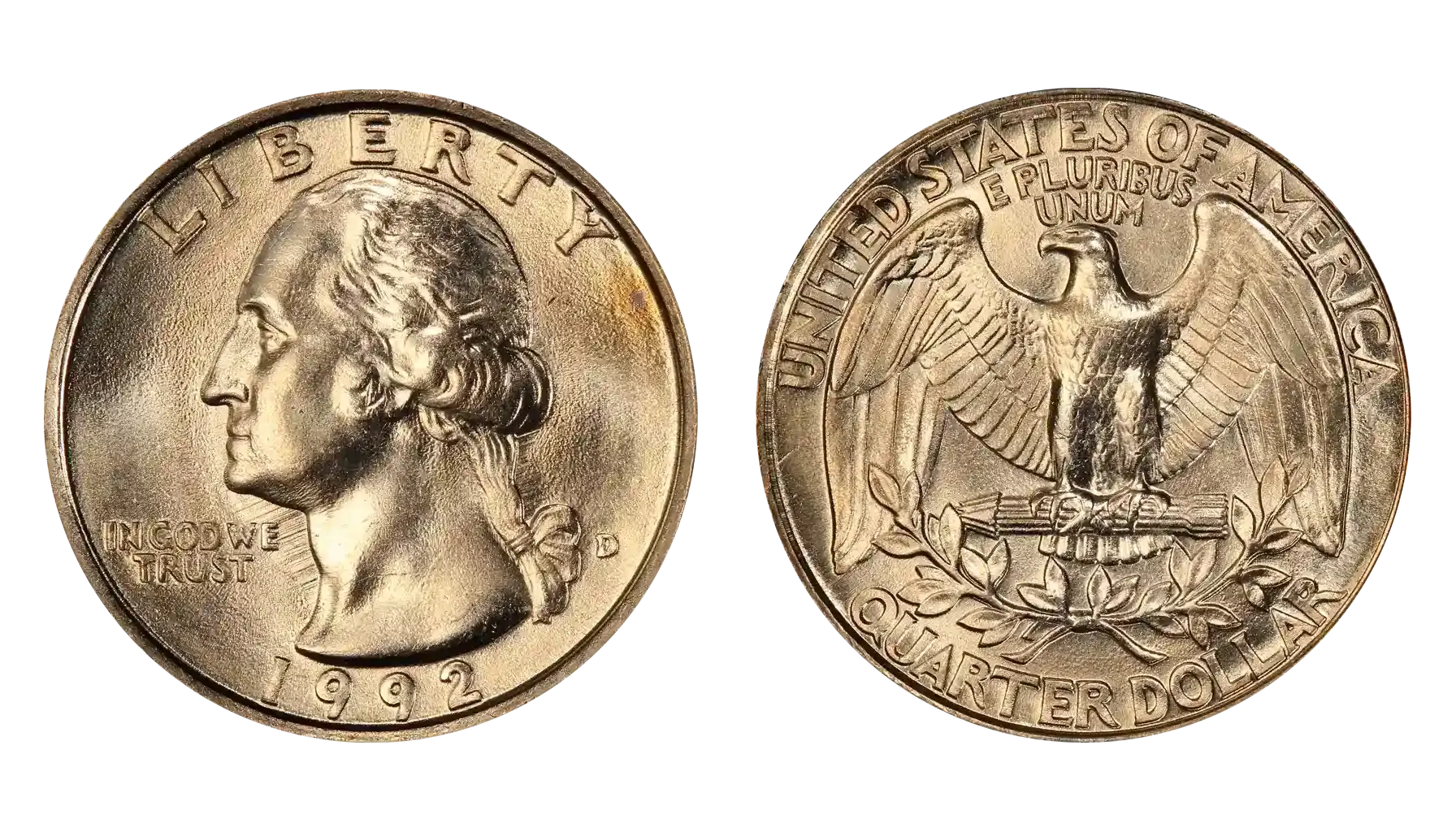
Produced by: Denver Mint
Mintage: 389,777,107
Auction Record: $1,763 for MS67
The product of the Denver Mint in 1992 is generally easy to locate in circulated and typical uncirculated grades. The 1992 D quarter value in MS67+, however, reflects how challenging it can be to find an example with a clean surface, high-level quality, and minimal wear.
1992-S 25C Proof
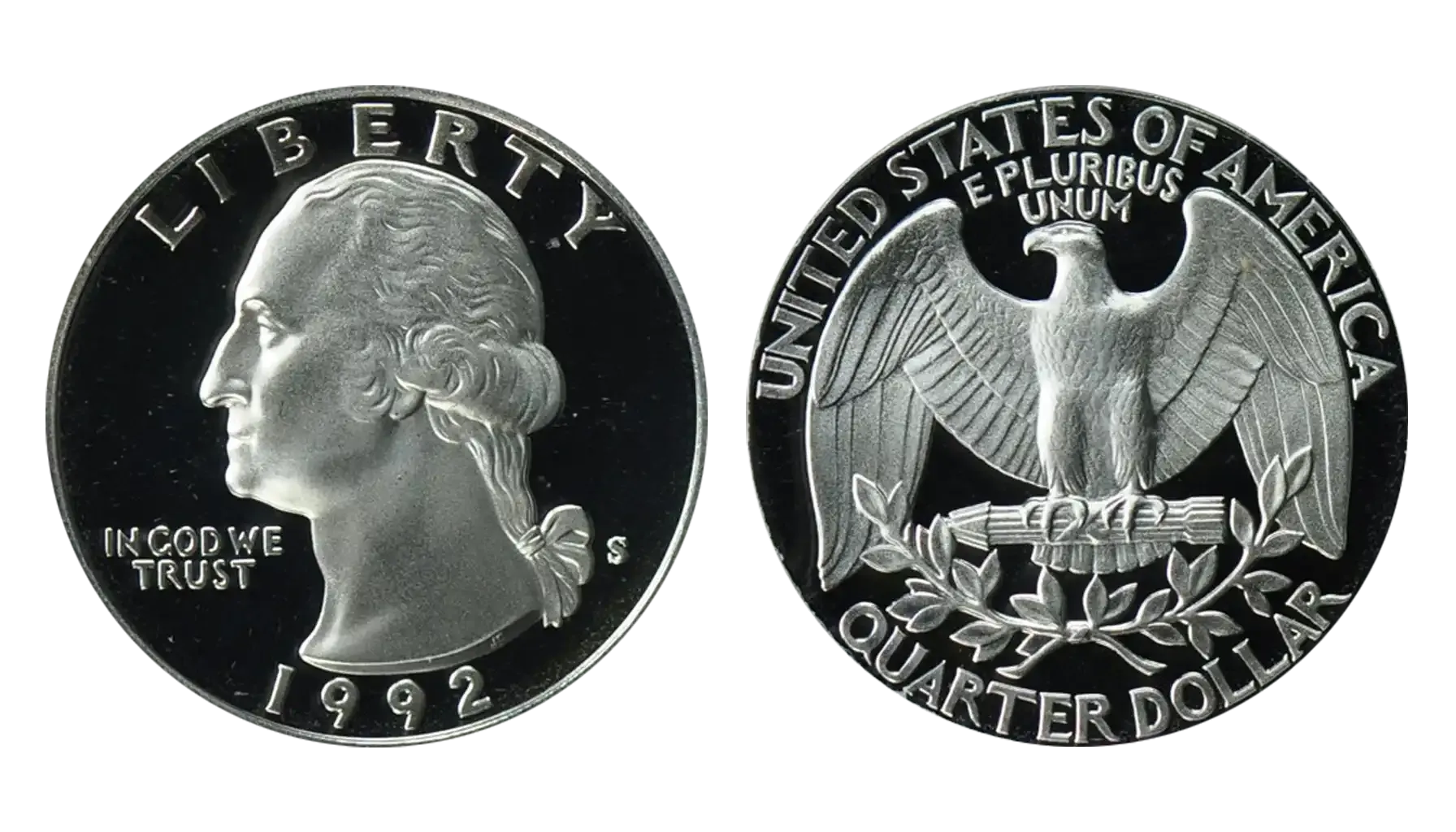
Produced by: San Francisco Mint
Mintage: 2,858,981
Auction Record: $345 for PR70
This is one of two proof versions of the coin that is widely available and tends to come nicely preserved. Even PR70 Deep Cameo pieces can be found without extra effort made. These are more of a quality appreciation than a rarity hunt.
1992-S 25C Silver Proof
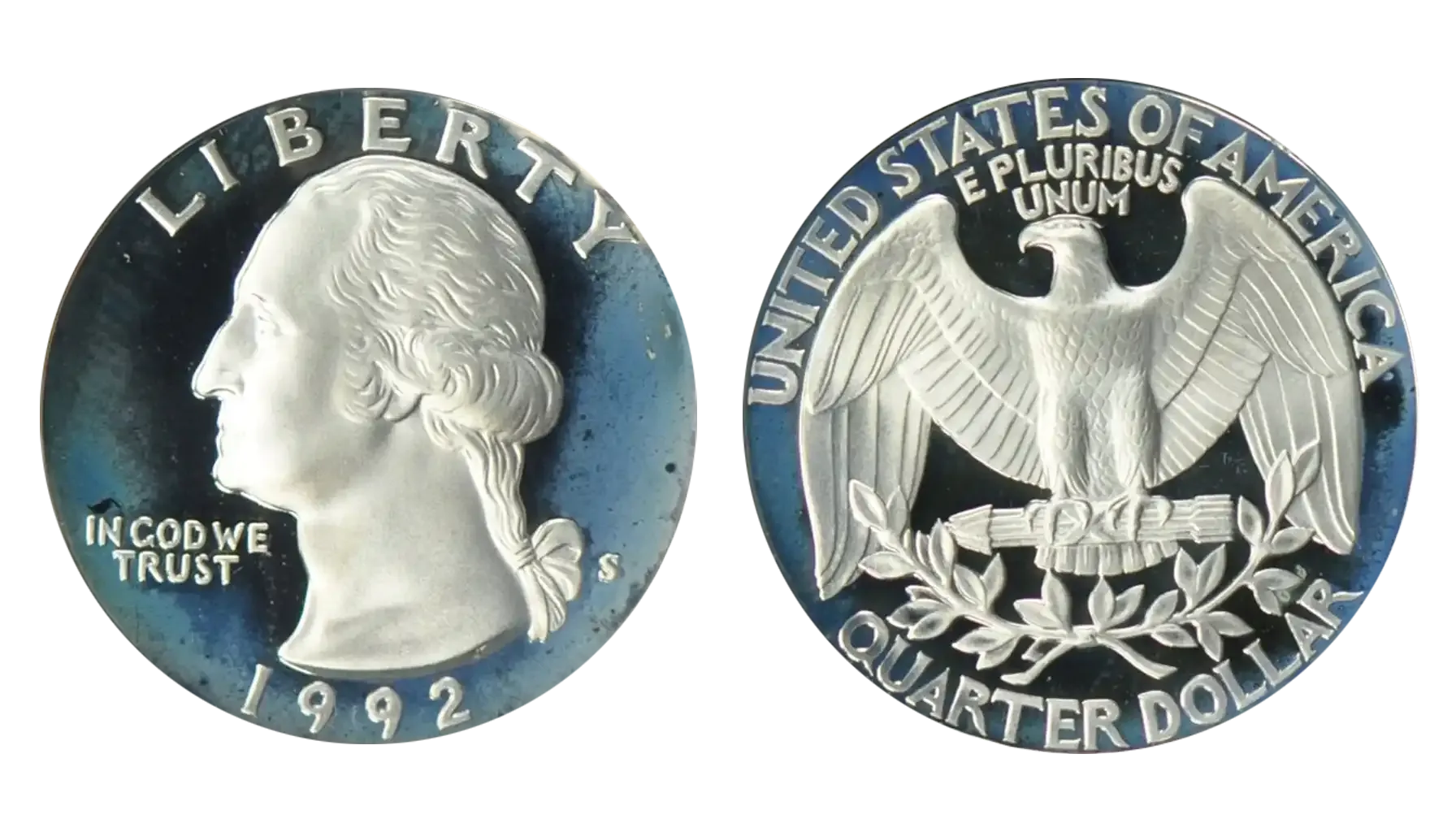
Produced by: San Francisco Mint
Mintage: 1,317,579
Auction Record: $437 for PR70
After silver-content quarters disappeared after the release of the 1976 special edition, 1992 finally brought this valuable composition alongside the standard clad proof. Many examples are still found in PR68–PR69 Deep Cameo, yet PR70 is a rarity.
“The Mint stopped producing Washington Quarters with silver content in 1976. However, in 1992, the U.S. Mint decided to produce two different Proof Quarters. <...> The 1992-S Proof Silver Quarter came in the special proof sets issued that year.”
— Jaime Hernandez, renowned numismatist, PCGS price guide editor
PCGS CoinFacts
Possible Errors in the 1992 Quarters
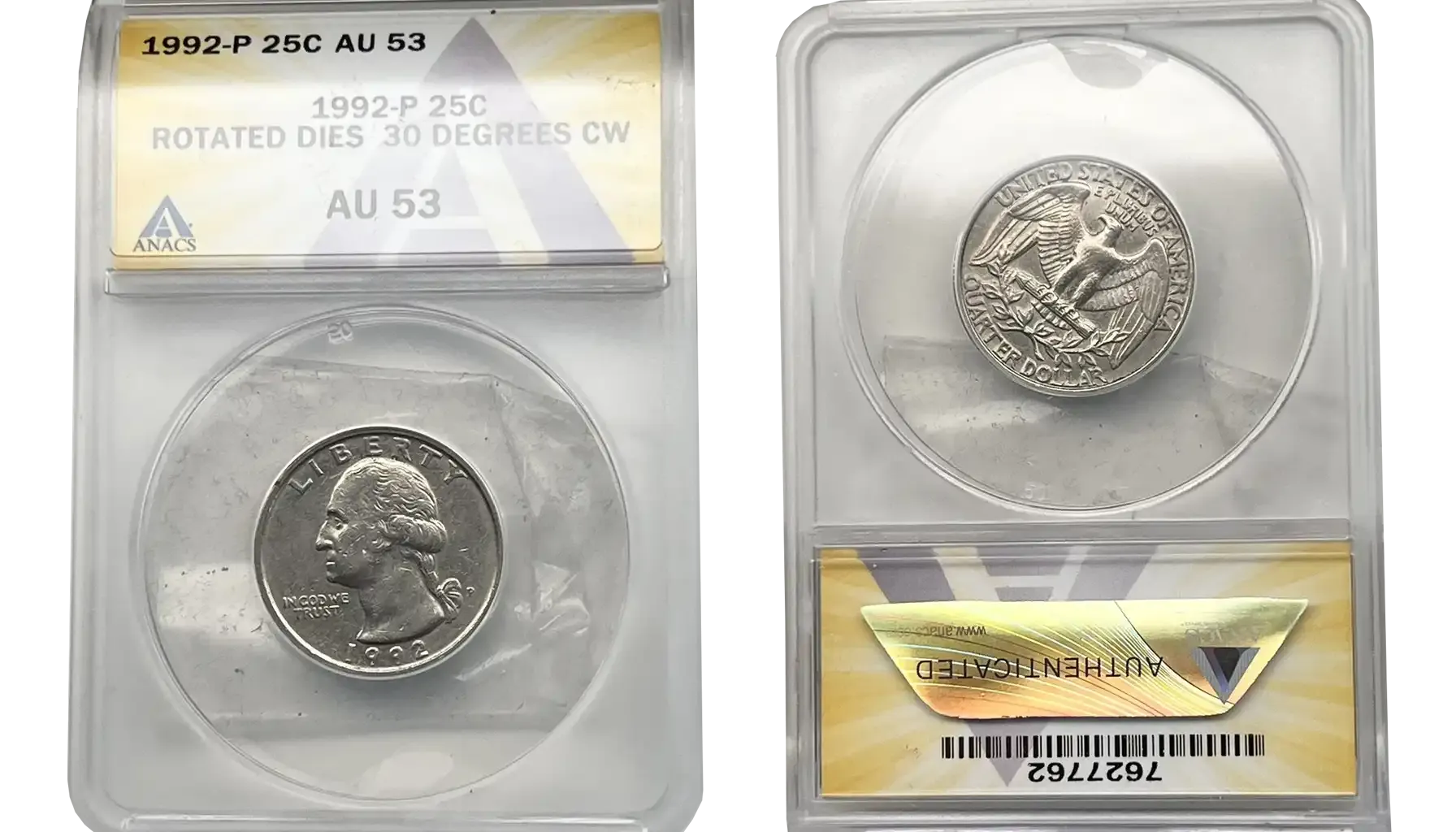
An average 1992 D quarter error list with picture, as well as one referring to other mints, usually includes numerous deviations that occurred during the process of coin creation (not afterward). This makes numismatic creations rarer and, hence, collectible enough to be worth more. Exclusivity matters.
So, here are a few prominent error types found on the market today:
Checkered Strike Thru – $2,500
DDO & DDR – $750
Stamped Errors – $300
Rotated dies – $150
Missing Clad Layer – $150
No Mint Mark Error – $100
1992 Quarter Value by Mint and Condition
How much is a 1992 quarter worth? Since the main part of the 1992 25C coins is common, their values change accordingly, as we move from the circulated to uncirculated grades. But how?
Factors Affecting the Value of a 1992 Quarter
Type + mint mark (P/D circulation vs S proof vs S silver proof)
Grade (the most definitive factor; gem business strikes are much scarcer than “nice uncirculated”)
Surface quality & strike (marks, haze, cameo contrast designation on proofs)
Errors/varieties (can exceed “common date” pricing)
Certification (the presence of documents that may prove grades and provenance)
General Value Ranges by Type and Grade
Grades | 1992-P | 1992-D | 1992-S Clad | 1992-S Silver |
Circulated | $0.25–$1 | $0.25–$1 | – | – |
MS63–MS65 | $2–$34 | $2–$20 | – | – |
MS66–MS67+ | $55–$4,500+ | $65–$2,500+ | – | – |
PR69–PR70 | – | – | $5–$35 | $30–$38 |
Collector Tips and Where to Buy 1992 Quarters
For the best odds of getting an accurately described 1992 quarter (especially proofs or MS66+ pieces), buy from reputable coin dealers or major auction platforms that show clear photos and offer returns. Then use Coin ID Scanner to quickly confirm the mint mark/type by photo and check the background on the spot.
Collect with patience – this always pays off.

 Facebook
  X (Twitter)
  Pinterest
  LinkedIn