Contents:
Found a 1975 nickel and wondered if it's worth more than 5 cents? The answer isn’t always simple. 1975 Jefferson nickel value depends on its story and some details that we are going to discuss further. But if you want a quick answer or just confirmation about this nickel or any other pieces, the best free coin identifier app can help you see details and current costs instantly.
The 1975 Nickel at a Glance: What You’re Holding
The 1975 Jefferson nickel is part of the series, started in 1938. It replaced the Buffalo nickel and is still issued now for circulation with small changes in design.
Design and Historical Context
The coin honors Thomas Jefferson (the author of the Declaration of Independence) and America’s history, ideals and respect for traditions. That is why the design (with rare exceptions of temporary coins with Lewis and Clark, and minor changes in details) remained almost unchanged.
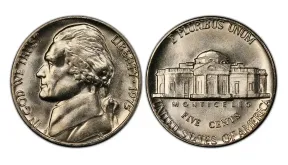
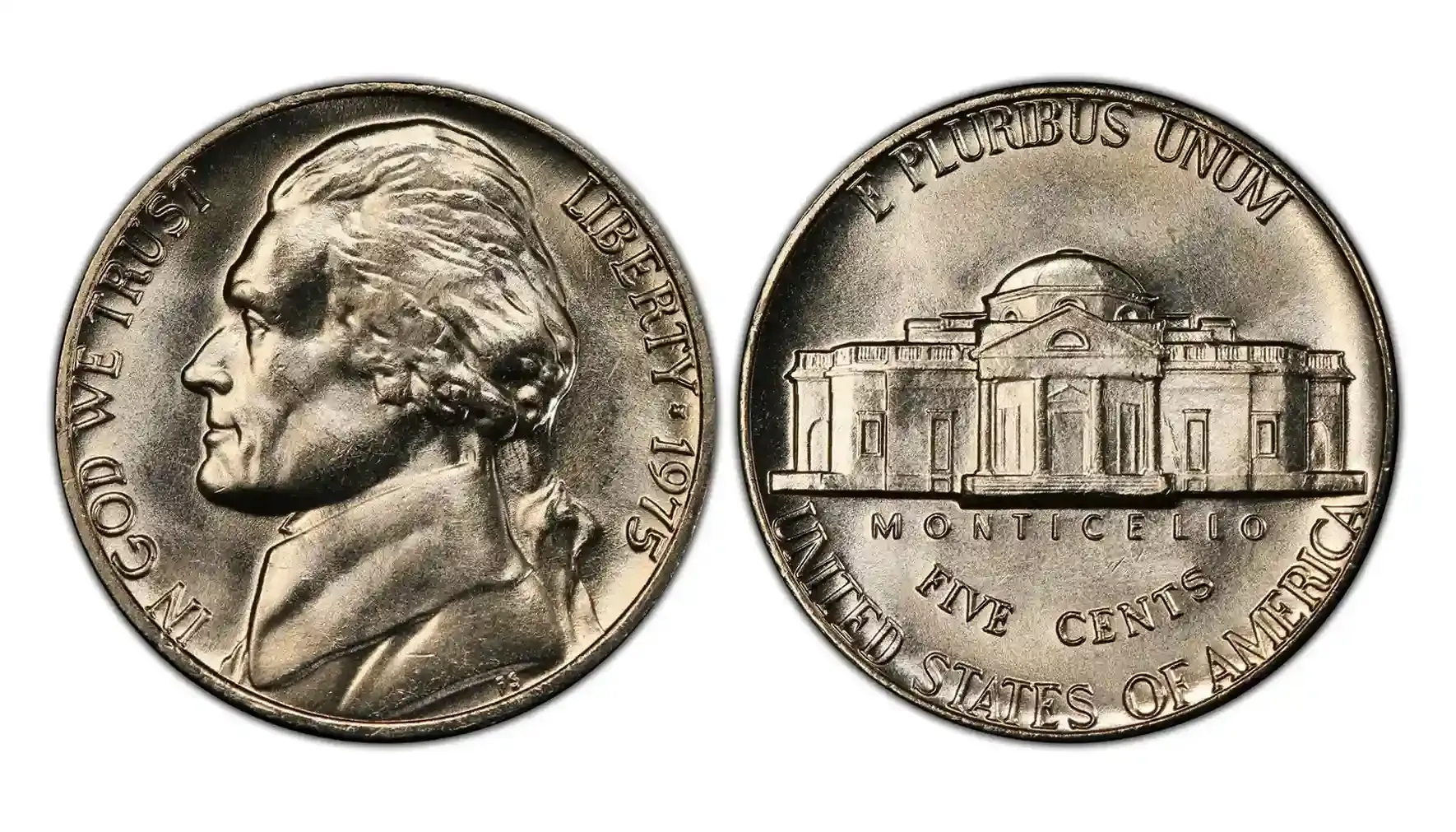
Obverse: Thomas Jefferson looking left.
Reverse: Monticello, his Virginia estate.
Designer: Felix Schlag, his initials appear on the reverse since 1966.
In 1975, coins were issued for circulation in Philadelphia (no mint mark) and Denver (“D”), while proof coins with “S” mint mark were produced at San Francisco for special collector sets only.
Key Specifications (Composition, Weight, Diameter)
Specification | Detail |
Composition | 75% Copper, 25% Nickel |
Weight | 5.00 grams |
Diameter | 21.21 mm |
Edge | Plain |
None (Philadelphia), D (Denver), S (San Francisco) | |
Mintage Figures | 181,772,000 (P), 401,875,300 (D), 2,845,450 (S Proof) |
Most P and D examples entered everyday use, so nickels in high grades are harder to find. But still, even small details can impact the nickels worth greatly.
The Real Value: It’s All About the Details
Even within one year, not all Jefferson nickels are equal. The mint mark, condition, and possible errors make the difference between face value and a collectible coin.
Mint Marks Explained
1975 nickels were produced at U.S. Mints:
Philadelphia: no mint mark. Standard circulation coins.
Denver (“D”): circulation issue with high mintage figures.
San Francisco (“S”): proof coins made for collectors only, but none were actually dated 1975. In 1975 the Mint started to issue 1976-S proofs in advance for the future Bicentennial sets.
On 1975 Jefferson nickels, the mint mark is on the obverse, right of Jefferson’s portrait and below the number “5” of the date.
So, is a 1975 nickel worth anything? Yes, mostly its face value, but higher grades and proofs still attract collector interest.
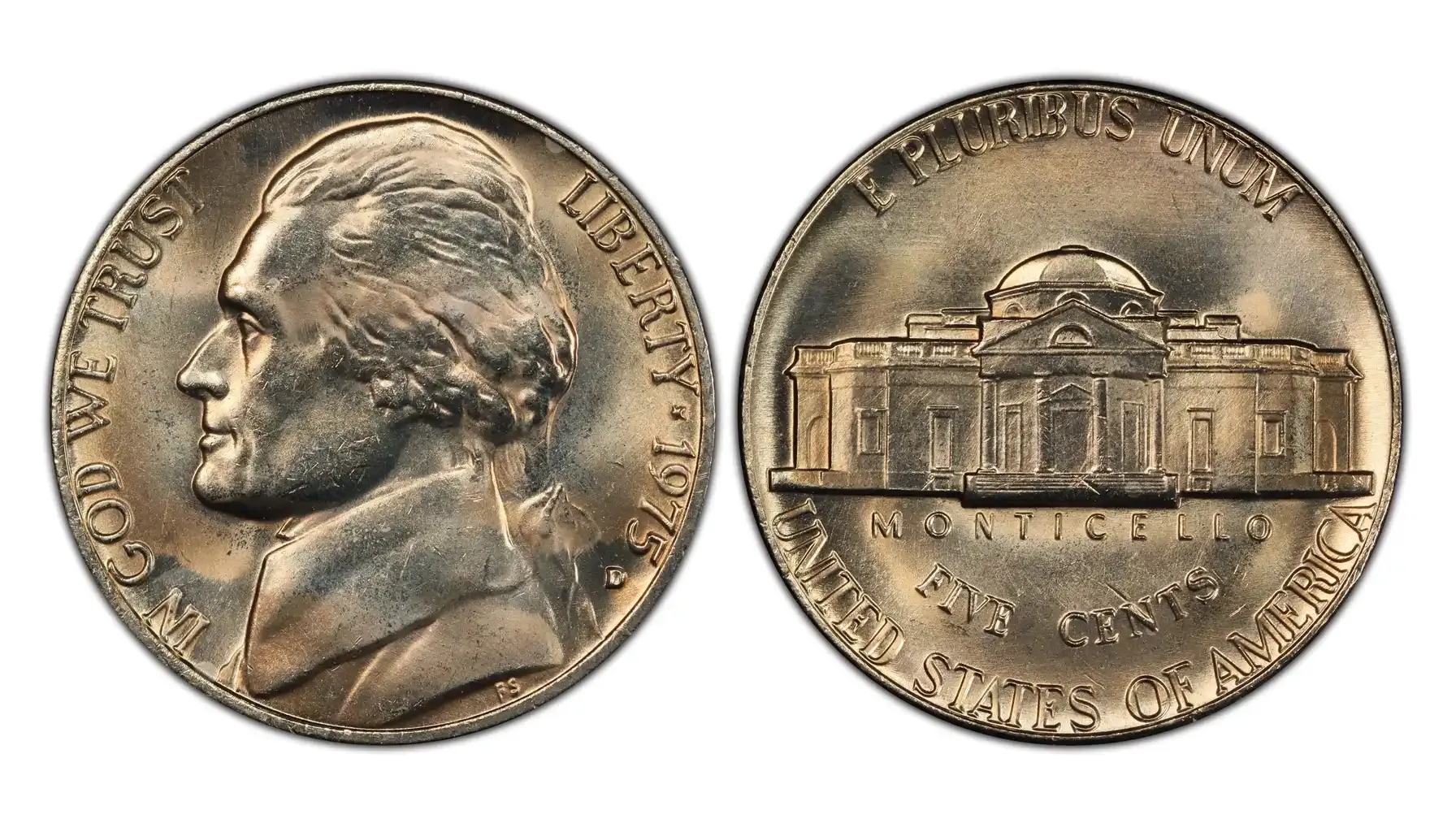
While most nickels of this year remain common, their worth can differ with mint and condition. An ordinary 1975 nickel no mint mark is worth about 5-20 cents in circulated grades, and up to $2–$3 for uncirculated coins. The 1975 nickel D usually reaches the same range, but some well-preserved pieces (MS66 or higher) can bring $10–$20+.
The Importance of Grade: How Condition Drives Price
Condition is always the main factor in market value. Circulated 1975 coins mostly have only main design elements, while uncirculated pieces have bright luster and sharp design. There are many scales to grade coins, but the most popular is the 70-point Sheldon scale used by PCGS and NGC. The common coin conditions are:
Good to Fine: heavy wear, mostly face value.
Very Fine: enough wear with visible hair and building details.
Extremely Fine: light wear on Jefferson’s hair and Monticello steps.
About Uncirculated: minimal signs of handling, the piece has some luster.
Mint State (MS60–MS67): all details are clear and sharp, no signs of wear marks.
1975 nickels in higher grades are less common but still possible to find, especially from saved rolls or mint sets.
As for high grades, collectors often look for the “Full Steps” version: on the reverse, all Monticello steps are clearly visible from top to bottom without breaks or flattening. Full steps variety is not an error but a high-quality coin that also reaches high prices.
Rare Varieties and Mint Errors to Look For
Even small errors can increase the price of the piece. So, how much is a 1975 nickel worth when it comes to specimens with minting flaws? Sometimes several times more than regular pieces. The 1975 nickel error list includes off-center strikes, doubled mintmarks, die breaks and so on. Below you can see some examples and check their value.
1975-D “High D” / Misplaced D Mintmark
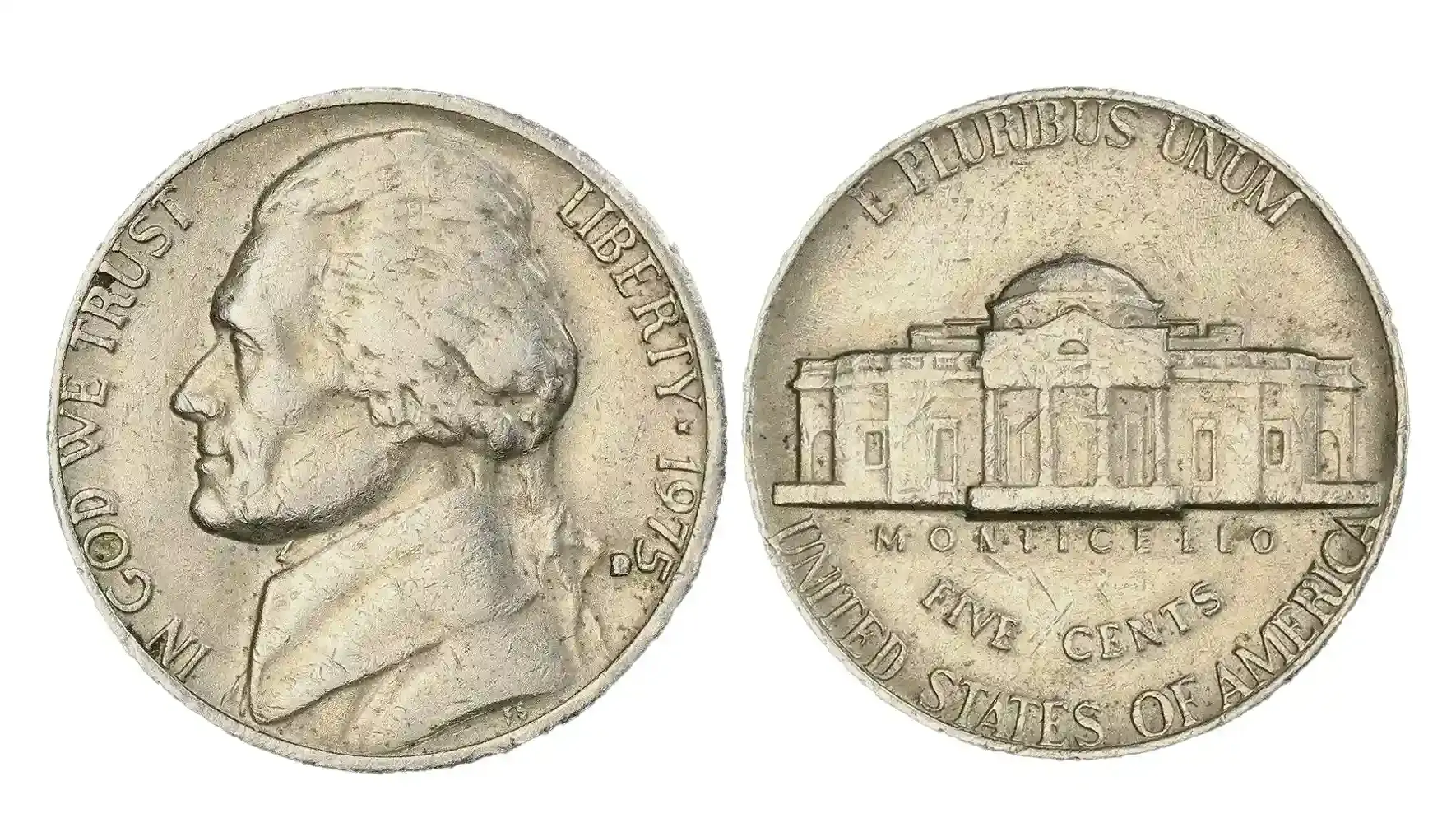
Only a few 1975-D nickels have the “D” mintmark stamped slightly above its normal position, right next to the date. The error is the result of misplaced die during striking. Even small shifts in mint mark’s location make the nickel rare and valuable.
Rarity: Very few confirmed examples
Value: Around $700–$1500, depending on clarity of the misplaced mark
“One of my favorite Jefferson nickels is the 1975 nickel with a misplaced mintmark … the so-called High D. … I have looked through at least a million nickels in the last 15 years, but I have only found two!”
— Tonerlover, coin collector and writer
“The Infamous 1975 High D”, Nickel Collector blog
1975 Off-Center Strike
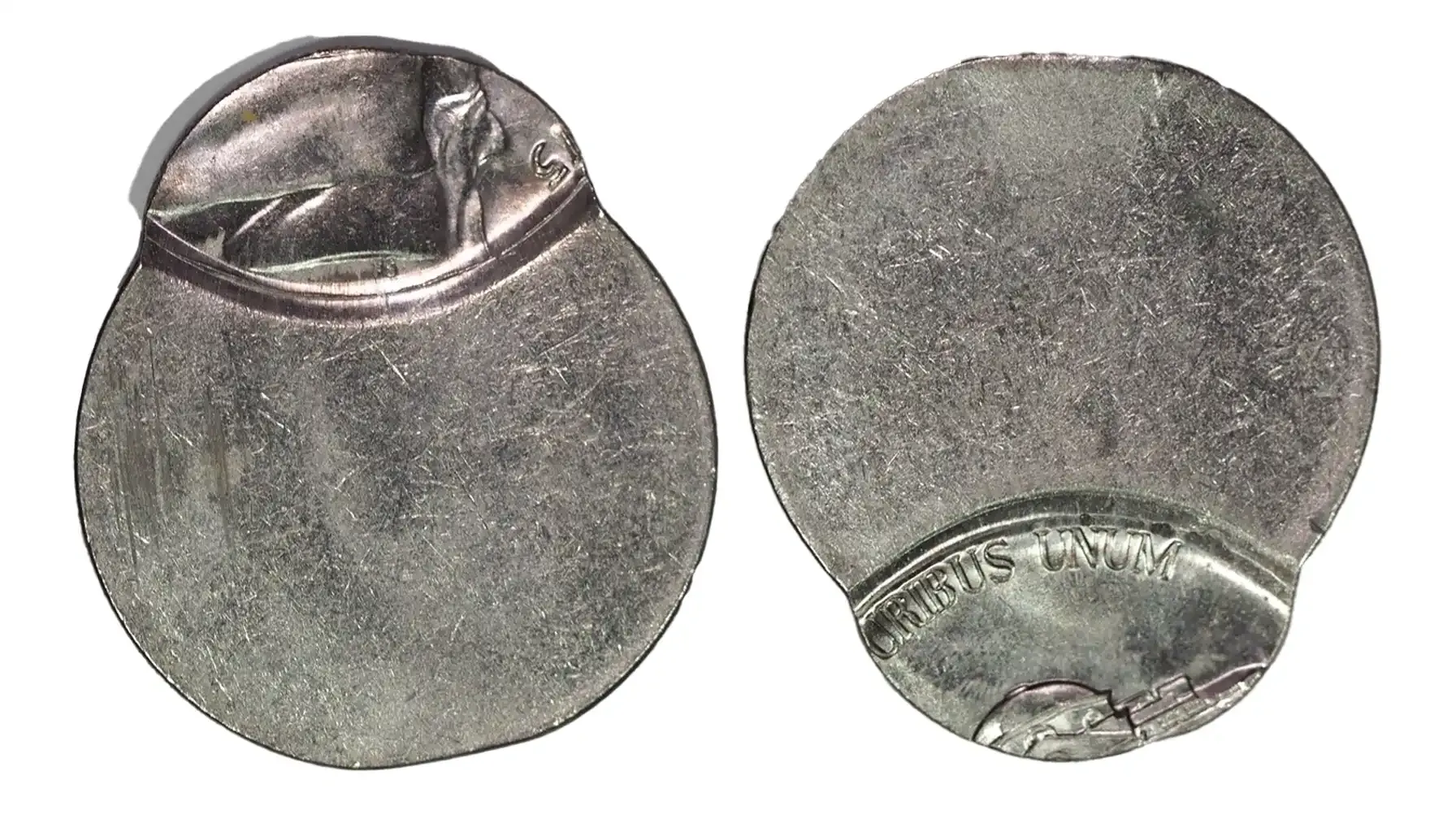
This error occurs when the coin’s planchet is not properly placed under the dies, so the part of Jefferson’s portrait or reverse design shifts, and the part of the empty planchet is visible. Coins with strong shifts are worth more.
Rarity: Occasional minting flaw
Value: Typically $40–$130, depending on the degree of the shift
1975-D/D RPM
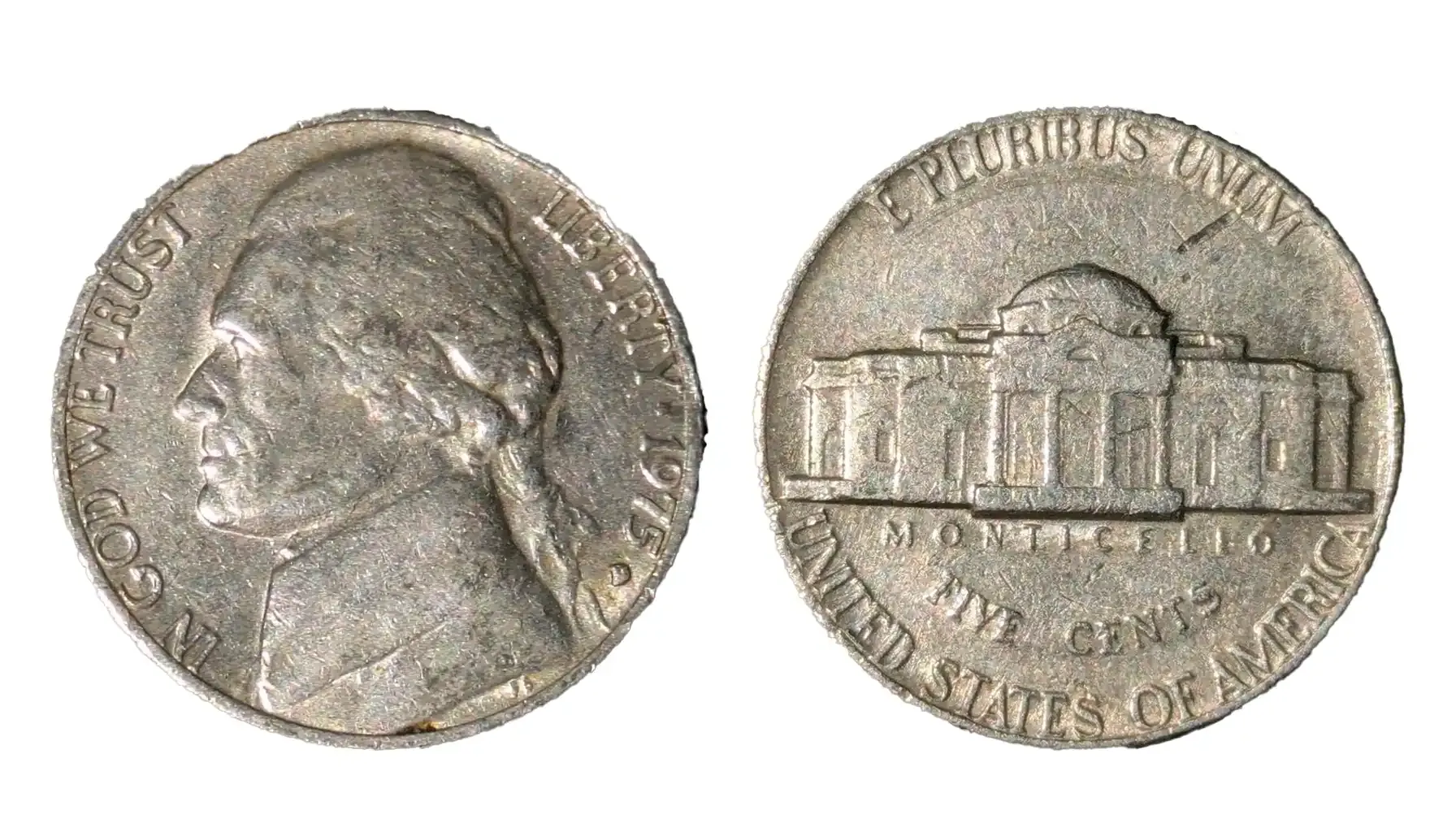
The coin has a doubled “D” mintmark. The second stamp is seen almost on the main letter. The rest of the coin’s surface looks ordinary with some signs of wear.
Rarity: Average
Value: Around $20–$100
1975-D Full Steps (PCGS MS67)
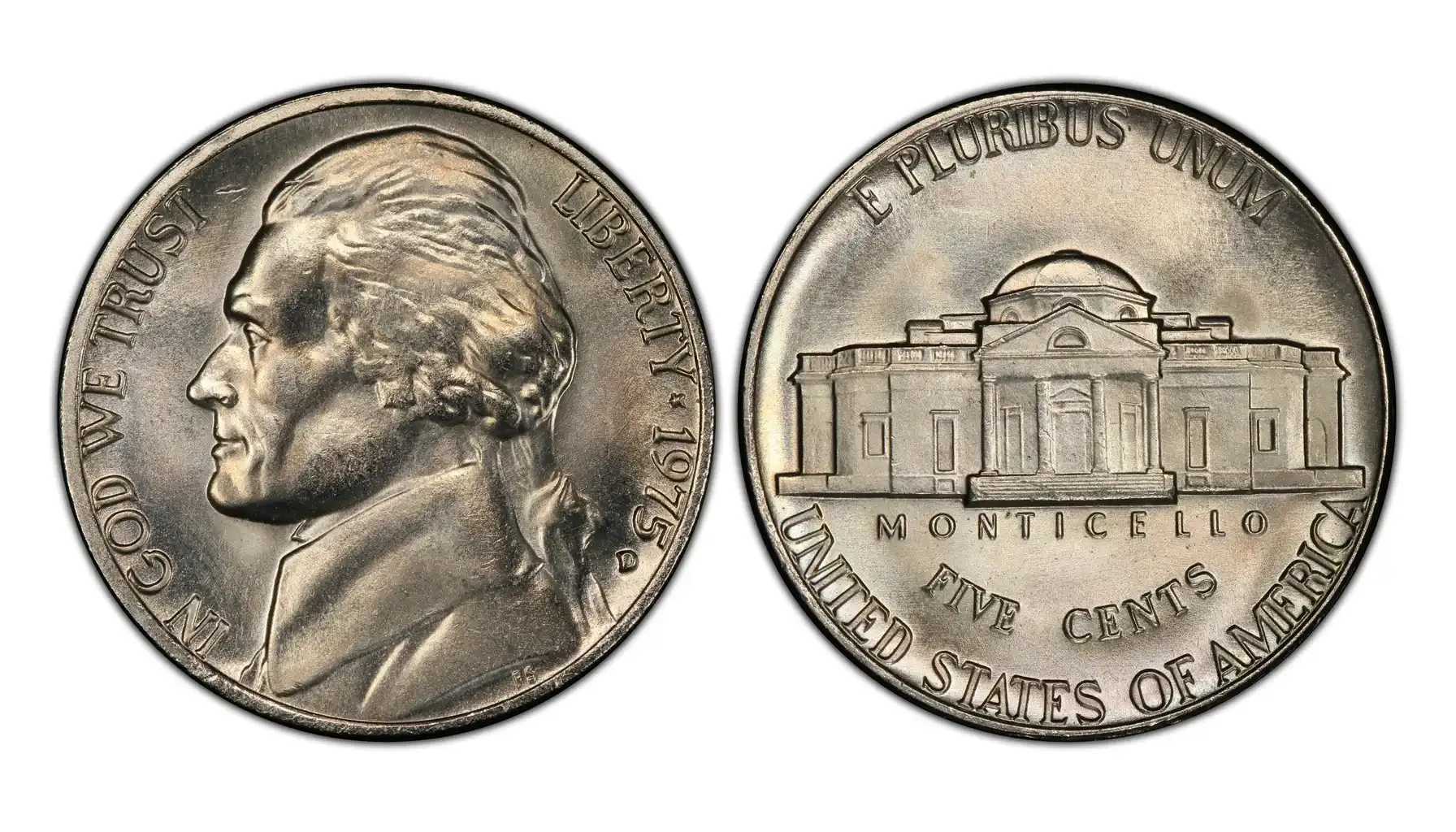
Not technically an error, but a desirable variety. On the reverse, all six steps of Monticello are sharp and clearly visible from top to bottom. This detail is lost on most circulation coins.
Rarity: Rare in high grades
This 1975 D nickel value: was sold for $750 in 2019, now a similar piece is listed on eBay for $180–$200.
1975 Nickel Value Chart (By Mint Mark and Grade)
You already know which main factors affect the coin's value. So, please refer to the table below to see approximate price ranges for 1975 nickels, depending on grade and type.
Type / Mint Mark | Good (G–F) | Extremely Fine (XF) | Mint State (MS60–MS65) | High Grade / Full Steps (MS66+) | Error Coins |
1975 (No Mint Mark – Philadelphia) | Face value | $0.10 – $0.25 | $1 – $5 | $20 – $40 | $50 – $300+ |
1975-D (Denver) | Face value | $0.10 – $0.30 | $2 – $8 | $50 – $200 | $90 – $950+ |
Actual value may vary depending on strike quality, collectors interest, and current demand (especially for error coins), so please contact an expert or check the current costs before selling or buying.
How to Accurately Identify and Value Your 1975 Nickel: A Step-by-Step Guide
To correctly identify 1975 nickel and determine its true worth, do these simple checks:
Examine the date and mint mark with a magnifier. The date and mint mark should be sharp.
Try to determine the condition. Hold the coin under natural light and notice the luster, scratches, and wear. Usually, the fewer scratches or other wear, the higher the coin value.
Examine Monticello steps on the reverse. If all are clear and unbroken, your coin can be a valuable “Full Steps” strike.
Weigh and measure your peace (optional). A true 1975 nickel weighs about 5.00 g and has a diameter of 21.21 mm. Any difference could be a sign that you have a coin stamped on the wrong planchet.
Compare findings to reliable sources. You can look at certified examples on PCGS, NGC, or online coin auctions’ listings and mark changes in cost to have an idea about the value of your coin.
From Identification to Action: Getting a Professional Appraisal

Once you’ve checked all details, consider applying to the professional services to confirm what you own. Grading services like PCGS or NGC can certify the coin and prove its grade.
But for a faster and more convenient start, use the Coin ID Scanner app. Identify, evaluate and manage your collectibles conveniently.
How to use the app:
Take a photo of your 1975 nickel
Wait a few seconds for results
Explore all basic information about your peace: minting details, historical background and even estimated value
Save all info for your digital collection and track it when convenient — all in one place.
FAQ
Is a 1975 Nickel Worth Anything?
Yes. Most 1975 nickels are worth face value but well preserved or error examples can sell from $20 to several hundred dollars, considering the coin’s rarity and certification.
What is the Composition of a 1975 Nickel? Does It Contain Silver?
No. All coins from 1975 issue (even proofs) made of 75% copper and 25% nickel, i.e. with the same composition used in regular Jefferson nickels since 1946.
Where is the Mint Mark on a 1975 Nickel?
On the nickels of this year the mint mark is placed on the obverse, just below the data and to the right of Jefferson’s portrait. “D” marks Denver and Philadelphia coins show no mint mark.
What are the Different 1975 Nickel Varieties and Which One is Rare?
The main varieties are the 1975 no mint mark, 1975-D. The rarest are error coins (i.e., off-center strikes, misplaced mint marks, or wrong planchet pieces) which can reach considerable sums.
How Much is a 1975 No Mint Mark Nickel Worth?
A regular 1975 nickel value no mint mark is typically ~ 5-10 cents in circulated grades. Uncirculated examples may reach $5–$40 depending on strike quality and luster. Error or Full Steps variety coins can be worth more.
Why Do Some 1975 Nickels Look Different? (Dull vs. Shiny)
Circulation coins can look dull over time, but if the piece was stored carefully, it saves their bright surface. While the metal content is identical for dull and shiny coins, the condition and right handling matter.
Conclusion
The 1975 Jefferson nickel isn’t among the rarest U.S. coins, yet certain examples, e.g., high-grade pieces or error examples can still attract attention. In general, 1975 nickel remains a modest but collectible part of the series.
Now that you know what things to consider, it is time to try quick solutions: use the Coin ID Scanner app to check coins’ values and explore even more with the app’s blog and tips.

 Facebook
  X (Twitter)
  Pinterest
  LinkedIn