Contents:
The Washington quarter coins appeared on the numismatic scene in 1932, and right from the start, they have proven to be some of the most widely circulated and eventually collected coins in the United States. They were struck during the most unstable periods of human history, but even so, the series survived, and it keeps thriving through limited editions, commemorative lines, and numerous regular issues to date.
The 1946 Washington quarter is the product of the first full postwar year. Although it cannot be considered the rarest or, at least, most famous “key date”, many examples still appear in the collections as fine representatives of their own kind. But how much is a 1946 quarter worth? How to check coin value, and which factors might affect the final price?
1946 Washington Quarter Overview
At first, the Washington quarter, which ultimately replaced the Standing Liberty design, was released as a commemorative issue of regular circulation, meant to celebrate the 200th anniversary of George Washington’s birth. So as to select the most appropriate appearance, the Treasury held a design competition, and the likeness, as per instructions, was to follow the famous bust by Jean-Antoine Houdon.
Although the United States Commission of Fine Arts favored Laura Gardin Fraser’s entry, the Treasury opted for the design by John Flanagan: the first was considered too difficult to strike (though it would later appear on a 1999 commemorative half eagle anyway). Having made the choice, the United States Mint prepared the new coin for nationwide use. This is how the 1932 Washington quarter started the legendary lineup (on August 1, 1932).
“...The new quarter dollar could be issued in 1932 as a part of the Government's participation in the two-hundredth anniversary celebration. Coins of the proposed new design would replace the current quarter dollar and would be placed in general circulation throughout the country at face value <...>. As the new coins would replace the present type of quarter dollar, the issue of the same would not be contrary to the objections set forth by the President in his veto message…”
— U.S. House Committee on Coinage, Weights and Measures
Hearings on H.R. 16973, 71st Congress, 3rd session, p. 2 (February 13, 1931)
Identifying the 1946 Washington Quarter: Design & Specs
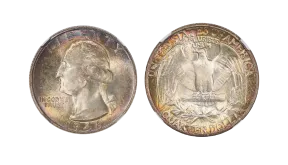
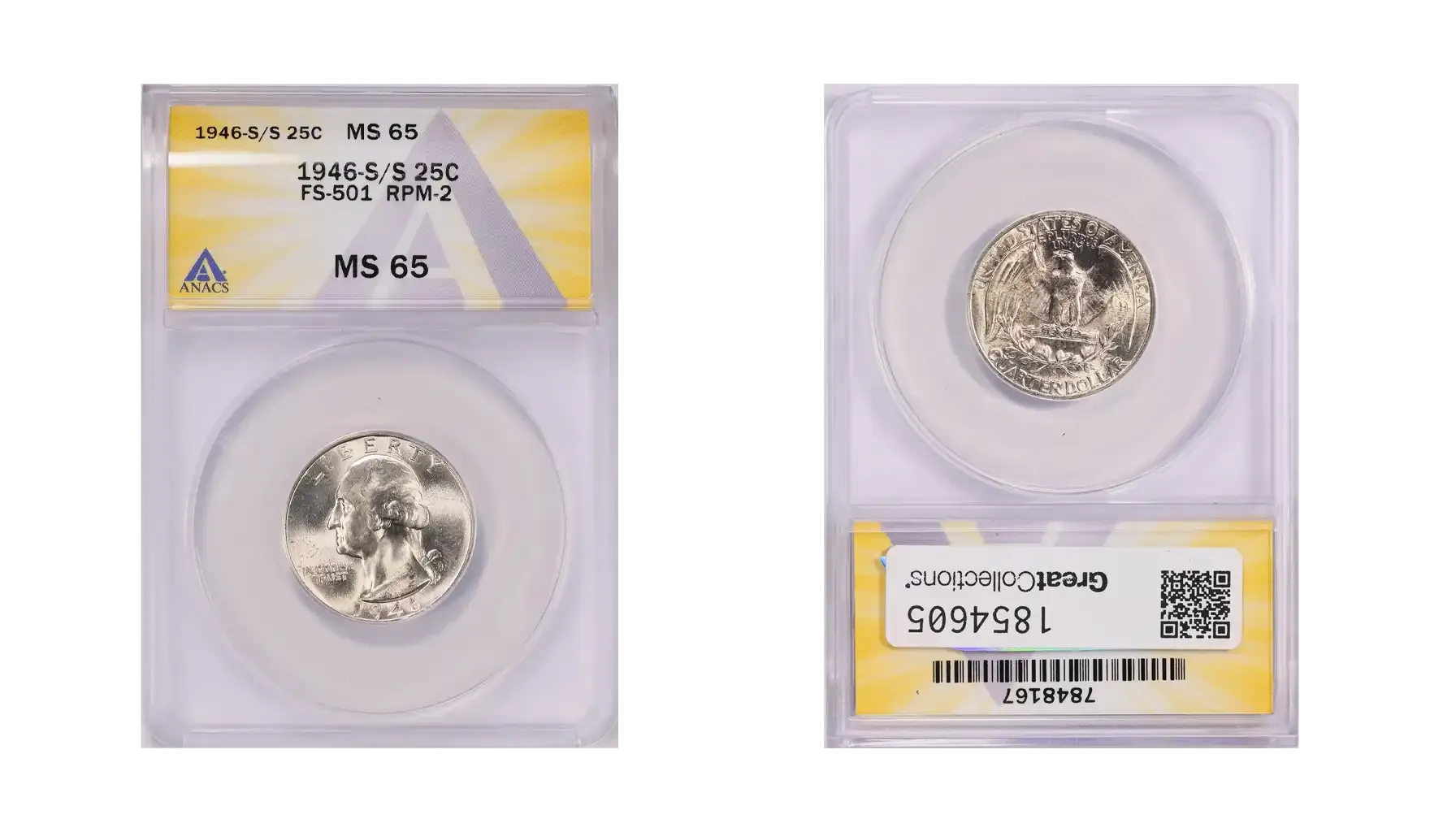
Obverse: The bust of George Washington, the inscription "LIBERTY" along the upper rim, the national motto "IN GOD WE TRUST" to the left of the profile (below the chin), and the year of mintage "1946" below.
Reverse: A bold eagle with its wings spread wide, perched on a bundle of arrows, with two olive branches curving upward beneath (and a tiny mint mark at the center below), as well as the inscriptions "UNITED STATES OF AMERICA" across the upper rim, "E PLURIBUS UNUM" above the eagle (between its wings), and the denomination "QUARTER DOLLAR" beneath.
The Main Features of the 1946 Quarter Silver | |
Denomination | 25 cents |
Composition | 90% silver, 10% copper |
Weight | 6.30 g |
Diameter | 24.30 mm |
Thickness | ~1.75 mm |
Edge | Reeded |
Designer | John Flanagan |
Mint Marks | None for Philadelphia “D” for Denver “S” for San Francisco |
Mint Marks and Varieties of the 1946 Quarter
1946 25C
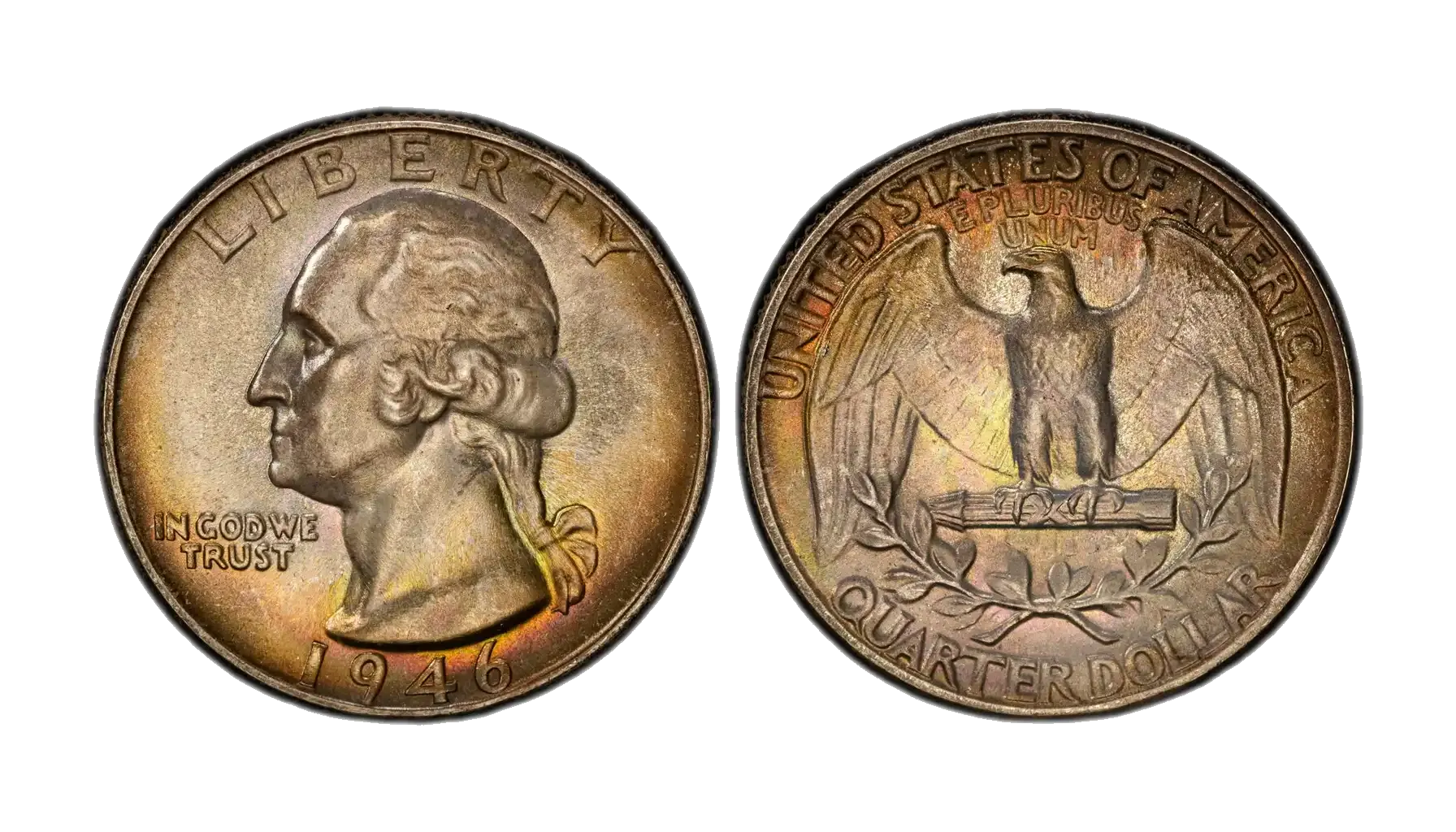
Produced by: Philadelphia Mint
Mintage: 53,436,000
Auction record: $8,050 for MS67
One may believe that high-mintage figures are less valuable. However, it is a stereotype. Indeed, the 1946 quarter no mint mark variety was minted in large quantities, yet it is surprisingly difficult to locate in true Gem condition today.
1946-D 25C
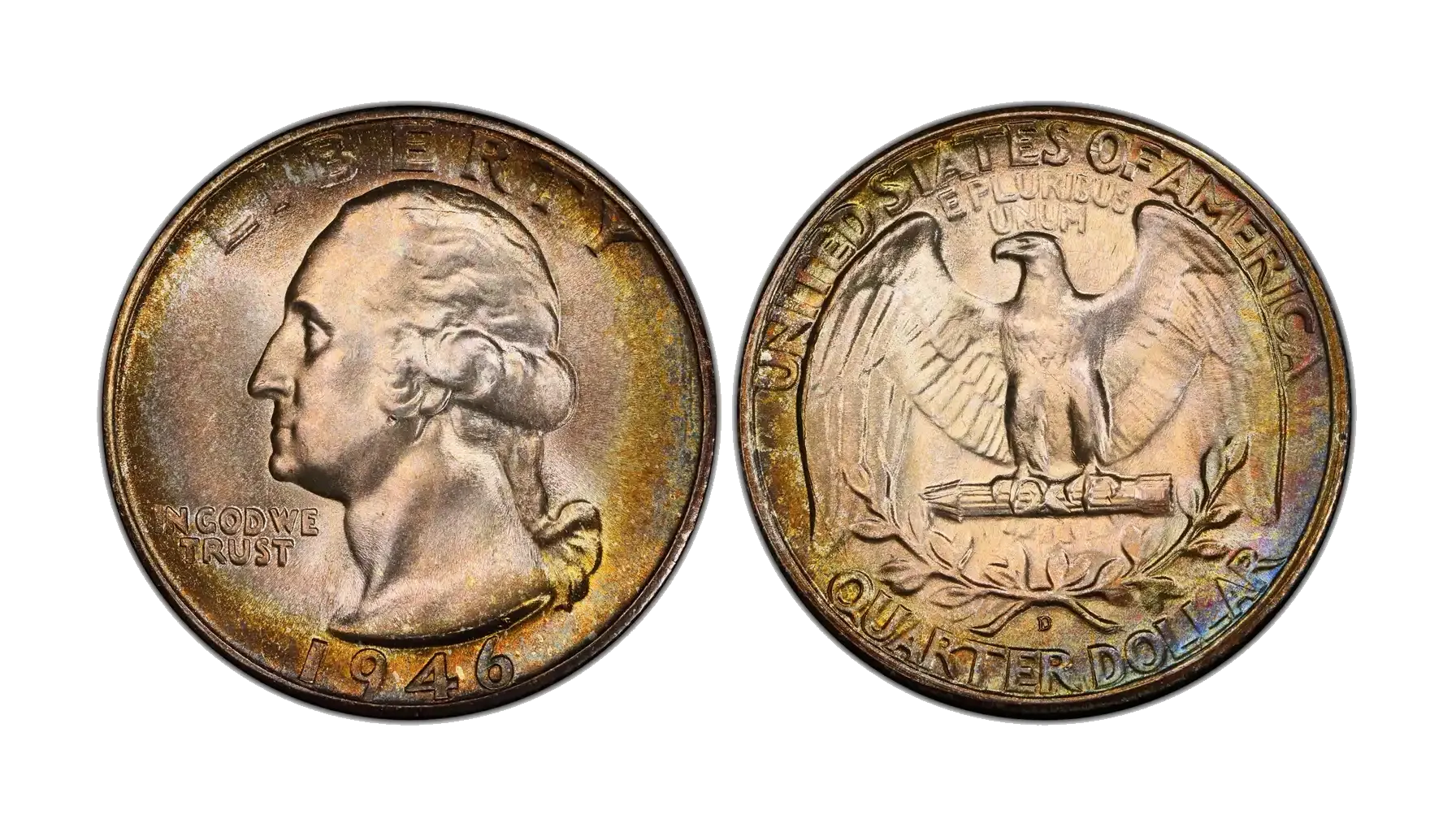
Produced by: Denver Mint
Mintage: 9,072,800
Auction record: $13,800 for MS68
Although the 1946 D quarter value might be a bit higher than that of other issues, the coin is still widely available in higher grades. According to David Hall, collectors might easily find attractive pieces with pleasing luster, and the strike quality tends to be solid (exceptions are possible, though).
1946-S 25C
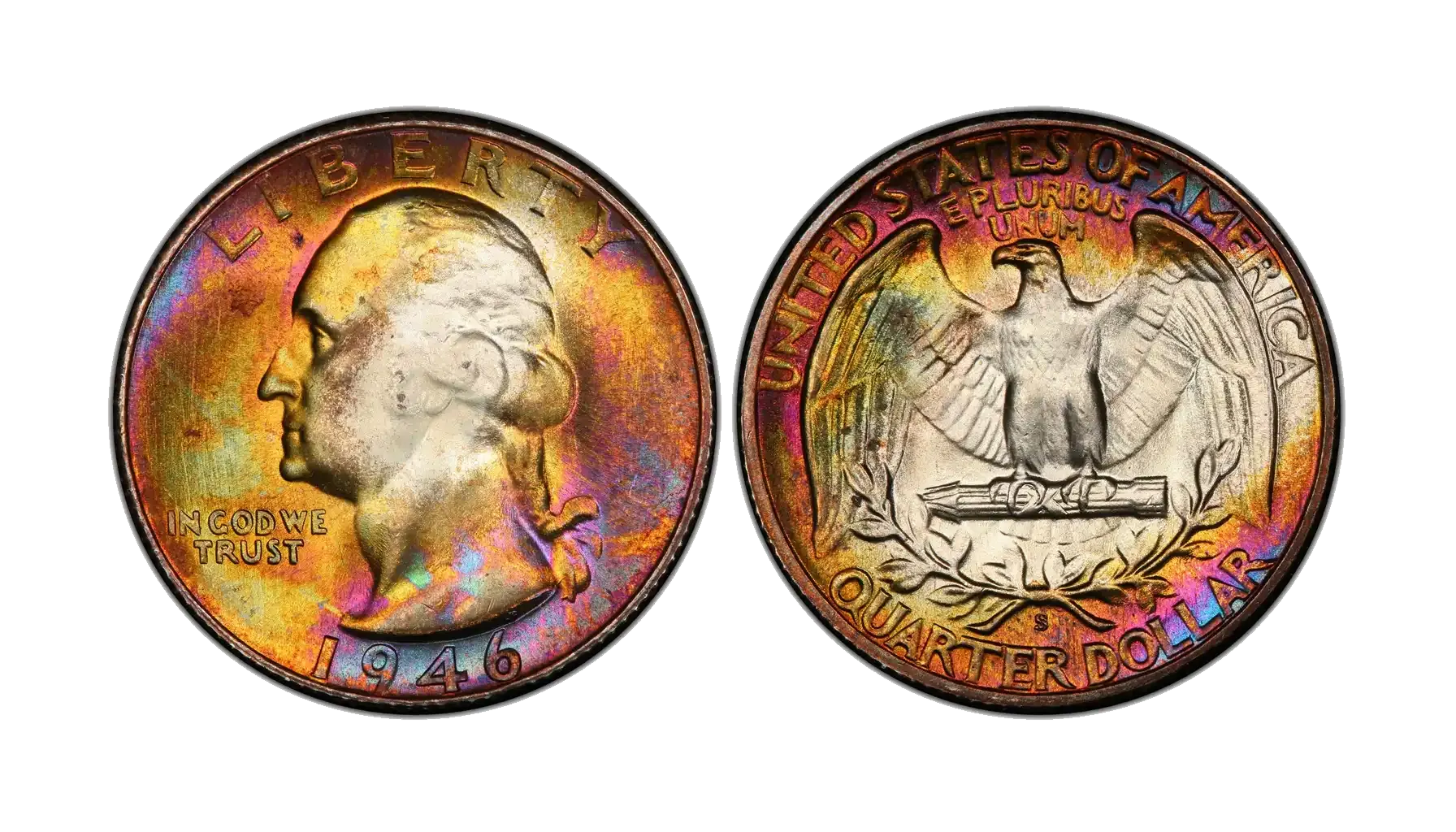
Produced by: San Francisco Mint
Mintage: 4,204,000
Auction record: $14,950 (MS68)
As numismatists state, the issue from the San Francisco Mint is plentiful in Gem condition. Roll savers paid attention to this coin in the mid-20th century, and many original, uncirculated rolls were preserved. This is why the average 1946 S quarter value is modest, though exceptional pieces may still cost a lot.
1946 Quarter Value Today (by Condition and Mint)
Notwithstanding the fact that the quarters of this type do not belong to the category of old coins of early America, the 1946 Washington quarter value may impress. It differs, but the price is never fixed (it may fluctuate within the mint group, let alone the series as a whole). But why, and what is a 1946 quarter worth?
Grade | 1946 25C | 1946-D 25C | 1946-S 25C |
G-4 | ~$19 | ~$19 | ~$19 |
VG-8 | ~$19 | ~$19 | ~$19 |
F-12 | ~$19 | ~$19 | ~$19 |
VF-20 | ~$19 | ~$19 | ~$19 |
EF-40 | ~$20 | ~$20 | ~$20 |
AU-50 | $21 | $21 | $21 |
MS-60 | $22–$23 | $22–$23 | $22–$23 |
MS-63 | $25–$26 | $25–$26 | $25–$26 |
MS-65 | $32–$45 | $32–$36 | $32–$38 |
MS-67 | $650–$2,500+ | $285–$3,200+ | $275–$950+ |
Factors Affecting the 1946 Silver Quarter Value
Silver Spot Price (Melt Floor): In lower circulated grades, it is common to rely on the bullion value (which is $15.6 as of 2026)
Mint Mark: Different mint marks mean different Washington quarter mintages and, hence, demand (which is tied to the price, and vice versa).
Condition (Grade): Wear level is the most definitive factor. We appreciate more well-preserved pieces – this is the rule.
Errors: Minting errors as exclusive offers are considered more desirable.
Certification: Coins graded by major services like PCGS or NGC tend to sell more easily, and high-grade examples can be more expensive.
Collector Tips and Where to Buy 1946 Quarters
Pro Tip: Always purchase collectibles from reputable sources. It is extremely important to verify authenticity, confirm the coin’s grade, and understand the seller’s return policy before you buy.
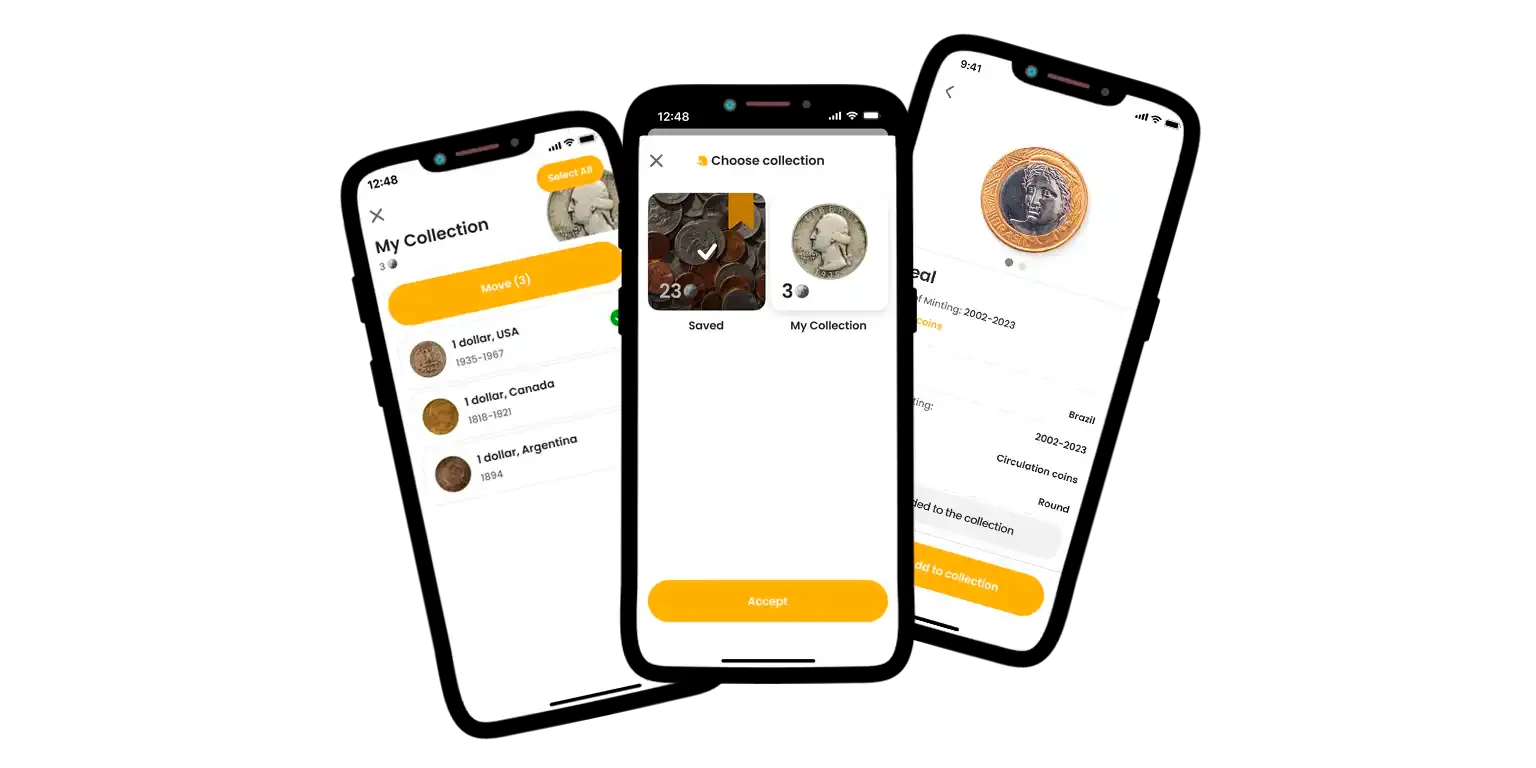
So as to make this process smoother, use apps like Coin ID Scanner to identify numismatic creations on the spot, compare coins to verified reference images, consult digital assistants, and analyze the potential at once.
Check twice – buy wisely.

 Facebook
  X (Twitter)
  Pinterest
  LinkedIn