Contents:
The Barber coinage is one of the most controversial chapters of American numismatics. The series started in 1892 with the introduction of new dime, half dollar, and quarter designs, and the initial comments were relatively positive (at least in the sense that Americans were ready to move on from the old Seated Liberty motifs and expected something fresh instead of mundane, traditional classics).
The optimism did not last long, though. "Institutional art" could literally be the only appropriate and polite term to describe numismatic creations of that type. In fact, the Barber aesthetic was careful, balanced, conservative, and correct, but it rarely felt daring or expressive (more of an official seal rather than true art).
So as to explore the depths of the Barber coinage, let us take a look at the 1899 US quarter as a fine representative example of such a discord, check coin value, and understand why these numismatic creations are always subject to debate.
1899 Barber Quarter Overview
The Barber quarters were first introduced in 1892. Before that, the United States Mint received repeated requests calling to replace the already outdated Seated Liberty design by Christian Gobrecht. A design competition failed to produce an acceptable outside entry, so Mint officials ultimately directed Chief Engraver Charles E. Barber to prepare the new coin design.
By 1899, it had already been well-established in the monetary system, and today the coin is no less than a standard, widely collected date of the late-19th-century US silver coinage series.
Identifying the 1899 Barber Silver Quarter: Design and Specs
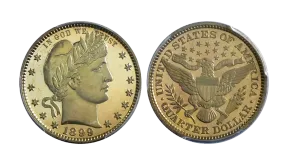
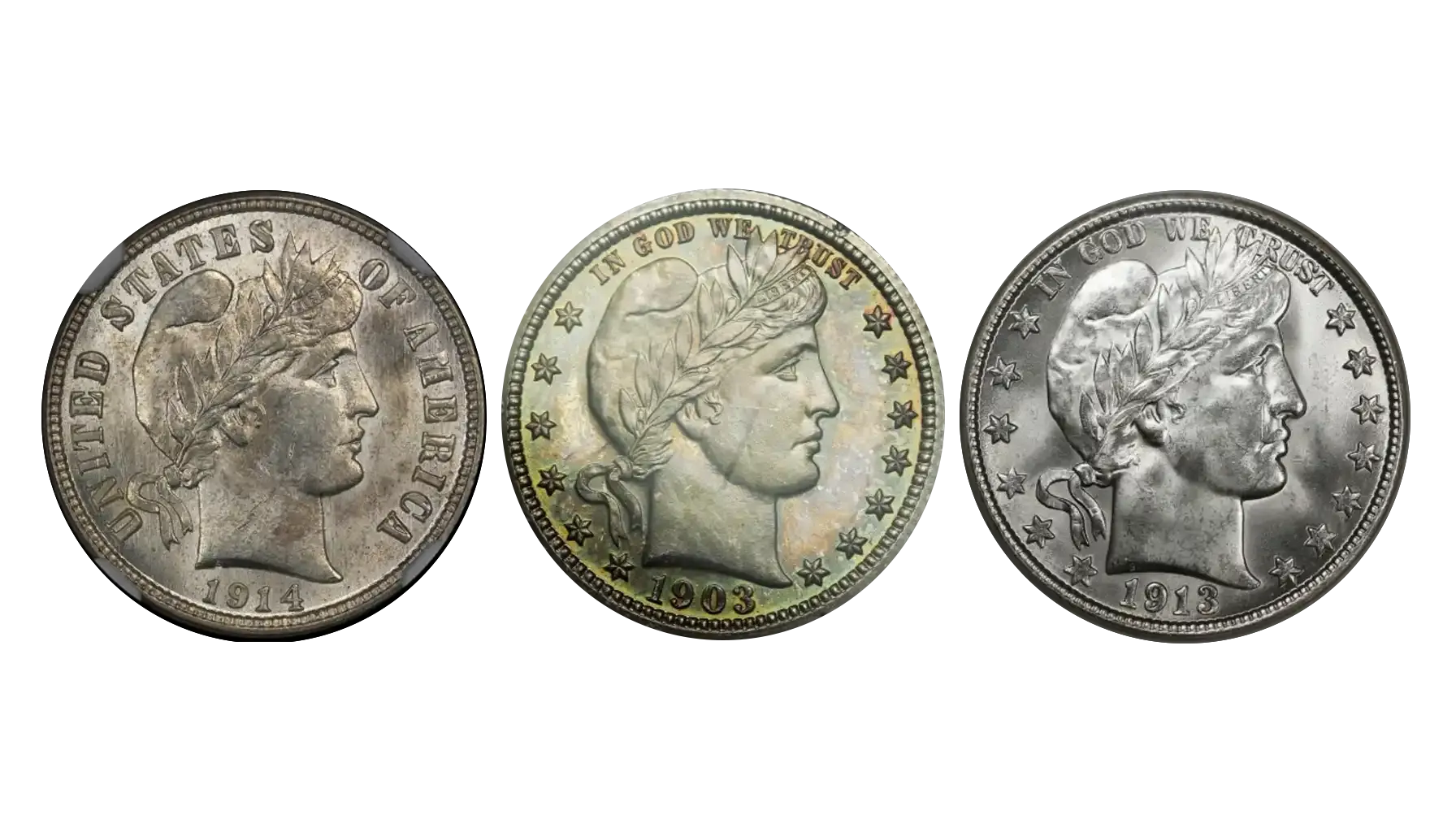
Obverse: Features the classical profile of Liberty in a Phrygian cap with a laurel wreath above it and a headband, worn across her forehead, inscribed “LIBERTY”. As for the other inscriptions, these include the national motto “IN GOD WE TRUST” positioned along the upper edge and continued (=looped) with 13 six-pointed stars around the rim, as well as a small letter “B” (for Barber) located on the truncation of Liberty's neck and the date “1899” beneath.
Reverse: Demonstrates a heraldic eagle (based on the Great Seal style), holding an olive branch in its right talon and arrows in its left, with its wings spread wide and a shield positioned on its chest. The arrangement is supported by 13 stars above the eagle and a small mint mark below, the inscription "UNITED STATES OF AMERICA" around the outer rim, "E PLURIBUS UNUM" written on a scroll in the eagle's beak, and the denomination "QUARTER DOLLAR" placed at the bottom.
The Main Features | |
Composition | 90% silver, 10% copper |
Silver fineness | .900 |
Weight | 6.25 g |
Actual silver weight (ASW) | 0.18084 troy oz |
Diameter | 24.3 mm |
Thickness | ~1.75 mm |
Edge | Reeded |
Designer | Charles E. Barber |
Varieties and Mint Marks of the 1899 Quarter
1899 25C
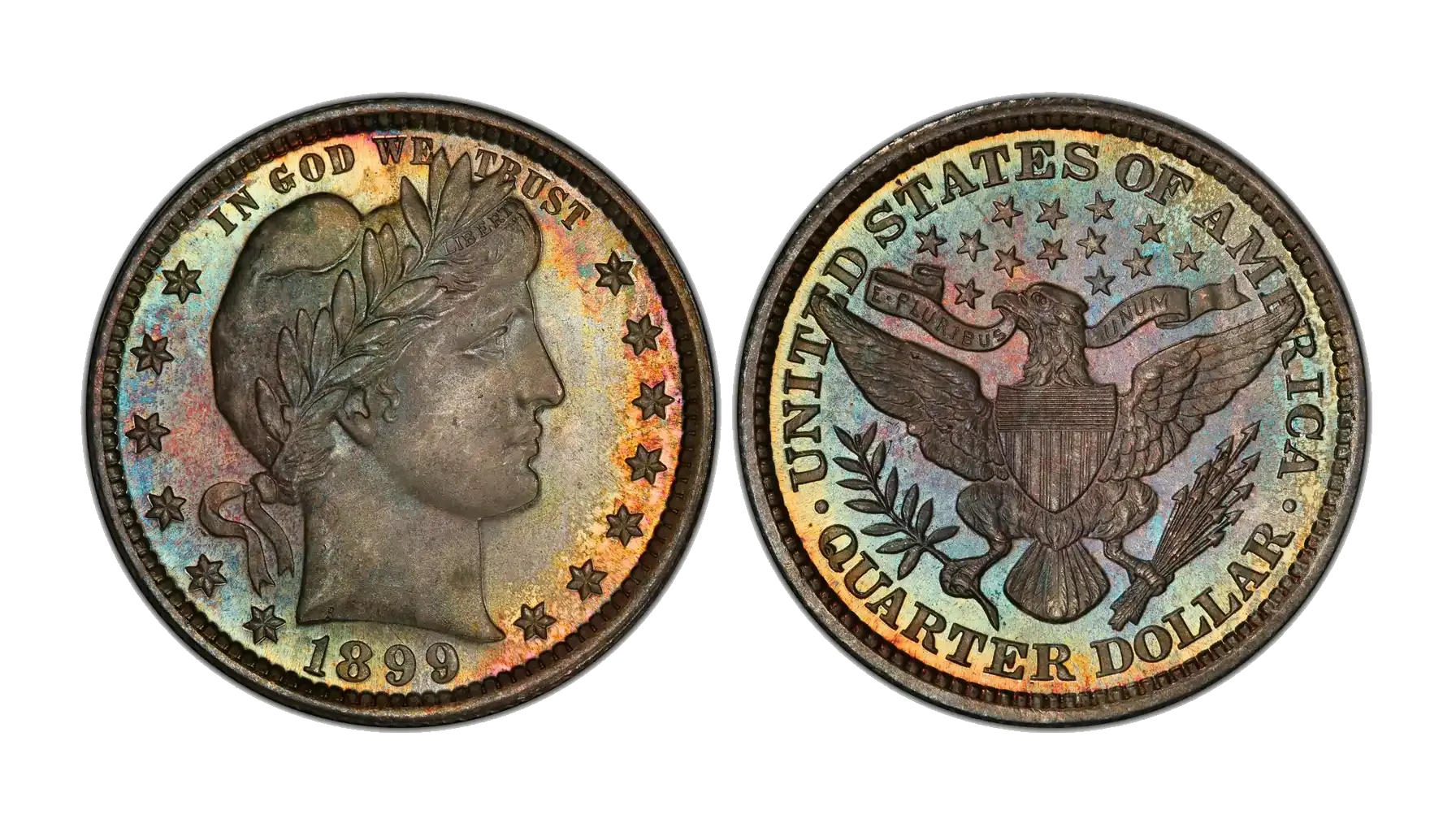
Produced by: Philadelphia Mint
Mintage: 12,624,000
Auction record: $14,400 for MS67
A high-mintage circulation issue from Philadelphia. It is common in word grades, but Mint State examples, especially over the MS63 grade and with strong luster and clean surfaces, can be sold for a few thousand dollars.
1899-O 25C
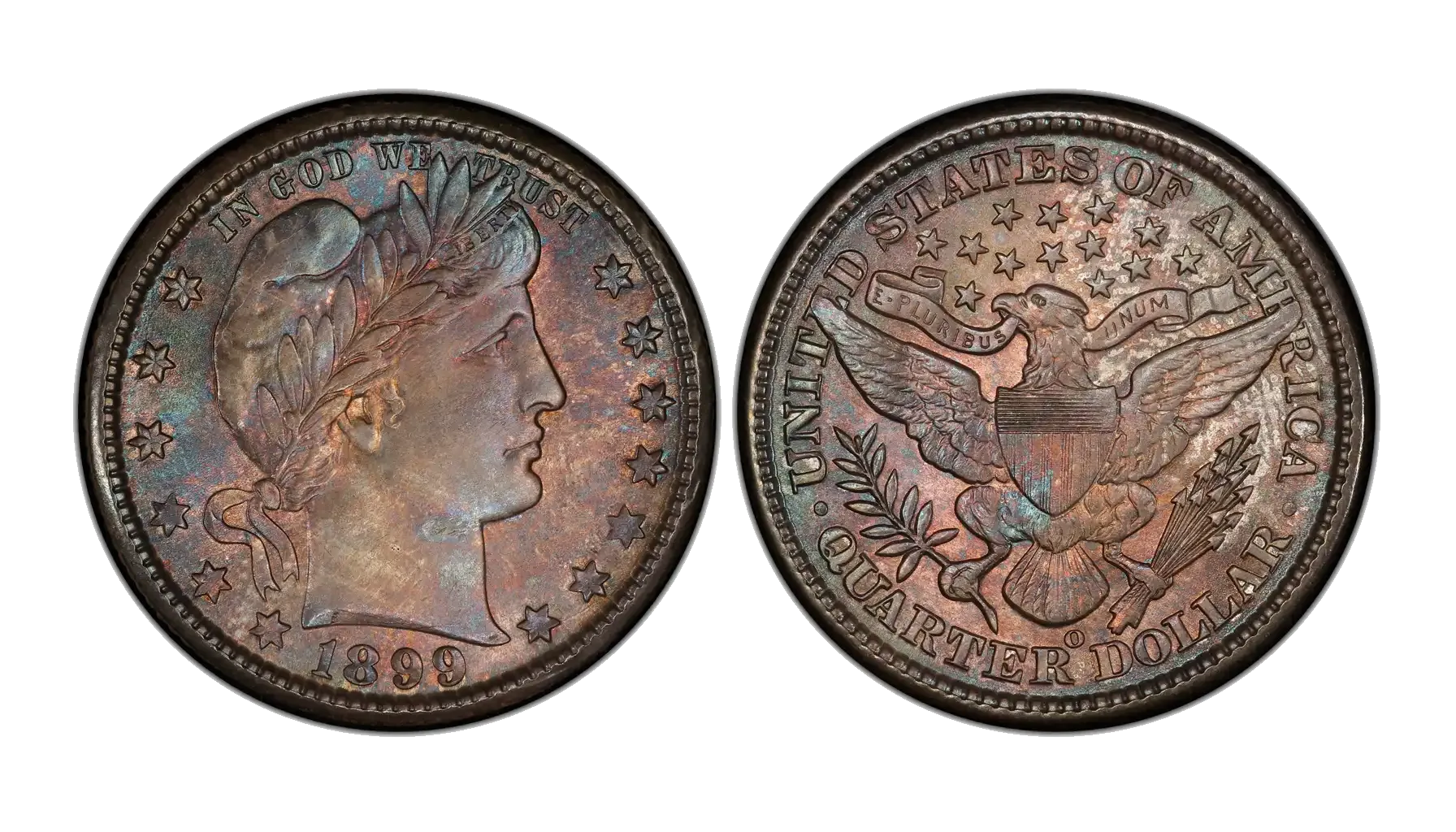
Produced by: New Orleans Mint
Mintage: 2,644,000
Auction record: $16,500 for MS66
A branch-mint issue identified by the “O” mint mark. It may boast a lower mintage than that of the Philadelphia, the stronger collector demand, and the higher 1899 Barber quarter value (relevant to higher Mint State grades).
1899-S 25C
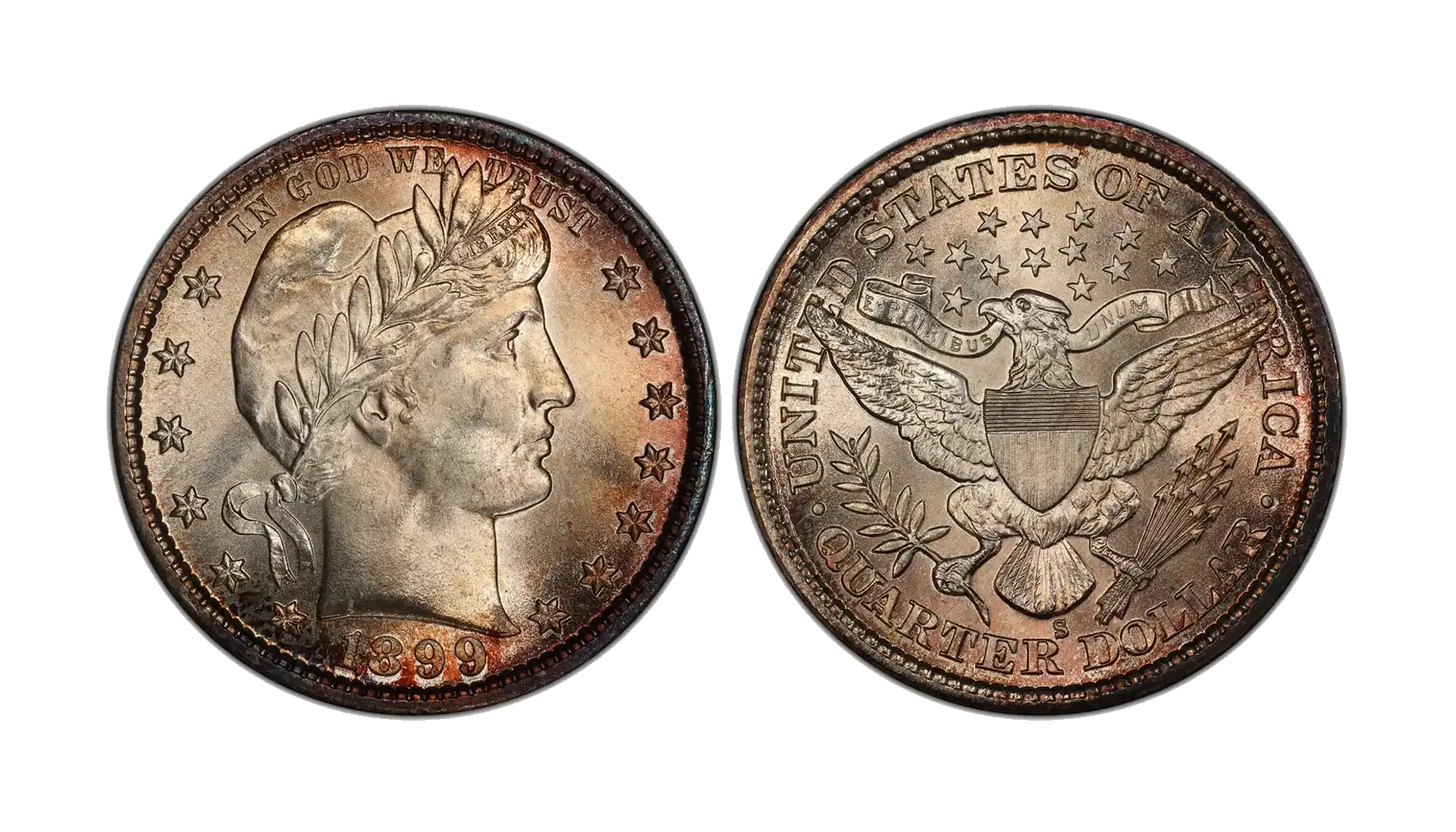
Produced by: San Francisco Mint
Mintage: 708,000
Auction record: $19,550 for MS68
A low-mintage San Francisco issue and one of the tougher S-mint Barber quarters by overall certified population. High-grade pieces are especially hard to find, which is why the 1899 silver quarter value may even exceed $20,000 in excellent condition.
“…As expected, the 1899-S is difficult to locate in high grade, with just a few dozen Mint State examples to satisfy intense collector demand. Fortunately, most Mint State survivors are nice, and the PCGS CoinFacts Condition Census includes ten coins that grade from MS66 to MS68…”
— Ron Guth, renowned numismatist, licensed Certified Public Accountant
PCGS CoinFacts
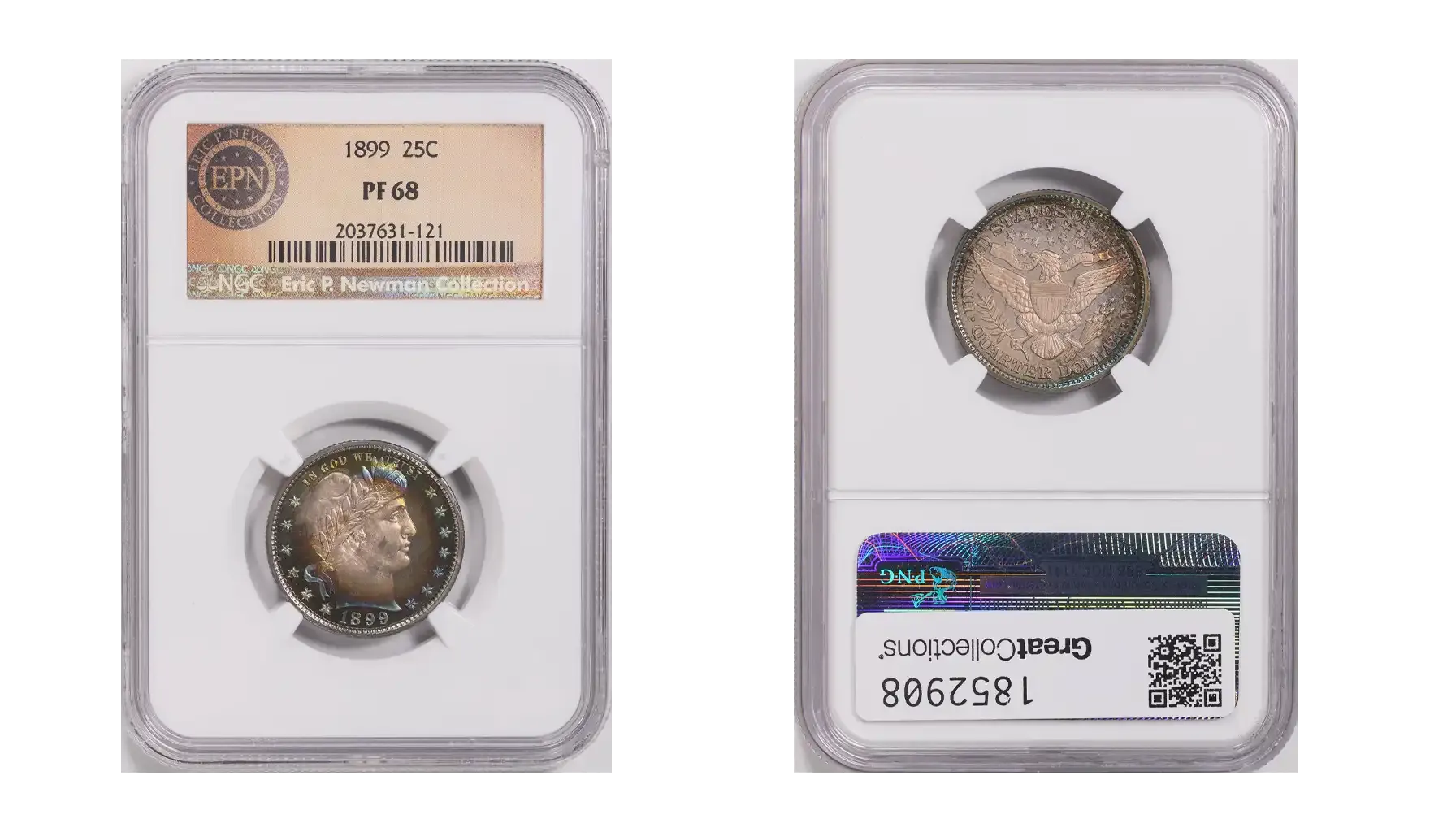
1899 25C (Proof)
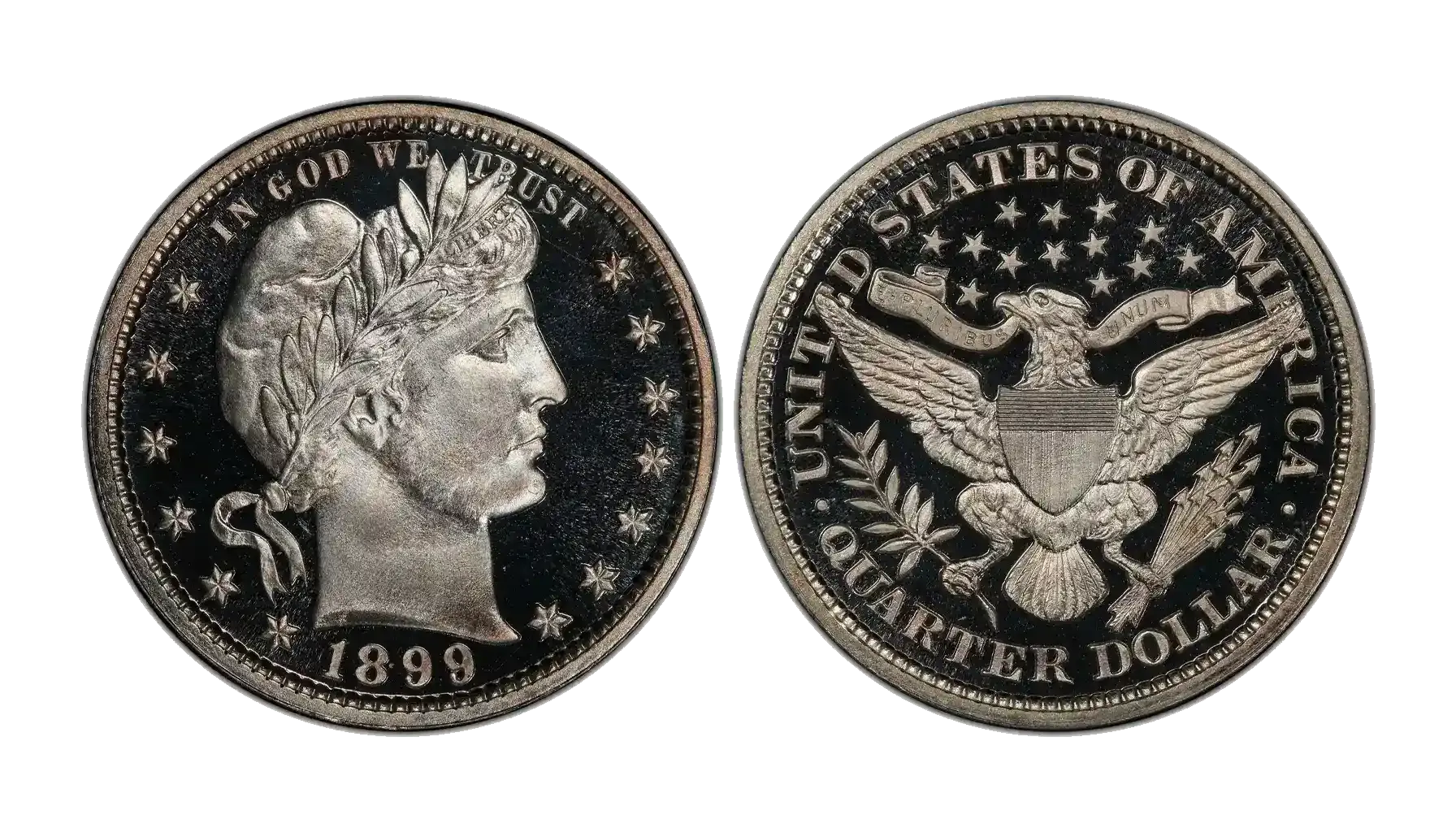
Produced by: Philadelphia Mint
Mintage: 846
Auction record: $90,000 for PR69DCAM
A special edition for collectors, produced in extremely limited quantities that, despite the overall demand, holds the all-time record for the value of 1899 quarter (applicable only to the 1899 line). May come with Cameo and Deep Cameo designations, with the latter being a more desirable (exquisite) one.
1899 Quarter Value Today (by Grade)
Even within the same date, the 1899 quarter dollar value may differ. It depends on several factors, let alone inflation rates and market trends that cannot be set but can be predicted only. So, how much is a 1899 quarter worth, and what could affect these variables?
Factors Influencing the Value of a 1899 Quarter Dollar
Mint/type: 1899 (P), 1899-O, 1899-S, or 1899 proof – each has its own scarcity level and demand.
Grade: higher detail = higher value; biggest jumps in MS and top Proofs.
Condition/appeal: original surfaces, fewer marks, no cleaning/damage.
Proof contrast & certification: Cameo/DCAM and PCGS/NGC certificates matter.
The 1899 Quarter Worth by Grade (Approximate)
Grade | 1899 25C (P) | 1899-O 25C | 1899-S 25C | 1899 25C (Proof) |
G4 | $26–$35 | $40–$45 | $45–$50 | – |
F12 | $50–$69 | $65–$80 | $125–$150 | – |
XF40 | $115–$125 | $200–$225 | $325–$385 | – |
MS63/PR63 | $475–$500 | $1,300–$1,500 | $2,500–$3,000 | $2,000–$2,350 |
MS65/PR65 | $775–$1,000 | $4,350–$5,000 | $5,250–$6,000 | $5,500–$6,500 |
MS67/PR67 | $15,750–$17,500+ | $20,000+ | $12,500–$30,000+ | $13,500–$115,000 |
How much was a quarter worth in 1899? Well, a simple quarter was worth 25 cents. As for the purchasing power, it would be approximately $9.80 in 2026.
If you are interested in past market dynamics and old issues, do not hesitate to download Coin ID Scanner – it offers numismatic tools to identify, analyze, study, and manage any coin on the spot.

 Facebook
  X (Twitter)
  Pinterest
  LinkedIn