Contents:
History of the 1795 Silver Dollar
The 1795 silver dollar marked a real shift in early U.S. coinage. After the Coinage Act of 1792, America finally started striking its own gold and silver money.
Each coin weighed around 27 grams, made from nearly 90% silver and the rest copper — that was the rule back then. Since minting was all manual, no two coins looked exactly the same; each carried its own small quirks and marks from the die.
This early liberty 1795 coin embodied the spirit of a new country, where even the metal itself conveyed the idea of freedom.
You can use a coin scanner app to determine the market value before purchasing.

From Flowing Hair to Draped Bust: The 1795 Transition
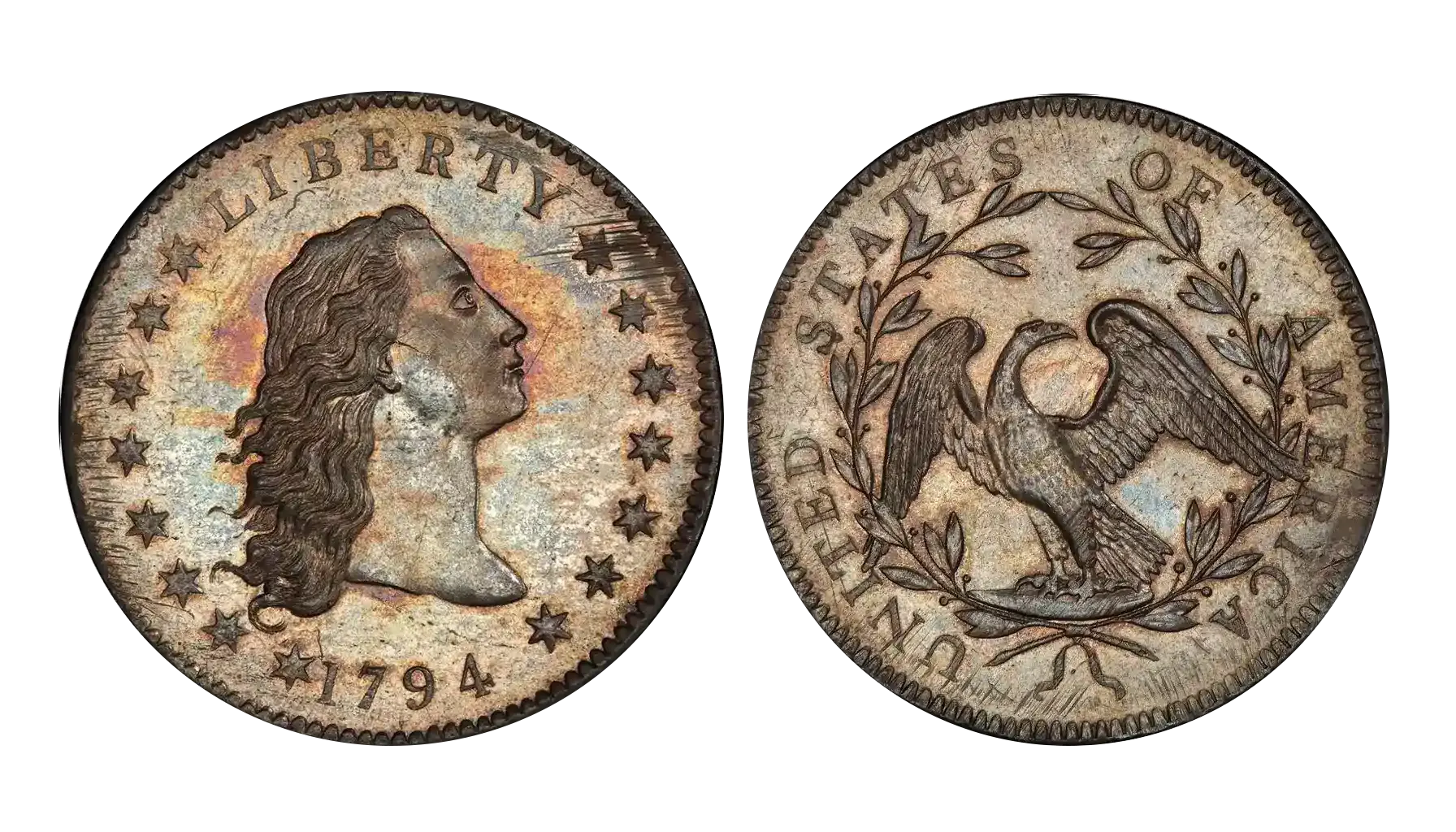
The story of the coin began in 1794, when the Mint first tried the Flowing Hair design. Liberty’s loose hair was supposed to show freedom. Still, many thought the result looked rough. A few months later, the design changed again: the 1795 Draped Bust dollar appeared, calmer in line and closer to the classical look people expected.
The artist Gilbert Stuart took ideas from old sculptures and gave Liberty a calm and elegant face.
Why the 1795 Dollar Matters to Collectors Today
This coin carries real weight in history — each piece was struck by hand, and no two are exactly alike. That sense of craft is what draws people to it.
When it comes to the market, the real 1795 Liberty coin value holds steady, supported by the few surviving originals and the lasting demand for early American coins.
1795 Silver Dollar Varieties
Flowing Hair Dollar (1794–1795)

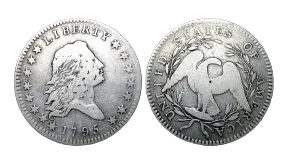
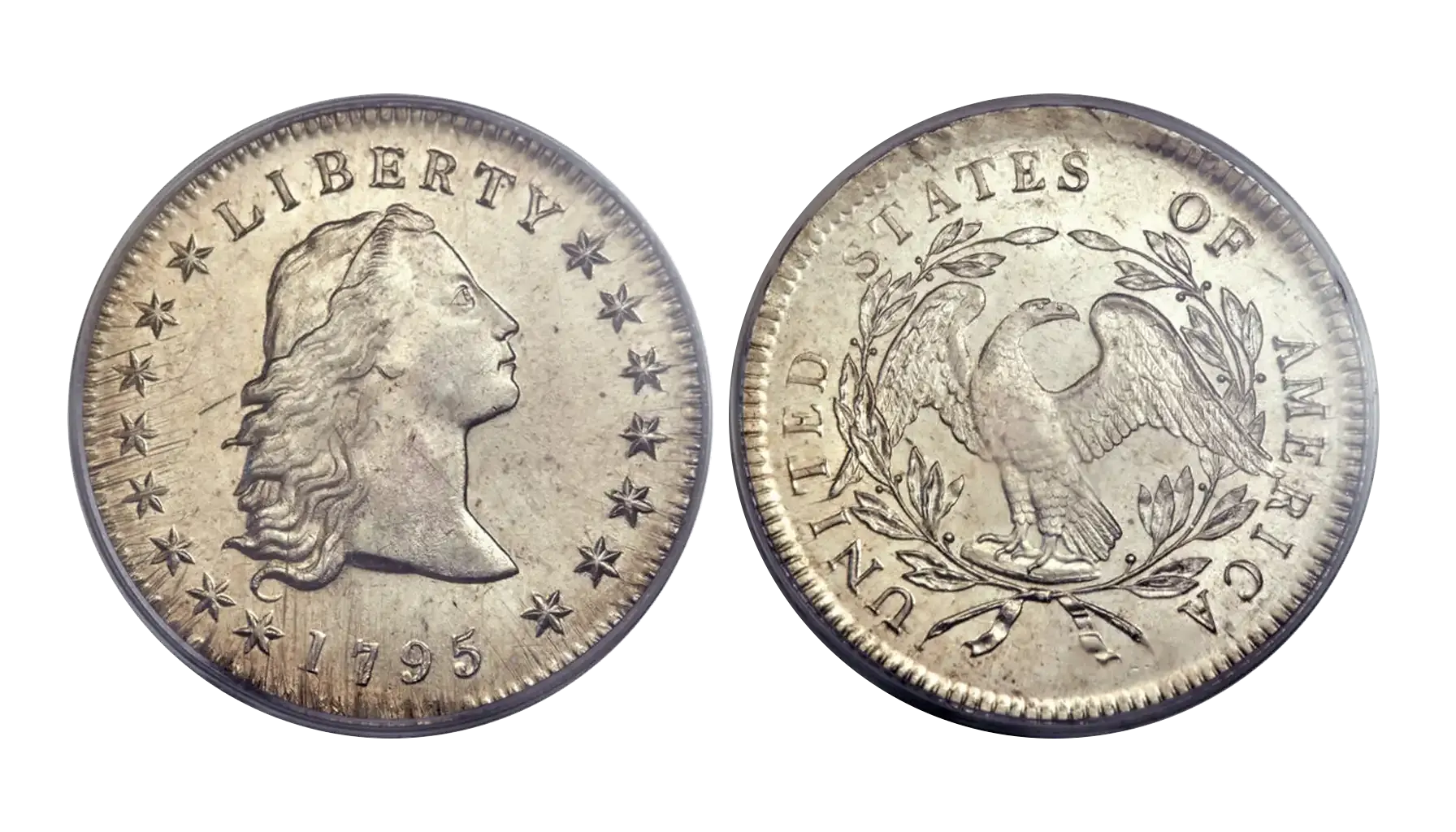
The first series came with the “Flowing Hair” design and was produced in small numbers. The obverse shows Liberty’s portrait, while the reverse features an eagle framed by a wreath.
Coin specifications:
Weight: 26.96 g
Diameter: 39–40 mm
Composition: 89.24% silver, 10.76% copper
Edge inscription: Hundred Cents One Dollar or Unit
Of the approximately 160,000 issued, fewer than 4,000 remain. Today's 1795 dollar coin value depends on the condition and die type. In the AU-58 category, such coins are valued in the tens of thousands of dollars.
Draped Bust Dollar (1795–1804)

The updated dollar featured a more elegant design. The reverse shows a large eagle with spread wings, and the obverse carries Liberty’s profile wrapped in drapery.
This series symbolized the transition from experimental minting to a more national style. The 1795 Draped Bust silver dollar value is especially notable for the offset-axis versions, which are several times more expensive than standard coins.
Comparing Both Designs
Parameter | Flowing Hair | Draped Bust |
Years of Issue | 1794–1795 | 1795–1804 |
Mintage | ~160,000 | ~200,000 |
Average Price VF20 | $15,000 | $8,000 |
Eagle | Wreath | Heraldic |
Minting Difficulty | High | More stable |
For comparison, you can look at rare pieces such as the 1788 Quarter — they show how coin design developed toward the end of the 18th century.
How to Identify a Genuine 1795 Dollar
Key Authentication Points
A genuine 1795 dollar follows the official minting standards set in the late 18th century.
To confirm authenticity, collectors usually focus on a few clear signs.
Metal: the composition should be about 89% silver with no traces of plating or visible surface defects.
Thickness and diameter: true coins show small differences caused by hand minting, but always stay within the historical norm of roughly 39–40 mm.
Surface texture: when viewed under magnification, original silver reveals a natural grain typical of old alloys — something missing in cast replicas.
Micro-relief details: genuine dies left fine, parallel lines that can be seen most clearly around Liberty’s cheeks and hair.
Common Counterfeits and Fakes
Counterfeits are frequent. The main red flags are a too-smooth edge, blurry lettering, and visible casting traces. Many replicas came from Asia in the 20th century and were made with silver plating rather than solid alloy.
Therefore, the question of whether the 1795 Liberty coin real or fake is always relevant. If you have any doubts about a coin, it's best to check it against PCGS catalogs or use a digital assay. Imitations with absurd prices are also common on the market, such as the fake 1795 silver dollar value, which isn't worth even an ounce of silver.
1795 Silver Dollar Value Chart
Factors That Affect Value
The main factors:
Grading Condition
Rarity
Mint Mark
Demand
Price Guide by Condition
Condition | Approximate Price (USD) |
G-4 | 2 000–3 000 |
F-12 | 6 000–8 500 |
VF-20 | 12 000–18 000 |
XF-40 | 25 000–40 000 |
AU-55 | 60 000–95 000 |
MS-63 | 120 000–200 000 |
MS-65 | 250 000+ |
Unlike most assets, for example, a 1 oz silver bar reflects only the pure metal value, while a numismatic coin adds something more — history, rarity, and collector appeal.
Auction Highlights and Record Sales
A 1795 Draped Bust dollar graded MS-64 once sold for $223,250 at auction.
High-grade 1795 Flowing Hair dollars (MS64–MS65) have reached anywhere from $375,000 to $750,000.
“Coins are both a hobby and [an] investment… You have to make good choices in what you pick.”
— Warren Zivi, head numismatist at American Rarities
Bankrate website
Investing in the 1795 Silver Dollar

Why the 1795 Dollar is a Smart Investment
The 1795 Liberty Dollar is a steadily appreciating asset. Over the past 10 years, prices for these coins in Australia have increased by nearly 70%. The reason is simple: the supply of genuine coins is dwindling, while demand is only growing.
Some collectors view investing in rare dollars in the same way as investing in precious metals like white gold.
Market Trends and Future Outlook
According to Heritage and Stack’s Bowers, the average annual growth for rare dollars is 8–9%. Coins with a rare die or perfect luster have even greater potential.
The greatest interest is drawn to pieces with a sharp reverse strike and original brilliance — these are the ones showing the most consistent appreciation in liberty 1795 coin value at long-term auctions and private sales.
How to Safely Buy or Sell a 1795 Dollar
The safest way to buy is through accredited dealers. Always check the certificate number and review the photos carefully.
To verify a coin’s authenticity or get a quick estimate, use the Coin ID Scanner app — upload a photo, and it will identify the coin type and show an approximate value.
FAQ
How much is a 1795 silver dollar worth today?
From about $2,000 to $300,000, depending on grade and rarity.
What is the difference between the Flowing Hair and Draped Bust designs?
The Flowing Hair design looks rougher, while the Draped Bust is cleaner and more detailed.
How many 1795 silver dollars were minted?
Around 360,000 pieces in total.
Where was the 1795 silver dollar produced?
All were struck at the Philadelphia Mint.
What makes some 1795 dollars more valuable than others?
Rare dies, strong luster, and clear provenance raise the price.
How can I check if my 1795 dollar is real?
Weigh it, check the edge and sound, or verify it through PCGS or NGC.
Where can I get my coin appraised or graded?
At grading services like PCGS, NGC, or Stack’s Bowers.
What is the composition of a 1795 dollar?
89.24% silver and 10.76% copper.

 Facebook
  X (Twitter)
  Pinterest
  LinkedIn