Contents:
The 1999 Georgia quarter is a small coin with a clear sense of place, and that makes it an easy match for anyone who watches Ginny & Georgia.
Georgia, the state, and Georgia Miller share a name, but the overlap goes further than that. The show is built on Southern roots, family history, and the pull of a home you think you’ve left behind. The Georgia quarter carries those same ideas in a compact way.
A 1999 Quarter Georgia is one of the first coins released in the U.S. Mint’s 50 State Quarters Program, which ran from 1999 to 2008. Georgia was the fourth state honored in the series.
Denomination: 25 cents
Year: 1999 (together with New Jersey, Connecticut, Delaware, and Pennsylvania)
Mint Marks: P (Philadelphia), D (Denver), S (proof), S silver proof
Metal (circulating): Copper-nickel clad
Metal (silver proof): 90% silver
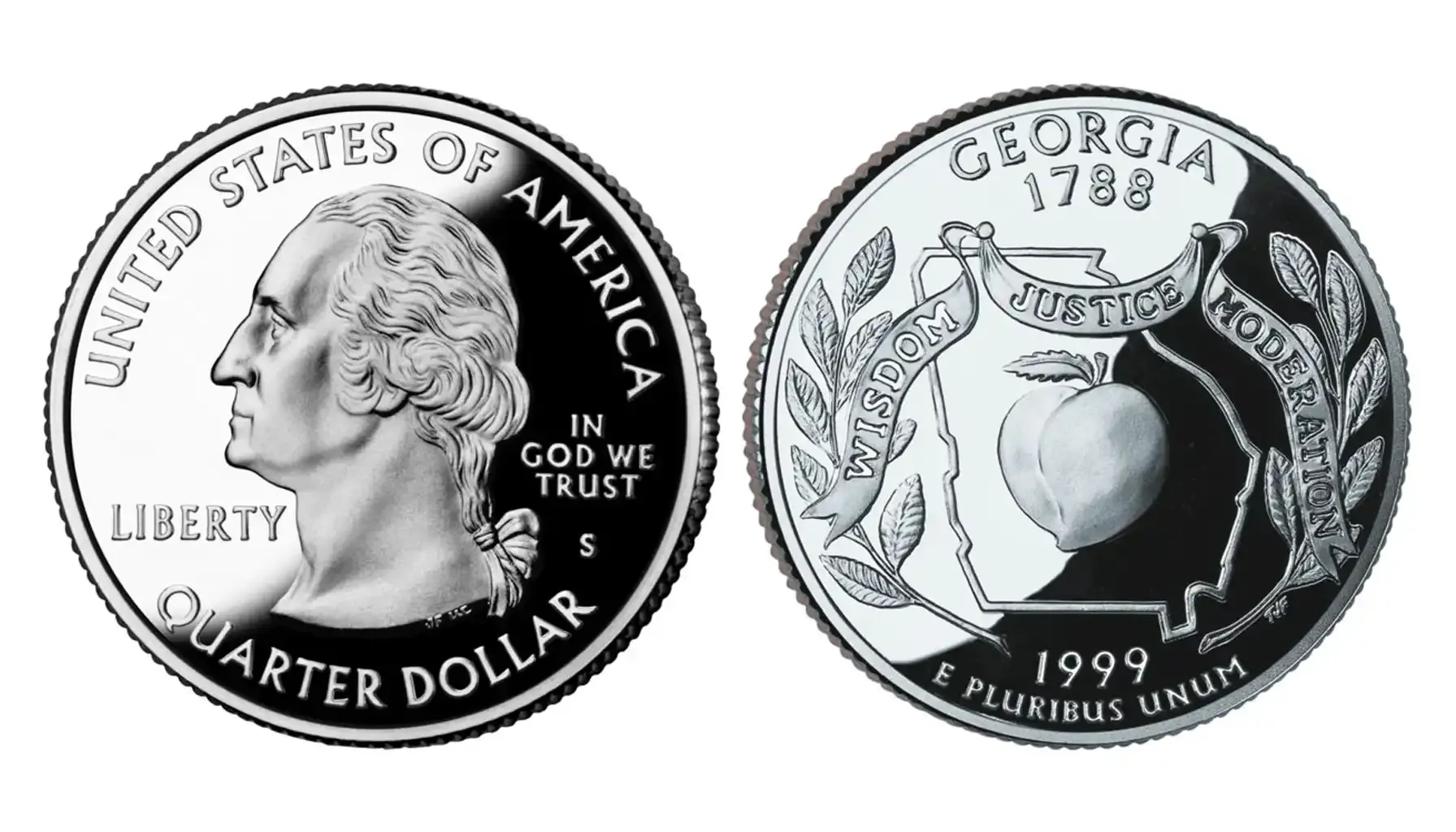
1999 Georgia Quarter Value Overview
The overall Georgia 1999 quarter value depends on the condition and type. Most circulating examples remain common, but uncirculated and proof versions bring higher prices.
Type | Value |
Circulated (P or D mint) | $0.25–$0.40 |
Uncirculated (MS60–MS65) | $3–$5 |
Higher uncirculated (MS66–MS68) | $20+ |
Proof (clad, S-mint) | $9–$10+ |
Silver proof (1999-S) | $40+ in standard proof quality; more for top-graded pieces |
Most Georgia quarters found in everyday change are worth only face value. Coins kept in mint condition, especially certified high-grade examples, can bring strong premiums. Proof and silver proof issues remain the most desirable versions, with Georgia 1788 quarter 1999 value today being influenced by preservation, eye appeal, and strike quality.
Georgia State Quarter Error and Value Types
Off-Center Strike
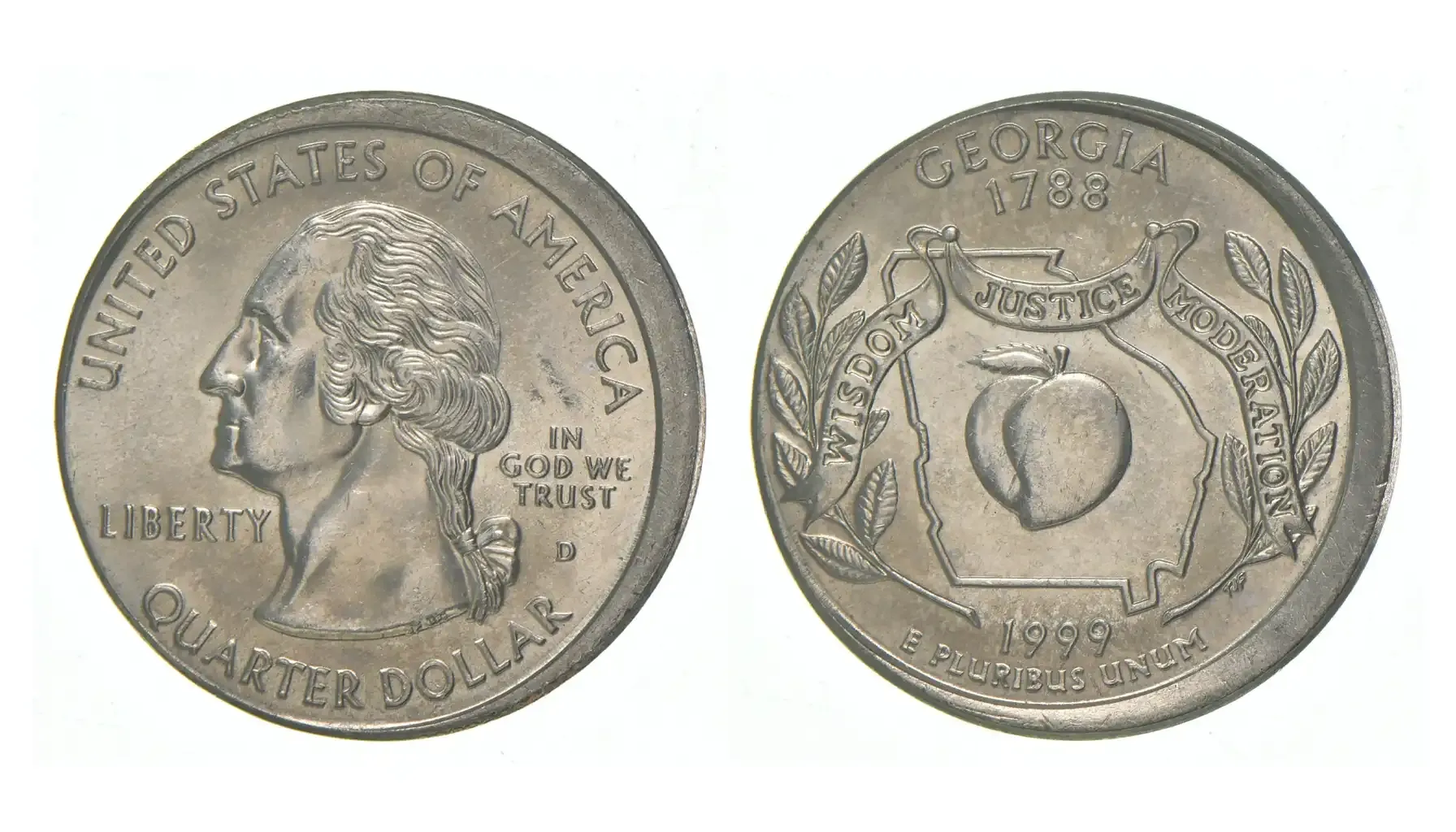
This error appears when the blank shifts during striking, leaving part of the design missing. Light off-center strikes sell for modest amounts, while large, clearly shifted examples with the date visible can reach high prices.
Most fall in the $15–$150+ range and have some rare 1999 Georgia quarter error pictures, and can be compared to the 1999 Delaware Spitting Horse quarter error type by its worthiness.
Broadstrike

A broadstrike is produced when the collar does not hold the coin in place. The rim looks stretched, and the quarter appears slightly wider than normal.
These pieces usually bring $10–$50.
Clipped Planchet
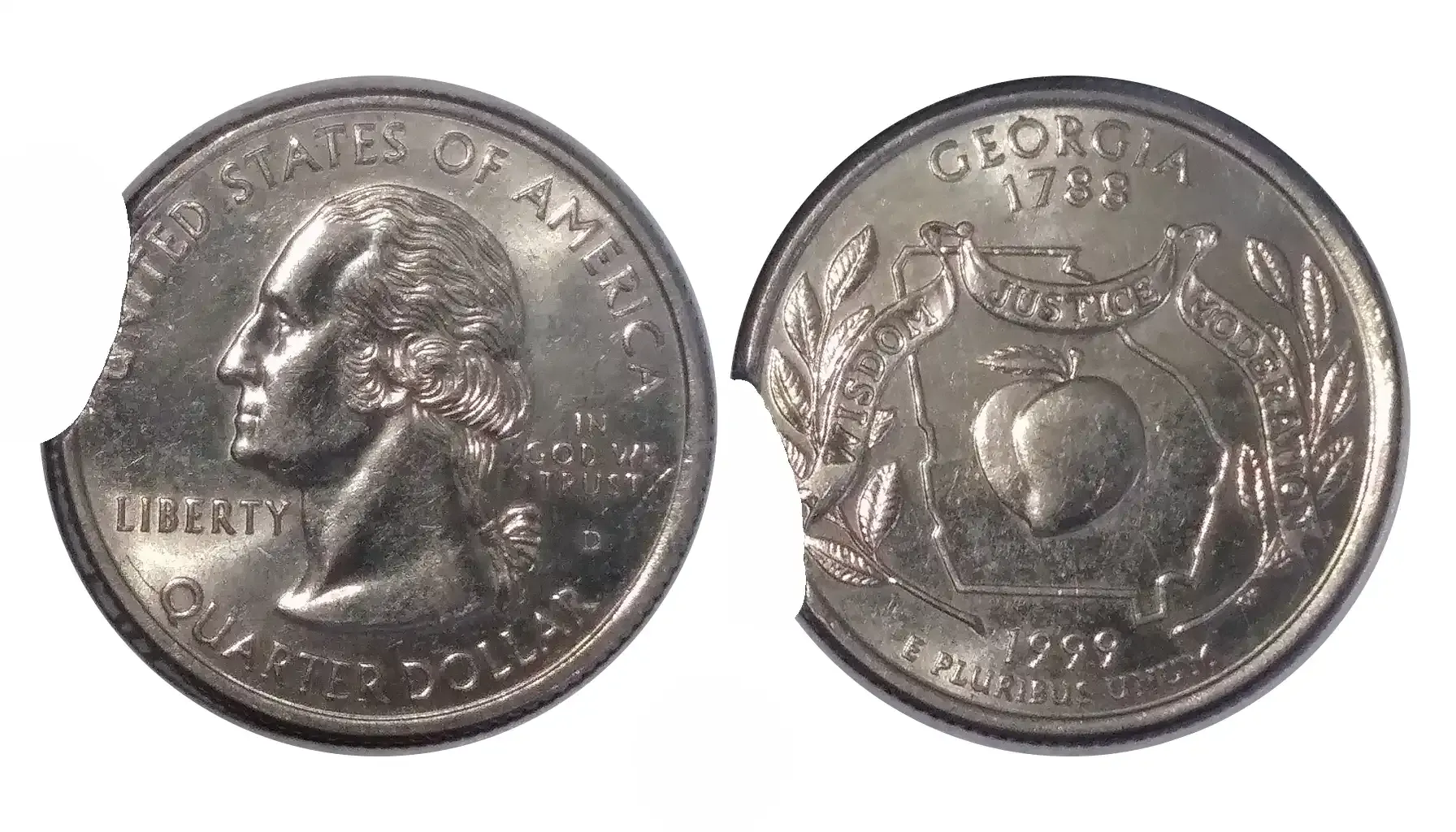
A clipped planchet shows a curved or angled missing section on the rim. Collectors prefer larger, cleaner clips, which make the flaw easy to see.
Typical 1999 Georgia quarter errors prices here run from $20 to $100.
Die Cracks and Die Breaks
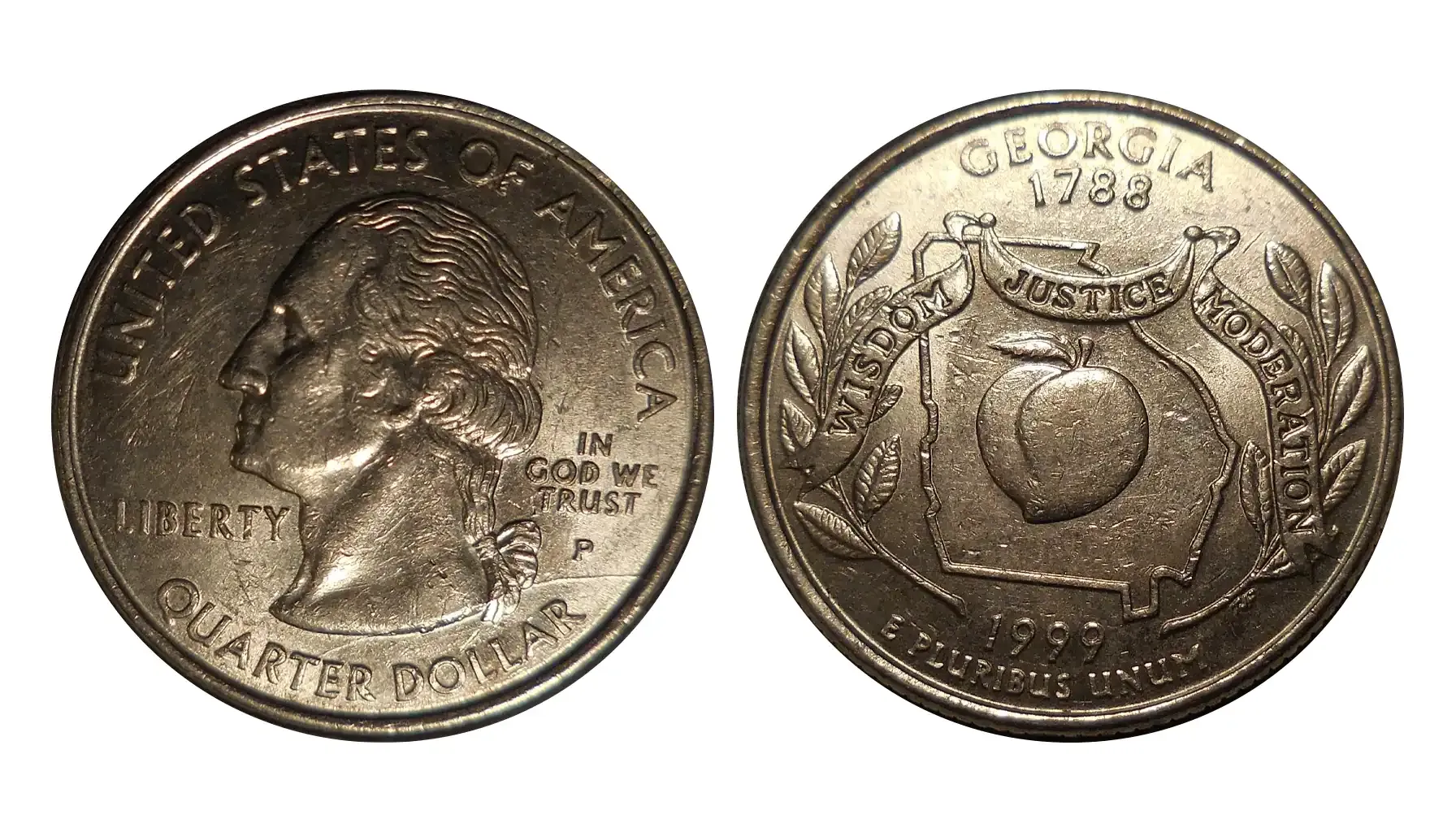
Raised lines or bumps appear when the working die begins to fail. Small cracks are common and worth a small premium. Larger breaks are more desirable.
Values generally range from $5 to $30.
Struck-Through Grease
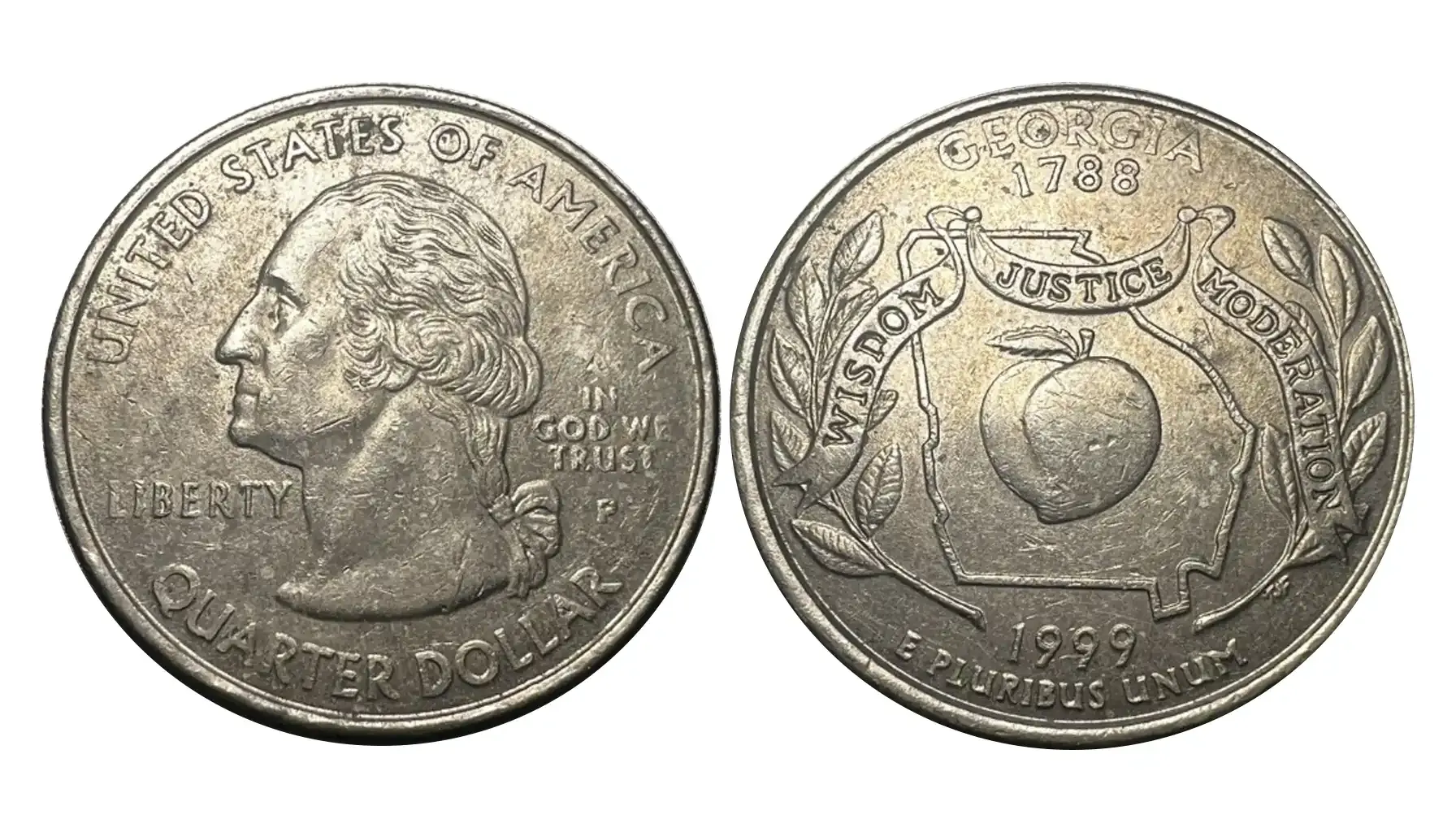
Parts of the design look faint or missing because grease or debris blocked the die.
These coins sell for about $5–$25. The total price depends on how much of the design is affected.
Rare 1999 Georgia Quarter Varieties
The 1999 Georgia quarter has a few notable varieties that collectors track separately from errors. These varieties come from differences in strike quality, finish, or minting method rather than mistakes during production.
“The first year of the State Quarters Program created enormous public interest, and coins like the Georgia issue were saved in huge numbers but not always in top condition.”
— Jeff Garrett, famous numismatist
Commentary on modern U.S. coinage, published by Whitman Publishing
Uncirculated High-Grade Varieties
Some Georgia quarters were preserved straight from mint bags or rolls and show sharp detail, clean surfaces, and no handling wear. Coins graded in the upper Mint State range—especially MS67 and MS68—are considered varieties of interest due to their scarcity in such condition. These pieces stand out because the first year of State Quarters often suffered from heavy circulation.
Full Torch (FT / FB-Style) Strike Characteristics
While Roosevelt dimes use the Full Bands or Full Torch designation, State Quarters have their own strike-quality markers. For 1999 Georgia Peach Quarter pieces, collectors look for unusually sharp detail in elements like the peach, lettering, and state outline. These are not official designations from grading services but are treated as premium strike varieties by specialists.
1999-S Clad Proof Variety
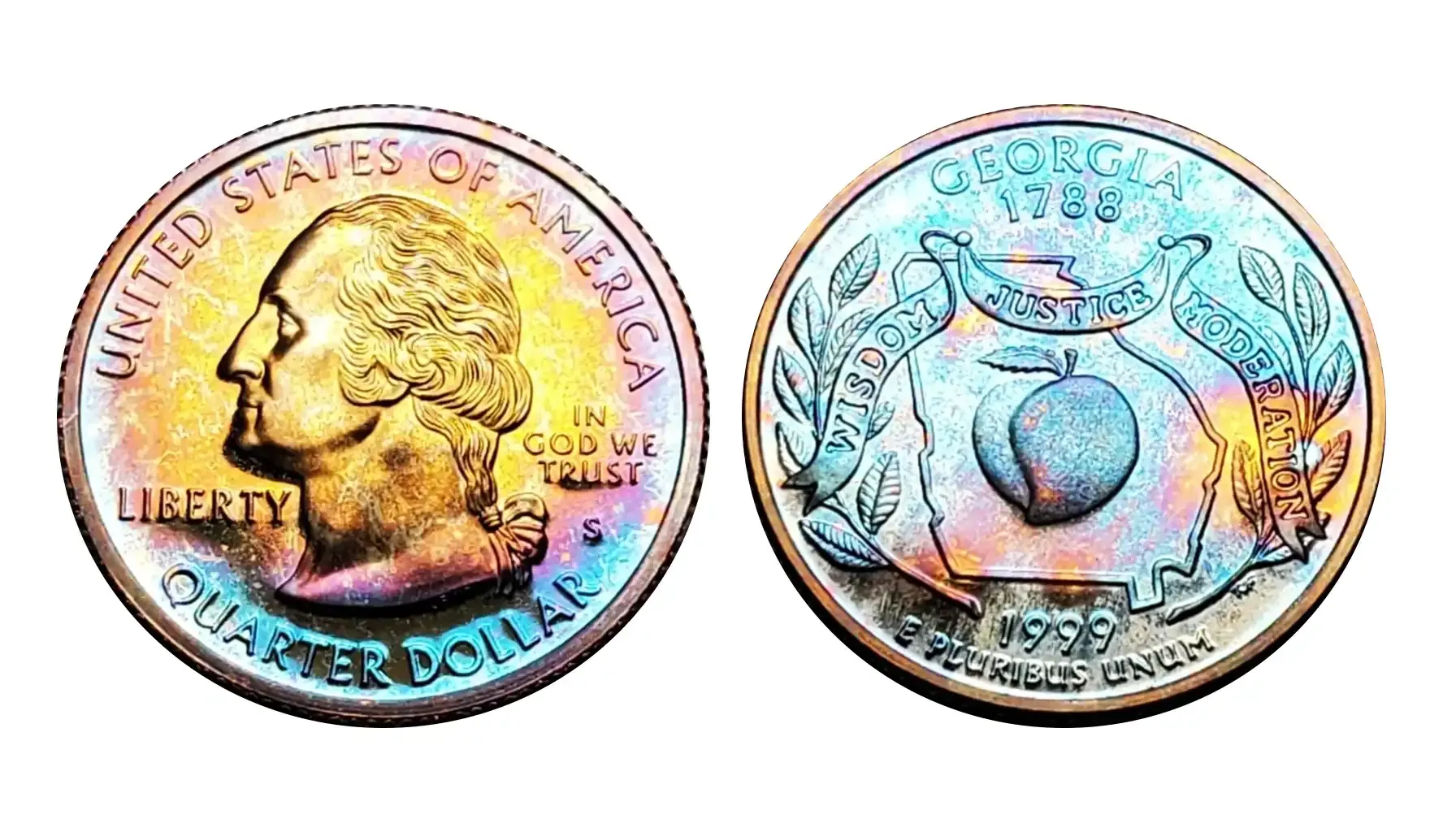
The regular clad proof from San Francisco is a collectible variety on its own. These coins have mirror-like fields and frosted devices. High-grade proofs with strong cameo or deep cameo contrast are prized, especially those certified at PR69 or PR70.
1999-S Silver Proof Variety
The silver proof is one of the most desirable varieties in the Georgia quarter lineup. Struck in 90% silver, it has a stronger cameo effect and sharper detail than its clad counterpart. These coins are collected as a separate variety and typically bring higher premiums due to their metal content and lower production.
1999 Special Set or Presentation Varieties
Some Georgia quarters appear in official U.S. Mint sets that offered slightly better strikes than mass-produced circulation coins. These include standard mint sets, proof sets, and silver proof sets. Their packaging and finish classify them as distinct varieties separate from ordinary quarters taken from circulation.
Auction Results for 1999 Georgia State Quarter
Auction & Date | Type | Grade | Sale Price (USD) |
January 10, 2020 FUN US Coins Signature Auction | Experimental planchet (“golden” alloy) | MS67 (PCGS) | $7,200 |
February 21, 2020 Long Beach Expo Signature Auction | Experimental planchet (nonstandard alloy) | MS65 (PCGS) | $2,160 |
March 20, 2023 Error Coin Showcase Auction | Quadruple-struck / 40% off-center | MS65 (PCGS) | $552 |
May 2023 Heritage Internet U.S. Coin Auction | Broadstruck (normal strike error) | MS64 (NGC) | $38 |
October 2025 GreatCollections listing | MS67 (Philadelphia strike) | MS67 (PCGS) | starting bid $175 |
How Minting Issues Affect Georgia Quarter Prices
The Georgia 1788 quarter value is tied to how well it was struck. Coins from this year often show uneven pressure or soft detail, so pieces with sharp lettering and a clear peach design are harder to find and bring higher prices. Collectors pay more for quarters that show full detail and clean surfaces.
Poor strikes or weak areas lower a coin’s value because they make the design look worn, even when the coin has little circulation. On the other hand, Georgia State quarter errors such as off-center strikes, broadstrikes, or wrong-planchet pieces can raise the price because they are uncommon and easy to identify.
Proof and silver-proof versions usually avoid these issues because they are produced under controlled conditions. Their consistent detail and finish help them hold stronger premiums compared to regular circulation strikes.
Tools like Coin ID Scanner can help collectors manage their collection. Moreover, you can identify and assess your pieces right on the spot.
Overall, strong minting increases a Georgia quarter’s desirability, while weak strikes reduce it. Rare minting problems from the 1999 Georgia quarter error list do the opposite and often reach the highest prices.

 Facebook
  X (Twitter)
  Pinterest
  LinkedIn