Contents:
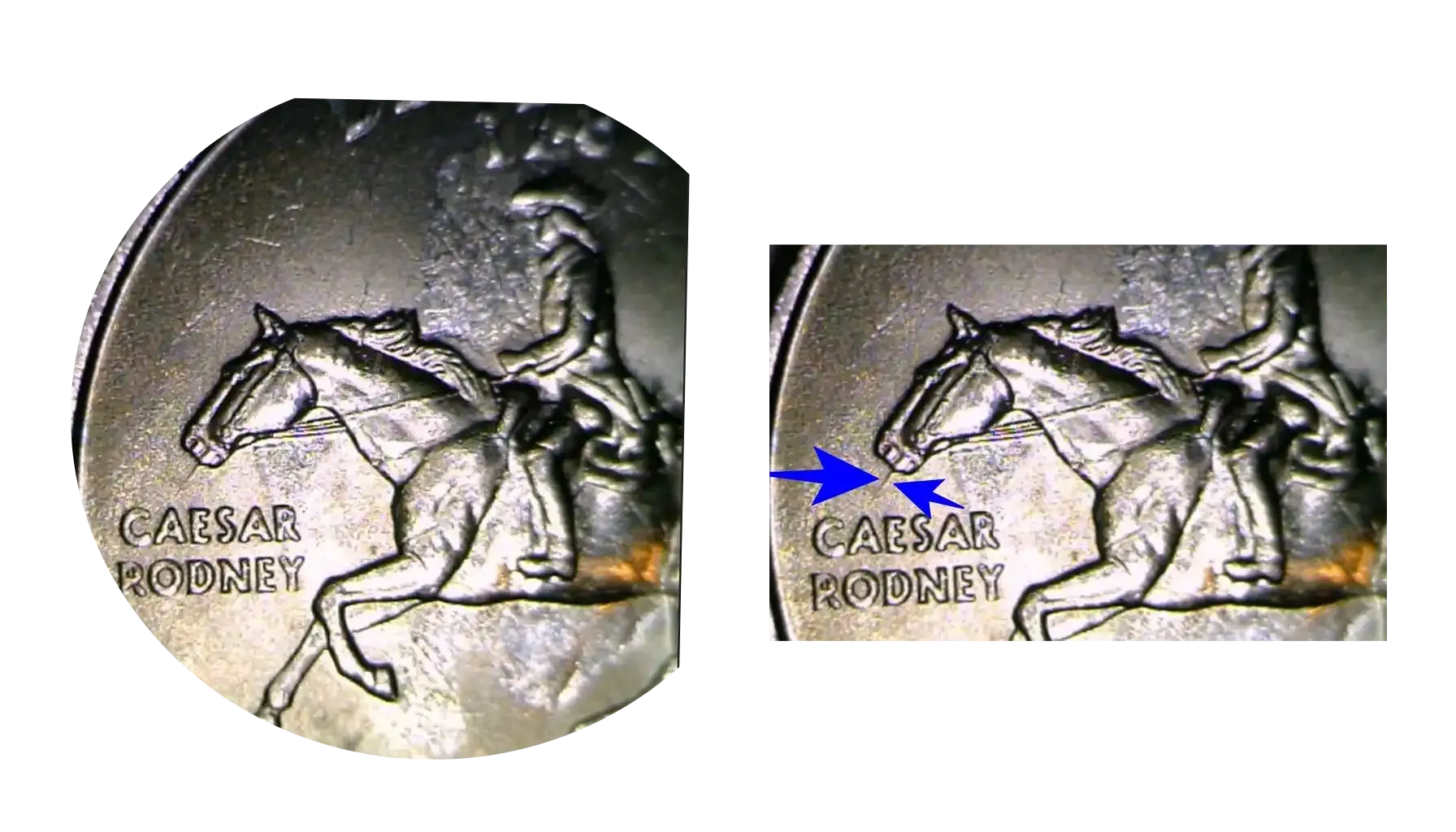
A 1999 Delaware “Spitting Horse” quarter is a die break (die chip) variety that can be found on some of the very first Delaware State Quarters issued in 1999. It gets its nickname from how the mint error makes it look like Caesar Rodney’s horse is spitting.
What if I want to identify my coin? What should I do then? There’s a simple yet advanced app for such situations – Coin ID Scanner!
Overview of the Delaware State Quarter
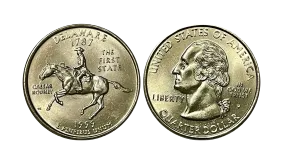
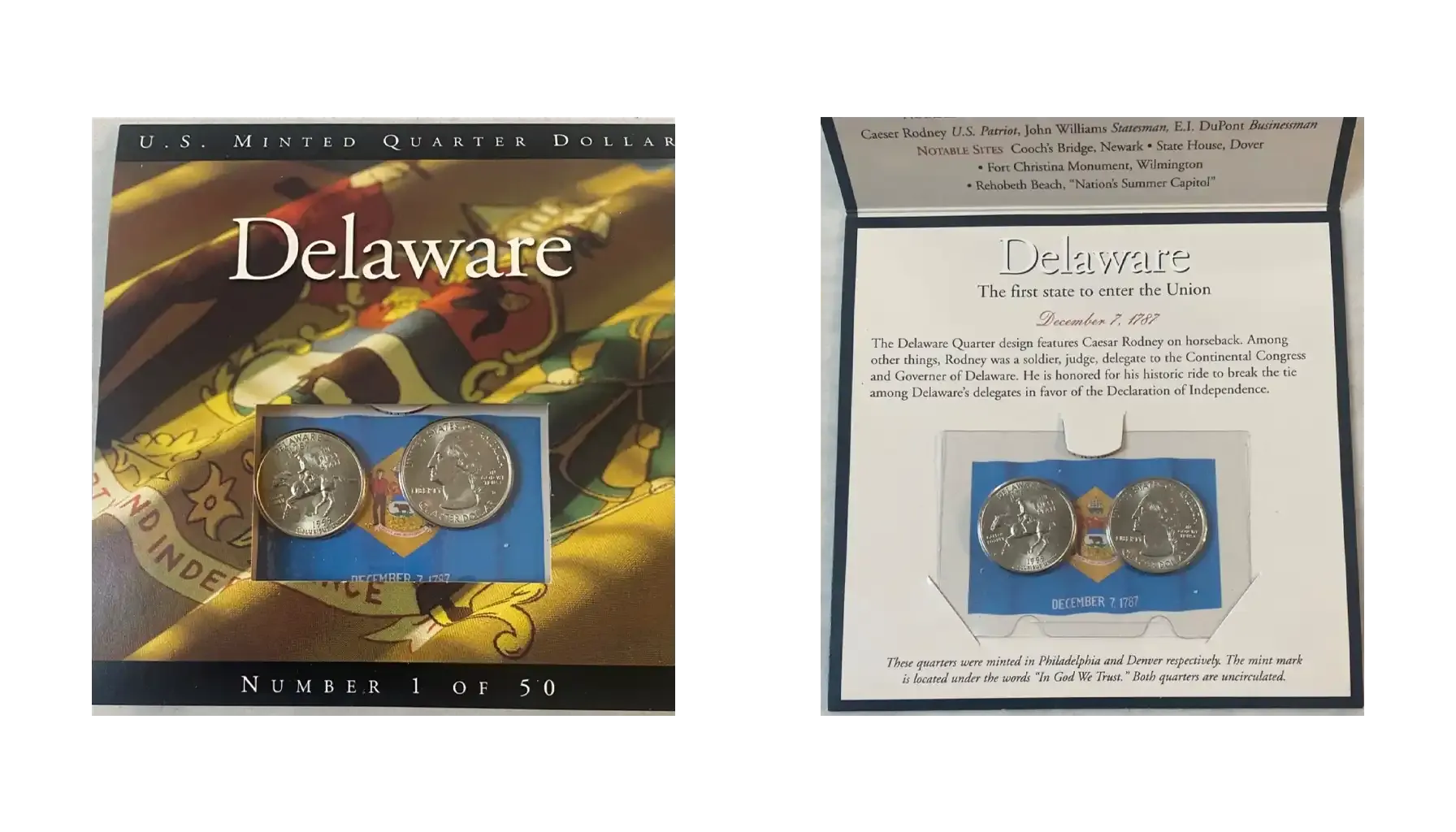
The Delaware State Quarter came out in 1999 as the first coin in the 50 State Quarters Program (the next one was the 1999 Pennsylvania State Quarter).
The reverse shows Caesar Rodney riding on horseback during his 1776 journey to Philadelphia, where his vote helped secure support for independence.
The obverse features George Washington, as always.
The coin was produced at the Philadelphia, Denver, and San Francisco mints, with the San Francisco issues reserved for proof sets in both clad and silver.
Feature | Details |
Country | United States |
Series | 50 State Quarters Program |
State | Delaware |
Year of Issue | 1999 |
Designer (Obverse) | John Flanagan (mod. William Cousins) |
Designer (Reverse) | William Cousins |
Composition (Circulation) | 91.67% Copper, 8.33% Nickel (Clad) |
Silver Proof Composition | 90% Silver, 10% Copper |
Weight (Clad) | 5.67 g |
Weight (Silver Proof) | 6.25 g |
Diameter | 24.26 mm |
Thickness | 1.75 mm |
Edge | Reeded |
What Is the “Spitting Horse” Error?
The “Spitting Horse” is a die break on some 1999 Delaware quarters. It’s a small crack formed in the die near the horse’s mouth. When the coin was struck, metal filled that crack and left a raised line that looks like the horse is spitting.
This line is part of the strike itself, not a scratch or damage.
How to Identify a Delaware Spitting Horse Quarter
Where to Look
Reverse side of the coin
At the horse’s mouth and jaw
A raised line projecting forward
How It Usually Appears
Thin line on earlier die wear
Thicker line on later strikes
Always raised, never cut into the surface
Why Collectors Notice It
First of all, it’s easy to spot without special tools. It’s also a recognized variety from the first year of the State Quarters program and a familiar example of how die wear creates collectible differences.
Coin ID Scanner can be useful when identifying a 1999 Delaware Quarter Spitting Horse. You just need to take a photo. The app will quickly give you detailed information about the specimen including prices. You can also store the coin in your digital collection.
Value of the 1999 Delaware Spitting Horse Quarter
The price of this coin depends mostly on how clear the raised line looks and how well the coin has been preserved. A coin that has been in normal circulation with some wear, e.g., a 1999-P Delaware Spitting Horse Quarter, usually sells for around $3 to $10.
If the surfaces are still fairly clean and most of the original shine is intact, the value can move into the $10 to $20 range.
Coins that were never used and still show strong mint luster tend to bring $20 to $40.
When a coin is graded by a service like PCGS or NGC and comes back at MS65 or higher, prices can rise to $50 and sometimes over $200, especially if the “spit” line is bold and easy to see.
“The average 1999 Delaware spitting horse die crack sells for between $10 and $25 dollars.”
— PeteS1003, user nickname
JustAnswer
A faint line or a heavily worn coin will usually fall on the lower end of the range. A sharp line together with bright, attractive surfaces is what pushes the value upward.
Condition | Description | 1999 Spitting Horse Quarter Value |
Circulated (G–VF) | Noticeable wear, dull surfaces, raised line still visible. | $3 – $10 |
Lightly Circulated (XF–AU) | Light wear with some remaining mint luster; the raised line is clearer. | $10 – $20 |
Brilliant Uncirculated (MS60–MS63) | No wear, full mint luster, may show small marks. | $20 – $40 |
Choice Uncirculated (MS64–MS65) | Bright surfaces with only minor contact marks; raised line stands out clearly. | $40 – $90 |
Gem Uncirculated (MS66+ and higher) | Strong strike, high luster, nearly flawless surfaces; bold raised line. | $100 – $200+ |
Proof (Clad or Silver) | Most proofs do not have the die break; standard proof finish. | Face value to small premium |
Disclaimer: The prices are average. Always consult a specialist before buying or selling.
Also read: 1999 New Jersey State Quarter.
Conclusion
The “Spitting Horse” quarter has a steady place in the hobby because it’s easy to recognize and has a memorable look. The variety isn’t rare by itself, so the real value is in condition.
Coins that have been protected since they were minted, especially those graded MS65 or higher, are the ones that show the most promise over time. These pieces have bright luster, clean surfaces, and a clear raised line, and they continue to be pulled out and set aside by collectors.
As more original rolls get opened and sorted through, finding truly high-grade examples becomes harder. That slow reduction in supply is why nicer coins tend to hold their value or even climb a bit. The lower-grade circulated coins usually stay in the modest price range and are more suitable for casual collecting than investment.
This coin works best for someone who collects deliberately and focuses on beautiful things. It won’t see huge spikes, but it does offer stable interest and a reliable audience among people who want to gather complete State Quarter sets or collections of modern die varieties.

 Facebook
  X (Twitter)
  Pinterest
  LinkedIn