Contents:
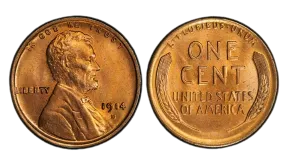
Wheat pennies were produced from 1909 to 1958 and feature a portrait of Abraham Lincoln on the obverse and two ears of wheat on the reverse. Most wheat pennies are worth only a few cents, but there are rare wheat pennies that can fetch thousands—or even millions—at auction.
What pennies are rare and worth money? Today, we will explore 50 rare wheat pennies to look for, help you identify the coins, and understand what cents are worth the most.
Why Some Wheat Pennies Are Valuable
Not every Wheat penny is expensive. High prices usually come from rarity, major mint error or variety, high grade, original surfaces, and strong copper color.
Color matters a lot for Lincoln cents. PCGS uses RD, RB, and BN designations, and full Red coins often sell for much more than Brown or Red-Brown examples in the same grade. PCGS also notes that the 1926-S is one of the toughest business-strike Wheat cents in full Red.
The most valuable rare wheat pennies worth money usually fall into three groups: rare off-metal errors, such as the 1943 bronze and 1944 steel cents; famous doubled dies, such as 1955 and 1958; key dates in exceptional Mint State Red condition, such as 1909-S VDB, 1914-D, and 1926-S.
Also read: 1999 penny value.
“The United States Mint only releases a certain amount of pennies annually. If the mintage is lower in a particular year, this will only help increase the value.”
— Dawn Allcot, Finance writer
Yahoo! Finance
10 Most Valuable Wheat Pennies
Rank | Rare Wheat Penny Dates | Why It Is Valuable | Auction Record |
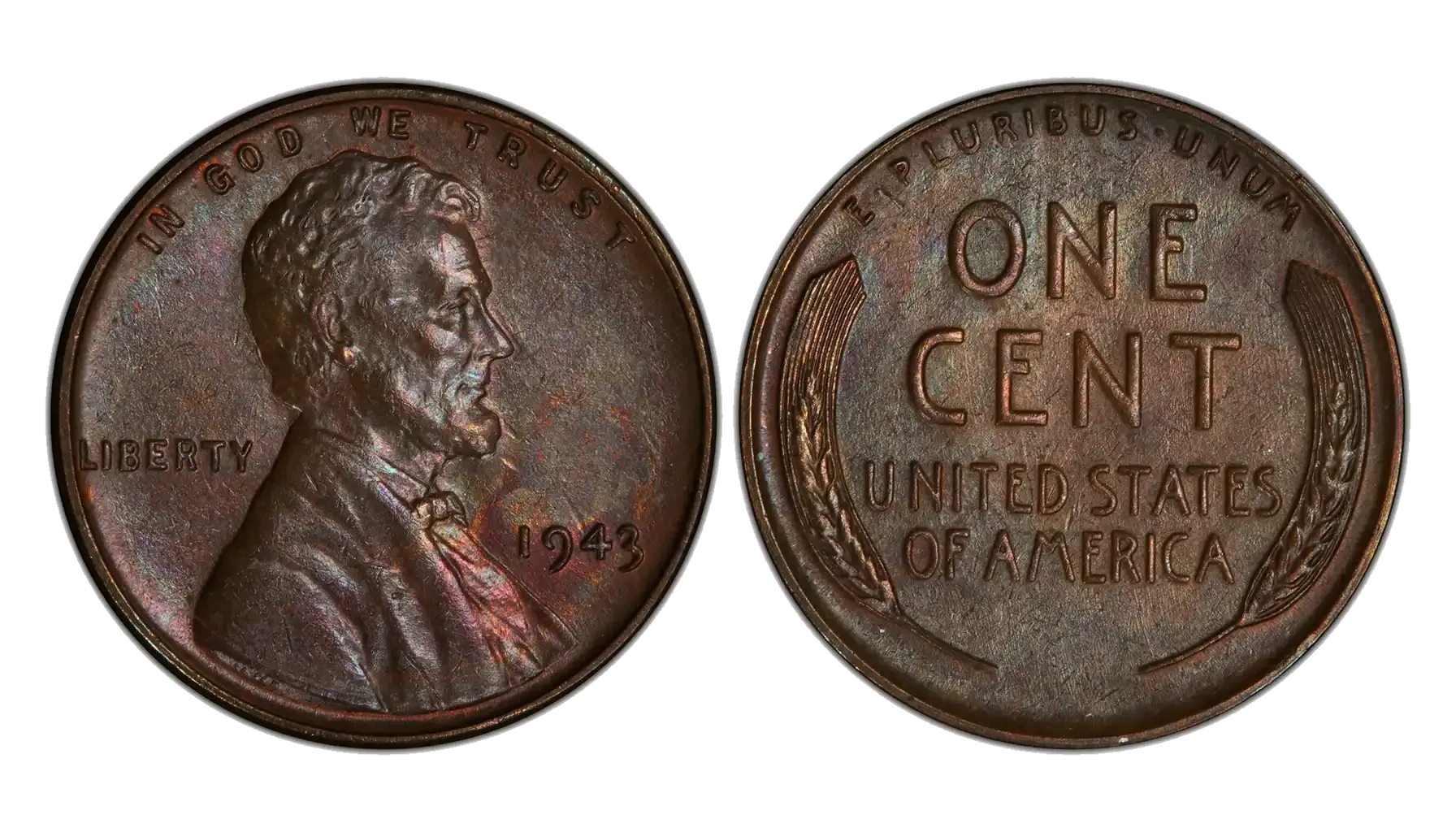
1 | 1943-D Bronze Cent | Rare bronze planchet error from the steel-cent year | $840,000 — PCGS MS64BN, Heritage, January 24, 2021. |
2 | 1943-S Bronze Cent | San Francisco bronze error instead of steel | $504,000 — PCGS record. |
3 | 1944-S Steel Cent | Rare steel planchet struck after the return to copper alloy | $490,500 — PCGS MS66, GreatCollections, January 5, 2025. |
4 | 1943 Bronze Cent (Philadelphia) | Classic wartime off-metal error | $372,000 — PCGS MS62BN, Heritage, February 25, 2021. |
5 | 1958 Doubled Die Obverse Cent | One of the rarest Lincoln doubled dies | $336,000 — PCGS MS64RD, Stack’s Bowers, March 2018. |
6 | 1944 Steel Cent (Philadelphia) | Steel leftover planchet struck in a copper year | $180,000 — PCGS MS64, Heritage, June 20, 2021. |
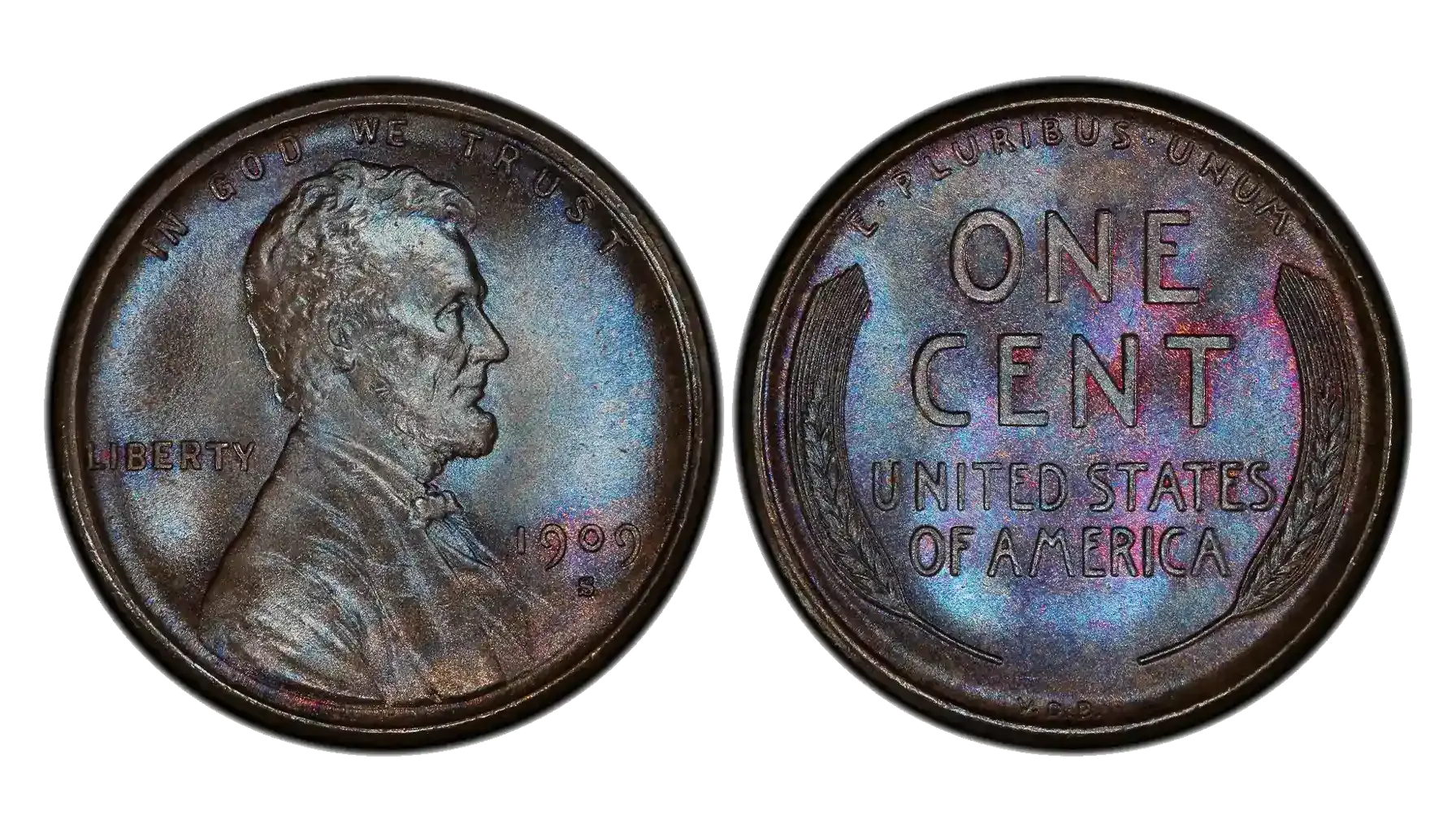
7 | 1909-S VDB Cent | Key date with low mintage and strong collector demand | $168,000 — PCGS MS67RD, Stack’s Bowers, April 13, 2022. |
8 | 1914-D Cent | Key date in top Red Mint State | $158,625 — PCGS MS66+RD, Legend, May 17, 2018. |
9 | 1926-S Cent | One of the toughest business strikes in full Red | $149,500 — PCGS MS65RD, Heritage, January 5, 2006. |
10 | 1944-D Steel Cent | Very rare Denver off-metal error | $115,000 — PCGS MS63, Heritage, August 9, 2007. |
The biggest rare Lincoln wheat penny value does not come from ordinary circulated coins but from rarities, famous mint errors, and top-grade Red examples.
Wheat Penny Errors That Increase Value
The cents that bring the strongest premiums usually have real mint-made errors or recognized die varieties, not small defects. PCGS distinguishes an error that is usually a one-off production mistake, such as a wrong-planchet or mis-struck coin, and a variety that comes from a die difference that repeats on multiple coins.
Off-Metal Errors
The classic examples are the 1943 bronze cents struck during the steel-cent year and the 1944 steel cents struck after the Mint returned to copper alloy. These are major rarities, and the PCGS wheat penny error list records six-figure auction results for them.
Major Doubled Dies
The best-known example in the error coins chart rare pennies worth money is the 1955 Doubled Die Obverse, which is popular because the doubling is strong and easy to see. The 1958 Doubled Die Obverse is even rarer, and PCGS reports a $336,000 auction record for one certified piece.
Key Die Varieties
Some pieces are collected like errors because the premium is so strong. The 1922 No D cent is the best example. PCGS notes that authentication is important, because only certain diagnostics identify the valuable variety. The 1909-S/S Horizontal S is another recognized Wheat cent variety with collector demand.
Other Error Coin Rare Lincoln Wheat Penny
Collectors also pay for coins struck on clipped planchets, for struck-through pieces, and for real lamination errors. These usually do not match the value of the famous bronze, steel, or doubled-die cents, but strong and obvious examples can still be worth something.
The errors that increase value the most are the ones that are rare, clearly mint-made, and easy to verify. Tiny flaws, weak details, or random surface damage do not belong in the same category.
List of 50 Valuable Wheat Pennies
The rare pennies worth money list uses PCGS auction records for the Lincoln Cent (Wheat Reverse) (1909–1958) category.
Rank | Rare Wheat Penny Years and Varieties | Type | Auction Record |
1 | 1943-D Bronze | Business strike | $840,000 |
2 | 1943-S Bronze | Business strike | $504,000 |
3 | 1944-S Steel | Business strike | $408,000 |
4 | 1943 Bronze | Business strike | $372,000 |
5 | 1958 Doubled Die Obverse | Major variety, business strike | $336,000 |
6 | 1909 VDB | Proof | $258,500 |
7 | 1943 Steel | Business strike | $218,500 |
8 | 1944 Steel | Business strike | $180,000 |
9 | 1909-S VDB | Business strike | $168,000 |
10 | 1914-D | Business strike | $158,625 |
11 | 1926-S | Business strike | $149,500 |
12 | 1943-S Steel | Business strike | $138,000 |
13 | 1914 | Proof | $126,500 |
14 | 1917 Doubled Die Obverse | Major variety, business strike | $120,000 |
15 | 1944-D D/S | Overmintmark variety | $115,000 |
16 | 1955 Doubled Die Obverse | Major variety, business strike | $114,000 |
17 | 1914-S | Business strike | $105,800 |
18 | 1922 No D Strong Reverse | Major variety, business strike | $92,000 |
19 | 1935 | Business strike | $84,000 |
20 | 1918 | Business strike | $78,000 |
21 | 1925-D | Business strike | $74,750 |
22 | 1909-S | Business strike | $69,000 |
23 | 1923-S | Business strike | $67,562.50 |
24 | 1924-S | Business strike | $66,000 |
25 | 1911-D | Business strike | $66,000 |
26 | 1952 | Proof | $64,625 |
27 | 1913-S | Business strike | $63,250 |
28 | 1909 | Proof | $59,800 |
29 | 1916-D | Business strike | $58,750 |
30 | 1956 | Business strike | $57,600 |
31 | 1909 VDB | Business strike | $56,400 |
32 | 1921 | Business strike | $55,200 |
33 | 1925-S | Business strike | $54,625 |
34 | 1910 | Proof | $52,875 |
35 | 1933 | Business strike | $52,800 |
36 | 1958 | Proof | $50,400 |
37 | 1955 | Proof | $50,400 |
38 | 1944-D/S D/S | Overmintmark variety | $49,937.50 |
39 | 1920-S | Business strike | $48,875 |
40 | 1915-S | Business strike | $48,300 |
41 | 1914 | Business strike | $48,300 |
42 | 1936 Doubled Die Obverse, Type 1 | Major variety, business strike | $48,000 |
43 | 1915-D | Business strike | $48,000 |
44 | 1910-S | Business strike | $48,000 |
45 | 1913 | Business strike | $47,150 |
46 | 1928-S | Business strike | $45,600 |
47 | 1918-D | Business strike | $45,600 |
48 | 1931-S | Business strike | $43,200 |
49 | 1919-S | Business strike | $43,200 |
50 | 1927 | Business strike | $40,800 |
True mint error coin Lincoln wheat penny issues in the table are the off-metal coins:
1943 Bronze Cent
1943-D Bronze Cent
1943-S Bronze Cent
1944 Steel Cent
1944-S Steel Cent
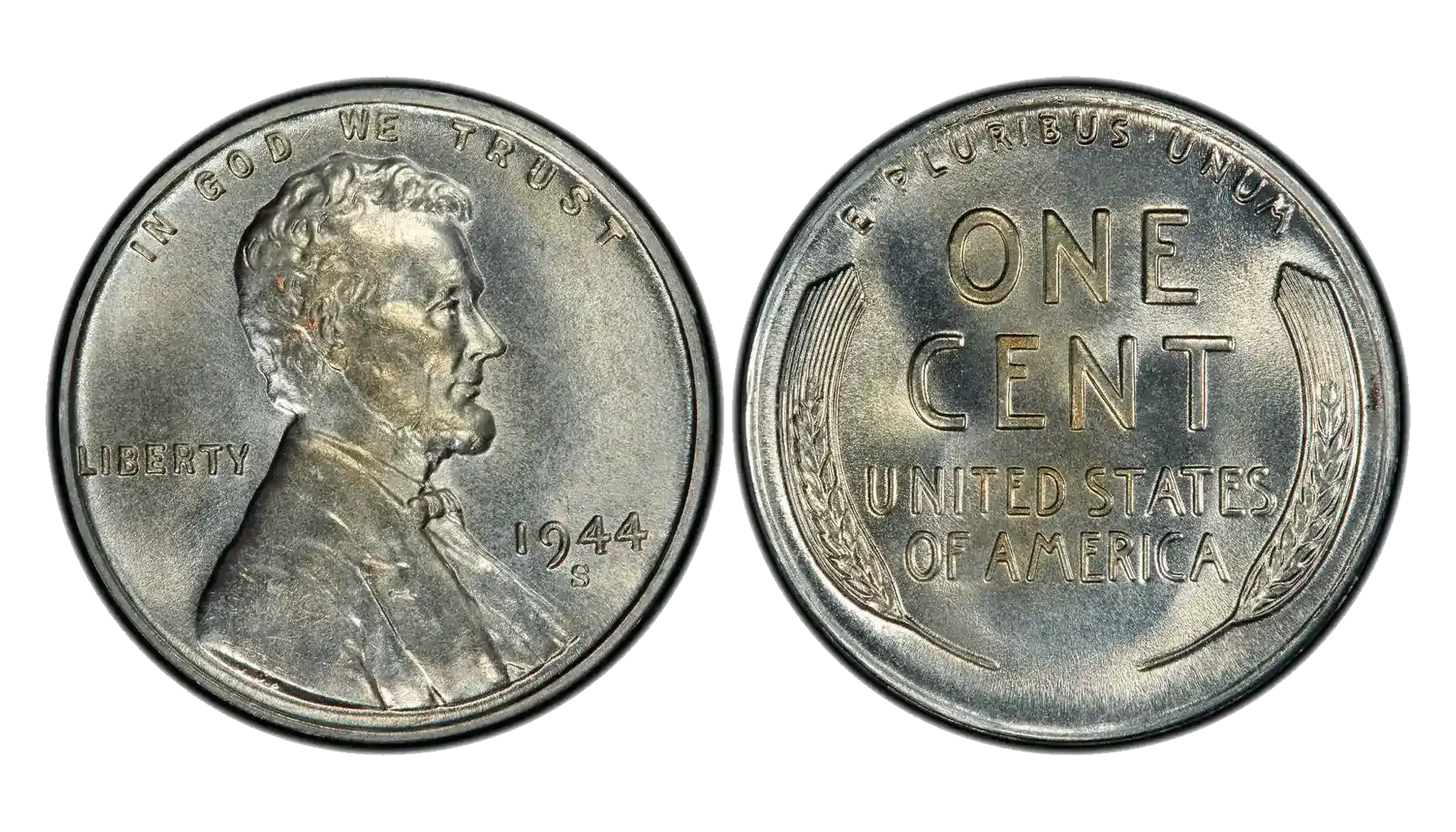
Those are genuine mint errors because they were struck on the wrong planchet for the year. PCGS distinguishes mint errors from rare Lincoln wheat pennies varieties this way: errors happen during production, while varieties come from differences in the dies used to strike multiple coins.
Related article: 1964 Pennies Worth Money.
Rare Wheat Pennies Still Found in Circulation
Wheat pennies were struck from 1909 to 1958, and the U.S. Mint confirms that the wheat-reverse design was used through 1958. PCGS also notes that Wheat cents can still turn up in circulation or in old jars of saved change, even though they are much less common now than later Lincoln cents.
How rare are wheat pennies now? In real-world searching, most Wheat cents found today are common dates from the 1940s and 1950s. The coins worth watching for are the better dates and major varieties: 1909-S VDB, 1909-S, 1914-D, 1922 No D, 1931-S, 1917 Doubled Die Obverse, and 1955 Doubled Die Obverse.
How to Identify Rare Wheat Pennies
Rare Lincoln wheat penny variants must show two wheat ears on the back, and the date will fall between 1909 and 1958. Then check the area below the date on the obverse for a mint mark. A D means Denver, an S means San Francisco, and no mint mark usually means Philadelphia. That step matters because coins like the 1909-S, 1909-S VDB, 1914-D, and 1931-S are much better than their common Philadelphia counterparts.
On the 1909-S VDB, the VDB initials appear on the reverse at the bottom. On the 1922 No D, the missing mint mark is important because PCGS describes it as the only circulation-strike Lincoln cent in the series that lacks its intended mint mark. On the 1955 Doubled Die Obverse, the doubling is obvious on the date, LIBERTY, and IN GOD WE TRUST. On the 1917 Doubled Die Obverse, the doubling shows at the date and motto. A loupe helps find rare US pennies worth money, but the best method is still date, mint mark, and visible diagnostics in that order.
Checklist
Check the reverse first: wheat ears = 1909 to 1958.
Read the date and mint mark carefully: many valuable Wheat cents are rare because of the mint.
Look for major varieties, not minor marks: 1922 No D, 1917 DDO, 1955 DDO.
Do not rely on color alone: date, mint mark, diagnostics matter first, and comparing it with a wheat chart rare pennies worth money matter.
Use Coin ID Scanner: take a photo of your coin and upload it to the app for identification and assessment.
FAQ
Are wheat pennies worth anything?
Yes. Every genuine Wheat penny is still worth at least one cent because U.S. pennies remain legal tender. The rare wheat pennies value includes additional collector premiums because they were struck from 1909 to 1958 and are no longer made.
Do people actually buy wheat pennies?
Yes. There is an active collector market for Wheat cents. PCGS maintains a full coin grading chart rare pennies worth money, and an auction database with thousands of auction appearances across regular issues, key dates, and varieties, which shows steady buying activity.
What is the rarest penny?
Within the Wheat/Lincoln context, the best-known answer is the 1943-D bronze cent. PCGS states that only one example is known, and it describes that coin as a unique specimen and arguably the most valuable small cent in existence.
Can you spend wheat pennies?
Yes. A Wheat penny is still a U.S. cent, so it can still be spent at face value. The practical issue is a Lincoln wheat penny rare coin value. A coin that might be worth more than one cent is usually better saved than spent.
What is a good price for a wheat penny?
It depends on the date, mint mark, grade, color, and whether the coin is a recognized variety. Common late-date pieces are inexpensive because some issues were struck in huge numbers and survive in very large quantities. By contrast, Red coins and better dates can be rare pennies that are worth money, so recent auction records and price guides matter more than generic list prices.
Why save wheat pennies?
Collectors save them because they are a distinct, completed design type from the 1909–1958 period, and some collectors of the Lincoln wheat penny value rare specimens. Even when a coin is common, it is still an older U.S. issue that no longer appears often in circulation.
Are wheat pennies becoming more valuable?
Some are. Common dates remain common, especially late issues with very high mintages and large survival numbers. The stronger price growth is usually in key dates, major varieties, and high-grade coins with better color.
Should I keep all my wheat pennies?
For most collectors, yes. They are easy to store, and it is often worth sorting them later by date and mint mark. The coins to check most carefully are early dates, San Francisco and Denver issues, and major varieties such as the 1922 No D or 1955 Doubled Die Obverse. A common coin can stay in a bulk group, but rare pennies worth a lot of money should be separated and reviewed more closely.

 Facebook
  X (Twitter)
  Pinterest
  LinkedIn