Contents:
- How Much Is a 1936 Half Dollar Worth Today?
- 1936 Half Dollar Value Chart
- Where Is the Mint Mark on a 1936 Half Dollar?
- 1936 Half Dollar Silver Content and Melt Value
- Rare 1936 Half Dollar Errors and Varieties
- How Condition Impacts 1936 Liberty Half Dollar Value
- How to Sell a 1936 Walking Liberty Half Dollar
- FAQs
Naturally, prices at auctions and reputable stores reach incredible heights – $100,000. The starting price for a common version starts at $130, which is already higher than the peak of late American coins.
How Much Is a 1936 Half Dollar Worth Today?
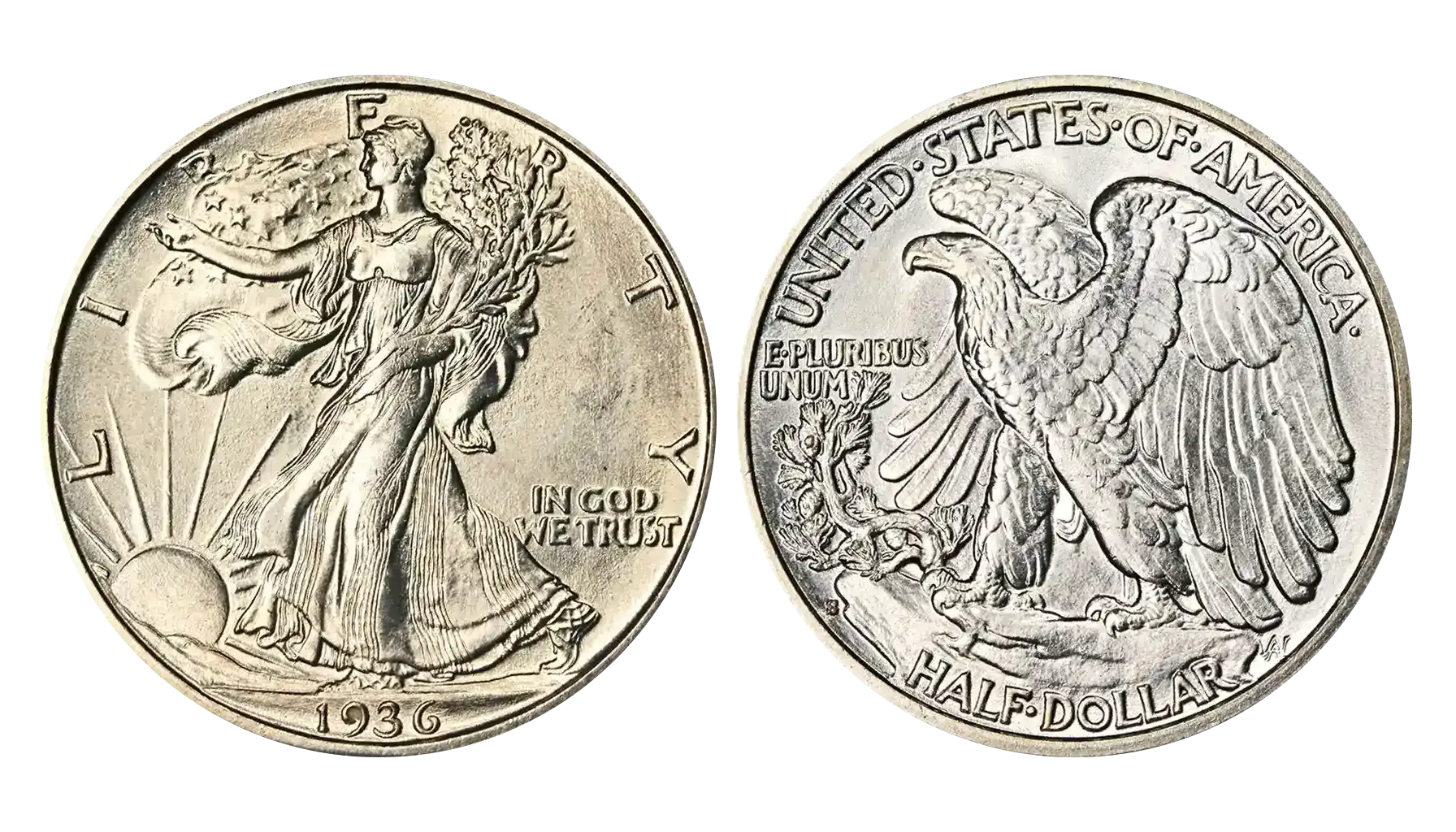
The main price drivers of the 1936 Walking Liberty Half Dollar value include its condition and compliance with its basic item specifications.
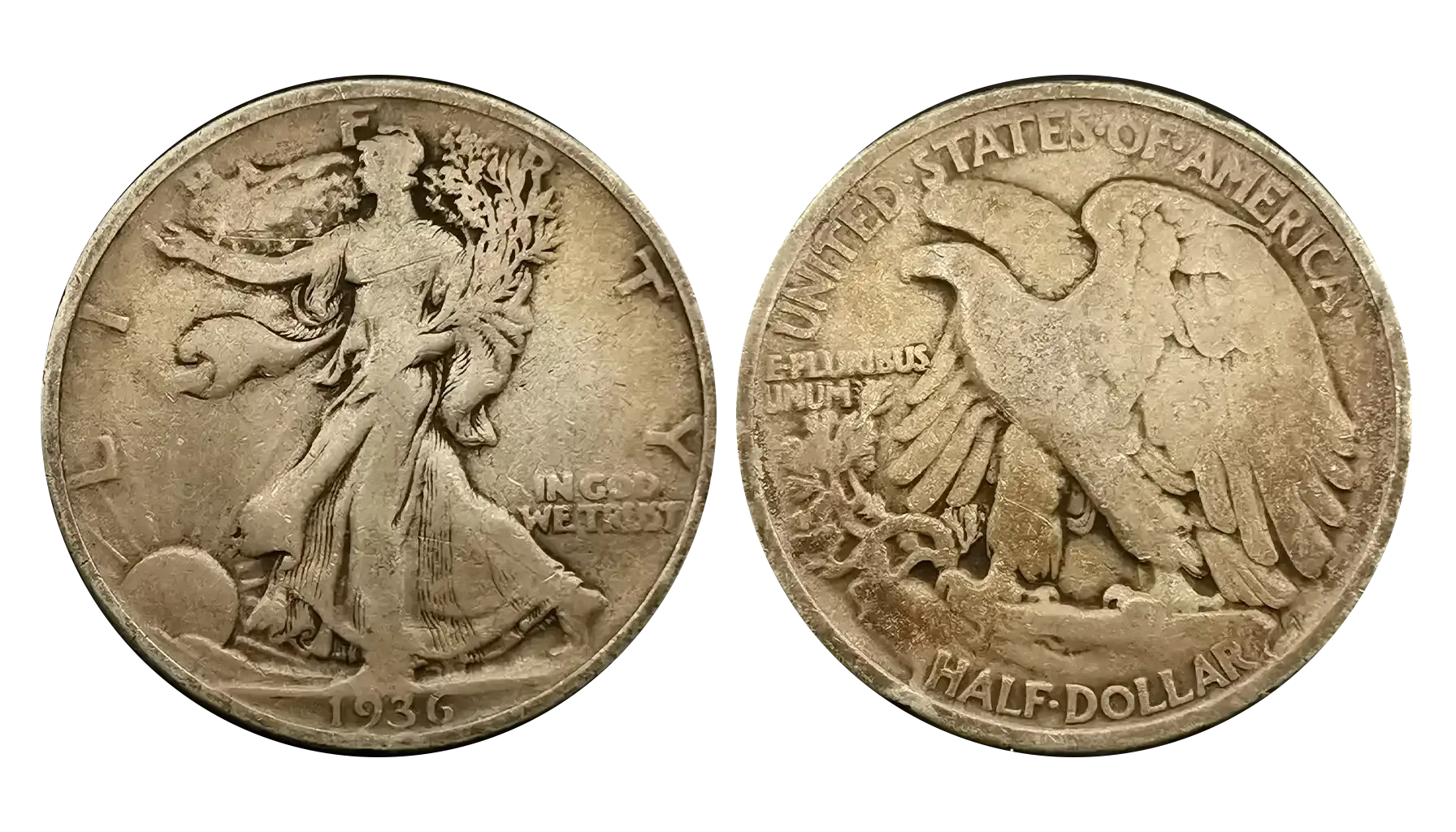
Good / Very Good Condition Value – $30+
Extremely Fine Condition Value of 1936 Half Dollar – $37+
Composition | Silver |
12.50 grams | |
Diameter | 30.60 mm |
Fineness | 0.9 |
Edge | Reeded |
The High-Grade Timeline
The certified pieces follow a completely different timeline driven by the Registry Set competition:
The Early 2000s – high-grade S pieces routinely saw massive price spikes as the first waves of digital registry sets intensified demand for top coins.
The 2008–2012 Financial Period – while common bullion fluctuated wildly, certified MS-67 Walking Liberties retained strong price retention, and established them as an alternative wealth preservation asset class.
The Current Mid-2020s Market – the market has placed an extreme emphasis on appeal and original toning. An MS-66 or MS-67 coin featuring natural, vivid rainbow toning from long-term cardboard album storage.
1936 Half Dollar Value Chart
Two item types exist – regular and proof. The price difference is up to a thousand dollars.
Grade | Regular Strike | Proof Item |
MS-63 | $130 | $2,000 |
MS-65+ | $350 | $4,250 |
MS-66/66+ | $575–$925 | $5,500–$6,750 |
MS-67/67+ | $1,400–$3,600 | $9,000–$32,500 |
MS-68/68+ | $25,000 | $100,000–$150,000 |
Where Is the Mint Mark on a 1936 Half Dollar?
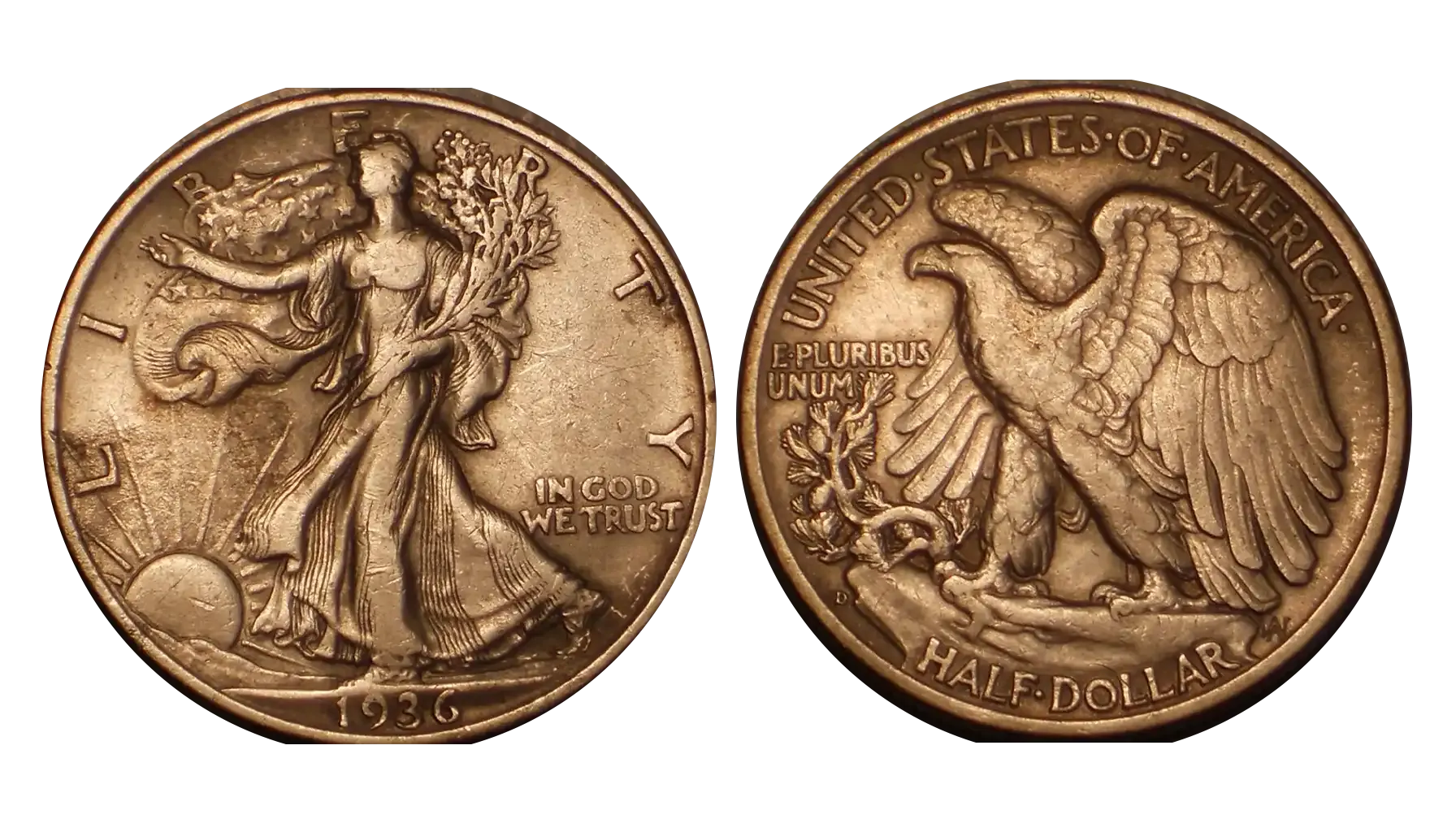
To find the mark, focus on the lower-left area of the reverse design, near the rim:
Locate the eagle and look near its tail feathers on the left.
Look right under that pine sapling and just above the rim.
Mint Mark Variations
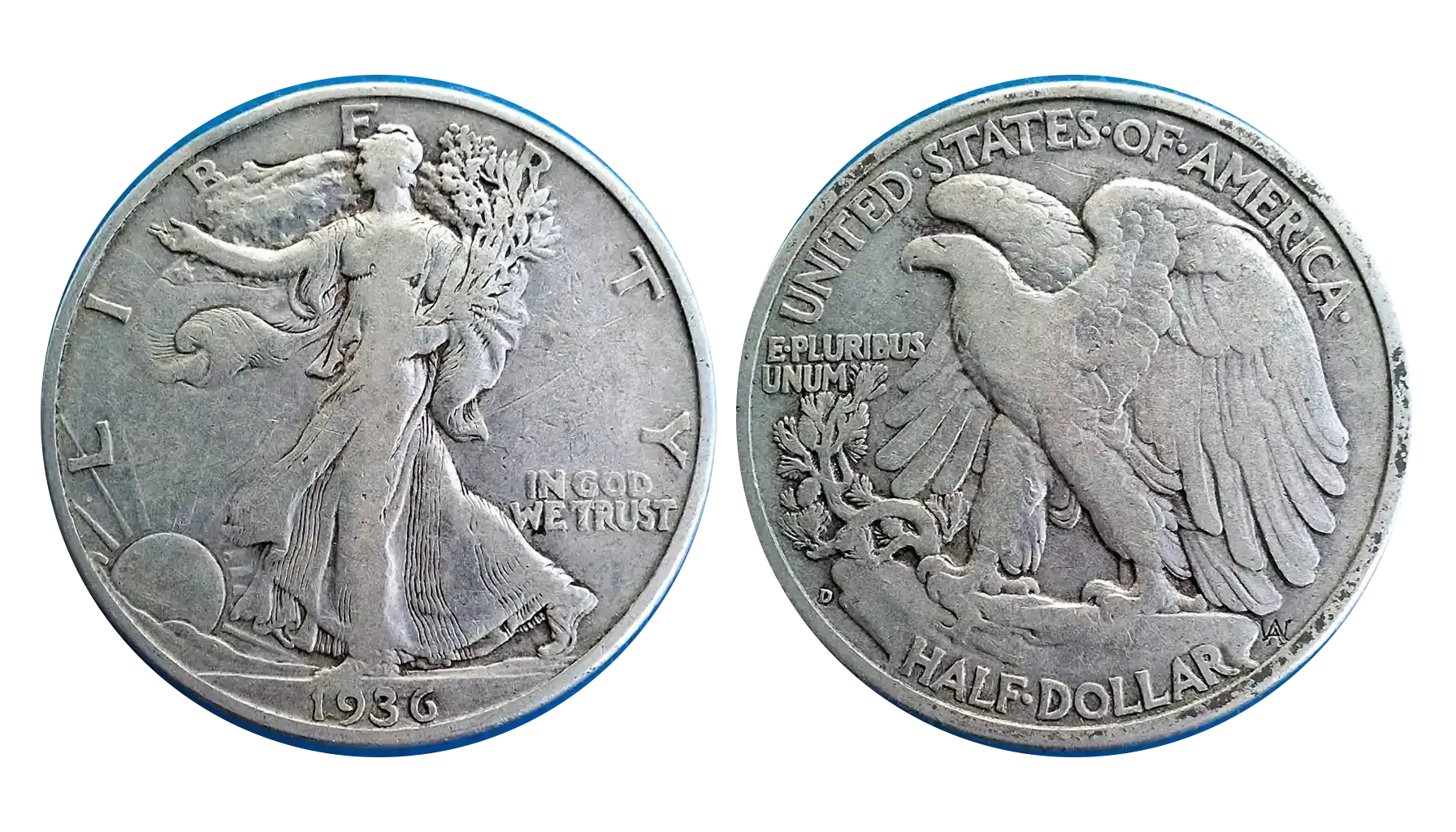
D – Denver, mintage is 4,252,400 pieces
S – San Francisco, mintage is 3,884,000 pieces
No Mint Mark – Philadelphia, mintage is 12,614,000 pieces
If you happen to be comparing this to early issues in the series (1916 or 1917 item), the mint mark position was originally placed on the obverse side below the motto IN GOD WE TRUST. The U.S. Mint moved the location to the lower-left reverse midway through 1917, which is where it remained for the rest of the series' run until it ended in 1947.
1936 Half Dollar Silver Content and Melt Value
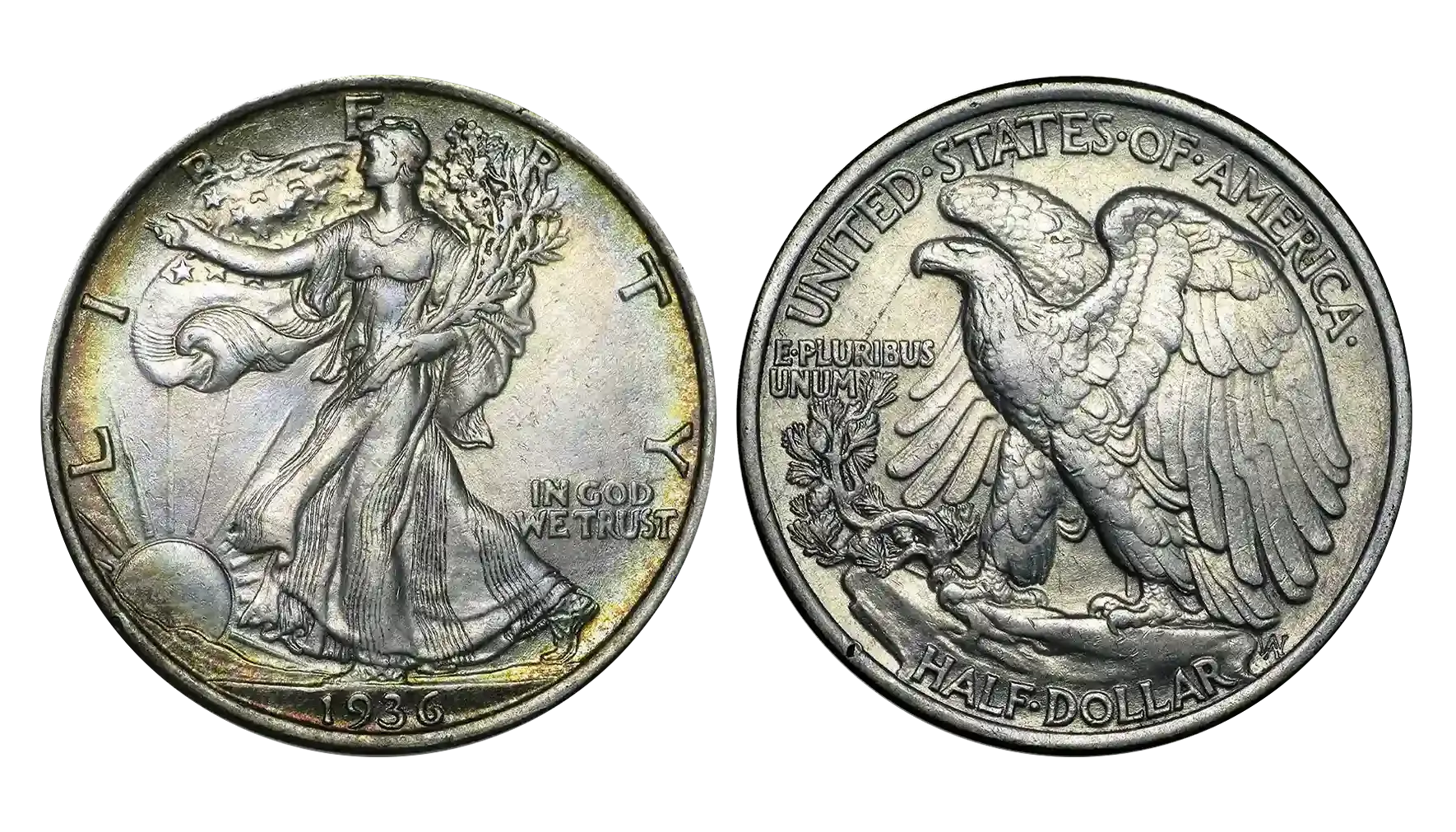
The financial profile of a Walking Liberty Half Dollar depends on its precious metal content. Because all United States items from 1916 through 1964 half dollar shares identical metal dimensions, a 1936 piece has the same silver weight as a modern Kennedy issue.
11.25 grams – net metal weight
12.50 grams – total item weight
Silver 90 % / Copper 10 % – total item composition
Melt Value = 0.36169 x Spot Price
Warning for Collectors
In contrast to modern 1964 halves, which frequently trade for exactly their raw 1936 S Walking Liberty half dollar value, they carry a permanent numismatic bonus price.
Even in heavily worn, Good condition issues command a retail bonus starting around $32 to $38. It means that you should never sell this specific year strictly for its raw $27.57 scrap melt value.
"Despite millions being struck, finding a 1936 Denver or San Francisco half dollar with a sharp, fully detailed strike is incredibly difficult ..."
– Q. David Bowers, expert
A Guide Book of Mercury Dimes, Standing Liberty Quarters, and Liberty Walking Half Dollars
Rare 1936 Half Dollar Errors and Varieties
Behind every high price, there is most often a unique minting defect. Below is a full list of the errors.
Doubled Die Obverse – DDO
Every numismatist should look at the date digits and the motto. You will see clear thickness and distinct separation lines.
FS-101 Variety Reaches $150–$300
DDO Denver
Inspect the words TRUST and the drapery lines on Liberty’s arm. The cost is comparable to the 1936 half dollar value today from Philadelphia.
Missing Designer Initials
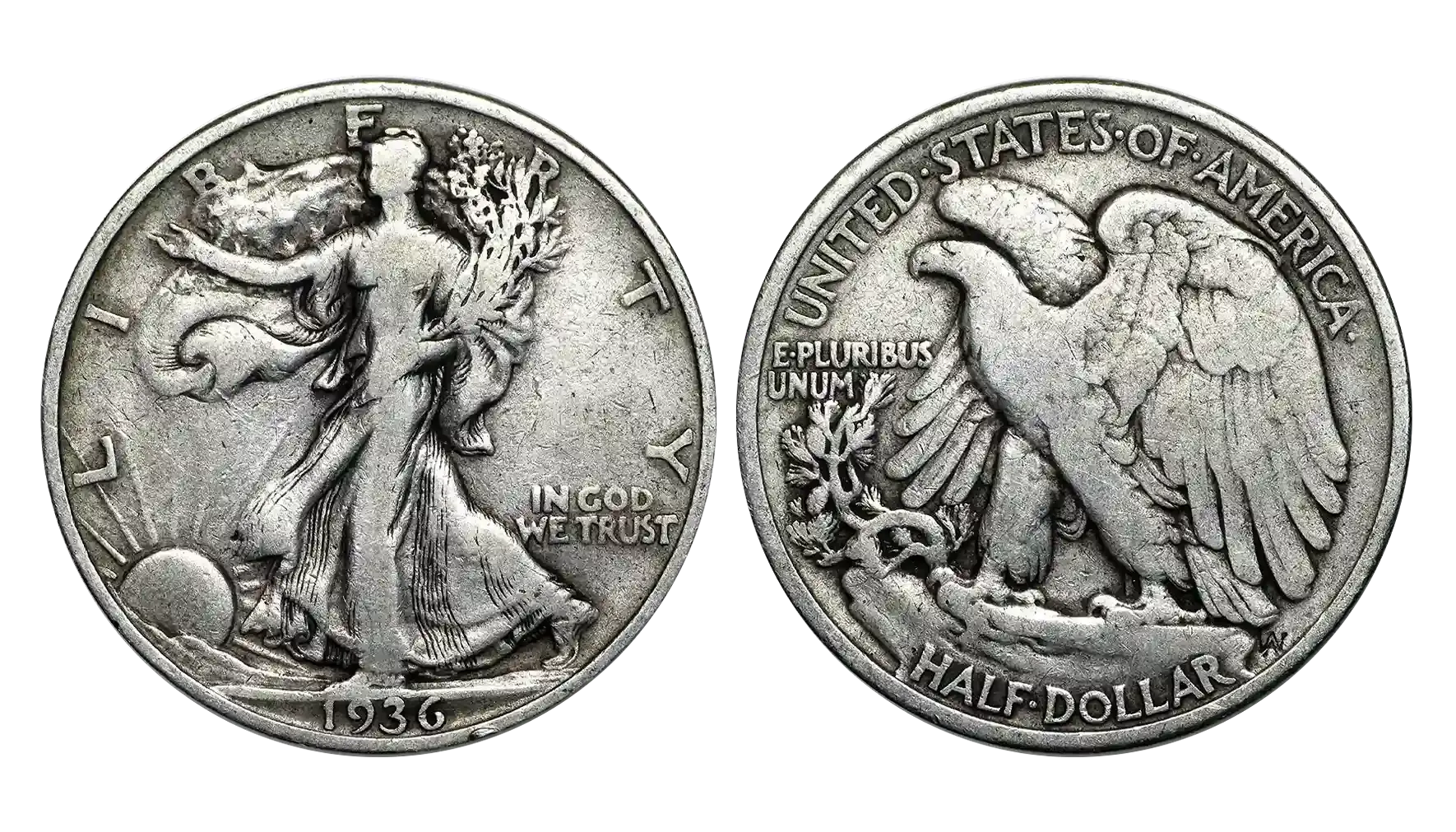
The classic reverse contains the AW designer initials, but on some issues, they are missing. Check the field directly underneath the eagle’s tail on the right side. The area should be completely smooth.
Value $50–$150+
Structural Striking Errors
In contrast to the recurring die varieties above, individual striking anomalies happened live on the production floor.
Planchet Lamination
Off-Center Strikes
The Proof Item Difference
The Philadelphia Mint officially resumed striking proof coins in mid-1936 after a 21-year cessation of proof coin production throughout the United States. The mint was testing its processes, producing only 3,901 proof issues for the entire year. This makes it the best proof coin of the key date for the entire Walking Liberty series.
There are two finishes:
Early coins have a distinctive satin finish. The item type can be confusing, resembling a regular, uncirculated coin but with wire rims.
Later coins have a more traditional Brilliant Mirror finish.
How Condition Impacts 1936 Liberty Half Dollar Value
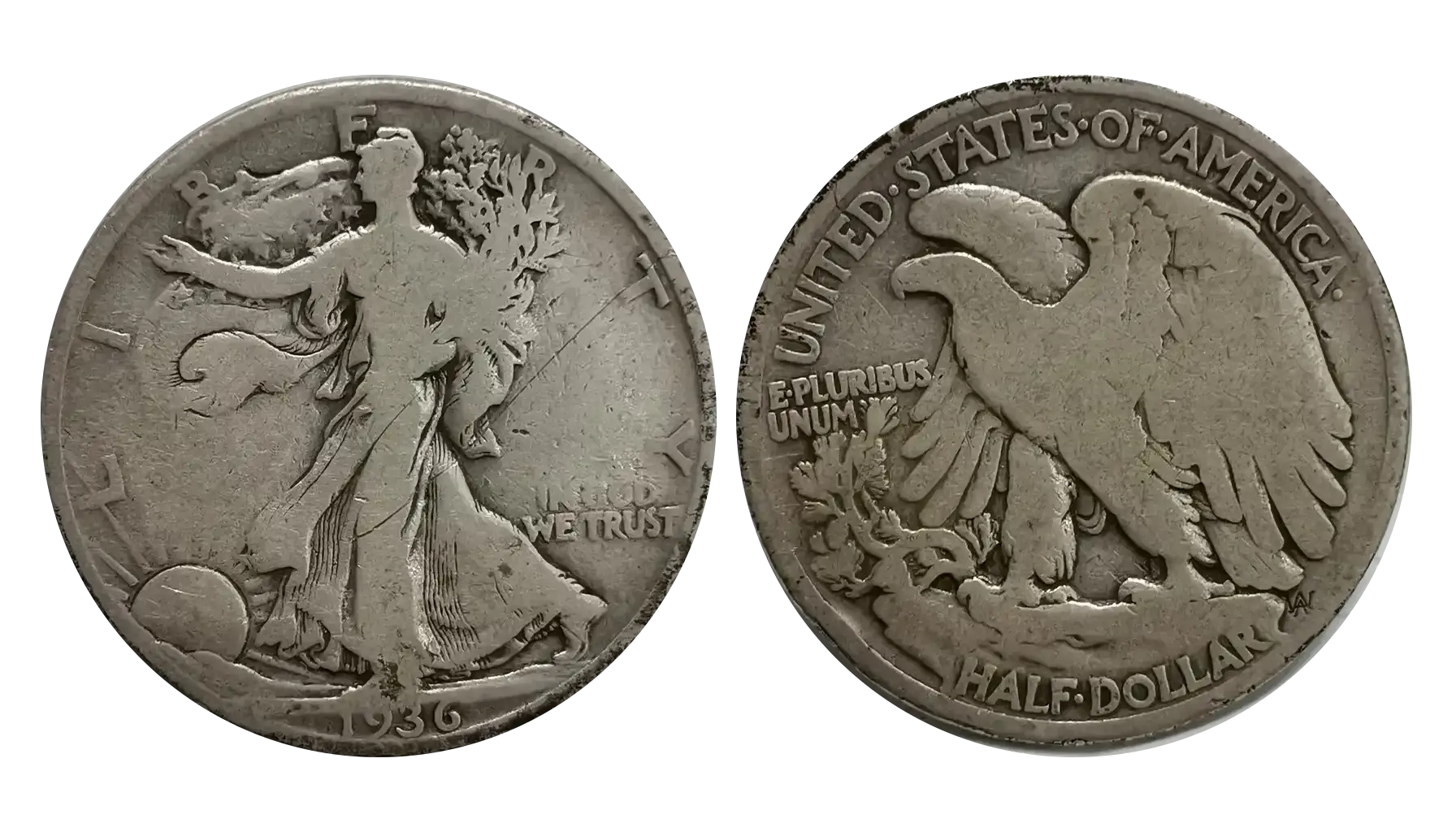
The coinage coincided with the Great Depression, with many of these coins actively circulating, while others were kept as a store of 1936 half dollar coin value.
Condition is crucial when determining the S and 1936 D Walking Liberty Half Dollar value. The difference between a heavily worn coin and an uncirculated one can range from the base value of silver to thousands of dollars.
Why the Massive Price Explosion Between D and S?
Look at the MS-67 tier. A 1936 silver half dollar in MS-65 is a beautiful $875 coin, but an MS-67 example can command north of $23,000 at auction. This is entirely driven by condition rarity.
Furthermore, the San Francisco and Denver mints in the year were notorious for producing softer strikes. Finding an MS67 with fully defined thumb lines on Liberty's hand or crisp feathers on the eagle is the ultimate prize for registry set collectors.
Collector’s Tip
Remember the golden rule – never clean your coins. Attempting to rub away dirt or tarnish creates microscopic hairline scratches that instantly ruin the coin's original luster. To a professional grader, a cleaned coin loses up to 50–80 % of its potential numismatic 1936 silver half dollar value, regardless of how shiny it looks afterward.
How to Sell a 1936 Walking Liberty Half Dollar
To sell rare coins is a big challenge if you've never done it before. To raise your profit, you should follow a clear plan.
Step 1 – Establish Your Coin's Price
Before you contact a single buyer, you need a realistic understanding of what you actually have. You must check for three primary variables:
The Mint Mark – D / S
The Condition Tier – Be brutally honest about the wear. If the lines on Lady Liberty's gown are completely worn flat and smooth, it is a circulated coin worth its basic $15 to $35 retail range.
Step 2 – Choose Your Selling Avenue
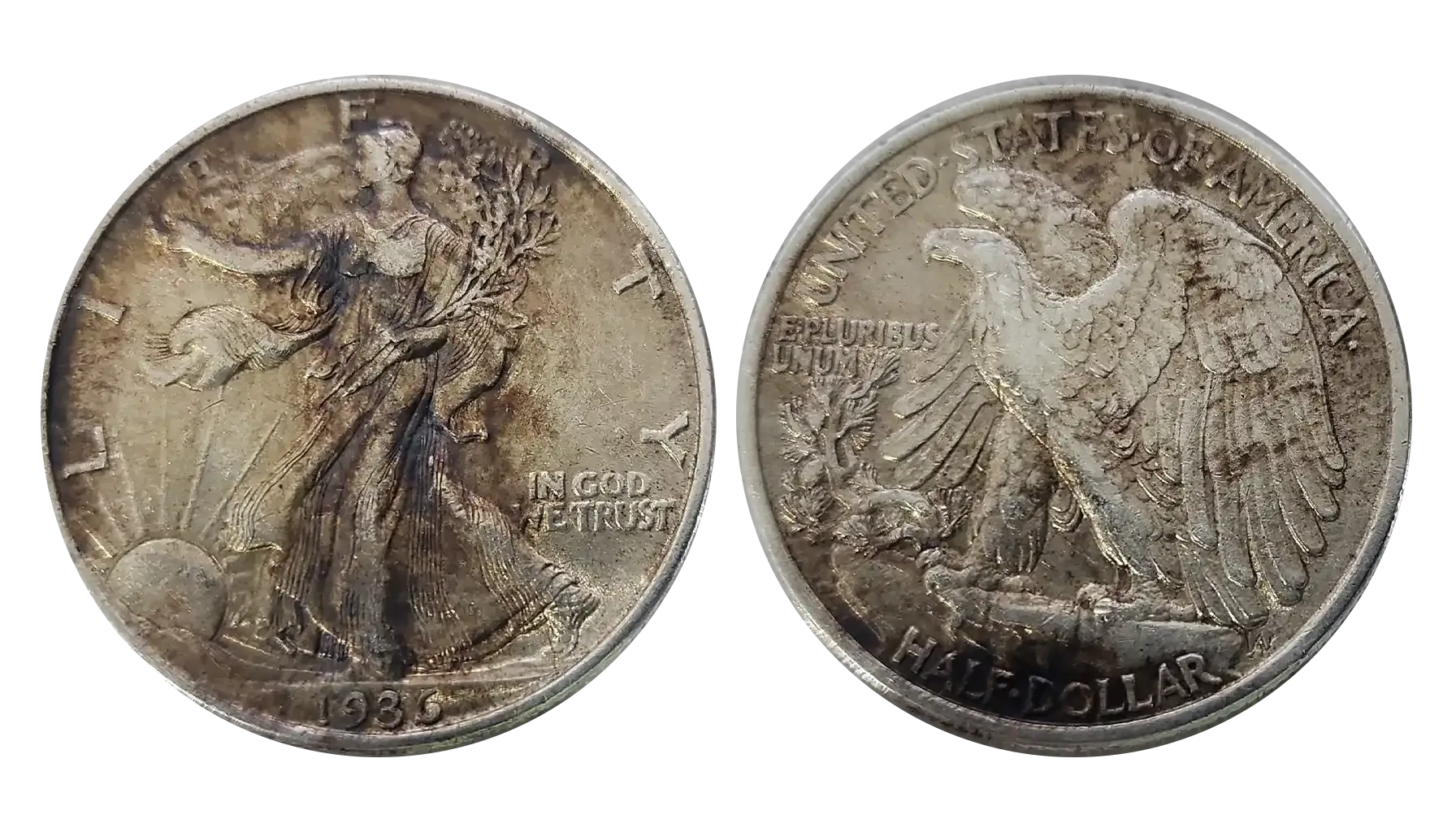
There is no single best place to sell a coin; the right platform depends entirely on how much work you want to put into the sale and the true rarity of your coin.
Local Shops
Local Coin Shops is your best option. The option is the best for circulated coins, or if you need immediate payment.
In real life, a reputable local coin dealer needs to make a profit margin to keep the lights on. For basic circulated halves, expect them to offer right around wholesale or bulk 1936 S half dollar value.
Bring the coin to two or three different shops if possible. Ask them: "What grade do you place on this, and what is your buy price?" Never accept an offer from a dealer who refuses to explain how they calculated the number.
Online Auctions
Do you remember the online platform eBay? The platforms give you direct access to millions of collectors who are willing to pay true retail prices. Always check the review section with photos.
Major Auction Houses
You can find coins with PCGS and NGC professional grading mostly here. If you have a rare one, the major auction houses, such as Stack’s Bowers, are your number one option.
Step 3 – Understand Third-Party Grading
If your item looks absolutely new and clear, you should consider sending it to PCGS or NGC for official authentication and grading before selling.
The professional grading service usually costs around $30 to $60 per coin plus fees. Therefore, you should only slab the coin if the potential jump from a raw price to a certified price easily covers that overhead.
Do not slab if the coin is heavily worn or damaged. A certified low-grade item won't sell for any more than a raw one.
Do slab if the coin is a clear, uncirculated gem or features a definitive major error. A certified grade locks in the coin's authenticity and preservation state and completely removes any negotiation arguments from potential buyers.
FAQs
What is 1936 half dollar worth?
From Good to Extremely Fine condition value ranges from $30 to $37.
Is 1936 half dollar silver?
The item contains 90 % silver.
Where is the mint mark on a 1936 Liberty half dollar?
You should look at the reverse side.
What is a 1936 half dollar worth today?
MS-67 reaches $3,600 on the market.
How much does a 1936 half dollar weigh?
11.25 grams is the net metal weight, 12.50 grams is the total item weight.
Where is the mint mark located on a 1936 half dollar?
Look on the left under the branches, you will see the D or S letter.
How much silver was in a 1936 half dollar coin?
9/10 parts of the item are silver.

 Facebook
  X (Twitter)
  Pinterest
  LinkedIn