Contents:
Found a 1936 quarter and wondering if it's valuable? This simple guide will show you exactly what to look for and how high your 1936 quarter value today might be. Even if you are not an advanced collector yet, with the right tools to identify tools and a bit of patience it is all possible.
Understanding the 1936 Washington Quarter
So, what is that shiny thing in your hands? Before evaluating varieties, let’s understand the basics about the coin itself.
Design Features and Specifications
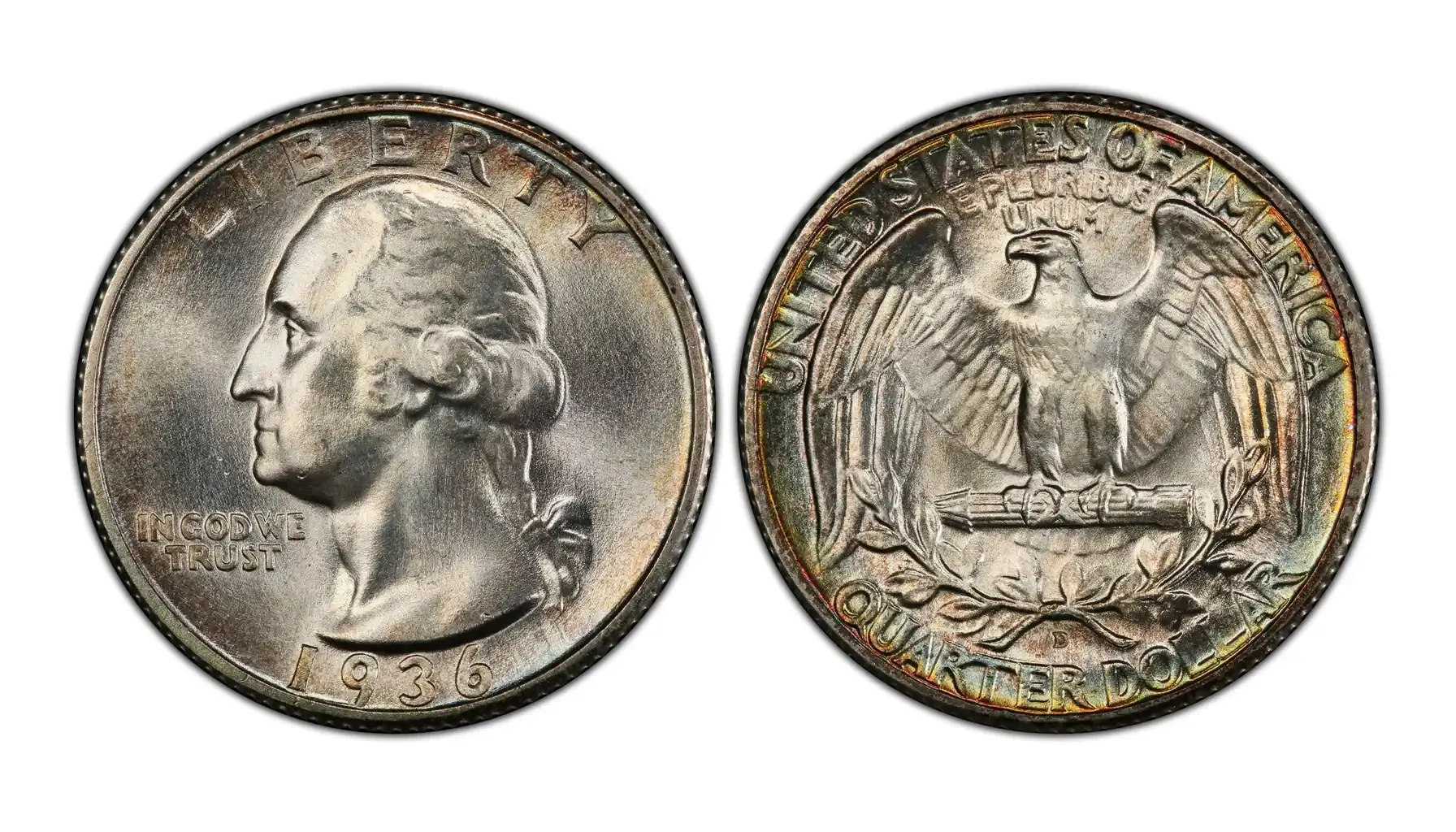
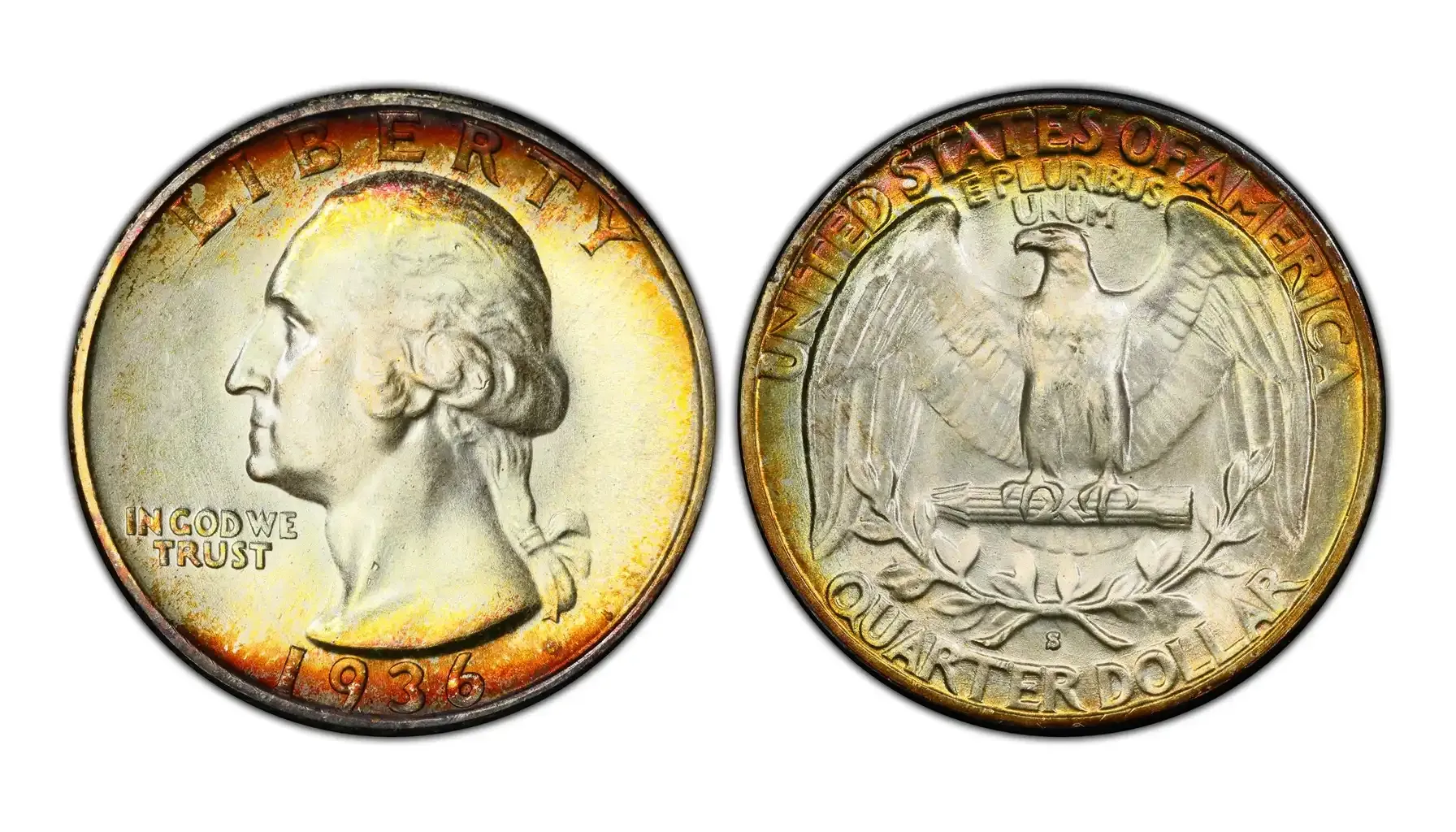
The 1936 Washington quarter belongs to the early years of the Washington series, commemorating his 200th birthday. The obverse shows Washington’s profile facing left, with “LIBERTY” at the top and “IN GOD WE TRUST” to the left. On the reverse you’ll see an eagle perched on arrows with olive branches below.
Key technical details are identical to other pre-1965 quarters:
Weight: 6.25 grams
Diameter: 24.3 mm
Edge: Reeded
Composition: 90% silver, 10% copper
Silver Content and Why It Matters
The 1936 quarter is one of silver coins produced by the US Mint, so its melt value alone provides a solid baseline. At current silver prices (around $35 per ounce in October 2025), each coin’s intrinsic metal content is worth approximately $6–$7.
However, the 1936 silver quarter value frequently gets above this minimum. For example, a well-preserved 1936-D or 1936-S coin can sell for hundreds — we will reveal the reasons soon.
Silver composition also means proper storage is crucial. Tarnish, cleaning, or environmental damage can reduce the 1936 S quarter value. Keeping it in a dry, airtight holder preserves both its condition and appeal to future buyers.
Mint Marks and Their Impact on Value
The U.S. Mint struck 1936 quarters at three usual locations: Philadelphia (no mint mark), Denver (“D”), and San Francisco (“S”). The mintage numbers were unequal, which changes today' s prices significantly.
1936 P (Philadelphia) Quarter Details
In Philadelphia, 1936 quarter no mint mark was produced in the highest numbers. They are the most common type, typically valued near silver melt in circulated grades.
In uncirculated (MS60–MS65) condition, however, they can range from $23 to $62+, with exceptional examples reaching higher prices. Proof versions, minted in very limited numbers, can be worth over $1,600.
1936 D (Denver) Quarter Details
The Denver Mint produced far fewer coins, making 1936 D quarter value noticeably higher. Circulated 1936-D quarters trade between $6 and $67, but uncirculated or high-grade examples exceed $400–$800. At major auctions, top-condition 1936-D coins have fetched well over $1,000.
Identifying Mint Marks Location
To find the mint mark, examine the reverse side of the coin beneath the eagle’s tail — specifically between the “R” and “E” in “QUARTER.” It will be the first step of the complex evaluation process.
No letter = Philadelphia
“D” = Denver
“S” = San Francisco
How to Determine Your Quarter's Condition
A coin’s grade is the single most important factor in determining how much is a 1936 quarter worth on the numismatic market.
“The Washington Quarter 25-cent piece is one of the most recognizable pieces of American coinage, and is one of the most sought after by collectors. Because early editions of the coin contain silver, their appeal seemingly knows no bounds... For any coin produced during the 1930s and utilized as a collector’s item today, the first question on the mind of any collector will be with regard to the coin’s condition.”
— The Expert Team of JM Bullion
From a Guide On Evaluating 1936 Quarters
Circulated vs Uncirculated Coins
Most 1936 quarters in circulation show light to heavy wear, which reduces collectible appeal. Even small differences in sharpness or luster affect prices dramatically.
Circulated coins typically show smoothing on Washington’s hair curls, flattening on the eagle’s wings, and loss of original shine.
Uncirculated coins display no visible wear, retain crisp edges, and have full mint luster — these often command the highest premiums among collectors.
A simple inspection under good lighting can help you identify which category your coin fits into.
Grading Tip: For more accuracy, compare your piece with professional grading photos or use Coin ID Scanner to analyze it more properly.
Simple Grading Guide for Beginners
Place your coin under a magnifying glass and try to notice all the tiny scratches on its surface. This is how you place it into one of the following categories:
Good (G): Major features are visible but worn flat. Washington’s hair and the eagle’s wings appear smooth, with heavy overall wear. These coins are typically worth only their silver melt value.
Fine (F): Moderate wear shows across high points, but most major design details remain visible. Expect a small premium above melt value.
Extremely Fine (XF): Minor wear limited to the highest areas. Washington’s hairlines and the eagle’s feathers are clearly defined. A favorite condition for casual collectors.
Uncirculated (MS60–MS65): No visible wear at all, full mint luster, and sharp details. These coins are much more valuable, often exceeding $100 depending on the mintmark.
Proof: Specially struck coins with mirror-like surfaces and fine detail. Not intended for circulation; these pieces are highly collectible and can exceed $1,000 in value.
What Affects Coin Value Most
Silver price provides a baseline, but three main factors determine real collectible value:
Condition (Grade): Uncirculated coins always lead in value.
Mint Mark: Denver and San Francisco mint issues are scarcer than Philadelphia.
Varieties and Errors: Rare die variations and mistakes can multiply a coin’s price dramatically.
Some coins combine multiple advantages and become extremely valuable, like a 1936-D in Mint State or a rare proof strike. You can see these examples in auction catalogs or professional grading registries.
Current Market Values for 1936 Quarters
Value by Grade and Mint Mark
Here’s a concise breakdown of typical retail values based on mint mark and condition:
Mint & Type | Circulated | Uncirculated | Exceptionals |
1936 (Philadelphia) | $6–$8 | $23–$62 | Proofs up to $1,600+ |
1936-D (Denver) | $6–$67 | $375–$838 | Top specimens exceed $1,000 |
1936-S (San Francisco) | $6–$28 | $76–$190 | Finest known up to $31,000 |
*These estimates reflect current collector market averages and may vary slightly depending on grading certification, dealer pricing, and actual silver value (roughly $35/oz in late 2025).
Silver Value vs Collectors Premium
Every 1936 quarter contains 0.1808 troy ounces of silver, giving each coin a base metal worth around $6.40–$6.60. But coins in high grades or with unique mintmarks can trade for ten times or more that amount.
Collector premiums arise from scarcity, preservation, and historical appeal. Even a common Philadelphia issue becomes a valuable collectible in Mint State condition, while a 1936-D or 1936-S in top grade rank among the most desirable Washington quarters of the decade.
Rare Varieties and Error Coins
Look patiently at the coin you own! Maybe it looks a bit strange? Pieces with minting errors or unusual die varieties are scarce and highly desirable among advanced collectors.
Doubled Die Obverse (FS-101): A visible doubling on the date and lettering “IN GOD WE TRUST.” Depending on sharpness and grade, these coins can bring $100–$600 or more.
Repunched Mint Mark (RPM): On some 1936-D or 1936-S coins, the mintmark was struck twice, leaving a faint shadow effect. These are minor but collectible errors.
Off-Center Strikes: Part of the design is misaligned or missing. Coins with 10–30% off-center errors can fetch $200–$1,000, depending on condition.
Error coins should always be authenticated by grading authorities such as PCGS or NGC, since counterfeits are quite common. Proper documentation significantly increases resale value. Before you grade it professionally, quickly check a coin via Coin ID Scanner.
How to Preserve and Protect Your Quarter
As you know already, the grade defines the price in most cases. Learn how to maintain your pieces in a perfect condition.
Proper Handling and Storage
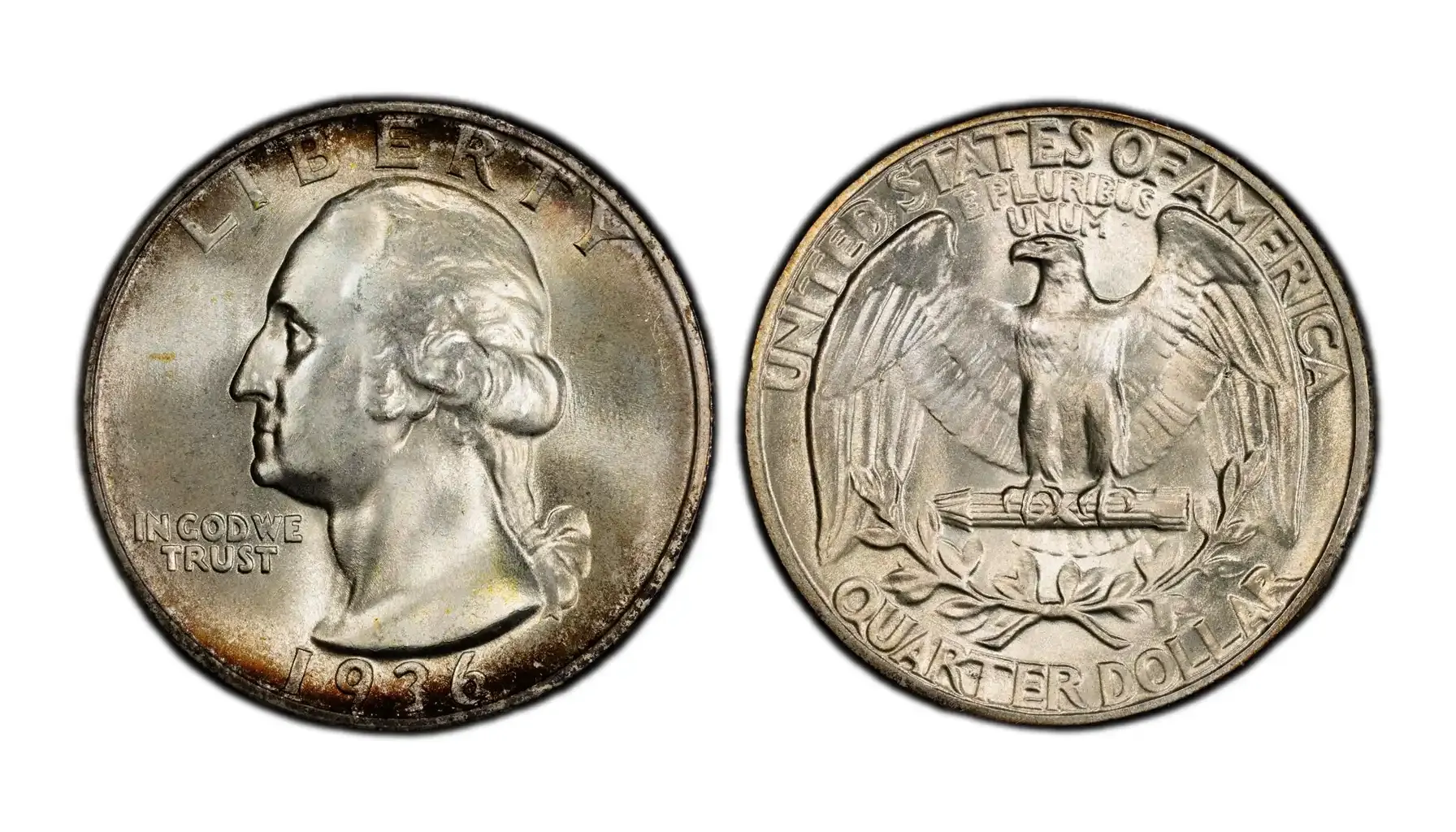
Proper preservation safeguards genuine beauty and collector’s value. Even minor handling mistakes can reduce collectible worth.
Follow these best practices:
Hold coins by the edges to prevent fingerprint oils or abrasions.
Store in non-PVC holders or acid-free 2x2 flips to prevent chemical reactions.
Keep in a dry, temperature-controlled environment, ideally in a small safe or protective case.
Never clean your coin — even gentle polishing can cause irreversible surface damage and lower resale value.
Pro Advice: For long-term collectors, digital tools can assist in cataloging, tracking condition, and monitoring value trends. Coin ID Scanner can help you with keeping track of your whole collection.
When Professional Grading Makes Sense
Professional grading is recommended for coins that appear uncirculated, proof, or show error features. A certified grade from PCGS, NGC, or ANACS increases credibility and resale potential.
Graded coins are sealed in tamper-proof holders that preserve condition and confirm authenticity. Certification is especially valuable for high-grade 1936-D or 1936-S quarters, which often sell for multiples of their raw value.
Modern Tools for Coin Collectors
If you are new to collecting or just want to add more structure to your hobby, a digital record of your collection might be the perfect solution.
Best Coin Identification Apps
Coin ID Scanner is the most accurate and user-friendly tool for identifying and valuing coins. Its AI recognition instantly detects date, mint mark, and variety from a quick photo scan, drawing data from an extensive global database.
Other helpful resources include PCGS CoinFacts, known for its expert-authenticated price charts and historical auction records, and NGC Coin Explorer with certified population reports and detailed variety information for serious collectors.
Using Apps for Instant Valuation
Follow these quick steps to get a reliable price range via Coin ID Scanner’s help:
Clean the view, not the coin: Place the coin under neutral, bright enough light; don’t clean it. Wipe your camera lens only.
Scan both sides: In Coin ID Scanner, capture obverse and reverse; enable variety/mint-mark detection.
Confirm details: Verify date, mint mark, and type (e.g., 1936-D). Manually override if the app misreads.
Estimate condition: Use the app’s grading assist; compare to reference photos (focus on Washington’s hair and eagle feathers).
Review comps: Check the app’s recent sales and price guide for your grade range (circulated vs. MS).
Adjust for factors: Note errors/varieties, eye appeal, and certification status; refine the estimate accordingly.
Save & track: Add the coin to your watchlist to monitor price alerts and market changes.
Building Your Digital Collection
Beyond valuation, Coin ID Scanner allows collectors to build a secure digital portfolio. Custom coin entries can include photos, serial numbers, grades, and purchase details.
Tips for beginners building a digital collection:
Start by cataloging coins you already own, adding clear photos and notes for each.
Record key details: year, mint mark, grade, and purchase price.
Use custom folders or tags to group by type, metal, or series.
Enable price tracking notifications to monitor changing market values.
Sync your data to the cloud for safe, long-term storage and easy device access.
FAQ
Is every 1936 quarter silver?
Yes, all 1936 quarters are 90% silver and 10% copper, containing roughly 0.18 troy ounces of silver.
How can I tell if my 1936 quarter is uncirculated?
Uncirculated coins show no visible wear on Washington’s cheek, hair, or the eagle’s feathers and have strong, original luster.
What's the difference between 1936 P and 1936 D quarters?
The Philadelphia coin has no mint mark and is common; the Denver coin, marked “D,” is much scarcer and commands higher prices in top condition.
Should I clean my old quarter?
No. Cleaning removes original surfaces and drastically reduces collector value.
Where can I sell my 1936 quarter?
Reputable coin dealers, auction houses, and certified online platforms such as Heritage Auctions or eBay are ideal options. For rare coins, grading certification ensures higher buyer confidence and stronger offers.

 Facebook
  X (Twitter)
  Pinterest
  LinkedIn