Contents:
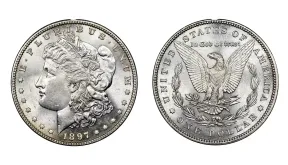
Issued in 1897, this Morgan Dollar represents the later phase of the series, when output had leveled off and mintages had dropped from the highs of the early 1890s. The coins were produced at three mint issues — Philadelphia, New Orleans, and San Francisco. These issues are distinguished by die quality and the number of surviving examples.
The 1897 silver dollar value today is determined by a combination of factors. Collectors are attracted to the coin due to its stable demand and clear grading statistics. Like many other rare coins, it remains an important object for study and investment due to its history and condition.

Why the 1897 Morgan Dollar Stands Out Among Collectors
The coin attracts collectors due to its combination of moderate mintage and rare varieties in high grades. Specimens with minimal wear and original luster are particularly sought after. They consistently command market prices above bullion value.
The series includes several key issues: Philadelphia (unmarked), New Orleans (O), and San Francisco (S). Prices range from tens to thousands of dollars depending on the grade.
Key Physical Features and Design Overview
George T. Morgan, who served as Chief Engraver at the U.S. Mint, developed the design. The coin’s metal mix and measurements are consistent with the established Morgan Dollar format.
Parameter | Value |
Metal | Silver 90%, Copper 10% |
Weight | 26.73 g |
Diameter | 38.1 mm |
Edge | Reeded |
Denomination | 1 U.S. Dollar |
Obverse Design | Liberty profile |
Reverse Design | Eagle with outstretched wings, wreath, inscription “ONE DOLLAR” |
Mint Marks and Mintage Numbers
Philadelphia Mint (No Mint Mark) – Common Yet Historic
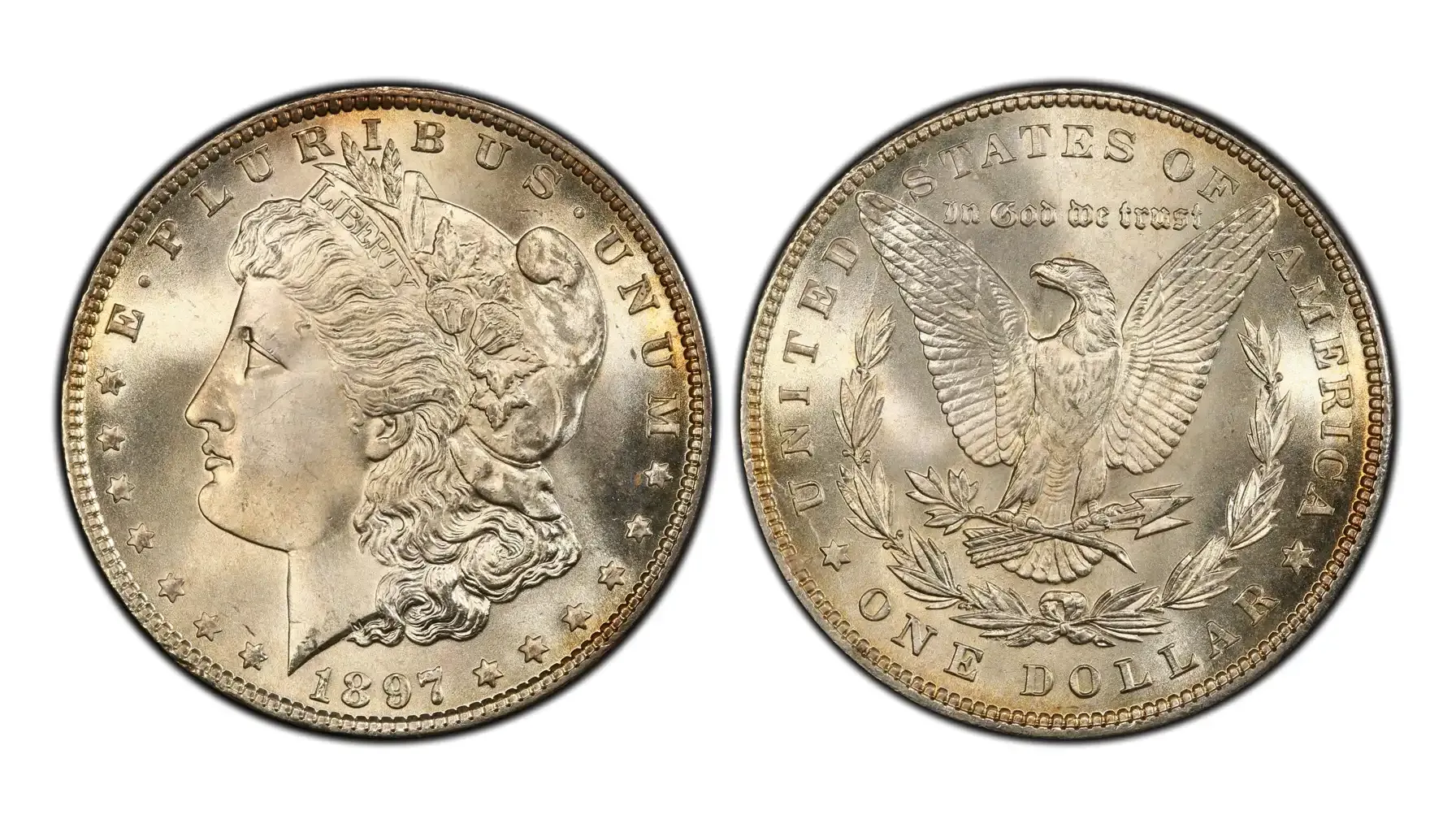
Mintage: 2,822,000 pieces.
These unmarked coins were minted in Philadelphia. They are known for their high die quality and uniform relief. Most specimens are found in grades from VF to MS65.
The average market price for MS64 specimens is $250–$350. Proof coins from 1897 are rare and of particular interest.
The sharp, uniform relief of Philadelphia coins often leads researchers to a broader question — the nickel secrets behind their finish. Subtle differences in metal composition and treatment can change how light plays across the surface and how crisp the strike appears.
New Orleans (O) Mint – Scarcer Varieties and Collector Demand
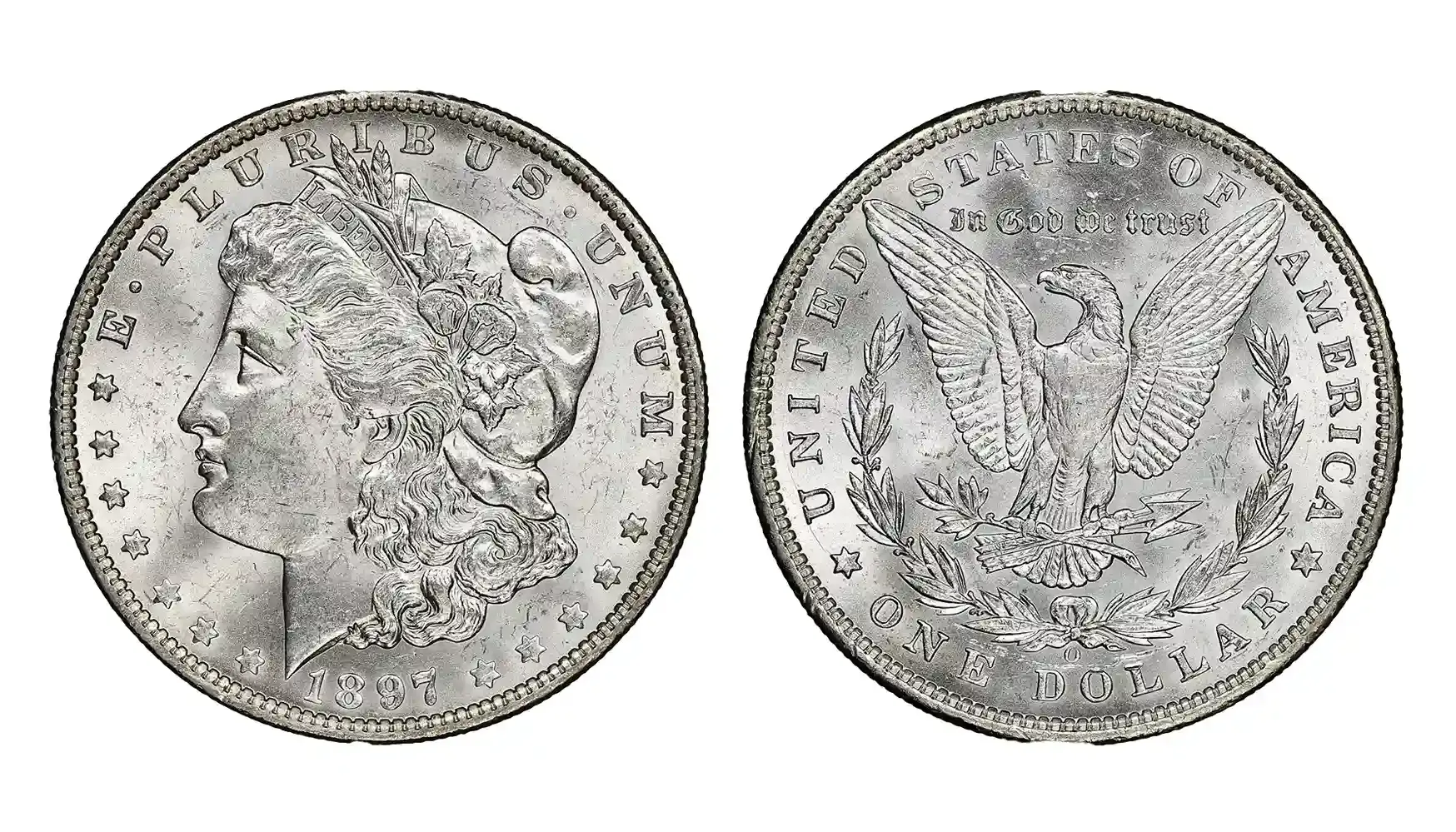
The "O" issue is characterized by weak strike and an uneven center. Mintage: 4,004,000 pieces.
They are harder to find in good condition, especially above MS63. The rarest grades are valued in the tens of thousands of dollars.
At a Heritage Auction, an 1897 Morgan Dollar value in MS67 CAC achieved $348,000.
Proof and Special Strike Coins – Extremely Limited Issues

Proof coins were minted in limited quantities—approximately 880 pieces. They feature a mirrored background and frosted relief. In PR65 condition, they are valued at $4,000–$6,000.
Understanding Rarity and Key Varieties
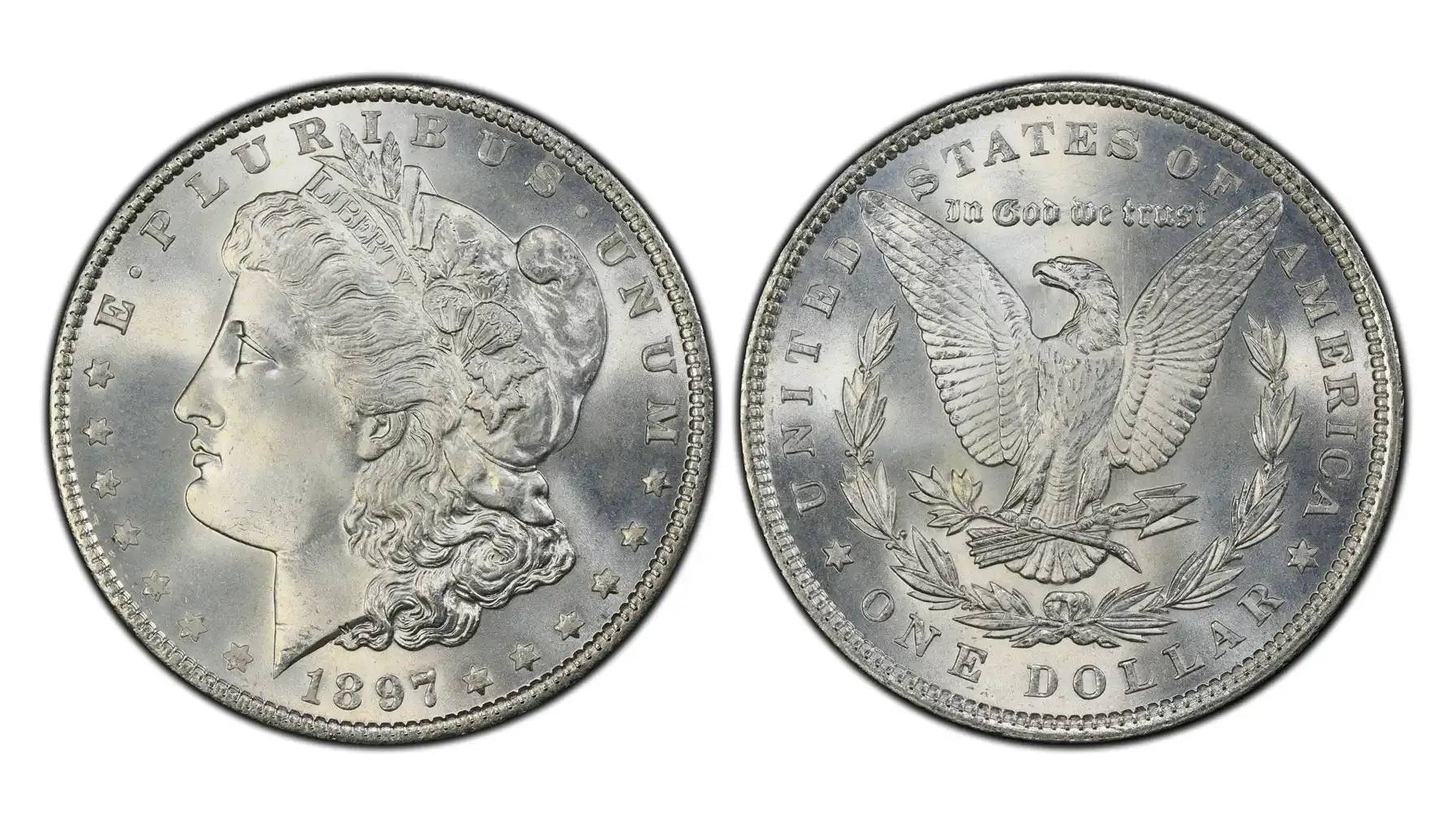
How Mintage and Survival Rates Define Rarity
Coin rarity is determined by a combination of the original mintage and the percentage of surviving pieces.
Mint | Mintage | Estimated Surviving MS60+ |
Philadelphia | 2,822,000 | ~10% |
New Orleans | 4,004,000 | <5% |
San Francisco | 5,825,000 | ~8% |
The Most Coveted High-Grade 1897-O Morgan Dollars
The number of pieces in high condition is limited.
MS63 — approximately 400–800 pieces.
MS64 — approximately 200 pieces.
MS65 — no more than 100 pieces.
MS67 — single pieces.
Fixed prices at $348,000 (Stack's Bowers, PCGS MS67 CAC).
“There is no substitute for knowledge when you buy coins.”
— Kenneth Bressett, longtime editor of Red Book
From the introduction/advice for collectors.
Die Varieties, Striking Errors, and Collector Appeal
The 1897 series is known for several variations related to technical irregularities during minting. The main categories include:
Doubled Date. The year digits are doubled, most often "1" and "9." These are easily visible even without a magnifying glass.
Weak Strike. The relief is weakened—Liberty's hair appears smoothed out, and the eagle's feathers are not defined.
Off-Center Strike. The image is offset, with part of the design moving toward the edge.
Clashed Dies. Die contact marks—elements of the reverse appear on the obverse.
Die Crack. A thin, raised line that looks like a crack on the coin.
Repunched Mint Mark. A repeated impression of an "O" or "S" mark, with the old outline visible beneath the new one.
Such varieties are recorded in specialized catalogs and certified separately (VAM numbers, determined using the Van Allen-Mallis database). A rare VAM can increase the value of 1897 silver dollar several times over.
Particularly prized are those that combine excellent preservation with a rare error, such as:
1897-O VAM-4 "Doubled 18-7, High O Tilted Right" in MS63;
1897-S "Reverse Die Crack Across AMERICA" with a crack along the word "AMERICA";
1897 "Clashed Die with Eagle Wing Impression on Liberty's Neck" with an eagle wing imprint on Liberty's neck.
Grading and Condition Explained
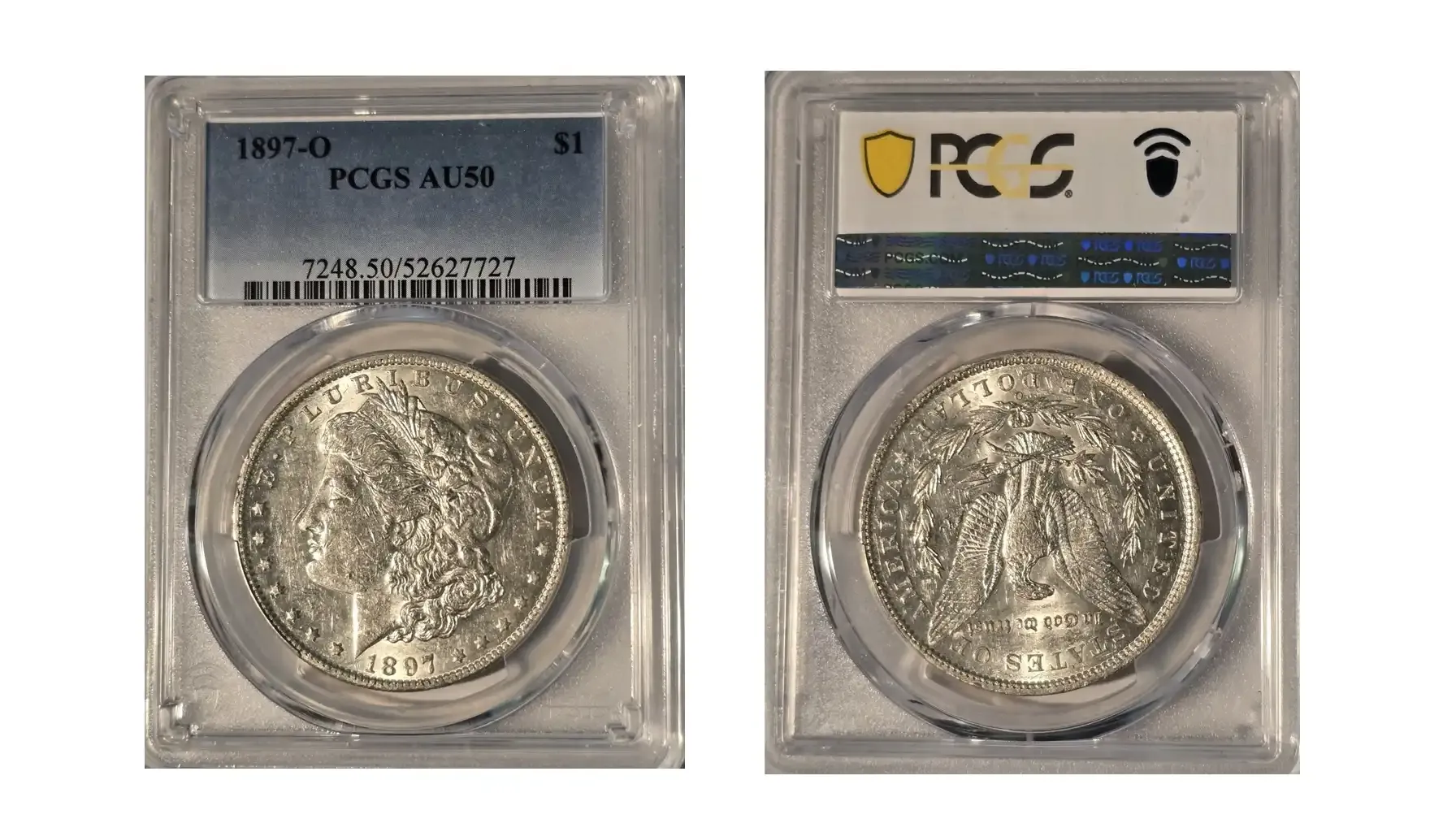
Grading Scale for the 1897 Morgan Silver Dollar
Numismatic grades are used to describe condition:
G (Good) – heavy wear, barely visible details of Liberty.
VG (Very Good) – partially legible details.
F (Fine) – lettering and outlines are visible.
VF (Very Fine) – noticeable hairline and wing details.
XF (Extremely Fine) – moderate wear, clear relief.
AU (About Uncirculated) – slight luster, minimal wear.
MS (Mint State) – no signs of circulation.
Take the 1920 Buffalo Nickel, for example. Between a coin that’s seen a bit of handling and one that’s nearly uncirculated, the price gap can run into the hundreds.
The Value Difference Between VF, AU, and MS Grades
Condition | Average Price (USD) | Comment |
VF | ~ 45–60 | Circulated specimens |
XF | ~ 75–100 | Relief preserved |
AU | ~ 150–250 | Minimal wear |
MS60 | ~ 300–400 | Good luster |
MS63–64 | ~ 500–800 | Strong luster |
MS65+ | ~ 1,200–5,000+ | Collector grade |
Prices are current at the time of writing and are approximate.
Professional Grading Services: PCGS vs NGC
PCGS and NGC are the main organizations whose certificates are recognized in the market. The price difference between similar grades can reach 20-30%. Coins with the CAC mark are valued even more highly.
Authentication and Counterfeit Detection
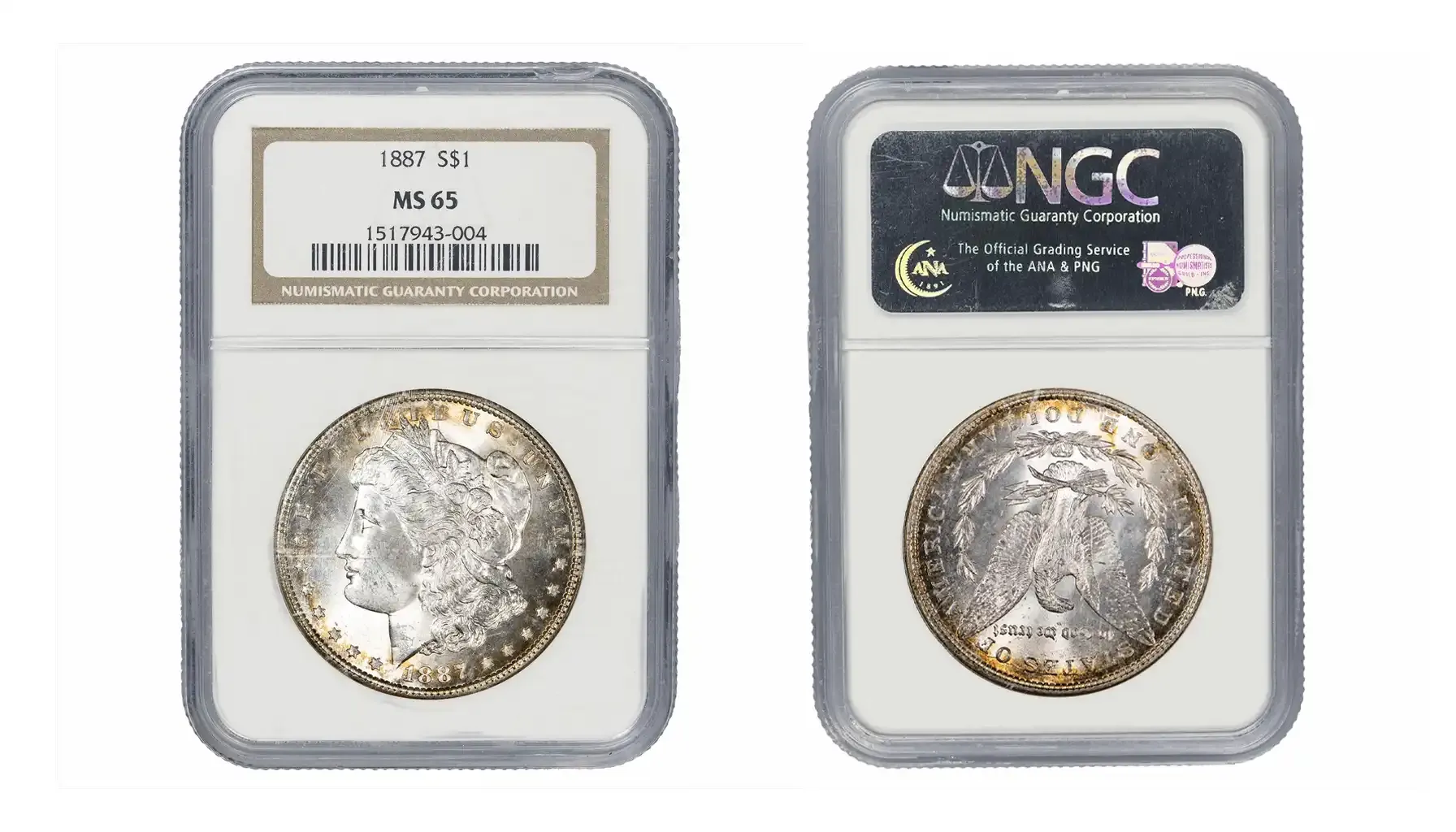
How to Identify Genuine 1897 Morgan Dollars
Authenticity features:
weight 26.73 g,
non-magnetic,
clear "E PLURIBUS UNUM" inscription,
uniform edge,
standard diameter of 38.1 mm.
The Coin ID Scanner app allows you to scan coins, determine the variety, approximate market value, and automatically save the data to your personal collection.
The same methods apply to other rare denominations—for example, the 1903 Nickel, where an experienced numismatist will recognize the original luster and microscopic pattern of the metal.
Common Counterfeits and Red Flags to Watch For
Types of counterfeits:
copies made of aluminum alloys,
fake stamps with blurred lines,
non-standard edges,
lack of clarity in the lettering of "LIBERTY."
authentic specimens have distinct relief depth and a uniform field.
Frequently Asked Questions (FAQ)
What Makes the 1897 Morgan Silver Dollar Rare?
Rarity reflects both supply and demand: few coins remain, and many collectors want them.
Where is the mint mark on an 1897 silver dollar?
The mint mark is located on the reverse below the eagle, above the word "DOLLAR".
How Can I Tell If My Coin Is Real?
Authenticity is verified by weight, diameter, and edge structure. Use certified scales or the Coin ID Scanner app.
Which Mint Mark Is the Most Valuable for 1897?
The most expensive variety is 1897-O in MS65+ condition or higher.
What’s the Current 1897 Morgan Silver Dollar Value?
At the time of publication, average ranges are $50–$4000 depending on grade.
How Does Grading Affect My Coin’s Worth?
The difference between XF and MS grades can be as much as tenfold in value.
Can I Still Find 1897 Morgan Dollars in Circulation?
They have disappeared from circulation, surviving mainly in private collections or forgotten reserves in old banks
How much is a 1897 dollar coin worth?
Base price: $40 for circulated coins to $5,000+ for rare Mint State examples.
How much is a Queen Victoria 1897 coin worth?
The average 1897 Victoria coin value is $25–$80 depending on condition and denomination.

 Facebook
  X (Twitter)
  Pinterest
  LinkedIn