Contents:
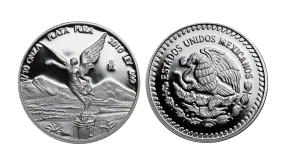
There are two kinds of scarcity: “hard to find today” and “hard to find, period.” Libertads can be both, depending on the year. Before you pay the premium, open a mintage chart—and keep a coin value checker online handy to compare real prices against the numbers.
What Is Libertad Coin Mintage and Why It Matters
Mintage is the number of coins struck for a given year + size + finish.
With Libertads, that last part matters a lot because the same year can exist as:
BU (brilliant uncirculated bullion)
Proof
Reverse proof
Antique finish (some years)
Each version has its own separate numbers.
Also, silver Libertads are issued under Banco de México and struck by the Mexican Mint (Casa de Moneda). They are bullion-style pieces (no “spend it at the store” face-value behavior like Eagles), so production tends to follow demand and distribution realities more than a fixed circulating coin plan.
Why Libertad Mintage Matters
1) Low number drives collector premiums (sometimes more than silver/gold)
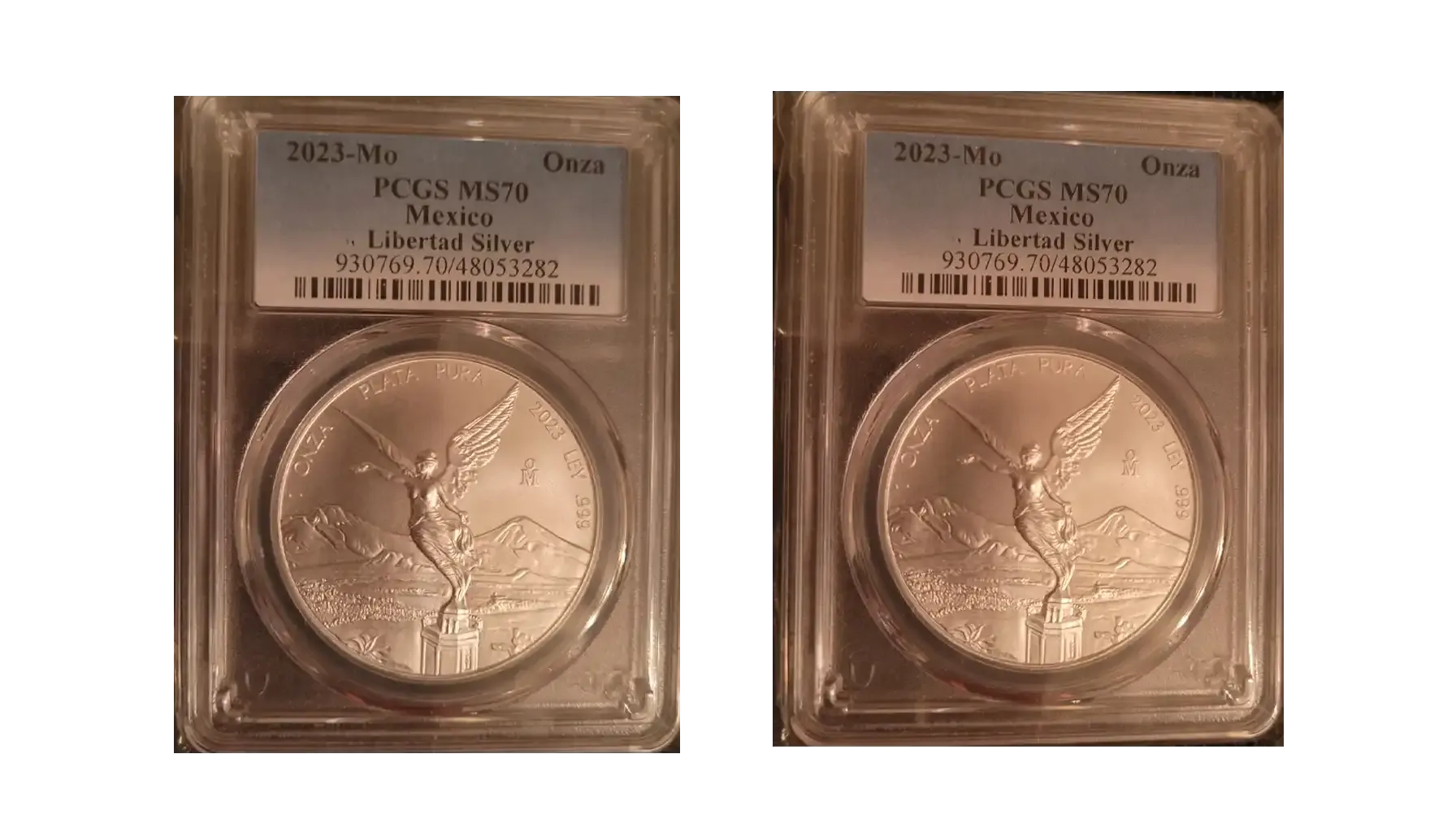
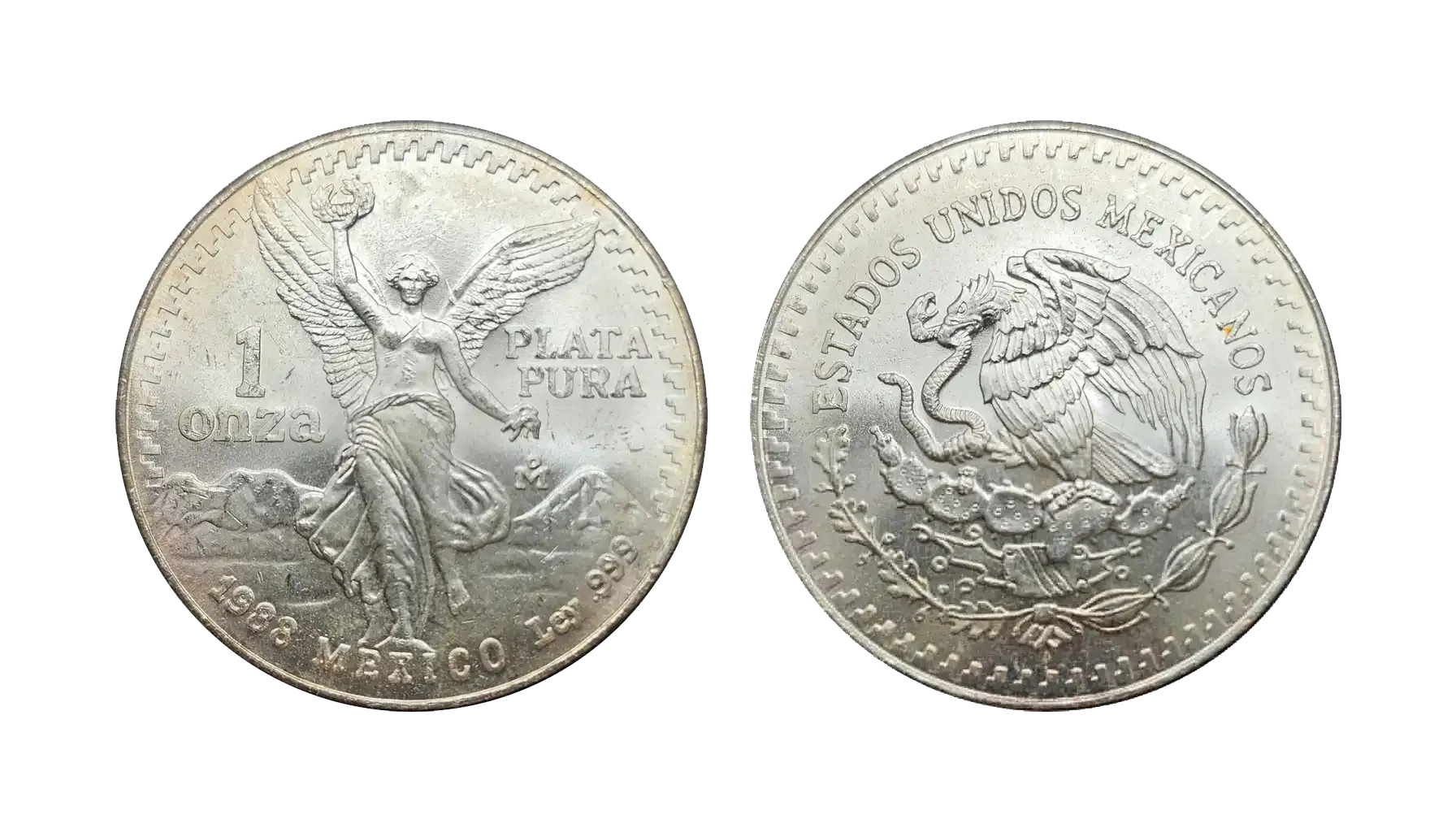
When a date is scarce, buyers pay for the number made, not the metal content. For example, the 1998 1 oz silver Libertad is treated as the modern key date, with a reported 67,000 BU mintage.
2) It changes which “key dates” exist in each size
Libertads come in many weights. A coin that is common in 1 oz can be scarce in 1/20 oz (and vice versa).
3) Final vs provisional numbers affect pricing (and rumors)
For some years, collectors have seen preliminary figures first, then final updates later. PCGS explicitly notes that some 2025 mintages were listed without being “final” from Banco de México at the time of writing—exactly the kind of situation that can whip premiums up or down.
Silver Libertad Mintage by Year (with Chart Overview)
The numbers move in waves, not straight lines. The clearest way to read the series is the 1 oz silver BU (bullion) baseline, then compare other sizes and finishes against it.
What the chart shows at a glance:
Early years (1980s–early 1990s): generally higher output, with several million-level peaks.
Modern key-date behavior: the late 1990s stand out for low mintages, with 1998 famously at 67,000 for the 1 oz BU—one of the main reasons it trades like a semi-numismatic rarity.
2000s–2020s: repeated jumps and dips.
How to read this silver Libertad mintage chart: each cell shows total data for that period, and the number in parentheses is how many years in that block have data for that size.
Years | 1/20 oz | 1/10 oz | 1/4 oz | 1/2 oz | 1 oz silver Libertad mintage BU | 2 oz silver Libertad mintage | 5 oz silver Libertad mintage | 1 kg |
1982–1989 | — | — | — | — | 9,680,626 (8) | — | — | — |
1990–1999 | 920,301 (9) | 674,450 (9) | 438,017 (9) | 433,618 (8) | 7,470,518 (9) | 27,000 (3) | 16,300 (3) | — |
2000–2009 | 263,000 (10) | 170,277 (10) | 165,500 (10) | 3,050,500 (10) | 3,372,049 (10) | 93,601 (10) | 37,923 (6) | 2,003 (1) |
2010–2019 | 121,300 (10) | 136,200 (10) | 130,900 (10) | 194,450 (10) | 7,826,700 (10) | 154,300 (10) | 102,350 (10) | 5,200 (5) |
2020–2022 | 13,550 (3) | 14,850 (3) | 11,850 (3) | 17,655 (3) | 1,100,000 (3) | 18,250 (3) | 21,950 (3) | 700 (2) |
Silver Libertad Proof Mintage Explained
It is the number of collector-finish Libertads struck in a given year, by size (1/20, 1/10, 1/4, 1/2, 1 oz, 2 oz, 5 oz, 1 kg). Proofs are made with specially prepared dies/planchets and sold as numismatic products, not as day-to-day bullion.
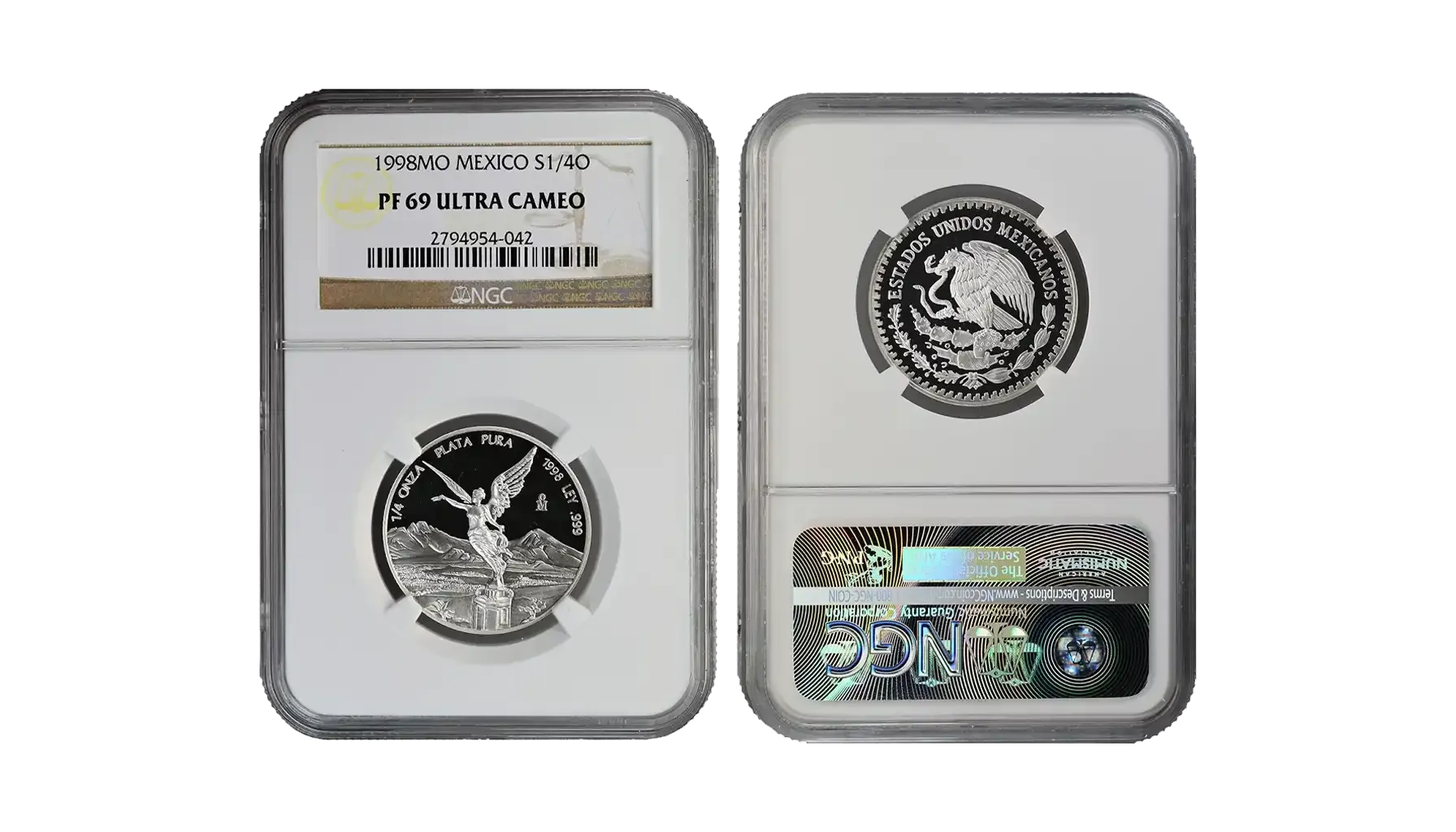
Standard Proof (p): mirror-like fields, frosted devices (typical proof look).
Reverse Proof (rp): the contrast is flipped (frosted fields, mirrored devices).
Antique Finish (af): matte/aged surface treatment (when offered).
“An antique finish silver Libertad coin was first released in 2018 with a limited mintage of 40,000.”
— Felix Kirzhner, numismatist
US Mexican Numismatic Association
Why Libertad Proof Mintage Feels Confusing
Libertad proof output is not a single annual number. It is a matrix:
Year × Size × Finish
So a headline like “2022 proofs are low” is incomplete. You need “2022, 1 oz, Proof” (and sometimes you must split “1 oz Proof” vs “1 oz Reverse Proof”).
An Example of How Low These Can Go
PCGS notes that for 2025 Libertad proofs, the larger denominations have very small “final mintage” figures (example: 2 oz proof 200, 5 oz proof 300) and also points out that some data for smaller proof denominations were not listed as final in the Banco de México correspondence they referenced. That “final vs not-final” detail is exactly why collectors watch mintage updates closely.
Where Collectors Get the Numbers
Compiled tables (often pulled from standard catalogs and published summaries). Wikipedia’s Libertad page includes a proof mintage table and marks finishes like (p), (rp), (af).
Major numismatic coverage that reports on program changes and limits (reverse proof limits, etc.).
Grading-service articles (useful for recent-year context and final mintage notes).
How to Read a Libertad Mintage Chart
1) BU vs Proof vs Reverse Proof
Start by finding the finish label.
BU (bullion) mintages behave like supply-and-demand production.
Proof / reverse proof / antique finish behave like collector products with tighter limits.
Do not compare a BU number to a proof number and call it “rare.” It is a different market.
2) Match the Size before You Judge Scarcity
Libertads are a multi-size program. A year that is common in 1 oz can be scarce in 1/20 oz or 5 oz. In the silver Libertad mintage by year chart, read across the row and treat each size as its own coin.
3) Separate “Low” from Llow for That Era”
A 1 oz BU at 300,000 might look small next to the early 1990s, but it may be normal for recent years. Use decade blocks or a line chart to see whether the year is a true outlier.
4) Watch for Blanks, Zeros, and “Not Listed”
Silver Libertad mintage numbers often show:
Blank cells: no data listed in that source.
0: a recorded zero (sometimes a placeholder; sometimes a real none-issued figure).
Not final / updated later: mintages can be revised.
Treat missing cells as “unknown,” not “zero.”
5) Use Low-Mintage Triggers to Spot Premium Years Fast
Three patterns usually signal premium pressure:
The 1 oz BU drops sharply vs adjacent years (easy to see on a line chart).
Fractionals are unusually tight (set builders feel this first).
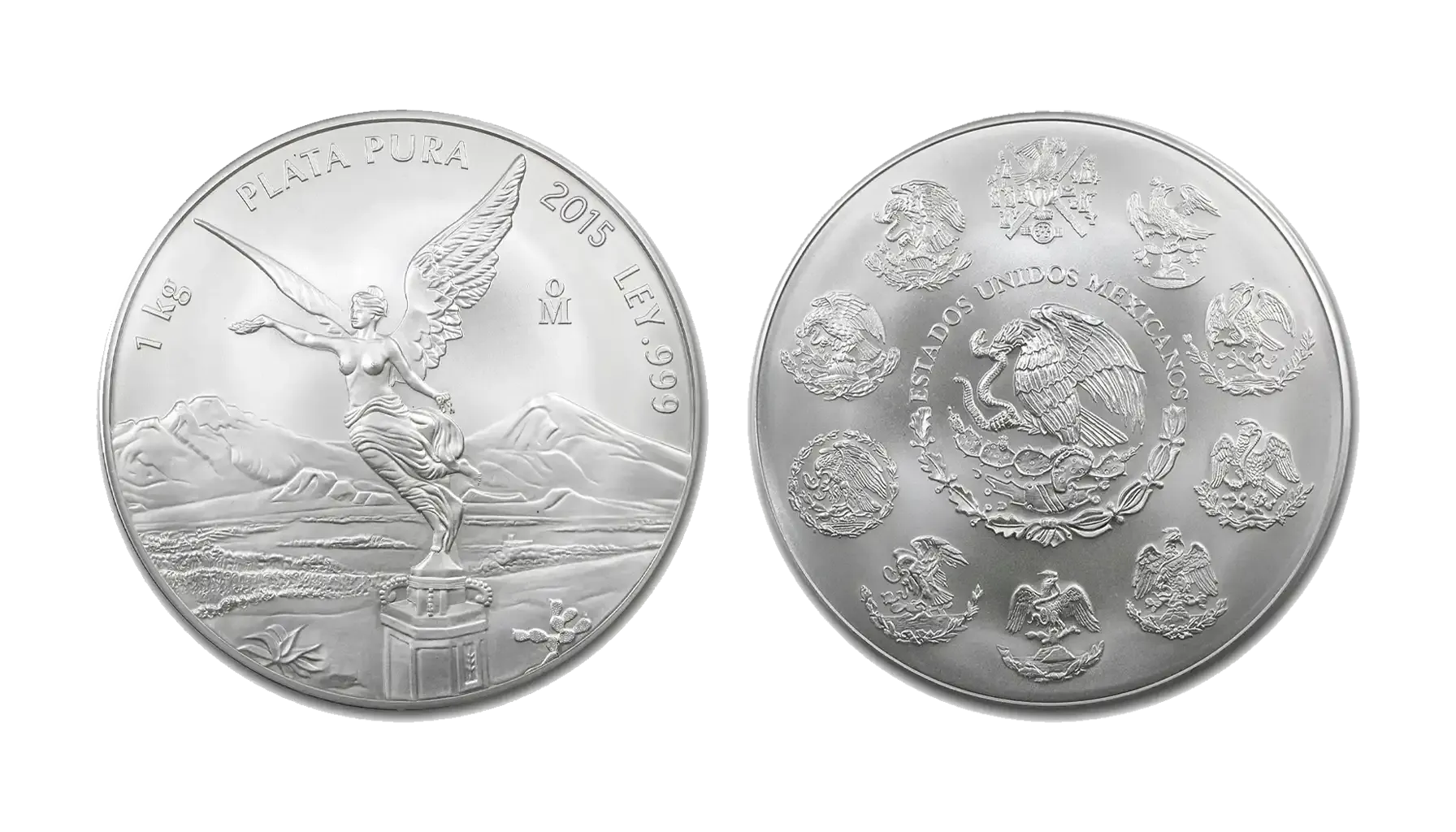
Large-format proofs are tiny (2 oz, 5 oz, 1 kg proofs can be minuscule in some years).
Lowest Libertad Mintage Years and Key Dates
Key dates are the years with very low production numbers, so they are harder to find and usually cost more. With Libertads, always match year + size + finish (BU vs proof), because each one has its own mintage.
The headline key date (1 oz silver BU) is 1998: 67,000 — the best-known low-mintage 1 oz Libertad and the date most collectors chase first.
Other low 1 oz BU years:
1997: 100,000
1999: 95,000
Fractionals can be even scarcer. Some years have tiny mintages in the small sizes (1/20–1/2 oz). That matters if you are building sets, because one missing fractional can stop the whole run.
Big coins can be quietly rare too. The 1 kg Libertads sometimes have low numbers in modern years, which can push premiums fast when demand shows up.
Proofs and Special Finishes
Proof, reverse proof, and antique finish are separate categories. They can have very small mintages, but you must compare them only to the same finish.
Stay up-to-date with the latest developments in the world of numismatics with Coin ID Scanner. The app is the best tool for coin identification. Download it today!

 Facebook
  X (Twitter)
  Pinterest
  LinkedIn