Contents:
In the military environment, small metal tokens have evolved into a distinct symbol of respect. For the U.S. Air Force, each issue carries the history of its units, training, and missions.
For collectors already familiar with apps for identifying rare coins, these tokens often become an object of systematic interest rather than just a souvenir.
The History and Meaning Behind Air Force Coins
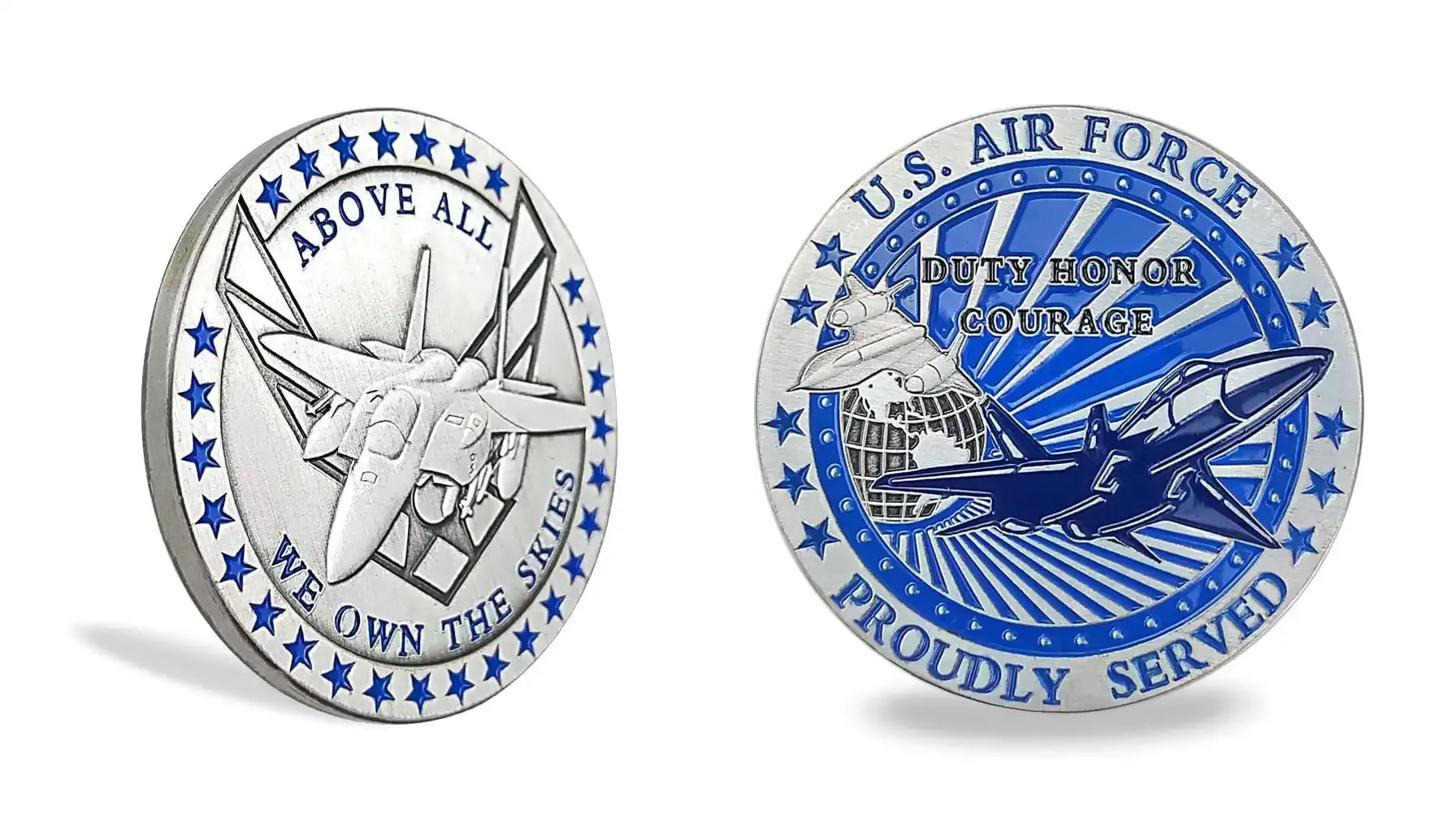
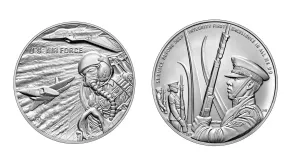
Military units use the Air Force coin to recognize service and strengthen team spirit. A token is awarded to those who distinguished themselves during training, flight, or missions.
Tokens identify:
Successful completion of a course;
Participation in missions;
Work in specific technical areas;
Contribution to unit training.
The Air Force coins meaning is conveyed through squadrons, flights, aircraft, technical service emblems, and elements of this culture. At the core of the United States Air Force coin tradition is respect and belonging.
“The Airman’s coin signifies the beginning of an enlisted member’s career upon graduating basic military training. It represents their transition from trainee to Airman and the heritage they are now part of.”
— Unknown author
U.S. Air Force official website, the article “Challenge coins: A tradition of excellence”
Key Types of United States Air Force Coins
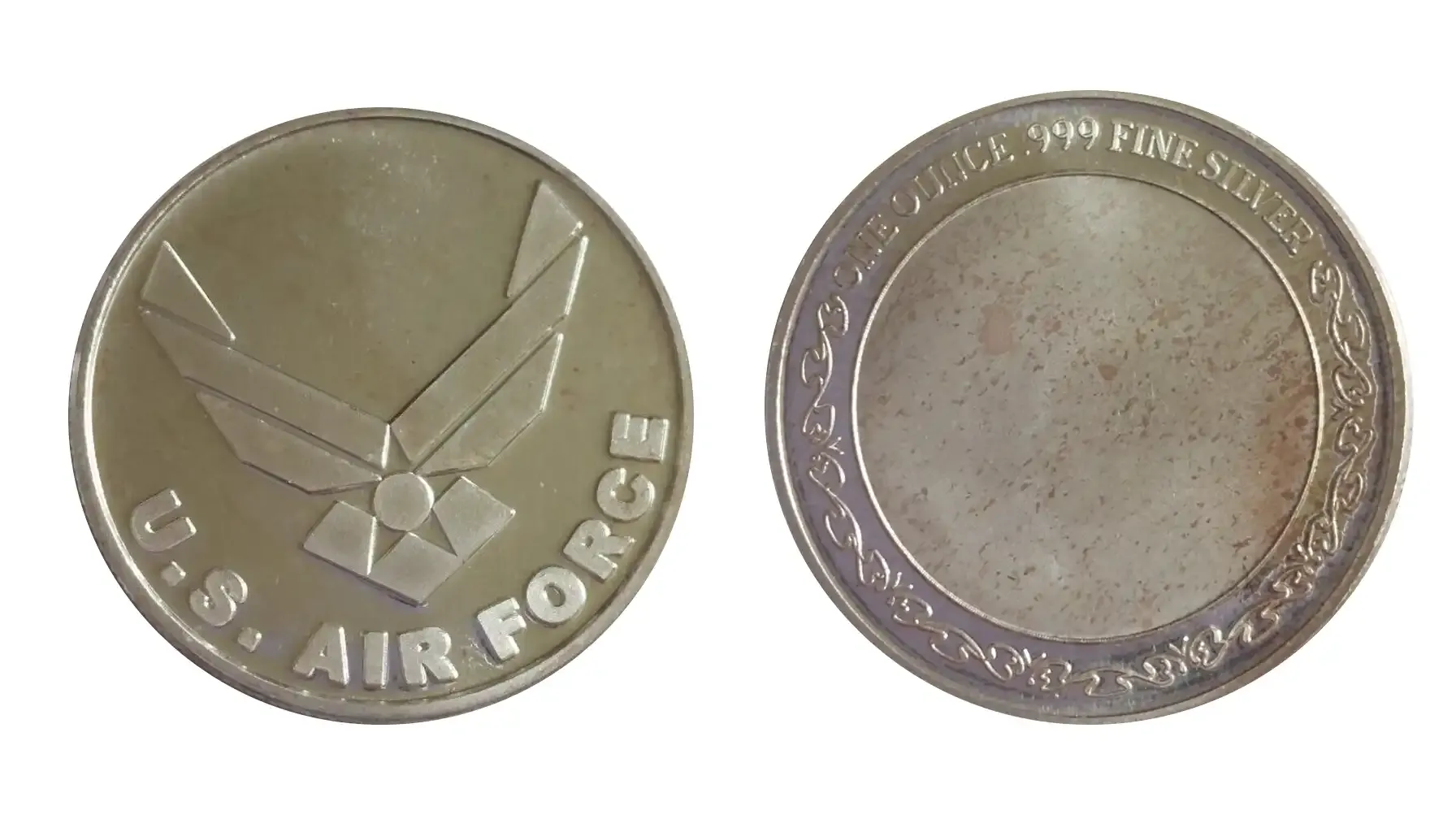
Dog tags come in many formats, but three main groups stand out.
Command and unit dog tags.
The US Air Force coin is often issued by individual squadrons or parts of major wings. The designs are chosen by the service members themselves, creating a large number of unique images.
These may include references to specific shapes, such as rounded profiles or thick dog tags for pilots. The metal density and plating quality vary between batches.
Achievement and reward tokens.
They are less common on the open market because they remain in the service member's family. Air Force Silver coins, when the award token is made of silver or silver-plated, also fall into this category.
Collectors sometimes compare the finish of these tokens to that of US Mint Silver coins to compare their visual quality, although the specimens and tokens belong to different categories.
Issues for special events.
When a major event occurs—a base anniversary, a corps anniversary, or a graduating class—a special token may be created. A typical example is an Air Force graduation coin.
The Air Force One coin (unofficial tokens) is also found in collections. Their design varies, but the theme of the presidential aircraft makes the issue stand out among civilian collectors as well.
Some units issue their own Air Force military coins, especially if they have technical or research groups.
Collector Value, Rarity Factors, and Market Demand
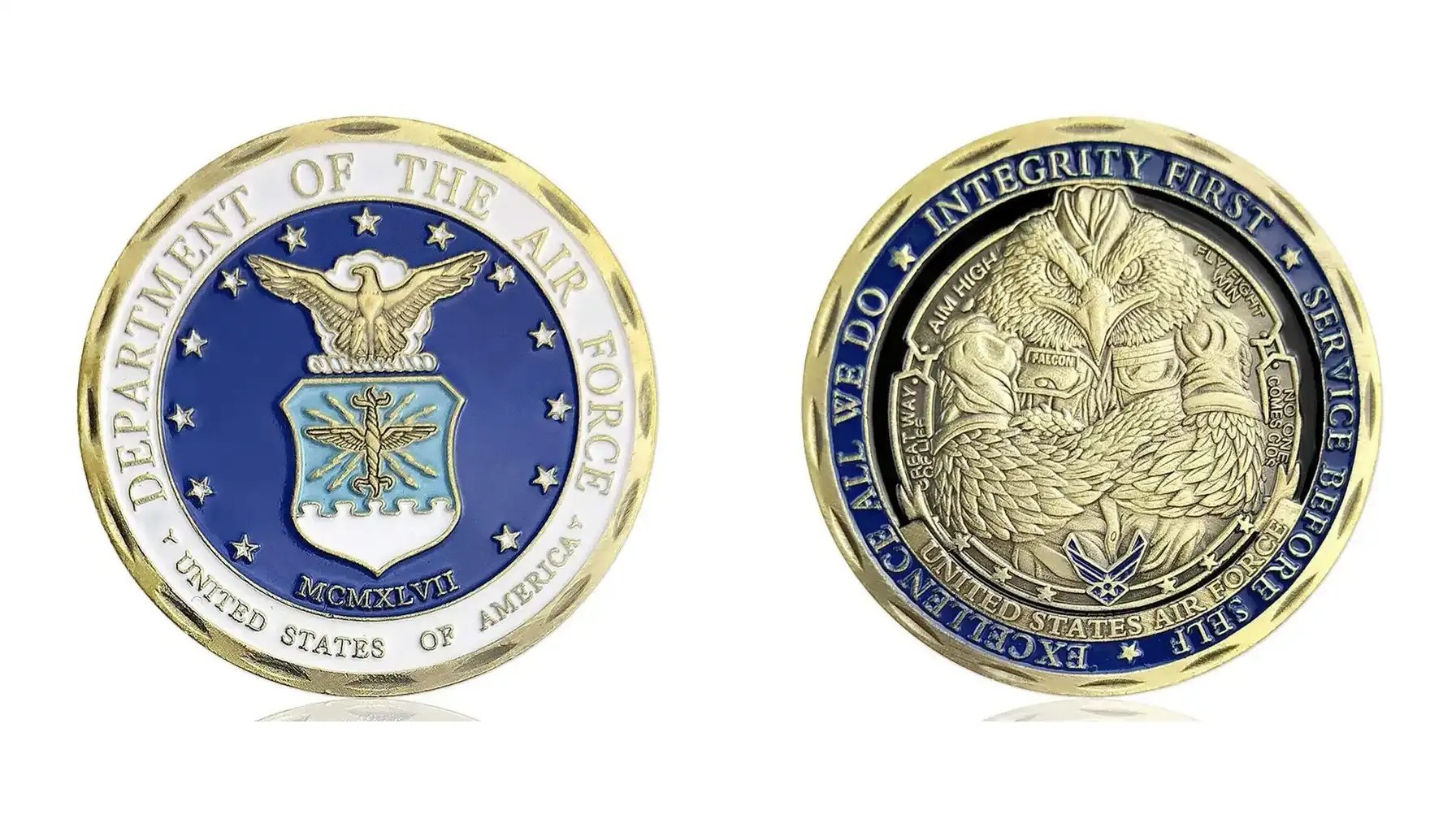
Design, rarity, unit affiliation, mintage, and condition are most often considered when assessing value. The market lacks a formal evaluation system, but collectors use coin grading principles to guide their assessment.
There is no strict, standardized scale like official specimens and the overall criteria remain similar: the fewer signs of wear, the higher the interest.
If you need to quickly determine the value of a specific token, the Coin ID Scanner app is convenient. It helps compare design, condition, and recent sales of similar issues, which is especially useful for rare lots.
What Influences the Price of Tokens
Number of pieces produced;
History of a specific issue;
Rarity of design;
Surface condition;
Manufacturer.
Token Type | Average Price Range |
Unit (Team) Tokens | $8–$35 |
Award Tokens | $20–$60 |
Graduation Tokens | $7–$25 |
Silver Tokens | $40–$100 |
Rare Special Series | $40–$150+ |
For comparison, collectors sometimes discuss the most valuable coins in the world to understand how military tokens differ from the traditional pieces market in terms of price trends.

 Facebook
  X (Twitter)
  Pinterest
  LinkedIn