Contents:
Because the 2014 Baseball Hall of Fame coin is about sports history and modern minting innovation, demand comes from both collectors and baseball fans. A coin appraisal online free of charge provides an estimate based on real market data.
2014 National Baseball Hall of Fame Coin
These pieces were officially issued by the United States Mint to celebrate the 75th anniversary of the National Baseball Hall of Fame and Museum in Cooperstown, New York.
They are famous for being the first curved coins ever struck by the U.S. Mint.
The program included three denominations: $5 Gold Coin, $1 Silver Coin, Clad Half Dollar. All were issued in Proof and Uncirculated finishes.
Design and Curved Coin Concept
They are the first curved pieces struck by the U.S. Mint.
A curved coin is one struck on a concave–convex planchet instead of a flat one. One side curves inward (concave), and the opposite side curves outward (convex). The shape is intentional and part of the design concept—not post-mint damage.
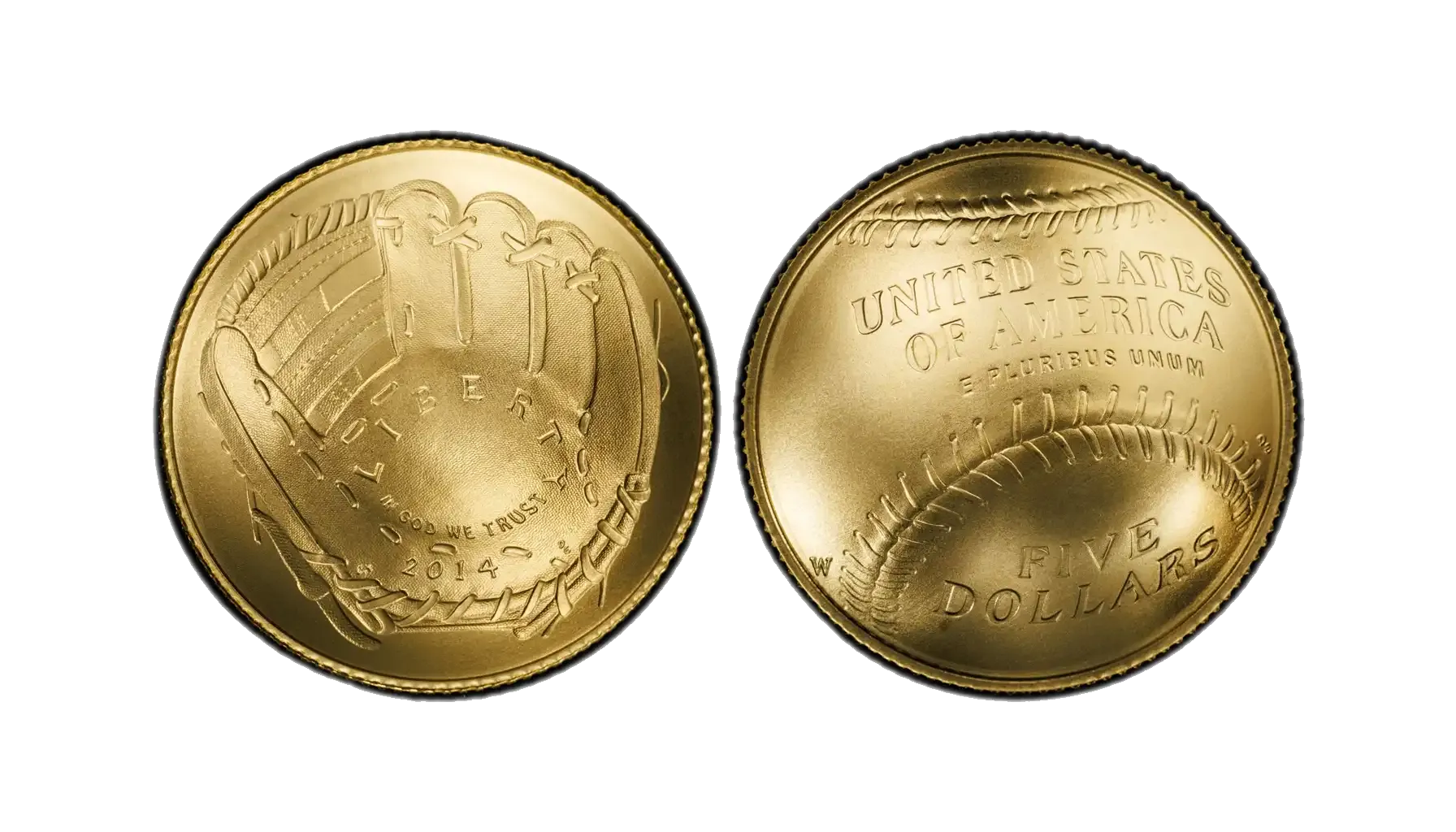
They were made as a paired illusion — concave “glove” side and convex “baseball” side. The glove design reads like the inside pocket of a mitt; the baseball reverse bulges outward like a ball.
The $5 gold, $1 silver, and half dollar all use the same basic glove/ball concept.
“The winning design in the 2014 Baseball Hall of Fame Commemorative Coin competition was created by Cassie McFarland of San Luis Obispo, California. Her design was selected from sixteen finalists by the Department of the Treasury on September 9, 2013.”
— Ron Guth, Recognized authority on United States and German coins
PCGS
2014 Baseball Hall of Fame Gold Coin
It was struck by the United States Mint at West Point and carries the “W” mint mark.
Denomination: $5
Composition: 90% gold, 10% alloy
Weight: 8.359 grams (0.2419 troy oz actual gold weight)
Diameter: 21.59 mm
Edge: Reeded
Mintage limit: 50,000 (combined Proof and Uncirculated)
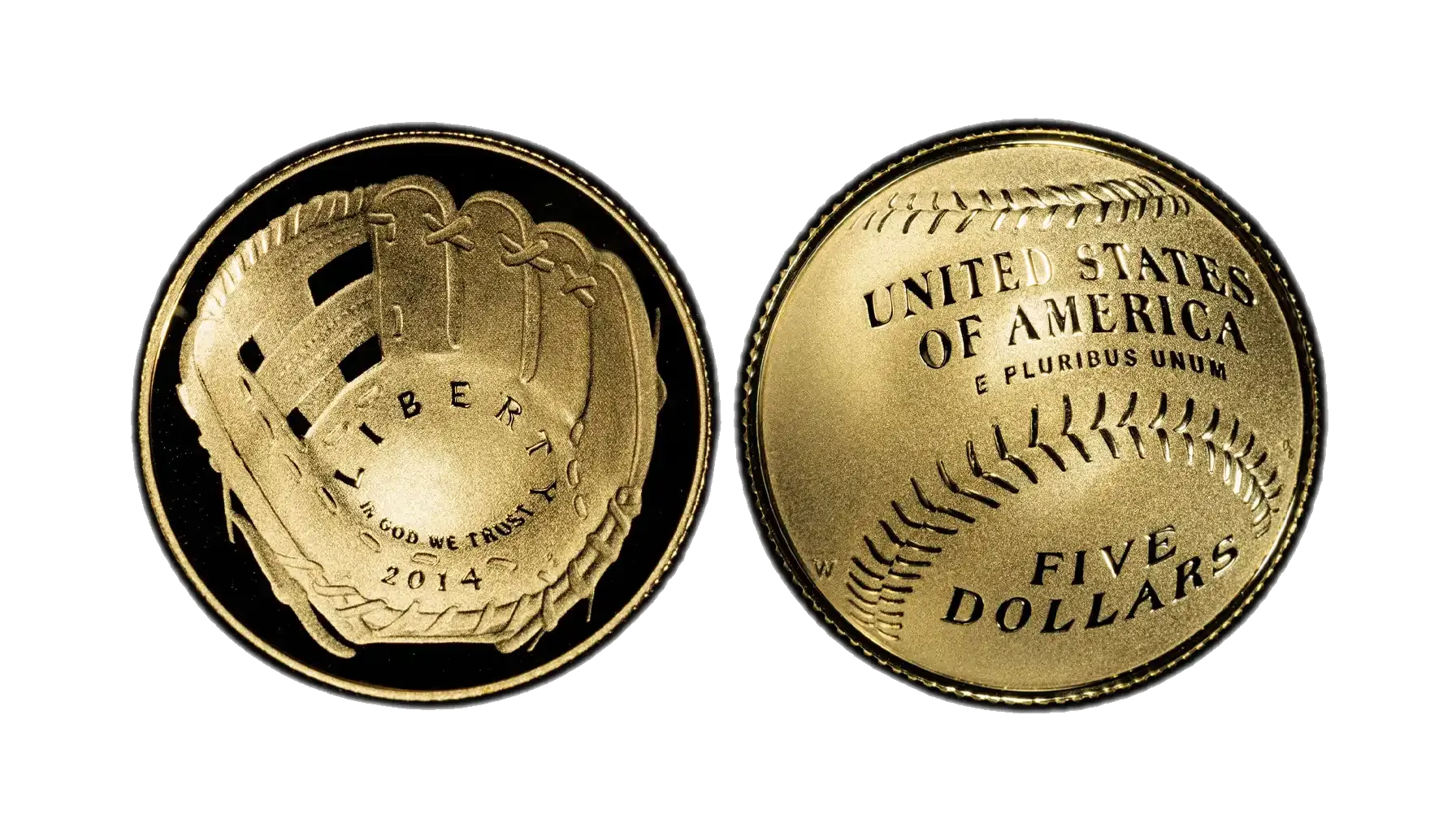
The gold piece sold strongly at release. Because of its limited mintage and the novelty of the curved format, certified PF70 examples often carry a premium over melt value. Value depends on gold spot price plus collector demand.
2014 Baseball Hall of Fame Silver Coin
The $1 silver commemorative is the most collected version of the program. It was struck at Philadelphia and bears the “P” mint mark.
Denomination: $1
Composition: 90% silver, 10% copper
Weight: 26.73 grams
Diameter: 38.10 mm
Edge: Reeded
Mintage limit: 400,000 (combined Proof and Uncirculated)
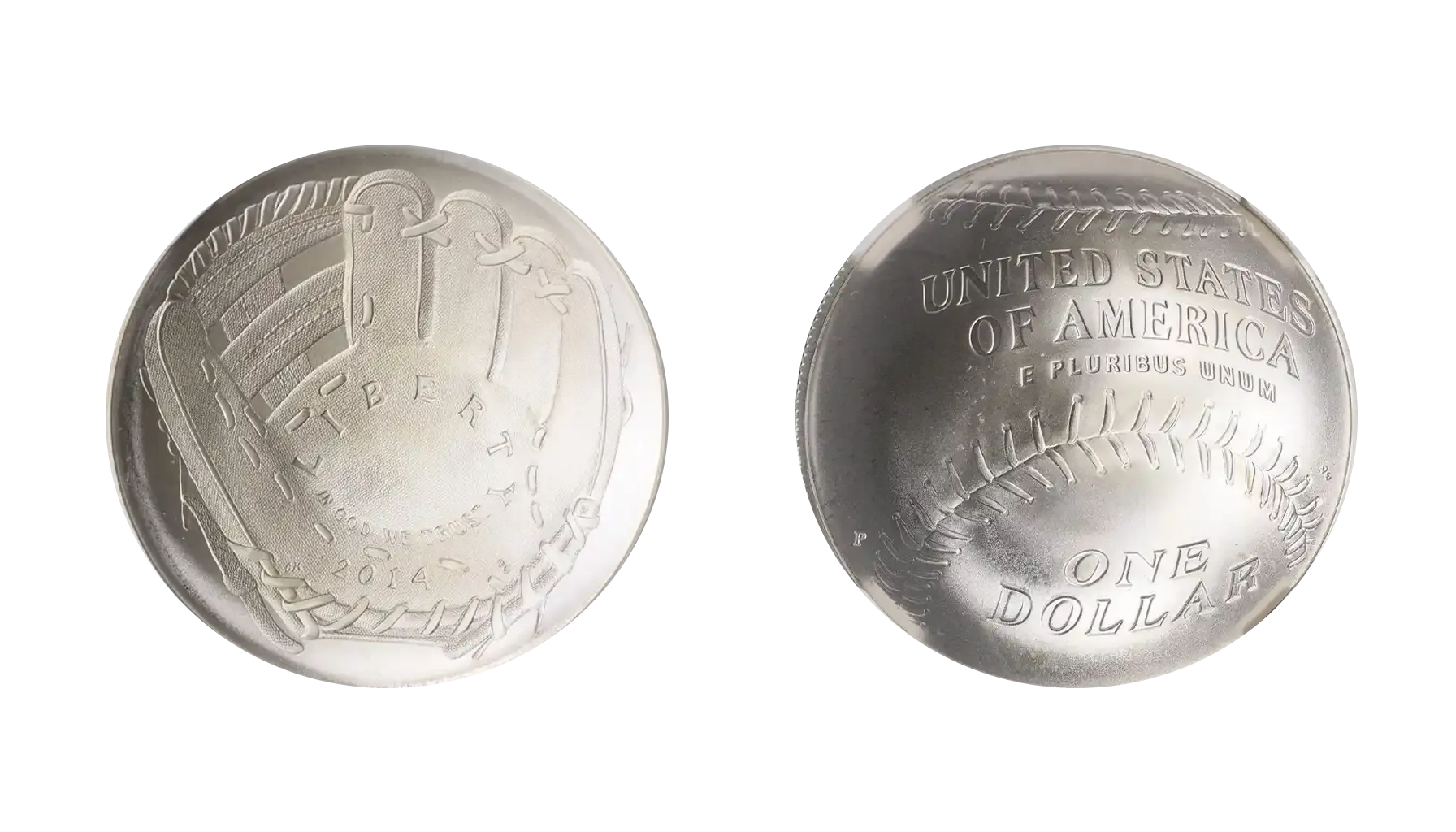
Because of the larger diameter, the curvature is more visually seen on the silver version.
The Proof silver dollar accounted for the majority of sales within the program. Demand was very strong on opening day in March 2014, and the issue quickly sold through large portions of its authorized mintage.
2014 Baseball Hall of Fame Commemorative Coin Value
Type & Grade | Value |
$1 Silver Proof (PF) | $70 – $130 |
$1 Silver Proof (PF70) | $150 – $250+ |
$1 Silver Uncirculated (MS) | $50 – $90 |
$1 Silver Uncirculated (MS69) | $100 – $160 |
$5 Gold Proof (PF) | ~$600 – $850 |
$5 Gold Proof (PF70) | $900 – $1,300+ |
$5 Gold Uncirculated (MS) | ~$580 – $800 |
$5 Gold Uncirculated (MS69) | $800 – $1,100 |
Half Dollar Proof / Uncirculated | $30 – $50 |
The silver dollar is the most actively traded within the series because of its broader collector base and lower entry cost than gold. Proof versions carry a noticeable premium over intrinsic silver because many collectors seek them in original packaging or certified grades.
The $5’s value is dominated by gold content and condition. Proof versions have been more desirable than uncirculated due to eye appeal and packaging.
Grading by major services like PCGS and NGC affects value, too. Slabs graded PF70 or MS69 tend to trade at a premium because they are the best survivors from the original mintage. Raw ones in typical grades (e.g., MS60–MS64) may trade closer to intrinsic metal value with modest collectible premium.
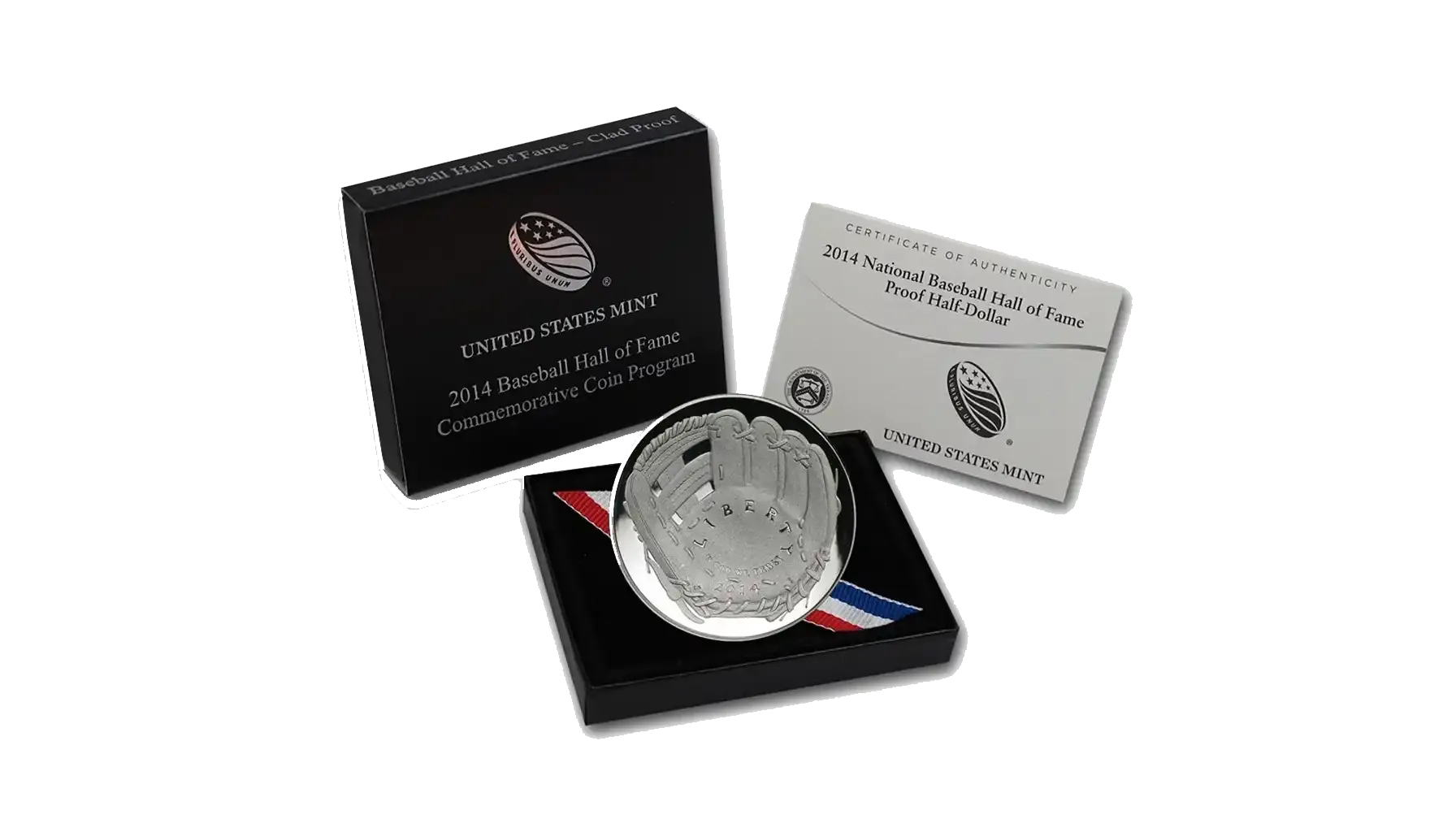
The clad half dollar is the least valuable in the series. Because it is base metal and relatively common, its value rarely exceeds modest collector demand.
Is the 2014 Baseball Coin a Good Investment?
The specimens combine collectible appeal with precious metal content, but they should be viewed as collector items first and investments second.
Why They Appeal
First curved pieces struck by the U.S. Mint.
Strong initial demand on release.
Attractive design that resonates with baseball fans.
What Limits Their Investment Potential
Modern commemoratives rarely appreciate dramatically over time unless mintage was extremely low or market demand surges.
Value closely tracks silver and gold spot prices, especially for raw examples.
Clad half dollars have very limited investment value.
So, they work well for collectors who also appreciate baseball history and U.S. Mint milestones.

 Facebook
  X (Twitter)
  Pinterest
  LinkedIn