Contents:
Have a 1972 nickel? You might be holding a simple pocket change coin or a treasure worth far more. The tricky part is figuring out which one you’ve got.
Many Jefferson nickels look nearly identical, but small differences in mint marks, condition, or minting errors can mean the difference between five cents and fifty dollars or more.
You’ll learn how to identify the coins mint, check for valuable errors, and understand what affects 1972 nickel value.
Understanding the 1972 Jefferson Nickel: Key Facts
Composition and Design Specifications
Category | Jefferson Five Cents (1938–Date) |
Obverse Designer | Felix Schlag |
Reverse Designer | Felix Schlag |
Composition | Copper–Nickel |
Weight | 5 g |
Diameter | 21.2 mm |
Edge | Plain |
The 1972 Jefferson nickel has the same design and metal makeup used since 1946. It’s a copper-nickel alloy that gives it a silver-like shine without containing any actual silver. It’s made of 75% copper and 25% nickel, weighs 5 grams, and measures 21.2 millimeters in diameter. The edge is plain, without reeding.
“The Jefferson nickel is a five-cent coin and has been struck by the United States Mint since 1938, when it replaced the Buffalo nickel. From 1938 until 2004, the coin's obverse featured a profile of Thomas Jefferson designed by artist Felix Schlag. In 2006 the Jefferson nickel was newly designed by Jamie Franki, with a more modern portrayal and Jefferson now faces forward.”
— lcrcoin.com
For 1972 Jefferson Nickel selling page
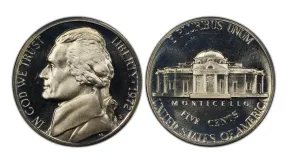
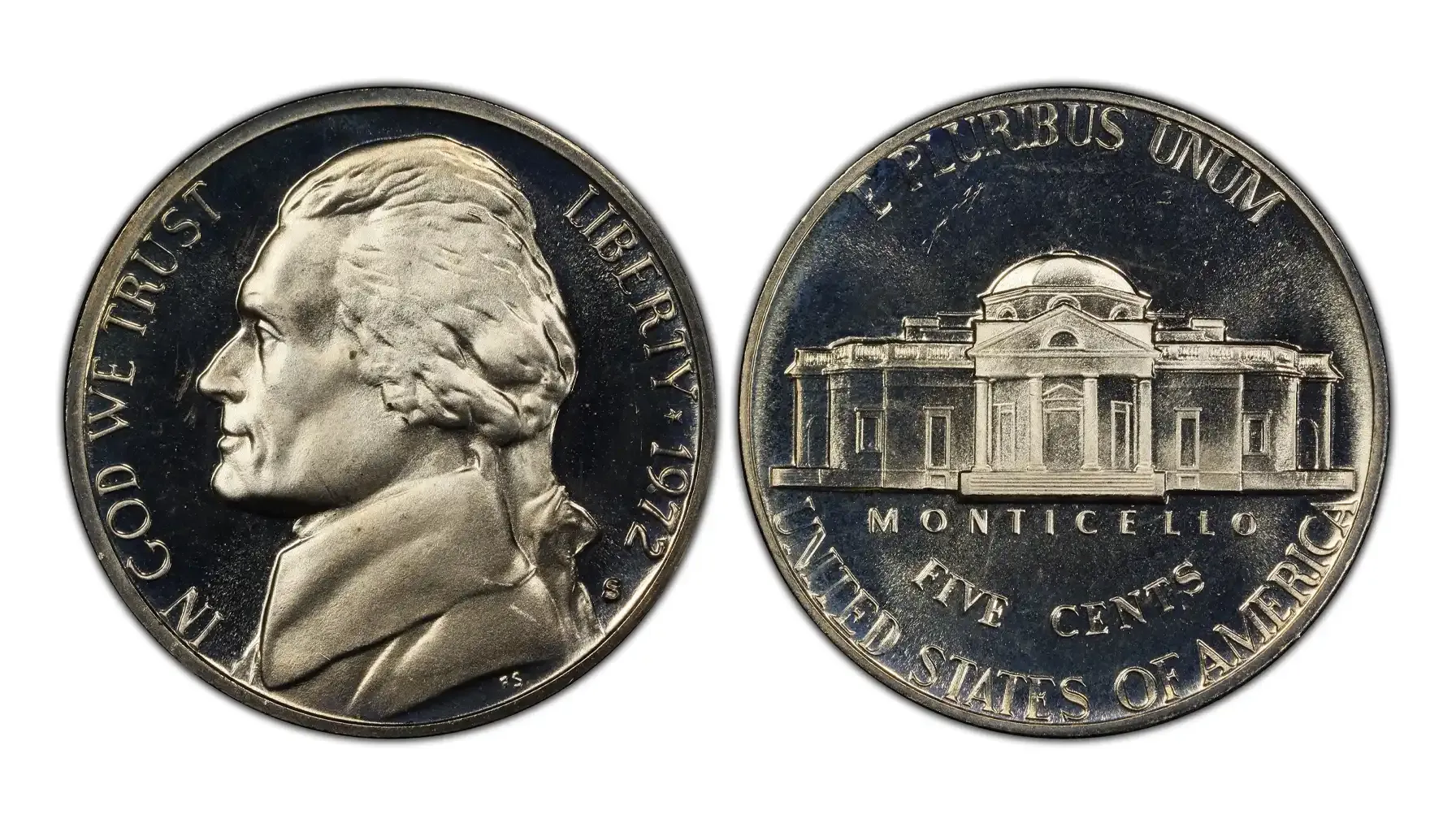
Designed by Felix Schlag, the obverse has Thomas Jefferson’s left-facing portrait with the word LIBERTY and the year 1972. The reverse shows his Monticello home, which has been the main theme of this coin since 1938.
Historical Context of 1972 Mintage
By 1972, the U.S. Mint was operating at full speed to meet the demand for circulating coins. The Vietnam War had recently ended, so the American economy was still adjusting.
That year, over 550 million nickels were struck in three mints: Philadelphia, Denver, and San Francisco. Most of these coins entered circulation quickly, and high-grade survivors are relatively scarce. The 1972 D nickel, produced in Denver, had the largest mintage, over 351 million coins, so the coins from this mint are the most common variety today.
Mint Marks Explained: Identifying Your 1972 Nickel
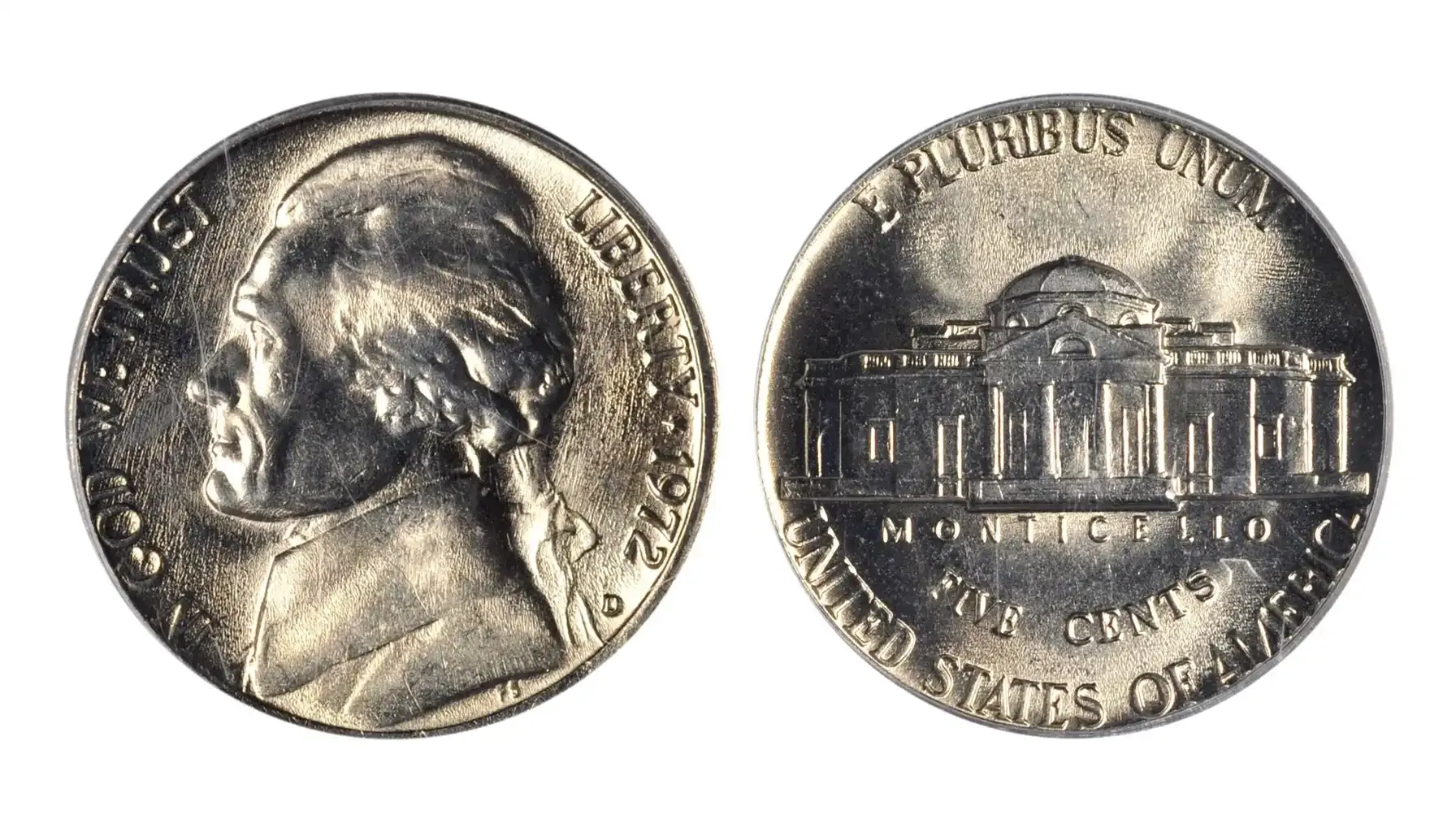
No Mint Mark (Philadelphia) Characteristics
If 1972 nickel no mint mark is situated under the right side of Jefferson’s portrait, it was made at the Philadelphia Mint. More than 202 million of these were struck.
Most 1972 nickel value no mint mark are only worth their face value. In uncirculated (Mint State) grades, they can cost $5-$25, and rare full-step examples (showing sharp details on Monticello’s steps) may sell for $100+.
“The Philadelphia coins have the most 'standard' version of the 1972 Jefferson nickel if you need to compare strike quality or study die variations.”
"D" Mint Mark (Denver) Features
The 1972-D nickel was struck in huge numbers (over 351 million coins) it is the most common of the three mints. Look for the small “D” under Jefferson’s bust on the obverse.
In circulated grades, these coins rarely exceed a few cents in value. But in higher grades, like MS65 or better, the 1972 D nickel value can rise to $25-$50. Minor 1972-D nickel errors, like die cracks, doubling, or off-center strikes, add even more value.
"S" Mint Mark (San Francisco) Details
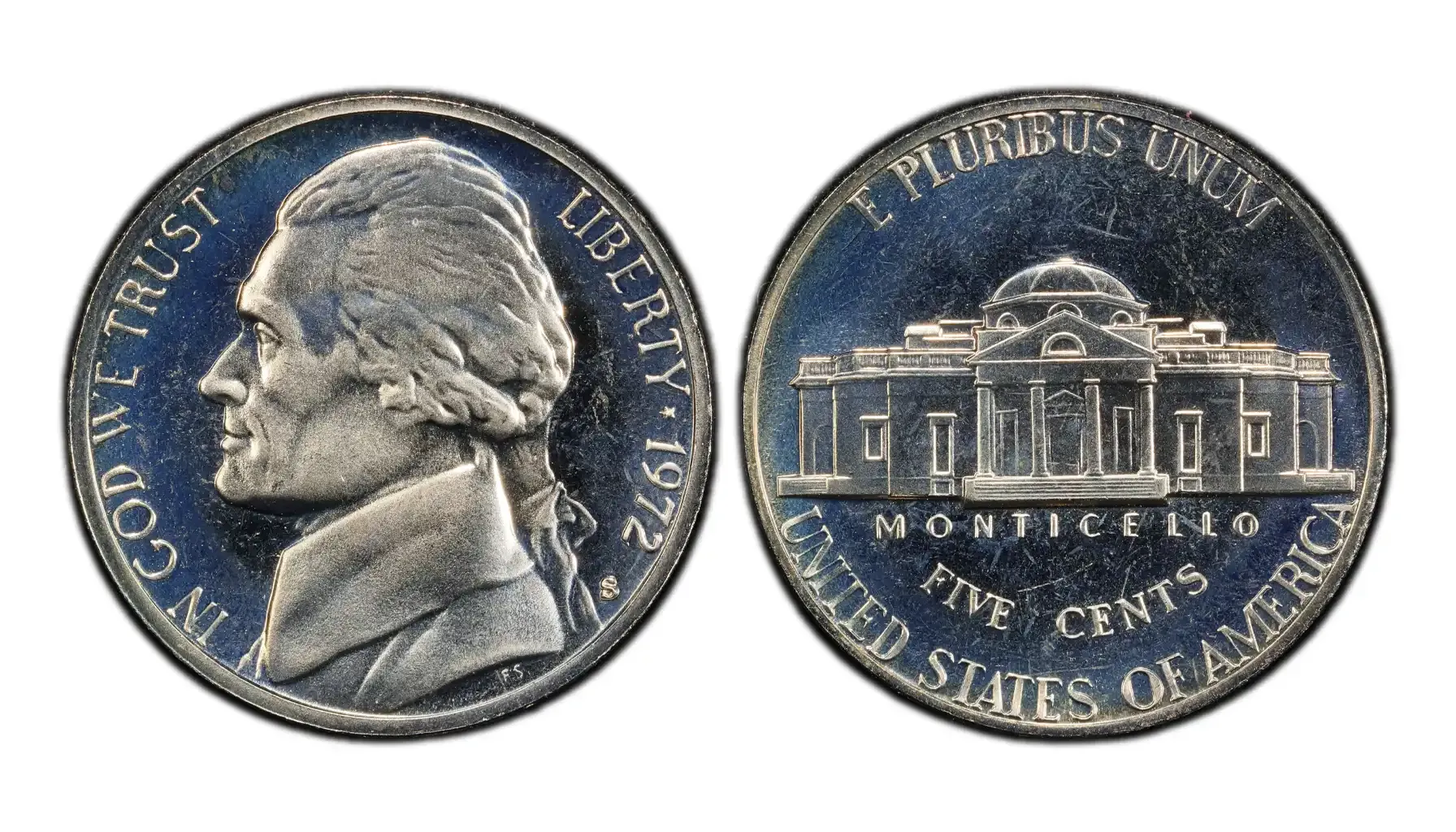
Coins marked with an “S” were struck at the San Francisco Mint, but unlike the others, these were proof coins, made for collectors, not really for circulation.
The 1972-S proof nickel typically sells for $2-$10, though flawless PR69 Deep Cameo examples can cost $30-$50 or more.
Comprehensive Value Guide: What’s Your Nickel Worth?
Grading System from Poor to Mint State
The grade of your nickel plays the biggest role in its value. Here’s how to interpret what you’re seeing:
Good (G–VG): Jefferson’s face is worn nearly flat, with little to no detail left on his hair or cheek. Monticello is faint or nearly smooth
Fine (F–VF): some definition returns, you can see partial lines in Jefferson’s hair and traces of detail on Monticello’s columns and steps
Extremely Fine (XF): strong features with minimal wear; Monticello’s structure and Jefferson’s hair are clearly visible
About Uncirculated (AU): light friction only on the high points, with some luster still present
Mint State (MS60–MS67): no signs of circulation. Sharp details, full mint luster, and no visible wear
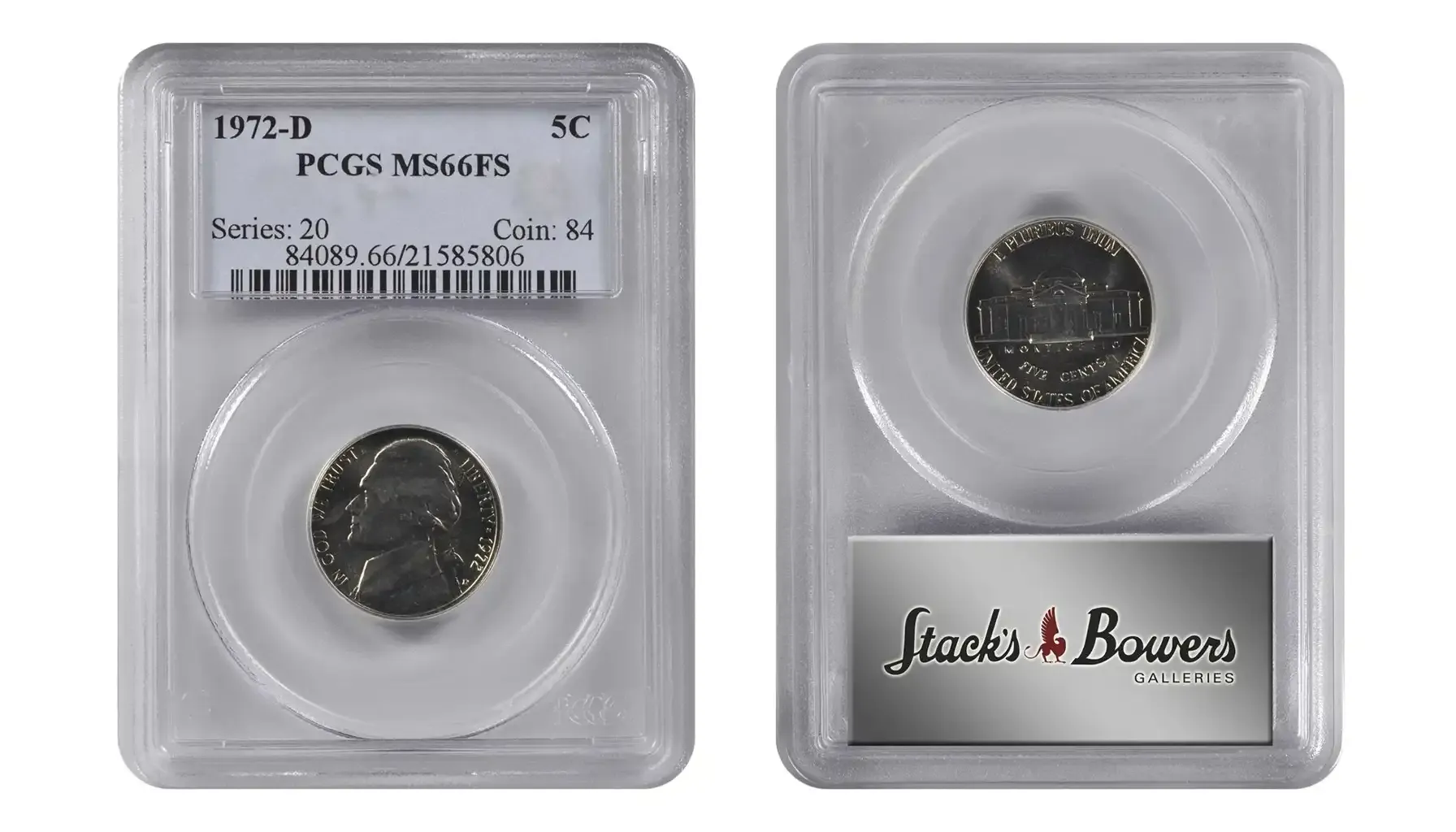
Current Market Prices for All Varieties
Coin Type | Circulated Value | Mint State (MS65) | Full Steps (FS) |
1972 Nickel (No Mint Mark) | $0.05 | $10–$20 | $100–$400+ |
1972-D Nickel | $0.05 | $10–$25 | $150–$500+ |
1972-S Proof Nickel | — | $2–$10 | $30–$50+ |
Rare Errors and Their Premium Values
A certain 1972 nickel error can cost a lot, for example:
Doubled Die Obverse (DDO): slight doubling on LIBERTY or the date can raise values to $50-$200
Off-Center Strikes: if the design is noticeably off-center (10–50%), expect $40-$150
Clipped Planchet: small curved clips on the coin’s edge from minting mistakes are worth $25-$75
Die Cracks and Cuds: these raised lines or lumps result from worn dies; minor ones sell for $10–$30, but larger cuds can exceed $100
Professional Collection Management Made Easy
Why Digital Cataloging Becomes Essential
If you’ve started collecting Jefferson nickels, especially different varieties, you may want to keep track of condition, mint marks, and values can get complicated fast. A digital catalog helps with that.
You can use apps or online tools to record every detail: grade, purchase price, mint mark, certification number, and photos. If your coin proof gets regraded or sold later, your records help prove authenticity and ownership.
Digital tools also make it easy to see how your collection’s value changes with the market. Since nickel value depends on silver prices, demand, and grading population, staying updated means you’ll always know when to buy, sell, or hold.
Step-by-Step Guide to App-Based Valuation
Download a coin identification app, such as Coin ID Scanner or a similar numismatic platform
Scan your 1972 nickel using your phone’s camera, and the app will detect mint marks, year, and surface condition
View instant valuation based on live market data and auction results
Save your coin in a personal catalog with notes about grade, certification, and provenance
Monitor trends, you’ll see alerts when similar nickels increase in value.
This process takes minutes but gives you the same insights professional dealers rely on
Frequently Asked Questions (FAQ)
How much is a 1972 nickel worth?
Most 1972 Jefferson nickels in circulation are worth only their face value, five cents. But uncirculated or proof coins can sell for $10–$50, and rare Full Step examples or major mint errors may reach $500+.
Which 1972 nickel is the most valuable?
The most valuable is typically the 1972-D nickel in Mint State with Full Steps. High-grade examples certified by PCGS or NGC can reach several hundred dollars. Rare 1972 nickel errors, like doubled dies or major off-center strikes, are also highly prized.
Where is the mint mark located on a 1972 nickel?
Look for the mint mark on the obverse (front) of the coin, just to the right of Jefferson’s portrait. You’ll see either a “D” for Denver, an “S” for San Francisco proof coins, or no mark at all for Philadelphia issues.
Are there any rare errors on the 1972 nickel?
Yes. Known 1972 nickel error list entries include doubled dies, die cracks, clipped planchets, and off-center strikes.
What's the difference between a 1972-D and 1972-S nickel?
The 1972-D nickel was struck for circulation at the Denver Mint, while the 1972-S nickel was a proof coin made at the San Francisco Mint for collectors. The “S” proof has sharp details, mirror-like surfaces, and often trades for $5-$30 depending on condition.
Conclusion
Your 1972 Jefferson nickel might be a common piece of change, or it could be a surprisingly high-value coin. The difference is in the mint mark, condition, and if you’ve spotted any errors.
If you’ve got a coin that looks uncirculated, has sharp Monticello steps, or shows signs of doubling, check it further. A scan with a coin valuation app or a review by a grading service like PCGS or NGC can tell you exactly what you have.
Try the Coin ID Scanner app, it helps you identify, catalog, and track the changing value in real time.

 Facebook
  X (Twitter)
  Pinterest
  LinkedIn