Contents:
Historically, coins were minted from precious metals such as silver and gold because their value was directly related to their weight and purity. This gave the coins an intrinsic value that was understandable and recognized by everyone.
When the cost of silver and other precious metals began to rise, coinage of them became unprofitable. As a result, many countries have switched to using less expensive base metals such as copper and nickel to mint coins for circulation.
Therefore, in order to identify coins and their value, several features must be taken into account.
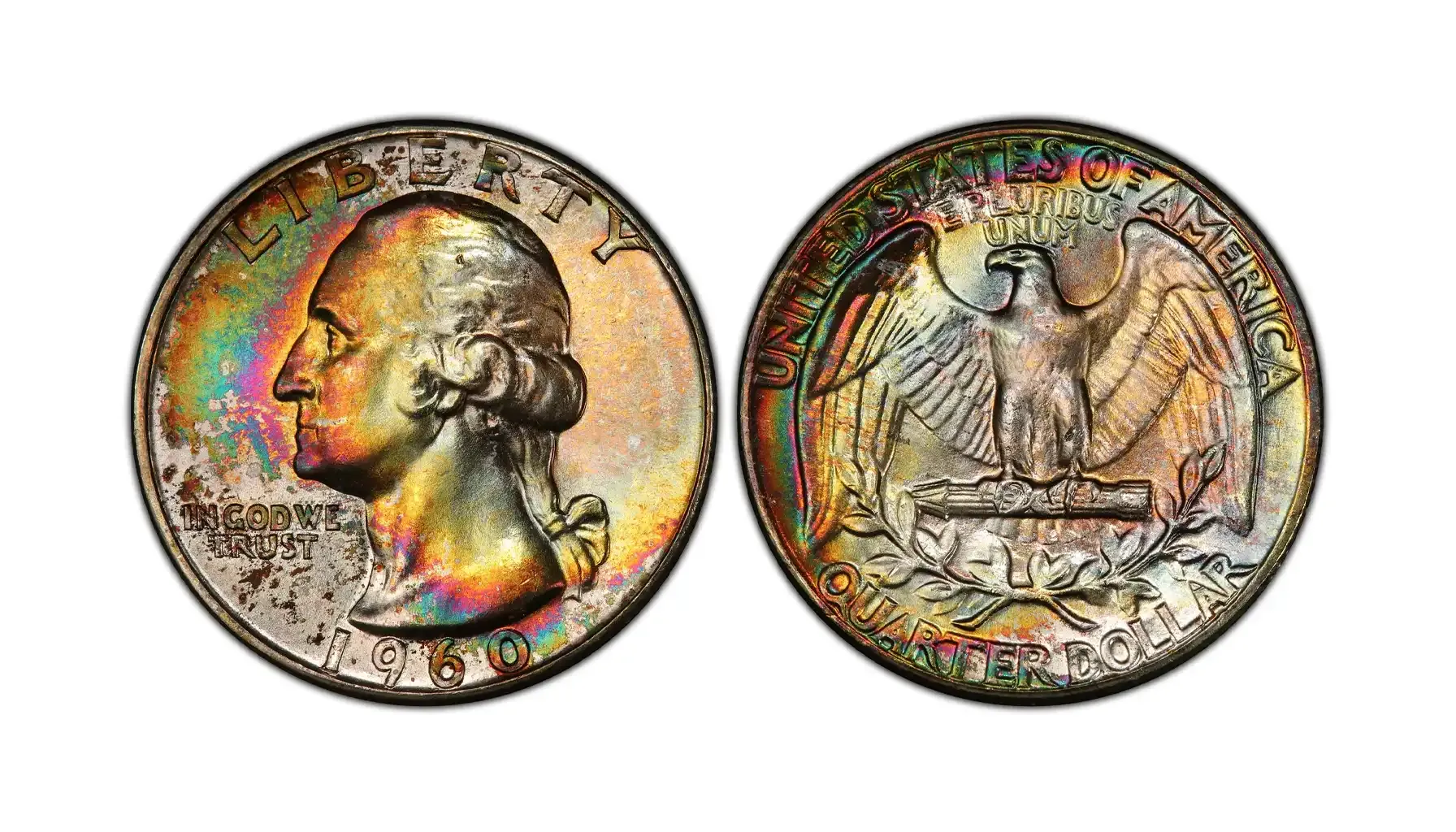
1960 Quarter Silver Content: Why Your Quarter is Special
The ASW, or "Actual Silver Weight," is the real amount of silver inside the coin. So, how much silver is in a 1960 quarter?
The 1960 quarter coin weighs 6.25 grams.
It is 90% silver and 10% copper.
This means it has about 5.625 grams of pure silver.
Decoding the Mint Mark: Where Was Your Quarter Made?
The small letter, usually found on the reverse side of the coin below the eagle, can significantly influence its collector's value. In 1960, two different mints were actively producing money, making it a part of the rare quarters worth money list.
No mark: It was made in Philadelphia (for both business strike and proof coins)
"D" mark: It was made in Denver
Why No S Mint Mark?
Why is there no "S" mark on the 1960 mint, especially since the San Francisco Mint has been producing tokens for many other years. The reason is that from 1955 to 1968, the San Francisco Mint did not issue any pieces for the United States.
During this period, the main function of this mint was to produce coins for foreign countries. And it was only in 1968 that San Francisco resumed issuing currency, starting with trial minting.
That's why you won't find 1960 United States quarter coins from the S circulation.
How Much Is a 1960 Quarter Worth: What To Expect
Name | Approximate Price (USD) |
1960 (No Mint Mark) | $7.25 - $7,500 |
1960-D (Denver) | $7.25 - $12,750 |
1960 Proof (No Mint Mark) | $15.00 - $60.00 |
1960 Doubled Die Obverse (DDO) | $50 - $500+ |
1960 Large Cud Error | $75 - $400+ |
1960 Off-Center Strike | $100 - $450+ |
1960 Clipped Planchet | $200 - $700+ |
1960 Die Crack | $90 - $500+ |
How much is a 1960 silver quarter worth? The prices can change based on market demand, silver prices, and the specific characteristics of individual coins.
1960 Washington Quarter (No Mint Mark)
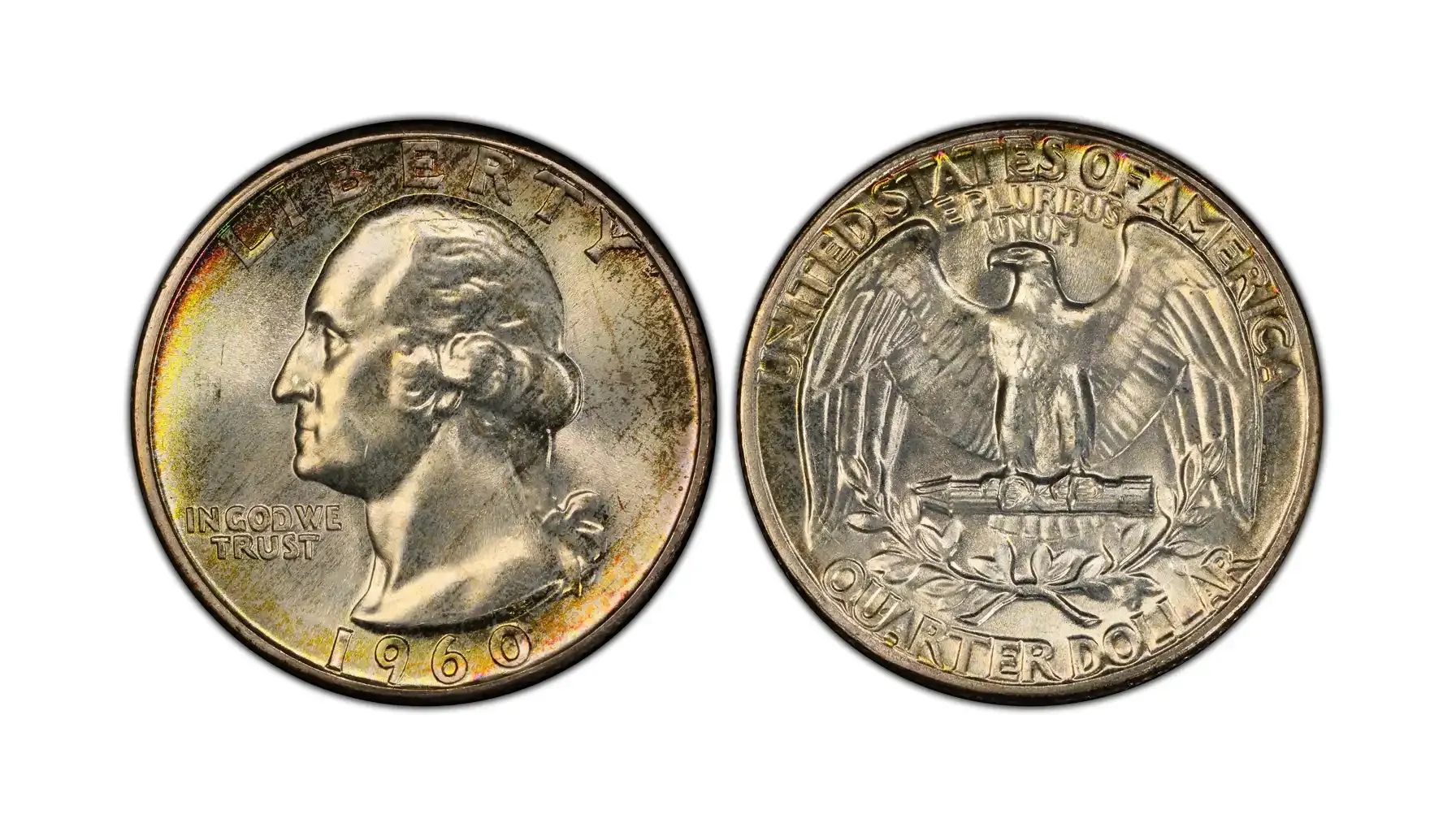
These are the most common of the 1960 quarters, but high-grade examples can still be very valuable to collectors. The value of a 1960 quarter with no mint mark is primarily determined by its condition and grade.
Mintage: 29,164,000
Composition: 90% Silver, 10% Copper
Diameter: 24.3 mm
How much does a 1960 quarter weigh? Only 6.25 grams
Grade | Price (USD) |
Circulated (G-F) | $7.25 - $7.25 |
Extremely Fine (XF) | $7.25 |
Uncirculated (MS-60) | $10.00 |
Uncirculated (MS-65) | $40.00 |
Uncirculated (MS-67) | $550.00 |
Uncirculated (MS-68) | $7,500 |
How much is a quarter from 1960 worth? The value can change based on market demand, silver prices, and the specific characteristics of individual coins.
1960-D Washington Quarter
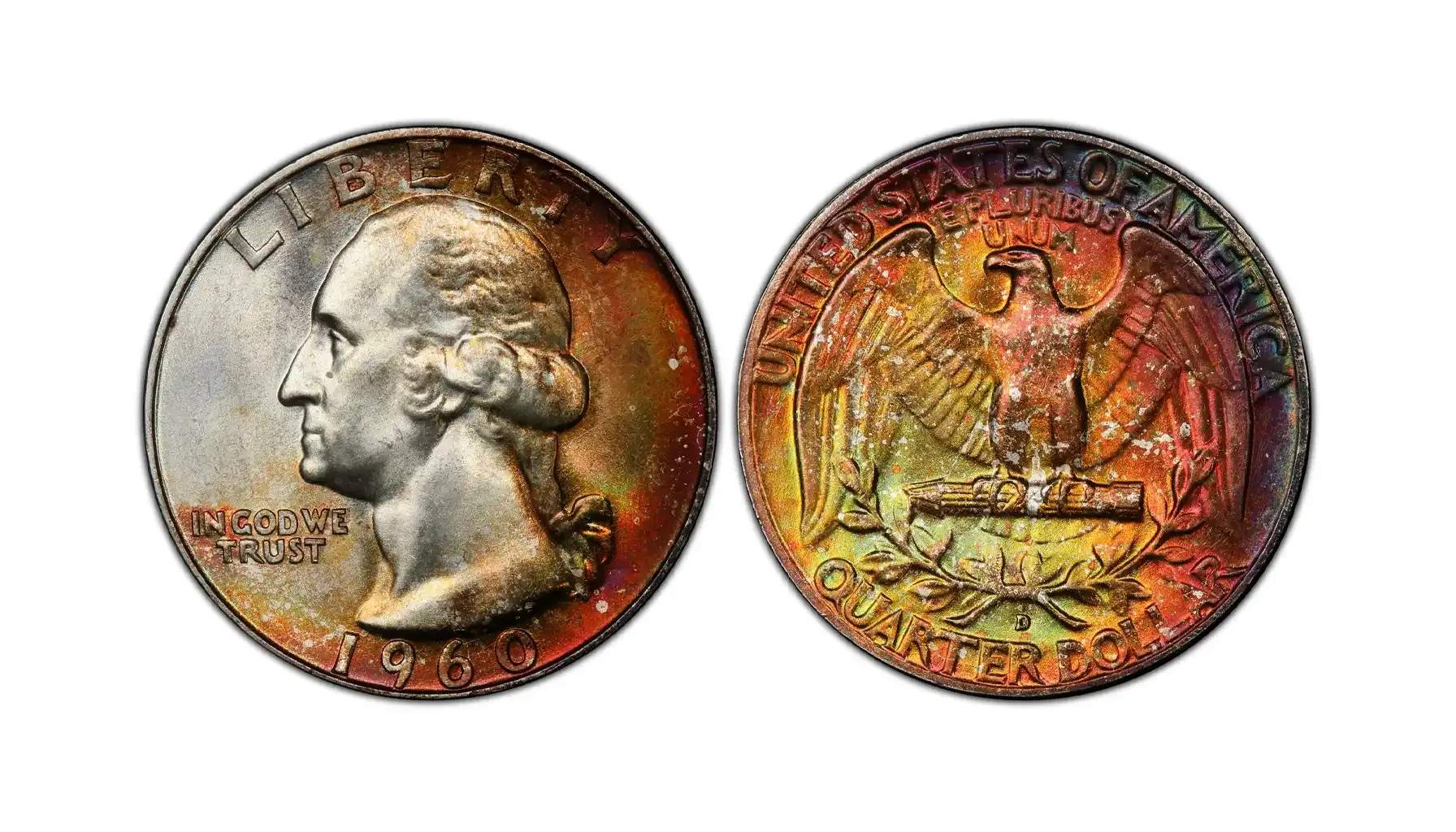
The "D" mint mark signifies the coin was produced in Denver. While the mintage was higher than the Philadelphia version, finding one in pristine condition can still be difficult.
Mintage: 63,000,324
Composition: 90% Silver, 10% Copper
Diameter: 24.3 mm
Weight: 6.25 grams
Grade | Price (USD) |
Circulated (G-F) | $7.25 - $7.25 |
Extremely Fine (XF) | $7.25 |
Uncirculated (MS-60) | $10.00 |
Uncirculated (MS-65) | $45.00 |
Uncirculated (MS-67) | $450.00 |
Uncirculated (MS-68) | $12,750 |
The 1960 D quarter value can change based on market demand, silver prices, and the specific characteristics of individual coins.
1960 Proof Quarter (No Mint Mark)
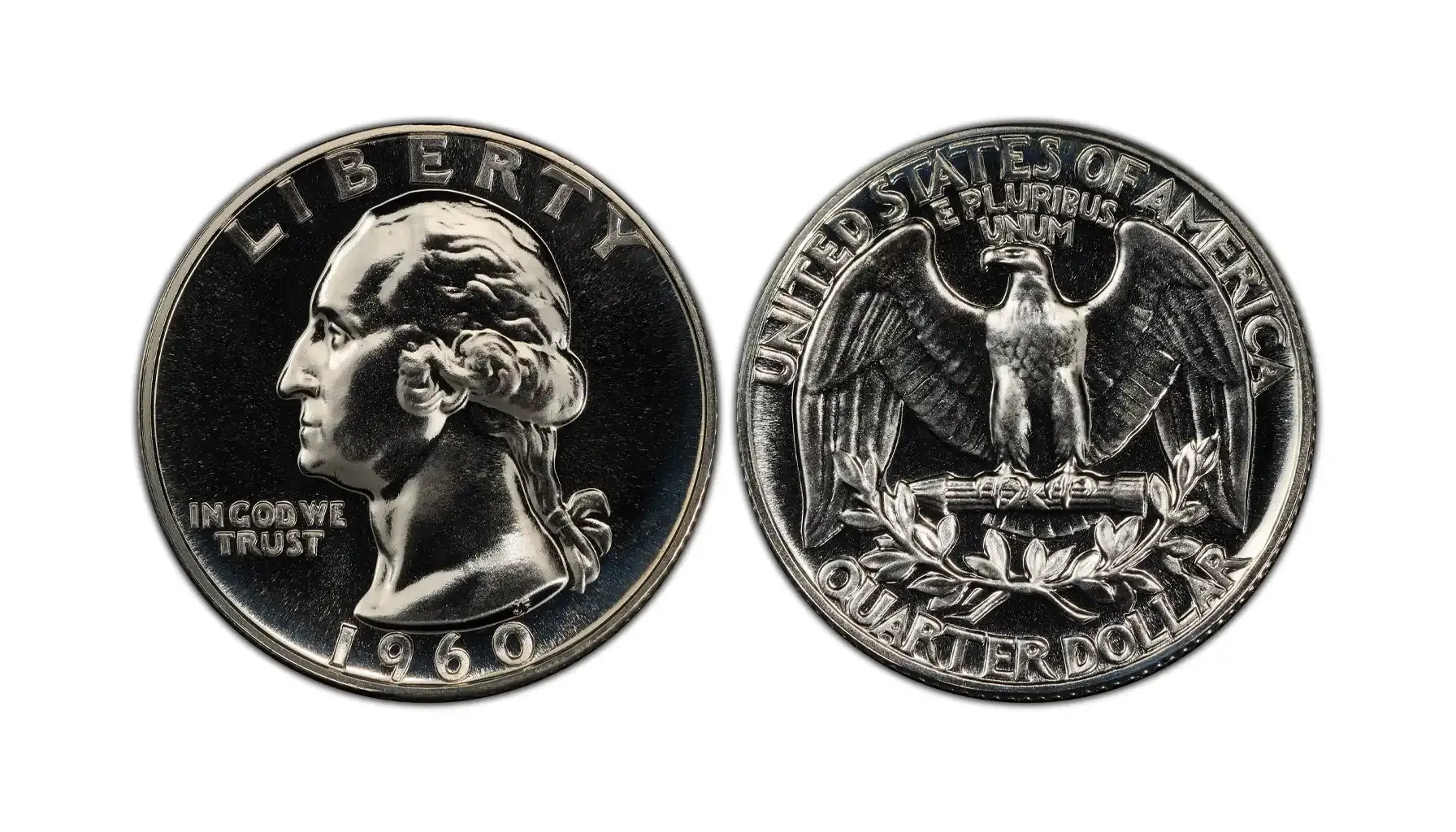
These ones were specially struck for collectors at the Philadelphia Mint. They are known for their sharp details and mirror-like surfaces.
Mintage: 1,691,602
Composition: 90% Silver, 10% Copper
Diameter: 24.3 mm
Weight: 6.25 grams
Grade | Price (USD) |
Circulated (G-F) | $15.00 |
Extremely Fine (XF) | $20.00 |
Uncirculated (MS-60) | $25.00 |
Uncirculated (MS-65) | $35.00 |
Uncirculated (MS-67) | $60.00 |
The 1960 proof quarter value can change based on market demand, silver prices, and the specific characteristics of individual coins.
1960 Doubled Die Obverse (DDO) Quarter
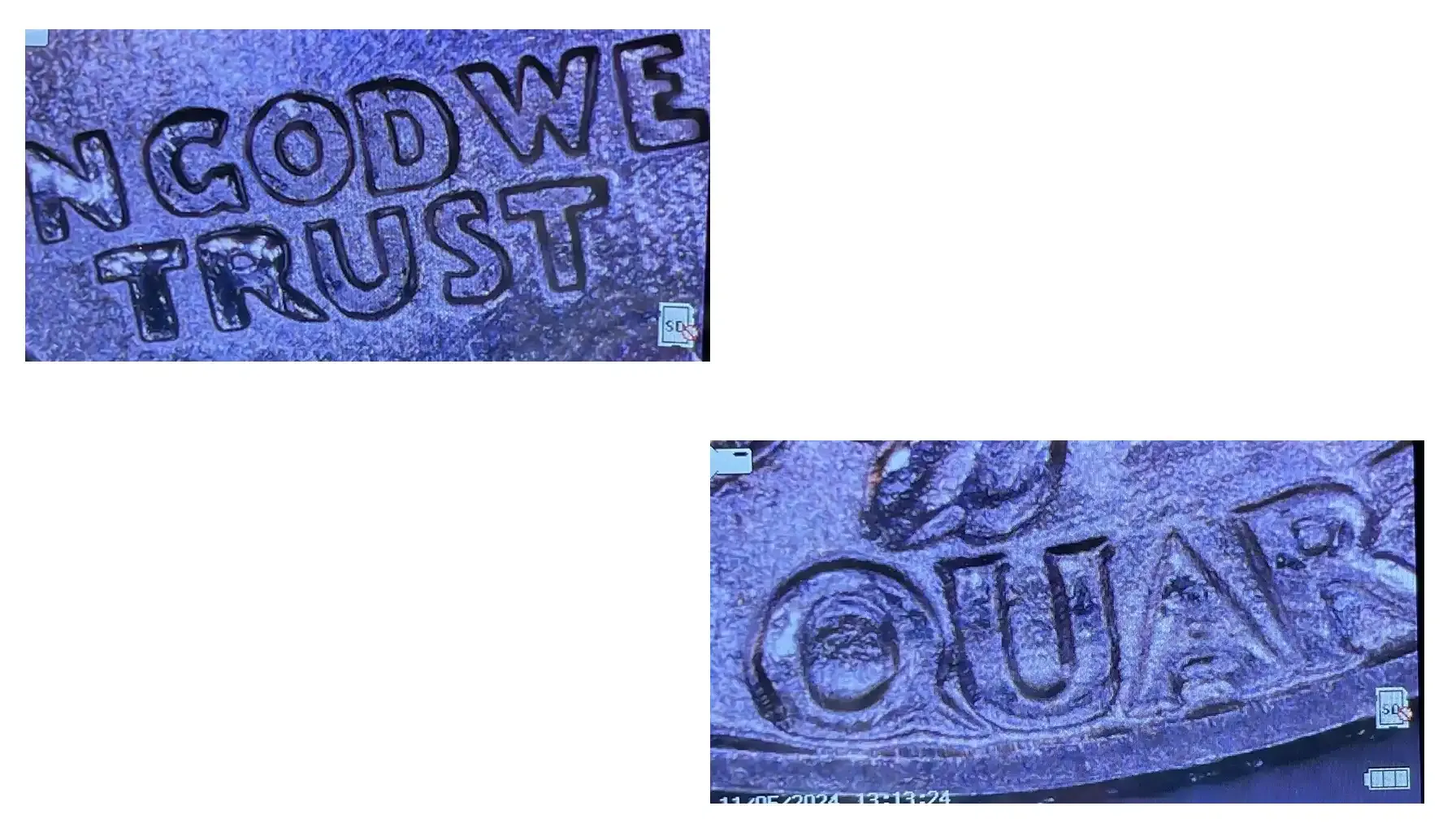
A Doubled Die Obverse occurs when the coin die strikes the planchet (blank coin) more than once, with a slight shift in position between strikes. This results in a doubled image on parts of the coin, most commonly seen in the lettering or date.
Description: Doubling visible on elements like "LIBERTY" or "IN GOD WE TRUST" on the obverse.
Composition: 90% Silver, 10% Copper
Diameter: 24.3 mm
Weight: 6.25 grams
Grade | Price (USD) |
Circulated (G-F) | $50 - $100 |
Extremely Fine (XF) | $120 - $250 |
Uncirculated (MS-60) | $300 - $400 |
Uncirculated (MS-65) | $500+ |
The 1960 D quarter error value can change based on market demand, silver prices, and the specific characteristics of individual coins.
1960 Large Cud Error Quarter
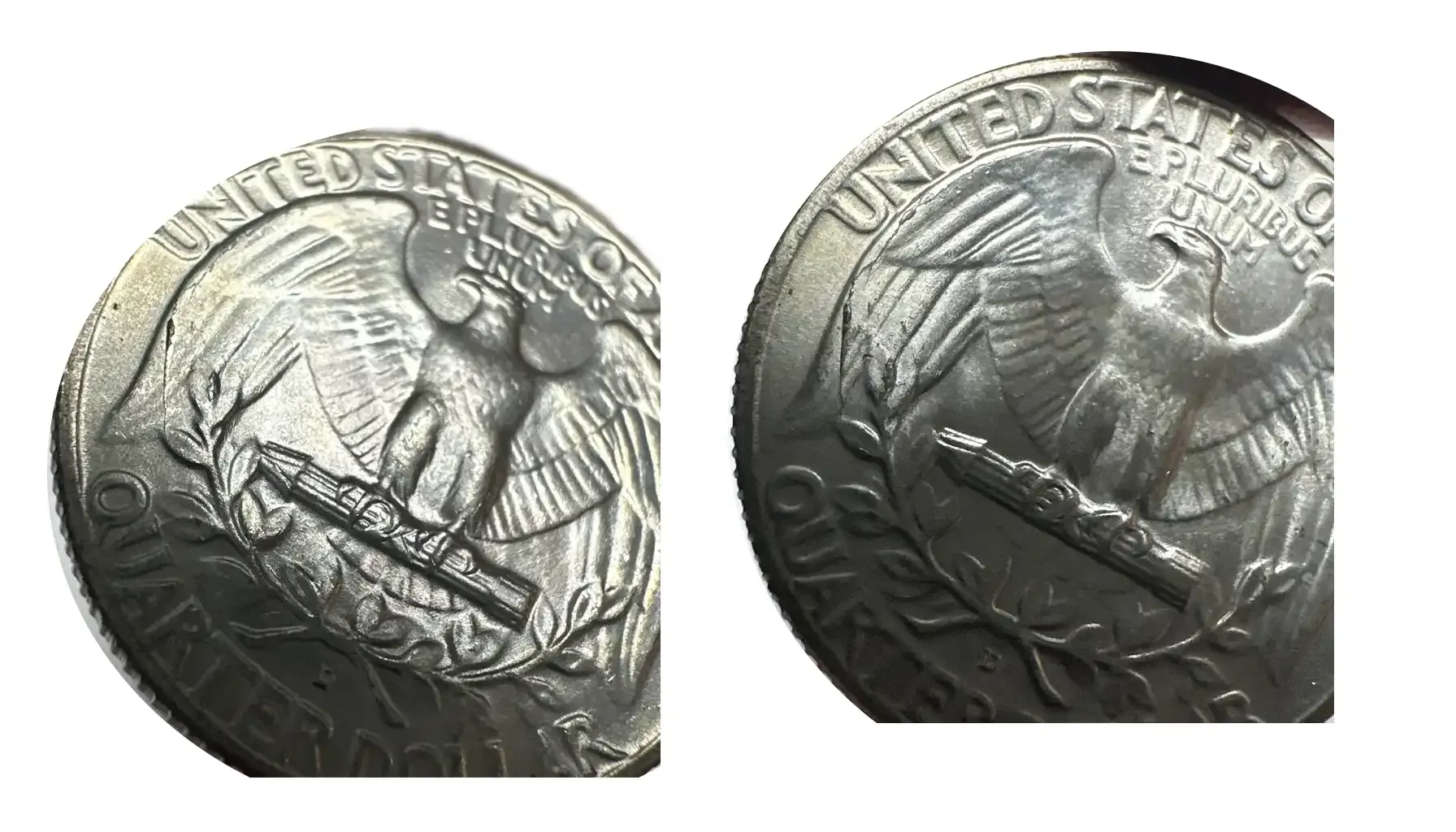
A cud error happens when a piece of the coin die breaks off, leaving a blank, raised area on the coin. These can vary in size and location, with larger or more prominent cuds being more desirable.
Description: A raised blob of metal, typically near the rim, caused by a broken die.
Composition: 90% Silver, 10% Copper
Diameter: 24.3 mm
Weight: 6.25 grams
Grade | Price (USD) |
Circulated (G-F) | $75 - $150 |
Extremely Fine (XF) | $180 - $250 |
Uncirculated (MS-60) | $400+ |
The silver 1960 quarter value can change based on market demand, silver prices, and the specific characteristics of individual coins.
1960 Off-Center Strike Quarter
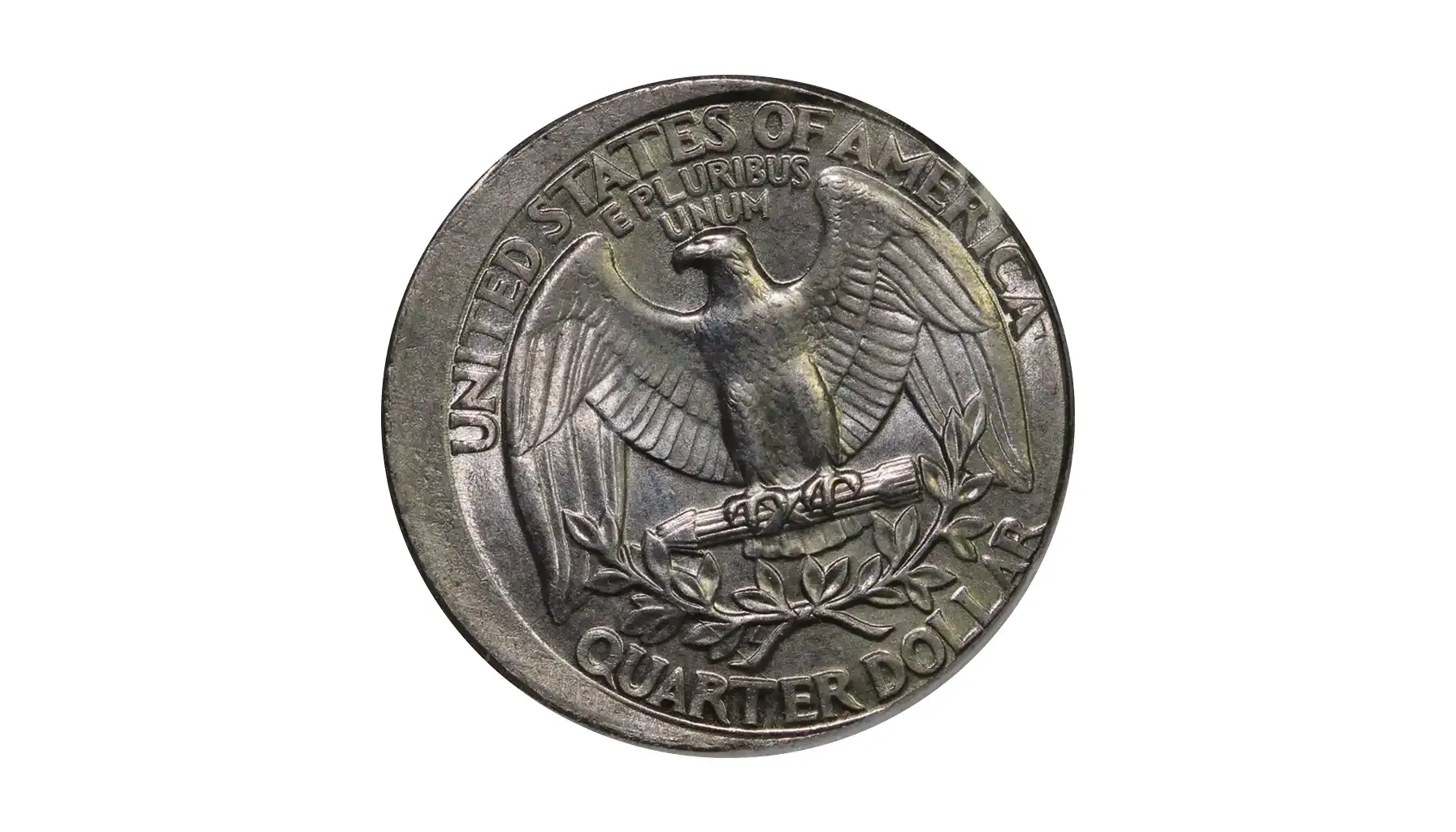
An off-center strike occurs when the planchet is not perfectly centered between the dies during the striking process. This results in a portion of the design being missing and a blank area on the opposite side. The value increases with the degree of off-centerness, especially if the date is still visible.
Description: The design is not centered, with part of the image missing and a blank area on the coin.
Composition: 90% Silver, 10% Copper
Diameter: 24.3 mm
Weight: 6.25 grams
Grade | Price (USD) |
Circulated (G-F) | $100 - $200 |
Extremely Fine (XF) | $250 - $400 |
Uncirculated (MS-60) | $450+ |
The 1960 quarter value no mint mark and with errors can change based on market demand, silver prices, and the specific characteristics of individual coins.
1960 Clipped Planchet Quarter
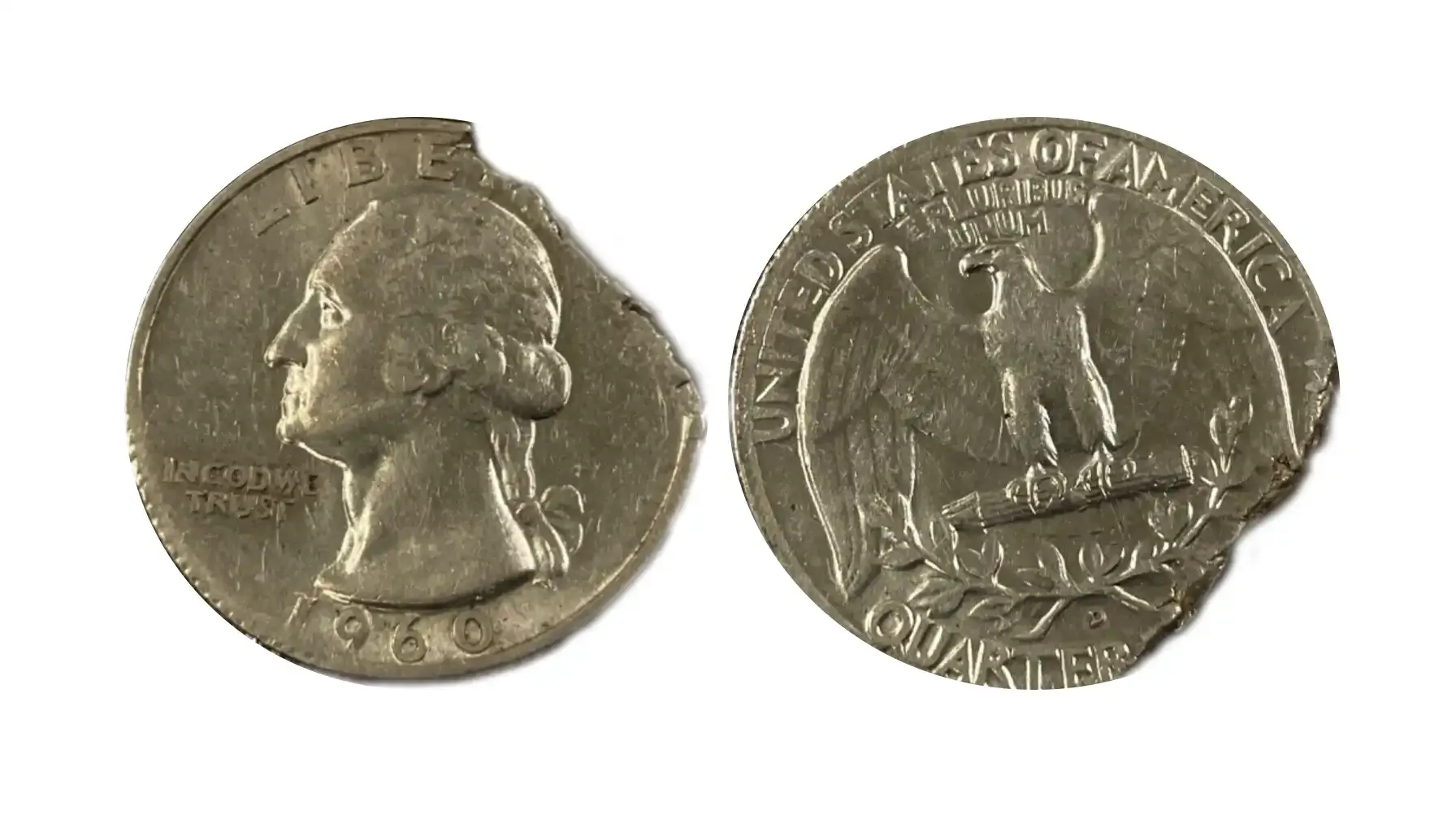
A clipped planchet error happens when a portion of the blank (planchet) is missing before it is struck by the dies. This results in a coin with a straight or curved edge that appears to have a "bite" taken out of it.
Description: A curved or straight piece of metal is missing from the edge of the coin.
Composition: 90% Silver, 10% Copper
Diameter: 24.3 mm
Weight: 6.25 grams
Grade | Price (USD) |
Circulated (G-F) | $200 - $350 |
Extremely Fine (XF) | $400 - $600 |
Uncirculated (MS-60) | $700+ |
The 1960 silver quarter value can change based on market demand, silver prices, and the specific characteristics of individual coins.
1960 Die Crack Error Quarter
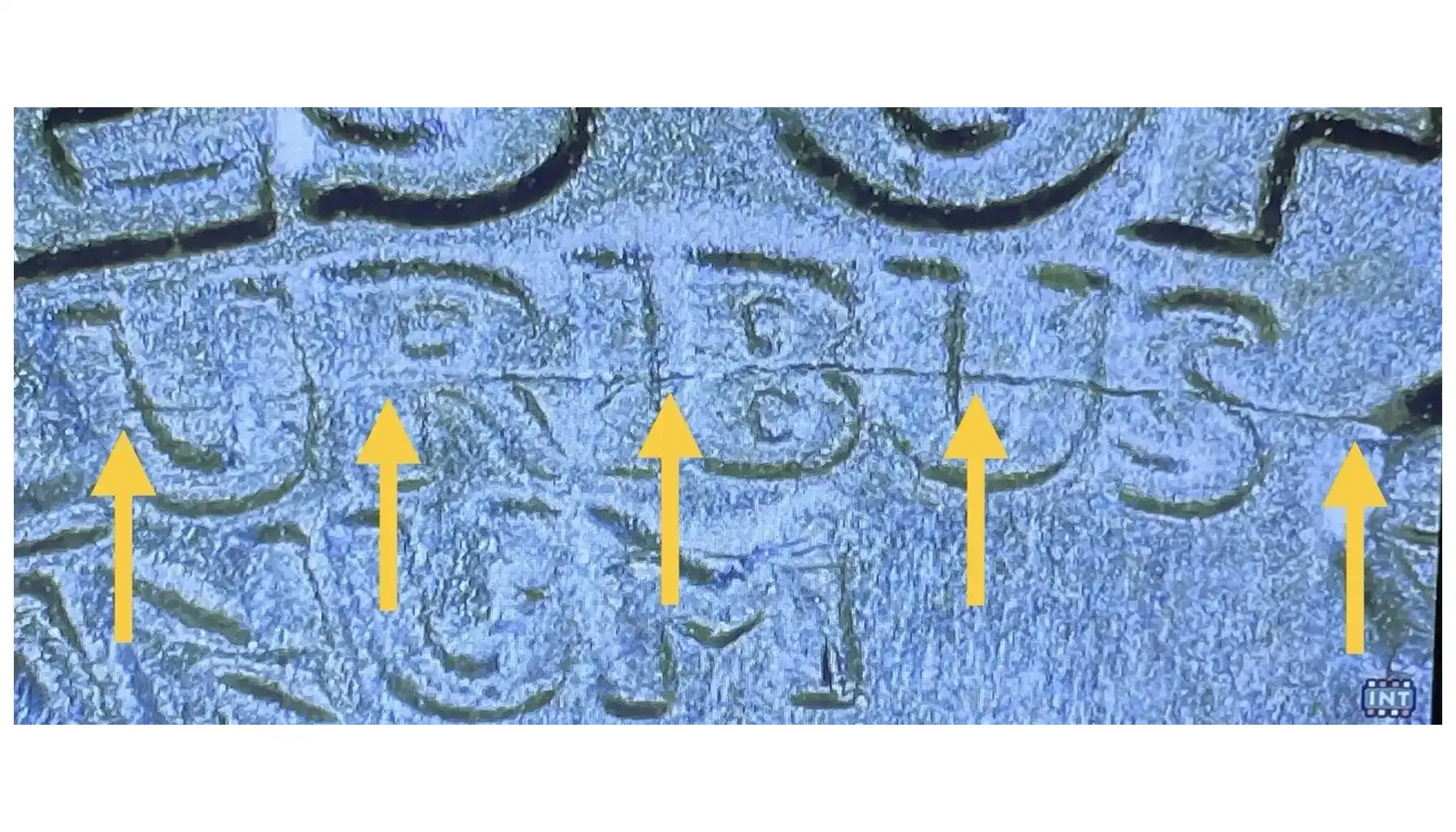
Die cracks are thin, raised lines that appear on the surface of a coin due to a crack in the minting die. While common, significant or unusual die cracks can add numismatic value.
Description: Raised lines or fissures visible on the coin's surface, indicating a crack in the die.
Composition: 90% Silver, 10% Copper
Diameter: 24.3 mm
Weight: 6.25 grams
Grade | Price (USD) |
Circulated (G-F) | $90 - $150 |
Extremely Fine (XF) | $180 - $250 |
Uncirculated (MS-60) | $280 - $500 |
The 1960 quarter value today can change based on market demand, silver prices, and the specific characteristics of individual coins.
How Much Was a Quarter Worth in 1960? Factors Influencing The Quarter 1960 Value
Beyond the mint mark and errors, several other factors contribute to the overall value of a 1960 quarter:
Condition: A grade is assessed on a scale from Poor (P-1) to Perfect Uncirculated (MS-70). Professional grading services like PCGS and Coin ID Scanner can significantly enhance market value.
Luster: Uncirculated ones should retain their original "mint luster," a subtle sheen that indicates they have not been handled or cleaned.
Toning: The natural oxidation of silver over time can create iridescent colors on a piece, known as toning. Attractive toning can increase an appeal and value.
Market Demand: The popularity of certain dates or error varieties among collectors can drive prices up.
Scarcity/Mintage: Lower mintage figures generally mean fewer tokens were produced, potentially leading to higher values if demand is consistent.
So, collecting coins is not as easy as it seems, and it is important to take into account the historical background of each token, for example, to know exactly when San Francisco did not issue coins in America.
It's better to spend time and study every detail than to regret that you sold your collection too cheaply.

 Facebook
  X (Twitter)
  Pinterest
  LinkedIn