Contents:
- How Much Is a 1976 Quarter Worth Today?
- 1976 Quarter Value Chart
- How to Tell If Your 1976 Quarter Is Silver
- Rare 1976 Bicentennial Quarter Errors Worth Money
- Complete 1976 Quarter Error List
- What Makes a 1976 Bicentennial Quarter Valuable?
- Rare 1976 Quarter Auction Sales
- How to Identify a Valuable 1976 Quarter
- FAQs
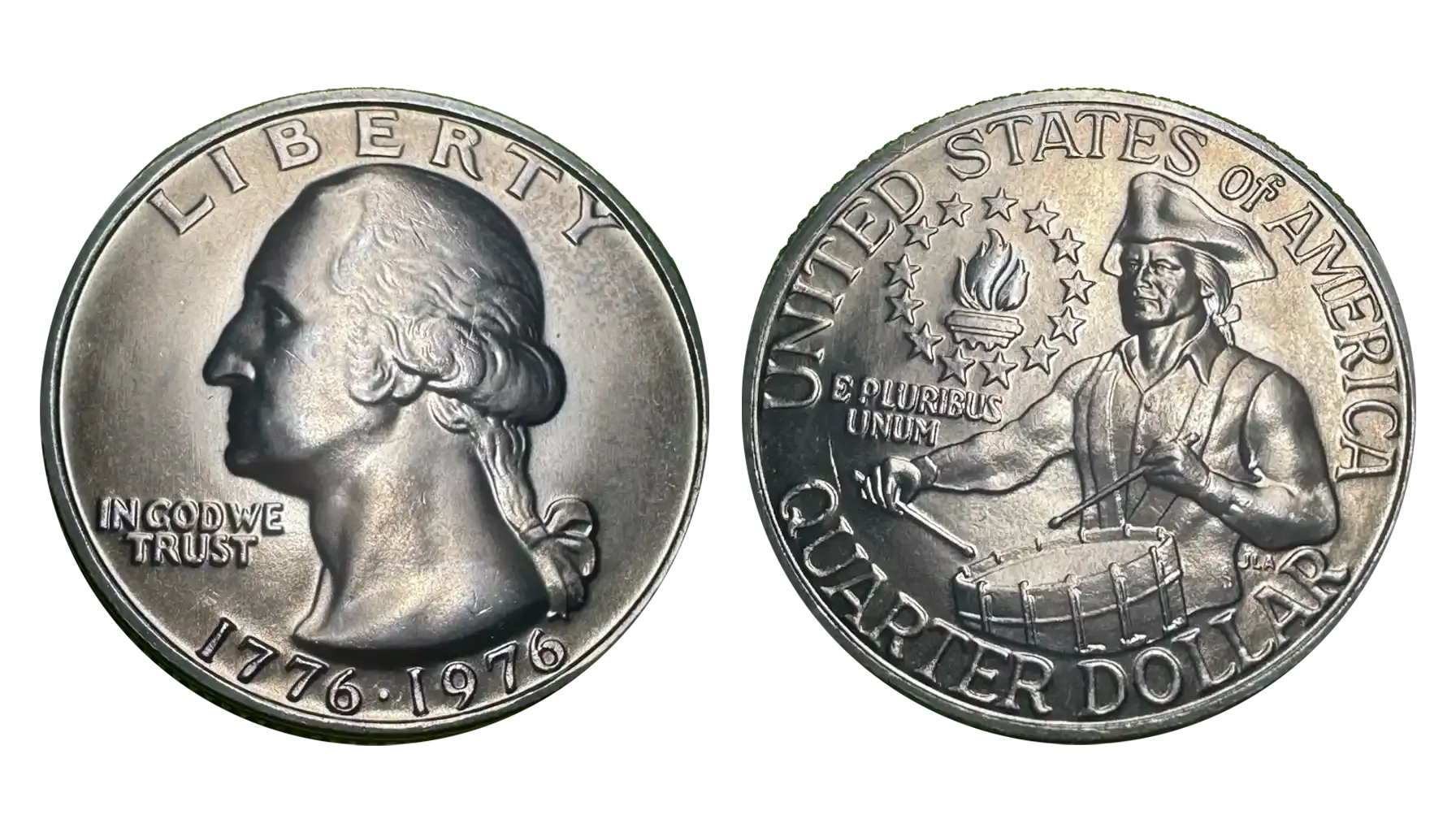
The commemorative quarter 1976 is unique, not least because it lacks the single date of 1976. Prices for this coin range from $0.25 to $100 in less-than-perfect condition.
How Much Is a 1976 Quarter Worth Today?
Circulated 1976 Bicentennial Quarter Value – $0.25–$0.50
Remember that the three essential value drivers always change the price in a better way in the market. Check the three points below:
Silver Composition
High Mint
Rare Defects
Top 1976 Bicentennial Quarter Coin Value Anti-Drivers
Do you know what actively destroys the coin’s value? The top 6 anti-drivers will surprise you.
Harsh Visual Cleaning – the use of chemical dips or metal polishes to artificially shine a dull coin. It strips the microscopic metallic flow lines and leaves hairline abrasions.
High-Traffic Contact Marks – scratches and gouges sustained when fresh coins clattered together in giant canvas bags at the mint, or hit metal cash registers.
Post-Mint Damage – dents, scrapes, spoons, and environmental chemical corrosion that happen after the coin leaves the coining press. Fakers often create fake errors.
Carbon Spotting & Corrosion – dark black or brown copper spots caused by trace moisture, saliva particles, or improper long-term storage in non-archival PVC plastic flips.
Artificial Re-toning – The deliberate use of high heat, blowtorches, or sulfur chemicals to force a fast, multi-colored rainbow look on a silver surface.
The False-Alarm Dull Strike – Weak design details on the hair lines or colonial drum caused by worn-out minting dies, not actual circulation wear.
1976 Quarter Value Chart
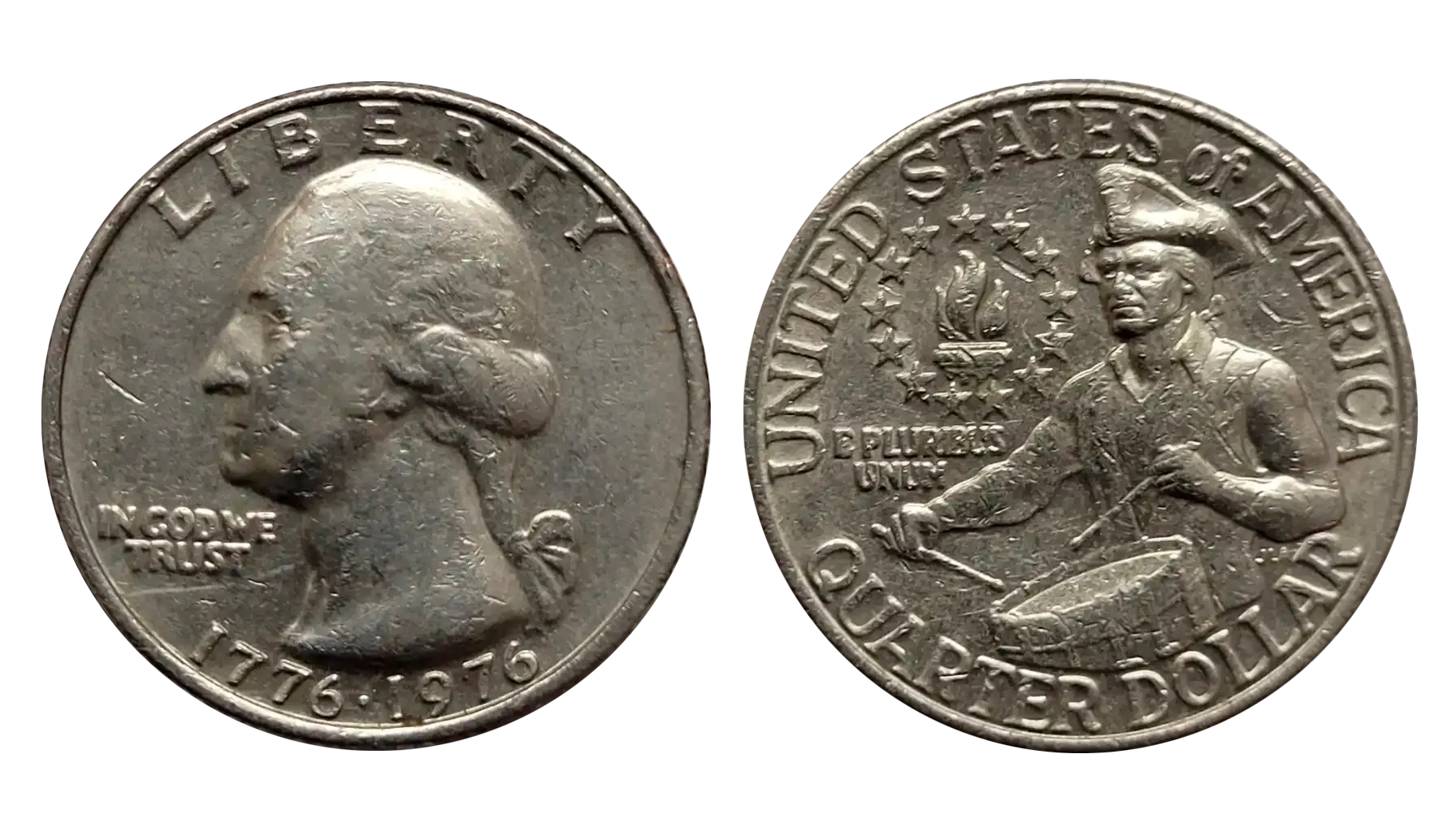
In lower uncirculated grades, the mint of origin has no impact on a coin’s value. Coins from both the 1976 quarter value no mint mark and Denver mints trade at identical price points: $0.50–$1.00 at the About Uncirculated level and $3.50 at the MS‑63 tier. So, is a 1976 quarter worth anything today?
Grade | Philadelphia | 1976 D Quarter Value |
About Uncirculated Coin | $0.50–$1.00 | $0.50–$1.00 |
MS-63 | $3.50 | $3.50 |
MS-65 | $10.00 | $12.00 |
MS-67 | $55.00 | $110.00 |
MS-68+ | $3,000+ | $6,000+ |
What is a 1976 quarter worth on the modern market? When coins reach the MS‑65 issues, a value gap begins to open. Denver strikes command a slight bonus over Philadelphia coins, fetching $12.00 compared to $10.00.
By the time they reach the pristine MS‑67 tier, the Denver quarter commands a price of $110.00 — exactly double the $55.00 value of 1976 quarter Philadelphia issue. This clearly shows that collectors encounter significantly fewer Denver quarters from this period with flawless surfaces.
How to Tell If Your 1976 Quarter Is Silver
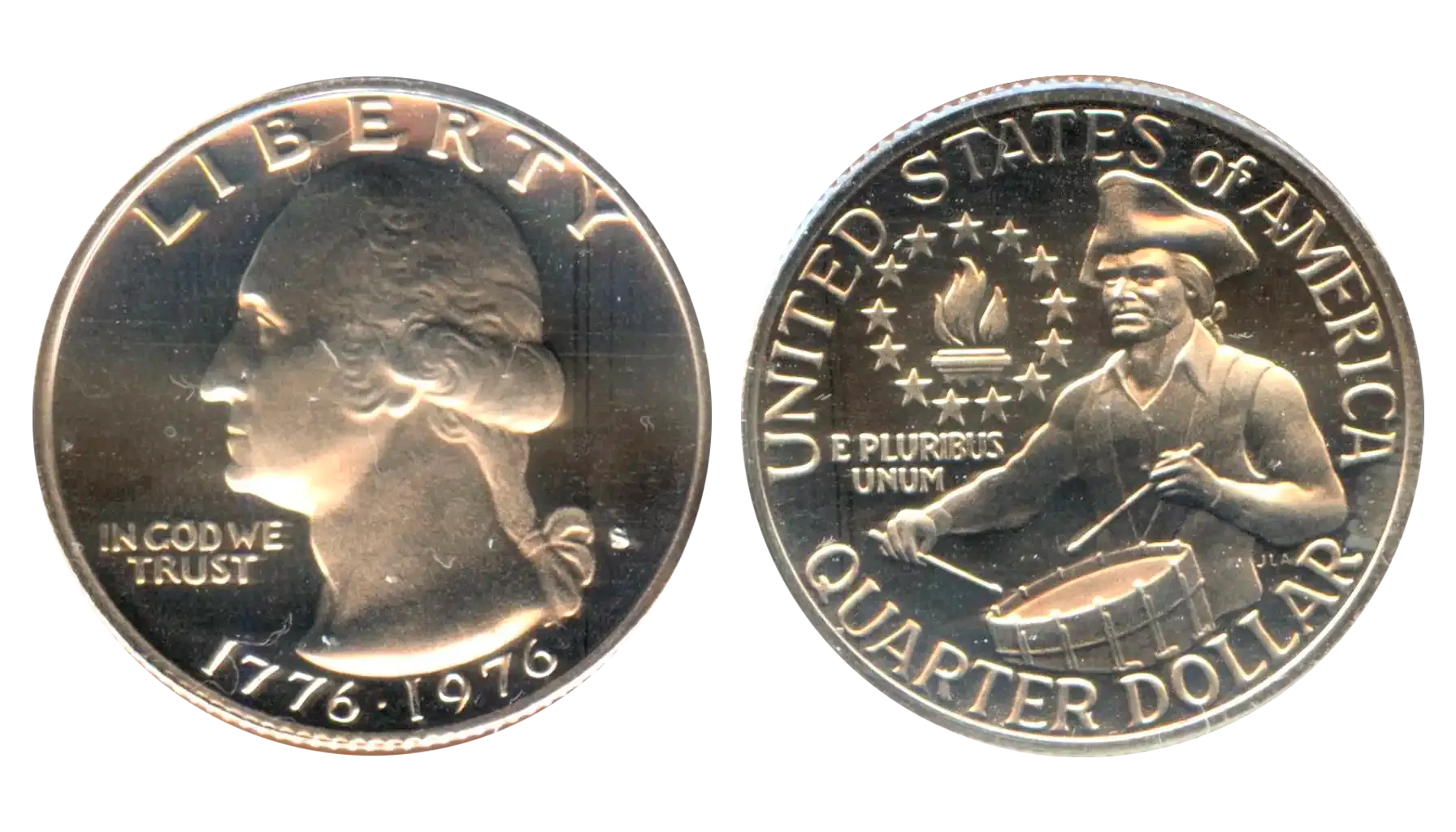
Issues for a special run of 11 million 40 % silver coins at the 1976 S quarter value, San Francisco Mint, for collector sets. Over the decades, many of these silver sets have been opened, and the coins have accidentally entered circulation.
The Mint Mark Location – Step 1
On the obverse, near George Washington’s ponytail, you will see a little letter – D or S. The 1976 quarter no mint mark or D, is 100 % copper and nickel item. If it has S, you have a 40 % silver issue.
The Digital Scale Test – Step 2
5.7 grams – standard clad item weight
5.75 grams – silver item weight
A variance of plus or minus 0.05 grams is normal because of wear, but a silver quarter will consistently cross the 5.7-gram threshold, while a worn clad quarter will often dip below 5.6 grams.
Rare 1976 Bicentennial Quarter Errors Worth Money
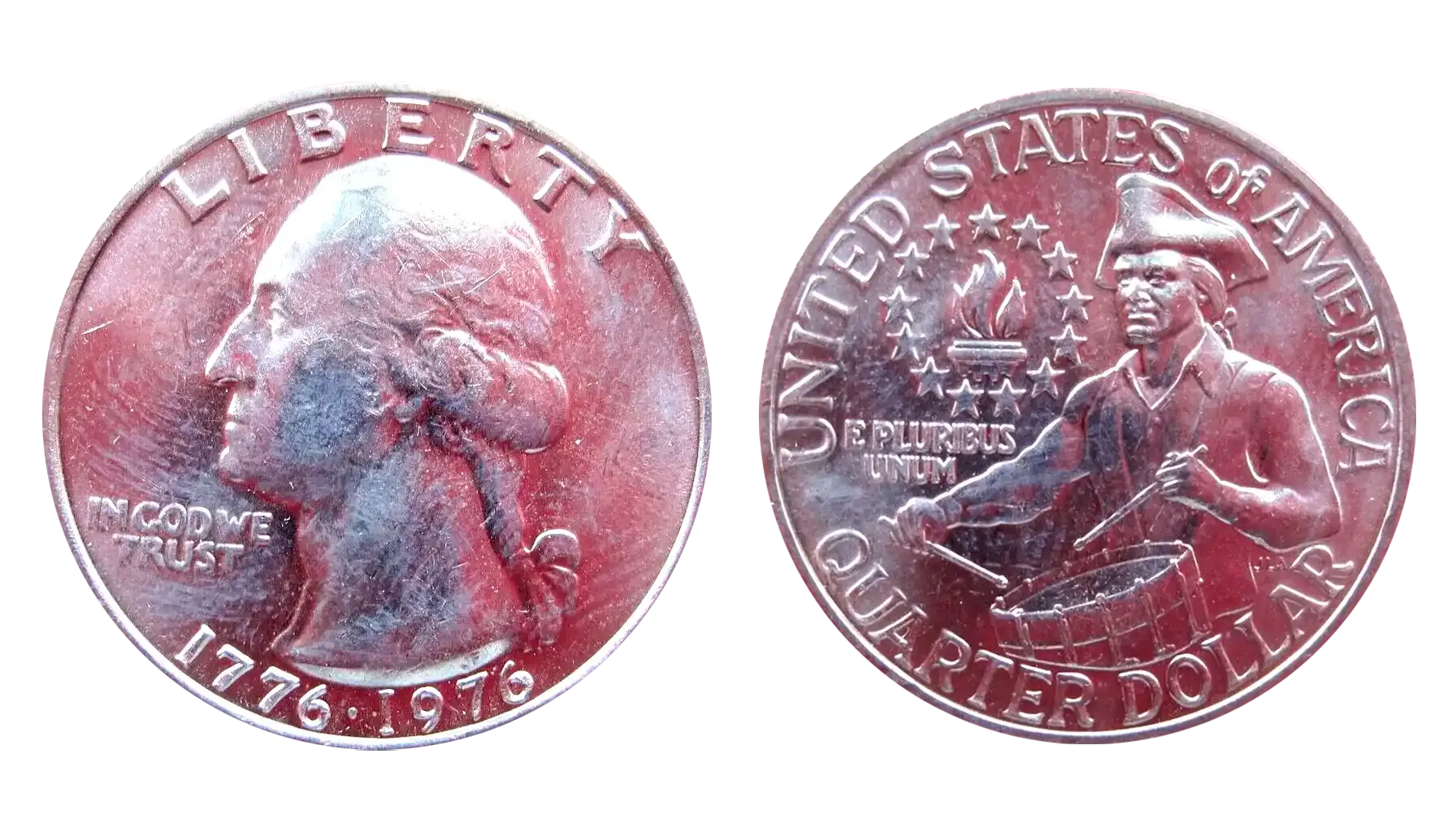
Like similar coins, such as the 1976 Washington quarter, it will not be without classic defects that affect its value. It's important for both novice and professional numismatists to be able to identify these flaws to feel confident when buying or selling.
D Doubled Die Obverse
This is a repeating die error: a defective hub stamped a duplicate image directly onto the steel die, and the die then minted thousands of identical coins. Look for motto and inscriptions. On the FS-101 variety, you will see strong doubling along the vertical stems of the letters – most noticeably on the "R" in Liberty and the numbers "1776".
Average Value – $30–$100
Extra Value – $300–$8,000
Wrong Planchet Defect
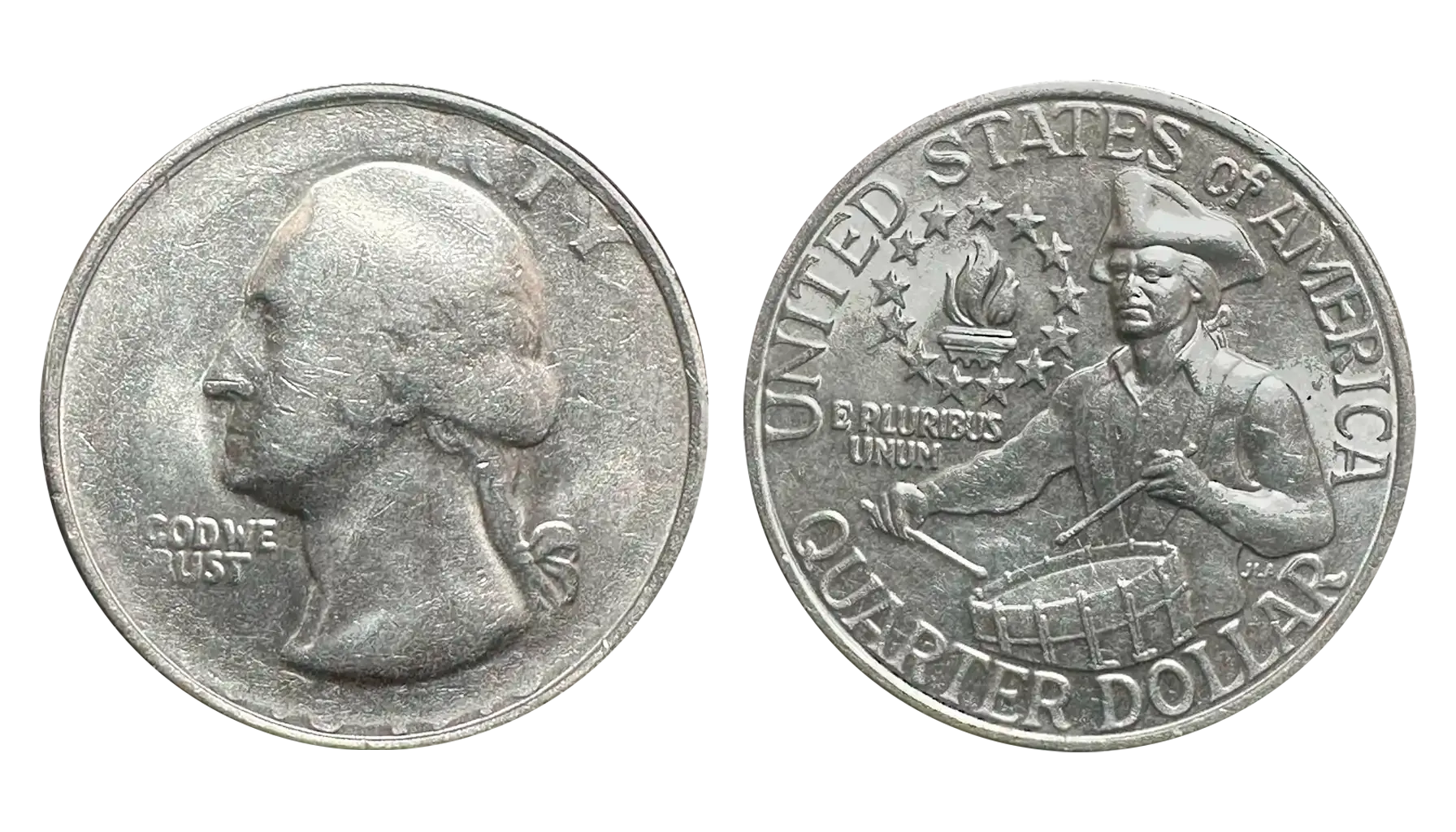
Struck on a Dime Planchet – the coin will be smaller, and the edges of the design will be cut off completely because the blank was too small to catch the entire die surface.
Struck on a Copper Lincoln Cent Planchet – this creates a stunning anomaly where a copper-colored, lightweight blank receives the crisp imprint of George Washington and the Colonial Drummer.
Value Reaches $1,000–$5,000+
Off-Center Strikes
The defect value depends on the off-center percentage. It can be 20 % or 100 %.
Average Value $250–$600+
Obverse Die Caps
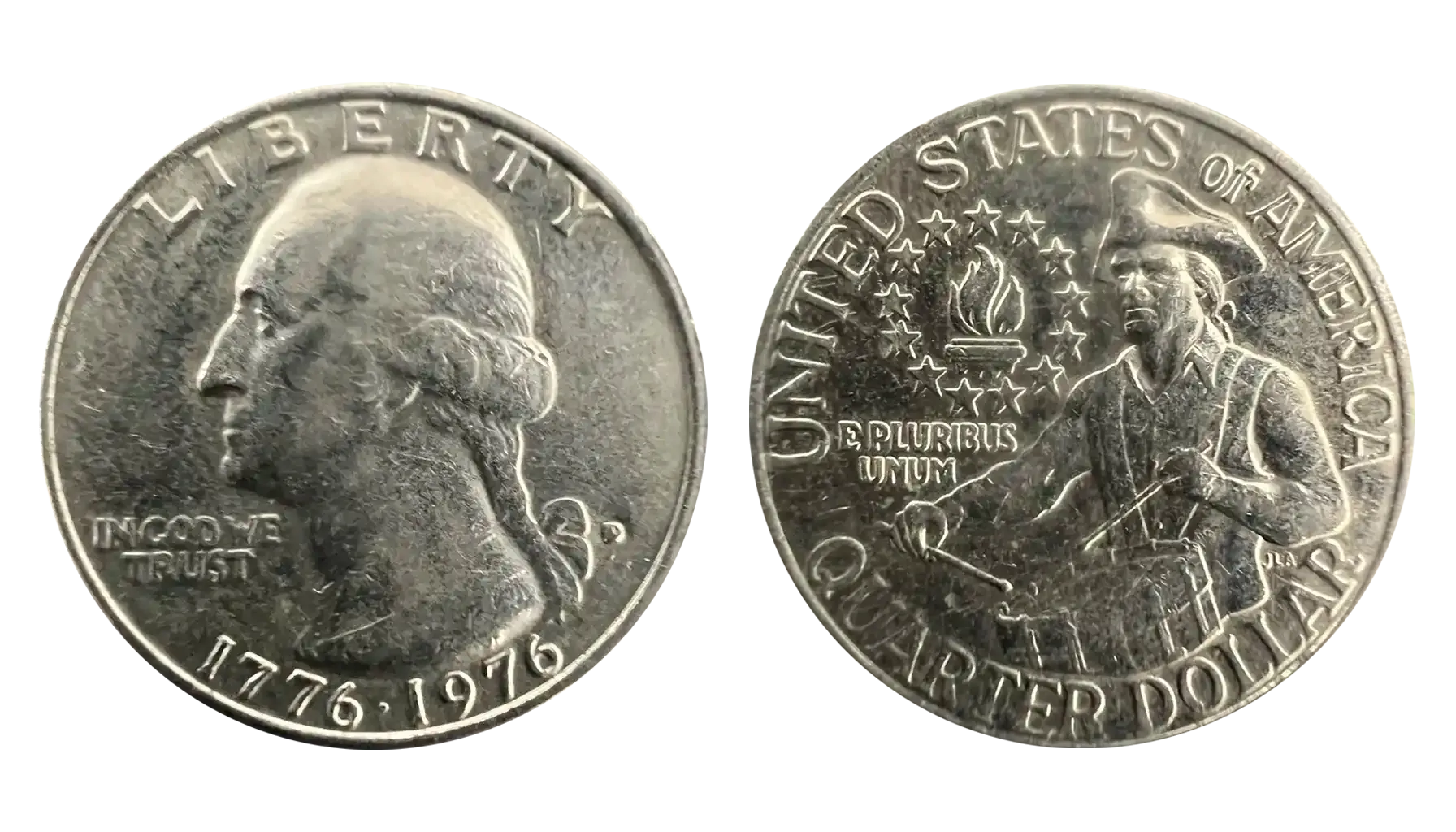
The coin becomes deeply cupped, looking almost like a bottle cap. The side stuck to the die maintains a highly detailed image, while the other side becomes distorted, blank, or completely smooth over time from repeated impacts. A 1976-D obverse die cap recently brought $2,880 at a major numismatic 1976 bicentennial quarter auction.
Value $2,000–$3,000+
Complete 1976 Quarter Error List
Full item error list:
1976 D Bicentennial Quarter DDO FS-101
D DDO FS-102
Off-Metal 1976 Quarter Errors
Die Cap
Clipped Planchet
Doubling
Filled D or Filled B in the Liberty
Why Does the Item Have So Many Errors?
Most standard coin series are struck for exactly 12 months before the mint switches to the next calendar year's dies. The 1976 bicentennial quarter valuation was a major exception:
Non-Stop Minting – to prevent public hoarding and ensure every American could easily find one, the US Mint struck Bicentennial quarters continuously for nearly two full years.
Massive Production Inversion – the mint smashed out 1.6 billion clad quarters.
The Baseline Effect – if the mint makes an error on a standard 1975 quarter, that coin enters circulation, gets beaten up, and eventually wears down until the error is invisible or the coin is melted.
Frozen in Time – because people instantly tucked 1976 silver quarters away into jars and desk drawers, they perfectly preserved thousands of mint‑floor errors.
What Makes a 1976 Bicentennial Quarter Valuable?
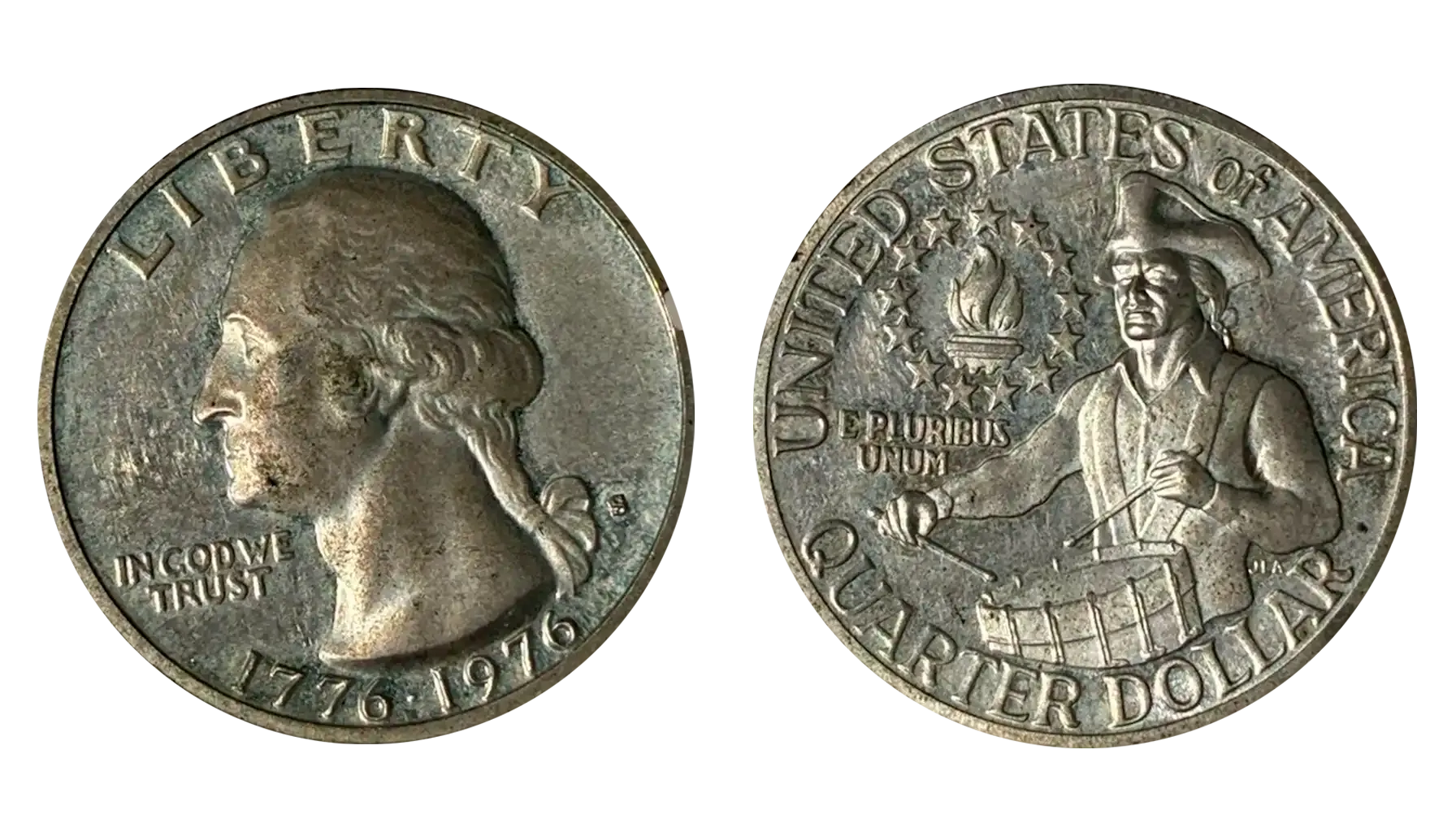
Combining all the above factors, let us turn to different views on collecting and further use of the valuable 1976 bicentennial quarters. We have investor and numismatic views.
The Numismatic View
The Market Play – numismatists evaluate these as excellent cross-over assets. They carry a baseline melt value pegged to the global spot price of silver. Uncirculated issues that have escaped the typical milk-spotting common to 1970s US Mint packaging carry a heavy numismatic bonus.
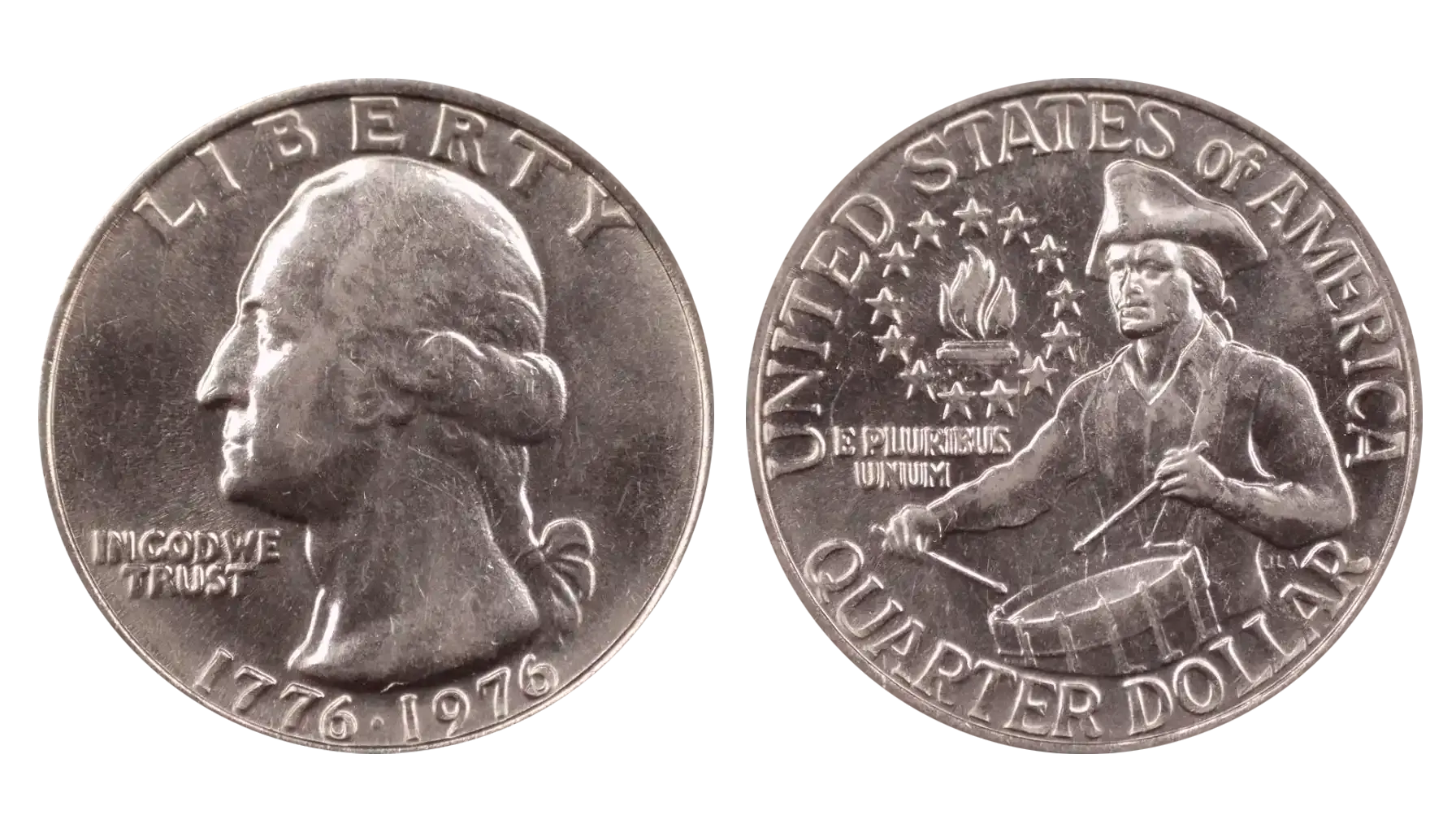
Provenanced Strike Varieties – numismatists actively search out the DDO FS-101 defect. This isn't a random damage flaw; it is a major, cataloged hub variety recognizing a structural defect on the Denver Mint's master tooling. Because it is an officially recognized variety in the Cherrypickers' Guide to Rare Die Varieties, it has steady demand from variety collectors.
The Investor View
The Registry Set Phenomenon - high-net-worth investors and competitive collectors compete globally in Registry Sets hosted by third-party grading houses, such as NGC. To rank number one in the world for an item collection, an investor must acquire the highest graded piece known to exist.
The Production Barrier – the technical survival rate of a coin escaping with zero microscopic marks is a statistical anomaly.
The Investment Yield – when a flawless 1976 quarter D clad achieves a PCGS MS-68 grade, it enters an elite asset tier where the population census is capped at less than a dozen coins.
Rare 1976 Quarter Auction Sales
“The theory in striking them was to have enough available so as many Americans as possible would have a chance to obtain a coinage commemoration of the Bicentennial year. They're mementos."
– Mary Brooks, director
The U.S. Mint
While the San Francisco Mint struck 11 million 40 % silver quarters for uncirculated collector sets, almost all of them contain minor bag marks. Out of those millions, PCGS has graded only a tiny handful as a near-perfect MS-69. This pristine piece represents the absolute apex of preservation for the silver Bicentennial series.
Type | Price | Auction |
MS-69 | $19,200 | Heritage Auctions |
MS-68 | $6,463 | Heritage Auctions |
MS-67+ | $2,520 | Heritage Auctions |
Top Auction Records for Major Mint Defects
$28,200 – Overstruck
A completed 1976 Bicentennial Quarter somehow ended up in the machinery handling larger Eisenhower Dollar blanks. The massive Ike Dollar die slammed down onto the pre-struck quarter, flattening it out and stamping the massive design elements directly over Washington and the colonial drummer. Crossover denomination errors of this magnitude are legendary centerpieces.
$8,400 – D Doubled Die Obverse FS-101
While worn examples are found in junk bins for $40, an uncirculated MS-66 piece displaying razor-sharp doubling on LIBERTY and 1776 with full original mint luster is exceptionally rare.
How to Identify a Valuable 1976 Quarter
Because the U.S. Mint struck over 1.6 billion of these, the baseline coins are incredibly common. The true quarter 1976 value comes entirely from:
Composition
Extreme condition rarity
Authenticated minting errors/misprint 1976 quarter error
Item Specifications
Be sure to check the coin's key characteristics and use specialized numismatic equipment to avoid counterfeits. Be alert to any discrepancies in value, even the slightest.
Composition | Cu and Ni Clad |
Weight | 5.67 grams |
24.30 mm | |
Thickness | 1.75 mm |
Edge | Reeded |
FAQs
What makes a 1976 quarter valuable?
The major defects make the coin rare, such as DDO.
Where is the mint mark on a 1976 quarter?
On the obverse, near the ponytail.
How much silver is in a 1976 bicentennial quarter?
The silver coin has 60 % not silver.
What does a 1976 bicentennial quarter look like?
The commercial item has a portrait on the obverse and a colonial patriot drummer on the reverse.
Where would the mint mark be on a 1976 quarter?
Look on the obverse side.
Which 1976 quarter is silver?
Issues from San Francisco are silver.
What is the error on the 1976 quarter?
One of the major defects is the wrong planchet and obverse die caps.
How can I tell if a 1976 quarter is rare?
You should identify valuable 1976 quarter with basic specifications and use the special equipment.
What's so special about a 1976 quarter?
The item is a limited commemorative series in America.
Why does my 1976 quarter have no mint mark?
The 1976 bicentennial quarter no mint mark because it was struck in the Philadelphia mint.

 Facebook
  X (Twitter)
  Pinterest
  LinkedIn